
January 19, 2026
Private aviation has long been associated with exclusivity, efficiency, and control. But in today’s market, owning a private jet is no longer limited to ultra-long-range aircraft with nine-figure price tags. For many individuals and businesses, the real question is far more practical: is a $10 million dollar private jet actually worth it? Within the business aviation industry, private jet ownership is a significant decision, and companies must carefully evaluate whether such an investment aligns with their financial strategy and overall business goals.
With modern light and midsize jets priced well below flagship aircraft, private jet ownership has become a realistic option for executives, entrepreneurs, and high-net-worth individuals who value time, flexibility, and reliability over the constraints of commercial travel. Private jet ownership provides complete control over scheduling and aircraft availability, a key advantage for those who require maximum convenience and responsiveness.
The light jet market, in particular, has reshaped access to private aviation in the United States and globally, opening up the world to seamless private travel. Combined with pre-owned aircraft availability and fractional ownership structures, the $10 million threshold now represents a strategic decision point rather than a luxury indulgence, reflecting broader trends in the industry.
This article breaks down the pros and cons of owning a $10 million private jet, compares ownership with alternatives, and explains when fractional jet ownership may offer a smarter path forward.
Private aviation represents the pinnacle of travel flexibility, offering a seamless blend of luxury, convenience, and control for both individuals and businesses. Whether you’re considering a nimble Cirrus Vision Jet for personal getaways or a larger business jet for corporate travel, the private jet market provides options to suit a wide range of needs and budgets. One of the primary draws of private jets is the ability to reclaim valuable time—bypassing long security lines, flying directly to smaller airports closer to your destination, and customizing your schedule to fit your life or business demands.
Understanding the essentials of private aviation is key to making a smart investment. Factors such as operating costs, ongoing maintenance, and the choice between outright ownership, chartering, or using a jet card program all play a role in determining what makes sense for your situation. While the initial price tag can be significant, private jets offer enhanced security, privacy, and comfort that commercial flights simply can’t match. For those who can afford it, the benefits of private aviation—whether for business efficiency or personal enjoyment—can far outweigh the costs.
Light jets dominate the sub-$10 million category and are often the entry point for first-time private jet buyers. These aircraft typically seat between 4 and 10 passengers in an executive configuration, offering a range generally between 1,000 and 3,000 nautical miles. Popular models include the Cirrus Vision Jet, known for its single-engine design and whole-aircraft parachute system, making it ideal for short- to mid-range flights, and the Embraer Phenom 100EV, priced around $4.5 million with a range of about 1,178 nautical miles.
Light jets like the Embraer Phenom 300, one of the most popular light jets on the market, are known for their excellent performance and comfort. These models provide excellent performance with a cruise speed near 464 knots and a spacious cabin equipped with advanced avionics such as the Garmin G3000 PRIME suite, which includes capabilities like Emergency Autoland. Models like the Embraer Phenom 300 and Pilatus PC-24 are popular choices in the light jet category, offering good range and speed. The Cessna Citation M2, with a 6-seat configuration and single-pilot certification, is another versatile choice for personal and business use.
Key advantages of light jets include:
The Pilatus PC-24 stands out for its unmatched operational flexibility, capable of landing on short, unpaved runways, and offering various seating configurations. The 2022 Phenom 300E, maintained under Part 135 with factory warranties remaining, is particularly attractive for buyers seeking reliability and peace of mind. The Embraer Phenom 300E is basically a larger, more feature-rich version of the Phenom 100EV, offering enhanced capacity and capabilities.
The Honda Jet Elite S is also a strong contender, with a range of 1,437 nautical miles and a cruise speed of 422 knots, which is faster than many of its competitors. Private jets in this category typically have cruise speeds ranging from 415 to 470 knots (approximately 470–540 mph).
For buyers seeking more cabin space and range without moving into long-range aircraft pricing, light-midsize business jets offer a compelling balance. These jets typically seat 7 to 9 passengers and provide stand-up cabin height in select configurations, with ranges suitable for longer nonstop flights across the continental United States.
Models such as the Cessna Citation XLS+ and the Bombardier Learjet 75, priced between $7 million and $10 million, are widely used for corporate travel and multi-leg business itineraries. The Gulfstream G150, priced at $7–$9 million, offers impressive range and speed with operational costs around $2,700 to $3,200 per hour. The Bombardier Learjet 75 Liberty, with operational costs of approximately $2,500 to $3,000 per hour, appeals to buyers prioritizing speed and performance.
Super midsize jets like the Gulfstream G280 or Challenger 300/350 provide transcontinental range, high cruise speeds (415 to 470 knots), and spacious cabins with luxury features such as fully enclosed lavatories often equipped with sinks, mirrors, and showers. Many of these jets also feature a facing couch seating arrangement, enhancing passenger comfort and encouraging social interaction within the cabin. These jets can exceed operating costs of $4,500 per hour but offer extended range and enhanced comfort.
Several new and pre-owned private jets are available for sale under $10 million, including:
A $10 million private jet typically offers luxury features for 4-8 passengers, including executive seating, galleys, private lavatories, advanced entertainment, and ranges of 1,000-3,000 nautical miles.
Owners may choose to sell their jets as part of asset management or market activity, and it is common to see jets with updated exteriors and new paint to attract buyers.
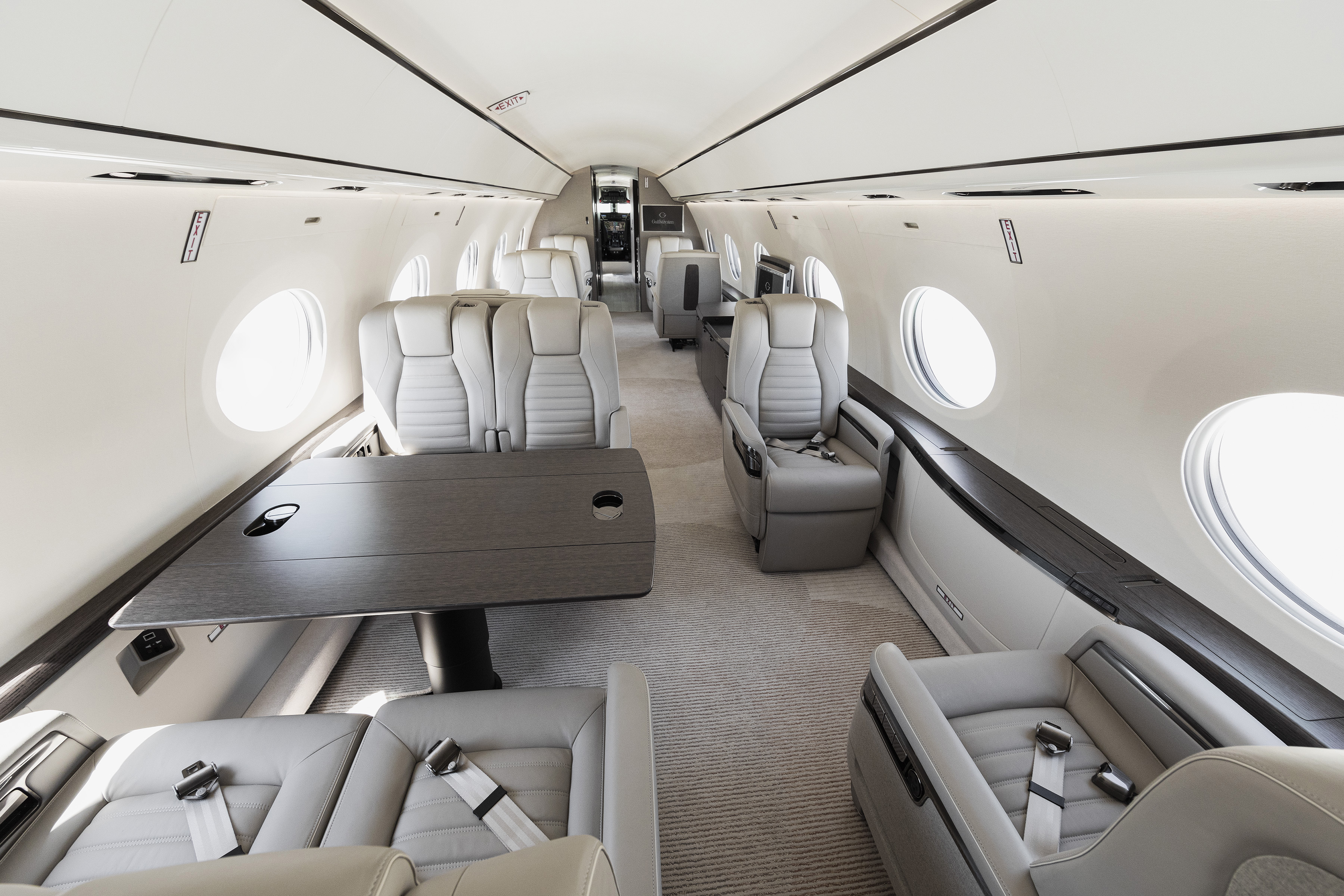
A defining feature of private jets is their spacious, thoughtfully designed cabins, which elevate the travel experience far beyond what’s possible on commercial flights. Aircraft like the Embraer Phenom 300 are renowned for their roomy interiors, allowing passengers to stretch out, work, or relax in comfort. High-speed internet, advanced entertainment systems, and customizable lighting are just a few of the amenities that transform the cabin into a productive office or a restful retreat at 40,000 feet.
The Cessna Citation XLS+ is another standout, offering plush seating, generous storage, and a fully equipped galley—perfect for both business meetings and family trips. These jets are engineered for speed and efficiency, but never at the expense of passenger comfort. Whether you’re flying solo or with a group, the interior of a private jet is designed to provide a quiet, luxurious environment where you can make the most of every minute in the air.
Owning a private jet involves significant ongoing expenses beyond the purchase price. Operating costs are estimated between $2,000 and $3,500 per flight hour, depending on fuel burn and maintenance programs. Light jets typically incur costs around $2,000 per hour, while super midsize jets can exceed $4,500 per hour. Maintenance plans and safety standards matter greatly, as they can significantly impact both costs and the overall safety of your investment.
Annual fixed costs, including maintenance, repairs, storage, fuel, insurance, and flight crew salaries, can total hundreds of thousands to over a million dollars per year. Annual costs for maintaining a private jet can range from $500,000 to $1.5 million, depending on jet size and usage. The total annual cost of owning a private jet typically ranges from $700,000 to $2 million, depending on usage and operational factors.
Private jets are depreciating assets that will lose value over time, making them a risky investment for many buyers. Many owners choose to charter their jets when not in use to offset fixed costs, though this requires compliance with FAA regulations.
A $10 million jet can be affordable for someone with a $30 million net worth and a $2 million annual income, but it requires careful financial planning. Private jet ownership is often seen as a long-term commitment that may not be suitable for everyone. Ownership makes the most sense for individuals who fly 200 or more hours annually. For others, it is often recommended to explore chartering or fractional ownership before committing to a full purchase, as these options provide cost-effective alternatives without the long-term commitment of full ownership.
Proper maintenance is the backbone of safe and reliable private jet ownership. Every aircraft, from a pre-owned Bombardier Learjet 75 to a brand-new Pilatus PC-24, requires regular inspections, timely repairs, and occasional upgrades to stay in peak condition. Maintenance costs can vary widely based on the jet’s age, usage, and model, with older or heavily used jets often demanding more frequent attention.
Programs like TAP Blue offer owners a way to manage and predict engine maintenance expenses, helping to keep costs under control and minimize unexpected downtime. By investing in routine maintenance and partnering with skilled technicians, owners not only protect their investment but also ensure that their jet is always ready for the next flight. Staying proactive about maintenance is essential for maximizing the value, safety, and longevity of your aircraft.
Securing the right insurance and meeting certification requirements are critical steps in the private jet ownership journey. Comprehensive insurance policies protect owners against a range of risks, from damage to the aircraft to liability during flight operations, ensuring peace of mind and safeguarding the jet’s value. For those flying light jets, single-pilot certification can offer added flexibility, allowing qualified pilots to operate the aircraft without a co-pilot, which can reduce costs and streamline scheduling.
Regulatory compliance is equally important. Modern jets must be equipped with ADS-B technology, which enhances flight safety and air traffic control by providing real-time aircraft tracking. By working with reputable insurance providers and staying current with certification and regulatory standards, owners maintain control over their investment and ensure every flight meets the highest safety benchmarks.
At the higher end of private aviation, ultra-long-range jets like the Gulfstream G700 offer intercontinental range, multiple living zones, and dedicated crew rest areas. These jets operate at altitudes up to 45,000–47,000 feet but come with acquisition costs exceeding $70 million and operating budgets that can reach several million dollars annually. For many buyers, the incremental benefits do not justify the exponential increase in cost.
Purchasing a private jet is a complex process that requires careful planning and expert guidance. It begins with defining your travel needs, setting a realistic budget, and deciding whether a new or pre-owned model best fits your requirements. Engaging experienced brokers, legal advisors, and maintenance professionals can help you navigate the market, evaluate aircraft, and negotiate favorable terms.
Key considerations include not only the purchase price but also ongoing operating costs, maintenance costs, and the potential resale value of the jet. For buyers who may not be ready to commit to full ownership, alternatives like jet cards or fractional ownership programs offer access to private aviation without the full financial responsibility. Ultimately, the buying process is about balancing your needs, budget, and long-term goals to ensure you select an aircraft that delivers lasting value and satisfaction.
Jet card programs from providers like NetJets and Flexjet allow travelers to prepay for flight hours without owning an aircraft. These programs provide predictable hourly pricing, fleet access, and guaranteed availability, making them suitable for frequent flyers who prefer flexibility over asset ownership.
Charter services offer on-demand access with no long-term commitment, ideal for occasional flyers needing specific routes or one-off trips. However, chartering can become costly and inconsistent at higher usage levels.
Fractional ownership enables buyers to purchase a share of an aircraft, sharing operating costs and gaining guaranteed access. This model offers lower upfront investment, predictable monthly costs, professional fleet management, and access to larger aircraft categories if needed.
Private aviation is increasingly addressing sustainability through fuel-efficient engines, optimized flight planning, and carbon offset programs. Newer light jets consume less fuel per passenger than older aircraft, and fractional ownership improves efficiency by maximizing aircraft utilization.
The answer depends on travel frequency, mission profile, and financial priorities. For individuals flying hundreds of hours annually with consistent routes, ownership may offer unmatched convenience and control. For others, the economics favor fractional ownership or structured access programs.
What matters most is aligning aviation strategy with actual usage—not aspiration.
A $10 million private jet can be a powerful tool—but it is not the only path to private aviation success. Fractional jet ownership offers a strategic alternative, delivering flexibility, efficiency, and predictability without the full burden of ownership.
Discover a smarter approach to private flying by visiting https://www.fractionaljetownership.com/. Learn how fractional ownership can enhance your travel experience and help you decide if full ownership, fractional access, or another option is the right fit for your lifestyle.
For more insights on private jets, tech, and aviation, be sure to follow my Medium account and check out my YouTube videos for in-depth reviews and tips.
