April 28, 2026
The Bombardier Challenger 350 has earned its reputation as one of the most capable super-midsize jets in private aviation. This guide covers the Challenger 350’s design, performance, cabin experience, operational history, and its role in fractional jet ownership programs. It is intended for executives, families, and aviation enthusiasts considering fractional ownership or seeking to understand the aircraft’s advantages. For executives and families seeking reliable access without the burden of full ownership, understanding this aircraft’s strengths helps inform smarter decisions about fractional jet ownership.
Fractional jet ownership is a model where multiple individuals or companies share ownership of an aircraft, allowing each to access the jet for a set number of hours per year without the responsibilities and costs of full ownership.
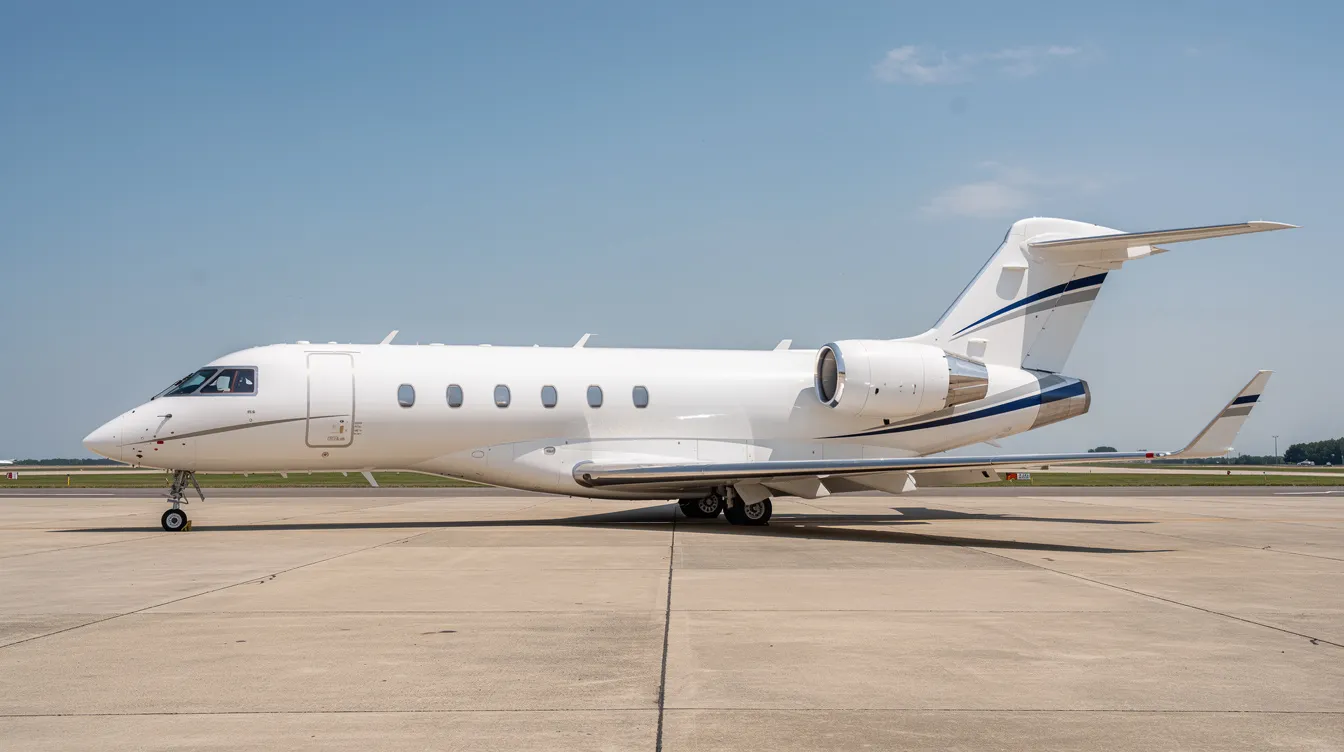
The Challenger 350 is a super-midsize business jet introduced by Bombardier as an evolution of the Challenger 300, with first deliveries beginning in 2014. This aircraft quickly established itself as a benchmark in its class for balancing performance, comfort, and efficiency. The Challenger 350 typically accommodates up to 10 passengers, with standard executive configurations seating eight comfortably, and the addition of a ninth passenger is possible through flexible seating options.
The aircraft offers a max passenger capacity of 10 and a max range of approximately 3,400 nautical miles, making it ideal for long-distance travel without the need for refueling. Powered by dual Honeywell HTF7350 engines, it delivers a high-speed cruise near Mach 0.82 (around 469 knots) and a service ceiling of 45,000 feet, supporting a wide range of mission profiles and operational distance requirements.
In the market, the Challenger 350 positions itself between light jets and large-cabin aircraft like the Gulfstream G450. In comparison to its competitors, the Challenger 350 offers more range than the Cessna Citation Latitude, but less than the Embraer Praetor 600 and Gulfstream G280. Corporate flight departments and fractional providers across the United States and globally favor it for this versatility. BlackJet Fractional Jet Ownership offers access to Challenger 350 aircraft via both equity-based fractional ownership and flexible, non-equity usage programs alongside fractional shares of comparable Falcon 2000EX super-midsize jets, focusing on predictable availability rather than one-off charter. By December 2017, over 200 Challenger 350 aircraft had been delivered, contributing to around 450 Challenger 300 deliveries.
The Challenger 350 represents a significant update to the Challenger 300 family, maintaining the proven airframe reliability while upgrading cabin, avionics, and efficiency. Built to withstand demanding operational use, the Challenger 350 is engineered for consistent performance even under challenging conditions. The Challenger 300 entered commercial service on January 8, 2004, with Flexjet as the launch operator. Bombardier announced the Challenger 350 program in 2013, with deliveries starting the following year.
Major design improvements include wider winglets for better aerodynamics, Honeywell HTF7350 engines with 7.3% more thrust than the predecessor, and refined interior materials. The upgraded Rockwell Collins Pro Line 21 avionics system features a synthetic vision system, ground clutter suppression via MultiScan weather radar, auto throttles, and reduced pilot workload through advanced displays. By the mid-2010s, hundreds of Challenger 300/350 family aircraft were in service worldwide, demonstrating dispatch reliability close to 99.8% over nearly one million flight hours.
The Challenger 350’s cabin stands out as a flat-floor, stand-up environment designed for eight passengers in a standard double-club arrangement, with an optional ninth seat on the belted lavatory. This configuration optimizes both business productivity and family travel.

Standard cabin dimensions measure approximately 25 feet 2 inches in length, 7 feet 2 inches in width, and 6 feet in height—the widest in its super-midsize class. The Challenger 350 offers a spacious cabin with 20% larger windows compared to its predecessor, the Challenger 300, flooding the interior with natural light. The aircraft features a baggage capacity of 106 cubic feet, which is accessible during flight, allowing passengers to retrieve items without waiting until landing.
Comfort features include advanced soundproofing for quiet operation, modern LED lighting, and connectivity options such as high-speed Wi-Fi and cabin management systems. Passengers can work as if in a conference room, with personal touchscreen controls and modular galley configurations. For fractional jet owners flying 25–150 hours per year, including those considering 1/8 fractional jet ownership structures, this cabin size proves ideal for regional U.S. and transcontinental missions where comfort and productivity converge.
The Challenger 350 delivers the ultimate combination of range, speed, and field performance, making it versatile for frequent private aviation users. The aircraft is praised for its balance of transcontinental range and runway performance.
Core performance specifications include a maximum range of 3,400 nautical miles with appropriate reserves, normal cruise speeds around 540–550 mph, and the ability to cruise at altitudes up to 45,000 feet. The Challenger 350 is engineered to climb quickly to 43,000 feet and reach a maximum speed of Mach 0.83, showcasing its high-performance capabilities. It requires approximately 4,835 feet of runway for takeoff at maximum weight.
Common mission profiles include nonstop flights such as New York to Los Angeles, Chicago to San Francisco, and Dallas to Seattle, plus many intra-Europe routes. Actual range and operational efficiency are affected by factors such as weather, passenger count, runway length, and winds. Access to medium-length runways at secondary airports closer to business centers enhances schedule flexibility. Lower direct operating costs compared with many large-cabin jets make the Challenger 350 attractive for companies optimizing cost per flight hour in a fractional jet ownership cost model or evaluating fractional ownership of efficient light jets like the HondaJet.

The Challenger 350 quickly became one of the most widely used super-midsize jets worldwide after its introduction, complementing growing demand for private access at regional gateways like Avord AB, private jet access, and ownership options. By November 2014, 448 Challenger 300s were in service, achieving a 99.79% dispatch reliability rate over nearly one million hours of operations.
As of the end of 2015, there were 550 Challenger 300/350 aircraft operational, with the largest operator being Flexjet, which had 30 Challenger 300s and seven 350s. Over 200 Challenger 350 aircraft were delivered by December 2017, supporting more point-to-point flying from destinations that value flexibility, such as Bay of Islands private jet access and ownership options. The 350th Challenger 350 was delivered in July 2020, marking continued strong demand.
New Challenger 350 aircraft were listed around the mid-$20 million range in the early 2020s, while pre-owned Challenger 300 models could range from roughly $7 million to over $20 million, depending on age and configuration, making fractional access through hubs like Bhubaneswar private jet access and ownership options appealing for many buyers. Like all certified aircraft, the family has been subject to regulatory airworthiness directives to maintain safety standards while still supporting lifestyle-focused flying to leisure markets such as Ibiza, private jet access, and ownership options. Despite isolated incidents and evolving requirements, the current Challenger 350 remains respected for reliability and suitability for demanding corporate and fractional operations that span global bases, from North America to fractional jet ownership offerings in Kaohsiung.
The Challenger 3500, launched by Bombardier in the early 2020s, represents the next-generation evolution with upgraded cabin technology and sustainability features. The Challenger 3500 features the industry’s first voice-controlled cabin, enhancing user interaction and convenience.
The Challenger 3500 features the widest cabin in its class, designed with a flat floor layout that allows for safe and unrestricted movement throughout the cabin. The Nuage seat in the Challenger 3500 is the first meaningful change in business aircraft seat design in over 30 years, offering class-defining comfort and the industry’s first zero-gravity position. The cabin of the Challenger 3500 is designed to minimize noise, making it the quietest in its class, which helps reduce stress and maximize comfort and productivity.
The Challenger 3500 includes industry-first features such as unmatched 4K entertainment and wireless charging capabilities. Its cabin features a low altitude of 4,850 feet, allowing passengers to arrive feeling refreshed and relaxed, similar to being at ground level in Denver, Colorado. The advanced air circulation system in the Challenger 3500 is the fastest in its class, rapidly replenishing the cabin with fresh air in less than two minutes.
From a mission profile standpoint, both aircraft occupy similar roles in range and passenger capacity. BlackJet helps clients decide whether a Challenger 350, newer 3500, or different aircraft type best matches their typical journey lengths, passenger loads, and annual flight hours by comparing its private aviation program options with alternatives like fractional ownership of long-range jets such as the Falcon 900LX.
The Challenger 350 stands as one of the most practical aircraft for fractional aircraft ownership and shared-use models in North America and Europe. Its balance of cabin size, range, and operating cost serves both personal and corporate itineraries effectively, particularly for clients leveraging fractional jet ownership in Virginia Beach and other coastal hubs.
BlackJet’s Equity Fleet model provides fractional owners with a deeded share, predictable hourly costs, and structured fractional jet ownership financing, potential tax benefits under U.S. rules, and priority access to their aircraft type. The Reserve Fleet or membership-style access leverages Challenger 350 capacity for clients who want the same aircraft class without committing to full ownership shares, paying only for actual hours flown, and choosing between fractional ownership and membership-style programs.
Scheduling advantages include guaranteed availability windows, the ability to book round-trip or multi-city destinations, and integration with BlackJet’s flight operations team for mission planning throughout the week, all structured around robust liability and insurance considerations in fractional jet ownership.
While a new Challenger 350 can cost tens of millions of dollars to purchase outright, fractional jet ownership provides a way to access the same aircraft class at half the capital outlay or less.
Major cost components include acquisition (full or fractional share), monthly management fees, hourly occupied flight charges, fuel surcharges, and potential engine and maintenance programs, all of which factor into the total cost of fractional jet ownership. Fractional ownership suits travelers flying roughly 25–150 hours per year who want guaranteed access and stable pricing and view fractional jet ownership as an investment in both time savings and travel flexibility. Charter serves occasional flyers, while jet card programs work for moderate but unpredictable use, sitting alongside leading fractional jet ownership programs for smart investors and region-specific solutions, such as fractional jet ownership in Atlanta, as core private aviation options.
BlackJet helps clients find and model the total annual cost of flying a Challenger 350—including fractional jet ownership tax implications—versus alternatives, using realistic utilization scenarios for hubs such as fractional jet ownership in Austin. Reach out for a personalized consultation to view how different ownership structures affect your bottom line and how to plan ahead for selling a fractional jet ownership share if your needs change.
Safety remains the primary consideration in private aviation decisions, particularly for corporate operators and high-net-worth families. The Challenger 350 aircraft boasts an exceptional dispatch reliability rate of 99.8%, making it one of the most reliable jets in its class.
Professional operators and fractional programs manage maintenance through scheduled inspections, manufacturer-approved service centers equipped with advanced systems, and real-time aircraft health monitoring to minimize disruptions, supported by highly trained pilots and crews focused on safety and service for owners, whether they base their shares in emerging hubs like fractional jet ownership in Nashville or larger markets. Bombardier’s industry-leading product support provides peace of mind for Challenger 350 operators, ensuring that any issues are resolved quickly and efficiently. While no aircraft is immune to mechanical issues or airworthiness directives, adherence to rigorous maintenance programs, clear fractional ownership contract terms and responsibilities, and pilot training standards ensures safe operations day-to-day.
BlackJet works only with vetted operators, standardized safety audits, and meticulous scheduling practices familiar to the most demanding corporate flight departments, helping clients navigate key fractional jet ownership terms and definitions as they evaluate programs or consider location-specific solutions like fractional jet ownership in Orlando.
The typical Challenger 350 user includes mid- to large-size companies, entrepreneurs, and families regularly flying regional and U.S. transcontinental routes—traveling in style and entering a world of luxury and exhilaration without excessive operating costs, particularly from strong private aviation hubs such as fractional jet ownership in Phoenix.
Ideal usage patterns include executives conducting multi-city business tours, teams of 4–8 staff traveling to client sites, and families moving between homes or vacation properties in North America and the Caribbean, with gateway hubs such as Calgary International Airport fractional access supporting these itineraries or connections to turboprop options like the TBM 850 in fractional programs. Flyers who consistently travel trips of 1.5–5 hours and value a full-size cabin often find the Challenger 350 hits the sweet spot, especially in markets where fractional jet ownership in Pittsburgh and similar cities provides convenient access. BlackJet conducts a travel profile review—destinations, passenger counts, and annual hours—to determine whether a Challenger 350-based fractional solution is optimal, including whether a floating fleet fractional ownership structure best fits the client’s flexibility needs.
The Challenger 350 combines proven reliability, a comfortable stand-up cabin for up to nine passengers, and efficient operating economics, making it a cornerstone aircraft in modern business aviation. Fractional jet ownership and curated usage programs allow individuals and businesses to enjoy everything this aircraft offers without the complexity and cost of sole ownership.
For more posts on aircraft comparisons and ownership strategies, explore the resources at BlackJet, including guidance on structuring an aircraft fractional ownership sample contract. Ready to explore the smarter way to fly private? Visit FractionalJetOwnership.com to learn how fractional ownership in aircraft like the Challenger 350 can transform your travel experience, and review detailed guides on the total cost of fractional jet ownership and a complete overview of fractional jet ownership costs. Thanks for reading—connect with our team to share your travel profile and discover which solution fits your needs.
