April 27, 2026
The phrase “cheap private jet” sounds like an oxymoron, but in 2026, affordable private aviation is more accessible than most executives realize. New very light jets like the Cirrus Vision Jet SF50 sell for $1.85–$3.6 million depending on condition and year, while pre-owned models of the Cessna Citation Mustang trade in the $1.5–$2.5 million range. These numbers represent the entry point for private jet ownership—but they rarely tell the whole story.
For most business travelers flying 25–150 hours per year, the most affordable path to fly private isn’t full ownership at all. It’s smarter access models: fractional ownership, jet cards, reserve hours, and on-demand charter, often anchored at regional gateways like Bay of Islands private jet access and ownership options. With approximately 24,270 private jets in operation worldwide as of July 2024, and growing market demand from executives seeking predictable travel, alternatives to buying an entire aircraft have matured significantly.
BlackJet Fractional Jet Ownership specializes in these access strategies, helping clients model the true total cost of private travel over 5–10 years rather than chasing the lowest sticker price. This article compares “cheap” ownership options against “cheap” access models—with actionable numbers so readers can orient their budget quickly.
What is the cheapest way to fly private in 2026? The answer depends on how many hours you fly annually and how much flexibility you have.
Up to 50–75% off standard charter; some U.S. domestic leg flights run $1,000–$3,000 for the whole aircraft. Utilizing booking apps can provide real-time notifications on available empty leg flights, helping flexible travelers seize these discounted opportunities.
Approximately $1,800–$4,000 per flight hour. Charter quotes should include all costs, such as fuel, landing fees, and any handling charges, to avoid surprises. Best for irregular flyers under 25 hours annually.
Prepaid blocks (often 25 hours) at locked-in hourly rates, often with lower repositioning fees. Best for 25–100 hours/year with predictable needs.
Buy a share for 25–200 hours/year with a lower effective hourly cost at higher usage. Best for consistent business travelers.
Initial purchase price of $1.0M–$3.6M, but significant annual operating costs often exceed $300,000. Best only for those flying 400+ hours annually.
For most executives flying 25–150 hours annually, fractional aircraft ownership or a structured membership—like BlackJet’s Reserve and Equity Fleets—delivers the lowest total cost over a 5–10 year horizon while eliminating management headaches.
When private aviation enthusiasts search for affordable private jets, they typically land in the very light jet category and the smaller light jet segment, especially on the pre-owned market.
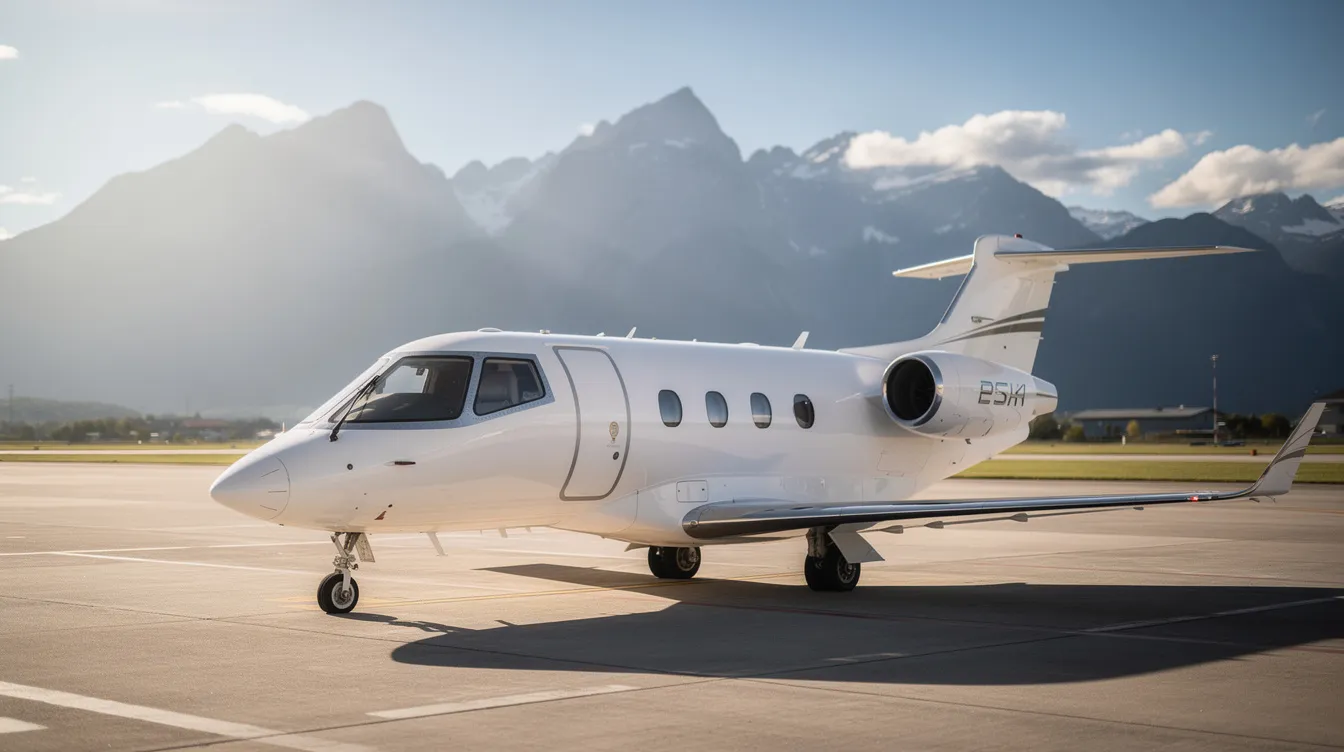
Very Light Jets (VLJs) are the most budget-friendly jets on the market, designed for efficiency and affordability, typically seating 2–5 passengers and ideal for regional flights under approximately 1,200 nautical miles. VLJs offer single-pilot operation, reducing crew costs, and access to smaller regional airports with lower landing fees and faster transit times.
Key points about entry-level jets:
Very light jets (VLJs) typically seat 2–5 passengers, offer ranges under 1,200 nautical miles, and feature single-pilot operation capability
The core “cheap jet” options in 2025–2026 include the Cirrus Vision Jet SF50, Eclipse 500, and Embraer Phenom 100
Budget-conscious buyers should note that the purchase price is only the starting point—operating costs, maintenance costs, and ongoing costs determine true affordability
VLJs represent the most budget-friendly jets designed for short-haul missions like New York–Chicago or Los Angeles–Denver. They’re the entry point for first-time jet owners seeking economical private jets.
Key advantages of the very light jet category:
Single-pilot operation reduces crew costs for owner-operators
Low fuel burn often translates to $500–$1,000 per flight hour in fuel costs
The ability to use shorter runways increases access to regional airports and smaller airports across the U.S.
Specific models worth examining:
Cirrus Vision Jet SF50: Single engine with approximately 1,200 nm maximum range, seating up to 5 adults plus 2 children. The CAPS parachute system provides a major safety differentiator. New pricing runs $1.85–$3.6M; late-2010s pre-owned models often under $2.5M.
Eclipse 500: Twin-engine VLJ with roughly 1,100 nm range. Originally marketed as a sub-$1M aircraft, it’s now commonly the cheapest pre-owned jet available at $1.0–$1.5M for early models.
Embraer Phenom 100: Technically a light jet but priced in the high-end VLJ bracket. Offers 1,178 nm range, spacious cabin with lavatory, and typical used prices of $2.0–$3.5M.
While these are affordable aircraft in acquisition terms, many buyers find they’re better served accessing them through private jet charter or fractional shares rather than purchasing the entire aircraft.
Light jets, such as the Cessna Citation Mustang and Embraer Phenom 100, offer a balance between luxury, comfort, and affordability, making them suitable for business trips or family getaways with greater range and cabin space compared to VLJs.
Light jet characteristics:
Seat 4–8 passengers comfortably
Offer ranges of 1,000–2,000 nautical miles (covering routes like New York–Miami or Dallas–San Diego)
Typical operating costs run $1,200–$2,000 per flight hour, excluding ownership overhead
Notable examples with 2024–2025 market pricing:
Cessna Citation Mustang: Approximately 1,150 nm range, 4 seats, used prices around $1.5–$2.5M. A benchmark affordable private option in the light jet category.
Embraer Phenom 100: 4–6 seats with 1,178 nm range. Modern cabin space and advanced avionics attract first-time buyers at $2.0–$3.5M used.
HondaJet HA-420: Maximum range of 1,200–1,400 nm depending on variant. Pre-owned examples run $2.5–$3.5M while new models approach $5M. Over-the-wing engines deliver excellent fuel efficiency and quiet cabin space, and fractional ownership of the HondaJet can further improve cost efficiency for many flyers.
Many fractional and membership programs—including BlackJet’s fleets—favor modern light jets because they offer the best cost-to-utility ratio for 2–6 passenger business trips, especially in regions with dense city pairs where solutions like fractional jet ownership in Portland can reduce both transit time and cost.
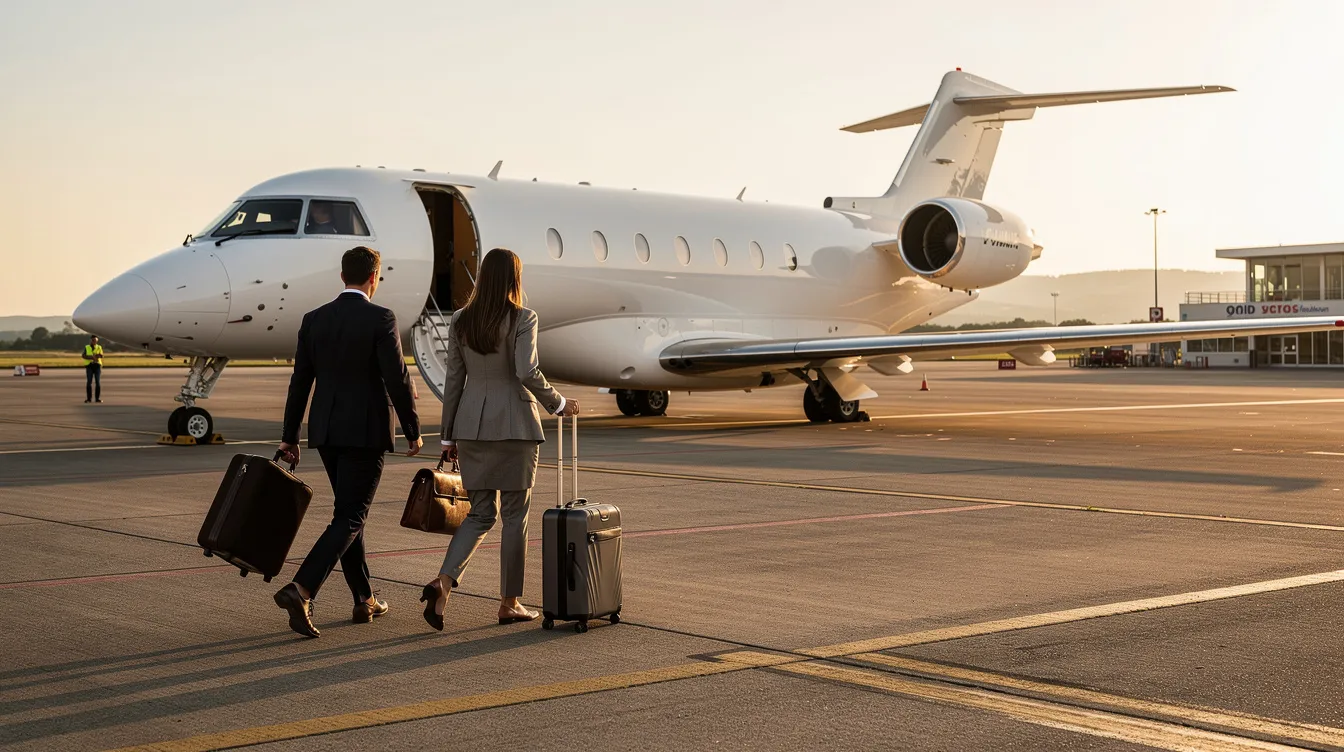
Large jets, like the Dassault Falcon and Gulfstream G200, provide unparalleled luxury and performance, suitable for intercontinental travel, with options such as fractional ownership of the Falcon 2000EX delivering this capability without full-ownership overhead. However, they come with higher purchase prices and significantly increased operating costs compared to smaller jets.
These aircraft offer:
Spacious cabins for 8–16 passengers
Ranges exceeding 3,000 nautical miles, enabling nonstop international flights, particularly in long-range platforms like fractional shares of the Falcon 900LX
Advanced technology and amenities for comfort on long-haul journeys, exemplified by next-generation designs such as fractional ownership of the Falcon 6X
Operating a mid-size or large jet can incur annual costs totaling several hundred thousand dollars, necessitating diligent financial planning for sustainable ownership.
The emotional appeal of “owning a private jet” is powerful, but financial reality tells a different story. Most executives need only 25–150 flight hours annually—far below the threshold where whole-jet ownership makes economic sense.
Buyer purchases a fraction (1/16, 1/8, 1/4) of an aircraft, translating to a fixed number of hours (typically 25–200 per year)
Provider handles aircraft management, maintenance, crew salaries, insurance, and scheduling
The owner pays an initial share price, monthly management fees, and hourly occupied flight charges
BlackJet offers two primary models, alongside an additional lease option outlined in its program comparison for Reserve, Equity, and Lease options:
Equity Fleet: Clients own an equity share in a specific aircraft type, gaining potential tax benefits, priority access, and custom aircraft sourcing. Ideal for predictable 50–150 hours per year, especially when paired with expert guidance on tax implications for fractional jet owners.
Reserve Fleet: Pay-as-you-go access without aircraft ownership, suited for 25–75 hours annually where flexibility matters most, though it’s still important to understand the total cost of fractional jet ownership when comparing long-term options.
Comparing costs versus full ownership, especially when evaluating financing structures, often leads buyers to explore fractional jet ownership financing options:
Owning a “cheap” $2M VLJ can require $300K–$600K+ per year in fixed costs and variable expenses at moderate usage, which makes it essential to compare that burden with the full cost breakdown of fractional jet ownership
A 1/8 fractional share (roughly 100 hours/year) spreads acquisition and fixed costs across multiple owners, often cutting effective hourly cost substantially; a dedicated guide to 1/8th fractional ownership can help quantify this trade-off
Non-financial benefits include guaranteed availability, backup aircraft during maintenance, and professional management—supported by highly trained pilots and crews dedicated to safety and service—removing the hassle of managing your own affordable aircraft.
These three models represent the primary “smart access” pathways for cost-effective private aviation in the U.S. and globally.
For readers new to the model, a detailed fractional jet ownership glossary can help clarify common terms and cost components.
Ideal for 50–200 hours/year
Offers ownership benefits, better scheduling priority, and potential depreciation/tax advantages
Works well for frequent flyers seeking predictability
Travelers often compare them directly against fractional jet ownership vs membership programs to decide which structure matches their usage.
Prepay 25–50 hours at locked-in hourly rates, often with lower repositioning fees
Suited for 25–100 hours/year with predictable needs
No ownership benefits, but simpler commitment
Pay per trip with no long-term commitment
Best for under 25–50 hours/year or irregular, last-minute flying
Charter flights can seem cheaper initially, but repositioning fees, fuel surcharges, and peak-day surcharges raise effective hourly costs, and fractional programs add further complexity around liability coverage in shared jet ownership
Booking two separate "one-way" legs can avoid the high ground wait fees associated with round-trip tickets
Choosing smaller regional airports rather than major commercial airports can result in lower landing fees and faster transit times
Chartering a private jet bypasses the congestion and delays often found at commercial flight terminals, offering a more streamlined and efficient travel experience
Fractional hourly rates often sit near or below comparable jet card rates over a 5-year period for those flying more flights consistently. BlackJet Fractional Jet Ownership specializes in modeling these 5–10 year cost scenarios, helping clients find their optimal path.
Additionally, safety certifications from independent auditors such as ARGUS or WYVERN are essential when selecting an operator for private jet travel, ensuring high standards of safety and service, just as when evaluating the best fractional jet ownership programs for smart investors.
The acquisition price—say, $1.5M for a used Citation Mustang—is merely the down payment on private jet ownership. Annual operating costs often surprise first-time jet owners.
Cost Category | Estimated Annual Range |
|---|---|
Fuel | $300–$700 per flight hour |
Maintenance | $50,000–$200,000 |
Insurance | $15,000–$30,000 |
Hangar/Storage | $600–$6,000 (varies $50–$500/month) |
Crew costs (pilots) | $120,000–$250,000 |
A “cheap” VLJ owner flying 100 hours annually faces all-in costs of $350,000–$600,000 per year.
This translates to $3,500–$6,000 per flight hour when all factors are included.
Compare this to fractional ownership, where clients pay only a portion of fixed costs, often reducing per-hour expense substantially.
Older jets (1980s–1990s Learjets or Falcon 50s) may be acquired for $1M or less, but 12-year structural inspections and engine overhauls frequently run six figures per engine—sometimes exceeding $200,000, which materially affects the total cost of fractional jet ownership when such aircraft are used in shared programs, whether they’re based in mature markets or emerging hubs like Bhubaneswar private jet access and ownership options.
Storage costs for an aircraft can range from $50 to $100 per month for outside storage to $100 to $500 for a hangar, which should be considered when evaluating the total cost of ownership.
The smarter calculation: evaluate the total cost of use per hour over 5–10 years rather than focusing solely on initial purchase price, especially if you view fractional jet ownership as an investment within a broader portfolio.
Many first-time jet owners underestimate the other expenses that accumulate quickly in private travel.
Common hidden or under-appreciated costs, which can be mitigated in some floating fleet fractional ownership structures in both North American and Asian markets, such as fractional jet ownership in Kaohsiung, include:
Landing and handling fees: Often $150–$500+ per airport visit, higher at major hubs or international locations
Repositioning costs: Paying to move aircraft to pick you up or return to base
De-icing charges: Significant during winter operation worldwide in northern climates
Interior refurbishment: Cabin updates, Wi-Fi connectivity hardware, and paint refresh every several years
Advanced avionics upgrades: Compliance with mandates like ADS-B and TCAS, often addressed in detail within an aircraft fractional ownership sample contract
Fractional and managed programs typically bundle or clearly disclose such fees upfront, providing more predictable budgeting than standalone ownership.
While not technically jets, modern turboprops and single-engine aircraft offer the most economical path to private flying on short regional flights under 500–800 nautical miles.
Examples: Beechcraft King Air 100/200, Pilatus PC-12, Daher TBM 910/960, and Mediterranean-focused programs such as Ibiza private jet access and ownership options, as well as high-performance turboprops available via fractional ownership of the TBM 850
Used turboprops from the 1970s–1990s start around $700,000–$3M, making them attractive candidates for region-focused programs such as fractional jet ownership from Kelowna
Fuel and maintenance costs per hour run 20–40% lower than similar-size jets, a key factor for owners flying from efficiency-focused bases like Calgary International’s fractional jet programs
Cessna 150/152: $20,000–$40,000 purchase price with approximately $8,500 annual fixed costs
Piper Cherokee/Archer: $30,000–$80,000 pre-owned, practical for 2–4 passengers
BlackJet focuses on jet-class access for business travelers, but these aircraft types help readers understand where jets begin making private aviation economically justified versus lower-cost options, particularly in fast-growing hubs served by programs such as fractional jet ownership in Austin.
Many travelers simply charter, enjoying complete luxury and privacy without committing capital to aircraft ownership, while others step into shared-ownership models where understanding essential contract terms in fractional jet ownership is critical.
Aircraft Category | Hourly Rate Range |
|---|---|
Turboprops/VLJs | $1,800–$4,000 |
Light jets | $2,000–$6,000 |
Midsize jets | $4,000–$8,000 |
Large jet/long-range | $8,000–$14,000+ |
Note: Charter pricing often includes minimums (two-hour daily minimums), positioning time, overnight fees, and peak-day surcharges.
While BlackJet specializes in fractional and membership-style access rather than pure charter brokerage, many clients migrate from ad-hoc private charter to fractional when crossing 25–50 hours per year—seeking more predictable cost and guaranteed access, especially in aviation-intensive regions like the Pacific Northwest, where fractional jet ownership in Seattle supports frequent regional hops.
The following profiles help readers map themselves to a cost-effective solution through planning ahead.
Families centered in Central Florida, for instance, might consider fractional jet ownership in Orlando once trip frequency and spend begin to rise, or explore nearby coastal options such as fractional access from Fernandina Beach for easier island and East Coast getaways.
Flies private 5–15 hours/year for family vacations or special events
Most economical approach: On-demand charter, occasional empty leg flights, no ownership commitment
Avoid jet cards or fractional at this volume
For example, someone expanding operations around the Southeast might explore fractional jet ownership in Atlanta as a scalable base, or leverage Midwest-centric networks like fractional jet options at Atlantic Municipal to cover secondary markets efficiently.
U.S.-based founder doing regional trips 2–3 times monthly, totaling 30–60 hours/year
Best fit: Reserve-style program or jet card for significant savings on consistent travel
Evaluate fractional if growth suggests 75–100 hours within 2–3 years
Leaders in fast-growing Western markets may find fractional jet ownership in Phoenix aligns well with multi-state travel patterns, just as coastal executives might prefer regionally tuned programs such as fractional jet ownership in Virginia Beach.
Runs multi-state operation, flying 75–150 hours/year with 3–6 executives per trip
Most economical over 5–10 years: Fractional ownership in an equity fleet of light/mid-size jet aircraft
Gains predictable access and potential tax benefits versus whole-jet ownership costs
Similarly, executives based in the Northeast Corridor might evaluate fractional jet ownership in Pittsburgh or leverage West Coast networks like fractional jet ownership in Seattle as part of a hub-and-spoke strategy. Over time, you may also need to plan an exit, making guidance on selling a fractional jet ownership share important and reviewing how international bases such as Avord AB private jet access and ownership options structure their programs.
200+ hours/year, often international routes
Whole-jet ownership may begin making sense, supplemented with fractional or charter for overflow or different aircraft type needs
Detailed cost modeling essential before committing
BlackJet specializes in running these comparisons for prospects based in the U.S. or with global private jet travel needs, helping identify the most budget-friendly jets and access strategies, whether that’s a light-jet share out of Tennessee via fractional jet ownership in Nashville or a larger-cabin solution elsewhere.
Typically a pre-owned VLJ such as an Eclipse 500 ($1.0–$1.5M) or older Cessna Citation Mustang ($1.5–$1.8M). The Cirrus Vision Jet SF50 remains one of the most budget-friendly new private jets available, with prices typically ranging from about $1.85 million to $3.6 million depending on the aircraft’s condition and year of manufacture.
Full ownership requires six-figure annual operating budgets plus acquisition costs. Even most budget-friendly jets demand $300K+ yearly expenses, making private jet ownership unrealistic at that income level. Structured access like shared flights offers a viable path.
For flyers under 200 hours/year, fractional or membership programs typically deliver lower total cost per hour over 5–10 years when all fixed and variable ownership costs are accounted for.
Yes, for flexible travelers seeking luxury travel at reduced rates. They offer 50–75% discounts versus regular charter. However, routes and timing depend on repositioning needs, making private aviation enthusiasts relying on them for business use often disappointed.
Consistent usage between 25–150 hours annually, value placed on predictable scheduling, and desire to avoid fleet management are strong indicators. A consultation with specialists like BlackJet can clarify the numbers through high-performance cost modeling.
“Cheap private jet” solutions are less about owning a bargain airplane and more about matching the right access model to your actual flying hours and routes through advanced technology in program design.
Key takeaways:
Full ownership of a “cheap” jet ($1.5M–$3.6M VLJ) can still cost hundreds of thousands per year to operate, reducing any potential significant savings on acquisition
Fractional aircraft ownership, reserve fleets, and membership programs provide more predictable—and often lower—all-in costs for 25–150 hours/year
Smart planning over a 5–10 year horizon beats chasing the lowest sticker price, making private aviation accessible without requiring the entire aircraft purchase
Consider your routes, passenger counts, and frequency before committing to any model
Ready to explore the smarter way to fly private? Visit FractionalJetOwnership.com to learn how fractional ownership can transform your travel experience. Schedule a consultation to model your next 3–5 years of travel and discover whether an Equity Fleet share, Reserve Fleet access, or hybrid strategy delivers the most cost-effective “cheap private jet” solution for your situation.
