January 19, 2026
In a private aviation market increasingly focused on efficiency, flexibility, and intelligent cost management, very light jets continue to play a critical role. Among them, the Eclipse jet family stands out for redefining how owners and operators approach private air travel. Designed for performance without excess and luxury without inefficiency, Eclipse aircraft have earned a unique position in the U.S. and global private jet market.
It is important to clarify that the term 'eclipse plane' in aviation refers to the Eclipse jet family, distinct from the astronomical 'ecliptic plane.' The ecliptic plane is Earth's orbital path around the Sun and is crucial for determining the occurrence of eclipses. Eclipses can only occur when the Moon crosses this ecliptic plane near the Sun-Earth line. The Moon's orbit is tilted approximately 5 degrees relative to the ecliptic plane, and the two points where the Moon's orbit crosses this plane are called nodes. Solar eclipses happen when a New Moon is at a node, placing the Moon between Earth and the Sun, while lunar eclipses occur when a Full Moon is at a node, placing Earth between the Sun and the Moon. These eclipse seasons occur roughly every six months when the alignment of the nodes with the Sun happens.
For individuals and organizations evaluating fractional jet ownership, charter alternatives, or light jet partnerships, understanding what makes the Eclipse platform distinctive is essential. The company, Eclipse Aviation, intended the Eclipse 500 project to make jet ownership accessible to a broader market. This guide explores the history, performance, features, and ownership considerations of the Eclipse 500 and its evolution, offering a clear, authoritative perspective for informed decision-making. The Eclipse 500 project was a significant initiative in the private jet industry.
Eclipse Aerospace is widely recognized as a pioneering force in the very light jet category. The company’s roots trace back to Eclipse Aviation, which set out to challenge traditional assumptions about private jet design by prioritizing efficiency, simplified operations, and lower operating costs. Eclipse Aviation was founded in 1998 to develop the Eclipse 500, which was based on the Williams V-Jet II.
The original Eclipse vision centered on creating a jet that could deliver jet-level performance while remaining accessible to a broader range of owners and operators. That philosophy led to the development of the Eclipse 500, an aircraft that redefined expectations for fuel efficiency and operational simplicity in private aviation. Eclipse decided to pursue innovative design and manufacturing techniques, which set the project apart from competitors.
One key innovation was the building process of the Eclipse 500, which was revolutionized by taking inspiration from the automotive industry. This approach led to a more robust cabin design that could be assembled by one crew in a single shift, significantly improving cost-effectiveness and production efficiency. The airframe was designed to be cost-effective by utilizing anti-corrosion bonding techniques alongside friction stir welding (FSW), a method Eclipse Aerospace pioneered in aircraft structures since receiving FAA approval in 2002. FSW is approximately 10 times faster than manual riveting and provides a continuous join for improved structural rigidity.
The Eclipse 500 cockpit features advanced glass cockpit technology and an integrated avionics package. Later aircraft were equipped with the Avio NG system, which includes the Avio Total Aircraft Integration system. This system simplifies flying by incorporating and combining every system on the aircraft, featuring interactive and automatic controls that enhance pilot situational awareness and ease of operation.
Today, the Eclipse program is owned and supported by AML Global Eclipse, which provides ongoing maintenance, parts support, and technical expertise for Eclipse aircraft worldwide. Eclipse Aerospace acquired the assets of Eclipse Aviation in August 2009 and Eclipse announced the Eclipse 550 update in October 2011. The Eclipse 550 was introduced as an upgrade to the Eclipse 500, featuring improved avionics and systems, further enhancing the platform's capabilities.
Eclipse Aviation entered Chapter 11 bankruptcy on November 25, 2008, and Chapter 7 liquidation on February 24, 2009; Eclipse Aerospace was merged into One Aviation in April 2015, which later entered Chapter 7 bankruptcy liquidation in February 2021. Eclipse Aviation developed a second aircraft, the Eclipse 400, but went bankrupt before production started.
As a result, Eclipse jets have become a popular choice among private owners, charter operators, and fractional programs seeking dependable performance without the financial burden of larger aircraft categories.
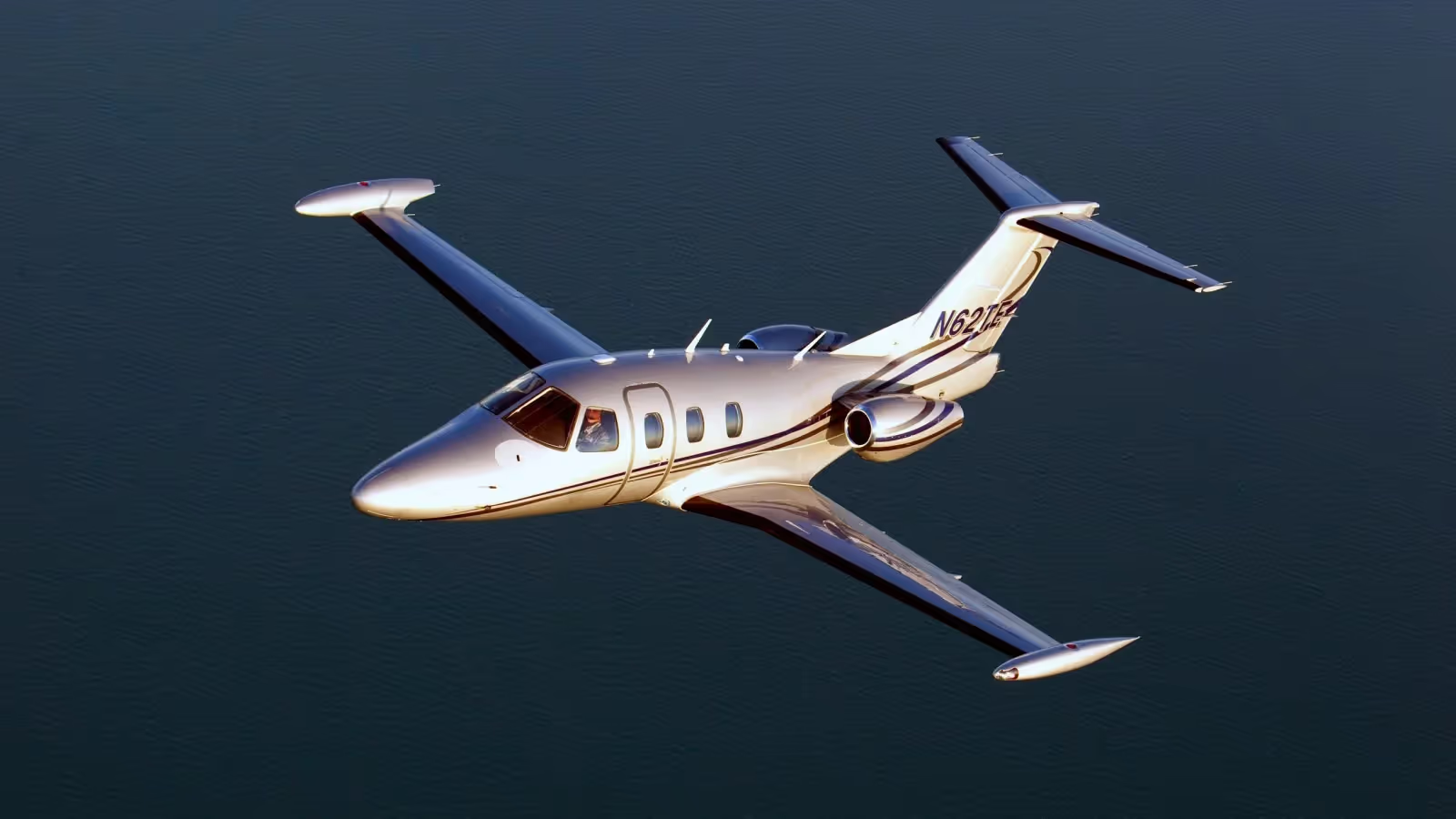
The Eclipse 500 airplane is the cornerstone of the Eclipse jet lineup and remains one of the most recognized very light jets (VLJ) in private aviation. Originally produced by Eclipse Aviation of Albuquerque, New Mexico, the airplane was designed to balance speed, range, and operating efficiency, delivering a compelling solution for short to medium-haul missions.
The Eclipse 500 prototype completed its first flight on August 26, 2002, using Williams EJ22 engines before switching to Pratt & Whitney Canada PW610F engines in 2004. The design and certification process were completed before the aircraft entered full production.
The Eclipse 500 achieves a maximum cruise speed of approximately 370 knots while maintaining impressive fuel economy for its class. Power is provided by Pratt & Whitney Canada PW610F engines, which are engineered specifically for efficiency, reliability, and reduced maintenance complexity.
One of the most distinctive aspects of the Eclipse jet is its all-metal airframe with a T-tail and straight wings. The Eclipse 500 initially had an airframe life rated at 10,000 hours, which was later increased to 20,000 hours through additional fatigue testing. This durability supports long-term operational use and enhances the aircraft's value proposition.
With a range of roughly 1,125 nautical miles, the Eclipse 500 is particularly well suited for regional travel, point-to-point business flights, and high-frequency missions where time efficiency matters most.
Within the private aviation ecosystem, the Eclipse 500 competes directly with other very light jets such as the Citation Mustang and the Phenom 100. While each aircraft serves a similar mission profile, the Eclipse platform distinguishes itself through operating efficiency and simplified ownership economics. Eclipse marketed the aircraft to general aviation aircraft owners who had not previously owned a jet, placing it in competition with high-end piston aircraft and turboprop models.
The private jet market has experienced sustained growth in recent years, driven by demand for privacy, schedule control, and reduced reliance on commercial airlines. At the same time, buyers are increasingly cost-conscious, seeking aircraft that deliver consistent value rather than excess capacity. The intended market for the Eclipse 500 was budget-conscious buyers seeking an affordable entry into jet ownership.
The original price of the Eclipse 500 was $775,000, but this increased to $2,150,000 by May 2008 due to higher production costs. Today, the price of a used Eclipse 500 can range from $750,000 to $940,000, depending on age and condition.
In this environment, very light jets have gained traction as a strategic alternative to larger aircraft. The Eclipse jet’s combination of speed, efficiency, and lower operating costs positions it as a practical solution for both business and personal travel.
By May 2007, Eclipse Aviation faced significant financial struggles despite a backlog of nearly 2,700 orders for the Eclipse 500. Production was halted in October 2008 due to lack of funding, impacting delivery schedules and customer confidence.
Charter rates for the Eclipse 500 vary depending on the length of the journey and the airports involved, offering flexible options for private travelers and businesses seeking efficient regional transport.
For fractional jet ownership structures, these characteristics are particularly valuable. Lower fuel burn, predictable maintenance profiles, and operational flexibility translate directly into improved cost control across shared ownership models.
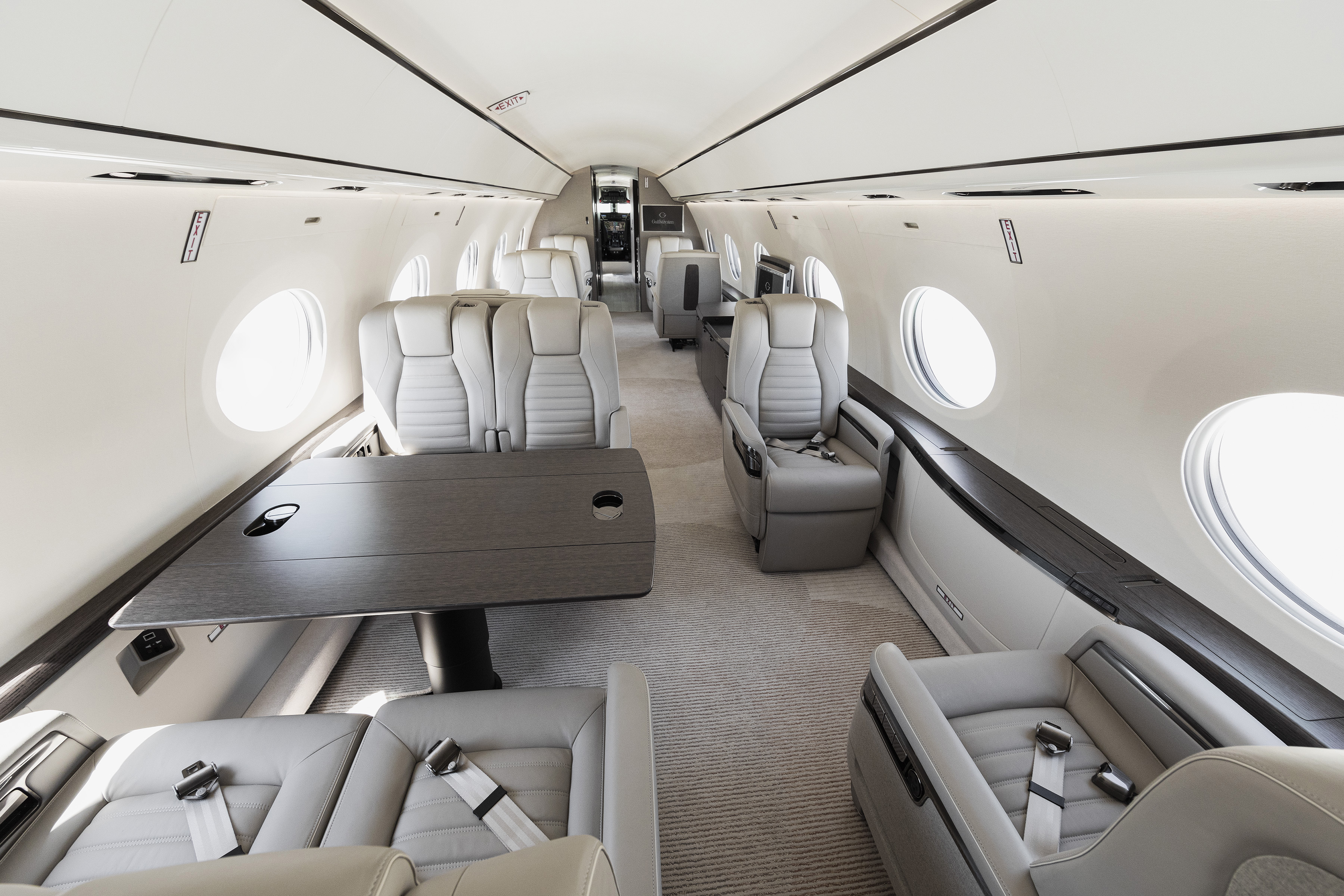
The Eclipse 500 was engineered to deliver comfort and capability without unnecessary complexity. Inside the cabin, the aircraft offers seating for up to six passengers in a thoughtfully designed layout that maximizes space within the very light jet category. The interior features premium leather seats, LED lighting, and a work/dining table, providing a refined environment suitable for both business and leisure.
Advanced avionics are a defining feature of the Eclipse platform. A modern glass cockpit integrates flight displays, navigation systems, and aircraft monitoring into a streamlined interface that enhances situational awareness for pilots.
Safety remains a core design priority. The Eclipse 500 incorporates systems such as an anti-skid braking system, redundant flight controls, and a robust engine architecture designed to perform reliably across a wide range of operating conditions.
Fuel efficiency is another standout feature. With average fuel consumption near 80 gallons per hour, the Eclipse 500 significantly reduces variable operating costs compared to larger jets, making it an attractive option for owners focused on long-term value.
Performance is where the Eclipse 500 truly demonstrates its strengths. The aircraft’s max cruise speed of approximately 370 knots enables efficient regional travel, while its maximum certified altitude of 41,000 feet allows operations above most weather systems and commercial traffic. The Eclipse 500 has a range of 1,125 nautical miles under NBAA IFR reserves, making it capable of supporting a variety of mission profiles at high altitude.
The Eclipse 500 offers a max payload of nearly 1,000 pounds, supporting flexible mission profiles that include business travelers, luggage, and specialized equipment. It is powered by two Pratt & Whitney Canada PW610F turbofan engines, each providing 900 lbs of thrust. The aircraft is also capable of operating safely on one engine in the event of an emergency. Its avionics suite includes autopilot functionality and weather radar, further enhancing operational capability.
Single-pilot operation is another key advantage. The Eclipse jet was designed with simplicity and automation in mind, making it well-suited for owner-operators, a single crew, or professional flight crews in charter and fractional programs.
Operational costs for the Eclipse 500 are competitive, with maintenance costs that can be calculated per flight hour. These capabilities allow the Eclipse 500 to perform reliably across a wide range of missions, from quick executive hops to multi-city itineraries that demand consistency and speed.
While efficiency is central to the Eclipse philosophy, comfort is never an afterthought. The Eclipse 500 cabin is designed to provide a refined, quiet environment suitable for both work and relaxation. Much like an SUV, the Eclipse 500 combines versatility, spaciousness, and practicality for travel, making it a user-friendly choice for a wide range of destinations.
Premium leather seating, modern LED lighting, and an advanced climate control system contribute to a comfortable onboard experience. Despite its compact size, the aircraft offers a practical cargo compartment with approximately 16 cubic feet of storage capacity.
The cabin layout emphasizes accessibility and ease of movement, supporting productivity during flight without sacrificing comfort. For passengers accustomed to larger aircraft, the Eclipse jet offers a surprisingly spacious, functional interior for its category.
This balance of comfort and efficiency makes the Eclipse 500 an appealing option for travelers who value substance over excess.
Long-term ownership success depends heavily on maintenance and support infrastructure. AML Global Eclipse plays a central role in sustaining the Eclipse fleet through comprehensive service programs and technical expertise. Eclipse offered its Jet Complete program to guarantee a maintenance cost of $209 per flight hour for owners flying 300 to 3,000 hours over three years. ACMI wet lease rates for the Eclipse 500 vary based on the age of the aircraft, lease term length, and number of guaranteed block hours.
Support services include routine inspections, scheduled maintenance, component repairs, and avionics upgrades. The maintenance process and rigorous test procedures are critical in ensuring aircraft reliability and safety. These programs are designed to minimize aircraft downtime and provide predictable operating costs for owners and operators.
AML Global Eclipse’s experienced engineering teams ensure Eclipse aircraft remain compliant with regulatory standards and benefit from ongoing improvements and enhancements. This commitment to support has been instrumental in preserving the Eclipse platform’s reputation and residual value.
For fractional jet ownership participants, reliable maintenance support translates directly into higher dispatch reliability and greater confidence in shared aircraft utilization.
When it comes to private jet travel, safety and security are paramount—and the Eclipse 500 sets a high standard among revolutionary very light jets. Eclipse Aerospace has engineered this aircraft with a comprehensive suite of safety features, ensuring peace of mind for both pilots and passengers on every flight.
A standout feature is the anti-skid braking system, which delivers superior control and stability during landings, even on shorter or wet runways. This advanced system, rarely found in other very light jets, gives pilots the confidence to operate in a wider range of conditions, making the Eclipse 500 a highly competitive choice for business and charter operations.
The Eclipse 500’s cabin is another testament to its safety-first design. Assembled using cutting-edge manufacturing techniques inspired by the automotive industry—such as friction stir welding—the aircraft’s structure is both robust and lightweight. This approach not only enhances crashworthiness but also contributes to the jet’s cost-effective and efficient performance.
Under the hood, the twin Pratt & Whitney Canada PW610F engines are engineered for reliability and fuel efficiency, each producing 900 pounds of thrust. Their low fuel consumption not only reduces operating costs but also minimizes the risk of fuel-related emergencies, supporting safe and efficient flying hour after hour.
Inside the cockpit, pilots benefit from an advanced avionics suite that provides real-time data, system alerts, and intuitive controls. This technology streamlines single-pilot operations, allowing for quick decision-making and enhanced situational awareness—key factors in safe private jet flights.
Eclipse Aviation, and now AML Global Eclipse, have subjected the Eclipse 500 to rigorous testing, analysis, and certification processes. The aircraft is fully certified for single-pilot operation and has accumulated an impressive record of safe flight hours across diverse operating environments.
The Eclipse 500 aligns naturally with fractional aircraft ownership models. Its efficient operating profile, manageable acquisition costs, and flexible mission capabilities make it well-suited for shared ownership programs.
Fractional structures benefit from aircraft that can be flown frequently without disproportionate cost increases. The Eclipse jet’s fuel efficiency and simplified maintenance requirements support this model while delivering jet-level performance.
Additionally, the aircraft’s ability to operate from shorter runways expands access to regional and secondary airports, increasing scheduling flexibility for fractional owners across the United States.
The Eclipse jet family represents a thoughtful approach to private aviation—one that prioritizes performance, efficiency, and operational intelligence over unnecessary scale. For individuals and organizations exploring private jet ownership, charter alternatives, or fractional participation, the Eclipse 500 offers a compelling balance of capability and value.
As the private aviation market continues to evolve, aircraft that deliver consistent performance with disciplined cost structures will remain in high demand. The Eclipse platform exemplifies this approach, making it a strong contender for modern private flyers.
Ready to explore the smarter way to fly private? Visit https://www.fractionaljetownership.com/ to learn how fractional jet ownership with aircraft like the Eclipse can transform the way private aviation is experienced.
