
April 26, 2026
For corporate leaders and high-net-worth individuals who measure success in outcomes rather than hours logged, how you travel matters as much as where you’re going. Executive jet flights have evolved from a symbol of status to a strategic tool for reclaiming time and maintaining competitive advantage.
This guide is intended for corporate leaders, business owners, and high-net-worth individuals considering private aviation solutions. It covers executive jet flight options, costs, safety, and ownership models.
BlackJet Fractional Jet Ownership specializes in fractional jet ownership and shared-use programs for executive travel throughout the United States and globally, supported by a global network of operational support and aircraft. Whether you’re considering charter aircraft, jet cards, or fractional ownership, BlackJet offers a range of options to ensure flexibility, safety, and access tailored to your travel needs.
Executive jet flights involve the use of private jets primarily for business-related travel, tailored to the traveler’s itinerary.
Executive jet flights represent point-to-point, non-scheduled private aviation services designed specifically for corporate executives, business owners, and high-net-worth travelers. Unlike commercial air travel with its fixed schedules and crowded terminals—or ad-hoc charter flights booked sporadically without any structured program—executive jet flights typically operate through jet card memberships, fractional ownership arrangements, or managed fleet programs that provide predictable access and consistent service levels. A private plane offers a premium, customizable travel option, delivering unmatched convenience and flexibility for both business and leisure travelers, and allowing for seamless, on-demand travel experiences tailored to your schedule.
Time savings: Reduced airport processing (arriving just 15 minutes before departure at private terminals versus 90+ minutes at major commercial hubs)
Privacy: For sensitive business discussions without shared cabin spaces
Enhanced productivity: Quiet cabins equipped with Wi-Fi and work surfaces
Direct access: Over 5,000 U.S. airports compared to roughly 500 commercial destinations
Flexible scheduling: The aircraft waits for the passenger, not the reverse
On-demand charter services enable travelers to bypass long security lines and enjoy a more personalized travel experience, making it an attractive option for both business and leisure.
Executive jet services are tailored to meet individual needs, offering personalized amenities and travel solutions that cater to each client’s unique preferences and requirements.
BlackJet Fractional Jet Ownership specializes in fractional jet ownership and shared-use programs for executive travel throughout the United States and globally. This article covers the essential considerations for corporate travelers evaluating executive jet options: costs across different models, aircraft types for various mission profiles, safety and reliability standards, and how to determine whether charter, jet cards, or fractional ownership best fits your travel patterns.
Consider a typical Monday business trip from New York to Chicago. On commercial airlines, you’re looking at arriving 90-120 minutes early at Newark or JFK for check-in and long security lines, potential weather delays, middle seats, and ground transportation on both ends. Door-to-door, you’ve invested 4-5 hours—often more with connections or congestion. In contrast, the executive jet flight journey is designed to be seamless, comfortable, and efficient from start to finish, prioritizing your preferences and ensuring a relaxed, luxurious experience.
Now contrast that with an executive jet departing from Teterboro. You arrive 15-30 minutes before departure at a private terminal, board directly, and land at Chicago Midway or DuPage Airport closer to your final destination. Total travel time: under 3 hours, with the option for a same-day return.
Private terminals: Eliminate 1-2 hours of commercial queues and boarding procedures
Direct routing: Removes layovers that add 1-3 hours to commercial itineraries
Smaller destination airports: Reduce ground transportation time by 30-60 minutes
Same-day out-and-back trips (like Dallas-Houston-Dallas at under 1 hour each way) become realistic rather than logistically impossible
Private jet travel can save travelers 90–180 minutes on many business routes due to expedited check-in, direct access to smaller airports, and flexible routing, while commercial flights often involve longer security lines and layovers.
Executives leverage quiet cabins with Wi-Fi connectivity for video calls, contract reviews, or team meetings. The spacious cabin environment transforms flight time from wasted hours into productive work sessions, supported by highly qualified, extensively trained pilots and crews focused on safety and service. Unlike commercial flights, where you’re sandwiched between strangers, a private aircraft provides the privacy needed for sensitive discussions and secure document review.
Fewer touchpoints mean reduced exposure to illness—a factor many executives now weigh seriously.
Private terminals handle discrete boarding for high-profile travelers, while the absence of crowds protects both conversations and documents from unwanted observation.
Route Example: Flying Teterboro to West Palm Beach takes approximately 2.5 hours nonstop on a private jet, landing close to your destination. The commercial alternative via Newark to Miami involves 2+ additional hours of travel, plus ground transportation from MIA—turning a half-day into a full-day commitment. Private jets can access over 5,000 airports in 120 countries, allowing for more direct routes and reducing overall travel time compared to commercial airlines, which typically serve fewer airports.
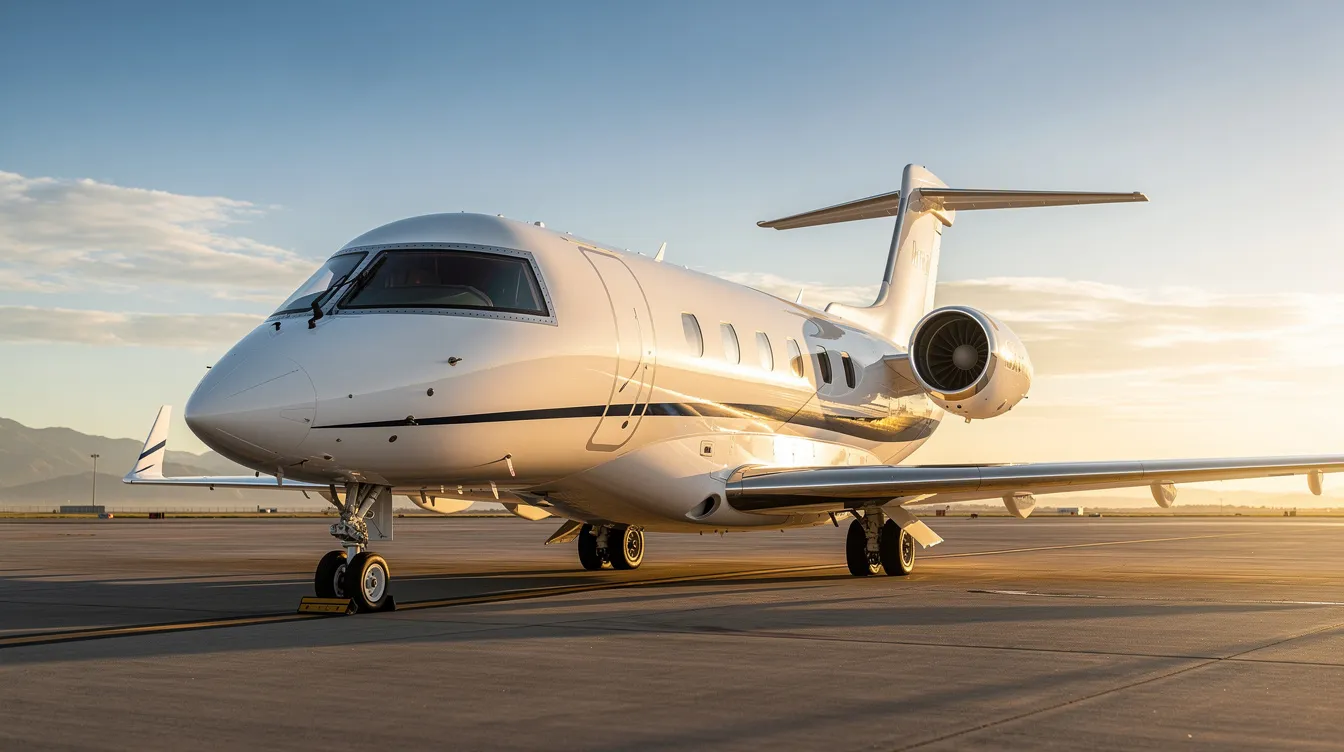
Different executive jets serve different mission profiles—from 300-mile regional business trips to transcontinental journeys and international flights. Options include charter aircraft, private jet rental, and private planes, each offering flexibility and tailored service for various travel needs. A small plane, such as a regional or piston aircraft, is ideal for short trips, offering affordability and accessibility to regional airports. Private jets are categorized into several classes, including light jets, midsize jets, heavy jets, and ultra-long-range jets, each designed for different travel needs and distances. Private jet charters can accommodate a variety of needs, including business travel, leisure trips, and emergency situations, providing flexibility and personalized service. Selecting the right aircraft means matching passenger capacity, range, cabin amenities, and cost to your actual travel patterns.
Examples: Cessna Citation CJ3+, Embraer Phenom 300
Passenger capacity: Accommodates 4-8 passengers comfortably
Range: Nonstop range of up to 1,500 miles, ideal for short to medium-haul flights
Use case: Small planes like these are perfect for short-distance and regional travel, providing efficient access to small airports and reducing travel time
Ideal routes: Los Angeles to Denver (850 miles), New York to Chicago (700 miles)
Cabin: Compact cabins with basic lavatories
Hourly rates: Typically $3,500-$5,500
Examples: Citation XLS+, Hawker 400XP
Passenger capacity: Seat 8-10 passengers
Range: Up to 2,300 statute miles (up to 5 hours)
Use case: Suitable for medium-haul, like Boston to Dallas (1,500 miles)
Cabin: Enclosed lavatories, galleys for catering, more cabin space
Hourly rates: Typically $5,000-$8,000
Examples: Bombardier Challenger 3500, Embraer Praetor 500
Passenger capacity: Carry 10-12 passengers
Range: Up to 4,000 statute miles (7 hours)
Use case: Perfect for cross-country like LA to New York (2,450 miles) or Teterboro to Aspen
Cabin: Club seating, work tables, high-speed Wi-Fi, sometimes showers
Hourly rates: Typically $8,000-$12,000
Examples: Gulfstream G600, Bombardier Global 6500
Passenger capacity: Handle 12-19 passengers
Range: As a long-range jet, designed for long-range travel with an average range of about 7,000 miles, making them ideal for international flights and accommodating larger groups
Use case: Range of 6,900-7,500 statute miles (9-12 hours)
Ideal routes: Enable New York to London (3,000 miles) or LA to Tokyo (5,500 miles)
Cabin: Full lie-flat beds, conference areas, advanced connectivity
Hourly rates: $12,000+
Private jet cabins should facilitate face-to-face meetings with configurations like club seating or conference-style tables.
Enclosed lavatories, deployable work tables, satellite Wi-Fi (often 50-100 Mbps), and customizable catering from gourmet meals to productivity-focused snacks are standard.
High-speed Wi-Fi is essential for video conferencing and accessing secure company servers in executive jets.
BlackJet Fractional Jet Ownership helps clients match aircraft type to their annual flight pattern. The right size jet should be chosen based on the mission: light jets for short-haul trips, while mid or heavy jets are used for longer, international flights. If you fly 25-75 hours yearly with most legs under 2.5 hours, a light jet or midsize share likely fits best. For 75-150 hours with regular cross-country legs, a fractional share of a Falcon 2000EX super midsize jet or other heavy jets may deliver better value.
Corporate travelers prioritize safety and reliability at least as much as comfort. When chartering a private jet or investing in fractional ownership, understanding the safety infrastructure and essential liability and insurance coverage in fractional jet ownership behind your flight matters.
ARGUS Platinum or WYVERN Wingman ratings indicate operators undergo rigorous third-party audits for proactive safety cultures
Part 135 (charter) or Part 91K (fractional) FAA compliance mandates specific maintenance schedules, inspections, and crew qualifications
Audited maintenance programs include 100-hour, annual, and phase inspections using OEM parts
ARGUS-rated fleets report dispatch reliability exceeding 99.5%
Private jet operators implement a comprehensive 11-step safety risk assessment for each flight to ensure passenger safety
Private aviation safety standards often exceed those of commercial airlines, with operators continuously evolving their safety protocols to enhance physical safety and cybersecurity
Captains typically hold 5,000-10,000+ minimum flight hours, with top-tier services requiring a minimum of 3,000 flight hours, well above legal minimums
Pilots of private jets typically have an average of over 20 years of experience, accumulating more than 9,000 flight hours throughout their careers, exceeding industry requirements
First officers maintain 1,500-3,000 hours minimum
Recurrent simulator training every 6-12 months
Crew Resource Management (CRM) protocols for coordinated decision-making
Discrete FBO terminals with identity verification
Encrypted Wi-Fi connections for secure work
No-recording policies and secure data wiping procedures
Private terminals minimize public visibility for high-profile travelers
BlackJet Fractional Jet Ownership works exclusively with vetted operators and managed fleets that exceed baseline FAA standards for executive operations. This includes advanced safety systems like TCAS collision avoidance, enhanced vision systems, and RAIM GPS integrity for international network operations.
High dispatch reliability rates (95-99% on-time performance) with contingency plans that include backup aircraft solutions available within 2-4 hours for mission-critical trips, all governed by essential contract terms in fractional jet ownership agreements that define service levels and remedies.
Transparent pricing, including fuel surcharges, landing fees, taxes, and positioning charges, is essential when evaluating executive jet service quotes. Understanding the full cost structure, including the complete cost breakdown of fractional jet ownership, ensures accurate budgeting and comparison.
In 2026, private airplane rental costs typically range from $2,000 to over $16,000 per flight hour, influenced by aircraft type, size, and additional fees. Typical one-way prices for international private jet charters range from $8,000 to $140,000, depending on aircraft type and distance, with options for discounted 'empty leg' flights available to reduce costs.
The “best” way to access executive jet flights depends primarily on your annual flight hours. A company flying 25 hours annually has different needs than one flying 100+ hours. Understanding the cost structure of each model helps identify where your travel pattern fits.
Pay-per-trip: No long-term commitment
Typical hourly ranges by aircraft size:
Light jets: $3,500-$5,500 per flight hour
Midsize jets: $5,000-$8,000 per flight hour
Super midsize: $8,000-$12,000 per flight hour
Heavy jets: $12,000+ per flight hour
Variable rates: Influenced by peak times, routing (empty repositioning can add 50-100%), fuel surcharges (10-20%), taxes, and landing fees
Best for: Infrequent flyers under 25 hours annually
Pre-purchased hours: Fixed or capped hourly rates
Common minimums: Around 25 hours ($100,000-$200,000 upfront deposit)
Pros: Predictable pricing, guaranteed availability with 24-48 hour notice, perks included
Cons: Expiration dates (12-24 months), potential blackout periods during holidays, unused funds may not transfer
Best for: 25-75 hours annually with a desire for rate certainty
Purchase of a share: (e.g., 1/16th equates to ~50 hours/year; 1/8th fractional jet ownership provides around 100 hours annually)
Initial investment: Ranges from $500,000-$3M+, depending on share size and aircraft type
Lower effective hourly rates: At higher utilization ($4,000-$7,000 after shared fixed costs)
Potential U.S. tax benefits: Including accelerated depreciation (100% bonus under Section 168(k) for qualifying business use) and specialized tax implications for fractional jet owners, with resale value retention (60-80% after 5 years)
Best for: 50-150 hours annually with predictable patterns
BlackJet Fractional Jet Ownership offers both Equity Fleet (true fractional shares with ownership benefits and potential tax advantages) and Reserve Fleet (flexible pay-as-you-go hours without capital commitment), complemented by a Lease Program for dedicated aircraft access. A side-by-side comparison of these private aviation programs allows clients to scale between models as needs evolve.
Model | Annual Cost (100 hrs, midsize jets) | Notes |
|---|---|---|
Annual Charter | ~$700,000 | $7,000/hour average |
Jet Card | ~$650,000 | Includes fees and surcharges |
1/8th Fractional | ~$500,000-$600,000 | Effective annual cost, including management |
Over a 3-5 year horizon, fractional ownership at this utilization level can deliver 15-30% savings through operational efficiency and applicable tax deductions. Consult your tax advisor for specific implications.
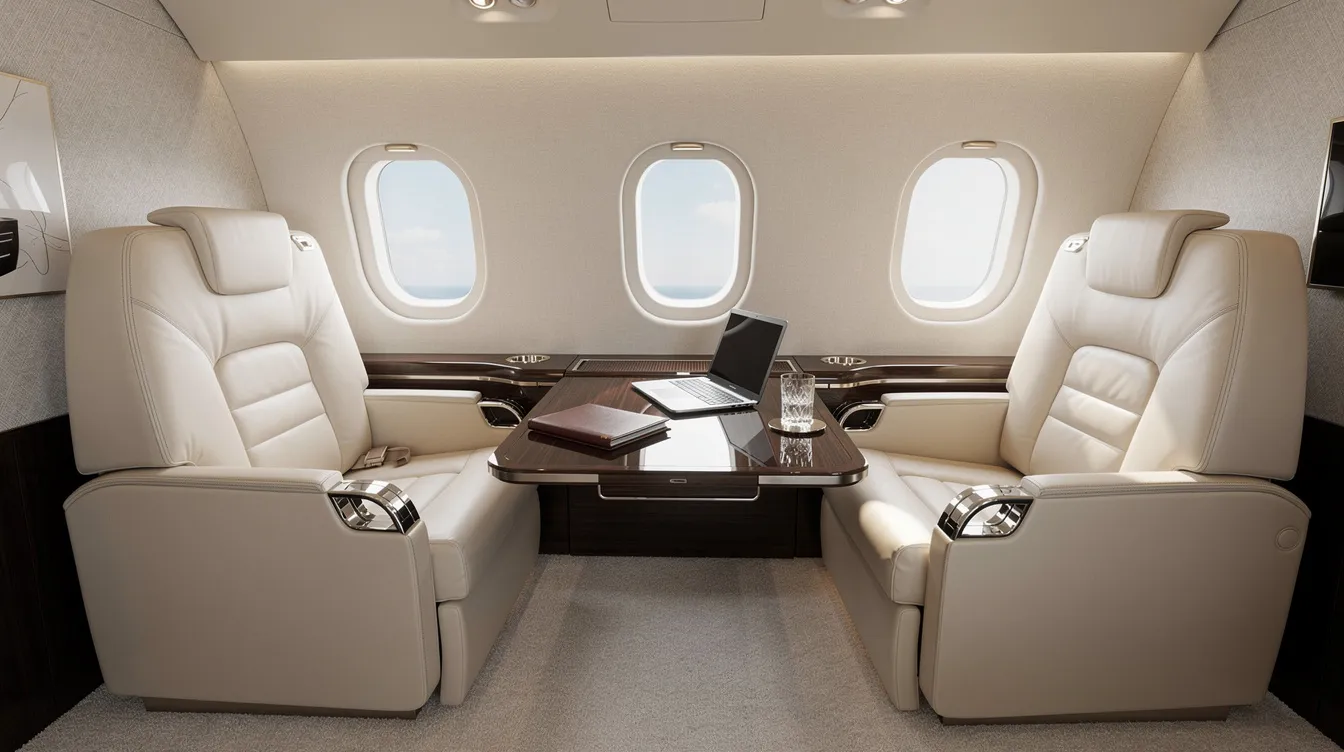
Many executives fall between occasional charter users and those who can justify full private aircraft ownership. Fractional ownership occupies this strategic middle ground, providing access without the full burden of ownership.
Shared equity in a specific aircraft or managed fleet (e.g., 1/16th to 1/2 shares)
Guaranteed access with defined notice periods (typically 10-24 hours)
Professional management of operations, aircraft maintenance, crews, and scheduling
Right-sized shares for 25-150 hours per year instead of owning 100% of an idle asset, supported by a clear understanding of fractional jet ownership terms and definitions
Consistent aircraft types and cabin standards across trips
Standardized service levels eliminate the variability of ad-hoc private charters
Guaranteed availability replaces the uncertainty of charter options during peak demand, especially when leveraging floating fleet options in fractional ownership
Buy-back and resale options provide exit flexibility
Shared fixed costs (40-60% of total operating expenses) are diluted across multiple owners
20-40% lower effective hourly rates than charter at scale
Access to structured fractional jet ownership financing options that can align capital outlay with usage
Clear visibility into the total cost of fractional jet ownership, helping avoid surprises over the life of the share
Avoids the full risk of aircraft ownership (jets optimally fly under 500 hours/year; owners absorb idle time costs)
No resale hassles that come with full ownership
BlackJet’s Equity Fleet model can be customized by aircraft type, share size, and preferred base locations. Whether you want your share based near Teterboro, fractional jet ownership in Atlanta for regional Southeast access, fractional jet ownership in Orlando for Florida and Caribbean routes, or fractional jet ownership in Phoenix for Southwest and West Coast travel, bespoke charter services can be tailored to your patterns.
BlackJet’s Reserve Fleet functions as a flexible complement for peak days or overflow beyond owned share hours—ensuring access even when your primary allocation is exhausted.
Modern executive jet scheduling is designed for speed and minimal friction. The process has evolved to respect that executives making last-minute changes need immediate confirmation, not bureaucratic delays.
Defining trip details
Selecting aircraft based on mission and client needs
Verifying safety credentials, including operator ratings such as ARGUS Platinum or WYVERN Wingman
Booking the flight and confirming the itinerary
Trip request: Submit via app or portal specifying dates, routing, and passenger count
Aircraft confirmation: Receive aircraft options within minutes to hours based on availability
Itinerary finalization: Confirm catering preferences, ground transportation, and flight details
Departure: Final confirmation 24-48 hours before departure (or same-day for domestic flights)
Routine U.S. domestic: 2-24 hours advance notice
Peak periods (Super Bowl, World Economic Forum, major holidays): 48-72+ hours recommended
International trips: 48-72 hours for customs pre-clearance coordination
FBOs enable drive-up access with minimal security screening—often completed in under 15 minutes. You arrive, complete a brief security check, and board directly. No long security lines, no crowded gates, no announcements about delayed connections.
BlackJet Fractional Jet Ownership provides a dedicated team of account managers to coordinate aircraft, crew, ground transportation, and any in-flight requirements. This personalized service extends to thoughtfully curated catering and destination logistics.
Sample Itinerary: Depart Chicago Midway at 7:30 a.m., arrive Detroit at 8:45 a.m. (1.25 hours). Conduct full-day meetings. Return flight at 6:00 p.m. You’re home for dinner without sacrificing an overnight stay—something infeasible with commercial flights given their fixed schedules.
Decision-makers evaluating private aviation need to match their travel profile to the right model. The answer differs based on hours flown, route patterns, and organizational requirements.
Annual hours: 25-40 hours annually
Recommended model: Ad-hoc charter flights are often sufficient
Annual spend: $150,000-$250,000
Advantages: No commitment, pay only when flying
Consider: Jet cards if seeking rate predictability
Annual hours: 50-75 hours annually
Recommended model: Jet card programs add meaningful value
Annual spend: $300,000-$500,000
Advantages: Capped rates, guaranteed availability, blackout protection
Consider: Fractional if hours trend upward consistently
Annual hours: 100+ hours annually
Recommended model: Fractional ownership through BlackJet becomes the strategic choice
Annual spend: $400,000-$800,000 effective
Advantages: Lowest effective hourly rates, ownership benefits, tax advantages, guaranteed access
Reserve Fleet: Complements handle overflow and surge periods
Required notice flexibility (charter 4+ hours; fractional 10-24 hours)
Typical passenger count (4-8 routine for most corporate travel)
Route patterns (regional suits light jets; transcontinental favors super midsize)
Corporate travel policy constraints and approval processes, including whether fractional ownership or jet membership programs better align with budget and governance
Companies should consider the total cost of travel—including $500-$1,000 per hour in lost executive productivity and overnight hotel stays—not just the hourly aircraft rate. A private jet travel solution that costs more per hour but saves two overnight stays may deliver superior ROI. Additionally, private aviation enables travelers to maximize their leisure time by avoiding commercial flight hassles and arriving at destinations relaxed and ready to enjoy their vacation or leisure activities, while preserving flexibility to sell a fractional jet ownership share if needs change over time.
Companies evaluating their options can request a personalized analysis of their past 12-24 months of travel to model optimal solutions against current charter or jet card spend, informed by an understanding of fractional jet ownership as an investment, with its benefits and considerations.
Many boards and family offices now factor ESG and environmental impact into aviation decisions. Private aviation is evolving to address these concerns with tangible solutions.
Models like the Embraer Praetor 500 or Bombardier Challenger 3500 offer 20% better fuel burn per passenger versus aircraft 15+ years old
Cutting-edge technology in newer jets optimizes routing and reduces emissions
Selecting appropriately sized aircraft (avoiding heavy jets for short hops) improves efficiency
SAF blends (10-100%) reduce lifecycle CO2 emissions by 50-80% compared to traditional jet fuel
Carbon offset programs through Gold Standard or similar organizations ($5-15 per ton) can be integrated into corporate sustainability strategies
Many operators now offer SAF options at additional cost
Pooled demand reduces empty repositioning legs (which represent 30-40% of charter flights)
Optimized fleet utilization across owners reduces total emissions by 15-25% compared to inconsistent one-off bookings
Tracked ESG reporting provides documentation for corporate sustainability reports and clarifies how total ownership costs, including environmental programs, factor into long-term planning
BlackJet Fractional Jet Ownership can help clients select aircraft and operating partners aligned with their ESG priorities, providing access to newer aircraft types and SAF options where available.
For public companies and visible brands, environmental initiatives in business and leisure travel deliver reputational benefits—70% of executives now prioritize sustainable travel according to NBAA surveys.
For domestic U.S. flights, most fractional programs and jet card providers accommodate a 24-48 hour notice. Same-day departures are possible with some operators, depending on aircraft availability. International executive trips typically require 48-72+ hours for customs pre-clearance and flight planning. Peak periods like major conferences or holidays may require longer lead times. Weather conditions, such as headwinds, turbulence, and altitude, can also influence aircraft performance, speed, and route planning, so it’s wise to allow extra flexibility when scheduling.
Yes. Executive jet flights offer encrypted Wi-Fi connections, private cabins with no other passengers, and operators that maintain no-recording policies. Many corporate clients conduct board calls, review M&A documents, and discuss sensitive matters with confidence that commercial air travel cannot provide. For highest-security needs, confirm specific data protection protocols with your operator.
The New York-Chicago-Los Angeles-Dallas corridor represents approximately 60% of domestic executive jet volume. Seasonal patterns include heavy traffic between Teterboro and West Palm Beach or Aspen during the winter months. Regional business trips between secondary city pairs (Austin-Houston, San Francisco-Seattle) represent growing demand.
Most executive aircraft accommodate pets and family members alongside business travelers. Larger cabin aircraft offer dedicated pet relief areas; light jet accommodations are more limited. This flexibility allows executives to combine business and leisure travel seamlessly when schedules permit.
A 1/16th share typically provides approximately 50 hours annually and represents the smallest practical fractional commitment ($400,000-$800,000 initial investment, depending on aircraft). For 25-50 hours, jet card programs through BlackJet’s Reserve Fleet may offer better flexibility without capital commitment. Aviation experts can model both scenarios against your specific travel patterns, using an aircraft fractional ownership sample contract guide to clarify rights and responsibilities.
Private jet travel simplifies international crossings. U.S. pre-clearance facilities (like Teterboro to Ireland routes) allow immigration processing before departure. Private terminals handle customs upon arrival with dedicated FBO services—bypassing commercial terminal queues. Documentation requirements vary by destination; your dedicated team coordinates all flight details and paperwork.
Potential U.S. tax advantages include accelerated depreciation (100% bonus depreciation under Section 168(k) for qualifying business use) and business-use deductions for operating costs. However, passive loss rules and AMT considerations apply. Consult your tax advisor to understand how these benefits apply to your specific situation before making ownership decisions, and review a complete guide to the cost of fractional jet ownership to see how taxes factor into overall economics.
For executives who routinely travel for business, the question isn’t whether private aviation makes sense—it’s which model delivers the best return on your valuable time investment. The elevated travel experience of executive jet flights transforms travel from a productivity drain into a competitive advantage, providing access to more airports, reducing travel time, and eliminating the friction of commercial alternatives.
Time savings of 2-4 hours per trip through private terminals and direct routing
Predictable access with guaranteed availability and defined notice periods
Cost-effective travel at 25-150 hours annually compared to pure charter
Professional management of aircraft scheduling, maintenance, and operations
Flexibility to scale between Equity Fleet ownership and Reserve Fleet hours
Ready to explore smarter executive jet flights?
Visit FractionalJetOwnership.com to request a consultation or charter flight quote comparison against your current charter or jet card spend.
BlackJet Fractional Jet Ownership can model scenarios using your current destinations, annual hours, and preferred aircraft types—whether you’re evaluating charter options for the first time or seeking to optimize an existing private aviation program.
Smarter executive jet flights aren’t about luxury for its own sake. They’re about productivity, control, and long-term value—transforming how you fly directly into how effectively you compete.
