
April 27, 2026
The question of how much a private jet costs rarely has a simple answer. For many travelers, the first thing they want to know is, "How much does it cost?"—and the answer depends on a range of factors that influence the overall expenses of private jet travel.
This guide breaks down private jet pricing and private jet charter costs across every major access model—from on-demand charter to fractional jet ownership to full aircraft ownership—so you can identify which approach aligns with your travel patterns and financial goals.
Private jet rental costs typically range from $2,000 to over $14,000 per billable flight hour, depending on the aircraft size and type. For a short U.S. light jet trip—say, New York to Florida—expect to pay roughly $8,000 to $15,000 all-in. An intercontinental route like New York to London on a heavy jet or ultra-long-range aircraft often totals $120,000 to $180,000 round-trip once taxes, fuel surcharges, and handling fees are included.
Those figures represent charter flight costs. Ownership economics operate on an entirely different scale. A new light jet starts around $4 million to $9 million, while large-cabin and ultra-long-range jets can exceed $40 million to $75 million or more. Annual operating expenses for private jet owners can range from $500,000 to over $4 million, depending on aircraft size and usage—a reality that surprises many first-time buyers.
Fractional jet ownership occupies a practical middle ground. Programs like BlackJet Fractional Jet Ownership serve clients flying 25 to 150 hours per year, offering predictable hourly costs and dramatically lower capital outlay than whole aircraft ownership, especially when you understand the complete cost breakdown of fractional ownership. This approach combines the benefits of guaranteed access with the financial efficiency of shared fixed costs.
Compared to commercial airlines, private jet travel offers greater flexibility, convenience, and access to more airports, but at a significantly higher cost.
Here’s a simplified view of the cost tiers:
Access Model | Best For | Upfront Cost | Typical Hourly Range |
|---|---|---|---|
Ad-hoc Charter | Under 25 hrs/year | None | $2,000–$14,000+ |
Jet Card/Membership | 25–75 hrs/year | $50,000–$250,000 deposit | Semi-fixed |
Fractional Ownership | 25–150 hrs/year | Mid-six figures | $3,000–$8,000 |
Full Ownership | 200–400+ hrs/year | $2M–$100M+ | N/A (all costs are yours) |
The total cost of private jet travel depends first on how you choose to access the aircraft, not just what you fly. Whether you are considering a private jet or a private plane, each access model—ownership, fractional ownership, membership, or charter—carries distinct cost structures, commitment levels, and benefits.
When it comes to on-demand charter, you can rent a private jet for specific trips, paying only for the hours you fly. This process involves considering factors such as hourly rates, additional fees, and the type of jet category, which all impact the overall cost of renting a private jet.
Factor | On-Demand Charter | Jet Card/Membership | Fractional (BlackJet) | Full Ownership |
|---|---|---|---|---|
Typical Annual Hours | Under 25 | 25–75 | 25–150 | 200–400+ |
Upfront Cost | None | $50K–$250K deposit | Mid-six figures | $2M–$100M+ |
Hourly Cost Range | $2,000–$14,000+ | Semi-fixed | $3,000–$8,000 | All costs borne |
Cost Predictability | Low | Medium | High | Variable |
When comparing private jet access models, it's important to consider how route and aircraft type affect both cost and suitability. Different routes and aircraft types can influence flight duration, operational costs, and scheduling flexibility, which in turn impact the best access model and overall cost structure for your needs
Chartering a private jet requires no upfront commitment. You pay per trip, making it ideal for those flying fewer than 25 hours annually. Aircraft operators manage the flights, set pricing, and handle operational costs such as Wi-Fi charges, daily minimums, and additional fees, providing transparency and helping clients avoid hidden charges. Typical 2026 U.S. hourly rates break down as follows:
Very light jets and turboprops: $2,000–$3,000 per hour
Light jets: $2,600–$4,000 per hour
Midsize jets: $3,500–$5,500 per hour
Heavy and long-range jets: $8,000–$14,000+
Empty leg flights are discounted one-way flights offered when a private jet is repositioning after dropping off passengers, allowing travelers to save up to 75% off regular charter rates—though availability is unpredictable, especially in sunbelt markets like Phoenix fractional jet ownership corridors.
In leisure-heavy markets such as Orlando's fractional jet ownership clientele or coastal gateways like Fernandina Beach with its private jet access and ownership options, some travelers weigh jet cards and memberships against fractional shares to balance spontaneity with predictable pricing.
Jet cards and membership programs allow travelers to buy hours in bulk or subscribe to a private aviation membership, which can reduce per-hour costs and offer added benefits. Deposits typically start around $50,000 to $250,000 for 25 to 75 hours annually. Many cards still add fuel surcharges and certain fees on top of the quoted hourly rate.
For those flying 25 to 150 hours per year, fractional ownership provides the best balance of cost control and access. You purchase a share—such as 1/16th for approximately 50 hours or 1/8th for 100 hours—and pay monthly management fees plus an occupied hourly rate.
BlackJet Fractional Jet Ownership offers two models, including flexible, floating fleet-style access structures that help optimize aircraft utilization and reduce repositioning costs:
Reserve Fleet: Pay-as-you-go access without ownership risk
Equity Fleet: True fractional ownership with asset appreciation potential and tax benefits
Both models deliver guaranteed aircraft availability and predictable budgeting.
Owning a private jet involves significant upfront costs ranging from $2 million to over $100 million for new, long-range aircraft. Annual fixed costs—including crew expenses (such as salaries for pilots and co-pilots), hangar fees, insurance, and training—often exceed $1 million to $3 million. A common industry benchmark is that full ownership of a private jet becomes financially justifiable only if you fly more than 200 to 400 hours per year.
Most owners engage aircraft management services to handle operations, crew, maintenance, and compliance, a model that also appeals to regional markets such as fractional jet ownership users in Nashville and lifestyle destinations like Ibiza, where private jet access and ownership options are in demand.
BlackJet helps prospective clients model the true annual cost per flight hour of each option based on their specific flying patterns, ensuring you select the most efficient path.
Most online figures show hourly pricing, but the invoice reflects many components beyond the base rate. Understanding these elements helps you compare quotes accurately.
Aircraft Category | Passengers | Typical Hourly Rate |
|---|---|---|
Turboprop/VLJ | 4–6 | $1,800–$3,000 |
Light Jet | 6–8 | $2,600–$4,500 |
Midsize/Super Midsize | 7–10 | $4,000–$8,000 |
Heavy/Ultra Long Range | 10–16 | $8,500–$14,000+ |
VIP Airliners | 20–50+ | $15,000–$25,000+ |
A typical private jet charter quote includes:
Base hourly rate (aircraft, crew member costs, standard insurance)
Billable flight time (taxi-to-touchdown, often exceeding time on board)
Daily minimums (usually 1.5 to 2.0 billable hours per day)
Standard government charges for U.S. domestic charter include:
7.5% federal excise tax on the transportation charge
Per-segment passenger fees of approximately $4 to $5 per passenger per leg
In addition to the hourly rate, total costs for renting a private jet can include additional costs such as fuel surcharges, landing fees, crew overnight charges, and other supplementary fees for ground services, which can add 20-40% to the base rate. Understanding these additional costs is essential for accurate budgeting.
Consider a two-day trip from Teterboro (TEB) to Opa-locka (OPF) on a midsize jet:
Flight time: ~3 hours each way (6 total)
Base rate: $4,500/hour × 6 hours = $27,000
Federal excise tax (7.5%): ~$2,025
Landing and handling fees: ~$1,500
Fuel surcharges: ~$1,800
Crew overnight: ~$800
Estimated Total: $33,000–$40,000
While BlackJet focuses on fractional access, these charter benchmarks help clients compare long-term cost effectiveness against structured ownership programs.
Aircraft size, range, and cabin category have the biggest impact on both private jet charter rates and ownership costs. The type of aircraft significantly affects rental costs, with larger jets typically commanding higher hourly rates due to their size and fuel requirements.
Private jets are categorized into different classes based on their size and capabilities, including very light jets, light jets, midsize jets, super midsize jets, heavy jets, ultra long range jets, and VIP airliners, and demand for each category varies by region—from transatlantic hubs to emerging markets like fractional jet ownership in Pittsburgh or established bases such as fractional jet ownership in Austin. Some travelers prefer to use the same aircraft model, such as the Citation CJ3+ or Learjet 75 Liberty, for both short and longer flights to ensure consistency and reliability across various routes.
Very light jets (VLJs) are ideal for short hops with 4 to 6 passengers and typically have lower operational costs, making them suitable for regional travel. These aircraft handle trips under 1,000 to 1,200 nautical miles efficiently, and high-performance turboprops like the TBM 850 in fractional ownership programs can offer similar economics with excellent range and speed.
Passenger capacity: 2–4 (VLJ) or up to 9 (turboprop)
Range: 800–1,200 nautical miles
Example models: Embraer Phenom 100, HondaJet in fractional ownership fleets, Pilatus PC-12
2026 charter rates: $1,800–$3,000 per hour
Light jets suit 4 to 7 passengers on U.S. regional routes like New York to Chicago or Los Angeles to Aspen. They offer a balance of speed, comfort, and cost for domestic travel.
Passenger capacity: 4–7
Range: 1,800–2,500 nautical miles
Example models: Cessna Citation CJ3+, Embraer Phenom 300
2026 charter rates: $2,800–$4,000 per hour
Light jet costs make them attractive for frequent short-haul travelers who don’t need cross-country range.
These aircraft provide stand-up cabins and coast-to-coast capability. A midsize jet handles routes like New York to Los Angeles or Miami to Denver with ease.
Passenger capacity: 7–10
Range: 3,000–3,500 nautical miles
Example models: Citation XLS+, Challenger 350, Embraer Praetor 600, and super midsize options such as the Falcon 2000EX in fractional programs
2026 charter rates: $4,000–$7,500 per hour
Super midsize jets push slightly higher on range and cabin space, with rates reaching $10,500 per hour for newer models.
Heavy jets, which can accommodate 10 to 16 passengers, are designed for long-haul or international flights and often come equipped with luxurious amenities including lie-flat beds, showers, and full galleys.
Passenger capacity: 8–16
Range: 5,000–7,500+ nautical miles
Example models: Gulfstream G450/G650, Bombardier Global 6000, Dassault Falcon 7X and long-range aircraft like the Falcon 900LX for fractional owners
2026 charter rates: $8,500–$14,000+ per hour
These aircraft handle international flights like New York to London or Los Angeles to Tokyo nonstop.
The Boeing Business Jet (BBJ) and Airbus Corporate Jet (ACJ) class serve heads of state, ultra-high-net-worth families, and large corporate delegations. With 20 to 50+ passenger capacity, hourly rates start around $15,000 to $25,000, and single missions can exceed $500,000.
These aircraft fall outside typical fractional programs and are less common for the average private aviation client.
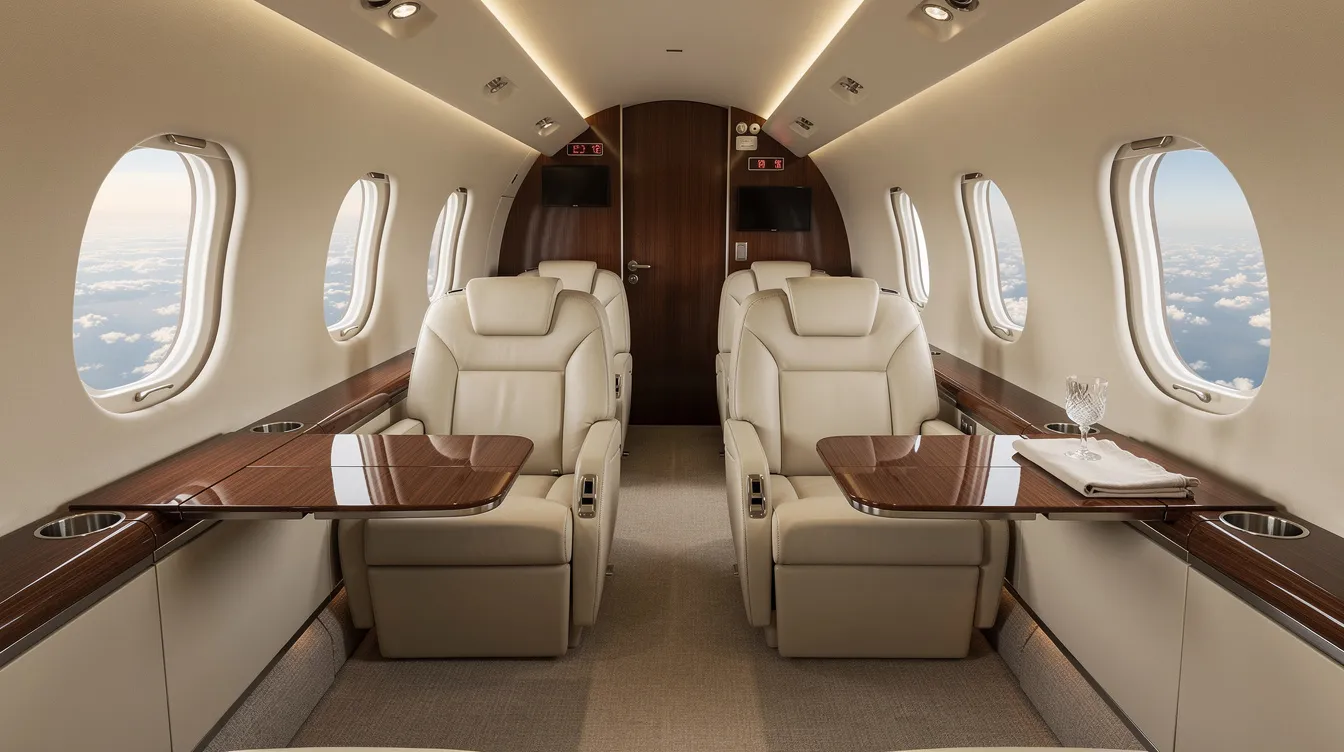
BlackJet’s Equity Fleet and Reserve Fleet focus on aircraft categories that balance cost, comfort, and range for frequent business and family travel rather than outsized VIP airliners, which is particularly attractive for travelers based in major hubs such as Atlanta, fractional jet ownership clients, or those departing from key Western Canadian bases like Calgary International’s fractional jet ownership options.
Purchase price represents only one component of whole aircraft ownership. Ongoing fixed costs and variable costs dominate the long-term budget for private jet owners. In addition, private jet operations are regulated by the Federal Aviation Administration (FAA), which enforces safety compliance and operational standards that owners must adhere to.
Aircraft Example | New Price (2026) | Used (10-year) | Annual Budget (300 hrs) |
|---|---|---|---|
Citation CJ4 (Light) | $9–$12M | $5–$6M | $700K–$1.2M |
Challenger 350 (Midsize) | $28M | $15M | $1.5M–$2.5M |
Gulfstream G600 (Large) | $55M | $35M | $2.5M–$4M |
Private jet acquisition costs vary significantly based on aircraft class and condition, with used jets typically 20% to 50% cheaper upfront but carrying higher maintenance risks.
Aircraft owners face substantial annual fixed costs regardless of how much they fly:
Crew salaries: Crew salaries for pilots range from $85,000 to $300,000 annually per pilot, plus benefits. Many aircraft require two pilots.
Hangar fees: Hangar fees typically range from $30,000 to $200,000 per year, influenced by location.
Insurance: Insurance premiums for private jets usually range from $15,000 to $85,000 annually, and can be up to $500,000 for large models, making it essential to understand liability coverage in fractional ownership structures if you opt not to own a whole aircraft.
Training and subscriptions: $50,000–$100,000 annually for recurrent training, navigation databases, and maintenance programs that support highly trained pilots and professional crews
Variable costs scale with usage:
Fuel: Fuel represents the highest variable cost for private jets, accounting for 25% to 35% of total operating costs.
Maintenance reserves: $500–$1,500 per hour, depending on aircraft size
Engine programs: $1,000+ per hour for manufacturer-backed maintenance plans
Landing and handling fees: Vary by airport and aircraft weight
Beyond operational costs, owners face a set of capital and lifecycle considerations that differ markedly from the total cost structure of fractional jet ownership:
Financing interest (4–6% on loans of $10–$50 million)
Depreciation for jets can result in a loss of around 20% to 30% of their value over 5 years
Unexpected maintenance events costing six or seven figures
A business flying 250 to 300 hours per year on a midsize jet can easily see total annual spend in the $2 million to $3 million range when owning outright, which is why many compare this to fractional jet ownership as an investment with shared capital and operating costs, especially at regional hubs such as Atlantic Municipal for private jet access and ownership options. Annual operating expenses often exceed $500,000 to $1 million, even for smaller aircraft.
Due to these economics, many individuals and companies in the U.S. and globally prefer fractional aircraft ownership or structured access programs like BlackJet’s over full ownership, often benchmarking against top fractional jet ownership programs in the market and carefully reviewing essential contract terms in fractional jet ownership before committing.
Fractional jet ownership means purchasing a share of an aircraft—typically 1/16th, 1/8th, or 1/4th—in exchange for a guaranteed number of flight hours per year with professional aircraft management and guaranteed access, and it comes with a specific set of fractional jet ownership terms and definitions that prospective owners should understand, whether they are based at major gateways like Avord AB with its private jet access and ownership options or smaller regional fields. To ensure legal compliance and safety, operators must hold a valid air carrier certificate, such as an FAA FAR Part 135 certificate, which authorizes them to conduct commercial flights and maintain regulatory standards.
Equity Fleet: True fractional ownership with equity in a specific aircraft type. Owners hold an asset, benefit from potential appreciation, and may qualify for tax advantages, including bonus depreciation and Section 179 treatment when used in qualifying business operations.
Note: Clients should consult their tax advisor regarding specific tax implications.
Reserve Fleet: Non-equity, pay-as-you-go access to a managed fleet. Ideal for clients who want guaranteed availability without ownership risk or capital lock-up.
Fractional programs involve three primary cost categories, which apply whether you’re evaluating options in North America or emerging Asia-Pacific markets like Kaohsiung’s fractional jet ownership platform:
Initial acquisition/deposit: Mid-six figures for an equity share (e.g., $800,000–$2 million depending on aircraft type and share size)
Monthly management fees: Several thousand dollars covering fixed cost sharing
Occupied hourly rate: $3,000–$8,000 depending on aircraft category, covering fuel, maintenance, and standard operational costs
A 1/16th share in a midsize jet designed for approximately 50 hours per year might involve a different commitment than a 1/8th fractional jet ownership structure, which typically provides around 100 hours annually:
Upfront investment: Mid-six figures
Monthly management fee: $5,000–$15,000
Hourly occupied rate: Low-to-mid four figures
This structure avoids the millions required for full ownership while delivering predictable access.
For many flyers, evaluating the full cost of fractional jet ownership alongside charter and whole ownership helps clarify where the best long-term value lies, whether they’re based in established markets like Portland’s fractional jet ownership hub or smaller regional airports.
Lower capital outlay with shared fixed costs
Professional management handles crew, maintenance, and compliance
Potential U.S. tax advantages for business use, especially when paired with thoughtful fractional jet ownership financing strategies and a clear understanding of the tax implications for fractional jet owners
Guaranteed access within agreed notice windows
Predictable budgeting for 25–150 hours per year
Ability to select aircraft size appropriate to typical missions, guided by clear fractional aircraft ownership contract structures that define rights and responsibilities, a key benefit in active regional markets such as Seattle’s fractional jet ownership ecosystem
BlackJet Fractional Jet Ownership serves executives and business owners seeking a balance between cost efficiency and reliable, on-demand private aviation without the overhead of owning an entire aircraft, and its clients can compare multiple fractional jet programs and structures and plan ahead for selling a fractional jet ownership share if their travel needs change.
Regardless of access model—charter, fractional, or ownership—the same core operational drivers affect what each private flight actually costs.
The cost of a private jet rental is influenced by several factors, including flight time, distance, aircraft type, and charter destination, which is why regional bases like Virginia Beach, with its fractional jet ownership options, can see different pricing dynamics than inland hubs.
Aircraft Size and Category: Larger aircraft command higher hourly rates but may prove more efficient for bigger groups. A heavy jet at $12,000 per hour carrying 12 passengers costs $1,000 per seat—potentially competitive with commercial first-class on certain routes.
Flight Distance and Duration: Longer flights generally incur higher costs due to increased fuel consumption and potential crew changes, making flight distance a key determinant of pricing. A 6-hour transatlantic leg costs substantially more than a 2-hour domestic hop.
Airport Selection: Using smaller regional airports often results in lower landing fees and quicker turnarounds, which can contribute to overall savings in private jet travel. Compared to commercial flights, private jets can access thousands more airports, avoid long wait times, and offer far greater flexibility in scheduling and routing. Private-aviation-friendly fields like Teterboro (TEB), Van Nuys (VNY), and Palm Beach offer lower fees than major hubs like JFK or LAX, though charges still vary significantly.
Peak Demand Periods: Peak demand periods can lead to increased pricing for private jet rentals, as availability decreases and operators may raise rates accordingly. Holidays, major sporting events, and global conferences like Davos or Art Basel can push charter rates up 20–40%.
Aircraft positioning fees occur when a jet must fly empty to pick up passengers or return to base. This can add 10–30% to trip costs. Fractional programs and well-structured fleets like BlackJet’s are designed to minimize repositioning through network optimization, especially at regional hubs such as Kelowna International with its fractional jet ownership services.

Frequent travelers benefit from working with an advisor to map typical routes and optimize aircraft type and base airport choices to manage costs annually, whether they depart from vacation destinations like the Bay of Islands with dedicated private jet access and ownership options or from major business centers.
Published hourly rates rarely include all fees. This section covers the most common extras found in private jet charter prices and statements. Landing fees, for example, are set and collected by the airport authority, and these charges vary depending on the airport, aircraft size, and operational needs.
Landing fees: Landing fees for private jets can vary significantly by airport, typically ranging from $100 to $1,500 per flight, depending on the aircraft size and weight.
Ramp and handling fees: Fixed base operators provide ground handling services typically costing between $100 and $500 per visit
Overnight parking/hangar: Ranges from a few hundred to over $1,500 per night in winter climates or premium locations
Federal excise tax: 7.5% for U.S. domestic charter flights
Per-segment passenger fees: Approximately $4–$5 per passenger per leg
International head taxes: Vary by country; Alaska and Hawaii have special rates
Fuel surcharges: Fuel surcharges are commonly applied when fuel prices rise, typically starting at around $300 per hour, and can significantly increase the overall cost of a private jet charter.
Deicing fees: Deicing fees can vary widely, ranging from $1,500 to $15,000 depending on the size of the aircraft and the amount of deicing required in colder climates.
Crew overnight accommodation: Crew overnight accommodation fees can add between $200 and $600 per crew member to the total cost if they are required to stay away from home overnight.
International handling fees: Premium charges at congested gateways like London or Dubai
Short leg fees may be charged for flights that fall below the operator’s minimum billable flight time, which is often set at 30 to 60 minutes, to cover fixed operational costs. Even a 20-minute flight may be billed at the daily minimum.
Custom catering: $200–$5,000+ per leg depending on menu
Premium ground transportation arrangements
In-flight connectivity packages: $1,000–$3,000 per hour for certain systems
Pet cleaning surcharges and concierge services
Fractional owners with programs like BlackJet typically see clearer, more predictable fee structures than ad-hoc charter, since many costs are standardized in program documents. Always request itemized quotes to compare providers fairly.
Concrete route examples make hourly rates easier to interpret. These estimates reflect 2026 pricing, including typical fees and taxes.
Route | Aircraft Type | Flight Time | Charter Estimate | Fractional Hourly |
|---|---|---|---|---|
New York–Boston | Light Jet | ~1 hour | $6,000–$12,000 | ~$3,500–$4,500 |
New York–Los Angeles | Super Midsize | ~5.5 hours | $35,000–$70,000 | ~$5,500–$7,000/hr |
New York–London | Heavy/Long Range | ~7 hours | $120,000–$180,000 RT | ~$8,000–$10,000/hr |
London–Geneva | Light/Midsize | ~1.5 hours | €8,000–€15,000 | Similar principles |
A New York to Boston one-way private jet flight on a light jet involves approximately one hour of block time. With an hourly rate of $3,500–$4,500, plus landing fees, handling, and taxes, the total charter cost typically lands between $6,000 and $12,000.
New York to Los Angeles on a super midsize jet requires roughly 5 to 6 hours each way. Charter budgets run $35,000 to $70,000 per direction. Fractional members with predictable hourly charges often see significantly lower effective costs for repeat routes.
New York to London on a Gulfstream, Global, or Falcon requires 6 to 7 hours each way. All-in charter costs reach well into six figures. For frequent transatlantic travelers, fractional ownership delivers more predictable cost per hour and guaranteed aircraft availability.
Traveling with a group can make the cost per person comparable to or even cheaper than commercial first-class tickets, providing a cost-effective option for private jet travel. An 8-passenger jet at $24,000 total equals $3,000 per seat—potentially undercutting last-minute commercial business class.

BlackJet can model exact costs based on a prospect’s real route map—such as New York to South Florida twice monthly plus quarterly European trips—rather than relying on generic averages.
There’s no one-size-fits-all answer. The optimal solution depends primarily on annual flight hours, route profile, and financial goals.
Annual Hours | Recommended Primary Model | Key Consideration |
|---|---|---|
Under 25 | Ad-hoc charter or occasional cards | Maximum flexibility, no commitment |
25–75 | Jet card or fractional entry | Growing predictability needs |
75–150 | Fractional ownership (BlackJet) | Best cost-per-hour efficiency |
200–400+ | Full or co-ownership | Sufficient utilization to justify capital |
When evaluating options, consider the tradeoffs between fractional jet ownership and membership programs:
Pricing predictability: Fractional programs lock in rates; charter fluctuates
Capital tolerance: How much are you willing to invest upfront?
Tax planning: Equity ownership may offer depreciation benefits
Peak availability: Fractional guarantees access when charter is scarce
Many corporations adopt a hybrid approach: fractional shares for core routes and regular hours, supplemented by occasional charter or jet cards during unusually busy periods or for special missions.
BlackJet serves as a partner that helps clients audit current charter spend, estimate implicit cost per hour, and determine whether moving to fractional ownership could yield savings and better control.
The most valuable metric isn’t hourly aircraft cost alone—it’s total cost per productive hour saved. For executives and business owners whose time carries significant value, even moderately higher aviation costs may deliver positive ROI through reclaimed productivity.
BlackJet Fractional Jet Ownership is a private aviation specialist focused on cost-efficient, predictable access for high-net-worth individuals and corporate clients flying 25 to 150 hours annually.
BlackJet’s Equity Fleet provides tailored fractional aircraft ownership: access to carefully selected aircraft types, customized share sizes aligned with your usage pattern, and professional scheduling and aircraft management.
The Reserve Fleet model offers a flexible, pay-as-you-go structure for clients who want guaranteed availability without equity stakes or the operational burdens of whole aircraft ownership.
Transparent pricing with fewer surprise fees
Guaranteed access within agreed notice windows
Network optimization to reduce aircraft positioning costs
Dedicated team managing aircraft maintenance, crew, and compliance
Guidance on potential tax planning angles (consult independent advisors)
Higher cost predictability
Consistent aircraft and private jet service quality
Ability to standardize corporate travel policies
Reduced exposure to peak pricing spikes
BlackJet serves both seasoned private flyers migrating from pure charter and newcomers exploring private aviation for the first time, who want a trusted advisor.
The cost of a private jet spans from a few thousand dollars per flight hour for occasional charter up to multi-million-dollar annual budgets for full ownership. The right solution depends entirely on your flying patterns and financial priorities.
For those flying 25 to 150 hours per year across the United States and key global routes, fractional aircraft ownership and structured access programs like BlackJet’s often deliver the best blend of cost control, flexibility, and reliability. You gain the benefits of private jet travel without the capital intensity and unpredictability of full ownership or the variable pricing of ad-hoc charter.
To determine your optimal path, gather your past 12 to 24 months of travel data—routes, frequency, group size—and use it as the basis for a professional cost analysis comparing charter, jet cards, fractional, and full ownership.
Schedule a consultation with BlackJet Fractional Jet Ownership to model your specific numbers, answer your questions about private jet cost, and explore tailored Reserve Fleet and Equity Fleet options.
Ready to explore the smarter way to fly private? Visit FractionalJetOwnership.com to learn how fractional ownership can transform your travel experience.
