
April 25, 2026
This guide is for travelers, business executives, and anyone considering private jet travel in 2026. Whether you’re exploring private jet charter, full ownership, or fractional ownership options, understanding the true costs of private aviation is essential to help you make informed decisions about the most cost-effective way to fly private. We cover everything from hourly charter rates and purchase prices to annual ownership expenses and the benefits of fractional programs, so you can confidently choose the best solution for your travel needs.
Private jet costs span a wide spectrum depending on how you access the aircraft. Private jet rental prices range from $2,000 to $14,000 per billable flight hour for most categories, while ultra-luxury VIP airliners start at $16,000 and scale to $23,000+ depending on aircraft size and operational variables. Purchasing a private jet outright requires capital starting around $3.5 million for entry-level models and exceeding $100 million for top-tier large-cabin jets.
Compared to commercial airlines, private aviation offers significant advantages such as access to more airports, direct routing, enhanced privacy, and greater operational efficiency—especially valuable for high-frequency business travelers and long-haul flights.
To put this in practical terms for 2026: a New York to Miami private flight on a light jet runs approximately $12,000–$18,000 one-way. A coast-to-coast trip from New York to Los Angeles on a super midsize jet costs roughly $35,000–$55,000 one-way. For international flights, a New York to London round-trip on a heavy jet typically falls between $120,000 and $180,000.
The three primary cost buckets for private aviation are: on-demand private jet charter (paying per flight hour without ownership), fractional jet ownership (purchasing a share of an aircraft with defined annual flight hours), and full aircraft ownership (buying the jet outright plus covering all operating costs). BlackJet Fractional Jet Ownership specializes in fractional aircraft ownership and shared-use programs through its Equity Fleet and Reserve Fleet models, often delivering lower effective hourly rates for travelers flying 25–150 hours per year compared to ad hoc charter.

Most people first encounter private aviation through on-demand charter, where the entire aircraft is rented per flight hour—not per seat like commercial flights. This means whether you’re flying solo or filling every seat, the private jet charter prices remain the same. Chartering offers all the advantages of private aviation—such as comfort, privacy, and direct flights—without the responsibilities and commitments associated with ownership or leasing.
In 2026, typical hourly charter ranges by aircraft category are:
Turboprops and very light jets: $1,500–$2,500 per hour for 2–4 passengers on regional hops
Light jets: $2,600–$3,800 per hour, accommodating 6–8 passengers up to 2,000 miles
Midsize jets: $3,500–$5,500 per hour with similar capacity but extended range
Super midsize jets: $5,000–$7,500 per hour for coast-to-coast efficiency
Heavy and long-range jets: $8,000–$14,000+ per hour for intercontinental missions seating 10–16
VIP airliners (e.g., Boeing Business Jet): $16,000–$25,000+ per hour for large delegations
Most U.S. operators require a minimum of 1.5–2 billable hours per leg, which sets a practical floor even for short trips, and long‑range platforms such as the Falcon 6X for fractional jet owners demonstrate how newer aircraft balance operating cost with transcontinental and intercontinental performance.
Los Angeles to Aspen (light jet): $19,500–$21,500 one-way (factoring the 2-hour minimum plus airport fees)
New York to Chicago (midsize jet): $25,000–$30,000
Miami to Teterboro (super midsize jet): $35,000+
These estimates reflect ad hoc charter and do not include the predictability and guaranteed aircraft availability that fractional programs or jet cards offer.
When choosing a private jet provider, prioritize those with third-party safety audits like ARGUS Platinum or Wyvern Wingman and ensure they operate under FAA Part 135 regulations, which require operators to hold a valid FAA-issued air carrier certificate to conduct legal commercial flights and maintain safety standards. Empty leg flights—repositioning flights where an aircraft flies without passengers to reach its next pickup location—are sold at discounts of 25–75% off standard charter rates for flexible travelers.
Advertised “from $X per hour” rates rarely equal the final invoice. Several components drive the true total charter cost, and understanding them helps travelers budget accurately. Private jet rental costs depend on variables that can add 20–40% to the base rate.
The main cost drivers include:
Aircraft category and age (older models typically 10–20% cheaper)
Flight time and distance
Aircraft positioning or repositioning legs (adding $5,000–$20,000 for empty flights to reach you)
Peak-period or short-notice premiums (20–40% uplift during holidays)
Airport and landing fees ($1,000–$5,000 per stop)
Crew expenses, including overnights ($500–$1,000 per crew member)
Taxes and regulatory surcharges (including a 7.5% Federal Excise Tax and various per-passenger segment fees)
Consider a practical example:
A 2-hour New York–Boston round-trip on a light jet in March might total $8,000–$10,000, including base hourly rates, landing fees, and fuel surcharges.
That same trip during Thanksgiving week could rise to $11,000–$14,000 due to demand surges and potential positioning requirements.
Market demand during peak seasons, such as holidays or major events, can increase rates by up to 30%.
Most FAR Part 135 charter operators bill from engine start to engine stop—this billable flight time determines your actual charge, not gate-to-gate time.
Many operators also apply minimums of 1.0–1.5 hours per leg.
Transparent, itemized quotes should separate base hourly rate, fuel surcharges, landing fees, and taxes—something sophisticated travelers should always request from any charter company.
Purchasing a private jet involves substantial capital outlay plus ongoing fixed and variable expenses, making ownership most sensible for those flying 200–300+ flight hours per year. The purchase price of a private jet can range from $2 million to over $110 million, depending on the size, model, and features of the aircraft.
Very light and light jets: $3.5M–$9M new (e.g., Cirrus SF50 VisionJet starts around $3.5M)
Midsize and super midsize jets: $5M–$30M (e.g., Embraer Praetor 600 lists around $21M)
Large cabin and long-range jets: $25M–$100M+ (e.g., Gulfstream G700 at $75M+)
VIP airliners (BBJ/ACJ): $90M–$300M+ fully outfitted
Pre-owned jets: typically 20% to 50% cheaper than brand-new models, but vary considerably by total airframe hours, maintenance history, avionics upgrades, and engine program enrollment
Pre-purchase inspections: $100,000–$1M+ for detailed Phase I-V structural checks
Tax structuring and potential refurbishment: Cabin interiors can cost $500,000–$5 million to update
Aircraft weight and configuration modifications may be required
In shared-use scenarios, a well-drafted aircraft fractional ownership contract is critical for protecting each co-owner’s rights and obligations, and prospective buyers should understand essential contract terms in fractional jet ownership before committing to a program
Owners who later transition to other access models should also understand how to sell or transfer a fractional jet ownership share efficiently to preserve value
The true cost of owning a private plane combines annual fixed costs that accrue whether the aircraft flies or not, plus variable operating costs that scale with usage. Annual fixed costs for owning a private jet can range from $500,000 to $2 million or more, which includes expenses such as crew salaries, insurance, and maintenance.
Hangar fees and storage: $30,000–$150,000+ depending on airport and aircraft size (New York area slots command premium prices)
Insurance: $30,000–$300,000+
Crew salaries and benefits: $250,000–$600,000 for two pilots (more with cabin crew)
Management fees and subscriptions: $50,000–$250,000+ for Part 135 compliance and scheduling
Navigation and data subscriptions: $10,000–$50,000+
Variable operating costs for a private jet can range from $1,000 to $5,500 per flight hour, depending on the size and type of the aircraft:
Light jet: $1,000–$1,500 per hour (fuel, maintenance reserves, and parts)
Midsize jets: $2,000–$3,500 per hour
Large cabin jets: $2,700–$5,500+ per hour
Fuel prices fluctuate with jet-A at $6–$8 per gallon in 2026, directly impacting these variable expenses
A business flying 250 hours per year on a midsize jet faces an estimated total annual budget of $2M–$3M, including all costs. A large-cabin owner flying 350+ hours per year often sees annual budgets in the $4M–$6M+ range. Many private jet owners delegate aircraft management to professional firms, but this adds cost and complexity—one reason fractional aircraft ownership and managed fractional programs offer attractive alternatives for those who want the benefits of jet ownership without full operational responsibility.

Fractional ownership enables individuals to purchase a portion of an aircraft with allocated usage hours, providing lower upfront investment and streamlined management compared to full aircraft ownership, and many regional options, such as fractional jet ownership in Atlanta, make this model accessible to business travelers. Clients purchase a share—typically 1/16, 1/8, or 1/4—of an aircraft in an equity fleet and receive a contracted number of hours per year (such as 25, 50, or 100 hours), all governed by clearly defined fractional jet ownership terms and concepts.
BlackJet Fractional Jet Ownership provides two primary models tailored to different needs. The Equity Fleet offers true fractional ownership shares with depreciation and potential tax benefits, allowing owners to build equity while accessing guaranteed flight time, but it is equally important to evaluate liability coverage in fractional jet ownership when comparing programs. The Reserve Fleet provides non-equity access with pay-as-you-go hours and guaranteed availability without capital ownership costs, often using floating fleet structures in fractional ownership to maximize flexibility and asset utilization for shareowners. The Reserve Fleet is ideal for those wanting flexibility without long-term commitment.
Acquisition for a 1/16 share in a light or midsize jet: $300,000–$800,000 range, amortized over 5 years
Monthly management fees per share: $10,000–$30,000
Occupied hourly rates: $2,000–$5,000—significantly below on-demand charter for comparable aircraft
For a deeper breakdown of the total cost structure of fractional jet ownership, it’s useful to examine how acquisition, management, and hourly fees interact over a multi‑year horizon. These program fees typically cover aircraft management, crew, insurance, hangar, maintenance management, and guaranteed aircraft availability.
Consider a U.S.-based executive flying 50–100 hours per year. Through an ad hoc charter, annual costs might total $250,000–$500,000 (for example, 10 New York–Miami trips at $15,000–$18,000 each plus additional routes). A fixed-rate jet card might run $200,000–$350,000. A BlackJet fractional or Reserve Fleet solution could reduce that to $150,000–$300,000, including predictable all-in pricing and no repositioning surprises—representing 20–40% savings while gaining guaranteed access.
While fractional ownership involves a capital commitment, it avoids the full financial burden and operational responsibility of whole-aircraft ownership. Many investors evaluate fractional jet ownership as an investment, weighing lower upfront costs and shared operating expenses against factors like depreciation and program liquidity. Owning or fractional ownership of a private jet begins to make financial sense if you exceed 200+ hours annually, though the predictability benefits start accruing at lower utilization levels. For many frequent travelers, a 1/8 fractional jet ownership structure providing roughly 100 hours per year can be a practical middle ground between occasional charter and full ownership.
Aircraft category fundamentally shapes both charter rates and ownership economics. Size, range, and mission capability determine what you’ll pay, whether renting or buying.
Very light jets and turboprops serve as entry-level aircraft ideal for 2–4 passengers on flights under 1.5–2 hours with ranges around 1,000–1,500 nautical miles, and aircraft like the TBM 850 in fractional ownership programs exemplify how turboprops can offer efficient, lower-cost access to private aviation. Hourly charter costs run $1,500–$2,500, making trips like Dallas–Houston or New York–Boston cost $8,000–$12,000. These smaller aircraft access smaller regional airports that larger aircraft cannot, adding convenience for certain routes, and models like the HondaJet are popular choices for fractional ownership of very light jets. Regional airports such as Atlantic Municipal with private jet access and ownership options illustrate how localized infrastructure can further enhance convenience for fractional owners.
Light jets accommodate 6–8 passengers with approximately 1,500–2,000 miles of range, while super midsize aircraft such as the Falcon 2000EX in fractional ownership structures provide additional cabin space and range for longer missions. Hourly charter averages $2,600–$3,800 per flight hour. Popular models include the Citation CJ3+ and Embraer Phenom 300, commonly used for routes like Los Angeles–Aspen or Chicago–Nashville. A new light jet in this category typically costs $8–$12 million. Light jet costs represent a sweet spot for regional business jet travel.
Midsize and super midsize jets offer 8–10 passenger cabins with longer range (2,500–3,500+ miles), hourly charter of $3,500–$7,500, and are common choices for coast-to-coast domestic or international flights like New York–Los Angeles, with hubs such as Calgary International’s fractional jet ownership options serving similar long-range mission profiles for Canadian travelers. The same aircraft in this category can handle most U.S. missions while offering improved fuel efficiency over larger jets.
Large cabin and long-range jets seat 10–16 passengers in stand-up cabins with intercontinental range suitable for transatlantic missions like New York–London or Los Angeles–Tokyo, and platforms like the Falcon 900LX for fractional jet owners are popular choices in this category, similar to how travelers departing major hubs like Mississauga benefit from fractional jet ownership options around Toronto Pearson. Typical hourly pricing runs $8,000–$14,000+, with models like the Gulfstream G650/G700 and Bombardier Global 7500 representing this category. These larger aircraft handle international flights requiring extended range.
VIP airliners, including the Boeing Business Jet and Airbus Corporate Jets, serve heads of state, corporations, or large delegations requiring exceptional space, and destination-focused bases like Ibiza private jet access and ownership options highlight how leisure markets leverage these high-capacity aircraft for group travel. Hourly charter costs reach $16,000–$25,000+, with intercontinental trip totals often exceeding $200,000. The aircraft type determines passenger capacity, and these jets can accommodate 20+ passengers in configured cabins, especially on premium leisure routes where airports such as Bay of Islands with private jet access and ownership options cater to high-end group travel.
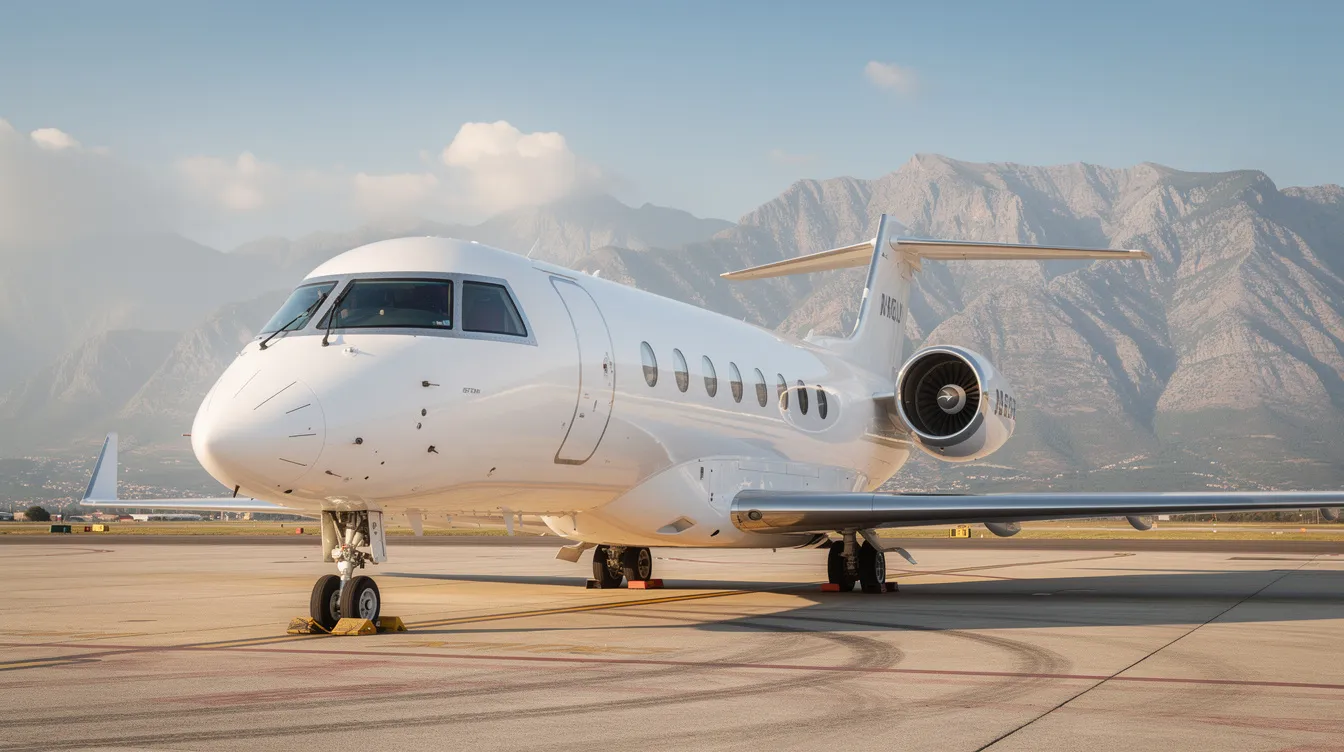
Even within the same aircraft category, two jets of similar aircraft size can differ dramatically in both charter rates and ownership costs. The price of a private jet is influenced by a combination of the aircraft’s physical attributes, operational requirements, and market conditions.
Manufacturer and model reputation (Gulfstream holds 10–15% resale premium)
Airframe age and total flight hours (post-10 years adds 20% maintenance risk)
Maintenance status and logbook quality
Engine program enrollment (JSSI or OEM plans)
Cabin configuration and recent refurbishments (West Star Aviation and similar facilities can transform older interiors)
Avionics suite quality (modern vs. legacy systems)
Fuel efficiency and performance (range, speed, runway requirements)
Jets enrolled in recognized engine programs often command higher charter rates and resale values due to predictable maintenance costs. A 10-year-old midsize jet with recent avionics upgrades and engine program enrollment might cost $3,500 per hour to operate and command an acquisition price of $8–10 million. A similar-aged jet without these benefits could cost $4,500+ per hour and sell for only $6–8 million, demonstrating how maintenance history directly impacts economics.
Savvy fractional programs like BlackJet’s Equity Fleet carefully select aircraft and manage maintenance to stabilize costs and aircraft availability for shareowners, whether they are based in major hubs or emerging markets such as Bhubaneswar with private jet access and ownership options, or Mediterranean destinations like Alicante El Altet with private jet access and ownership options. This curation process works hand in hand with highly trained fractional program pilots and crews to ensure consistent safety, service quality, and dispatch reliability. Frequent flyers particularly value this predictability.
The “right” way to pay for private jet travel depends primarily on annual flight hours, route patterns, and the desire for control versus flexibility. The cost structure differs significantly between ownership and chartering, and finding your optimal path requires an honest assessment of how you actually fly privately.
Ad hoc private jet charter: Makes sense for occasional flyers under approximately 25 hours per year, particularly those originating from regional airports like Kelowna with private jet access and ownership options or New England gateways such as Auburn/Lewiston Muni with private jet access and ownership options. Chartering is more cost-effective if you fly fewer than 150 hours per year and offers maximum flexibility in aircraft type without long-term commitments. Charter factors include hourly rates, crew overnight fees, landing fees, and repositioning fees that vary by trip. Private flight club memberships enable booking domestic or international flights on a variety of jets at fixed hourly rates, often with short notice.
Jet cards and membership programs: Attract flyers around 25–50 hours per year seeking predictable hourly rates, and in markets such as Austin’s fractional jet ownership scene or European hubs like Avord AB with private jet access and ownership options, these programs often complement equity and non‑equity share solutions. These programs offer charter access with locked-in pricing and guaranteed availability without ownership responsibilities. Travelers weighing fractional jet ownership vs membership programs should consider how often they fly, their need for guaranteed access, and their appetite for long-term commitments. Leasing provides access to modern aircraft without the long-term responsibilities of maintenance costs and depreciation.
Fractional jet ownership: Fits ideally for approximately 25–150 hours per year, suited for executives and families using similar missions repeatedly—New York to Florida, Los Angeles to San Francisco Bay Area, or similar patterns, and regional offerings such as fractional jet ownership in Nashville or Camp Guernsey with private jet access and ownership options follow this same utilization logic for local clients. Prospective shareowners benefit from understanding the total cost of a fractional jet ownership share, including acquisition, monthly management, hourly usage, and eventual resale value, and many evaluate airport-specific options, such as fractional jet ownership in Orlando, when modeling their budgets. This model balances cost efficiency, guaranteed availability, and ownership-oriented tax benefits through programs like BlackJet’s Equity Fleet.
Full aircraft ownership: Generally becomes financially rational beyond 250–300 hours per year on light/midsize jets, or even higher thresholds for large jets, particularly for corporations with consistent global travel needs. Chartering a private jet is typically the most cost-effective option unless you fly more than 200–250 hours per year.
Review your last 12–24 months of travel patterns—origins, destinations, group sizes, and schedule flexibility—then model costs across charter, jet cards, fractional, and whole ownership before committing; in some markets, solutions like fractional jet ownership in Phoenix or Fernandina Beach with private jet access and ownership options can materially change the economics compared to pure charter. Tools that let you compare fractional jet ownership programs and access models can clarify whether a Reserve Fleet, Equity Fleet, or lease-style solution best fits your profile, and city-focused offerings such as fractional jet ownership in Pittsburgh or fractional jet ownership in Kaohsiung further tailor those models to local demand. This analysis often reveals that frequent flyers are spending more on ad hoc arrangements than a structured program would cost, especially in regions where fractional jet ownership in Portland or similar markets provides competitive fixed-rate access.
A single private jet flight typically costs $10,000–$100,000+, depending on aircraft category and distance. New York–Miami on a light jet runs $12,000–$18,000 one-way. New York–Los Angeles on a super midsize jet costs $35,000–$55,000 one-way. Private jet rentals for shorter routes like New York–Boston start around $8,000–$10,000.
Annual ownership costs range from $2–$6 million depending on aircraft size and utilization. A midsize jet flown 250 hours per year typically costs $2–$3 million annually. Large cabin jets with higher utilization reach $4–$6 million+. These figures include fixed costs and variable costs and exclude the initial purchase price.
New York–London round-trip on a heavy jet runs $120,000–$180,000. Los Angeles–Paris requires an ultra-long-range jet and costs considerably more due to the distance. International flights also incur international handling fees at foreign fixed base operators.
Monthly costs combine amortized share purchase, management fees, and hourly rates. Expect $15,000–$50,000 monthly depending on share size, aircraft category, and actual usage. This covers management, crew, insurance, and guaranteed availability, and many buyers explore fractional jet ownership financing options to structure these commitments over time.
Business use of private aircraft may qualify for significant tax deductions, including Section 179 and bonus depreciation (up to 100% for qualifying business use). However, the Federal Aviation Administration and IRS have specific requirements regarding business versus personal use documentation. Fractional shareowners face similar considerations, making it critical to understand tax implications for fractional jet owners before structuring ownership. Always consult qualified aviation tax professionals before assuming deductibility.
Yes. For regular travelers flying 25–150 hours annually, fractional ownership often reduces effective per-trip costs by 30–40% compared to paying full private jet charter prices each time. The elimination of positioning fees and predictable hourly rates drives these savings, but you’ll want a clear grasp of fractional jet ownership terminology and key concepts to accurately compare programs.

Private jet use spans from a few thousand dollars per hour in a chartered light jet to multi-million-dollar annual budgets for full ownership. Understanding where you fall on this spectrum—based on actual flight hours, route patterns, and flexibility needs—determines the most efficient access model. Many travelers now favor smarter middle-ground solutions that deliver the benefits of private aviation without unnecessary financial burden.
BlackJet Fractional Jet Ownership specializes in helping clients identify the most efficient path—Reserve Fleet access, Equity Fleet fractional shares, or a hybrid strategy—based on actual travel patterns and financial objectives, whether you’re evaluating options in hubs like Seattle’s fractional jet ownership market or flying globally. Travelers often start by reviewing leading fractional jet ownership programs and providers to benchmark features, service levels, and pricing before tailoring a solution, and then narrow their search to specific bases, such as fractional jet ownership in Virginia Beach, that match their home airport and route patterns. Rather than guessing based on hourly rates alone, the most informed decisions come from analyzing your last year of travel: number of trips, routes, passenger counts, and scheduling requirements.
Ready to explore the smarter way to fly private? Visit FractionalJetOwnership.com to learn how BlackJet’s fractional ownership and membership solutions can reduce your cost per flight while preserving flexibility, privacy, and control, with location-specific options from Atlantic Municipal’s private jet access and ownership programs to other regional hubs. Contact BlackJet Fractional Jet Ownership for a personalized cost analysis comparing ad hoc charter, jet cards, fractional ownership, and full ownership under current 2026 market conditions.
Understanding how much it costs to fly private is essential for making informed decisions about your travel options. Whether you choose on-demand charter, fractional jet ownership, or full aircraft ownership, each model offers distinct advantages and cost structures tailored to different flying needs and frequencies. Chartering remains the most flexible option for occasional flyers, while fractional ownership provides a balanced solution for those flying regularly between 25 and 150 hours annually, combining cost savings with guaranteed access and streamlined management. Full ownership suits high-utilization travelers willing to bear the high fixed and variable costs for maximum control.
BlackJet Fractional Jet Ownership stands out as a trusted guide in private aviation, offering tailored fractional ownership and shared-use programs that optimize cost efficiency, flexibility, and safety. Their Equity Fleet and Reserve Fleet models allow clients to access private jets with predictable pricing and operational excellence, minimizing the complexities of full ownership while delivering superior service.
For executives, business owners, and frequent travelers seeking a smarter way to fly private, BlackJet Fractional Jet Ownership provides expert consultation and customized solutions to match your unique travel profile. Explore your options and discover how fractional ownership can transform your travel experience by visiting FractionalJetOwnership.com.
Ready to elevate your private aviation journey? Contact BlackJet Fractional Jet Ownership today to receive a personalized cost analysis and start flying smarter in 2026 and beyond.
