January 10, 2026
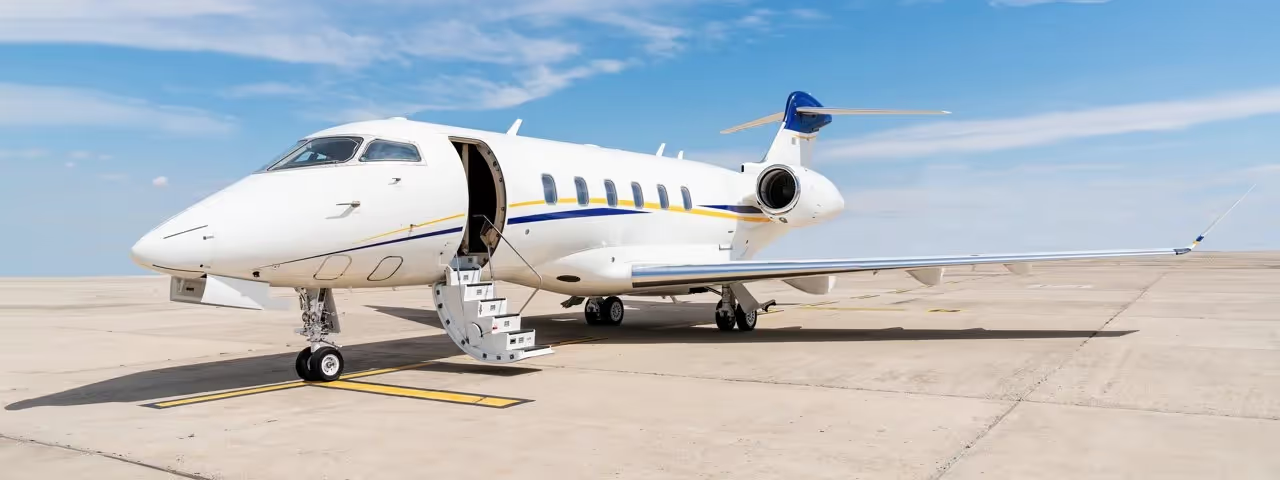
Business aviation has evolved far beyond convenience alone. Today, it represents a strategic approach to travel for high-net-worth individuals, executives, and organizations that value control, efficiency, and global reach. At the very top of this spectrum sits the largest private aircraft ever configured for personal use—the Boeing 747-8. The Boeing 747-8i is the largest private jet in the world, setting the benchmark for size and luxury in its class.
The private jet market has experienced steady growth over the past decade, driven by rising global business travel, heightened security concerns, and demand for flexible, point-to-point transportation. While most private flyers operate midsize or large-cabin business jets, the fascination with the world’s largest private aircraft highlights the extremes of customization, range, and onboard comfort. The Airbus A380 has also been converted for private use, most notably for high-net-worth individuals like Saudi Prince Alwaleed bin Talal, whose A380 was priced at over $500 million and featured extravagant amenities.
Private aviation offers advantages that commercial airlines cannot replicate: personalized schedules, access to thousands of airports worldwide, enhanced privacy, and time savings that compound over years of travel. The largest private jets take these benefits further by transforming air travel into fully self-contained living and working environments. In this class of aircraft, models like the Airbus Corporate Jet (ACJ) 350 stand out, offering approximately 2,900 to 3,300 square feet of floor space and the ability to fly for over 22 hours nonstop.
Government and specialized use of large private aircraft is also significant. The United States Air Force operates two specially adapted Boeing 747-200B aircraft as Air Force One, each costing approximately $325 million, to serve as presidential transport.
Alongside ultra-large aircraft, modern business jet models such as the Bombardier Global 8000 demonstrate how performance and comfort can be achieved without operating an aircraft the size of a commercial airliner. The Global 8000 has a cabin volume of 2,236 cubic feet and can accommodate up to 19 passengers. It is the world’s fastest business jet, boasting a top speed of Mach 0.95 and a range of 8,000 nautical miles. Its innovative Smooth Flĕx Wing enhances performance and allows the aircraft to access 30% more airports than competitors.
Other notable large business jets include the Gulfstream G650, with a cabin volume of 2,421 cubic feet and seating for up to 19 passengers. The Gulfstream G650 ER set the record for the longest nonstop flight by a business jet, covering 8,010 nautical miles. The Gulfstream G700, successor to the G650, features the industry's widest and tallest cabin, with 20 panoramic oval windows—the largest in business aviation—and can be configured with up to five living areas. It offers a cabin volume of 2,603 cubic feet, accommodates up to 19 passengers, and flies at speeds up to 709 knots (1,313 km/h).
The Dassault Falcon 10X is another ultra-long-range jet, featuring the largest cabin cross-section in its class, nearly 9 feet wide and over 6 feet tall, with a cabin volume of 2,780 cubic feet. It also seats up to 19 passengers, offering versatile interior configurations for ultimate comfort.
The Bombardier Global 7500 holds the distinction of having the largest cabin volume of any non-converted private jet at 2,786 cubic feet. It is also the world’s longest-range business jet, capable of nonstop flights up to 7,700 nautical miles. Like the Global 8000, it offers advanced cabin features including ergonomic beds, the cleanest air in business aviation with Bombardier Pũr Air filtration, a full-fledged kitchen, and a dedicated crew suite.
When discussing the largest private jet in the world, the Boeing 747-8 stands apart due to its sheer scale and engineering pedigree. Originally designed as a commercial airliner, select units have been converted into VIP aircraft that rival luxury residences in both size and function. The Boeing Business Jet (BBJ) 747-8i features nearly 5,000 square feet of cabin space across two decks, offering the capabilities of two aircraft in one. Its wingspan measures 224 feet 7 inches (68.45 meters), and it can accommodate up to 467 passengers in a standard three-class layout. The 747-8I has a range of 8,000 nautical miles (9,200 miles / 15,000 kilometers), making it ideal for intercontinental travel.
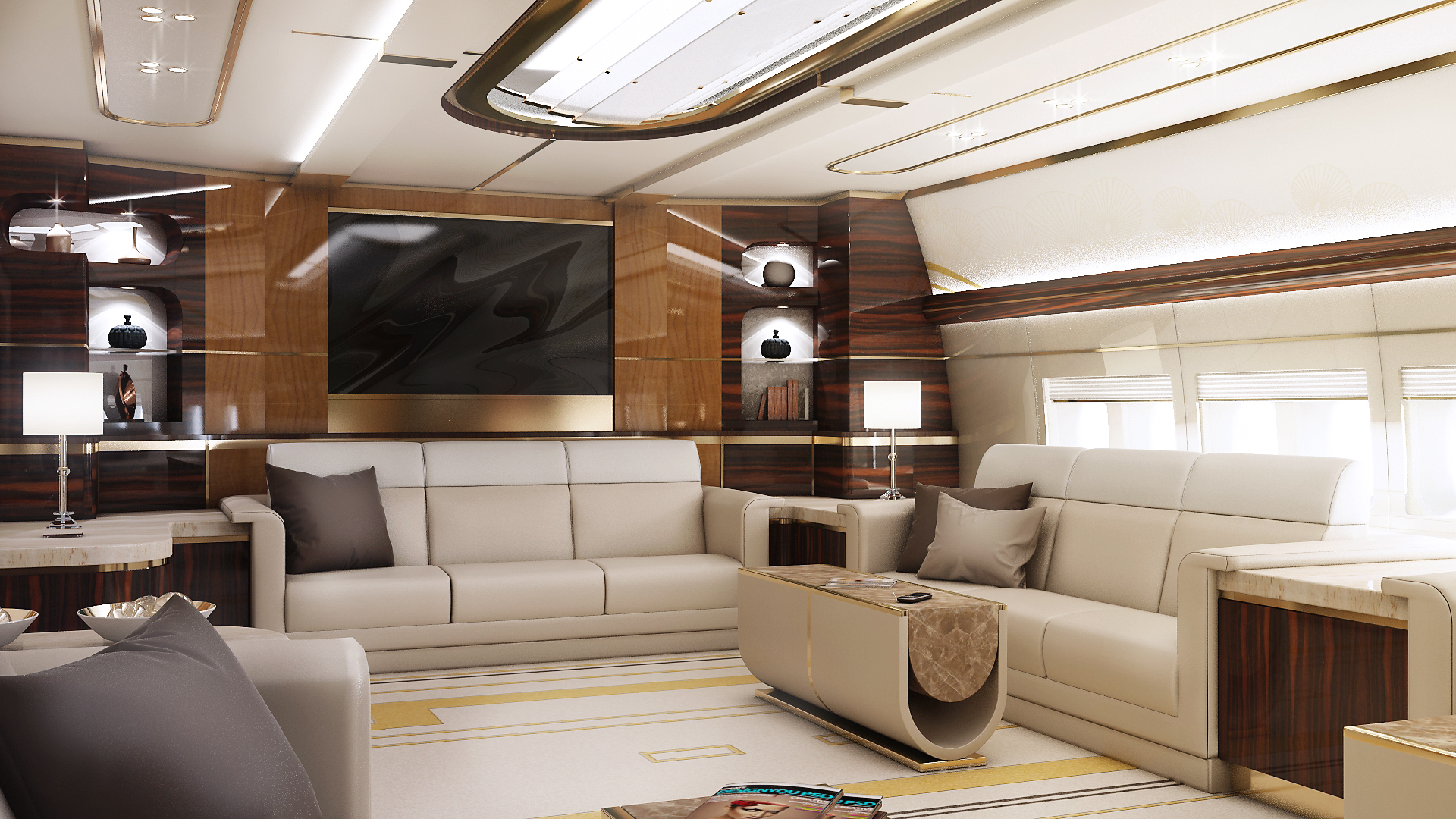
The Boeing 747-8 offers an extraordinary maximum takeoff weight, intercontinental range, and a cabin volume unmatched by any traditional business jet. Interiors can span multiple decks, accommodating features such as full-size master suites, conference rooms, lounges with vaulted ceilings, medical facilities, and dedicated crew quarters. The living areas are especially spacious, often featuring a coffee table as a centerpiece in the salon for relaxation and socialization. A large baggage compartment is also a key feature, providing ample storage and convenience for travelers. The list price for the Boeing 747-8I is approximately $367 million, but customized interiors can push the total cost to over $400 million.
Another aircraft frequently mentioned in discussions of ultra-luxury private aviation is the Airbus A380. The A380’s interior area offers roughly 5,920 square feet of usable floor space across three levels. Often referred to as a “Flying Palace” when customized for private use, the A380’s double-deck design enables expansive layouts that include wellness areas, prayer rooms, and entertainment spaces rarely associated with aviation. Prince Alwaleed bin Talal’s A380 was intended to include extravagant amenities such as a concert hall and a garage for his Rolls-Royce. However, some private A380 orders were not delivered due to financial or logistical reasons.
Notable owners of the Boeing 747-8i include Joseph Lau, a Hong Kong real estate tycoon. The late Sheldon Adelson owned a fleet of private jets, including two Boeing 747SPs and an Airbus A340-500. Paul Allen was among the first private individuals to purchase a Boeing 757 for personal and business use.
In contrast, aircraft such as the Bombardier Global 7500 prioritize efficiency over sheer size. While significantly smaller than the 747-8 or A380, the Global 7500 delivers one of the longest ranges in private aviation, along with an advanced wing design that enhances ride quality and fuel efficiency.
It is important to note that the environmental footprint of the largest private jets is considerable. High fuel consumption and emissions mean these aircraft are typically reserved for governments, heads of state, or ultra-high-net-worth individuals with specialized travel requirements.
The interior experience aboard the largest private jets is designed to remove any sense of limitation associated with flight. On a Boeing 747-8 VIP configuration, the master bedroom is located in the nose of the aircraft for maximum privacy and can rival those in luxury penthouses, featuring a full size bed, added convenience such as touch-controlled lighting and accessible storage, private bathrooms, and dedicated dressing areas. The master bathroom in the Boeing 747-8 includes a walk-in shower and a stylish vanity.
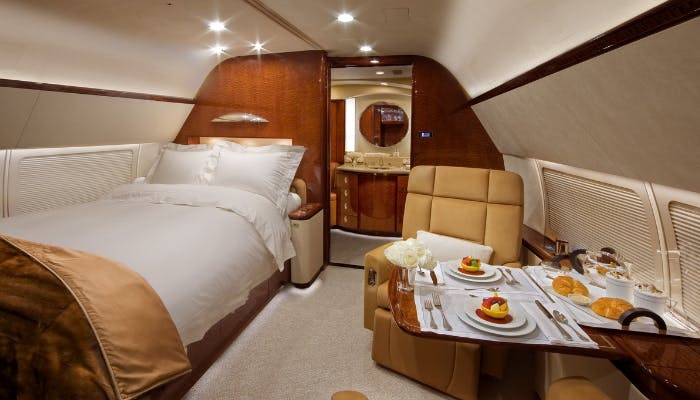
The spacious living room in the Boeing 747-8 features a high-definition flat-screen television and a children's play area, further enhancing the luxury experience. Attention to cultural and personal preferences is often a defining feature. Some configurations allow the master suite to include a prayer room that can rotate to face Mecca, reflecting the needs of specific owners. Additional living spaces may include formal dining rooms, private offices, lounges, and even performance or music halls.
When converted for private use, the Airbus A380 extends this philosophy further. Even the smaller bedrooms are generously proportioned and well-appointed, with smaller bedrooms often featuring their own bathrooms to ensure comfort and exclusivity. Shared spaces may incorporate spa-like amenities, wellness rooms, and relaxation zones that support long-duration flights. Some customized private A380 models feature extreme amenities such as a Turkish bath and a concert hall.
For travelers seeking comparable comfort without operating an aircraft of this magnitude, modern business jets provide refined alternatives. Aircraft such as the Bombardier Global 8000 feature four spacious suites with ergonomic beds designed for passenger comfort, and offer the industry's lowest cabin altitude at just 2,691 feet. The Bombardier Pũr Air system in the Global 8000 features a hospital-grade HEPA filter that captures up to 99.99% of particles, and the jet supports various internet connectivity options, including Ka-band and Starlink. The Global 7500 has the cleanest air in a business jet, utilizing advanced HEPA filters, and features a full-fledged kitchen and a dedicated crew suite, enhancing its luxury experience.
Leading business aviation companies, including NetJets and Flexjet, curate fleets designed to deliver luxury and consistency without the complexity of sole ownership. These providers focus on operational reliability and service standards rather than spectacle, but for those seeking the ultimate in exclusivity, the most expensive private jet options offer amenities and customization that only the owner can dictate, making each expensive private jet a true symbol of status and opulence.
The Boeing 747-8 is currently recognized as the largest private jet in the world. The list price for the Boeing 747-8I is approximately $367 million, but customized interiors can push the total cost to over $400 million. Acquisition costs often exceed $400 million before interior customization. For example, Russian billionaire Alisher Usmanov reportedly spent an additional $362 million on interior modifications for his Airbus A340-300 after the initial purchase. Roman Abramovich owned a Boeing 787 Dreamliner valued at approximately $350 million. Once ongoing operational expenses, staffing, maintenance, and fuel are considered, annual costs can reach tens of millions of dollars. Russia's invasion of Ukraine has also impacted ownership and storage of private jets, with sanctions affecting Russian billionaires and their aircraft.
The Airbus A380, while equally impressive, is even rarer in private configurations due to its operational complexity and limited airport compatibility. Both aircraft are typically owned by governments, royal families, or global conglomerates with specialized travel needs.
In contrast, long-range business jets such as the Bombardier Global 8000 offer practical global access, nonstop intercontinental capability, and significantly lower operating costs. These aircraft are more aligned with how most private aviation users travel today.
Manufacturers like Boeing and Airbus continue to push boundaries in materials, avionics, and cabin innovation. However, the market trend increasingly favors aircraft that deliver efficiency and flexibility rather than maximum size.
Safety remains foundational in business aviation, regardless of aircraft size. The flight deck of the Boeing 747-8 incorporates advanced avionics, fly-by-wire systems, and multiple redundant controls derived from commercial aviation standards.
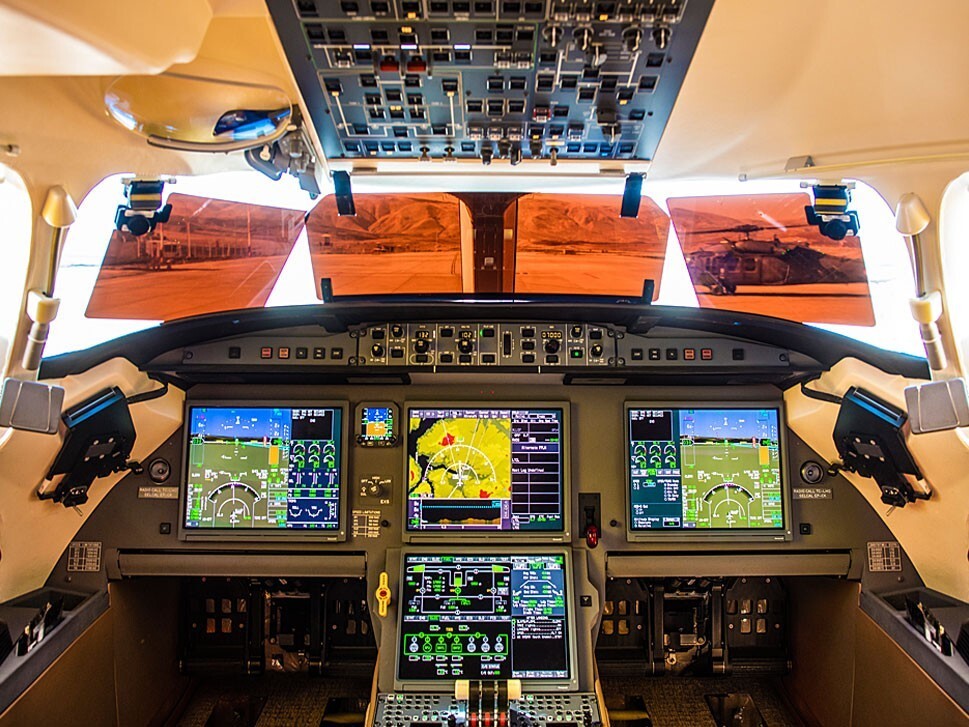
Similarly, modern business jets integrate enhanced vision systems, predictive landing performance tools, and sophisticated weather radar to reduce operational risk. Aircraft such as the Gulfstream G650 exemplify how advanced safety technology has become standard in the upper end of private aviation. The introduction of the Nuage seat, with its ergonomic design and deep recline feature, further enhances passenger comfort and represents a significant innovation in cabin seating.
Operators adhere to strict regulatory frameworks, including rigorous maintenance schedules, pilot training requirements, and operational oversight. Accumulated flight time is a key factor in establishing pilot expertise and credibility, ensuring that only highly experienced professionals operate the largest private planes. Large private aircraft, particularly those derived from commercial platforms, are subject to additional scrutiny to ensure safety standards remain uncompromised.
One of the defining advantages of private aviation is the ability to tailor the aircraft environment entirely to the owner’s needs. The owner has personal control over every aspect of customization, from layout to materials and technology. On aircraft such as the Boeing 747-8 and the Airbus A380, customization is virtually unlimited, constrained only by engineering feasibility and regulatory approval.
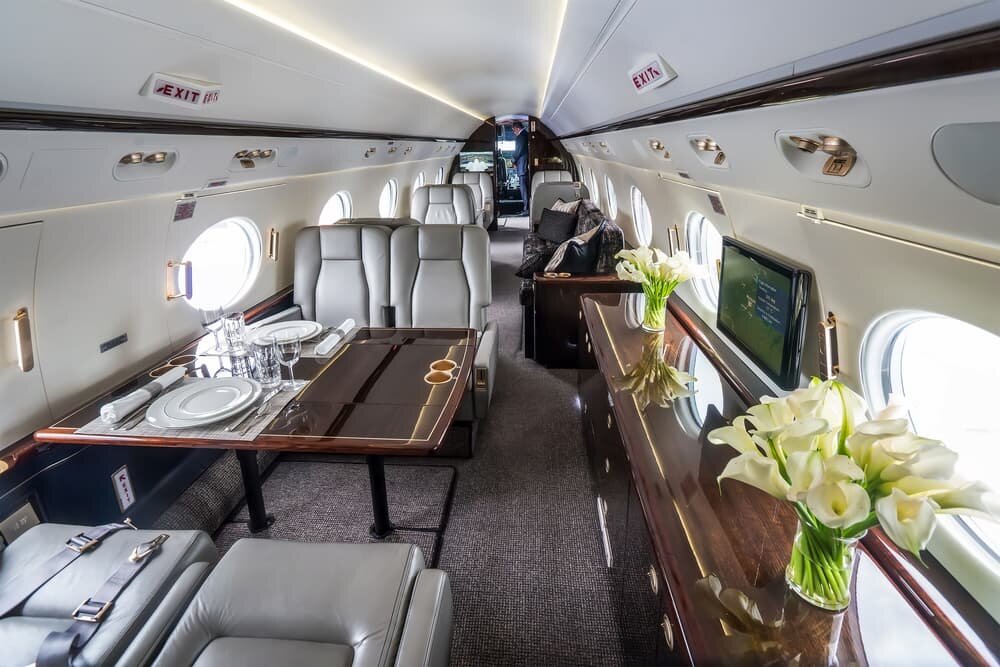
Specialized firms such as Lufthansa Technik are renowned for bespoke interior design and aircraft completion services. These projects can take several years and involve extensive collaboration between designers, engineers, and aviation authorities.
Customization options extend beyond aesthetics. High-speed connectivity, secure communications, advanced entertainment systems, and specialized lighting are all integral to modern private jet interiors. The size and accessibility of the baggage compartment is also a key element of luxury and practicality, providing ample storage for luggage and personal items. Even smaller long-range jets offer extensive personalization, allowing owners to balance style, comfort, and operational efficiency.
Owning the largest private jet in the world, such as the Boeing 747-8 or the Airbus A380, is a feat that extends far beyond the initial purchase price. These giants of private aviation demand a level of maintenance and upkeep that rivals the world’s most complex machines. With a maximum takeoff weight and the largest cabin in the business jet industry, the Boeing 747-8, for example, can incur annual maintenance costs exceeding $10 million. This investment ensures that every aspect of the jet—from its powerful engines to its advanced cabin altitude systems—operates flawlessly for every flight.
Behind the scenes, a dedicated team of highly trained technicians and engineers, often from renowned organizations like Lufthansa Technik, meticulously inspects and services these aircraft. Regular checks are essential to guarantee safety, reliability, and the smoothest ride possible for passengers. Advanced technologies, such as Bombardier Pũr Air, are employed to maintain the cleanest air in the cabin, while innovations like the Smooth Flĕx Wing help absorb turbulence, delivering a remarkably comfortable experience even at high altitudes.
The sheer scale of these jets means that specialized equipment and facilities are required for routine and unscheduled maintenance. Every system, from avionics to environmental controls, is monitored and maintained to the highest standards in the industry. For owners and operators, this commitment to excellence is not just about luxury—it’s about ensuring that the world’s largest private jets remain at the pinnacle of safety, performance, and passenger comfort.
While the luxury and convenience of the largest private jets are unmatched, their environmental impact is a growing concern within the private aviation industry. Aircraft like the Boeing 747-8, with their powerful engines and expansive range, consume significant amounts of fuel, contributing to higher emissions compared to smaller jets. However, the industry is actively seeking ways to reduce its environmental footprint and promote more sustainable practices.
Many of the latest private jets are equipped with advanced, more efficient engines designed to lower fuel consumption and emissions. The adoption of Sustainable Aviation Fuel (SAF) is also gaining momentum, with some operators now flying select routes using SAF to significantly reduce their carbon output. Manufacturers such as Bombardier are leading the way by developing new models like the Global 8000, which combines impressive range and speed with improved fuel efficiency and lower emissions.
In addition to technological advancements, the operating rules and performance assumptions for private jets are being re-evaluated to prioritize sustainability. This includes optimizing flight paths, reducing unnecessary weight, and implementing best practices for efficient flying. As a result, passengers can continue to enjoy the luxury and exclusivity of private jet travel while supporting efforts to create a more environmentally responsible future for aviation. The industry’s commitment to innovation ensures that even the largest private jets can evolve to meet the demands of both luxury and environmental stewardship.
While the largest private jets capture attention, they are not representative of how most private aviation users access aircraft. Fractional jet ownership has emerged as a practical alternative, offering access to high-performance aircraft without the financial and operational burden of full ownership.
Fractional aircraft ownership allows individuals or businesses to purchase a share of an aircraft, gaining predictable access, professional management, and cost transparency. This structure is particularly appealing to frequent flyers who do not require exclusive, year-round use of a single aircraft.
Compared to charter or jet card programs, fractional ownership often provides greater consistency in aircraft type, service standards, and long-term cost efficiency. For many, it represents a strategic middle ground between convenience and control.
The largest private plane in the world—the Boeing 747-8—demonstrates the extraordinary heights private aviation can reach. Yet, its scale and cost place it firmly in a niche category reserved for a select few.
For most travelers, the true value of private aviation lies not in size alone, but in flexibility, reliability, and efficiency. Fractional jet ownership delivers these benefits while avoiding the complexity of operating an ultra-large aircraft.
Ready to explore the smarter way to fly private? Visit https://www.fractionaljetownership.com/ to learn how fractional ownership can align with your travel needs and long-term aviation strategy.
