February 26, 2026
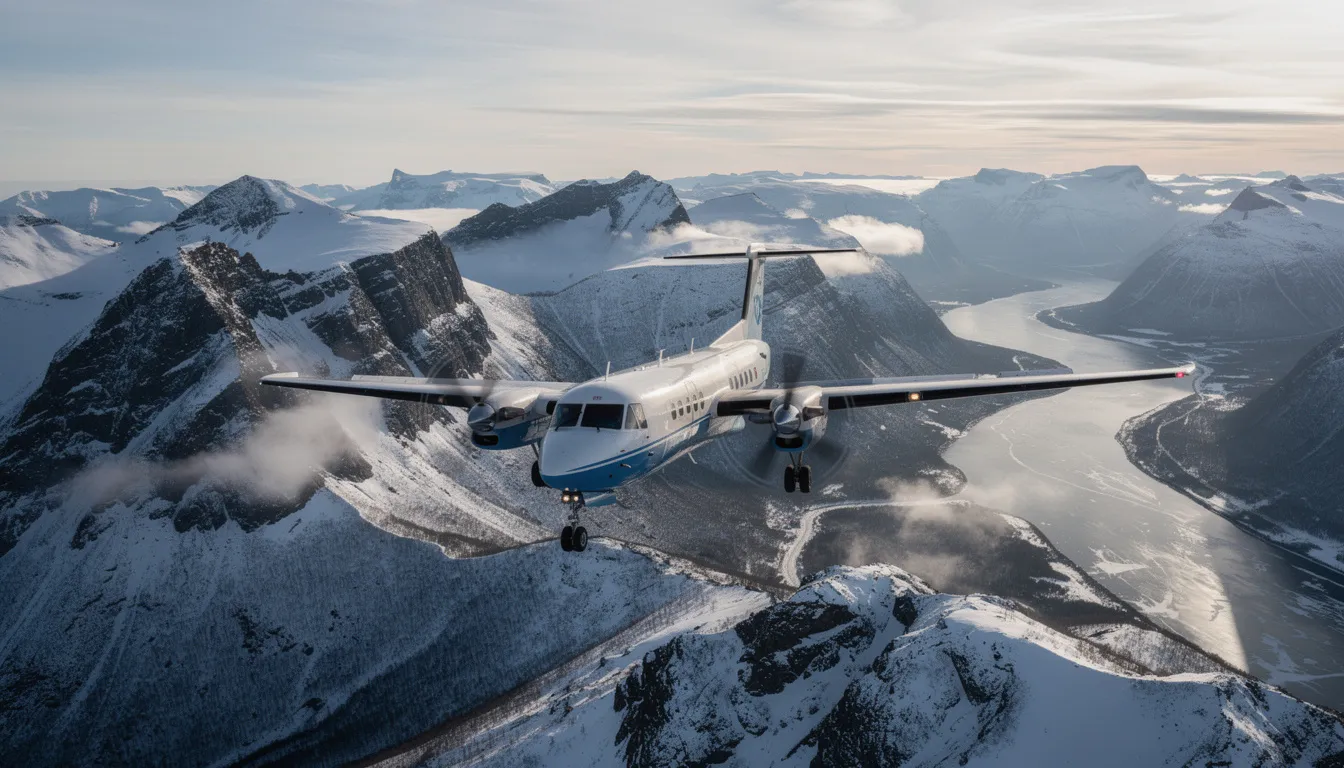
Nextjet was once one of Sweden’s largest regional airlines, operating from December 2002 until its sudden collapse in May 2018. For over 15 years, this company provided essential air links between Stockholm and remote communities across the north of Sweden, as well as select routes to Finland and Norway.
The airline was headquartered in Frösundavik, Solna Municipality, just north of central Stockholm. Its primary hub was Stockholm Arlanda Airport (ARN), from which it connected passengers to dozens of smaller domestic destinations. Nextjet specialized in regional connectivity, linking Stockholm to communities such as Hemavan, Lycksele, Vilhelmina, Örnsköldsvik, Arvidsjaur, Gällivare, Kramfors, and others that would otherwise face lengthy ground journeys.
Many of these domestic routes were operated under public service obligation (PSO) contracts subsidised by the Swedish government. These arrangements ensured year-round air links to sparsely populated areas where commercial viability alone would not support regular flights.
In addition to its own scheduled services, NextJet also operated routes on behalf of other airlines such as Sverigeflyg and Air Åland, expanding its reach within the regional Scandinavian market.
This article covers Nextjet’s history, fleet composition, route network, passenger experience, its 2018 collapse, current alternatives for travelers, and clarifies the distinction between the defunct Swedish carrier and a separate “NEXTJET Airlines” entity.
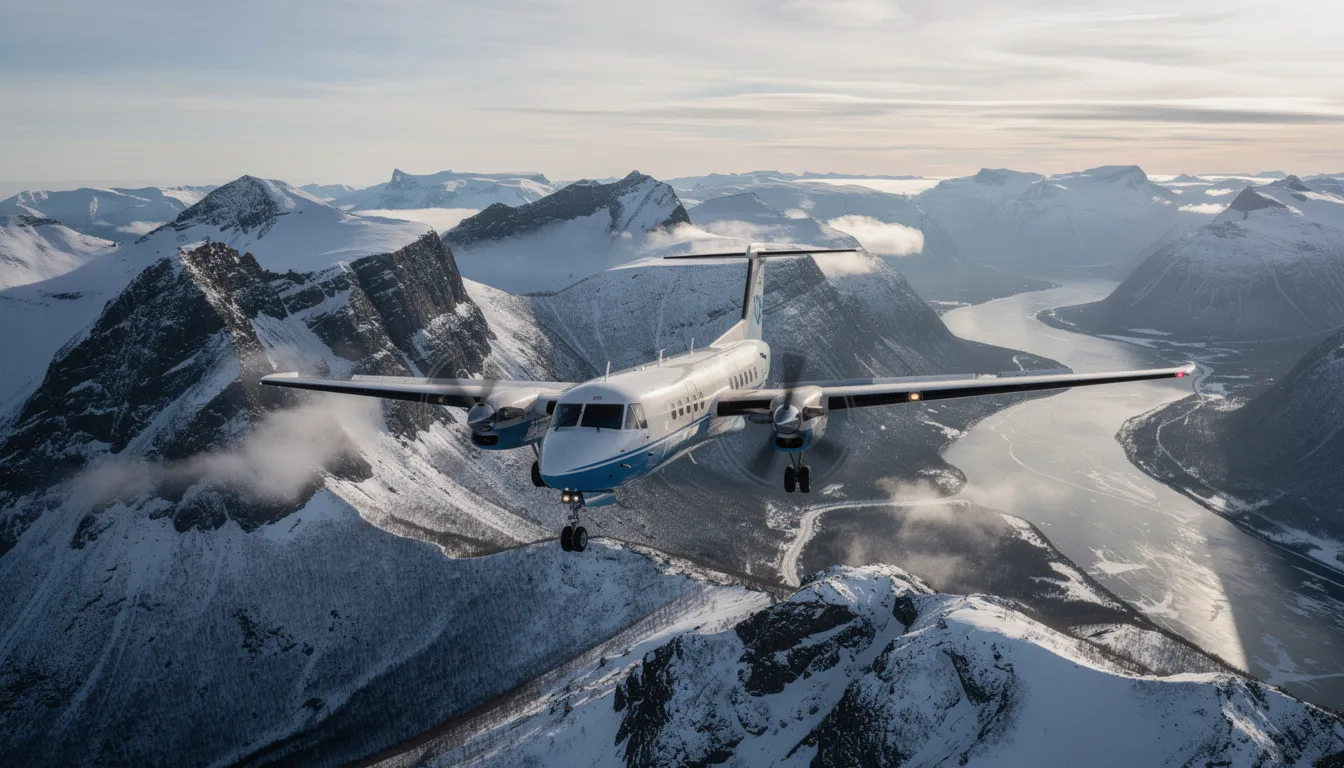
Nextjet was founded in 2002 by Magnus Ivarsson and began operations with a single Saab 340A aircraft. The Saab 340 proved ideal for short regional hops due to its ability to operate from short runways in challenging Scandinavian weather conditions. Early operations focused on wet-leasing and ACMI (aircraft, crew, maintenance, insurance) arrangements, allowing Nextjet to build expertise without heavy capital investment.
During the mid-2000s and early 2010s, the airline expanded significantly. By 2010, Nextjet had become the largest regional airline in Sweden, serving over 20 domestic destinations including Gothenburg, Luleå, Stockholm, Sundsvall, Visby, Hemavan, and others. The airline focused on connecting smaller cities in Sweden to major hubs, particularly Stockholm-Arlanda Airport (ARN).
Ownership evolved considerably over the years. Early investors included ABBA member Björn Ulvaeus, adding a notable cultural footnote to the company’s profile. By 2012, control shifted to Höga Kusten Flyg AB, representing Örnsköldsvik’s local business interests. From July 2016, the Nextjet group became jointly owned by Jakobstad-based energy firm Katternö, Air Åland, and Magnus Ivarsson, who served as both CEO and co-founder.
However, starting in 2012, Nextjet began to experience financial difficulties due to increased competition and an economic downturn. For frequent business travelers, such instability has led some to explore alternatives like fractional jet ownership programs for regular flyers. These challenges culminated in the loss of its operating licence in 2017 due to financial concerns.
On 16 May 2018, Nextjet filed for bankruptcy in a Swedish court and immediately stopped all operations. The announcement came with shocking abruptness—all Nextjet flights departing after approximately 13:00 local time that day were cancelled without warning.
The sudden cessation stranded passengers and disrupted remote communities that depended heavily on these air links. For towns in northern Sweden with limited rail and road connections, the loss of flights created genuine hardship.
Six months prior to its demise, Nextjet experienced a sabotage incident involving one of its aircraft, which resulted in the closure of an airport and its air traffic, further destabilizing the airline’s operations.
Initially, there were announcements suggesting restructuring efforts and a potential rebranding. The Olsen Group acquired assets on 1 June 2018, planning a relaunch as Air Scandic on 11 June. However, this never materialized, and the airline’s air operator’s certificate was effectively lost.
Under Swedish bankruptcy procedures, ticket sales ceased immediately, operations were suspended, and a bankruptcy trustee was appointed. Outstanding tickets became part of the bankruptcy estate, meaning most passengers had to seek refunds through credit card chargebacks, travel insurance claims, or intermediaries rather than directly from the airline.
Nextjet officially ceased operations in October 2018 and sold all of its assets.
Nextjet’s network was heavily focused on domestic Sweden, supplemented by cross-border services to Finland and Norway. At its peak, the airline served 22 destinations, primarily from its Stockholm Arlanda Airport hub.
Representative domestic destinations included:
Gothenburg (GOT) - Southwest Sweden
Luleå (LLA) - North Sweden
Sundsvall-Timrå (SDL) - Central Sweden
Visby (VBY) - Gotland
Örnsköldsvik (OER) - North Sweden
Hemavan (HMV) - North Sweden
Lycksele (LYC) - North Sweden
Vilhelmina (VHM) - North Sweden
Arvidsjaur (AJR) - North Sweden
Gällivare (GEV) - North Sweden
Kramfors (KRF) - North Sweden
Some services also operated from Stockholm Bromma (BMA) and from Mariehamn (MHQ) in Åland, where Nextjet flew on behalf of partners such as Sverigeflyg and Air Åland.
The airline supported regional economies by maintaining year-round links to sparsely populated northern areas. Without these connections, rail and road journeys would have been significantly longer for business travelers, medical appointments, and general connectivity.
International or near-international routes included services from Sweden to Finland’s Vaasa and Kokkola/Pietarsaari, and occasional Norwegian destinations, reflecting the airline’s limited but important cross-border role.
Nextjet primarily operated turboprop aircraft optimised for short regional sectors, later supplemented by small regional jets. At its peak, the fleet totaled 15 aircraft of various types.
The following aircraft formed the backbone of operations:
Saab 340A/B The workhorse of the fleet, with 9 aircraft in total (3 Saab 340As and 6 Saab 340Bs). These turboprops seated 33-36 passengers and were perfectly suited for short Scandinavian routes and smaller airfields with limited runway length. Operating costs ran approximately 20-30% lower than jets for routes under 500 km.
BAe ATP Four of these larger turboprops provided around 68 seats each. They were deployed on routes with slightly higher demand or cargo requirements, offering more capacity while maintaining turboprop efficiency.
Bombardier CRJ200 Two of these regional jets (operated by Voyageur Airways) seated 50 passengers and offered a somewhat faster, jet-equivalent experience on busier routes. The CRJ200s provided differentiation from the turboprop fleet.
The airline also maintained two business jets for taxi and executive charter flights, typically requiring experienced flight crews comparable to those found in premium private aviation pilot and cabin crew services. While fleet diversity helped Nextjet match aircraft size to route demand, it also increased maintenance complexity and training requirements, adding operational costs for a regional carrier.
The policies described in this section reflect how Nextjet operated before 2018 and are preserved for historical reference only. These rules no longer apply.
Nextjet offered three Economy fare types:
Economy Light: Carry-on baggage only, most restrictive change policies, lowest fares. This fare did not include free checked baggage.
Economy Standard: One checked bag included, weighing no more than 20 kg, with moderate flexibility.
Economy Flex: Two checked bags allowed, each weighing up to 23 kg, more flexible ticket changes, and priority rebooking.
A small premium cabin was available on selected routes, offering:
Priority boarding
More flexible tickets
Additional baggage allowance (two pieces of carry-on baggage up to 8 kg each, typical size 55 x 40 x 23 cm)
Enhanced onboard service including wider leather seats with more legroom, dedicated check-in and boarding counters, and priority baggage handling.
Carry-on baggage:
One item up to 8 kg, approximately 55 x 40 x 23 cm, for most passengers
Business Class passengers were typically allowed two such items
Checked baggage:
Standard allowance of 20-23 kg per checked bag, depending on fare type
The number of free bags varied by fare type
Excess baggage fees applied for overweight or additional pieces
Online check-in typically opened 24 hours before departure on Nextjet’s website, allowing passengers to obtain boarding passes in advance. This covered most flights, though some smaller airports required airport desk check-in only.
Airport check-in desks generally opened 1-2 hours before departure and closed 30-45 minutes before take-off. Business Class and fully flexible ticket holders had access to priority check-in counters at larger airports like Stockholm Arlanda.
Passengers without printers or smartphones could obtain boarding passes at staffed desks or self-service kiosks at major airports.
The onboard product varied by aircraft type, route length, and cabin class. Customer reviews were generally mixed to average overall.
Passengers rated Nextjet as follows:
Seat Comfort: 2.5 out of 5
In-flight Entertainment: 1.5 out of 5
Food and Beverage Service: 2.5 out of 5
Customer Service: 3 out of 5
Cleanliness: 3 out of 5
Boarding & Check-in: 3.5 out of 5
Saab 340 and BAe ATP turboprops offered basic but functional seating for short flights, with a standard 2-1 or 2-2 layout and limited recline. Most of these aircraft did not offer personal in-flight entertainment, and only occasionally provided shared overhead screens for basic video content.
CRJ200 cabins offered more of a “jet” feel, with a narrower 2-2 layout and slightly improved comfort on busier sectors. Some CRJ200 aircraft were equipped with individual screen entertainment, providing access to movies, TV shows, and music—a notable differentiation from the turboprop fleet.
Complimentary catering depended on route length and time of day:
Short flights (under one hour): Limited or no free service; buy-on-board snacks and soft drinks available
Longer domestic legs: Often included free coffee, tea, water, juice, cookies, or small salty snacks
Alcohol: Generally available for purchase in Economy on qualifying routes, subject to Swedish regulations
Business Class: Complimentary light meals or substantial snacks, plus a broader range of free beverages including wine and beer on longer flights
Special meal options were limited compared with larger network carriers. Passengers with strict dietary needs were advised to plan ahead.
Since Nextjet ceased operations in 2018, travelers must use other airlines or transport options to reach the same destinations.
Many previously served Swedish regional routes are now flown by alternative carriers under new PSO contracts or commercial arrangements. Braathens Regional Airlines, for example, has taken over several routes formerly operated by Nextjet.
When planning travel to former Nextjet destinations:
Search current schedules from Stockholm Arlanda (ARN) and Stockholm Bromma (BMA)
Check regional airport websites for updated carrier information
Use modern flight comparison tools rather than relying on outdated references
Consider alternative modes such as rail or coach connections, which may have been enhanced since 2018
For some smaller communities, air services have shifted to new operators, been consolidated into nearby airports, or replaced partly by improved ground transport. The Swedish government has increased regional aviation subsidies to over SEK 1 billion annually to maintain essential connectivity.
It is important to clarify that “Nextjet” (the Swedish regional airline) and “NEXTJET Airlines” are completely different entities.
The historic Nextjet was a real Swedish carrier headquartered near Stockholm, with a network centred on Stockholm Arlanda Airport, operating scheduled domestic and regional flights from 2002 to 2018.
“NEXTJET Airlines” refers to a separate, Toronto-based concept linked to aviation enthusiasts or virtual airline activity. This operation uses Toronto Pearson International Airport (CYYZ) as its only hub and allows members to fly only to and from CYYZ, similar in geography to services that might operate to or from Mississauga’s Toronto Pearson (YYZ) airport.
There is no direct commercial or corporate connection between these two. The Toronto-centric NEXTJET does not represent a successor to the Swedish airline that filed for bankruptcy. Readers should not confuse the two when checking historical flight reviews, booking tools, or online forums—especially when encountering contrasting route maps and hub information.
While Nextjet is no longer rated as an active airline, historic reviews remain visible on platforms like Tripadvisor and travel meta-search sites.
User ratings typically showed:
Passengers' ratings of Nextjet services included:
Boarding & Check-in: 3.5 out of 5
Food & Beverage: between 1.5 and 2.5 out of 5
In-flight Entertainment: between 1.5 and 2.5 out of 5
Seat Comfort: between 2 and 2.5 out of 5
Passengers appreciated the connectivity to remote communities and punctuality on many routes (75-80% on-time performance reported). However, criticism focused on older aircraft interiors, cabin noise typical of turboprops, and limited onboard amenities.
Despite its shortcomings, Nextjet played an important role in Sweden’s regional transport network for over 15 years. Its collapse forced a significant reorganisation of air services across northern and rural areas, requiring government intervention and new PSO contracts to restore essential connectivity.

No. The Swedish airline Nextjet filed for bankruptcy on 16 May 2018 and permanently ceased all flight operations the same day. There have been no successful attempts to restart the brand. Any current references to NextJet flights in booking tools represent either historical data or mislabelling.
After the 2018 bankruptcy, unused tickets became part of the bankruptcy estate, and the airline stopped issuing refunds. Historically, the best recourse was through credit card chargebacks, travel insurance policies, or claims via travel agencies. However, time limits for such claims have generally long since expired.
Coverage varies by route and has changed several times since 2018. Different regional carriers have stepped in under new contracts. Braathens Regional Airlines serves several former Nextjet routes. Travelers should check current timetables on Swedish airport websites and use up-to-date flight comparison tools rather than relying on fixed replacement lists.
No. Each airline maintains its own baggage allowances, check-in times, and fare classes, which differ significantly from Nextjet’s former policies. Always consult the current operating carrier’s website or booking confirmation for applicable rules.
There is no direct commercial or corporate link between the historical Swedish Nextjet and the Toronto-hub “NEXTJET Airlines” concept. They should be treated as entirely separate entities: one was a defunct Swedish regional airline, the other is a distinct operation centred on Toronto Pearson (CYYZ) with no connection to Scandinavian aviation.
Nextjet Airlines played a vital role in connecting Sweden's remote northern communities with major hubs like Stockholm Arlanda Airport for over 15 years. Despite its eventual bankruptcy in 2018 and cessation of operations, the airline's legacy highlights the importance of regional air connectivity in sparsely populated areas. Today, travelers seeking alternatives to Nextjet can explore various regional carriers serving former Nextjet destinations or consider other modes of transport.
For frequent business travelers or those seeking more flexible and premium travel options beyond traditional regional flights, fractional jet ownership programs offer an attractive alternative. Services such as those detailed at Fractional Jet Ownership provide access to private jets with shared ownership, combining convenience, time savings, and personalized service. This option may be particularly appealing for those requiring frequent and efficient travel across Sweden, Scandinavia, or beyond, supplementing or replacing the kind of routes once served by airlines like Nextjet.
By understanding Nextjet's history and the evolving landscape of regional air travel, passengers can make informed choices about their future travel plans and explore modern alternatives that fit their needs.
