
April 30, 2026
Understanding how much it does cost to fly private in 2026 requires looking beyond the sticker price. This guide is for prospective private jet buyers, frequent charter clients, and anyone evaluating the true cost of flying private in 2026. Understanding these costs helps you make informed decisions about ownership, charter, or fractional options. Whether you’re evaluating your first private jet flight or reconsidering your current aviation strategy, the numbers involve far more than hourly charter rates or initial purchase price. This guide breaks down the real costs of private aviation across ownership, charter, and fractional models.
For 2026, private jet charter prices range from approximately $2,000 per hour for very light jets (VLJs) to $14,000 or more per hour for heavy jet and long-range aircraft. Very Light Jets (VLJs) are the most budget-friendly jets on the market, designed for efficiency and affordability, typically seating 2–5 passengers and ideal for regional flights under approximately 1,200 nautical miles. Light Jets generally cost from $1.8 million to $11 million when pre-owned, offering a balance between luxury, comfort, and affordability, and are suitable for business trips or family getaways with a greater range and cabin space compared to VLJs. Midsize Jets range from $15 million to $28 million when new, and can drop as low as $2.1 million for older used models; these jets offer stand-up cabins and transcontinental range, appealing to frequent flyers prioritizing cabin space compared to light jets. Heavy and Ultra-Long-Range Jets exceed $70 million new, with some custom-converted commercial airliners exceeding $100 million, providing intercontinental travel capability with spacious cabins and advanced technology. Turboprops range from $2 million to $7 million when new, with pre-owned models starting around $500,000, and are known for fuel efficiency and the ability to operate from shorter runways, making them the most economical option for shorter flights.
Full private jet ownership starts around $1.5 million for a pre-owned light jet and climbs past $70 million for new ultra-long-range business jets, with some custom-converted commercial airliners exceeding $100 million. Fractional ownership offers a middle ground, with programs typically starting at 25 flight hours per year and requiring significantly less capital than buying a private jet outright. When considering private jet cost, it’s important to look beyond just hourly charter rates or the initial purchase price—factors such as aircraft size, route, onboard services, and additional fees all influence the total expense.
As of July 2024, there are approximately 24,270 private jets in operation worldwide, reflecting the growing accessibility and popularity of private aviation.
The total charter cost of a private flight depends heavily on aircraft category and distance. Here’s what a typical all-in trip costs look like in 2026:
New York to Miami (approximately 2 hours on a light jet): $12,000–$18,000 including billable flight time, landing fees, taxes, and fees such as the 7.5% Federal Excise Tax (FET) plus a per-segment fee of about $4.80.
Los Angeles to New York (approximately 5 hours on a midsize or super midsize jet): $35,000–$50,000
New York to London (approximately 7 hours on a long-range jet): $120,000–$180,000+, with crew overnights adding $300–$500 per night.
Chartering a small private jet typically costs between $2,000 and $6,000 per hour, while midsize or super midsize jets range from $4,000 to $8,000 per hour. The typical cost to charter a private jet in the United States ranges from $5,000 to $10,000 for a standard 2-hour domestic flight on a midsize jet, which includes the base hourly rate and additional fees.
Private jet charter costs typically range from $2,000 to over $14,000 per flight hour, depending on the aircraft size, route, and onboard services.
Most charter operators require a minimum booking of two flight hours, so the cost to hire a private jet generally begins between $4,000 and $7,000, even for shorter trips.
Annual fixed costs for larger aircraft often exceed $1 million regardless of how often the aircraft flies. These include pilot and crew salaries, hangar fees, insurance, and management overhead. This reality makes charter or fractional ownership significantly more efficient for anyone flying below roughly 200 hours per year. Total trip costs for private jet charters may also include additional charges such as aircraft positioning fees, fuel surcharges, landing fees, crew expenses, and applicable taxes, which can increase the base rate by 20-40%.
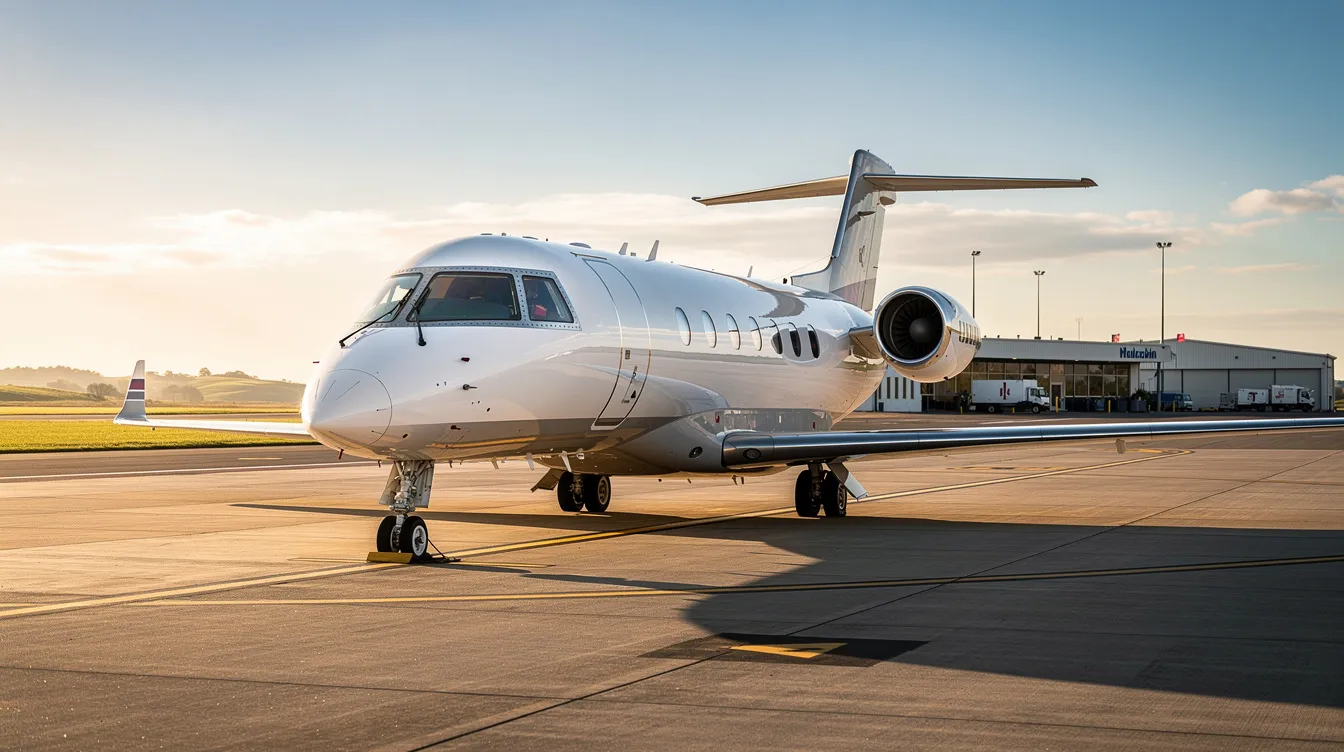
BlackJet Fractional Jet Ownership positions itself as the middle path between ad-hoc private jet rental and full ownership. For individuals or businesses flying 25–150 hours annually, this model delivers predictable costs, guaranteed aircraft availability, and professional management without the capital burden of buying an entire aircraft.
The purchase price of a private airplane represents only a fraction of the total cost equation. Lifecycle expenses—shaped by aircraft category, age, utilization patterns, and access model—determine whether private aviation makes financial sense for your situation.
Aircraft size and category: Each step up from the very light jet category to light jet, midsize, super midsize, heavy, and ultra-long-range multiplies both fixed and variable costs by 2–5x. Larger aircraft require more crew members, increased hangar space, and higher regulatory scrutiny.
Age and condition: New jets typically feature the latest technology but come with higher initial costs. Used jets may be 30-50% cheaper but might require immediate maintenance. Aircraft typically lose 10% of their value in the first year and 5% each subsequent year due to depreciation.
Annual flight hours: At 50 hours per year, fixed costs translate to $20,000+ per effective flight hour. At 400 hours, that figure drops to approximately $4,000. Higher utilization spreads fixed costs across more flying, fundamentally changing the economics.
Geographic and operational factors further influence expenses. US operations typically run 15–25% higher than European equivalents due to federal excise tax (7.5%), high-fee FBOs at airports like Teterboro or LAX, and crew logistics for overnight trips. Crew overnight fees typically range from $150 to $500 per crew member each night, covering accommodations, meals, ground transportation, and the cost of maintaining highly trained private jet pilots and crews. International handling fees and overflight permits add thousands per mission when crossing borders.
Management structure matters as well. Self-managed operations suit high-hour owners with dedicated teams, while third-party management or fractional programs like BlackJet bundle compliance, crew, and scheduling into predictable fees—often reducing administrative overhead by 10–20%.
The private jet market in 2026 reflects post-pandemic demand normalization with continued strong resale values for popular business jets. Delivery backlogs at manufacturers like Bombardier and Gulfstream have pushed many buyers toward pre-owned aircraft, where well-maintained models retain 70–90% of value.
Here are typical 2026 price bands by aircraft category:
Very Light Jets (VLJs): The most budget-friendly jets on the market, designed for efficiency and affordability, typically seating 2–5 passengers and ideal for regional flights under approximately 1,200 nautical miles. New aircraft run $2 million to $5 million; pre-owned from approximately $1.5 million. These single-pilot certified aircraft offer excellent fuel efficiency and can handle short runways, making them a practical choice for budget-conscious buyers. Examples include the Cirrus Vision Jet SF50 and Embraer Phenom 100, the latter with a new purchase price around $4.5 million reflecting its premium yet accessible position in the VLJ category.
Light Jets: Generally cost from $1.8 million to $11 million when pre-owned. Popular models like the Cessna Citation Mustang, priced between $1.5 million and $2.7 million pre-owned, and the Embraer Phenom 100 offer a balance between luxury, comfort, and affordability. They suit business trips or family getaways with a greater range and cabin space compared to VLJs. New light jets typically range from $8 million to $12 million.
Midsize and Super Midsize Jets: New jets command $15 million to $30 million; pre-owned $7 million to $20 million. These aircraft offer stand-up cabins and transcontinental range, appealing to frequent flyers prioritizing cabin space compared to light jets. Older used models can drop as low as $2.1 million, while fractional programs allow you to own a fractional share of a Falcon 2000EX–class super midsize jet without the full capital outlay.
Heavy and Ultra-Long-Range Jets: New aircraft reach $45 million to $75 million+, with some custom conversions exceeding $100 million. These jets provide intercontinental travel capability with spacious cabins and advanced technology, but come with higher purchase prices and operating costs; long-range models such as the Falcon 6X in fractional ownership structures target buyers prioritizing nonstop global reach.
Turboprops: Range from $2 million to $7 million when new, with pre-owned models starting around $500,000. Known for fuel efficiency and the ability to operate from shorter runways, turboprops are often the most economical option for shorter flights, and some buyers opt to own a fractional share of a TBM 850 turboprop to capture those economics with lower upfront capital.
For budget-conscious buyers, older but capable models like early-2000s Dassault Falcon 50EX or Gulfstream G200 trade in the $3 million to $8 million range, offering proven range and spacious interiors with fewer cutting-edge avionics, while fractional options in aircraft such as the Falcon 900LX long-range jet provide similar mission capability with shared ownership economics.
Acquisition financing typically spans 5–12 years, impacting annual cash outlay significantly. Many US buyers leverage accelerated depreciation (Section 179 or bonus depreciation, where still available) for qualifying business use—though the 2026 specifics require consultation with aviation-savvy CPAs and a clear understanding of liability and insurance coverage in fractional jet ownership.
Annual ownership cost breaks into two buckets: fixed costs paid whether the jet flies or not, plus variable costs per flight hour. For most business jets, annual fixed costs exceed $500,000–$1,000,000, making utilization the critical factor in ownership economics.
Crew salaries and benefits: Pilot salaries range broadly from $85,000 to over $300,000 annually per pilot, with combined pilot and attendant salaries reaching $200,000 to $500,000 depending on crew size and experience. Recurrent training adds $20,000 to $50,000 per pilot yearly.
Hangar fees: Storage fees vary widely, from $30,000 to over $200,000 per year, depending on location and aircraft size. Premium airports like Teterboro, LAX, or London Luton command higher rates.
Insurance: Hull and liability insurance typically run $40,000 to $250,000 annually, scaling with aircraft value, pilot experience, and projected usage.
Management fees: Third-party management or Part 135 charter programs add 5–10% ofthe operating budget for compliance, scheduling, and administration.
Fuel consumption: VLJs burn approximately $500 per hour; midsize jets $1,800 to $2,500; long-range aircraft $3,500 to $5,000+ at current fuel prices. Fuel often represents the largest operating expense.
Maintenance reserves and engine programs: Budget roughly 2% of the original purchase price annually for routine maintenance, with major events such as engine overhauls costing $1 million or more per engine.
Trip-specific charges: Landing fees vary by airport and aircraft weight, typically $10 to over $200 per landing, with major commercial airports charging higher fees than smaller reliever airports. Additional costs include handling, navigation charges, de-icing ($1,000–$10,000 in winter), and catering.
Fuel costs range from $300 to $700 per flight hour
Maintenance costs range from $50,000 to $200,000 annually
Insurance costs between $15,000 and $30,000 per year
Realistic scenario: A midsize jet flown 250 hours per year totals $1.5 million to $2.2 million annually, including all fixed and variable costs. A large long-range jet at 300 hours can exceed $4 million to $6 million, which is why many investors compare these figures against the best fractional jet ownership programs for smart investors before deciding on full ownership.

On-demand charter offers private jet travel without capital outlay, making private jet rental ideal for those flying under approximately 200 hours annually. Understanding 2026 hourly charter rates helps frame the ownership decision.
When evaluating hourly rates, availability at your preferred airport also matters; some city-pair searches, such as private jet flights to or from Mississauga YYZ, may show limited aircraft due to performance constraints or fleet positioning.
Turboprops and VLJs: Approximately $1,800 to $3,000 per flight hour. These economical private jets suit short regional flights and access to smaller airports, including regional fields that support fractional jet ownership and access at Atlantic Municipal.
Light jets (Citation CJ3+, Learjet 75): $2,600 to $4,000 per hour. The light jet category balances cost against capability for 6–8 passengers on domestic routes, and light-jet fleets often serve leisure-focused hubs like Bay of Islands private jet access and ownership programs.
Midsize and super midsize (Citation XLS+, Challenger 350): $3,800 to $7,500 per hour. Enhanced cabin space and transcontinental reach justify the step up, particularly from emerging business hubs such as Bhubaneswar’s private jet access and ownership options.
Heavy jets and long-range (Gulfstream G550, Global 6000): $8,000 to $14,000+ per hour. Complex maintenance and substantial fuel loads drive premiums, but these aircraft unlock nonstop missions to lifestyle destinations supported by Ibiza private jet access and ownership options.
Actual private jet rental prices include more than hourly rates. Total trip costs incorporate:
Billable flight time,e including aircraft positioning (empty leg flights to reach you)
Fuel surcharges tied to jet fuel prices
Landing and ramp fees at destination airports
Crew overnight costs for multi-day trips
Federal excise tax at 7.5% plus per-segment fees in the US
Seasonal spikes affect charter costs significantly. Events like Art Basel Miami, Super Bowl, or ski season in Aspen can push rates 20–50% above standard pricing, and beach destinations served by Fernandina Beach private jet access and ownership options see similar surge dynamics.
The break-even calculation: At 50 to 75 hours per year, charter typically proves more economical than owning even affordable private jets. Above 200 hours annually, full or fractional ownership usually delivers better cost per hour plus scheduling control. Between those thresholds, fractional programs like BlackJet often provide the optimal balance.
Many BlackJet clients still use ad-hoc charter to supplement peak dates or unusual missions, mixing access strategies based on seasonal demand and route patterns.
Fractional aircraft ownership means purchasing a share—typically 1/16 or 1/8 fractional jet ownership—of an aircraft that entitles the owner to a specific number of flight hours per year. Professional management handles crew, maintenance, and scheduling while delivering predictable pricing and potential tax advantages. For private aviation enthusiasts flying 50–150 hours annually, this structure often outperforms both pure charter and full ownership.
BlackJet Fractional Jet Ownership offers three primary access models:
Reserve Fleet: Pay-as-you-go hours without equity ownership, often structured around floating fleet options in fractional ownership. Fixed hourly rates, no long-term ownership risk, and guaranteed availability make this ideal for 25–75 hours per year. Clients avoid capital tie-up while gaining access to the same aircraft with consistent service standards.
Equity Fleet: Fractional ownership shares with an initial capital buy-in plus monthly management and hourly occupied flight charges, so understanding the total cost of fractional jet ownership is essential. Suited for 50–150+ hours annually, this model offers priority access, custom aircraft sourcing, and potential tax benefits. Exit via resale after 5–10 years typically retains 70–90% of value on popular models.
Typical fractional cost elements include the key components outlined in our complete guide to the cost of fractional jet ownership:
Initial share purchase: Buying 1/16 of a light or midsize jet requires equity outlay often in the low- to mid-seven figures, substantially less than an entire aircraft, and many buyers explore fractional jet ownership financing options to structure this investment.
Monthly management fees: These cover crew salaries, hangar, insurance, and administration regardless of usage—typically $20,000 to $50,000 monthly depending on aircraft category.
Occupied hourly rates: Covering fuel, maintenance, and variable operating costs, these rates run $2,000 to $10,0,00, depending on fleet type, usually 10–20% below comparable ad-hoc charter prices, and differ from private jet membership programs where you do not hold equity.
Potential to use accelerated depreciation (up to 100% bonus depreciation if business-qualified, though TCJA provisions are phasing out post-2026) as outlined in our guide to tax implications for fractional jet owners
Structured fractional programs help document business versus personal use for IRS compliance
BlackJet recommends clients consult aviation-savvy tax advisors for 2026-specific guidance
Beyond cost predictability, fractional jet ownership as a cost-effective investment delivers guaranteed access, service standards, and familiar cabin layouts versus charter variability. Corporations can budget accurately with contracted hourly rates and known fixed fees—a significant advantage for CFOs managing travel expenses.
Matching your flying profile to the most cost-effective access model requires honest assessment of annual hours, route patterns, and need for control, plus a solid grasp of core fractional jet ownership terminology. Here’s how each model fits different usage levels:
Model | Best For (Annual Hours) | Capital Commitment | Control & Customization | Predictable Pricing | Annual Operating Cost | Typical Users |
|---|---|---|---|---|---|---|
Full Ownership | 250–400+ | $3M–$75M+ | Maximum | Variable | $1.5M–$6M+ | Corporate flight departments, UHNWI, heavy users |
Fractional Ownership | 50–200 | Shared (low- to mid-7 figs) | High | Contracted | $800K–$1.2M (midsize) | Executives, business owners, frequent flyers |
Membership/Reserve | 25–100 | None | Moderate | Transparent | Pay-as-you-fly | Moderate-frequency travelers |
Jet Cards | 25–75 | Upfront deposit ($50K+) | Moderate | Fixed hourly | Pay-as-you-fly | Predictable travel patterns |
Ad-Hoc Charter | <25–40 | None | Low | Variable | Per-trip | Infrequent travelers, one-off trips |
A CEO flying New York–Chicago and New York–Miami twice monthly logs approximately 120 hours annually. Charter at average midsize rates runs $400,000 to $600,000 per year. A BlackJet Equity Fleet share amortized over several years, plus monthly and hourly fees, totals $800,000 to $1.2 million but includes equity value and tax benefits. Full midsize ownership exceeds $1.5 to $2 million annually. Fractional often delivers the sweet spot.
A family making 6–8 holiday trips per year (roughly 40–60 hours) finds Reserve Fleet or jet card programs beating full ownership on both cost and convenience. Without consistent business utilization, the most budget-friendly jets for occasional use remain accessible via membership rather than ownership, and some owners eventually choose to sell a fractional jet ownership share when their travel patterns change.
Many first-time buyers underestimate expenses that add 10 to 25% to expected annual budgets, especially when tallying the total cost structure of fractional ownership. These soft costs deserve attention before committing to any access model.
Pilots require 1–2 simulator sessions annually for type rating currency
Budget $20,000 to $50,000 per pilot for recurrent training
Time away from operations affects scheduling flexibility
Cabin refurbishment every 5–10 years runs $500,000 to $5 million, depending on scope.
Wi-Fi upgrades, Garmin G5000 avionics installations, and leather reupholstery maintain resale value.e
Outdated interiors significantly impact aircraft marketability
De-icing at airports like Denver in winter costs $1,000 to $10,000 per event, a factor particularly relevant for northern bases such as Calgary International’s fractional jet ownership options
International overflight permits for Canada, Mexico, Europe, or Caribbean routes add $1,000 to $10,000 per mission for owners departing from gateways like Kelowna’s private jet access and ownership hub
An air carrier certificate for charter operations under Part 135 requires substantial compliance infrastructure, and co-owners must also consider the fractional ownership contract structure governing rights and responsibilities
$10 million to $50 million locked in aircraft ownership could generate 4–7% returns invested elsewhere
Fractional and Reserve programs free capital for other business or personal investments
Liquidity matters for entrepreneurs and business owners
Professionally managed fractional fleets, such as BlackJet’,s bundle many of these hidden items into predictable monthly and hourly charges, and understanding the essential contract terms in fractional jet ownership helps avoid surprises, especially when structuring access from lifestyle destinations already mentioned, like Bay of Islands fractional ownership options. This simplifies budgeting for corporate travel departments and family offices, eliminating surprise invoices for de-icing, permits, or crew training.
Not everyone needs to own a jet. However, many executives overspend on commercial flights and ad-hoc charter because they haven’t properly analyzed their travel patterns against available private aviation solutions.
Calculate current or projected annual flight hours: Review 12–24 months of commercial airline tickets, charter invoices, and ground transportation costs. Include time lost to connections, delays, and overnight stays.
Map typical routes: Domestic US hops under 3 hours favor light jet or midsize capabilities. Frequent transatlantic or transcontinental missions require long-range aircraft with different economics. Access to regional airports versus major hubs affects aircraft selection.
Assign value to time saved: Federal Aviation Administration data shows private flights achieve 95% on-time performance versus 80% for commercial airlines. Executives gain 2–4 productive hours per trip by avoiding security lines, connections, and commercial flight delays. For senior executives, those hours carry real dollar value.
Compare estimated annual charter spend at current usage versus fractional share costs (initial buy-in amortized over 5–10 years plus ongoing fees) versus indicative ownership costs
Factor in residual aircraft value at exit for ownership and fractional equity
Consider tax implications for business use—though consult professionals for specifics
A consultation with a specialist provider like BlackJet Fractional Jet Ownership can build a customized cost model incorporating tax treatment, financing options, and fleet mix strategies, whether you’re considering fractional jet ownership in Atlanta, fractional jet ownership in Nashville, or another major market such as fractional jet ownership in Phoenix. Many clients discover that accessing both light and midsize aircraft through the same program optimizes cost versus capability across varied mission profiles, a pattern that holds for fractional jet ownership in Austin and other regional hubs.
The most affordable private jets for acquisition are pre-owned turboprops like the Pilatus PC-12 NGX ($3–5 million, operating $600–900/hour) and very light jets like the Eclipse 500 or Cirrus Vision Jet ($1.5–$3 million pre-owned). These cheapest private jets serve as the most affordable entry point for owner-pilots flying short regional flights. The Cessna Citation Mustang, a popular light jet, typically sells pre-owned between $1.5 million and $2.7 million, balancing cost and performance, while models like the HondaJet are often accessed through fractional ownership of a HondaJet share rather than full purchase. However, fractional or Reserve access avoids full ownership costs entirely while providing access to the same aircraft categories without capital commitment, whether you’re based near major leisure markets like Orlando fractional jet ownership solutions or regional gateways that support fractional jet ownership in Portland and fractional jet ownership in Seattle.
The industry rule of thumb places the break-even between 200 and 300 hours per year. Below that threshold, fixed costs (crew salaries, hangar, insurance, management) spread across too few hours, making private jet rental costs more economical. Above 300 hours, ownership typically delivers the lowest per-hour expense—though this assumes disciplined management of operating costs and realistic maintenance budgeting.
Yes, though with trade-offs. Older VLJs and turboprops trade below $2 million, offering capable aircraft for owner-operators comfortable with higher maintenance uncertainty and limited aircraft weight capacity. Mission profile matters: these aircraft suit 2–4 passengers on flights under 1,000 nautical miles. For buyers wanting newer technology or larger cabin space, fractional ownership provides access to superior aircraft without the full capital requirement, with regional options such as fractional jet ownership in Pittsburgh and fractional jet ownership in Virginia Beach making access more convenient.
US businesses using aircraft primarily for qualified business purposes may leverage accelerated depreciation, potentially writing off significant portions of acquisition cost in early years. Section 179 and bonus depreciation provisions (subject to TCJA sunset timelines) can substantially improve after-tax ownership economics. However, IRS scrutiny of aircraft deductions requires careful documentation of business versus personal use. BlackJet recommends clients work with aviation-focused tax advisors before structuring any purchase.
Absolutely. Many BlackJet clients fly privately for a mix of business travel and family vacations. Fractional programs help structure and document mixed-use scenarios for tax reporting purposes. The key lies in maintaining accurate flight logs, distinguishing business missions from personal trips, which professionally managed programs facilitate through standardized reporting.

Private airplane cost is genuinely multi-layered. The purchase price tells only part of the story; annual fixed costs, variable operating expenses, tax treatment, and opportunity cost of capital shape the complete picture. The right solution depends on your actual usage patterns, typical routes, capital preferences, and desire for control and predictability.
For many high-net-worth individuals and companies flying 25–150 hours per year, fractional aircraft ownership and membership programs deliver a superior balance of cost, flexibility, and service versus either full ownership or purely ad-hoc charter. Programs like BlackJet’s Equity Fleet and Reserve Fleet eliminate the administrative burden of aircraft management while providing guaranteed access, predictable pricing, and the benefits of flying private without the headaches of operating your own flight department.
The most valuable next step is reviewing your last 12 months of travel—commercial flights, charter trips, and ground transportation costs—then contacting BlackJet Fractional Jet Ownership for a tailored cost comparison and fleet recommendation based on your actual profile.
Ready to explore the smarter way to fly private? Visit FractionalJetOwnership.com to learn how fractional ownership and membership can transform your travel experience in 2026 and beyond.
