
April 30, 2026
Are you a prospective private jet buyer, business executive, or high-net-worth individual considering private aviation? Understanding the private jet cost to buy is essential for making informed financial decisions and comparing the true costs of ownership with alternatives like fractional ownership and membership programs. This article provides a comprehensive overview of private jet purchase prices, ongoing ownership expenses, and the most popular alternatives, empowering you to choose the best solution for your travel needs.
Here’s a summary table to directly answer the core question—how much does it cost to buy a private jet? This overview includes new and used price ranges, annual ownership costs, and a quick comparison to charter, fractional, and membership alternatives.
Jet Category | New Price Range | Used Price Range (20-50% less) | Typical Annual Ownership Cost | Charter Cost (per hour) | Fractional/Jet Card Cost (per year) |
|---|---|---|---|---|---|
Very Light Jet (VLJ) | $2M – $10M | $1.1M – $8M | $500K – $1M | $2,000 – $4,000 | $100K – $250K (50-75 hrs) |
Light Jet | $5M – $15M | $3M – $12M | $600K – $1.2M | $3,000 – $5,000 | $150K – $300K (50-75 hrs) |
Midsize Jet | $10M – $25M | $6M – $20M | $800K – $2M | $4,000 – $7,000 | $200K – $450K (75-100 hrs) |
Heavy/Long-Range Jet | $25M – $100M+ | $15M – $80M | $1.5M – $3M+ | $8,000 – $14,000+ | $400K – $900K (100-200 hrs) |
Used jets typically cost 20% to 50% less than new models, but even pre-owned jets can still cost millions or several million dollars, depending on age and features.
Total private jet cost to buy and own varies by millions of dollars depending on aircraft features, usage, and other variables.
There are many factors influencing the total cost of ownership, including usage, aircraft type, mission profile, and ongoing expenses like fuel and maintenance.
Annual ownership costs include fixed and variable expenses, often exceeding $500,000.
Charter is best for under 25-50 hours/year; fractional/jet card programs suit 25-150 hours/year.
Full ownership becomes economical around 200-250 hours/year for light/midsize jets.

New business jets in 2024 span a wide spectrum based on size, range, and manufacturer. Understanding where different aircraft fall within this range helps buyers match their mission profile to appropriate investment levels.
Very Light and Light Jets:
Very light jets (VLJs) represent the smallest jet category, typically seating 4–6 passengers and offering a range of 1,000–1,500 nautical miles. VLJs are an affordable entry point for private jet ownership, ideal for short regional flights with limited cabin space. Light jets, slightly larger, seat 6–8 passengers and can fly up to 2,000 nautical miles. When comparing new light jets to pre-owned models, new light jets offer advantages such as fresh engines, the latest avionics, and improved fuel efficiency, though they come at a higher price point.
Midsize and Super-Midsize Jets:
These jets seat 7–10 passengers and offer greater range (2,000–4,000 nautical miles), cabin comfort, and baggage capacity. They are popular for coast-to-coast travel and can access smaller airports.
Large Cabin and Long-Range Jets:
Heavy jets, such as the Gulfstream G450, Challenger 605, and Global 5000, are designed for long-haul and group travel. These aircraft seat 12–19 passengers, feature stand-up cabins, and can fly transatlantic or intercontinental routes with ranges exceeding 5,000 nautical miles. Heavy jets are ideal for international flights and larger groups seeking maximum comfort and extended range.
Used Aircraft: Pre-owned aircraft can offer significant savings compared to new models, but buyers must consider factors such as age, total flight hours, and maintenance history, which influence both market value and ongoing expenses. It is crucial to conduct a pre-buy inspection by an independent, certified mechanic to identify issues like corrosion, airframe fatigue, and landing gear condition. Additionally, buyers should budget for maintenance reserves to cover routine maintenance, engine overhauls, and unexpected repairs, ensuring financial preparedness for ongoing ownership costs.
Very Light Jet (VLJ): Very light jets are the most affordable option in private aviation, typically seating 4-6 passengers and ideal for short regional flights (up to 1,200 nautical miles). They offer a key entry point for individuals or businesses seeking private jet travel with lower costs and limited cabin space. New price: $2 million to $10 million.
Light Jet: Seats 4-8 passengers, range of 1,500 to 2,000 nautical miles. A new light jet offers the latest avionics, fresh engines, and improved fuel efficiency compared to pre-owned models. New price: $5 million to $15 million, making light jets a popular choice for regional programs such as fractional jet ownership in Orlando.
Midsize Jet: Seats 6-10 passengers, range of 2,000 to 3,500 nautical miles. New price: $10 million to $25 million, and this category frequently anchors regional offerings like fractional jet ownership in Phoenix.
Heavy/Long-Range Jet: Heavy jets are designed for long-haul, transatlantic, and international flights, seating 10-19 passengers with a range of 4,000 to 7,500+ nautical miles. These large aircraft, such as the Gulfstream G450, Challenger 605, and Global 5000, are ideal for group travel and extended journeys. New price: $25 million to over $100 million.
Very Light and Light Jets ($2M–$15M): Entry-level aircraft like the HondaJet Elite and Cessna Citation CJ3+ start around $3.5 to $5.7 million new. The popular Cessna Citation CJ4 Gen2 lists at approximately $10 million. These jets are ideal for domestic routes such as New York to Miami or Los Angeles to Denver.
Midsize and Super-Midsize Jets ($10M–$30M): The Embraer Praetor 600, priced around $21 million, offers transcontinental range and stand-up cabins. Midsize jets typically accommodate six to ten passengers with ranges extending 2,000 to 3,500 nautical miles.
Large Cabin and Long-Range Jets ($25M–$100M+): Ultra-high-net-worth individuals and major corporations gravitate toward aircraft like the Gulfstream G700 (approximately $75 million) or Bombardier Global 7500. These larger aircraft offer 6,000 to 7,500+ nautical mile range—enabling direct flights from New York to Tokyo—with suite-style interiors that may include showers and conference rooms.
Used Aircraft: Pre-owned jets offer entry points 20% to 50% below new pricing. For example, a seven to ten-year-old Embraer Phenom 300 might trade in the $5 to $7 million range compared to roughly $9 million new. Buyers should budget $300,000 to $2 million for potential interior refurbishment and avionics upgrades on used aircraft. Customization packages and avionics upgrades can significantly influence the price of a private jet, as buyers often seek specific features that enhance comfort and functionality. Costs for upgrades and refurbishments vary based on aircraft age, type, and buyer preferences.
Beyond the initial purchase price, ongoing costs play a critical role in total ownership expenses.
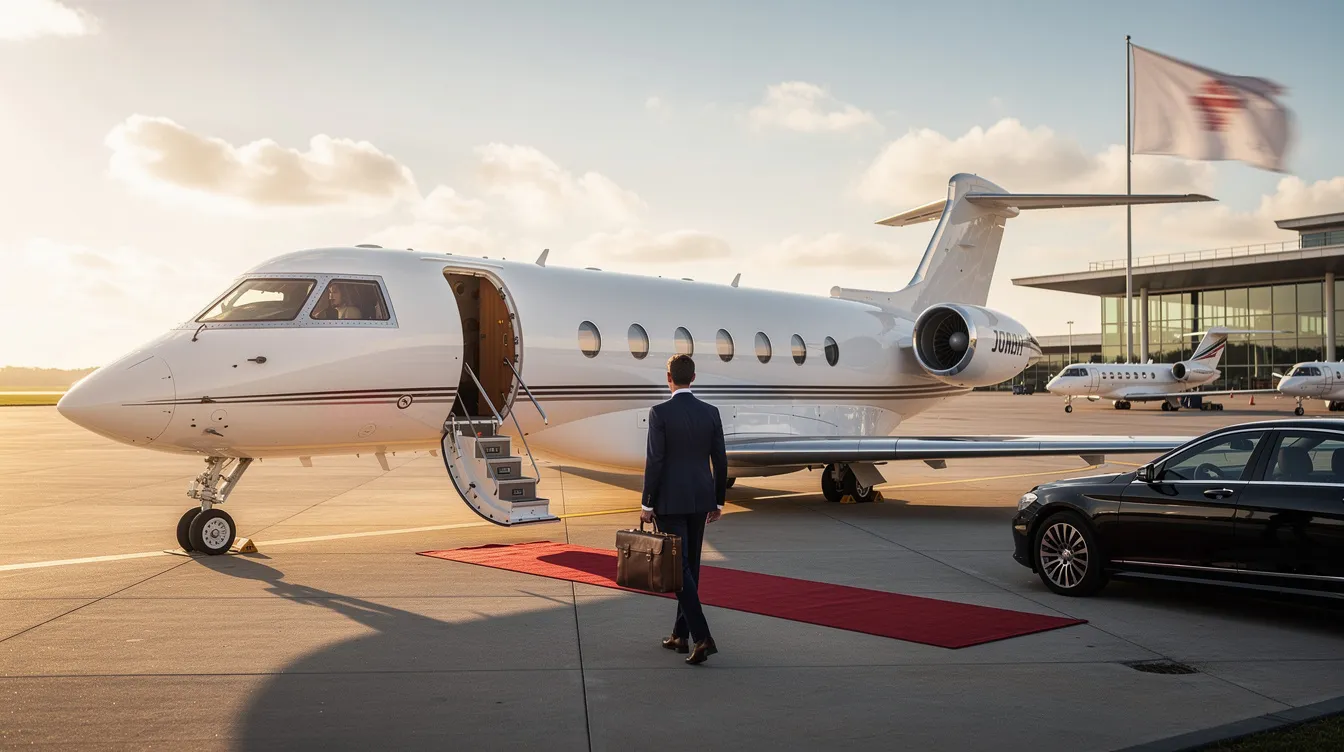
Many factors influence the price of a private jet. We’ll start with the most general considerations and move toward more specific technical and market-driven elements.
The reputation of the manufacturer and brand equity can significantly impact pricing. For example, Gulfstream consistently commands 5% to 15% premiums over comparable-category competitors due to strong resale value retention. Bombardier, Dassault, Cessna, and Embraer each occupy distinct market positions with corresponding price expectations.
Cabin size and intended mission profile are major drivers of cost. Aircraft within the same manufacturer line can differ by three to four times based on range capability and cabin dimensions. Having enough space for both passengers and luggage is a key factor in justifying the ownership costs of a private jet, as adequate storage and comfort are essential for maximizing value. Long-range jets capable of 6,000+ nautical miles command 40% to 80% premiums over midrange equivalents because they enable direct intercontinental travel.
Moving to more specific factors, the age of the airframe, total flight hours, and maintenance history play a crucial role in determining value. Flight time is a key metric used to assess aircraft usage and value, and is distinct from block time, which includes taxi and delays. Aircraft depreciation accelerates in years one through three (10% to 15% annually), then stabilizes at 5% to 8% annually. For example:
A low-time 2018 aircraft under 2,000 total hours may retain 60% to 70% of its original value.
A high-utilization 2008 aircraft with 8,000+ hours might trade at 30% to 40% of its original value.
Complete maintenance records with engine programs can add 10% to 25% to the asking price.
Next, avionics and regulatory compliance requirements can add high costs. Modern avionics suites like Garmin G3000 or Collins Pro Line Fusion can add $2 million to $5 million to new aircraft pricing. Used aircraft may require $1 million to $3 million in avionics upgrades to meet current and anticipated regulatory requirements, including ADS-B Out and CPDLC datalink for oceanic operations.
Engine support programs such as JSSI or MSP typically add $200,000 to $500,000 at purchase but reduce buyer uncertainty about future overhaul costs (historically $1 million to $3 million per engine). Aircraft with active engine programs consistently command 10% to 25% premiums at resale.
Finally, market cycles can influence pricing. Post-pandemic demand surges extended new aircraft delivery backlogs to two to three years for popular models, inflating both new and pre-owned market transaction prices 15% to 30% above pre-pandemic levels. As supply constraints ease in 2025-2026, pricing may moderate.
Understanding these factors helps buyers evaluate whether a specific aircraft represents fair value and prepares them for the next step: calculating the ongoing costs of ownership.
Beyond the initial investment, private jet ownership involves significant annual expenses. The total cost of operating a private jet per hour includes crew costs, handling fees, landing fees, and aircraft repositioning fees, all of which can significantly increase the overall expense of a flight. These costs are divided into fixed and variable components, both of which are essential to consider before making a purchase.
A significant portion of these fixed expenses is tied to flight staff; high-net-worth buyers often prioritize programs with highly trained, safety-focused pilots and crews to maximize value and peace of mind.
Hangar Fees: Storage costs range from $15,000 to over $200,000 annuall,y depending on location. Premium markets like Miami, Los Angeles, and New York often exceed $75,000 to $120,000 per year.
Insurance: Annual insurance premiums typically range from $10,000 to over $500,000, based on aircraft value and usage. Hull coverage usually runs 1% to 3% of aircraft value annually, while liability coverage adds $50,000 to $200,0,00, depending on risk profile.
Crew Costs: Owning a private jet requires hiring and managing skilled flight staff, which adds to operational costs. Typically, two pilots earn between $150,000 and $250,000 each annually, with cabin attendants increasing total crew salaries to $360,000 to $620,000 plus benefits.
Management Fees: Third-party management companies charge between $100,000 and $250,000 annually for scheduling, crew supervision, maintenance oversight, and regulatory compliance.
Fuel: Fuel prices are the single largest variable cost for private jet owners, accounting for roughly 25% to 35% of total operating costs. Prices fluctuate regularly, and annual fuel expenses can vary based on flight activity and mission profile, sometimes reaching millions depending on flight hours and mission profiles. For example, a midsize jet burning 200 to 250 gallons per hour at $5 to $7 per gallon faces fuel costs of $1,000 to $1,750 per flight hour.
Maintenance: Owners should budget for maintenance reserves to cover routine maintenance, engine overhauls, and unexpected repairs. Maintenance and repair costs vary based on aircraft type, age, and usage frequency. Routine and unscheduled maintenance typically accounts for 5% to 10% of the aircraft’s value annually, with annual maintenance costs ranging from $500,000 to $1 mill, ion depending on these factors. Significant inspections every 5 to 10 years or engine overhauls can incur costs of $1 million to $2 million.
Airport Fees: Landing, handling, and ramp fees vary widely, typically ranging from $100 to over $1,500 per stop based on airport and aircraft weight.
Customization and Upgrades: Buyers often invest in customization packages and avionics upgrades, which can significantly influence price. Mandatory upgrades for navigation systems or environmental standards may cost hundreds of thousands.
A midsize aircraft valued at $15 million to $20 million, flown 250 hours annually, typically incurs:
Fixed costs: $600,000 to $1.2 million
Variable costs: $500,000 to $1 million
Total annual ownership: approximately $1.1 million to $2.2 million
This excludes depreciation (typically 20% to 30% over five years) and debt service if financed. Many buyers flying fewer than 150 hours annually find their per-hour costs exceed charter or fractional alternatives.
Break-even represents the annual flight hours at which full ownership becomes more economical than charter, jet cards, or fractional ownership. For light and midsize jets, full ownership becomes economical around 200-250 hours per year. This is because fixed costs are spread over more flight hours, reducing the per-hour cost. For individuals flying fewer than 200 hours annually, chartering or fractional ownership may be more appropriate.
These thresholds also guide whether you should compare leading fractional jet ownership programs instead of pursuing full ownership.
Aircraft Category | Break-Even Point |
|---|---|
Light jets | 200-250 hours/year |
Midsize jets | 200-250 hours/year |
Large cabin jets | 300-400 hours/year |
Below these thresholds, fixed costs dominate the total cost structure. For a light jet with $600,000 in annual fixed costs flown only 100 hours, fixed costs alone equal $6,000 per flight hour—before adding any variable costs.
Practical Comparison:
Consider a regional business owner flying 80 to 100 hours annually on domestic routes. Their options:
Full ownership of a $7M to $10M light jet: $600,000 to $900,000 annually
Fractional ownership with 75-hour allocation: $200,000 to $350,000 annually
Jet card membership at 80 hours: $200,000 to $280,000 annually
For this usage profile, fractional aircraft ownership or membership programs deliver substantial savings while maintaining private flight benefits.
Understanding your annual flight hours is the first step in choosing the right ownership or access model.
Fractional aircraft ownership allows buyers to “own the hours you actually use” instead of carrying 100% of the cost of an underutilized jet. Many owners offset ownership expenses by placing their aircraft on a charter certificate, allowing their jet to generate revenue when not in use. Prospective buyers should understand key fractional jet ownership terms and concepts before selecting a program.
Purchasing a share of an aircraft—typically 1/16th, 1/8th, or 1/4th—corresponds to a fixed number of annual flight hours (50, 100, or 200 hours, respectively). The fractional provider handles management, crew, maintenance, insurance, and hangar operations through centralized infrastructure. For example, 1/8th fractional jet ownership usually equates to about 100 flight hours per year.
When evaluating whether a share makes sense, it’s important to understand the total cost structure of fractional jet ownership, including acquisition, management, and hourly fees.
Ownership Model | Initial Investment | Annual Costs (100 hrs) |
|---|---|---|
Full ownership ($15M midsize) | $15,000,000 | $1,300,000-$2,100,000 |
1/8th fractional share | $1,875,000 | $280,000-$450,000 |
Fractional ownership represents a 60% to 75% cost reduction for equivalent access and aircraft category. The equity component provides potential tax advantages and residual value participation compared to a pure charter, and many buyers evaluate fractional jet ownership as an investment rather than just a travel expense.
These benefits differ from jet card and membership models; understanding fractional ownership vs membership programs helps clarify which structure best fits your flying habits.
Fleet access: Backup aircraft available if the primary jet undergoes maintenance
Guaranteed availability: Typically within 4 to 10 business hours
Standardized experience: Consistent cabin configuration and crew professionalism
International support: Overflight permits and foreign logistics handled by the provider
BlackJet Fractional Jet Ownership offers two distinct models. The Equity Fleet provides actual aircraft equity with potential tax benefits for those wanting ownership-style advantages. The Reserve Fleet delivers pay-as-you-go flexibility without capital acquisition costs for those prioritizing simplicity, and BlackJet’s comparison of its Reserve, Equity, and Lease programs outlines how each aligns with different usage profiles.
For corporations and individuals flying between 25 and 150 hours annually, fractional ownership eliminates fleet management burden while preserving predictable private jet travel access.
Fractional ownership is just one alternative—membership and jet card programs offer even more flexibility for lower annual usage.
Membership and jet card programs provide on-demand access to private jets via pre-purchased hours or deposits, without any aircraft title or equity. Charter flight memberships also offer an alternative financing option, allowing users to access a fleet of private jets by paying an annual or monthly fee plus flight costs, which can range from $1,300 to $16,000 per hour, depending on the jet size.
Upfront deposit: Often $50,000 to $500,000
Fixed hourly rates: $2,500 to $6,500 by aircraft category; the hourly rate includes various operational fees such as crew, handling, landing, and repositioning costs, and is a key component of jet card and membership program pricing, ensuring cost transparency
Guaranteed access: Typically within 10 to 14 days (economy) or 4 to 6 hours (premium)
Defined usage hours: Pre-purchased blocks of 25, 50, or 100+ hours
Jet cards appeal to frequent flyers in the 25 to 75 hour-per-year band who want charter-like simplicity with predictable pricing. Unlike ad-hoc charters, membership programs eliminate surge pricing during peak periods and provide budget certainty for corporate flight departments.
A CEO flying monthly from New York to Florida (roughly 50 to 70 hours annually) faces these options:
Full ownership of $8M light jet: $600,000-$900,000 annually plus capital commitment
Jet card membership at 60 hours: $150,000-$210,000 annual, ly with no capital tied up
Fractional 50-hour share: $200,000-$300,000 annually with equity participation
For many prospective buyers, the question should shift from “what does it cost to buy a private jet” to “what does it cost to access private aviation at my usage level.” BlackJet’s Reserve Fleet provides transparent pricing and guaranteed access while eliminating depreciation and resale risk inherent in full ownership.
Membership and jet card programs are ideal for those seeking flexibility and predictable costs without the responsibilities of ownership.
Even ultra-high-net-worth buyers frequently finance aircraft purchases to preserve liquidity or leverage tax strategies rather than paying cash outright.
Asset-Backed Loans: Aviation-focused lenders typically offer 60% to 80% loan-to-value ratios, requiring 20% to 40% down payments. Terms extend 5 to 10 years, often with balloon payments. Interest rates typically run 50 to 150 basis points above comparable corporate lending rates.
Operating Leases: Three to five-year terms with purchase options at termination. Monthly payments are fully deductible as business expenses, though the lessee lacks equity participation.
In shared arrangements, well-drafted fractional ownership contracts and co-ownership agreements are critical to defining rights, responsibilities, and exit options.
Sale-Leaseback: Current owners monetize equity while retaining operational control. Attractive for those requiring liquidity without losing aircraft access.
Tax rules affect both whole-aircraft and shared ownership; understanding the total cost of fractional jet ownership helps frame how tax treatment fits into overall economics.
Current IRS regulations may permit bonus depreciation for qualified business aircraft under certain conditions. Section 179 expensing may also apply. However, rules are complex and subject to legislative change—consult specialized aviation tax counsel before making decisions based on tax assumptions.
Many BlackJet clients choose fractional equity or programmatic solutions specifically to gain ownership-style benefits—including possible tax efficiencies—without underwriting full acquisition cost and operational risk. Private jet financing decisions should always involve aviation-savvy tax and legal advisors, especially when exploring fractional jet ownership financing options.
Financing and tax strategies are important, but for many, alternatives to buying outright may offer the best value.
Outright purchase represents only one path to reliable private jet access. Many sophisticated travelers blend multiple solutions based on mission requirements. Charter access is a flexible alternative to full ownership, offering pricing transparency and ease of booking across multiple operators, making it ideal for occasional flyers seeking premium service.
Some buyers prefer fractional solutions that use floating fleet structures in fractional ownership, which can offer more flexibility than relying solely on ad-hoc charter.
Best for under 25 hours annually or highly unpredictable schedules
Pay-per-trip flexibility with no long-term commitment—each private jet flight is booked individually, allowing for maximum customization
Charter operators bill for the actual airborne duration, known as flight time, from engine start to engine shut-down; minimum flight time charges may apply for short routes, impacting total cost
Some charter services offer individual seats on shared flights, making private aviation more affordable for travelers who do not need to charter the entire aircraft
Enhanced passenger safety features and premium services in private jet flights come with added cost due to rigorous safety checks and exclusive amenities
Higher per-hour rates and exposure to market volatility
Empty leg flights occasionally offer significant discounts
Ideal for 25 to 150 hours annually
Consistent experience with ownership-style benefits
Lower per-hour costs than charter with fleet access
Bridge between charter and fractional
Fixed rates and guaranteed access without equity commitment
Particularly effective for 50 to 100-hour users
Corporate flight departments increasingly combine solutions—primary owned or fractional aircraft for core missions plus charter or jet cards for overflow, simultaneous routing, or specialized requirements. BlackJet can help design tailored combinations of Equity Fleet and Reserve Fleet access aligned with specific routes, frequency, and budget constraints.
With so many options, it’s important to evaluate your unique needs before making a decision.
Evaluating whether to buy a private jet requires weighing both tangible and intangible factors against your specific travel patterns. As part of due diligence, it is standard practice to request itemized quotes, verify operator credentials, and check safety ratings when considering a private jet purchase or charter. This ensures transparency and safety, helping you make an informed decision.
Consider these factors before committing:
Annual flight hours: Track actual usage for 12 months if data unavailable
Typical routes: Domestic versus long-haul affects aircraft category requirements, and region-specific solutions such as fractional jet ownership in Nashville can optimize access to nearby airports
Passenger count: Regular group travel may justify larger aircraft and may influence whether BlackJet’s Reserve, Equity, or Lease program mix is the most efficient structure
Branding needs: Custom interiors and livery require ownership, though regional fractional solutions such as Virginia Beach fractional jet ownership can still offer a high level of personalization
Capital appetite: Willingness to commit $5M to $75M+ to depreciating asset versus exploring lower-capital models like fractional jet ownership in Pittsburgh
Owning a private jet provides significant privacy and confidentiality, allowing owners to avoid public air travel and security checkpoints.
Private jet ownership allows for greater accessibility to remote areas and smaller airports, which can be a significant advantage over commercial travel options.
Access to 5,000+ airports versus approximately 500 commercial airports
Ability to fly privately with pets and unusual cargo
Confidentiality for board-level discussions and M&A transactions
Departure from smaller airports near home or headquarters
Complete scheduling control
20% to 30% depreciation over five years on many aircraft
Crew member hiring, management, and regulatory compliance responsibilities add to operational costs
3 to 6 months resale timeline, not limiting flexibility
Maintenance costs and reserves requiring ongoing capital
For many executives and entrepreneurs, fractional jet ownership or membership programs deliver the majority of ownership benefits at a fraction of the total cost. The right model depends entirely on individual usage patterns and preferences, whether you’re considering fractional jet ownership in Atlanta or exploring fractional jet ownership options in Austin.
The true private jet cost to buy encompasses far more than the acquisition price. Prospective buyers must factor annual fixed and variable costs totaling $500,000 to over $3 million, plus depreciation that can cost hundreds of thousands annually, and eventual exit costs at resale.
Full ownership typically makes financial sense for fliers consistently logging 200 to 300+ hours annually with mission-critical or ultra-premium requirements. For the substantial population flying 25 to 150 hours per year, fractional aircraft ownership and membership programs deliver 70% to 90% of ownership benefits at 30% to 40% of the cost.
BlackJet Fractional Jet Ownership serves as a trusted aviation advisor, structuring Equity Fleet and Reserve Fleet solutions tailored to both US-based and international travelers. Whether you’re an individual executive or managing a corporate flight department, the right private aviation model transforms travel from a logistical constraint into a strategic advantage.
Ready to explore the smarter way to fly private? Visit FractionalJetOwnership.com to explore current programs, request a personalized cost comparison, or speak with an aviation specialist about whether to buy, share, or simply access a private jet.
