
April 25, 2026
Understanding private jet costs has never been more important for executives and high-net-worth travelers navigating today’s aviation market. With hourly rates ranging from $2,000 for turboprops to over $20,000 for ultra-long-range jets, the gap between a well-structured flight program and ad-hoc charter can mean hundreds of thousands of dollars annually. The cost to rent a private jet varies widely depending on jet category, flight duration, and additional factors, making it essential to understand these variables when evaluating private aviation options. Private jet rental prices typically range from $2,000 to $14,000 per billable flight hour, with ultra-luxury VIP Airliners starting at $16,000 and scaling to $23,000 or more.
This guide breaks down exactly what you can expect to pay in 2026, which access model fits your flying pattern, and how to optimize every dollar spent in the air.
In 2026, private jet charter rates in the United States and Europe span a wide spectrum based on aircraft size and capability. Turboprops like the Pilatus PC-12 run approximately $2,000 to $3,000 per billable flight hour, while light jet options such as the Citation CJ3+ fall between $3,500 and $6,000 per hour. Moving up to midsize jets and super midsize jets, expect $5,000 to $10,000 per hour. For heavy jet and ultra-long range aircraft like the Gulfstream G650 or Global 7500, hourly rates climb to $10,000 to $20,000 or more, with heavy jets typically ranging from $8,000 to $14,000 per hour.
To put these numbers in perspective, here are concrete one-way trip estimates for popular routes:
New York (TEB) to Miami (OPF) on a light jet: approximately $16,000–$22,000
Los Angeles (VNY) to Aspen (ASE) round trip on a light jet: approximately $20,000–$28,000
New York (TEB) to Los Angeles (VNY) on a super-midsize: approximately $38,000–$55,000
London (Luton) to Dubai (DXB) on a long-range jet: approximately $80,000–$120,000
The total cost formula is straightforward: hourly rate multiplied by flight time, plus taxes, airport and handling fees, and any extras like in-flight catering or ground transportation. A two-hour flight doesn’t simply double the hourly rate—it layers on landing fees, crew expenses, fuel surcharges, and applicable taxes that can add 20–40% to the base.
Longer flights generally incur higher costs due to increased fuel consumption and potential crew changes, while shorter flights can be disproportionately expensive due to fixed costs like crew positioning and landing fees.
For travelers logging 25 to 150 flight hours annually, BlackJet Fractional Jet Ownership offers two pathways to reduce effective costs: the Reserve Fleet provides pay-as-you-go access with priority availability and pre-negotiated rates, while the Equity Fleet enables fractional aircraft ownership with predictable monthly fees and occupied hourly rates well below typical private jet charter cost.
On-Demand Charter: Pay per trip, best for under 25 hours annually
Jet Card: Prepaid blocks with fixed hourly rates, ideal for 25–75 hours
Fractional Ownership: Share purchase plus monthly fees, optimal for 50–150 hours
Full Ownership: Capital-intensive, efficient only above 200–250 hours
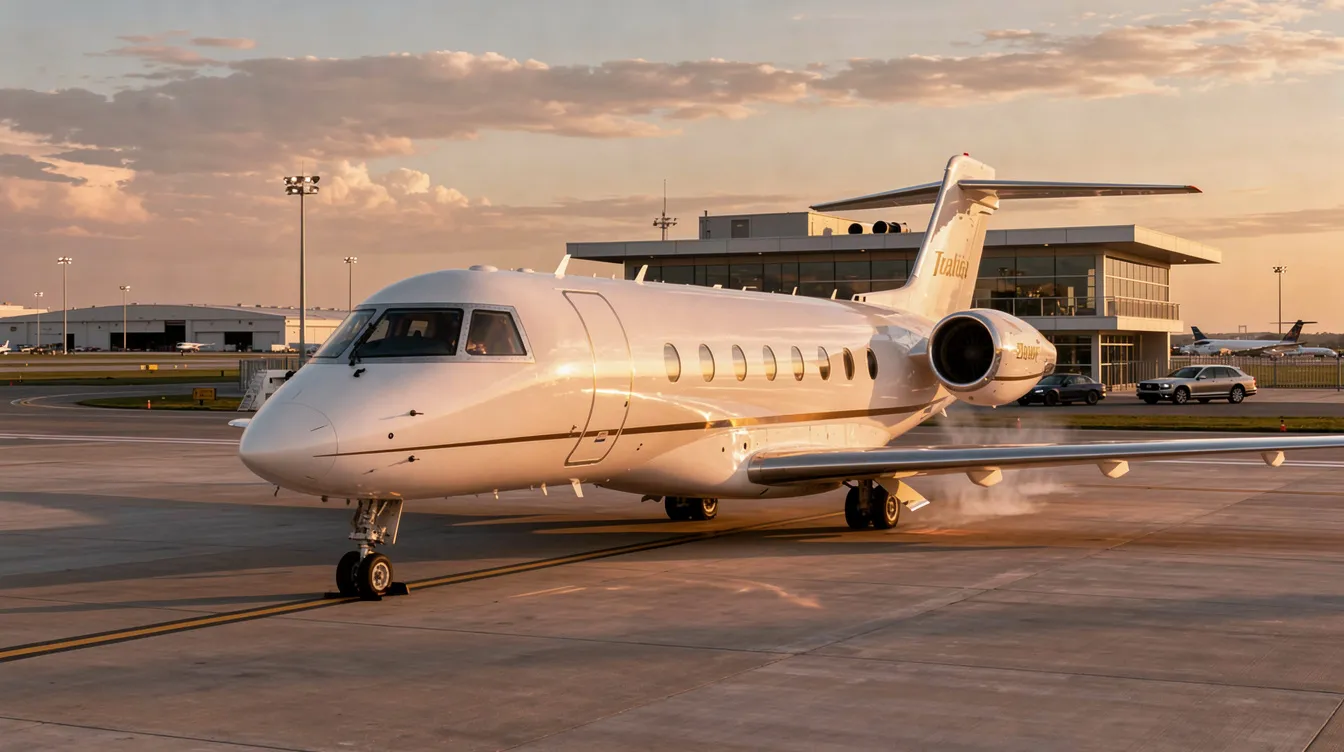
Four primary factors determine what you’ll pay for any private jet service in 2026: aircraft category, flight distance, airport selection, and aircraft availability. Understanding these levers helps you make smarter decisions, whether you’re booking a single charter or evaluating a long-term ownership program.
Here’s what moves the needle on private jet pricing:
Aircraft size and flight range: Larger aircraft with greater range cost more per hour but become more efficient for longer missions
Flight distance and duration: Longer flights spread fixed costs across more hours, lowering per-mile expense
Airport selection: Executive airports like Teterboro or Van Nuys offer lower landing fees and hangar fees than major hubs
Repositioning needs: If the jet must fly empty to reach you, those ferry fees get passed along
Seasonality and peak days: U.S. holidays like Thanksgiving week or events like Art Basel Miami can add 20–50% to charter costs
Service level: Premium catering, Wi-Fi connectivity, and deicing services all layer onto the final cost
On shorter flights under 45–60 minutes, per-mile costs spike dramatically. Most charter companies enforce billing minimums of 1 to 1.5 hours, meaning a quick hop from Teterboro to Boston may cost nearly as much as flying to Miami despite being half the airtime. This is where understanding billable flight time becomes critical.
Crew expenses can significantly add to the total cost of owning or chartering a private jet, including salaries, training, and overnight accommodations.
Fractional jet ownership and membership programs smooth out many of these variables for consistent travelers, providing fixed or capped hourly rates that don’t fluctuate with seasonal demand or last-minute booking premiums, a structure explored in depth in the complete guide to fractional jet ownership costs.
In 2026, most on-demand charter in North America and Europe falls into five aircraft categories. Each serves different mission profiles, passenger counts, and route lengths. Selecting the right aircraft type for your specific needs is one of the most effective ways to control private jet rental costs.
Private jets are categorized into different classes based on their size and capabilities, including Very Light Jets, Light Jets, Midsize Jets, Super Midsize Jets, Heavy Jets, Ultra Long Range Jets, and VIP Airliners. Each class is designed to serve specific travel needs and passenger capacities:
Very Light Jets (VLJs): Ideal for short hops with 4–6 passengers, VLJs are known for their operational efficiency and cost advantages, making them suitable for regional travel, particularly in models such as HondaJet fractional ownership programs.
Light Jets: Slightly larger than VLJs, light jets typically accommodate 6–8 passengers and are efficient for short to mid-range missions.
Midsize Jets: These jets offer more cabin space and range, comfortably seating 7–9 passengers and are suitable for transcontinental routes.
Super Midsize Jets: With larger cabins and coast-to-coast capability, super midsize jets can carry 8–10 passengers and offer extended range and comfort.
Heavy Jets: Designed for long-distance travel, heavy jets can typically accommodate 8–12 passengers, offering a higher level of comfort and amenities compared to smaller jets.
Ultra Long Range Jets: These aircraft are built for intercontinental flights, providing extended range and luxury for 10–16 passengers.
VIP Airliners: The largest and most luxurious VIP Airliners are converted commercial airliners configured for private use, offering unmatched space, amenities, and range for large groups.
The relationship between these classes is primarily based on increasing size, range, passenger capacity, and onboard amenities as you move from VLJs up to VIP Airliners.
Below is a comparison table summarizing the typical hourly rates, passenger capacity, and range for each aircraft type:
Aircraft Type | Hourly Rate (Approx.) | Passenger Count | Typical Range |
|---|---|---|---|
Turboprops | $2,000–$3,000 | 4–8 | <1,000 miles |
Very Light Jets (VLJs) | $3,500–$5,000 | 4–6 | Short regional |
Light Jets | $4,500–$6,000 | 6–8 | 2–3 hours |
Midsize Jets | $5,000–$7,500 | 7–9 | Transcontinental |
Super-Midsize Jets | $7,500–$10,000 | 8–10 | Coast-to-coast |
Heavy Jets | $10,000–$14,000 | 8–12 | Long-distance |
Ultra Long Range Jets | $14,000–$20,000+ | 10–16 | Intercontinental |
VIP Airliners | $16,000–$23,000+ | 16+ | Global |
Turboprops (Pilatus PC-12, King Air 350, TBM 850 fractional turboprop ownership): ~$2,000–$3,000/hr, 4–8 passengers, ideal for regional routes under 1,000 miles.
Very Light Jets (Phenom 100/300, Citation CJ3+): ~$3,500–$6,000/hr, 6–8 passengers, efficient for 2–3 hour missions. Very Light Jets (VLJs) are ideal for short hops with 4–6 passengers and are known for their operational efficiency and cost advantages, making them suitable for regional travel.
Midsize Jets (Hawker 800XP, Citation XLS+): ~$5,000–$7,500/hr, 7–9 passengers, comfortable for transcontinental routes.
Super-Midsize Jets (Challenger 350, Praetor 600, Falcon 6X super-midsize fractional ownership): ~$7,500–$10,000/hr, 8–10 passengers, coast-to-coast capability with larger cabin.
Heavy & Ultra-Long-Range (Large Jets) (Gulfstream G450, G650, Global 7500, Falcon 900LX fractional ownership option): ~$10,000–$20,000+/hr, 10–16 passengers, intercontinental range. Heavy Jets are designed for long-distance travel and can typically accommodate 8–12 passengers, offering a higher level of comfort and amenities compared to smaller jets.
Route-to-aircraft matching illustrates how choices affect total trip cost. A Chicago to Palm Beach trip fits comfortably in a midsize jet at $20,000–$30,000, but upgrading to a super-midsize for added cabin space pushes the price to $35,000–$45,000. Meanwhile, New York to London demands a heavy jet due to range requirements, pricing the one-way at $90,000–$140,000—simply unavailable on smaller aircraft.
These hourly rates typically include the aircraft, standard crew members, basic insurance, and allocated fuel. However, they exclude airport fees, overnight expenses, or premium catering. BlackJet’s Equity Fleet typically sources super-midsize and large-cabin aircraft, providing consistent quality for clients who value cabin space and range without the variability of ad-hoc charter, including options such as owning a fractional share of aircraft like the Falcon 2000EX.

Moving from theoretical hourly rates to actual trip pricing requires factoring in the complete picture. These 2026-style all-inclusive estimates represent what travelers can expect for popular U.S. and international flights using typical light, midsize, and heavy jet options.
Sample itineraries with estimated charter ranges:
New York (TEB) – Miami (OPF) one-way, light jet: ~$16,000–$22,000
Los Angeles (VNY) – Aspen (ASE) round trip, light jet: ~$20,000–$28,000
Dallas (DAL) – New York (TEB) one-way, midsize jet: ~$30,000–$40,000
New York (TEB) – Los Angeles (VNY) round trip, super-midsize: ~$70,000–$95,000
London (Luton) – Nice (LFMN) one-way, light jet: ~$14,000–$19,000
London (Luton) – Dubai (DXB) one-way, long-range jet: ~$80,000–$120,000
These prices assume standard scheduling without peak-day surcharges, moderate airport fees, and no significant aircraft positioning requirements. Flying into smaller regional airports rather than congested hubs can reduce costs—choosing Teterboro over JFK or Luton over Heathrow often saves 30–40% on ground-side expenses, and similar dynamics apply at destinations such as Bay of Islands private jet access and ownership options.
For international flights, additional variables like landing permits, customs handling, and overnight crew per diems add complexity. The London-Dubai route, for instance, includes substantial fuel loads and longer crew duty requirements that drive the total cost higher. International flights may incur additional fees ranging from $500 to $5,000 or more, which include landing permits, customs, and immigration fees, a consideration for global hubs that support fractional jet ownership in Kaohsiung and similar markets.
BlackJet advantage: Clients flying these routes frequently through fractional ownership or Reserve Fleet access often see significantly lower effective hourly costs compared to booking each trip separately through standard charter companies.
Private jet pricing operates in layers. The base calculation—hourly cost multiplied by flight time—represents just the starting point. What determines your final cost is the stack of variable fees driven by your specific itinerary, season, and service requirements.
Below is a table summarizing the core cost components, typical 2026-style ranges, and notes:
Cost Component | Typical Range | Notes |
|---|---|---|
Base Hourly Charge | Included in the hourly rate | Covers aircraft, pilots, basic insurance, and standard fuel allocation |
Fuel Surcharges | $300–$900 per hour | Added when fuel prices spike above baseline assumptions |
Landing Fees | $100–$1,500 per airport | Higher at major hubs; JFK/LAX can be 3–4x executive fields |
Ramp/Handling Fees | $100–$500 per stop | Sometimes waived with a minimum fuel purchase |
Hangar Fees | $500–$1,500 per night | Essential in winter climates or congested fields |
Crew Overnight/Per Diem | $200–$600 per crew/night | Varies by city |
Deicing Services | $1,500–$15,000 | Depends on aircraft size and weather conditions |
Wi-Fi/Connectivity | Varies | Some jets include: others charge per MB or flat fees, especially internationally |
Catering | $200–$300 (snacks), $1,000–$2,000+ (meals) | Premium meals per leg |
Federal Excise Tax | 7.5% + $4.50/segment | U.S. domestic charter |
Cleaning Fees | Varies | Often included; may be billed separately for extended trips or special requests |
In the United States, reputable aircraft operators provide itemized quotes that make most of these line items visible. Hidden fees typically arise from repositioning requirements (ferry fees when the aircraft must fly empty to your departure point) or last-minute booking process changes that trigger short-leg fees and availability premiums.
Total trip costs for chartering can be 20–40% higher than the base hourly rate due to additional variable fees, which is why some travelers at airports like Atlantic Municipal, private jet access, and ownership options turn to fractional models for more predictable budgeting.
BlackJet consolidates these additional costs into transparent proposals for both Reserve Fleet and Equity Fleet clients. Rather than discovering unexpected charges post-flight, clients receive comprehensive cost modeling in advance—a significant advantage when budgeting annual private jet travel expenses, similar to localized offerings like Fernandina Beach private jet access and ownership options.
The access model you choose has more impact on your total cost than any single flight decision. What works for someone flying 10 hours annually looks completely different from what makes sense at 100+ hours per year.
Below is a comparison table summarizing the main access models, recommended annual hours, cost structure, and pros/cons:
Access Model | Annual Hours | Cost Structure | Pros/Cons |
|---|---|---|---|
On-Demand Charter | <25 | Pay-per-trip, variable pricing | Flexibility, no commitment; subject to peak surcharges, availability challenges |
Jet Card / Membership | 25–75 | Prepaid blocks, fixed hourly rates | Predictable rates, simplified billing, and upfront capital required |
Fractional Ownership | 50–150 | Share purchase, monthly fees, and hourly | Guaranteed access, potential tax benefits; capital outlay, shared costs |
Reserve Fleet / Priority | 25–75 | Pay-as-you-go, priority access | No ownership, priority booking, pre-negotiated rates; less flexibility than full ownership |
Full Ownership | 200–250+ | Capital outlay, fixed/variable costs | Ultimate control, custom scheduling; high fixed costs, depreciation, resale risk |
Best for travelers flying under ~25 hours annually. Pay-per-trip flexibility comes with variable pricing, peak-day surcharges, and potential availability challenges. Private jet charter rates fluctuate with market demand, and region-specific solutions such as fractional jet ownership in Atlanta or fractional jet ownership in Phoenix can become attractive as hours increase.
Ideal for ~25–75 hours per year. Prepaid blocks of flight time lock in fixed hourly rates with simplified billing. Removes pricing variability but requires upfront capital commitment.
Strong fit for ~50–150 hours annually. Purchase a share of a specific aircraft, pay monthly management fees and occupied hourly rates, gain guaranteed availability, and potential tax advantages. Ownership costs are shared among multiple owners, and understanding key fractional jet ownership terms helps clarify how these programs are structured.
Hybrid solution for travelers wanting charter flexibility with better availability and pre-negotiated pricing tiers. No ownership commitment, but priority access over standard charter, making it a useful comparison point alongside fractional jet ownership vs membership programs and city-specific offerings like fractional jet ownership in Portland.
Efficient only beyond ~200–250+ hours per year. Requires substantial capital outlay ($5M–$70M+ depending on aircraft age and type), plus crew salaries, hangar, maintenance, and insurance. Exposes the owner to depreciation and resale risk.
Ownership typically incurs high fixed costs, including crew salaries, hangar storage, and insurance. The operating expenses for owning a jet include predictable fixed costs that typically range from $500,000 to $1,000,000 annually. Private jet ownership involves annual operational costs commonly exceeding $1 million, not including the purchase price, making it essential to understand the total cost of fractional jet ownership when comparing access models or regional options such as fractional jet ownership in Pittsburgh.
Depreciation can cause a private jet to lose 10% of its value in the first year and 5% annually thereafter, which is a central consideration when evaluating fractional jet ownership as an investment versus full ownership.
Annual-use scenarios: As you review these examples, it can be helpful to compare them with insights on the best fractional jet ownership programs available in the broader market.
At 30 hours per year, on-demand charter typically runs $150,000–$250,000 total for light to midsize missions. Peak-day volatility adds unpredictability.
At 75 hours per year, a jet card or Reserve Fleet arrangement stabilizes costs around $400,000–$600,000 with meaningful savings versus ad-hoc booking.
At 125 hours per year, fractional ownership delivers effective rates of ~$6,000–$9,000 per hour all-in (including monthly fees), compared to $10,000+ for equivalent charter—translating to $800,000–$1.2M annually versus potentially $1.4M+ through pure charter.
The math clearly favors fractional aircraft ownership for frequent travelers who want predictable access without the $1M+ annual fixed costs of maintaining their own private jet, while still preserving the option of selling a fractional jet ownership share if their travel needs change.
Fractional jet ownership allows multiple owners to share both the benefits and expenses of a high-performance private jet, making consistent private aviation accessible without the full burden of whole-aircraft ownership, provided that owners clearly understand essential contract terms in fractional jet ownership.
Initial acquisition: Purchase of a fractional share (1/16th, 1/8th, or 1/4th) of a specific aircraft, such as a Challenger 350, Gulfstream G450, or similar. Share prices scale proportionally from the aircraft’s total value.
Monthly management fee: Covers crew, hangar, insurance, scheduled maintenance, and flight scheduling services. Pro-rated based on ownership percentage.
Occupied hourly rate: Charged only when the owner or authorized user is on board. Typically, 20–40% below comparable charter rates for the same aircraft type and aircraft options.
Potential tax benefits: In the United States, business users may be able to depreciate their aircraft share under IRS Section 168 rules. This can provide meaningful tax advantages, though clients should consult qualified tax advisors for their specific situation and ensure they have appropriate liability and insurance coverage in fractional ownership.
Guaranteed aircraft availability with defined notice periods (typically 10–48 hours)
Consistent cabin configuration across all trips—no surprises on interior quality
Predictable annual budgeting for clients flying 50–150 hours per year
Access to larger aircraft without the larger aircraft ownership burden
Illustrative scenario: Consider a CEO flying 120 hours annually between New York, Dallas, and Los Angeles. Through fractional ownership, the total annual cost might run approximately $720,000 (effective rate ~$6,000 per hour, including all fees). The same flight pattern booked through an ad-hoc charter could exceed $1.2M—a potential savings of $480,000 while gaining schedule priority and consistent service levels, especially when structured with thoughtful fractional jet ownership financing.

For travelers flying roughly 25–75 hours annually, membership-based access bridges the gap between the variability of pure charter and the capital commitment of fractional ownership. BlackJet’s Reserve Fleet exemplifies this approach.
No aircraft purchase or long-term ownership commitment required
Access to a curated fleet across categories—light, midsize, super-midsize, and large cabin aircraft
Priority availability on peak travel days compared with standard charter booking
Simplified cost structure: fixed or capped hourly rates with known surcharges
Streamlined booking process without negotiating each trip individually
These programs provide more predictable budgeting than ad-hoc charter while avoiding the capital tied up in fractional aircraft ownership. For many business travelers, this represents the optimal balance of flexibility and cost control, especially when supported by a clear aircraft fractional ownership sample contract that defines rights and responsibilities or regional frameworks such as fractional jet ownership in Seattle.
Example customer profile: A regional private equity firm logs monthly trips between Chicago, Boston, and Atlanta—approximately 40 hours annually. Through standard charter, costs fluctuate significantly based on timing and availability. Reserve Fleet pricing stabilizes their annual travel budget at $200,000–$300,000, eliminating the volatility that makes expense forecasting difficult, much like market-specific programs for fractional jet ownership in Orlando do for Southeast-based travelers.
BlackJet uses both Reserve and Equity Fleets to tailor the optimal cost structure to each client’s actual flying patterns. Rather than forcing a one-size-fits-all approach, the program adapts to whether you need 30 hours of occasional flexibility or 150 hours of guaranteed access, and tools that compare fractional jet ownership programs can help frame which structure best fits your use.
While private aviation is inherently a premium service, thoughtful planning materially lowers effective hourly and per-seat costs without sacrificing safety or comfort. These strategies apply whether you rent a private jet occasionally or fly 100+ hours annually.
Right-size your aircraft: Match jet category to passenger count and route distance. A midsize jet for 4 passengers on a 2-hour trip often costs 30–40% less than defaulting to a heavy jet for the same mission.
Consolidate trips: Combine multi-city itineraries into efficient routing. This reduces repositioning flights and minimizes the number of minimums charged.
Use secondary airports: Select smaller regional airports with lower landing, ramp, and congestion delays. Teterboro saves significantly versus JFK; Van Nuys beats LAX on ground-side costs, and regional hubs such as Calgary International fractional jet access can offer similar efficiencies for Western Canada travelers.
Travel off-peak when possible: Avoid high-demand days like the Wednesday before Thanksgiving or major event weekends. Time savings remain substantial while avoiding 25–50% surges.
Consider empty leg flights selectively: Empty leg flights offer 30–75% discounts for flexible leisure trips, though schedule and routing constraints limit their practicality for business travel, even on popular leisure routes from hubs like Ibiza, private jet access, and ownership options.
Migrate from charter to structured programs: For frequent flyers, moving from on-demand charter to a jet card, Reserve Fleet, or fractional ownership locks in more favorable rates and eliminates peak-day premiums, as seen in market-specific solutions like fractional jet ownership in Nashville.
BlackJet advisors routinely run side-by-side cost simulations to identify the mix of charter, Reserve, and Equity Fleet usage that minimizes a client’s annual spend while maintaining the flexibility and availability they require, including evaluating whether a floating fleet fractional ownership option or fractional jet ownership in Austin offers additional efficiencies.
How much does it cost to charter a private jet for a 2-hour flight? In 2026, a 2-hour charter on a light jet runs approximately $8,000–$12,000, including standard fees and taxes. Midsize options push this to $14,000–$18,000, while heavy jet or ultra-long range jets for the same flight duration might reach $24,000–$35,000 all-in.
Is it cheaper to buy a jet or use fractional jet ownership? Full ownership becomes economical only above approximately 200–250 flight hours per year and requires $5M–$70M+ in capital, depending on aircraft size. Fractional ownership spreads costs and risk efficiently for travelers in the 50–150 hour range, including market-specific solutions like fractional jet ownership in Virginia Beach.
Can private jet costs be tax-deductible? Many U.S. business flights may qualify for deductions, and fractional owners may be able to depreciate their aircraft share. Specific benefits depend on usage patterns and business structure—consult a qualified tax advisor for guidance and review dedicated resources on the tax implications for fractional jet owners.
Do I pay per seat or for the whole aircraft? Most private jet pricing is for the entire aircraft regardless of how many seats you fill. Some shared-flying models exist but operate under different structures than traditional charter or ownership, and are often paired with regional infrastructure such as Bhubaneswar private jet access and ownership options.
How far in advance do I need to book to get the best price? Booking 5–7 days in advance typically yields more aircraft options and lower repositioning costs. Same-day requests often add 20–100% premiums due to availability constraints and rushed aircraft positioning.
What is the difference in cost between flying first class commercial and flying private? A family of four flying from New York to Los Angeles in commercial first class might spend $20,000–$30,000. The same trip on a light or midsize private jet runs $40,000–$60,000—but splits to $10,000–$15,000 per person while offering time savings, privacy, and schedule control that commercial flight cannot match, particularly when leveraging regional hubs such as Kelowna private jet access and ownership options.
Private jet costs in 2026 span from a few thousand dollars per hour for turboprops to $20,000+ per hour for vip airliners and ultra-long-range aircraft. But the biggest variable isn’t the aircraft itself—it’s the access model you choose. Travelers who understand the private aviation market and select the right structure consistently save 20–40% compared to those who book each trip reactively.
For individuals and companies flying 25–150 hours per year, BlackJet’s combination of Equity Fleet (fractional aircraft ownership) and Reserve Fleet (flexible access without ownership) delivers significantly better cost predictability and availability than ad-hoc charter alone. The question isn’t whether you can afford private jet travel—it’s whether you’re structuring it intelligently.
Ready to explore the smarter way to manage your private jet costs? Visit FractionalJetOwnership.com to schedule a confidential cost analysis of your current flying, or to compare charter, jet card, and fractional options tailored to your routes.
Private aviation is a strategic business tool—saving time, increasing control, and protecting executive energy. When structured with the right partner, it becomes not just a luxury but a competitive advantage.
Understanding private jet costs in 2026 is essential for executives and high-net-worth travelers seeking the optimal balance of convenience, flexibility, and value. Whether you choose on-demand charter, jet cards, fractional ownership, or full ownership, selecting the right access model based on your flying habits can significantly reduce your overall expenses while enhancing your travel experience.
Fractional jet ownership offers a compelling solution for frequent flyers, providing predictable costs, guaranteed availability, and potential tax benefits without the full burden of sole ownership. Meanwhile, membership programs like BlackJet’s Reserve Fleet deliver flexible, priority access for those who prefer a pay-as-you-go approach without long-term commitments.
For tailored guidance and a confidential cost analysis, visit FractionalJetOwnership.com to explore how fractional ownership and membership programs can transform your private aviation experience. With expert advice and transparent pricing, you can confidently navigate the private jet market and elevate your travel to a strategic business advantage.
Ready to explore the smarter way to fly private? Discover your options today at FractionalJetOwnership.com and take the first step toward more efficient, luxurious, and cost-effective private jet travel.
