
January 23, 2026
Private aviation represents the pinnacle of modern travel, offering a level of control, privacy, and efficiency that commercial airlines cannot match. For high-net-worth individuals, corporate leaders, and global travelers, the most expensive private jets are more than a mode of transportation—they are strategic assets that redefine how time, comfort, and productivity are managed in the air.
The private aviation industry has evolved far beyond small business jets. Today’s most expensive private jets rival five-star hotels and corporate headquarters, featuring expansive cabins, advanced safety systems, and interiors designed entirely around the owner’s lifestyle. Private jets come in various aircraft types, including light jets, midsize jets, super-midsize jets, large jets, and ultra-long-range jets. Light jets are ideal for quick journeys and smaller groups, while larger jets provide more space and amenities for longer flights. Choosing the right aircraft type impacts ongoing costs, maintenance, and operational suitability, making it important to consult with aviation experts to determine the best fit for individual needs. These aircraft showcase what is possible when engineering excellence meets bespoke design.
While private jet ownership requires substantial financial investment, the benefits extend well beyond luxury. The amount of money required for ownership, maintenance, insurance, and operations represents a significant financial commitment. Flexibility in scheduling, access to thousands of airports, enhanced privacy, and significant time savings are core drivers behind demand for private aviation. For many, the value lies not in extravagance but in efficiency and control.
As the global private jet market continues to expand, more travelers are evaluating different access models. Alongside full ownership, options such as fractional jet ownership, jet card programs, and private jet charter offer alternative pathways into private aviation without the long-term commitments associated with owning an aircraft outright.
Among these options, the most expensive private jets stand as symbols of ultimate capability—demonstrating what private aviation can achieve at the highest level of investment. The purchase price of a private jet varies widely from $2 million to $100 million dollars, with new light jets starting around $3.5 million and large, long-range jets costing $80 million or more. Annual operational costs can reach or exceed one million dollars, underscoring the substantial investment involved.
Private jet travel stands as the ultimate symbol of luxury, efficiency, and exclusivity in modern air travel. As the private aviation industry continues to soar, more individuals and corporations are discovering the unmatched benefits of flying private. Expensive private jets, such as the Gulfstream G800 and Bombardier Global 7500, have become icons of status and innovation, offering the ability to fly nonstop to destinations across the world with unparalleled comfort and style.
The appeal of private jet travel lies in its ability to transform the air travel experience. Passengers enjoy personalized service, flexible scheduling, and the freedom to access thousands of airports that commercial airlines simply cannot reach. Whether traveling for business or leisure, flying private allows travelers to maximize productivity, maintain privacy, and arrive at their destination refreshed and ready for what lies ahead.
In today’s world, private jet travel is more than a means of transportation—it is a lifestyle choice that reflects a commitment to convenience, safety, and the highest standards of comfort. As demand for bespoke air travel continues to grow, the private aviation industry remains at the forefront of innovation, setting new benchmarks for what is possible in the sky.
The price of a private jet is determined by far more than its size or brand. The world’s most expensive private jets command their value through a combination of aircraft platform, customization, range, technology, and operational capability.
At the highest end of the market, pricing often reflects:
The base aircraft itself, frequently derived from large commercial or ultra-long-range platforms
Extensive interior customization, often designed over several years
Advanced avionics, safety systems, and connectivity technology
Long-range performance enabling nonstop intercontinental travel
Unlike standard production aircraft, many of these jets are one-of-a-kind. Interiors are designed in collaboration with leading aviation design firms, resulting in aircraft that function as private residences, executive offices, and long-haul aircraft simultaneously. Private jets can be customized with various features, including private offices, children's playrooms, and advanced entertainment systems, enhancing both comfort and productivity onboard.
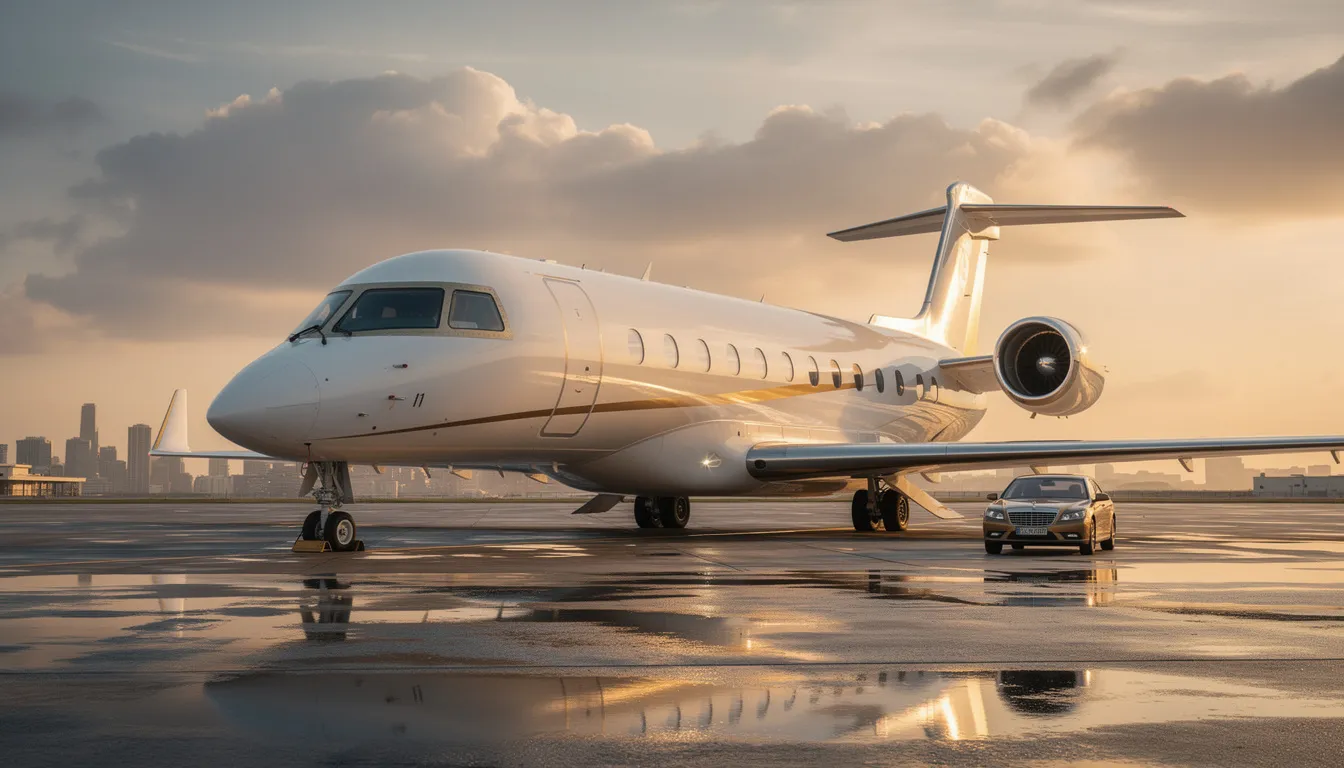
These iconic planes are renowned not only for their advanced engineering but also for their exceptional design and luxury features, including spacious cabins, state-of-the-art technology, and bespoke amenities.
What makes these jets stand out is not just their impressive specifications, but also other factors such as owner preferences and mission requirements, which can significantly influence the choice and performance of these aircraft.
The Airbus A380, when converted for private use, is among the most expensive private aviation concepts ever envisioned. While primarily known as the world’s largest commercial passenger aircraft, select ultra-wealthy buyers have explored A380 configurations tailored entirely for private use. The Airbus A380 has also been operated by air forces and government officials, with these versions featuring advanced security measures and luxury amenities, underscoring the aircraft's significance as a symbol of power and prestige.
Private A380 concepts often include multiple full-size bedrooms, private lounges, spa facilities, conference rooms, and even dedicated wellness areas. When customized for private use, the Airbus A380 can feature a built-in garage for luxury cars and several bedrooms. Customization costs are heavily influenced by the original aircraft price, which also plays a key role in determining ongoing maintenance and insurance costs, as these expenses are often calculated as a percentage of the initial purchase price. With potential customization costs pushing total investment toward $600 million, the A380 is the most expensive private jet in the world.
Its appeal lies not only in size, but in the ability to replicate the experience of a luxury estate in the sky—an option reserved for governments, royal families, and a very small number of private individuals.
The Boeing 747-8 VIP has long been associated with heads of state and global leaders. Its distinctive upper deck and expansive cabin volume make it ideal for large-scale private customization.
In VIP configuration, the 747-8 often includes private offices, dining rooms, secure communications centers, and multiple guest suites. The aircraft’s size allows owners to separate work, rest, and entertainment zones—an advantage for long-haul travel involving teams or extended family.
Pricing for a fully customized Boeing 747-8 VIP can cost as much as $367 million and includes a stateroom and multiple lounges. The extensive jet operations required to maintain and run such a large private jet add to the ongoing expenses, including fuel, maintenance, crew salaries, hangar fees, and insurance. This reflects both the aircraft’s scale and the engineering required to support such bespoke designs.
While wide-body aircraft dominate headlines for sheer luxury, the Bombardier Global 8000 long range business jet represents a different kind of prestige—one rooted in speed, efficiency, and range.
The Global 8000 is often described as being comparable to two aircraft in one, thanks to its combination of the industry's fastest speed, longest range, and a spacious cabin with four equal-sized living spaces. It is known for its range of 8000 nautical miles and is considered the fastest business jet in the world, capable of reaching speeds near Mach 0.95. The Global 8000 is designed for travelers who prioritize time savings without sacrificing comfort. Its range allows for nonstop intercontinental routes that reduce travel fatigue and eliminate layovers.
The Global 8000 showcases how modern private aviation blends performance with luxury, offering refined interiors, advanced connectivity, and the ability to access smaller airports that larger aircraft cannot.
The Gulfstream G700 is another pinnacle of private jet performance, boasting a maximum operational speed of Mach 0.935 and a range of 7,500 nautical miles. It is ideal for intercontinental flights and offers exceptional speed and comfort.
The Bombardier Global 7500, priced at $81 million, is the largest Bombardier-developed business jet and features a transonic wing designed to reduce drag and improve efficiency. Known for its ultra-long-range capabilities, the Global 7500 offers a spacious cabin and advanced technology, making it a favorite among discerning travelers.
The Airbus ACJ350, valued at around $326 million, features multiple private guest rooms and a lounge area, blending the space of a commercial airliner with the luxury of a private jet.
The Gulfstream III remains popular for its lavish interiors and VIP baths, appealing to those who appreciate classic luxury combined with reliable performance.
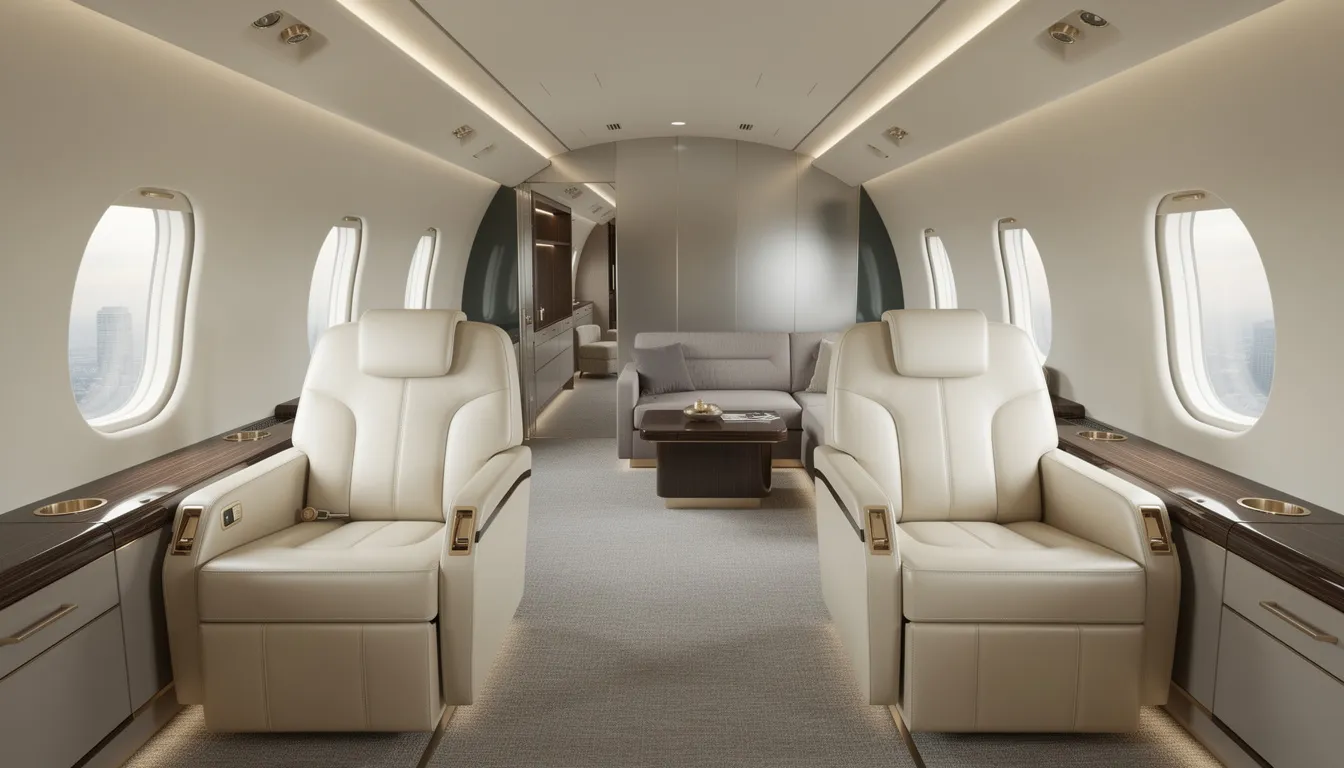
Expensive private jets are defined by interiors built from the ground up. Unlike standard configurations, every detail—from layout to materials—is customized to the owner’s preferences.
Common features include private bedrooms with full-size beds, spa-inspired bathrooms, walk-in closets, and dedicated entertainment lounges. Private jets often feature custom furnishings and state-of-the-art entertainment systems, enhancing the luxury experience. Materials often include handcrafted wood veneers, premium leathers, stone accents, and custom lighting designed to enhance comfort during long flights. Routine inspections are essential to maintain the safety and quality of these bespoke interiors, ensuring that all luxury features remain in top condition.
For executives and business owners, productivity is a core consideration. Many ultra-high-end private jets feature fully equipped private offices, secure communication systems, and conference areas designed for in-flight meetings.
These environments allow travelers to remain productive across time zones, transforming flight time into working hours rather than downtime.
State-of-the-art entertainment systems, high-speed satellite internet, and seamless device integration are standard in the most expensive private jets. These features support both business needs and personal enjoyment, ensuring uninterrupted connectivity across global routes.
Upgrading communications systems in a private jet can cost over $500,000, and the operation of advanced entertainment and connectivity systems can significantly increase the overall cost per flight hour.
Safety is a critical factor in the cost and design of private jets. The most expensive private jets incorporate advanced avionics, redundant flight systems, and cutting-edge navigation technology.
These aircraft are maintained to rigorous standards and operated by highly trained flight crews, including experienced pilots and attentive flight attendants. Pilots are essential for safe and efficient flights, while flight attendants play a key role in ensuring passenger comfort and safety during both short and long-haul journeys. Advanced weather radar, enhanced vision systems, and real-time aircraft health monitoring contribute to safer and smoother flights, particularly on long-haul routes.
In private aviation, cost often reflects not just comfort, but the engineering investments that ensure reliability and peace of mind.
Owning a private jet is not just about enjoying luxury in the air—it also requires a steadfast commitment to safety and operational excellence on the ground. Routine maintenance is the backbone of private jet ownership, encompassing regular inspections, repairs, and parts replacements to ensure every flight meets the highest standards of airworthiness. For larger jets like the Airbus A380 and Boeing 747-8 VIP, the sheer size and complexity of these aircraft demand even more extensive maintenance protocols, often involving specialized teams and advanced technology.
Pre-owned aircraft, while offering a cost-effective alternative to new jets, may require significant investments in refurbishment and upgrades to align with modern safety and comfort expectations. Private jet owners often spend millions of dollars refurbishing their pre-owned aircraft to suit their style and comfort preferences. Maintenance costs can quickly increase into the millions of dollars, especially when factoring in the need for routine and extensive maintenance, as well as unexpected repairs. Companies such as Lufthansa Technik have become leaders in providing bespoke maintenance solutions for ultra-luxury jets, ensuring that every aircraft remains in pristine condition and ready for flight at a moment’s notice.
Annual maintenance costs for private jets can vary significantly, ranging from $50,000 to over $500,000, while engine overhauls can cost between $1 million to $2 million per engine every few thousand flight hours.
Ultimately, the ongoing commitment to maintenance is a critical factor in the overall operational costs of private jet ownership. It not only preserves the value and performance of the aircraft but also guarantees the safety and peace of mind that discerning owners expect from their investment in private aviation.
Protecting a private jet is as important as maintaining it, making insurance and risk management essential components of private jet ownership. The insurance premiums for ultra-luxury jets can represent a significant portion of annual operating costs, with rates influenced by factors such as the jet’s value, flight hours, pilot experience, and the aircraft’s operational range. For the world’s most expensive private jets, insurance costs can reach hundreds of thousands of dollars each year, reflecting the substantial investment at stake.
Effective risk management goes hand in hand with insurance, encompassing regular maintenance, comprehensive crew training, and adherence to rigorous safety protocols. These measures not only minimize the risk of incidents but can also help reduce insurance premiums over time. Owners must work closely with experienced aviation insurance brokers and risk management specialists to tailor coverage that addresses the unique needs of their aircraft and operations.
In the complex world of private aviation, having the right insurance and risk management strategies in place ensures that owners are protected against unforeseen events, safeguarding both their financial investment and their ability to enjoy the ultimate in private jet travel.
While acquisition prices attract attention, ownership costs represent an equally important consideration. Annual costs and ongoing costs are key factors in private jet ownership, encompassing a wide range of recurring expenses that must be budgeted for each year. Operating a large private jet involves ongoing expenses that can reach tens of millions of dollars annually.
These costs typically include fuel, maintenance, crew salaries, insurance, hangar storage, landing and airport fees based on the aircraft's weight and size, and regulatory compliance. Crew costs, including salaries, training, and accommodations for pilots and flight attendants, can range from $100,000 to over $500,000 annually based on experience and qualifications. Hangar fees for private jets can range from $1,500 to over $100,000 per year depending on the location and size of the jet. Management companies may charge between $50,000 and $200,000 annually for managing private jet operations.
Annual fuel costs for a private jet typically fall between $1,000 and $1,500 per flight hour, with fuel costs varying from $1,100 to $2,700 per flight hour depending on the size of the jet. Maintenance costs for private jets can quickly increase to $500,000 to $1 million or more annually. Insurance premiums for private jets can range from $10,000 to $500,000 or more annually.
Larger jets offer a greater range, making them suitable for long-haul flights and intercontinental travel, but these capabilities also increase operational costs due to advanced fuel management and extensive crew planning. Additionally, private jets typically lose 10% to 15% of their value in the first year and 5% to 10% annually thereafter due to depreciation. High annual costs for owning and operating a private jet can total between $700,000 and $4 million, depending on aircraft size and usage, while ongoing costs typically range from $500,000 to $1 million annually.
As a result, even individuals who can afford the most expensive private jets often explore alternative access models that deliver similar benefits at greater financial efficiency.
Fractional jet ownership offers a structured way to access private aviation without assuming full ownership responsibilities. Owners purchase a share of an aircraft, gaining guaranteed access while sharing operating costs with other stakeholders.
This model delivers many of the benefits associated with private jet ownership—flexibility, consistency, and privacy—while significantly reducing capital exposure. Fractional ownership is particularly attractive for travelers who fly regularly but do not require full-time aircraft availability.
Jet card programs provide prepaid access to private jet flights with predictable pricing. While offering flexibility and convenience, jet cards may cost more per hour than fractional ownership for frequent flyers.
Charter remains a popular entry point into private aviation, allowing travelers to fly on demand without long-term commitments. Chartering a private jet can be cost-effective, with prices typically ranging from $5,000 to $20,000 per hour depending on the aircraft and amenities. Many charter companies offer luxurious interiors, advanced technology, and exceptional service, eliminating the responsibilities of maintenance, crew management, and insurance. Chartering allows access to a wide range of aircraft, from light jets to ultra-luxury models, offering flexibility for various trip lengths and passenger counts.
Many private jet services offer 24/7 customer support to assist with any travel needs, enhancing the convenience and appeal of chartering. Chartering a jet offers all the comfort, convenience, and exclusivity without the ongoing expenses associated with ownership.
Even though only a select few will ever own the most expensive private jets, these aircraft influence the broader private aviation market. Innovations in cabin design, connectivity, and aircraft performance often debut at the highest end before filtering down to more accessible platforms.
They also set benchmarks for what private aviation can deliver—reinforcing the importance of flexibility, comfort, and time efficiency across all ownership models.
The private jet market in the United States remains the largest in the world, driven by business travel, geographic scale, and a strong culture of private aviation. Private jets are renowned for their ability to connect major cities like New York with other global destinations nonstop, offering unmatched range, convenience, and premium service for high-net-worth travelers. For example, the Gulfstream G700, priced at $75 million, boasts a maximum operational speed of Mach 0.935 and exceptional range, making it ideal for intercontinental flights such as New York to Dubai. The Gulfstream G800, priced at $72 million, features sixteen oval windows for enhanced views, further elevating the luxury travel experience.
Globally, demand continues to rise as executives and entrepreneurs seek alternatives to congested commercial air travel.
This growth has accelerated interest in fractional aircraft ownership and other shared-access models that balance premium travel experiences with financial discipline.
The most expensive private jets represent the ultimate expression of private aviation capability, combining engineering excellence, bespoke design, and unmatched performance. While full ownership of such aircraft remains reserved for a select few, the benefits they embody—control, efficiency, and flexibility—are increasingly accessible through alternative ownership models.
Fractional jet ownership offers a practical pathway to experience private aviation at its highest standard without the complexity and cost burden of owning an aircraft outright.
Ready to explore the smarter way to fly private?
Visit FractionalJetOwnership.com to learn how fractional ownership can deliver the benefits of private jet travel with greater efficiency and strategic value.
