
April 28, 2026
Finding private plane cheap flights is achievable through strategies like empty legs, shared charters, and fractional ownership. Private jets offer the flexibility to choose your own destination, allowing you to reach locations not always served by commercial airlines. The key is understanding which approach fits your travel patterns and whether you need occasional bargains or sustainable year-round savings.
In the United States and Europe, the absolute lowest-cost private options in 2026 center on:
Empty leg flights on a light jet, typically $2,000–$5,000 per leg on routes like Los Angeles to Las Vegas or Geneva to Linz
Semi-private or shared-seat services starting around $250–$500 per seat on routes such as LA–San Francisco or Paris–Nice
Travelers can rent private jets at these rates, with the rental process involving selecting the aircraft and route that best fit their needs, or even exploring owning a fractional share of a HondaJet when they want recurring access in the light-jet category.
These prices are highly route- and date-dependent. For example, April 2026 sees European repositioning deals like Speyer–Vienna at €990 or Paris–London at €1,410—, but availability requires flexibility and last-minute booking. Apps and websites such as Jettly, Silverhawk Aviation, and GlobeAir make it easy to find and book private jet charters, and booking apps allow users to secure flights directly from their mobile devices.
For travelers needing 25–150 hours per year, BlackJet Fractional Jet Ownership offers a smarter path: predictable, lower effective hourly costs versus ad-hoc charter. The rest of this article explains concrete price ranges, the pros and cons of each option, and how fractional jet ownership reduces cost per flight hour over a full year, building on simplified explanations of key fractional ownership concepts.
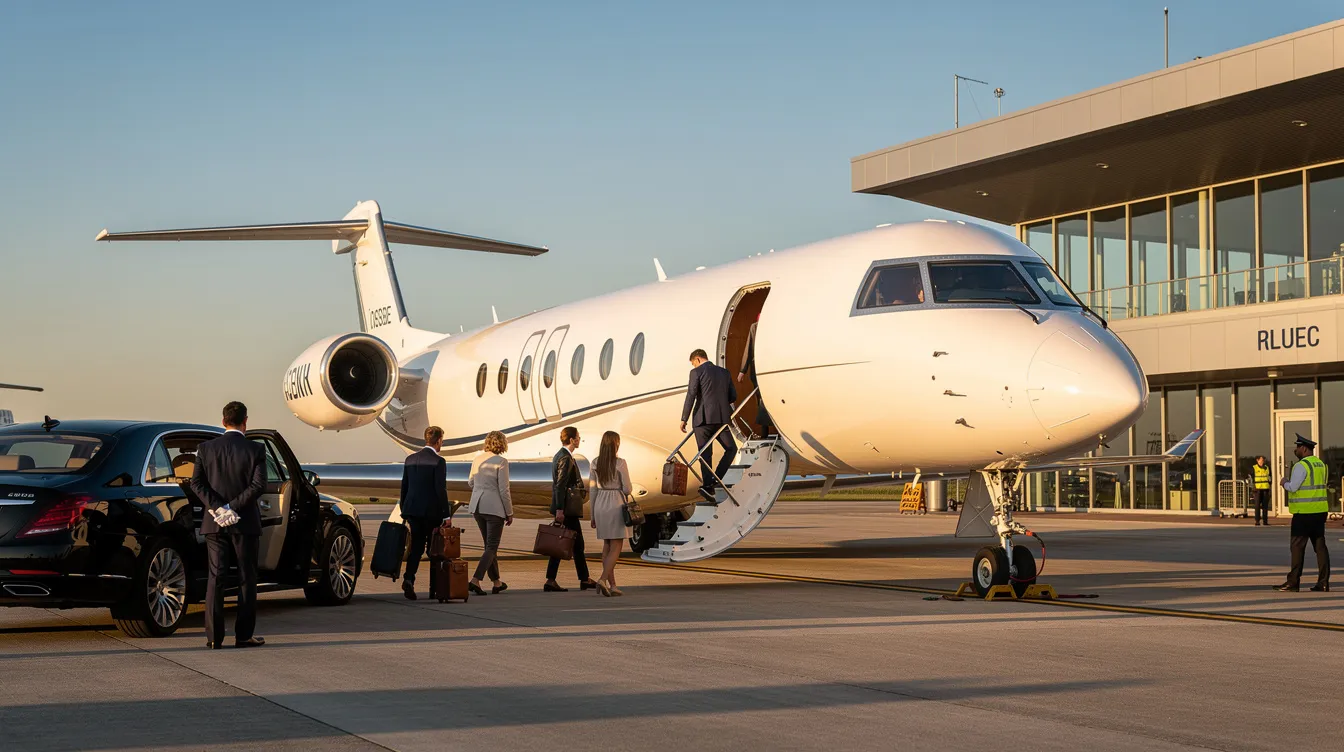
In private aviation, “cheap” still means thousands of dollars per flight—but far below conventional private jet charter or full ownership costs.
The price of a private jet flight can vary widely depending on factors such as the type of aircraft, the distance flown, and the time of year. For example, turboprop planes can start at several thousand dollars per hour, while larger jets cost much more.
Aircraft Type | Hourly Rate |
|---|---|
Light jet | $4,000–$6,000 |
Mid-size jet | $5,000–$8,000 |
Heavy/long-range | $8,000–$15,000+ |
Major cost drivers include aircraft type, route length, repositioning needs, airport fees, and peak dates (summer in Europe, holidays in the U.S.). Private jets can land at thousands of smaller regional airports, which often have lower landing fees than large international hubs, helping reduce overall costs. Travelers can make the most of their in-flight spend by taking advantage of the flexibility and comfort private jets offer—using flight time for work, meetings, or relaxation. There’s also a crucial difference between one-off headline deals—like a repositioning leg at €990—and sustainable strategies like fractional ownership or reserve fleet access that deliver predictable costs year-round.
Real-world examples help anchor what private plane cheap flights actually look like. Consider these European empty leg style deals for late April 2026:
Speyer (ZQC) → Vienna (VIE) on April 25: discounted from ~€7,250 to ~€990
Paris (LBG) → London (BQH) on April 25: reduced from ~€5,800 to ~€1,410
Geneva (GVA) → Linz (LNZ) on April 25: cut from ~€6,200 to ~€990
These empty leg flights are typically available because the aircraft must reposition for its next charter, and if your course matches the repositioning route, you can access these discounted rates.
Additional April 26–27 routes like Avignon–Nice, Berlin–Vienna, and Hamburg–Düsseldorf offer similar savings, though flight details can change if the primary charter shifts. These prices compare favorably to commercial business class ($1,000–$3,000 transatlantic), but the trade-off is limited flexibility.
Such flights suit ultra-flexible leisure travelers. Executives and corporate teams often need the predictability of structured programs like BlackJet’s Equity and Reserve Fleets, especially when they regularly fly on super-midsize aircraft such as a fractional share of a Falcon 2000EX.
Below are eight actionable strategies—each with price ranges and guidance on who benefits most. Travelers should also consider other options such as air taxis and jet cards, which can offer additional flexibility and cost savings compared to standard private jet chartering.
An empty leg flight occurs when a private aircraft repositions without passengers before or after a booked charter, typically to pick up its next passenger or prepare for its next assignment. These flights follow fixed routes and schedules set by the operator, limiting flexibility for travelers. Operators discount these to offset repositioning costs.
U.S. light jet empty legs: $2,000–$5,000 (New York–Palm Beach, LA–Las Vegas)
European examples: Geneva–Linz or Antwerp–Brussels under €1,000–€1,500
Empty-leg flights can offer steep discounts, sometimes up to 75% off the cost of a conventional private jet charter, since you pay only for the empty leg rather than the full trip.
Fixed schedule and fixed routes, often confirmed at short notice
20–50% cancellation risk if the primary charter changes
May limit group size or pets
Best suited for travelers with flexible schedules, as the routes and times are predetermined by the jet operator
Use empty legs opportunistically for leisure, but never rely on one when timing is mission-critical for business.
Shared charter services enable travelers to reserve a single seat on a private jet, significantly lowering costs by dividing the charter flight expenses among multiple passengers. This model offers the privacy and convenience of private terminals at a fraction of the usual cost.
U.S. routes (LA–San Francisco, Dallas–Houston): $250–$500 per seat
European routes (Paris–Nice, Geneva–Olbia): €300–€800 per seat
Pros: Lower cost, access to private terminals, shorter check-in, and more space than commercial flights.
Cons: Fixed departure times, shared cabin limits confidentiality, experience closer to premium business class than bespoke private charter.
For travelers who want some privacy but do not require full aircraft control, shared charters offer an affordable entry point.
Private jet membership programs provide cost-efficient access to flights, often including perks like guaranteed availability and discounted rates for frequent flyers. Members pay a recurring fee to access a fleet of aircraft at reduced hourly rates.
Membership fees vary, but often start in the low thousands annually
Hourly rates in the $4,000–$6,500 range, depending on jet size
Benefits: Locked-in rates, priority access, flexible booking, and often waived or reduced peak surcharges.
Drawbacks: Membership fees and potential minimum flight hour commitments.
Brokers and membership providers often focus on local operators to avoid repositioning fees, passing savings on to members, but frequent travelers should still compare fractional jet ownership vs. membership programs to see which model truly fits their usage.
Fractional ownership means buying a share (e.g., 1/16th or 1/8th fractional jet ownership) that entitles you to fixed annual flight hours, with the operator managing the private aircraft.
Cost benchmarks: (for more detail, see a complete guide to fractional ownership costs)
1/16th share of a light or midsize jet: ~$500,000 plus ~$10,000+ monthly management fees, which many buyers structure through fractional jet ownership financing solutions
Effective hourly costs at 50+ hours/year: competitive with or lower than frequent charter
BlackJet offers two models within a broader portfolio of fractional jet ownership programs you can compare side by side:
Equity Fleet: Own an equity stake in specific aircraft, gain potential U.S. tax advantages for fractional jet owners (depreciation), and enjoy priority access
Reserve Fleet: Access a curated fleet on a pay-as-you-go basis with guaranteed availability—no large capital investment or long-term commitment required, while still benefiting from carefully managed total cost visibility in fractional jet ownership.
Over three to five years, fractional owners can significantly reduce the cost per flight hour versus constant ad-hoc private jet charter at $5,000–$10,000/hour. Travelers evaluating this path should understand the full cost structure of fractional jet ownership. This approach suits executives and families flying 25–150 hours annually who value reliability over chasing occasional rock-bottom fares, especially those considering whether 1/8th fractional jet ownership or a smaller share aligns with their actual hours, or whether a long-range solution like a fractional share of a Falcon 900LX better matches their missions.

On-demand charter is the most common entry point into flying private and is ideal for occasional travelers, as it allows you to book flights as needed with no upfront costs or long-term commitments, though frequent regional travelers may graduate to models like fractional jet ownership in Nashville for better economics.
Chartering smaller, very light jets or turboprops is generally more cost-effective than larger, long-range jets. Turboprops like the Pilatus PC-12, King Air 350, or a TBM 850 fractional ownership option offer hourly rates around $4,000–$4,900 and are well-suited for short to medium distances.
40-minute hop (Las Vegas–Los Angeles): $2,800–$5,000
1.5-hour midsize jet (New York–Chicago): $12,000–$18,000 round trip
Use turboprops for short hops to save on hourly rates
Choose airports near the aircraft’s home base to avoid repositioning fees; brokers often secure better rates by focusing on local operators
Travel midweek (Tuesday–Thursday) when demand is lower, often resulting in better rates than weekends or holidays
Clients spending 25+ hours annually should evaluate fractional ownership for better long-term economics, weighing fractional jet ownership as an investment against recurring charter or membership costs.
Smart choices on timing and routing materially lower costs, particularly if you routinely fly to secondary destinations such as those served by Atlantic Municipal private jet access and ownership options:
Midweek travel avoids peak surcharges on routes like New York–Miami or Los Angeles–Aspen
Secondary airports (Teterboro vs. JFK, LBG vs. CDG) reduce handling fees and taxi time, and regional hubs like Calgary International’s fractional jet ownership options can offer similar efficiencies
Booking older aircraft can often be less expensive while still meeting safety standards, particularly on leisure routes from destinations like the Bay of Islands, private jet access, and ownership hub
Planning 7–14 days ahead unlocks more aircraft options and better pricing
BlackJet’s operations teams use these levers proactively to keep owners’ effective hourly rates as low as possible, often leveraging floating fleet structures in fractional ownership to match aircraft to demand efficiently, whether you’re based in a major hub or a market like Portland with dedicated fractional jet ownership options.
Experienced private fliers rarely rely on a single solution, especially when they split time between major business hubs and leisure gateways like Ibiza private jet access and ownership options. Consider these scenarios:
A York-based executive with a BlackJet Equity share for business travel, supplementing with empty legs for weekend trips to Miami, and using private charter flights to accomplish multiple meetings or site visits within a single day for maximum efficiency—much like a business owner leveraging fractional jet ownership in Atlanta or fractional jet ownership in Austin to cover regional routes efficiently
A European family using Reserve Fleet hours for 30–40 hours annually, adding semi-private seats during school holidays, similar in spirit to how families use fractional jet ownership in Orlando or fractional jet ownership in Phoenix to combine leisure trips with predictable costs
This blended approach keeps average cost per flight hour lower than pure on-demand charter while preserving schedule flexibility, and understanding key fractional jet ownership terms, plus regional offerings like fractional jet ownership in Pittsburgh, helps you choose which mix of options fits your flying profile best.
Abnormally low prices can indicate corners cut on safety or regulatory compliance, and they may also signal gaps in critical protections like liability coverage in fractional jet ownership.
FAA Part 135 (commercial for-hire) vs. Part 91 (private, non-commercial), alongside contract basics you’d see in sample fractional jet ownership agreements
Flying friends or clients for compensation under Part 91 constitutes an illegal charter
Valid Part 135 certificate (or EASA AOC in Europe)
Proper aircraft insurance and crew certifications
BlackJet’s curated fleet and management oversight deliver competitive pricing without compromising professional pilots and flight crews standards, aircraft, or regulatory compliance, all governed by robust fractional ownership sample contract structures.
How does deal-hunting compare to building a long-term aviation strategy?
Model | Best For | Effective Hourly Cost | Control Level |
|---|---|---|---|
Full ownership | 400+ hours/year | Highest upfront ($3–10M+), $700K–$1M annually | Maximum |
Jet cards | 25–50 hours/year | $5,000–$6,500/hour | Medium |
Ad-hoc cheap flights | <25 hours/year | $250–$5,000/trip | Low |
Fractional ownership | 25–150 hours/year | $4,000–$6,000/hour effective | High |
For many high-net-worth individuals and corporate flight departments, fractional ownership represents the best balance of cost, convenience, and flexibility, especially once they’ve modeled the total cost of a fractional jet share and planned ahead for selling a fractional jet ownership share when their needs change. Consider not just the cheapest single trip, but the lowest all-in cost per productive hour saved over a full year.

BlackJet Fractional Jet Ownership serves as a strategic partner focused on efficiency, predictability, and cost discipline in private aviation, similar in spirit to other leading fractional jet ownership programs for smart investors.
Equity Fleet: Purchase an equity stake in specific aircraft tailored to your typical missions. BlackJet manages operations, scheduling, and maintenance under a transparent program with potential U.S. tax advantages.
Reserve Fleet: Access a curated fleet on a pay-as-you-go basis with guaranteed availability—no large capital investment or long-term commitment required.
BlackJet lowers effective hourly costs by optimizing aircraft selection, using strategic repositioning, and blending fractional access with opportunistic empty legs when appropriate, supported by thoughtful fractional jet ownership financing structures that work whether you’re flying from major hubs or regional airports like Kelowna with private jet ownership options. The company serves both U.S. and global clients, whether they fly within North America, Europe, or on transatlantic routes.
While private plane cheap flights exist through empty legs, semi-private seats, and last-minute deals, true savings for serious travelers come from structured solutions like fractional ownership and reserve-style programs.
Occasional flyers can catch empty legs and shared private charter flights to experience private aviation at lower entry prices
Frequent flyers (25–150 hours/year) achieve far better long-term economics through fractional aircraft ownership
Safety, legality, and reliability should never be sacrificed for the absolute lowest quote
Your next step: Review your last 12–24 months of travel and estimate your annual private flight hours. Then schedule a consultation to compare ad-hoc charter, jet cards, and fractional ownership on a like-for-like cost basis.
Ready to explore the smarter way to fly private? Visit FractionalJetOwnership.com to learn how BlackJet Fractional Jet Ownership can reduce your cost per flight hour while upgrading your travel experience. Gain all the benefits of private jet flights—time saved, luxury in the journey, and the confidence of having a trusted aviation advisor handling every detail.
