
April 27, 2026
Flying a private plane to Europe from the United States represents one of the most demanding missions in business aviation—and one of the most rewarding when executed well. For executives, family offices, and corporations routing teams between US financial centers and European capitals, the question isn’t whether private jet travel makes sense, but which access model delivers the best combination of predictability, cost efficiency, and operational control.
In 2026, transatlantic private jet flights will offer compelling advantages over commercial alternatives. Popular transatlantic private jet routes include New York to London, Miami to Paris, and Los Angeles to Rome, with flight times typically ranging from 6 to 8 hours. Direct routing eliminates airline connections that typically add 2-4 hours per leg.
Here’s what frequent US-Europe travelers should know:
Flight times by region: New York to London or Paris takes approximately 6.5-8.5 hours; Miami to Nice or Lisbon spans 9-9.5 hours; Chicago to Paris or Frankfurt requires 8-9.5 hours; Los Angeles to London demands 10.5-12 hours on ultra-long-range aircraft.
Charter costs: On-demand private jet charter for transatlantic routes runs $120,000-$170,000 one-way on heavy jets, with Los Angeles-Paris exceeding $180,000-$250,000 due to longer flight hours and positioning.
Fractional alternative: BlackJet Fractional Jet Ownership offers more predictable hourly costs and guaranteed availability for travelers logging 25-150 flight hours annually, positioning fractional aircraft ownership as a strategic alternative to repeated ad-hoc charters.
Modern long-range aircraft like the Gulfstream G550 and G650, Bombardier Global 5000/6000, and Dassault Falcon 7X/8X comfortably cover routes such as New York-London, New York-Zurich, and Miami-Lisbon nonstop with full fuel reserves. Ultra-long-range jets such as the Gulfstream G550, Bombardier Global Express 5000, and Falcon 900LX fractional jet shares effortlessly complete nonstop flights from the US to Europe, boasting ranges of 6,750 and 6,200 nautical miles, respectively.
For frequent flyers exceeding 25-50 transatlantic hours per year, fractional ownership often proves more cost-effective than booking repeated private charter flights, especially when you understand the full cost structure of fractional jet ownership.
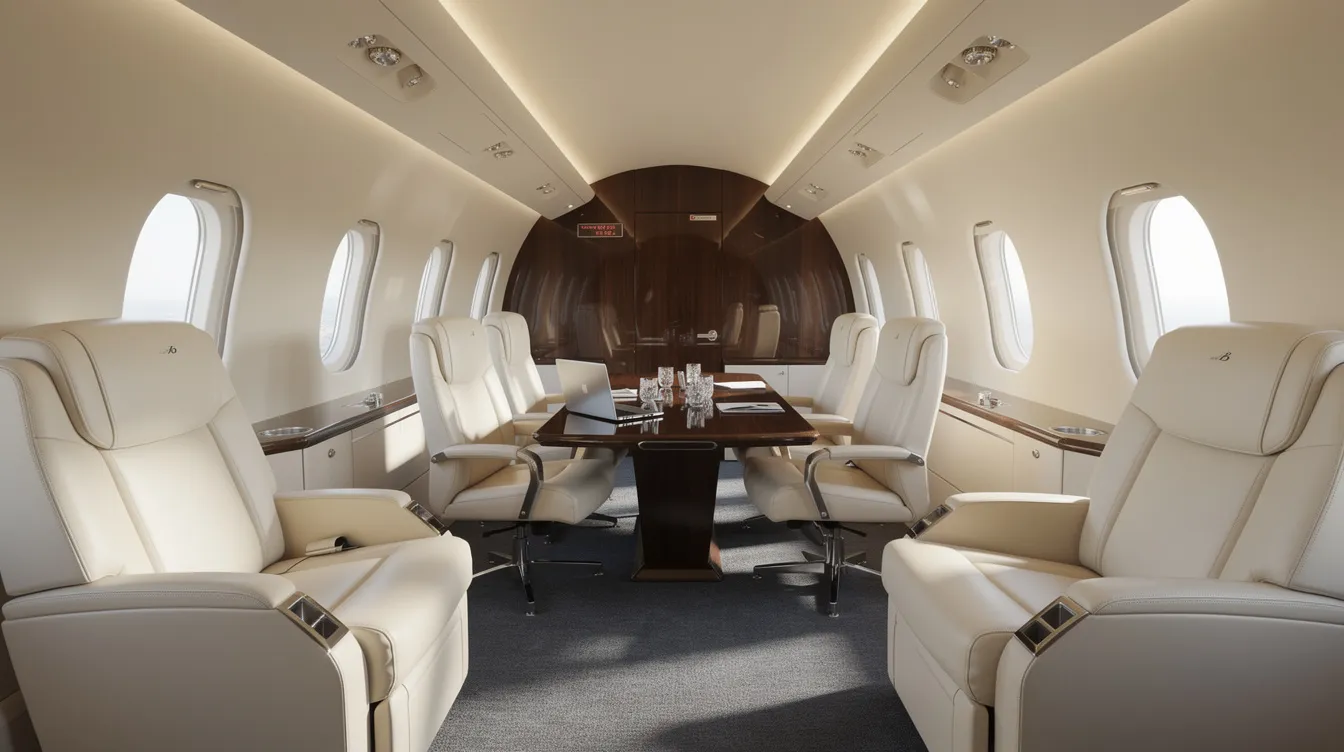
Private jet travel can save 3-4 hours of total travel time on transatlantic journeys compared to commercial flights, with reduced flight time compared to commercial routes being a key advantage, as well as eliminating early airport arrival, TSA screening, and boarding delays. Skip check-in and fly private from dedicated terminals with 15-30 minute procedures.
Depart after late New York meetings and arrive in London or Frankfurt for next-morning briefings—impossible with red-eye commercial airline constraints. Travel on your own schedule without airline timetable restrictions.
Private jets can access over 984 airports across Europe, including many smaller airports that commercial airlines cannot reach, enhancing travel flexibility. Fly into Luton or Farnborough instead of Heathrow, Paris Le Bourget instead of CDG, or secondary leisure airports like Nice, Olbia, Sion, Ibiza, and Mykonos—cutting ground transportation from 2-3 hours to 20-45 minutes.
Secure Wi-Fi, private cabins, and conference seating allow teams to work on sensitive deals during 7-10 hour crossings. This productivity advantage matters for US financial-to-European capital transactions.
A private aircraft can combine New York-Paris-Milan-Zurich-New York in 3-4 days without airline reconnections, enabling complex business travel that would require multiple commercial bookings.
Private jet terminals offer significantly expedited customs processes compared to commercial airline terminals, allowing passengers to complete border formalities in minutes rather than hours. While on-demand charter provides convenience for occasional trips, BlackJet’s fractional model delivers the added predictability and planning leverage that regular transatlantic travelers require.
Understanding range requirements helps match the right private jet to your European missions. To reach Europe nonstop from the US East Coast, private jets need a minimum range of approximately 3,500 nautical miles; however, a range exceeding 4,000 nautical miles is advisable to provide greater routing flexibility and to accommodate potential weather-related adjustments.
Range requirements: Most US East Coast to Western Europe routes require at least 3,500 nm real-world range, with 4,000+ nm recommended for flexibility against headwinds up to 100 knots or diversions.
Ultra-long-range capability: Heavy jets with 6,000+ nm range—including Gulfstream G550/650, Global 5500/6500, and Falcon 7X/8X—comfortably handle nonstop flights such as New York-London, Boston-Geneva, Miami-Lisbon, and Chicago-Paris.
Older heavy jets: Aircraft like the Gulfstream GIV-SP or Embraer Legacy 600 (3,400-3,800 nm) can operate many East Coast-Europe pairings but may require a fuel stop in Iceland or the Azores in adverse winds or when fully loaded, while high-performance turboprops such as the TBM 850 fractional share programs are better suited to shorter feeder legs into major transatlantic gateways.
Light jets and very light jets: These aircraft generally lack the range for nonstop US-Europe sectors, requiring 2-3 fuel stops that erode time savings and add operational complexity—making them unsuitable for core transatlantic missions, though models like the HondaJet fractional ownership option can still be valuable for shorter domestic or intra-Europe legs.
The category of private jets capable of crossing the Atlantic Ocean must meet stringent technical requirements while providing the comfort and amenities expected by passengers during extended international flights. Heavy jets are suitable for transcontinental travel and can accommodate up to 14 passengers with comfortable standing cabins.
BlackJet’s Equity Fleet sourcing prioritizes aircraft with sufficient transatlantic range to cover key business routes—Teterboro to London Luton, White Plains to Paris Le Bourget—nonstop under typical conditions, applying the same rigor to terminology and structure outlined in a fractional jet ownership terms glossary. Aviation experts on BlackJet’s advisory team help prospective owners match aircraft range to their real travel patterns, whether originating from the East Coast or West Coast with Northern or Southern European destinations.
Flight durations for private jets traveling from the US East Coast to Europe typically span 6 to 8 hours, offering significantly faster travel than commercial airlines due to direct flight paths. However, actual flight times can vary widely depending on the departure city, specific European destination, aircraft model, and prevailing weather conditions.
Route | Approximate Flight Time |
|---|---|
New York (TEB) to London (LTN) | 7-8 hours |
New York to Paris (LBG) | 7.5-8.5 hours |
Washington DC to Frankfurt | 8 hours |
Boston to Geneva | 7.5-8 hours |
Miami to Nice | 9-9.5 hours |
New York to Rome | 8.5-9 hours |
Los Angeles to London | 10.5-11 hours |
Dallas to Madrid | 9-9.5 hours |
These popular routes extend to leisure destinations including Mallorca, Sardinia (Olbia), and Greek islands, as well as Mediterranean party hubs like Ibiza, private jet access, and ownership options, providing access to both financial hubs and resort destinations across European countries.

Region | Flight Duration Range |
|---|---|
East Coast to Western Europe | 6.5-8.5 hours |
Midwest to Western Europe | 8-9.5 hours |
West Coast to Western Europe | 10-12 hours |
Aircraft Type | Hourly Rate Range | Notes |
|---|---|---|
Heavy Jets (Transatlantic) | $8,000 - $10,000 | Experienced oceanic crews command $8,500-$11,000 |
Various Aircraft Categories | $20,000 - $40,000 per flight hour | Depends on aircraft type and availability |
Route | One-Way Cost Range |
|---|---|
New York to London | $120,000 - $170,000 |
Los Angeles to Paris | $180,000 - $250,000+ |
Option | Upfront Cost | Hourly Cost | Access and Benefits |
|---|---|---|---|
Jet Cards | Low | $7,000 - $12,000 | Prepaid hours, no ownership, no tax benefits |
Fractional Ownership | Higher upfront capital | Lower effective hourly cost | Guaranteed access, tax benefits, priority scheduling |
For a US-based firm doing monthly New York-Frankfurt trips (12 annual round-trips, roughly 96 hours), charter might cost $1.2-1.6 million annually versus $800,000-$1.1 million through fractional ownership after amortizing the initial investment—a difference that compounds over time while providing access you can plan a journey around with confidence and aligns with viewing fractional jet ownership as an investment and understanding the total cost of fractional jet ownership.
Several variables move trip pricing up or down on transatlantic charter flight bookings:
Factor | Impact on Cost |
|---|---|
Aircraft type and age | Newer jets cost more per hour but may be more efficient |
Seasonality | May increase costs by 20-40%, peak events up to 50%+ |
Repositioning | Empty legs reduce cost; repositioning flights increase cost |
Additional fees | Crew fees, fuel surcharges, landing permits ($1,000-$5,000 per country) |
Airport choice | Smaller airports reduce congestion and fees |
For frequent US-Europe travelers, choosing between on-demand charter, jet cards, and fractional ownership depends on annual flight hours, predictability requirements, and capital considerations, mirroring the broader trade-offs explored when comparing fractional jet ownership vs membership programs. Here’s how the options compare:
Option | Best For | Advantages | Limitations |
|---|---|---|---|
On-demand Charter | Occasional trips | Flexibility, no ownership commitment | Variable pricing, no guaranteed availability |
Jet Cards | Under 25 hours/year | Predictable hourly rates, prepaid hours | No ownership or tax benefits |
Fractional Ownership | 25-150 hours/year | Guaranteed access, tax benefits, and consistent aircraft | Higher upfront investment |
BlackJet Reserve Fleet | Mixed domestic and European flights | Flexible pay-as-you-go without ownership | Limited to managed fleet availability |
Beyond pricing, non-price benefits matter significantly to executives and family offices:
Consistent quality: Fractional ownership provides more predictable aircraft quality and cabin configuration across trips than varied jet charters from multiple aircraft operators, especially when evaluating flexible, floating fleet options in fractional ownership that optimize aircraft availability across regions.
Priority access: Guaranteed availability windows reduce the risk of last-minute aircraft substitutions before critical board meetings in London, Zurich, or Frankfurt—addressing inventory concerns that plague peak-season charter.
Centralized management: BlackJet centralizes flight planning, scheduling, and aircraft management, so owners work with a single expert team instead of multiple brokers. This service level means one call to arrange ground transportation, coordinate with the crew, and confirm all flight details.
The contrast is clear: calling a broker for each New York-London trip means explaining preferences repeatedly and accepting whatever aircraft is available. Working with BlackJet’s dedicated scheduling team means they already understand your preferences, travel inspiration, and requirements—streamlining every journey.

Transatlantic flight requires compliant oceanic procedures, including RVSM, CPDLC, and ADS-B Out. Reputable operators adhere to FAA, EASA, and IS-BAO standards. Aviation authority compliance varies significantly across European countries, with each maintaining its own regulations, taxes, and inventory concerns that impact private jet operations and travel planning. These individual requirements are often influenced by the European Aviation Safety Agency (EASA), making it essential to have experienced operators who can effectively navigate these complexities.
Overflight permits are critical for transatlantic flights, as each country whose airspace is traversed requires specific authorization, which must be secured well in advance due to varying processing times. Chartering a private plane involves managing documentation such as landing permits and customs for international travel, all of which should be reflected accurately in an aircraft fractional ownership sample contract.
Local noise limits, slot controls, and night curfews require experienced flight planners who route aircraft through suitable European airports such as London Luton, Paris Le Bourget, Geneva, Munich, or Milan Linate.
Crew qualification requirements for international flights exceed domestic standards, necessitating pilots to have appropriate ratings for both the aircraft type and international operations, including specific training for oceanic procedures, which are typically outlined in essential fractional ownership contract terms.
BlackJet works only with vetted operators whose maintenance records, air crew training, and safety audits meet or exceed industry best practice—ensuring clients can explore Europe with confidence thanks to highly qualified pilots and cabin crews.
Documentation requirements for international private jet travel to Europe streamline border crossing while maintaining security standards, requiring valid passports and appropriate visa documentation for all passengers and crew.
Passport and visa: All passengers require valid passports and, where applicable, Schengen or UK visas and upcoming digital travel authorizations (ETIAS), even when using private terminals, while owners must also understand tax implications for fractional jet owners when allocating trips between business and personal use.
Advance passenger information: Operators submit API electronically before arrival, allowing customs officers to pre-screen travelers and often process them in minutes at private terminals. This advantage means no long lines at the airport.
Pet travel: Pets can often accompany owners in the cabin if they meet EU or UK veterinary documentation, vaccination, and microchip requirements, coordinated in advance.
Private terminal processing: Discrete immigration areas in cities like London, Paris, Geneva, and Nice minimize wait times even during peak seasons—a key advantage over commercial terminals. Private jets provide direct access to over 984 airports in Europe, including smaller airports that commercial airlines cannot reach, enhancing travel flexibility and convenience and preserving asset value when selling a fractional jet ownership share or transitioning programs.
Matching your actual mission profile—city pairs, passenger counts, frequency—to an optimal aircraft and BlackJet program type ensures you pay for capability you’ll use, in line with how smart investors evaluate the best fractional jet ownership programs.
Primary departure airports (Teterboro, Miami Opa-locka, Van Nuys)
Main European destination cities
Typical passenger load (4-6 vs 10-14)
Whether nonstop capability is essential
For frequent New York-London, New York-Zurich, or Washington DC-Brussels flights with 6-10 passengers, a long-range or ultra-long-range jet share in BlackJet’s Equity Fleet is often the ideal solution, particularly for owners who have evaluated dedicated fractional jet ownership financing options to align capital outlay with expected usage. Reserve Fleet access suits clients with mixed profiles—some domestic US flights plus several Europe trips annually—who want flexibility without committing to a single aircraft type immediately, and can be evaluated alongside BlackJet’s other options using the comparison of fractional jet ownership programs.
Consider aircraft classes strategically: large-cabin jets for transatlantic missions handle the cruise comfortably, while super-midsize jets like the Falcon 2000EX fractional share option work well for intra-Europe leg flights once on the continent. On 7-10 hour crossings, comfort elements matter: lie-flat seating, quiet cabins, stable connectivity, and sufficient baggage capacity for extended European stays save valuable time and energy, often aligning well with a 1/8th fractional jet ownership structure that delivers around 100 hours of access per year and warrants careful attention to liability coverage in fractional jet ownership as part of overall risk management.
These realistic multi-leg trip examples demonstrate how a private plane to Europe streamlines complex travel, whether you’re departing from major hubs or regional airports. Atlantic Municipal private jet access and ownership options:
Business itinerary:
Depart Teterboro for the London board meetings
Fly London-Zurich for private banking discussions
Return via Zurich-Teterboro over 3-4 days
Total block time approximately 20 hours versus 30+ hours commercial with hotels and connections—allowing travelers to contact European clients while maintaining New York commitments, similar to how fractional jet ownership in Atlanta can streamline regional and international missions for Southeast-based firms.
Leisure itinerary:
Miami-Lisbon for a few days
Short intra-Europe hops to Mallorca and the French Riviera (Palma-Nice, Nice-Ibiza)
Return to Barcelona-New York in 10 days
Secondary airports eliminate 2-hour ground transfers from major commercial hubs, maximizing time at each destination in the world you want to explore, much like fractional jet ownership in Pittsburgh and fractional jet ownership in Austin can optimize access to both business and leisure destinations from their respective regions.
These itineraries show the advantage of private aviation: completing a multi-city European trip in the time a commercial itinerary would require for two destinations.
For frequent US-Europe travelers, fractional aircraft ownership represents a strategic alternative to repeated on-demand charter or jet cards. The combination of predictable access on critical routes, tailored aircraft range and cabin comfort, professional scheduling support, and potential US tax advantages creates compelling value for those exceeding 25-50 transatlantic hours annually.
Executives, family offices, and mid-market corporations who routinely travel between the United States and Europe for board meetings, investor visits, or extended family trips should evaluate whether their flight patterns justify fractional ownership with competitive rates compared to charter alternatives, whether they’re based in Asia with fractional jet ownership in Kaohsiung, the American South through fractional jet ownership in Nashville and fractional jet ownership in Orlando, the Southwest with fractional jet ownership in Phoenix, the Pacific Northwest via fractional jet ownership in Portland and fractional jet ownership in Seattle, or the Mid-Atlantic coastline using fractional jet ownership in Virginia Beach.
Ready to explore the smarter way to fly private? Visit FractionalJetOwnership.com to learn how BlackJet’s Reserve Fleet and Equity Fleet options can transform your transatlantic travel. Request a personalized Europe travel analysis to see how your specific routes and frequency translate to ownership economics.
The right program turns your US-Europe corridor from a logistical challenge into a reliable, efficient extension of your home and office—letting you focus on what matters at your departure point and destination rather than the journey between them.
Flying a private plane to Europe offers unparalleled convenience, flexibility, and efficiency for frequent transatlantic travelers. Whether choosing on-demand charter, jet cards, or fractional jet ownership, understanding the benefits and costs of each model is essential for optimizing your travel experience. Fractional ownership, particularly through trusted providers like BlackJet Fractional Jet Ownership, delivers predictable access, competitive pricing, and operational control tailored to your specific flight needs. With expert scheduling, premium aircraft options, and streamlined regulatory support, fractional ownership transforms complex international travel into a seamless extension of your business and lifestyle.
For executives, family offices, and corporations regularly flying between the United States and Europe, fractional aircraft ownership is a smart investment that balances cost, convenience, and luxury. To explore how fractional ownership can elevate your private aviation experience and provide reliable access to popular destinations across Europe, visit FractionalJetOwnership.com. Discover the difference that expert guidance, flexible programs, and world-class aircraft can make on your next transatlantic journey.
