
April 28, 2026
Picture this: it’s 6:00 a.m., and you need to be in Miami for a noon meeting. On commercial flights, you’re looking at a 5:30 a.m. airport arrival, long security lines, potential delays, and connections that turn a 3-hour flight into a 7-hour ordeal. With a same-day private jet rental in 2026, you could depart Teterboro at 8:00 a.m. and touch down at Opa-locka before 11:00 a.m., ready to work.
This guide is for business executives, frequent travelers, and anyone considering private jet rental or ownership. Understanding your options for renting a private jet can save you time and money and provide unmatched travel flexibility. Fractional jet ownership allows multiple individuals or companies to share ownership and usage of a private jet, providing access without the full cost and responsibility of sole ownership.
That’s the reality of private jet travel today. Air charter services offer flexible, safe, and personalized flight options for both leisure and business travelers, positioning air charter as a premium, on-demand service. Private jets allow for uninterrupted work in a quiet environment, serving as a productive flying office. Additionally, private jet travel can save travelers between 90 and 180 minutes on many business routes due to expedited check-in, direct access to smaller airports, and flexible routing, making it a more efficient option compared to commercial flights. But for those who fly frequently, the question isn’t whether private aviation makes sense—it’s which access model delivers the best combination of flexibility, cost efficiency, and predictability. This guide breaks down everything you need to know about how to rent a private jet, what it actually costs in 2026, and when transitioning to fractional jet ownership becomes the smarter financial decision.
Securing a private flight in the United States no longer requires days of back-and-forth negotiation. When working with a structured program like BlackJet Fractional Jet Ownership, travelers can often confirm aircraft availability and receive accurate pricing within hours—sometimes under six hours for domestic routes. For those seeking convenient and personalized private jet travel, charter jet options are also available, offering flexibility and a wide network of aircraft to suit your needs.
The booking process starts with gathering your trip essentials. Have ready your exact travel dates, departure and arrival airports using specific codes (Teterboro TEB, not just “New York”), passenger count, any special luggage requirements like golf bags or ski equipment, and your preferred departure window. The more precise your information, the faster your quote arrives.
Modern quoting systems work by matching your trip profile to available aircraft categories. You’ll typically receive options across light jet, midsize, super midsize, and heavy jet classes, each with estimated hourly rate ranges and approximate all-in trip pricing. For a regional hop under two hours, you might see light jets starting around $3,000 per hour. Cross-country missions could show midsize or super midsize options in the $4,500-$6,500 range.
What separates a true aviation advisor from a simple booking platform is the guidance that comes with the quote. BlackJet Fractional Jet Ownership helps clients evaluate whether a single trip rental makes sense for their situation or whether their usage patterns—tracked over 12-24 months—justify stepping into a jet card membership or fractional ownership structure, supported by clear explanations of fractional jet ownership terms and concepts. This advisory approach ensures you’re not just getting a flight, but building toward the most cost-effective access model for your actual travel habits.

Most private jet rentals in the United States fall between $2,000 and $14,000 per flight hour in 2026, with aircraft size and range serving as the primary cost drivers. Understanding these ranges helps you budget accurately and choose the right aircraft for your specific trip.
Current 2026 market rates break down as follows:
Aircraft Category | Seats | Typical Range | Hourly Rate |
|---|---|---|---|
Turboprops | 6-8 | 1,075-1,845 nm | $2,000-$2,300 |
Very Light Jets | 2-4 | 1,178-1,300 nm | $2,750-$3,500 |
Light Jets | 6-7 | 1,500-2,527 nm | $2,900-$3,500 |
Midsize Jets | 8-9 | 1,741-3,242 nm | $4,300-$4,750 |
Super Midsize Jets | 8-10 | 2,850-4,142 nm | $5,100-$6,500 |
Large/Heavy Jets | 10-16 | 3,000-4,728 nm | $6,800-$9,500 |
Ultra Long Range | 12-16 | 5,950-8,055 nm | $10,000-$14,000 |
VIP Airliners | 16-50 | 3,000-6,100+ nm | $16,000-$23,000+ |
Key considerations when renting a private jet include safety ratings, aircraft size, total costs, and specialized catering or ground transportation needs. The base hourly rate typically covers:
The entire aircraft
Professional crew
Insurance
Standard fuel allocations
However, several factors can push your final flight cost higher:
Repositioning legs: If the aircraft must fly empty to reach your departure city, you may pay for that positioning flight
De-icing: Winter operations in the Northeast and Midwest can add $2,000-$5,000, depending on aircraft weight and weather conditions
Hangar fees: Adverse weather requiring overnight shelter can add $500-$2,000+ daily
Crew logistics: Extended delays that exceed pilot duty limits trigger crew changes and hotel costs
Premium catering: Basic refreshments are often included, but elaborate meals add hundreds or thousands
Landing fees and handling fees: Popular airports charge substantial fees that are passed through
International trip charges: Customs fees, overflight permits, and additional crew costs may apply
Weight and balance limits: Private jets have strict luggage and cargo limits, requiring early disclosure of heavy or oversized items
The total cost of a private jet flight can be 20-40% higher than the base hourly rate due to these additional expenses. It’s essential to ensure the quote is all-inclusive and to inquire about potential extra charges before confirming your booking.
The hourly rate represents just the starting point. Your total charter cost includes the round-trip or return positioning, fuel surcharges, and various operational factors. Here’s what realistic all-in pricing looks like:
Los Angeles to Las Vegas (Light Jet): Approximately 1 hour flight time. Expect $6,000-$9,000 round trip, including return positioning, making this a practical option for same-day business meetings or leisure time in Vegas.
New York to Miami (Midsize Jet): About 2.5 hours each way. Plan for $25,000-$32,000 round trip. The midsize jet offers stand-up cabin comfort and luggage capacity that light jets can’t match for this popular route.
New York to London (Heavy Jet): Roughly 6.5 hours eastbound. One-way pricing runs $95,000-$130,000 depending on the specific aircraft and seasonal demand. These long-haul missions require larger aircraft with the range and cabin comfort for productive transoceanic work.
Empty leg flights, where a plane is repositioning for its next scheduled flight, can offer discounts of up to 50% off standard charter rates, making private aviation more accessible for flexible travelers. Potential savings of 30–75% can be achieved by comparing options that include empty leg flights when renting a private jet.
Empty leg flights: Take advantage of discounted repositioning flights for up to 75% off standard prices.
Shared charters: Split the cost of a private jet charter among a group to reduce individual expenses by 40-70%.
Flexible scheduling: Departing a day before peak travel avoids surcharges and improves aircraft availability.
Choose regional airports: Opt for airports with lower fees over premium hubs to reduce landing fees.
Private jets can access nearly 5,000 regional airports in the U.S., compared to only 500 served by commercial airlines. This expanded airport access enables travelers to land closer to their final destinations, saving significant ground travel time and enhancing convenience.
For perspective, full private jet ownership typically implies $1 million or more in annual fixed costs covering maintenance, hangar fees, crew salaries, insurance, and aircraft depreciation—before you fly a single hour. This math makes private jet rental or fractional ownership cost structures far more rational for travelers logging under 200 hours annually.
BlackJet’s Reserve Fleet model addresses the unpredictability problem for frequent flyers. Rather than negotiating pricing trip-by-trip, members access more transparent pricing structures that reduce surprises while maintaining the flexibility of renting by the hour. This bridges the gap between pure on-demand charter and full fractional ownership commitment.
Private jets are categorized into several types based on size and range, including light jets, midsize jets, super-midsize jets, large jets, and ultra-long-range jets. Light jets typically accommodate 4 to 7 passengers and are suitable for short regional flights, while midsize jets can carry 6 to 9 passengers and are capable of longer distances. Heavy jets are designed for long-distance travel, accommodating larger groups and offering a range of approximately 7,000 miles, making them ideal for international flights. Ultra-long-range jets can fly distances of 5,950 to 8,055 nautical miles, accommodating 12 to 16 passengers, and are often used for intercontinental travel. Turboprop aircraft are known for their efficiency over shorter distances, typically flying between 600 and 1,000 miles, and are often used for regional travel.
Selecting the right aircraft depends on four practical factors: distance, passenger count, runway requirements, and budget. Luxury amenities matter, but mission suitability matters more. A gorgeous heavy jet is wasted on a 300-mile hop, just as a light jet won’t serve you on a nonstop transatlantic crossing.
Aircraft like the Pilatus PC-12, King Air 350, and high-performance models such as the TBM 850 turboprop offer 6-9 seats with a range up to 1,845 nautical miles. At $2,000-$2,300 per hour, they represent the most cost-effective entry point for private air travel. Turboprops excel on regional routes like Dallas-Houston or international short-hauls like Geneva-Nice. Their ability to access shorter or rugged runways opens airports that jets simply cannot reach. For business executives making frequent regional hops under 800 miles, turboprops deliver private travel efficiency without premium jet pricing.
The Citation CJ3+, Phenom 300, and similar light jet models carry 6-8 passengers approximately 1,500-2,500 nautical miles. At $2,900-$3,500 per hour, they’re the most frequently booked category for regional U.S. charter flights. Light jets handle routes like Chicago-Jackson Hole, Boston-Miami, or San Francisco-Las Vegas with improved fuel efficiency compared to heavier aircraft options. They’re ideal when you need jet speed, but your route doesn’t demand a larger aircraft.
The Citation Latitude, Praetor 500, and Challenger 3500 represent the midsize and super midsize jet categories, alongside popular super midsize options like the Falcon 2000EX fractional ownership platform. With 7-10 seats, ranges reaching 4,142 nautical miles, and hourly rates of $4,300-$6,500, these aircraft types dominate 3-5 hour transcontinental missions. New York-Aspen, Los Angeles-Chicago, and similar routes benefit from stand-up cabins, larger baggage holds, and cabin comfort that makes productive work possible during flight times. Super midsize jets often include high-speed Wi-Fi and enhanced entertainment systems for business travelers who need to stay connected.
The Gulfstream G600, Global 6500, and similar heavy jet models carry 10-16 passengers across 5,950-8,055 nautical miles nonstop, a category that also includes long-range platforms like the Falcon 6X and Falcon 900LX fractional programs. At $10,000-$14,000 per hour for ultra-long range capability, these aircraft enable routes like Los Angeles-Honolulu, New York-London, or transcontinental executive transport. Many feature separate sleeping configurations, dedicated crew rest areas, and galley facilities approaching commercial aircraft standards. For frequent flyers making regular intercontinental trips, these become the baseline for serious long-range travel.
Boeing Business Jets (BBJ) and Airbus Corporate Jets (ACJ) serve 20-50+ passengers at $16,000-$23,000+ per hour. These larger aircraft are occasionally rented for board meetings, large corporate delegations, or special incentive travel events. On the opposite end of the spectrum, very light jets like the Honda Jet fractional ownership option provide efficient access for smaller groups and shorter missions. They represent a small plane only in comparison to commercial airliners—in reality, they’re flying conference rooms with bedroom suites attached.
BlackJet’s Equity Fleet fractional ownership model allows clients to select or co-own an aircraft matched to their primary mission profile, whether that means regional solutions such as fractional jet ownership in Austin or national programs, alongside Reserve Fleet and lease options that let you compare flexible private aviation programs. A client consistently flying 2-3-hour East Coast routes might own a share in a midsize jet, while someone making regular New York-Europe trips would look at heavy jet shares. This customization eliminates the constant re-evaluation of aircraft categories that comes with ad-hoc private jet rental.
“Renting a private jet” actually describes three distinct access models, each suited to different annual usage levels and scheduling priorities. Understanding where you fall on the usage spectrum determines which model delivers the best value.
Pure on-demand charter flights work best for travelers flying under 25 hours per year. You pay only when you fly, with no upfront capital commitment or administrative overhead. The trade-offs include pricing that varies trip-to-trip based on aircraft availability, potential difficulty booking during peak periods like Thanksgiving week or major sporting events, and no guaranteed aircraft familiarity. For occasional leisure travel or unpredictable business needs, on-demand private charter delivers the flexibility these users need without locking up capital.
Jet card memberships bridge the gap between pure rental and ownership. Programs typically involve pre-purchasing 25-50+ hours at fixed hourly rates, gaining guaranteed availability with 24-72 hours' notice, and eliminating peak-season price surges. Memberships starting around $370/month can provide access to 20,000+ aircraft through global network partnerships, so it’s worth understanding fractional ownership vs. membership programs before committing.
The jet card model suits frequent flyers in the 25-75 hour annual range who value pricing predictability and guaranteed access but don’t want aircraft equity. The drawback: you’re committed to prepaid hours regardless of actual usage, and monthly fees continue during low-travel periods.
BlackJet’s Equity Fleet represents true fractional jet ownership—acquiring a legal share in a specific aircraft. A 1/16 share might provide 50 hours annually, while a 1/8 fractional jet ownership share covers approximately 100 hours. Owners pay a purchase price for their share, monthly management fees covering hangar, maintenance, and crew, plus hourly operating fees when flying.
In exchange, fractional owners receive guaranteed aircraft access, booking priority (especially valuable on peak travel days), familiar cabin layouts and consistent amenities, and potential U.S. tax benefits for fractional jet owners, including accelerated depreciation. For travelers flying 75-150+ hours annually with consistent routing patterns, fractional ownership typically delivers lower effective hourly costs than repeated charter bookings.
For frequent users who want more stability than on-demand charter but aren’t ready for aircraft equity, BlackJet’s Reserve Fleet model offers a middle path. Members access predictable hourly rates and guaranteed availability without ownership commitment—reducing the administrative friction of traditional floating fleet style fractional programs while maintaining pay-as-you-go flexibility.
Here’s the practical decision framework, whether you’re considering national options or regional solutions like fractional jet ownership in Atlanta or fractional jet ownership in Nashville:
Under 25 hours/year: On-demand private jet rental is likely most efficient, with market-specific options such as fractional jet ownership in Portland becoming relevant only as hours increase
25-150 hours/year: Fractional ownership—whether through a national provider or market-specific options like fractional jet ownership in Orlando, or jet card membership typically delivers better value and convenience
Over 150-200 hours/year: Consider full or co-ownership with professional management
BlackJet positions itself as an advisor helping clients find the right fit, rather than pushing everyone toward the highest-commitment option, whether that’s a focused regional solution like fractional jet ownership in Phoenix, fractional jet ownership in Pittsburgh, or fractional jet ownership in Seattle. The goal is to match your actual travel patterns to the access model that optimizes both cost and convenience.
Modern private jet rental can be handled end-to-end by a dedicated aviation advisor, often completing the entire booking process same-day for domestic U.S. flights. Understanding each stage removes the mystery and helps first-time private aviation users know exactly what to expect.
The process begins with gathering mission-critical details. Your advisor will confirm departure and arrival airports using specific codes (TEB, OPF, VNY—not just city names), exact dates and preferred departure windows, a complete passenger list including any children or elderly travelers, pet requirements with documentation, medical or accessibility accommodations, and ground transportation needs at origin and destination.
If you have time-sensitive connections—a board meeting at 2:00 p.m. that requires touchdown by noon—communicate this clearly. Your advisor can build buffer time into flight details to protect against operational disruptions like weather or air traffic delays.
Based on your trip profile, you’ll receive 2-3 aircraft options with pricing, estimated block time, and available amenities. Behind the scenes, responsible providers verify operator credentials, including FAA Part 135 certification for U.S. private charter operations, third-party safety ratings from organizations like ARGUS, Wyvern, and IS-BAO, pilot experience and training records, and aircraft maintenance history.
Even when aircraft are accessed through partner fleets, reputable programs maintain consistent safety standards. Price alone should never drive aircraft selection—vetting matters more than a few hundred dollars per hour saved.
Once you select an aircraft, you’ll receive a private charter agreement outlining terms, services included, and cancellation policies. Typical arrangements require a deposit (often 25-50% of the estimated cost) to secure the aircraft, with the balance due before departure.
Cancellation policies vary by provider and timing. A cancellation 72+ hours before departure might allow a deposit refund or credit, while 24-hour cancellations typically forfeit deposits entirely. Changes to flight times or passenger counts are generally accommodated with appropriate adjustments.
Here’s where the private jet experience truly differs from commercial flights. You’ll arrive at a private terminal (FBO) just 20-30 minutes before departure, compared to the 2-3 hour early arrival commercial flights demand. No long security lines. No removing shoes and laptops. Your luggage is handled directly from the vehicle to the aircraft.
Boarding occurs when all passengers arrive. The aircraft departs when you’re ready, not according to a fixed schedule. Catering preferences, beverage selections, and cabin entertainment are confirmed in advance. The flight itself delivers privacy, productivity space, and arrival at private terminals that often sit minutes from your final destination rather than the 45-minute drives from major commercial hubs.

Frequent flyers using this same rental process repeatedly can transition into fractional ownership or Reserve Fleet membership with minimal friction. The familiarity you build with private air travel through individual charter flights becomes the foundation for a more structured relationship—with guaranteed aircraft, standardized terms, and reduced trip-by-trip negotiation.
Price should never serve as the primary decision factor when booking a private flight. Safety, regulatory compliance, and operational standards matter far more than saving a few hundred dollars per hour. Sophisticated travelers understand that the true cost of private aviation extends beyond the hourly rate.
Before booking any private jet charter, confirm the operator maintains current FAA Part 135 certification for U.S. charter operations or EASA certification for European flights. Third-party safety audits provide additional assurance—look for ARGUS Platinum, Wyvern Wingman, or IS-BAO Stage 2-3 ratings.
Verify that the aircraft operates with experienced two-pilot crews (even when regulations might permit single-pilot operation on smaller aircraft types). Request information about pilot flight hour minimums, type-rating requirements, and recurrent training programs. Reputable operators share this information readily. Those who deflect or minimize safety questions deserve suspicion, especially when you consider how much depends on highly trained pilots and professional cabin crews.
Transparent maintenance records matter equally. When did the aircraft last undergo a major inspection? Are all airworthiness directives current? Many operators offer aircraft that appear identical from the outside but differ dramatically in maintenance standards and crew quality.
Confirm that your chosen aircraft can actually fly your specific trip nonstop with a full passenger load. High-altitude airports like Denver reduce aircraft performance. Short runways like Aspen’s or regional fields such as Atlantic Municipal International Airport limit which aircraft categories can operate safely with passengers and luggage.
Aircraft size and aircraft weight affect takeoff and landing requirements. A midsize jet that easily serves Teterboro might face restrictions at mountain airports with challenging terrain or specialized locations like Avord AB International Airport. Your advisor should proactively flag these constraints rather than discovering them during pre-flight planning.
For access to more airports and flexibility in destination choices, lighter aircraft often outperform larger alternatives. A turboprop accessing a small plane-capable runway 10 minutes from your meeting—such as routes served from Bay Of Islands International Airport—beats a heavy jet landing at a regional hub requiring additional ground transportation.
Beyond the base hourly rate, several factors can significantly increase your flight cost:
Repositioning legs: If the aircraft is based 200 miles from your departure airport, you may pay for that empty positioning flight at the full hourly rate—potentially doubling a short-hop charter cost.
De-icing operations: Winter flights in the Northeast and Midwest frequently require de-icing fluid application. Depending on aircraft size and weather conditions, de-icing adds $2,000-$5,000 to your trip.
Hangar fees during delays: If adverse weather requires overnight or extended airport stays, hangar rental or premium tarmac storage can add $500-$2,000+ per day.
Crew duty-time management: Extended delays that push pilots past FAA duty limits require crew changes, hotels, and overtime—all billable to the charter client.
Landing fees at premium airports: Popular destinations like Teterboro, Van Nuys, or Aspen charge substantial landing fees that many operators pass through directly.
Peak-day surcharges: During Thanksgiving week, Christmas-New Year, Super Bowl weekend, and major golf tournaments, some operators apply surcharges of 10-25% above standard rates.
Flexible scheduling: Provides the simplest path to cost efficiency. Departing a day before peak travel avoids surcharges and improves aircraft availability.
Choose regional airports: Opt for airports with lower fees over premium hub airports to reduce landing fees without significantly impacting convenience.
Empty leg flights: Represent repositioning aircraft seeking to offset deadhead costs with discounted charter. These leg flights can offer savings up to 75% off standard prices, though they require flexibility on timing and routing, whether you’re flying from major hubs or emerging markets like Bhubaneswar International Airport.
Book round-trips: For round-trip itineraries, booking both legs simultaneously typically costs less than two one-way charters, as it eliminates repositioning on one leg.
Environmentally conscious clients increasingly request Sustainable Aviation Fuel (SAF) options and carbon offset programs. SAF can reduce carbon footprint by up to 80% compared to conventional jet fuel, though availability and cost premiums vary by location.
Reputable carbon offset programs provide verified emissions reduction through forestry, renewable energy, or methane capture projects. BlackJet can coordinate these options for clients, whether they’re flying from large gateways like Calgary International Airport or smaller regional fields, prioritizing environmental responsibility alongside private aviation convenience.
BlackJet Fractional Jet Ownership standardizes many of these variable costs for members and fractional owners. Fixed hourly operating rates, bundled management fees, and consistent aircraft sources mean fewer line-item surprises on each trip, alongside carefully structured liability and insurance coverage for fractional owners. Long-term budgeting becomes possible when you’re not negotiating de-icing fees and crew overnight costs on every winter flight.
The transition from trip-by-trip private jet rental to fractional ownership typically makes financial sense between 25 and 150 flight hours annually, depending on routing patterns, aircraft preferences, and appetite for tax planning benefits.
Consider a founder or executive flying monthly New York-Miami roundtrips (approximately 36 hours annually), quarterly Los Angeles trips (30 hours annually), and occasional visits to Austin, Aspen, or other secondary markets (20 hours annually). This pattern accumulates 75-100 flight hours per year by 2026.
At average midsize jet charter rates of $5,000-$6,000 per hour, annual private jet charter costs reach $375,000-$600,000. Every trip requires new quotes, operator vetting, and contract negotiation, whether you’re departing from a large hub or more specialized locations such as Camp Guernsey International Airport. Aircraft quality and cabin layout vary flight-to-flight. Peak-day availability becomes a genuine concern during holiday periods.
A 1/8 fractional share (approximately 100 hours annually) in a comparable midsize jet might involve a specific fractional jet ownership financing structure:
Share acquisition: $200,000-$250,000 in purchase price, depreciated over 5+ years
Monthly management: $5,000-$8,000 covering hangar, insurance, crew, and administration ($60,000-$96,000 annually)
Hourly operating fees: $3,500-$4,500 per flight hour ($350,000-$450,000 for 100 hours)
When amortized properly, the total cost of fractional ownership can run $95,000-$146,000 less than equivalent charter spending for 100-hour users. Consultation with tax advisors may reveal additional advantages—fractional aircraft shares can qualify for accelerated depreciation under current U.S. tax law, though specific benefits depend on business use percentage and individual circumstances.

Non-financial benefits often prove equally compelling for business executives and frequent flyers using both major airports and boutique gateways like Fernandina Beach International Airport. Fractional ownership delivers:
Peak-day priority: Guaranteed access during Thanksgiving, Christmas, Super Bowl, and other high-demand periods when charter availability becomes scarce
Cabin consistency: Same aircraft type every flight, with familiar layouts, Wi-Fi systems, and work environments
Reduced friction: No trip-by-trip negotiations, operator research, or contract review
Control: Input into aircraft sourcing, maintenance standards, and cabin configurations
BlackJet’s Equity Fleet program structures fractional ownership around each client’s core mission profile, whether that core routing centers on leisure destinations like Ibiza International Airport or purely business corridors. Rather than forcing clients into predetermined share sizes, the program offers custom aircraft sourcing matched to actual travel patterns. A client making primarily 2-hour regional flights gets different recommendations than someone regularly crossing the Atlantic.
Share sizes, aircraft types, and management arrangements flex based on real usage projections—ensuring you’re not over-committed to hours you won’t use or under-served on the routes you fly most, whether that means mountain gateways like Kelowna International Airport or major business centers, which is central to viewing fractional jet ownership as an investment rather than just an expense.
For some businesses and family offices, hybrid approaches work best. Fractional ownership covers core recurring routes—the predictable monthly travel that justifies aircraft equity and is governed by a clear fractional ownership contract framework. Reserve Fleet or on-demand rental handles overflow: the one-off client visit to an unusual city, the large-party trip requiring a different aircraft category, or the emergency travel that exceeds fractional allocation.
This combination maximizes time savings on routine travel while maintaining flexibility for exceptional situations, provided you understand key fractional ownership contract terms and agreements that define how those options work together.
For a 2-hour flight in 2026, expect to pay $8,000-$12,000 all-in for a light jet or $11,000-$15,000 for a midsize jet. These estimates include basic positioning, crew, and fuel, but may not cover de-icing, premium catering, or peak-day surcharges. Request itemized quotes to understand exactly what’s included before confirming your booking.
For most domestic U.S. routes, 24-72 hours provides sufficient lead time to secure quality aircraft at reasonable rates. Peak holiday periods tell a different story—Thanksgiving week, Christmas through New Year, Super Bowl weekend, and major golf tournaments like the Masters benefit from 1-2 weeks' advance booking. Summer resort-season travel to destinations like Aspen, Nantucket, or the Hamptons also sees elevated demand, requiring earlier planning.
Absolutely. Same-day out-and-back business missions represent one of private aviation’s most compelling value propositions. A Boston-Washington D.C. day trip, Los Angeles-Las Vegas meeting, or New York-Toronto client visit becomes feasible when you eliminate overnight hotel costs, maximize leisure time at home, and accomplish in one day what commercial flights would stretch across two.
Most operators welcome dogs and cats with prior notice and appropriate documentation. Cleaning fees may apply, typically $200-$500, depending on the aircraft and operator policies. Larger pets or exotic animals require advanced coordination—confirm arrangements during your initial consultation rather than discovering restrictions on departure day.
Private flight security differs substantially from commercial aviation. You’ll use private terminals (FBOs) that bypass standard TSA checkpoints and long security lines. Identification verification and basic security screening still occur, but the process takes minutes rather than the hour-plus typical at major commercial airports. International private flights involve additional customs and border procedures coordinated by your operator.
Valid passports are essential for all international private flights, with visa requirements varying by destination country. Your operator should provide guidance on specific entry requirements, customs procedures, and documentation timing. For frequent international travelers, Global Entry and similar trusted traveler programs streamline the return process. BlackJet coordinates entry requirements and customs pre-clearance where available.
Jet card programs involve prepaying for flight hours at fixed rates without acquiring aircraft equity. You’re essentially a preferred customer with guaranteed access and predictable pricing. Fractional ownership means you own a legal share of a specific aircraft—paying a purchase price, monthly management fees, and operating costs in exchange for guaranteed access, potential tax benefits, and input into aircraft standards. Jet cards suit 25-75-hour annual users; fractional ownership typically makes sense at 75-150+ hours.
Empty leg flights can deliver savings up to 75% off standard charter flights, making them excellent options for flexible travelers. These represent repositioning flights—aircraft returning to base or moving to pick up another client. The catch: limited route flexibility, timing constraints, and potential cancellation if the primary charter changes plans. For leisure travel with schedule flexibility, empty legs offer genuine value. For time-critical business travel, the reliability trade-off may not be worthwhile.
Renting a private jet delivers immediate benefits: time savings, privacy, and control over your travel schedule. For occasional travelers, these advantages justify premium pricing on a trip-by-trip basis. But as annual flight hours accumulate, the economics shift. Fractional ownership and membership models transform that same convenience into long-term predictability and cost-effective travel.
The decision framework is straightforward. Under 25 hours annually, on-demand jet rental typically delivers the best value—you’re not committed to hours you won’t use. Between 25 and 150 hours, fractional ownership through BlackJet’s Equity Fleet or a Reserve Fleet membership usually provides superior economics and guaranteed access, similar to the leading fractional jet ownership programs for smart investors. Above 150 hours, full or co-ownership with professional management enters the conversation.
To make an informed decision, gather your last 12-24 months of actual travel data: routes flown, passenger counts, and total spending, including commercial flights, hotels for overnight connections, and missed opportunities from scheduling constraints. Then project your next 12 months of anticipated travel. This creates the objective foundation for comparing pure private jet rental, jet card programs, and fractional jet ownership costs using a clear total cost framework, and even planning eventual exits by selling a fractional jet ownership share if your needs change.
Ready to explore the smarter way to fly private? BlackJet Fractional Jet Ownership provides confidential consultations to analyze your specific travel patterns and recommend the access model that optimizes both cost and convenience.
Visit FractionalJetOwnership.com to learn how fractional ownership can transform your travel experience—or to request a custom cost comparison based on your actual usage profile.
For those ready to move beyond one-off rentals while maintaining flexibility, privacy, and control, fractional jet ownership represents the most intelligent path forward in the private aviation market.
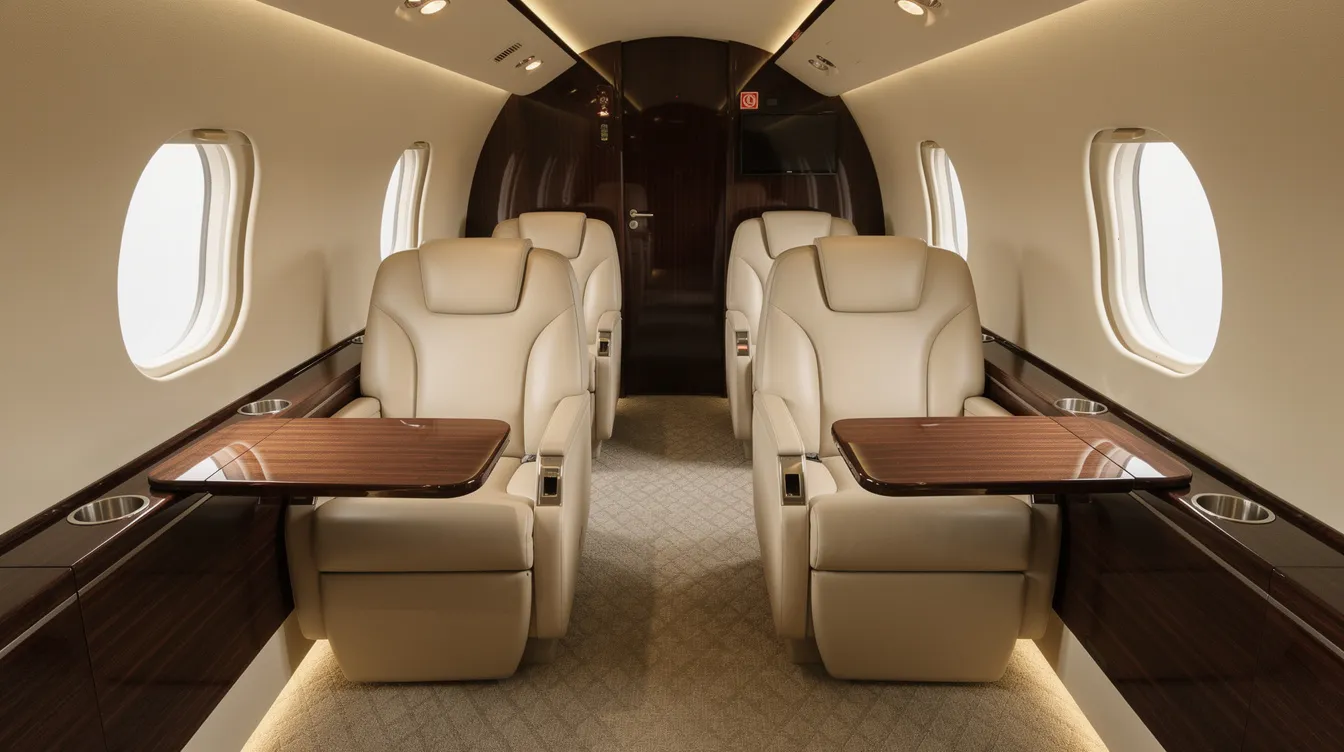
Stepping aboard a private jet is an experience that redefines luxury travel. Unlike commercial flights, where space and privacy are limited, private jets offer an environment tailored to your comfort and preferences. Spacious cabins allow you to stretch out, hold meetings, or simply relax in plush, ergonomically designed seats finished with fine leather and elegant wood accents. The attention to detail is evident in every aspect of the cabin, from ambient lighting to noise-reducing interiors that create a tranquil atmosphere for work or rest.
Gourmet dining is a hallmark of the private jet experience. Passengers can enjoy chef-prepared meals and a curated selection of fine wines, all served by a dedicated crew attentive to your every need—whether departing from U.S. bases or international hubs that support fractional jet ownership in Kaohsiung and similar markets. Whether you’re traveling for business or leisure, the service is personalized and discreet, ensuring your journey is as enjoyable as your destination.
Technology further enhances the onboard experience. Advanced avionics contribute to improved fuel efficiency and smoother flights, while high-speed Wi-Fi keeps you connected to your office, family, or entertainment throughout the journey. State-of-the-art entertainment systems, customizable climate controls, and even private sleeping quarters on larger jets ensure that every flight is tailored to your lifestyle. For those who value both productivity and relaxation, private jet travel offers a level of comfort and convenience that commercial flights simply can’t match.
The private jet charter industry is undergoing a dynamic transformation, fueled by rising demand for private air travel and evolving traveler expectations. One of the most significant trends is the adoption of digital booking platforms, which have revolutionized the way clients access private jet charter services. These platforms offer transparent pricing, real-time aircraft availability, and instant quotes, making it easier than ever to compare options and secure charter flights that fit specific needs.
Sustainability is also at the forefront of industry innovation. Many private aviation companies are investing in carbon offset programs and exploring the use of sustainable aviation fuel to reduce the environmental impact of private jet travel. This shift reflects a growing awareness among travelers and operators alike, who seek to balance luxury with responsibility.
Cost-effective travel options are gaining traction as well. Empty leg flights—discounted charter flights that occur when an aircraft needs to reposition—offer significant savings for flexible travelers. Regional programs, such as fractional jet ownership in Virginia Beach, also reduce per-hour costs for consistent users. Shared flights are another emerging trend, allowing passengers to split costs while still enjoying the benefits of private terminals and personalized service.
As the private aviation market continues to expand, operators are investing in new aircraft, including ultra-long-range jets and advanced light jets, to meet diverse client demands. Enhanced services, improved technology, and a focus on transparent pricing are setting new standards for the private jet experience. Whether for business executives seeking efficiency or leisure travelers desiring exclusivity, the future of private jet charter promises greater accessibility, innovation, and value across every segment of private air travel.
Renting a private jet offers unparalleled convenience, flexibility, and time savings for occasional flyers and business travelers alike. However, as flight hours increase, fractional jet ownership emerges as the smarter, more cost-effective solution—combining the benefits of guaranteed aircraft access, priority scheduling, consistent cabin experience, and potential tax advantages. BlackJet Fractional Jet Ownership provides tailored programs that match your unique travel patterns, whether through equity shares, reserve fleets, or hybrid models, helping you optimize both cost and convenience.
For executives, entrepreneurs, and families who demand reliability and efficiency without the full responsibilities of ownership, fractional ownership bridges the gap between ad-hoc charter and sole aircraft ownership. It delivers predictability, personalized service, and long-term value, transforming private aviation from an occasional luxury into a strategic business asset.
Ready to explore the smarter way to fly private? Visit FractionalJetOwnership.com to learn how fractional ownership can elevate your travel experience, provide unmatched flexibility, and deliver peace of mind on every flight. Discover how this innovative approach to private aviation can save you time, reduce costs, and open new horizons for your personal and professional journeys.
