March 9, 2026
You can be a private jet owner and still prioritize operational efficiency; the two are no longer mutually exclusive. While ultra-long-range flagships like the Bombardier Global 7500 capture the headlines, the real momentum in 2026 is happening in the “middle” of the market.
Data from Honeywell’s 34th Annual Global Business Aviation Outlook indicates that the super midsize category is a primary driver of fractional fleet growth, which has grown by more than 65% since 2019 as operators expand to meet record demand.
Corporations, in particular, favor this class because it perfectly aligns with the geography of global business. Beyond lower operating costs, these aircraft can access shorter regional runways, offering proximity to final destinations that larger "heavy" jets simply cannot reach. This article from Fractional Jet Ownership reveals that this combination of range, flexibility, and cost-efficiency is why super midsize models continue to lead fractional programs into the second half of the decade.
Private aviation has maintained its post-2021 trajectory, but the method of travel has evolved.
Sole ownership is increasingly viewed as an administrative burden; instead, the 2026 market has embraced the fractional model. Several parties share a single aircraft while providers manage the “logistics of flight”—crew recruitment, maintenance, and 2026 regulatory compliance.
Under these models, the fractional fleet providers manage the heavy lifting of the operational side. By handling the complex requirements of hangaring, staffing, and safety compliance, they allow owners to focus on the utility of the aircraft rather than the logistics of the hangar.
Within these managed fleets, the landscape is defined by four distinct categories:
Among these, the super midsize remains the most requested share. Operators have leveraged this demand to record-breaking effect; for instance, the Challenger 300 series recently recorded over 210,000 departures in North America alone—the highest of any private jet model.
Large fractional fleet operators are among the best clients for Bombardier's super midsize models, with over 1,000 aircraft delivered. According to recent reports, this platform recorded over 210,000 departures in North America in 2024, which is the highest of any private jet model.
The appeal of this aircraft category is a combination of factors, such as:
Let’s take them one by one:
While flagship jets are designed for 7,500 nautical mile polar hops, the vast majority of private missions are regional or transcontinental. A super midsize jet provides 3,000 to 3,500 nm of range, sufficient for New York to London (with a stop) or nonstop coast-to-coast flights regardless of winter headwinds.
For a fractional owner, paying for the range of a heavy jet for a four-hour mission is increasingly seen as an operational inefficiency.
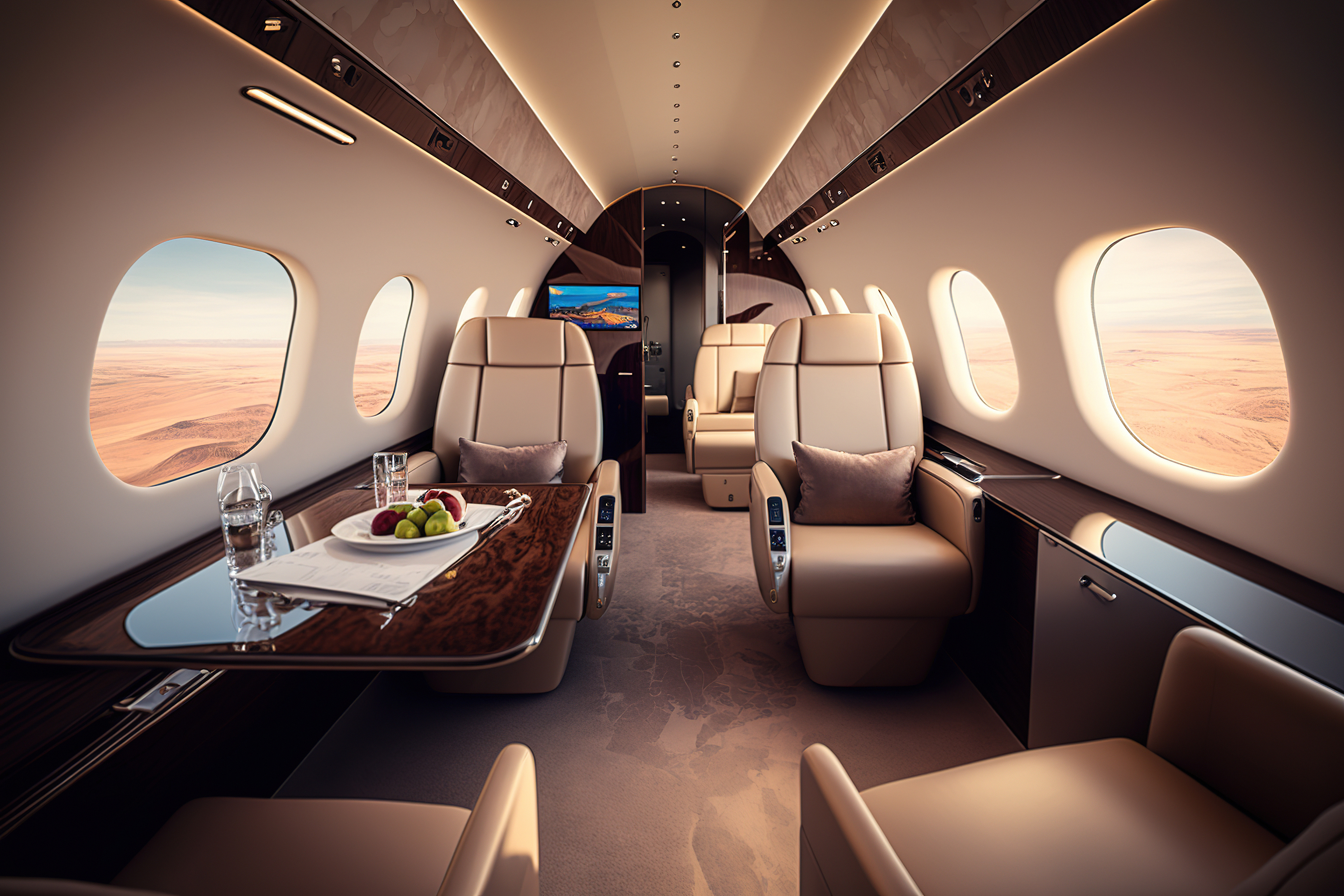
The defining characteristic of the super midsize class is the stand-up cabin, a feature historically reserved for $15M plus heavy jets. Models like the Challenger 3500 and Cessna Citation Latitude feature completely level floors, allowing passengers to walk upright from the cockpit to the lavatory.
On a five-hour transcontinental flight, this physical mobility is a productivity multiplier, allowing travelers to arrive prepared for work rather than fatigued by the cabin's geometry.
In 2026, these cabins function as “offices in the sky.” High-speed Ka-band/Ku-band Wi-Fi and Starlink integration have become standard, ensuring the boardroom environment remains uninterrupted by altitude.
One reason the super midsize is seen as a disruptor in the private aviation world is that it provides 90% of the luxury of a $75M Gulfstream for about 60% of the price. A Challenger 3500 might cost around $4,000/hr to operate, whereas a Global 6000 can easily double that.
For a fractional provider, this translates to more competitive pricing for the share owner. Plus, these models hold their value better due to high demand in the pre-owned market.
The use of fractional ownership by figures like Patrick Mahomes or Bill Gates reflects a broader market correction toward “smart” lift. The era of the “trophy asset” is being replaced by a focus on utility and ease of management. As the super midsize category continues to evolve, it remains the definitive sanctuary for the value-driven traveler in 2026.
