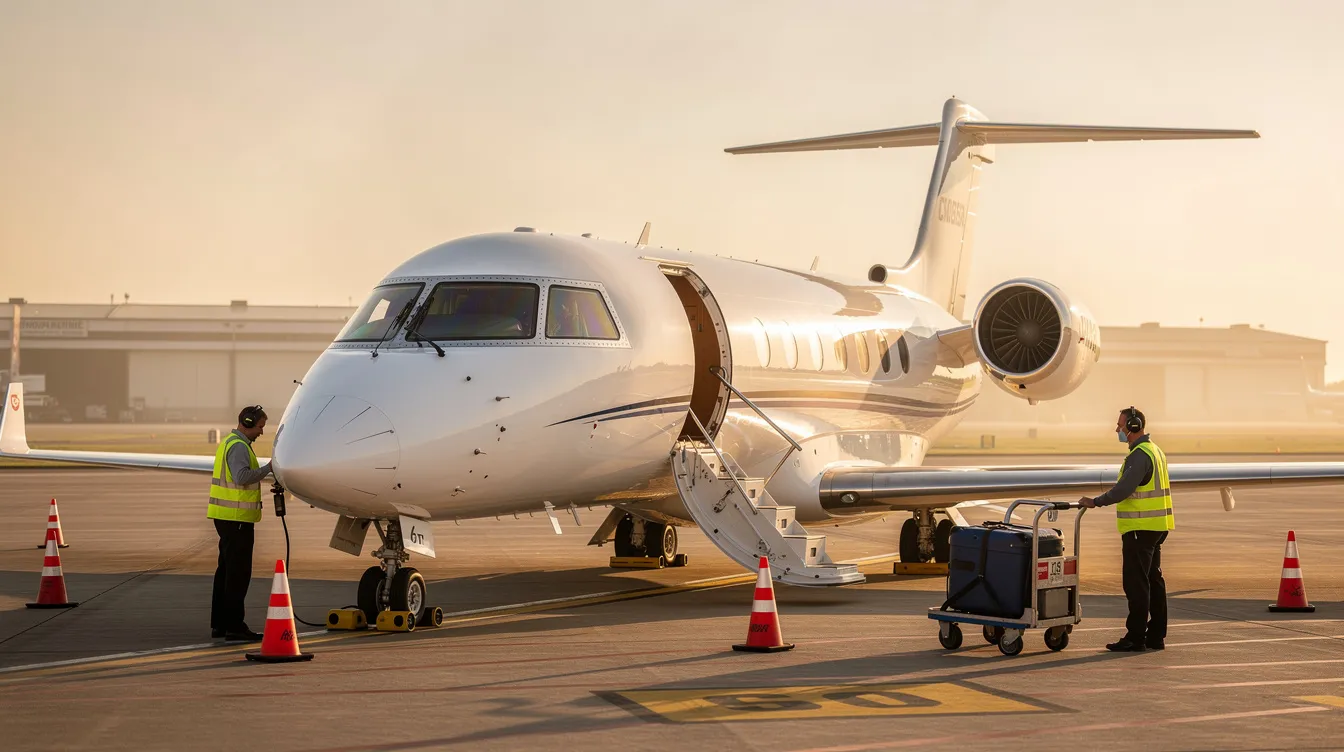
August 21, 2026
For executives running multi-city roadshows, families splitting time between continents, or corporate flight departments coordinating board trips, the 10-seater jet occupies a rare strategic position in business aviation. It delivers enough cabin space and range to handle serious missions without the capital intensity of a heavy jet or the cramped trade-offs of a light aircraft. This guide breaks down the models worth knowing, what they actually cost to own and operate, and why fractional ownership through BlackJet may be the most intelligent way to access this class of jet aircraft.
A 10-seater jet is designed for short- and medium-haul non-stop flights lasting up to five hours, which covers roughly 90% of the routes most private flyers need. On a Los Angeles to New York trip, flying privately eliminates roughly two hours of airport security, check-in, and boarding, plus the unpredictable delays that come with airline schedules. On a route like London to Dubai, a capable super midsize jet avoids lengthy layovers and the need to transit through congested hub airports. The 10-passenger capacity is especially useful for executive teams, families, or groups traveling together, where splitting across multiple smaller aircraft would add complexity and cost.
For travelers flying between 25 and 150 hours per year, 10-seater jets hit an ideal balance. Light jets are too constrained in range and luggage capacity for anything beyond short hops; heavy jets carry acquisition and operating costs that only make sense at much higher utilization. Private jets access around 5,000 airports in the US alone-many of them smaller fields closer to final destinations-giving this class of aircraft a logistical edge that commercial first class simply cannot match.
This article answers the questions that matter before committing capital or signing a membership: which aircraft model fits which mission, what ownership really costs versus chartering, and how BlackJet Fractional Jet Ownership offers a smarter path than buying an entire airframe.
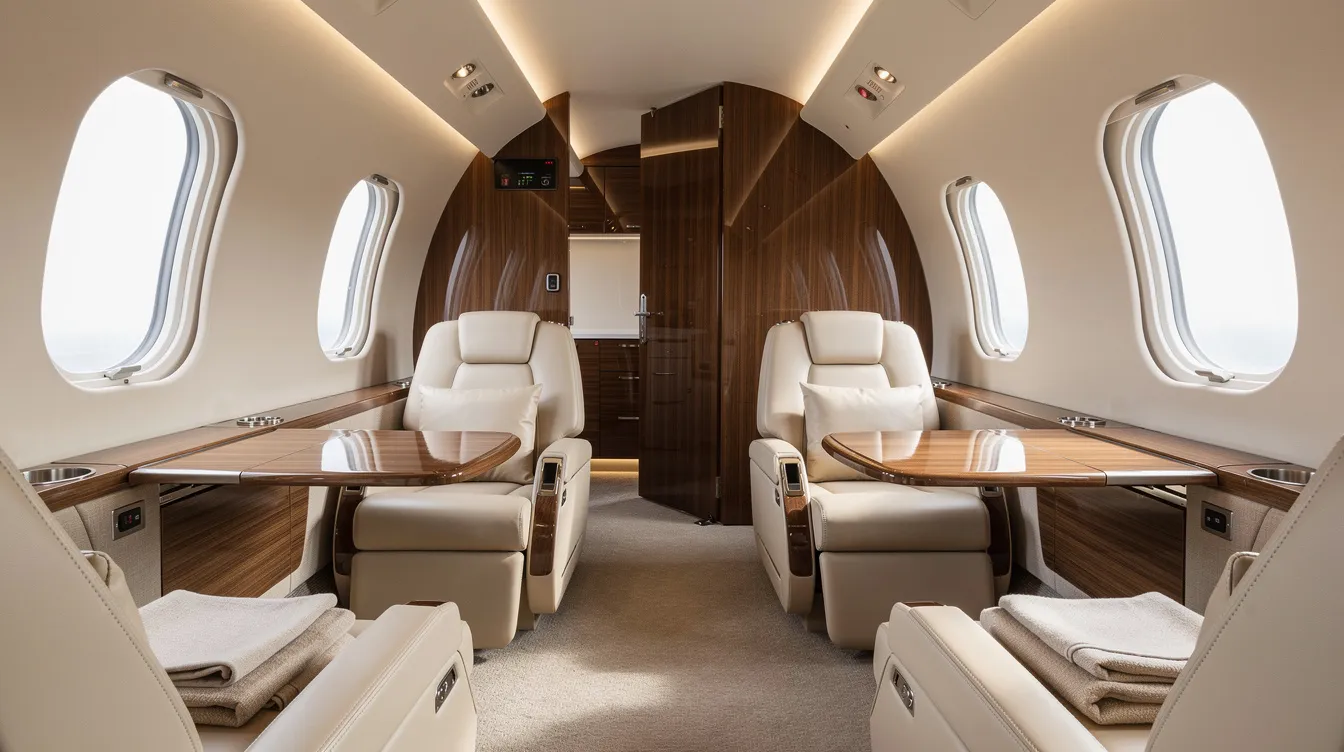
A "10-seater jet" typically refers to an aircraft with certified seating for 8 to 10 passengers plus one or two crew members. Layouts vary-some feature a club-4 arrangement forward, a club-4 aft, and a berthable divan; others use club-2 pairs with additional single seats. The configuration matters because a jet that seats 10 on a two-hour hop may only be comfortable for eight on a transcontinental leg with full luggage.
Here is where most 10-seat-capable aircraft sit in the private jet spectrum:
Mid-size jets: Cabin for 7–9 passengers; range of 2,000–2,500 nautical miles; typical cruise speeds of Mach 0.75–0.82. Examples include the Cessna Citation XLS+ and Hawker 900XP.
Super mid-size jets: Purpose-built for 8 to 12 passengers with wider cabins, flat floors, and ranges of 3,000–4,000+ nm. Typical cruise speeds reach Mach 0.78–0.85. Examples: Bombardier Challenger 350, Embraer Praetor 600, Cessna Citation Longitude.
Heavy jets can seat 10 to 14 passengers comfortably, with even more cabin volume and range, but significantly higher acquisition and operating costs. The Dassault Falcon 2000 series and Gulfstream G450 fall here.
Large cabin jets accommodate 10 to 19 passengers in various configurations, often overlapping with the heavy category.
Ultra-long-range jets: Designed for 12 to 16 passengers with intercontinental nonstop capability, models like the Bombardier Global 7500 or Dassault Falcon 8X seat 10 in exceptional comfort but represent a different cost tier.
The key takeaway: brochure capacity and real-world comfort diverge. A super midsize jet advertised for 10 may do so only with minimal luggage on shorter legs. For longer flights, operating with eight often delivers a noticeably better experience.
These are the aircraft that define the 10-seat segment in today's market. Each serves a different mission profile:
Cessna Citation XLS+: A Textron Aviation stalwart with a range of approximately 1,850–2,100 nm and a cruise speed of around 440 knots. Cabin height sits near 5.7 ft with roughly 80–90 cubic feet of baggage capacity. Best for missions like Los Angeles to Chicago or New York to Miami. Widely available in the charter and jet card market, and a frequent presence in smaller fractional fleets.
Cessna Citation X+: The speed champion of its class, cruising at roughly 527 knots with a range of around 3,200 nm. This aircraft model rewards travelers who prize speed over cabin width-ideal for time-sensitive coast-to-coast trips where shaving 30–45 minutes matters.
Embraer Legacy 500 / Praetor 600: The Praetor 600 delivers approximately 4,018 nm of range (NBAA IFR) carrying 8–10 passengers. Stand-up cabin height near 6 ft, panoramic windows, and advanced cabin management systems make this a tech-forward choice. CFS Jets and other dealers regularly list these; demand is strong in fractional and corporate lease programs.
Bombardier Challenger 350: Range of roughly 3,200–3,400 nm, with a wide cabin that comfortably handles coast-to-coast US flights or Europe–Middle East segments like London to Riyadh. One of the most popular super midsize jets in fractional fleets due to proven reliability and cabin size.
Dassault Falcon 2000 LXS/EX: Wide-cabin alternatives with cabin width around 7.7 ft and range up to 4,000 nm in certain variants. Excellent short-field performance, useful for secondary airports. More expensive to acquire and operate, but rewarding for international missions.
Gulfstream G280: Range near 3,600 nm with a flat-floor cabin and excellent high-altitude performance. The Gulfstream G450 variant, with a maximum takeoff weight of 24,000 lb, extends into the large-cabin category for those needing more space.
Each of these aircraft is equipped with modern engines and avionics suites; which one fits depends on mission length, passenger count, and how you plan to access it.
Step aboard a well-configured 10-seat business jet and the difference from commercial first class is immediate. Super-midsize jets provide a comfortable cabin with a galley, enclosed lavatory, and club seating-typically a club-4 arrangement forward, a club-2 pair amidships, and an aft three-place divan that doubles as a sleeping surface. Stand-up cabins allow average adults to walk upright in the jet, a detail that matters enormously on flights exceeding two hours.
Cabin dimensions vary meaningfully across aircraft. A midsize jet like the Citation XLS+ offers roughly 5.7 ft of headroom and 5.5 ft of width-workable but snug for taller passengers. Super midsize and heavy jets like the Bombardier Challenger 350 and Dassault Falcon 2000 push past 6 ft of height and 6–7 ft of width, creating space that feels closer to a private office than a narrow tube.
Key comfort features that frequent flyers prioritize:
Flat-floor cabins that allow easy movement without stepping over obstructions
Low cabin altitude at cruise (typically 5,000–6,000 ft equivalent), reducing fatigue on longer legs
Inflight Wi-Fi and satellite connectivity with individual power and USB ports at every seat
Berthable seats and convertible divans for overnight flights, turning the cabin into sleeping quarters
Gourmet meals prepared by FBO catering services or personal chefs, served on proper tableware
The flexibility to convert the same space from a board meeting layout to family dining to a rest configuration is what separates a private jet cabin from any commercial alternative, regardless of ticket class.
Range is where the 10-seat segment reveals its diversity. 10-seater jets can fly up to 4,000 miles nonstop in the right configuration, but actual performance depends on passenger count, luggage weight, weather, and routing.
Here is how different aircraft classes handle real-world routes:
Short to mid-range missions (2,000–2,500 nm): Midsize jets have a range of 2,000–2,500 nautical miles, making them well suited for trips like Los Angeles to Houston or Paris to Moscow. The Hawker 800XP, with a range of 3,280 nm, stretches this category further. These jets work best when most of your flying stays within a single continent.
Long-range segments (3,000–4,000+ nm): The Bombardier Challenger 350 and Embraer Legacy 500 handle nonstop flights from New York to Los Angeles or London to Riyadh. At full passenger and baggage load, expect real-world range to fall 10–15% below published NBAA IFR figures due to fuel reserves, alternates, and headwinds.
Intercontinental flights: True intercontinental flights with 10 passengers generally require super midsize jets at the upper end of their range envelope or long-range heavy jets. Ultra-long-range aircraft like the Dassault Falcon 8X or Bombardier Global series handle these effortlessly but sit in a higher cost bracket.
The practical lesson: if your typical mission is under four hours and domestic, a midsize jet delivers excellent efficiency. If you regularly fly coast to coast or cross oceans, nonstop capability from a super midsize or heavy aircraft becomes essential.
Every 10-seater business jet operating commercially in the United States must comply with FAA Part 135 (charter) or Part 91K (fractional) regulations, with equivalent EASA oversight in Europe. These regimes mandate rigorous maintenance schedules, pilot training standards, and operational checks. The FAA warns consumers about illegal charter operations and recommends verifying the operator before booking-a step that reputable programs like BlackJet handle on your behalf through standardized safety audits and operator vetting.
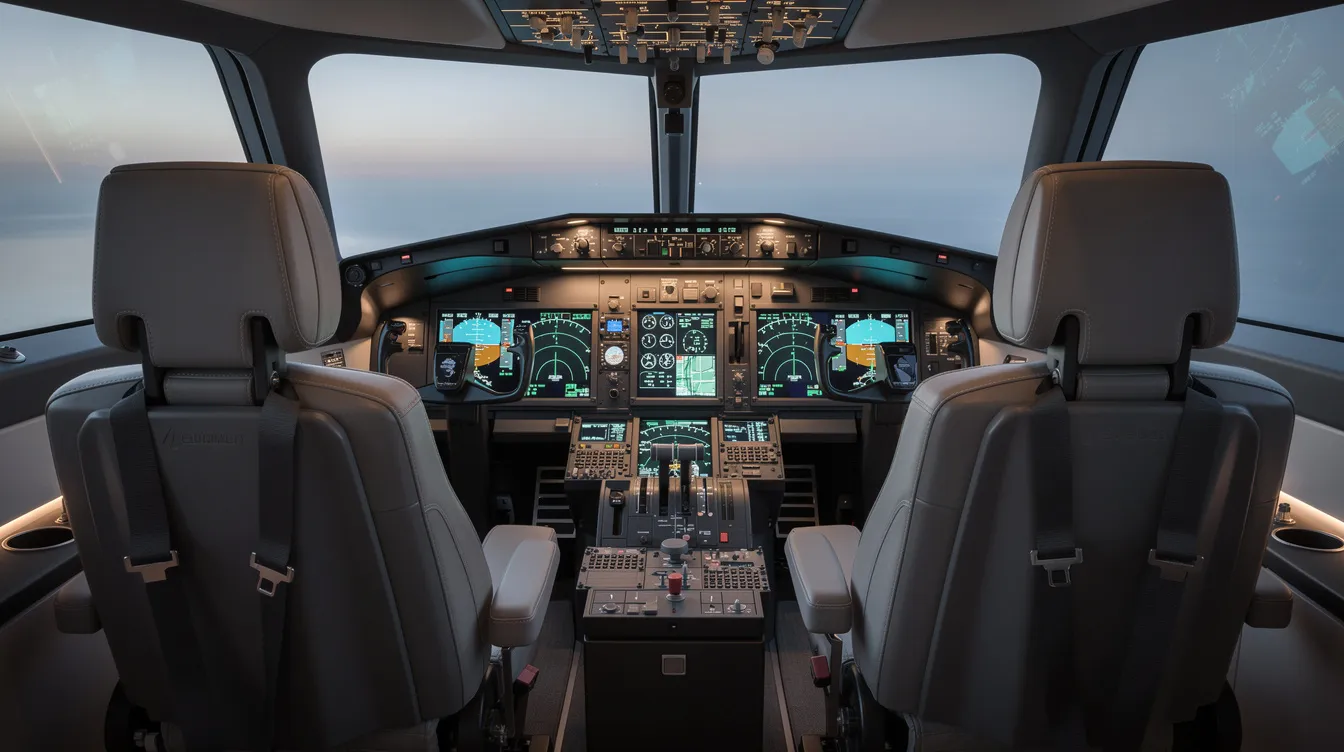
Modern cockpits in this class are remarkably advanced:
Synthetic and combined vision systems (standard on newer Dassault Falcon and Bombardier Challenger variants) overlay terrain and runway imagery on pilot displays
Autothrottles and predictive windshear detection reduce workload and increase safety margins in challenging weather
ADS-B, TCAS II, and enhanced ground proximity warning systems provide layered traffic and terrain awareness
Digital avionics suites (Garmin G5000, Honeywell Primus Elite, Collins Fusion) integrate flight planning, weather, and engine monitoring
Many newer 10-seat jets are also SAF-compatible, meaning engines enrolled in current OEM programs can operate on approved Sustainable Aviation Fuel blends, reducing lifecycle carbon emissions without modifications to the airframe.
Understanding the total cost of owning a 10-seater jet requires looking well beyond the purchase price. Related to this, many buyers also evaluate the cost of fractional jet ownership when deciding how to access aircraft in this class. Here is what the numbers look like:
Acquisition:
New super midsize jets cost between $20 million and $30 million, depending on the variant, avionics package, and interior specification
10-seater jets typically range from $15 million to $30 million on the pre-owned market, with price driven by total airframe hours, engine time remaining, maintenance status, and avionics currency
Fixed annual costs (assuming 200–300 hours of annual flying):
Fixed costs include crew salaries, hangar fees, and insurance, plus management, recurrent pilot training, and software subscriptions
Aggregate range: $500,000 to over $1 million per year, with yearly operating costs for a 10-seater jet ranging from $500,000 to over $1 million depending on base location and staffing model
Variable costs per flight hour:
Fuel burn on a super midsize jet runs roughly 230–280 gallons per hour; at $6–$7 per gallon, fuel alone costs $1,400–$1,900 per hour
Maintenance reserves, landing and airport fees, handling, and catering add $500–$1,200 per hour depending on the aircraft model and route
Depreciation:
Jets typically depreciate by 5% to 10% annually during the first decade, meaning a $25 million aircraft could lose $1.25–$2.5 million in value per year
Keeping avionics current and maintaining engines on manufacturer programs preserves residual value; letting programs lapse accelerates decline
For many buyers, these figures make full ownership compelling only at 200–300 or more hours per year. Below that threshold, the math favors charter or fractional access.
Chartering a jet eliminates capital investment and much of the ownership headache, but pricing can be opaque. Here is how jet charter costs break down for 10-seat-capable aircraft:
Base hourly rates (2026 market):
Midsize jets: approximately $5,500–$8,500 per hour
Super midsize jets: approximately $6,500–$11,000 per hour
Heavy jets: $10,000–$14,000+ per hour
Key factors that raise the price:
Repositioning (ferry) legs when the aircraft must fly empty to your departure airport
International handling, overflight permits, and customs facilitation-especially for Middle East or transatlantic routing
Peak-season demand (holidays, major events in Las Vegas, Fort Worth, San Antonio, and other high-traffic destinations)
Crew overnight costs, de-icing, and specialized catering
Sample cost comparisons:
A same-day New York to Miami round trip on a super midsize jet: roughly $65,000–$90,000 all-in
A three-day multi-leg Los Angeles to Chicago to Dallas itinerary with overnight crew: potentially $150,000–$200,000+
Transparency tip: Always request an "all-in" quote that itemizes fuel surcharges, segment fees, ground handling, de-icing, overnight crew costs, and taxes. Hidden ancillary charges can inflate the price by 25–40% beyond the base hourly rate. The best deal comes from clarity, not from the lowest headline number.
Choosing how to access a 10-seater jet depends almost entirely on how often you fly and how predictable your schedule is. Utilization should be considered when deciding between charter and ownership of a jet, and fractional programs exist precisely for the band where neither extreme makes sense.
Full ownership suits entities flying 200 or more hours per year with predictable schedules and a willingness to manage crew, maintenance, and depreciation. It provides maximum control but demands the highest capital and fixed-cost commitment. Ownership is more compelling for frequent flying of 200–300 or more hours per year.
On-demand charter or jet cards work well for travelers under 25–50 hours annually who value flexibility and have no interest in asset ownership. Costs per hour may be higher, and aircraft availability can tighten during peak periods.
Fractional ownership and membership programs fill the middle ground-25 to 150 hours per year-where you want ownership benefits (tax depreciation, priority scheduling, consistent cabin quality) without the burden of managing a single aircraft. Aircraft management ensures regulatory compliance and cuts redundant operational overhead.
Here are three scenarios where each model fits:
Regional law firm, 30–40 hours/year: Monthly intercity hops between, say, Dallas and Houston. Charter or a Reserve Fleet membership keeps costs proportional to usage without locking up capital.
Family with homes in Los Angeles and London, 80–120 hours/year: Fractional ownership through BlackJet's Equity Fleet delivers tax depreciation, priority access to a consistent aircraft type, and no management burden.
Private equity partners, 60–100 hours/year with unpredictable itineraries: A combination of Equity Fleet shares for anchor routes and Reserve Fleet access for ad hoc legs provides coverage without overpaying for idle hours.
Selecting the right aircraft starts with understanding typical routes and annual flight hours. Here is a framework:
Mission length: Sub-two-hour regional hops (midsize jets are efficient and cost-effective) vs. four-to-six-hour segments (super midsize or range jets with coast-to-coast nonstop capability)
Passenger load: If you typically fly six passengers, a 10-seat cabin may be underutilized-but if group sizes fluctuate between six and ten, the extra space justifies the step up
Baggage-heavy trips: Golf outings, ski trips, or film crews demand 80–100+ cubic feet of baggage capacity; some midsize jets fall short here, making super midsize the better fit
Airport access: 10-seat aircraft can use shorter runways compared to larger heavy jets, opening up secondary airports closer to city centers-think Van Nuys instead of LAX in Los Angeles, or Teterboro instead of JFK in New York. Private jets reach approximately 5,000 airports across the US, many inaccessible to airline service.
Interior preferences: Forward galley vs. aft galley affects service flow; enclosed vs. pocket doors impact cabin noise and privacy; ergonomic work surfaces matter for in-flight productivity
BlackJet's advisory team evaluates your annual hours, passenger counts, and mission profiles to recommend whether a Cessna Citation, EmbraLegacy/Praetortor, Bombardier Challenger, or Dassault Falcon variant best fits, and whether Equity Fleet or Reserve Fleet access is the smarter structure.
The new-versus-pre-owned decision affects cost, lead time, and long-term value:
New delivery: Latest avionics, full OEM warranty, custom interior, newest engine variants with improved fuel efficiency, highest residual value trajectory, and eligibility for current tax incentives
Pre owned acquisition: Lower capital outlay (pre-owned 10-seater jets typically range from $15 million to $30 million), faster delivery timelines, and the ability to inspect actual performance history before purchase. Many Challenger 300/350s, Citation XLS+ aircraft, and Legacy 500s sit in the 5–15-year age band on today's market, often available through private sellers or dealer inventory.
Engine and maintenance programs are critical when evaluating pre-owned airframes:
Programs like MSP, ESP, RRCC, TAP, and CAMP reduce surprise maintenance costs and protect residual value
Aircraft with engines enrolled in hourly coverage programs command higher resale prices; gaps in coverage drive value down sharply
A thorough pre-purchase inspection covering airframe logs, AD compliance, and avionics currency is non-negotiable
BlackJet can source or structure access using both new and well-vetted pre-owned aircraft inside its Equity Fleet, aligning airframe selection with each client's tax planning and usage strategy.
Modern 10-seat-capable business jets have made meaningful strides in efficiency. Current-generation engines from Honeywell, Pratt & Whitney Canada, and Rolls-Royce deliver 5–15% better fuel burn per nautical mile compared with predecessors, thanks to improved turbofan thermodynamics, advanced winglet designs, and lighter composite airframe materials.
Many current aircraft are certified for SAF blends of 30–50%, reducing lifecycle carbon emissions on long-range segments without engine modifications
Optimized routing through modern avionics-continuous climb and descent profiles, real-time wind data integration-trims fuel consumption by 3–8% versus legacy flight management systems
Newer aircraft produce lower emissions per seat-mile than older turboprop aircraft or piston aircraft pressed into service for similar passenger counts, and dramatically less per-passenger impact than operating half-empty heavy jets
BlackJet prioritizes newer, more efficient aircraft within client allocations and can integrate carbon offsetting programs for clients who want to fly with a reduced environmental footprint
The value of a 10-seater jet becomes clearest through specific use cases:
Executive team: Los Angeles → New York → Toronto over two days: A Bombardier Challenger 350 handles both legs nonstop. Total flight time: approximately six hours. The team avoids four commercial segments, two hotel nights, and roughly eight hours of ground time at airline terminals. Meetings start on arrival, not the next morning.
Family of eight: London → Geneva → Nice for a holiday week: Range needs are modest (under 1,500 nm total), so a midsize or light super midsize jet keeps costs efficient. Smaller airports near Geneva and Nice mean less ground transfer time. Baggage capacity for eight with ski gear requires careful aircraft selection-a cabin with 90+ cubic feet of hold space is essential.
PE fund partners: Dallas → Chicago → Boston across three days: Three legs, each under two hours, with timing subject to deal-flow changes. A Reserve Fleet membership provides guaranteed access to a super midsize aircraft without repositioning fees eating into the budget. Flight attendants manage catering and cabin turnover between legs.
Tech founder: San Antonio → Las Vegas for a 48-hour conference: A shorter mission where a midsize jet is the most efficient choice. Door-to-door time is under three hours each way versus five or more on a commercial airline with connections.
In each scenario, BlackJet's scheduling platform accommodates last-minute timing shifts or added legs-an air of flexibility that full ownership of a single aircraft rarely provides.
Two type-rated pilots are standard. On super midsize and heavy jets, one flight attendant is typically added for cabin service on legs exceeding two hours. Crew rest regulations under Part 135 apply to longer duty days.
Yes, the Dassault Falcon 2000 LXS/EX, Embraer Praetor 600, and certain Bombardier Challenger variants can make eastbound Atlantic crossings nonstop under favorable wind conditions. Westbound crossings against the jet stream may require a fuel stop in Iceland or the Azores.
Depending on configuration and category, 10-seater jets can accommodate 10 to 19 passengers across the broader range of large cabin and heavy variants. Super mid-size jets typically carry 8 to 12 passengers in standard layouts.
Charter brokers generally need 24–48 hours for US domestic routes. BlackJet's Reserve Fleet can often confirm aircraft with as little as a few hours' notice, depending on scheduling and aircraft class.
Yes. Nearly all operators accommodate pets (with advance notice and conditions), and custom catering-including dietary-specific gourmet meals-is standard. Charges vary by operator and FBO.
Most 10-seat jets offer 80–100 cubic feet of accessible baggage space, with direct ground-level loading. Commercial first class restricts you to overhead bins and checked-bag limits. For groups with golf bags, ski equipment, or film gear, the private jet advantage is substantial.
If structured properly and business use exceeds applicable thresholds (typically 50–75%), fractional shares may qualify for 100% bonus depreciation under current US tax law, plus standard MACRS depreciation on a pro-rata basis. For broader context on tax implications for fractional jet owners, consult the IRS Publication 946 and a qualified aviation tax advisor for specifics.
The Gulfstream G450 has a maximum takeoff weight of 24,000 lb, placing it in the large-cabin category with range and payload characteristics suited for international missions.
BlackJet Fractional Jet Ownership was built for the reality that most travelers who need a 110-seaterjet do not need to own one outright. The economics, logistics, and opportunity cost of full ownership only align for a narrow band of very high-utilization operators. For everyone else, BlackJet offers two accessible paths:
Equity Fleet: Purchase a fractional ownership share in a curated 8–110-passengeraircraft. You gain priority access, potential tax advantages including bonus depreciation, and a cabin environment that reflects your preferences-without managing crew, maintenance, or scheduling yourself.
Reserve Fleet: Access a network of vetted, comparable-class aircraft on a pay-as-you-go basis. No residual-value risk, no fixed costs, and no long-term capital commitment. Ideal for variable usage or as a complement to an Equity Fleet share on overflow days.
What separates BlackJet from aad hoccharter or traditional jet cards is consistency. Every aircraft in the network meets standardized cabin quality, safety oversight, and operational benchmarks. Operators are vetted. Scheduling is handled by a dedicated team that understands your world-not a call center.
The right question is not whether you can afford a 110-seaterjet. It is whether the way you access one matches how you actually fly. If your annual flight profile falls between 25 and 150 hours, and you value predictable access without the weight of full ownership, BlackJet is designed precisely for that space.
Explore how BlackJet Fractional Jet Ownership can reshape the way you travel. If you're still learning the language of shared aviation, a primer on fractional jet ownership terminology can clarify key concepts like shares, hours, and fees. Start a conversation about your missions, your routes, and the aircraft that fits—and consider whether structures such as 1/8th fractional jet ownership through the Equity Fleet or flexible Reserve Fleet access are your smarter path forward.
