September 6, 2026
Spending $2 million on a private jet sounds like it should buy a lot of airplane. In reality, that budget places buyers squarely in the entry tier of private aviation—a space filled with capable but modest aircraft that may not match the mental image of sweeping cabins and intercontinental range. This guide breaks down exactly what a 2 million dollar private jet delivers in 2025–2026, what it costs to operate year after year, and why fractional ownership may be a smarter path for many travelers.
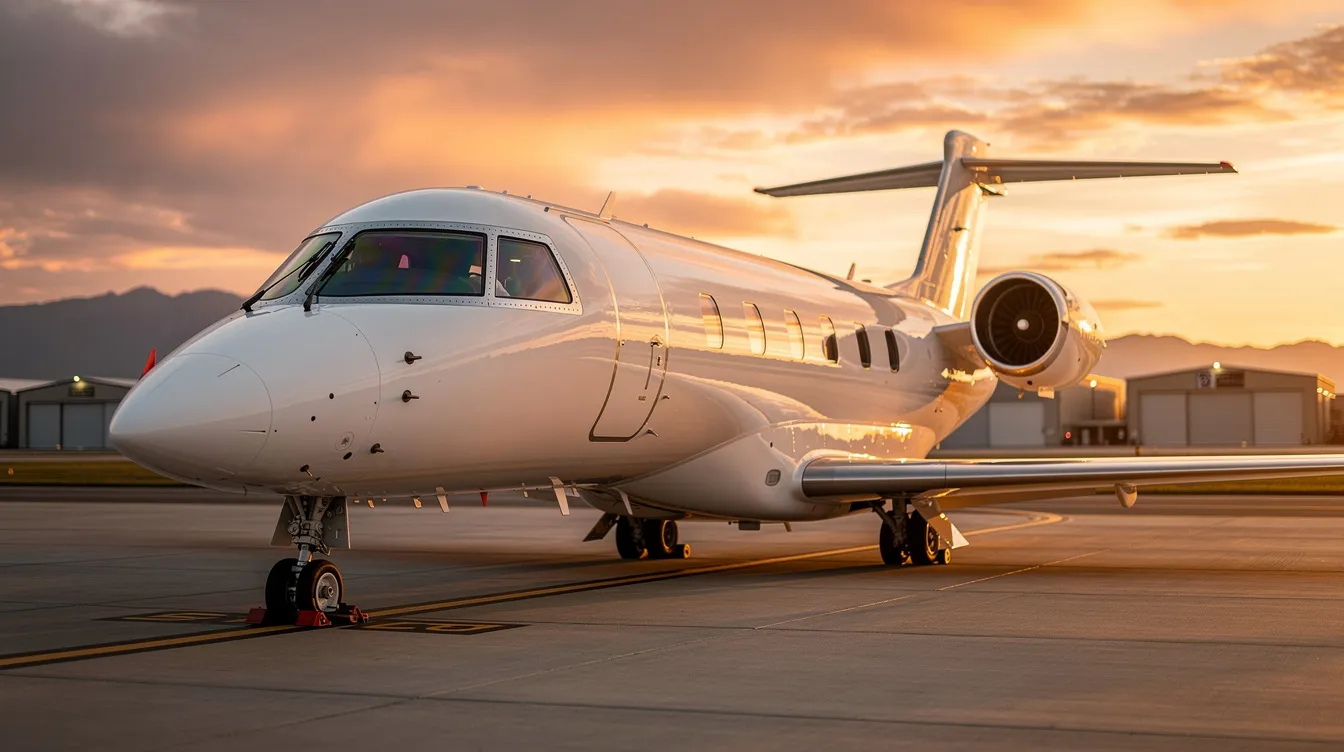
A budget of $2 million typically buys a pre-owned light jet or a new-to-market very light jet-not a gleaming midsize cabin cruiser or a Bombardier Global class aircraft. Think late-model Cirrus Vision Jet G2 units trading around $1.9–$2.3 million, 2010–2014 Embraer Phenom 100s in the $2.3–$2.6 million corridor, or older Cessna Citation CJ1/CJ1+ models with higher airframe hours dipping below the $2 million line. These are real, flyable, useful aircraft-but they come with clear limitations.
Most jets in this price range seat four to five passengers comfortably, with a typical passenger count rarely exceeding six. They offer a maximum range of roughly 1,000 to 1,500 nautical miles, making them ideal for regional trips within the United States—flights like New York to Miami, Dallas to Chicago, or Los Angeles to Aspen. They are not designed for nonstop coast-to-coast missions or transatlantic crossings.
Here is what many first-time buyers overlook: annual operating costs can reach $400,000 to $800,000 or more, and total ownership costs can exceed $2 million over five years. That means the ongoing expense of flying, maintaining, insuring, and housing the aircraft can match or surpass the original purchase price within a single ownership cycle.
BlackJet Fractional Jet Ownership offers an alternative. Through its Reserve Fleet and Equity Fleet models, clients can access similar light jets for 25–150 flight hours per year without tying up $2 million in a single depreciating asset.
In today's private aviation market, $2 million sits at the threshold between entry-level personal jets and the broader world of purpose-built business jets. It is enough to acquire a well-maintained pre-owned light jet from the late 2000s to mid-2010s, or a recent very light jet like the Cirrus Vision Jet. It is nowhere near enough for a new super-midsize, large-cabin, or ultra-long-range aircraft.
For perspective, here is where $2 million falls in the broader landscape of private jets and prices:
New very light jets: ~$2.5–$4 million
New light jets: ~$3–$10 million
Midsize jets: ~$12–$25 million
Large-cabin / Bombardier Global series: ~$40–$75 million+
Most expensive private jets (Gulfstream G700, Bombardier Global 7500): ~$70–$80 million
Many buyers are surprised that $2 million is an entry ticket rather than a blank check in jet ownership. The expensive private jets that dominate magazine covers and social media cost ten to forty times this amount.
The aircraft category available near the $2 million mark includes light jets, very light jets, high-end turboprop aircraft, and select high-performance twins, with many buyers also considering premium turboprops for short regional missions because of their lower operating costs. These are among the most common aircraft in owner-pilot and small corporate fleets, valued for their relatively predictable maintenance costs, modern avionics, and versatility on shorter routes.
Most models in this range are single pilot certified, which helps reduce crew costs and insurance premiums compared with older jets requiring two-pilot operations. This is a meaningful distinction: single-pilot certified jets can lower overall staffing costs for aircraft owners considerably.
The sections below profile specific aircraft families-including the Cirrus Vision Jet, Embraer Phenom 100, and Cessna Citation CJ series—with concrete model years and price ranges relevant to 2025–2026.
The Cirrus Vision Jet SF50 has become the defining aircraft model at the $2 million price point. Powered by a single Williams FJ33-5A engine, the Vision Jet was designed from the ground up as a personal jet for owner-operators who want to step up from piston or turboprop aircraft into true jet performance. As of 2025–2026, pre-owned 2019–2021 G2 models trade around $1.9–$2.3 million depending on total time and condition.
Key performance figures for the Vision Jet:
Cruise speeds up to 345 mph (~300–310 knots)
Maximum range of approximately 1,150 nautical miles
Seating for up to seven passengers (4–5 adults plus two smaller seats)
Fuel burn of roughly 50–70 gallons per hour
The Cirrus Vision Jet stands apart from other aircraft in this bracket thanks to its safety features. It includes advanced avionics with synthetic vision technology via the Garmin Perspective Touch+ flight deck, Safe Return emergency autoland capability, and-most notably-the Cirrus Airframe Parachute System (CAPS) for whole-airframe emergency recovery. These features make it a standout as one of the safest private jet options for first-time jet owners.
Typical direct operating cost for the Vision Jet is often cited at $1,100–$1,500 per flight hour when all variable and allocated fixed expenses are included. That is lower than many comparable twin-engine light jets, though still a substantial ongoing commitment.
The Vision Jet is designed to be flown by a single pilot, which eliminates the need for a second crew member and the salary, training, and scheduling complexity that comes with it. For BlackJet clients, comparable light jets can be accessed through fractional or membership programs for 25–150 hours a year without shouldering full ownership risk.
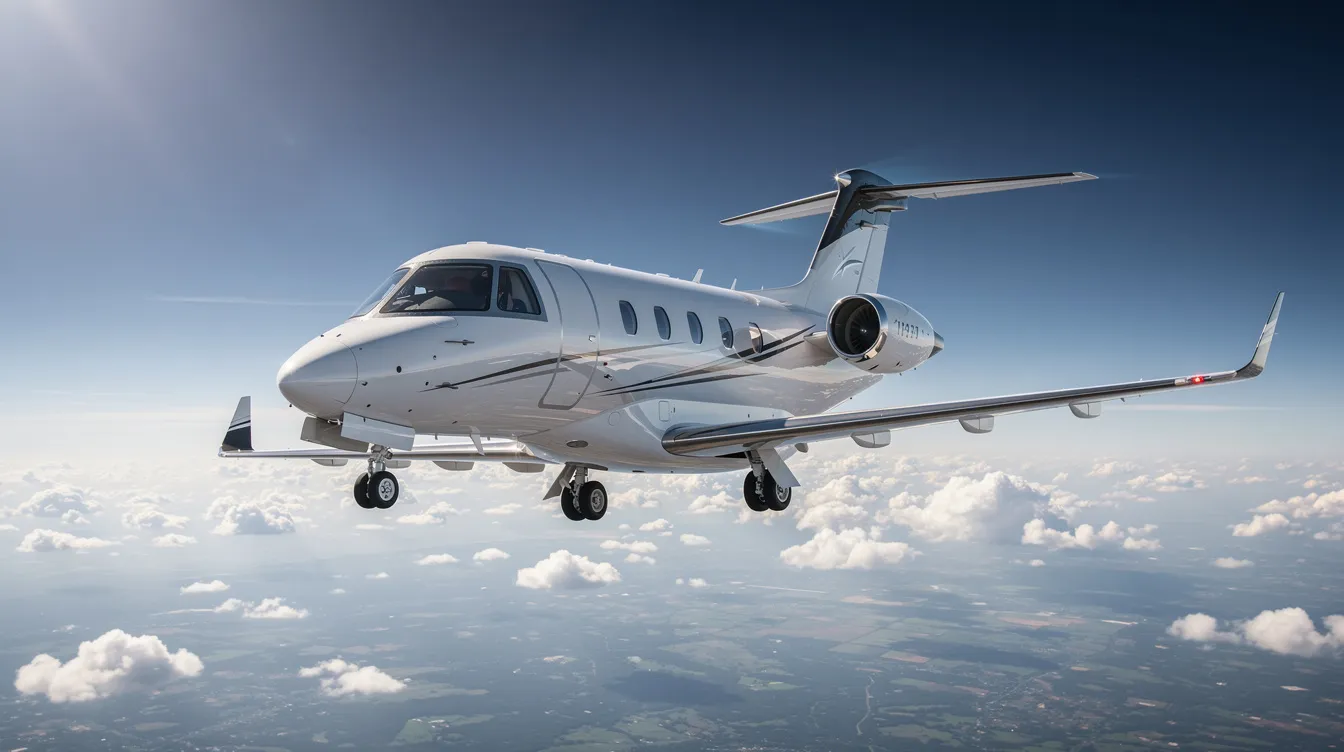
Beyond the Vision Jet, several aircraft families frequently trade in the $1.5–$2.5 million range on the pre-owned market:
Embraer Phenom 100 (2010–2014 models): A popular entry-level business jet seating four in a club configuration, with a range around 1,178 nm. Better-condition units with low hours trade at $2.3–$2.6 million; older or higher-time examples can dip below $2 million.
Cessna Citation CJ1/CJ1+: A pre-owned light jet with proven reliability. Mid-2000s CJ1+ models with avionics upgrades sell in the $1.4–$2.2 million range, though older CJ1 units with high airframe hours may trade well under $1.5 million.
Beechcraft Premier I: A composite-fuselage light jet offering a stand-up cabin and cruise speeds around 450 knots. Pre-owned examples from the 2000s fall into this price bracket.
Pilatus PC-12 NG: While technically turboprop aircraft rather than a jet, the PC-12 NG offers 6–9 seats, a range of 1,500–1,700 nautical miles, and exceptional short-field performance. Late-2000s to early-2010s models are among the most common aircraft in serious owner and charter fleets.
Piper M600/M500: Single-engine turboprops that sometimes fall in the high-$1 million to low-$2 million range, especially 2017–2021 models.
These models are widely supported with established maintenance networks and parts availability, which is critical for controlling long-term maintenance costs. For a deeper comparison of what is available in this aircraft category, see this guide to very light jet pricing.
Aircraft in this bracket are optimized for regional missions-think one- to three-hour legs, not nonstop intercontinental flights. Here are the typical performance bands:
Aircraft Type | Typical Range | Cruise Speed | Seating |
|---|---|---|---|
Very light jets (Vision Jet, Phenom 100) | 1,000–1,200 nm | 300–400 knots | 4–6 |
Light jets (Citation CJ1/CJ2) | 1,200–1,500 nm | 370–420 knots | 5–7 |
Pilatus PC-12 NG | 1,500–1,700 nm | 260–285 knots | 6–9 |
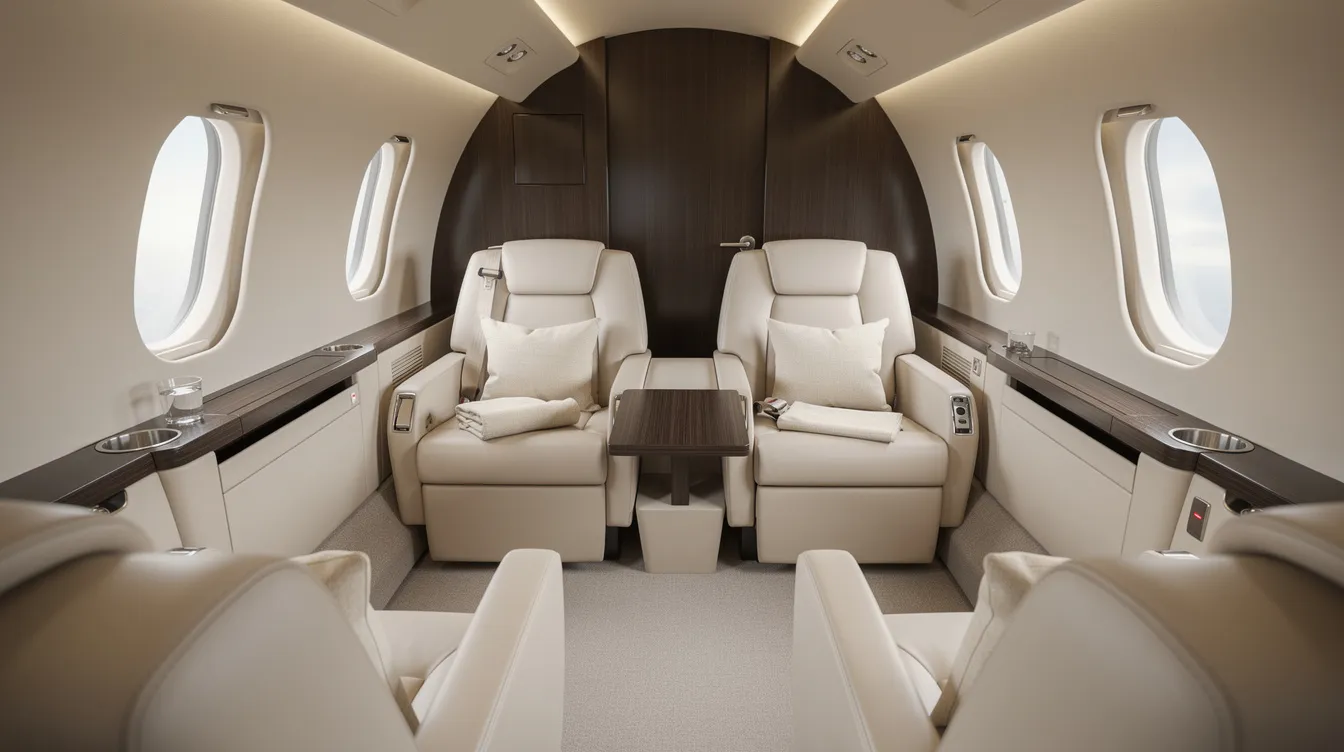
Cabin space in most light jets features four-place club seating, a small refreshment center rather than a full galley, and limited stand-up height. The typical seat capacity for jets in the $2 million range is four to six passengers, and limited cabin space and comfort can compromise longer trips in these aircraft. Passenger comfort improves in turboprops like the PC-12, which offers a larger fuselage and more baggage room despite slower cruise speeds.
Concrete route examples that work well for these aircraft:
New York to Miami (~1,080 nm): Near the upper limit for VLJs
Dallas to Chicago (~700 nm): Well within capability for any aircraft in this class
Los Angeles to Aspen (~600 nm): Comfortable mission with payload flexibility
True coast-to-coast flights (2,500–3,000 nm) or transatlantic missions require fuel stops or much more expensive larger aircraft like a Bombardier Global 6000 or Gulfstream G550. Newer $2 million-class aircraft do benefit from quiet cabins, modern air conditioning, and upgraded LED lighting, improving perceived luxury despite smaller size.
Most private jets in the $2 million bracket are not designed for nonstop ocean crossings or ultra-long-range missions. Very light jets and light jets lack the fuel capacity, cabin endurance, and pressurization margins needed for long haul flights across the Atlantic or Pacific.
Some owners explore ferry tanks to extend range for transatlantic missions, but this approach increases complexity, certification requirements, and insurance concerns. A typical Atlantic crossing-say, Teterboro to Shannon to London-requires at least one fuel stop even in many midsize jets. For a $2 million light jet, the logistics become impractical for routine use.
Occasional intercontinental trips typically make more sense via chartered larger jets or fractional access to aircraft in the Bombardier Global or Gulfstream family. Buyers whose core mission includes frequent long-haul routes should either budget far more than $2 million or use membership, jet cards, or fractional programs instead of owning a light jet.
The purchase price of a turbine aircraft is often less than half the total cost over a five- to seven-year ownership period. This is where many first-time buyers get caught off guard.
Fixed costs (paid whether the aircraft flies or not):
Hangar space: $25,000 to $60,000+ per year
Insurance (hull and liability): $15,000 to $50,000 annually
Crew salaries: Can exceed $100,000 per year for a single pilot (more for two-pilot operations)
Pilot training and recurrent: $10,000–$25,000 annually
Management fees, subscriptions, database updates: Variable
Fixed annual costs for a light jet commonly run $200,000 to $350,000 per year. Owning a $2 million jet incurs high fixed operating costs of $200,000 to $500,000 annually once all line items are tallied.
Variable costs per flight hour include:
Fuel costs: $350–$600/hr depending on burn rate and Jet-A pricing
Maintenance reserves: Several hundred dollars per hour, especially if engines are not enrolled in a program
Landing, handling, and ground fees
Catering and passenger services
Annual maintenance budgets are typically about 5% to 10% of aircraft value—meaning $100,000 to $200,000 per year for a $2 million aircraft. When fixed and variable costs are combined at 150–200 flight hours per year, total annual ownership costs land in the $400,000 to $800,000+ range.
Over five years, that means total cost of ownership can exceed $2 million-effectively doubling the real price of a "2 million dollar private jet."
BlackJet's Reserve Fleet and Equity Fleet models allow clients to pay only for the flight hours used, with predictable pricing instead of absorbing all fixed costs alone.
Two pre-owned jets listed at the same $2 million purchase price can have radically different true costs depending on maintenance history and program enrollment. This is one of the most important—and most overlooked-variables in aircraft ownership.
Common engine and APU programs include options like JSSI, ESP Gold, TAP Blue, and manufacturer-backed plans. Aircraft with engines enrolled in these programs carry predictable hourly reserves and tend to hold higher resale value. Pre-owned aircraft can be cheaper upfront but come with potential maintenance costs that dwarf the savings if deferred maintenance or upcoming overhauls are lurking.
Consider this example: a 2008 Citation CJ2+ on ESP Gold may trade at a higher asking price than an off-program CJ2 of similar vintage. But the off-program aircraft could face a six- or seven-figure engine overhaul within a few hundred flight hours-making it far more expensive to own despite the lower sticker price.
Buyers should verify:
Total airframe and engine flight hour history
Calendar limits on inspections and life-limited parts
Compliance with avionics mandates (ADS-B Out, WAAS/LPV)
Damage and corrosion history
Whether avionics upgrades are current or needed
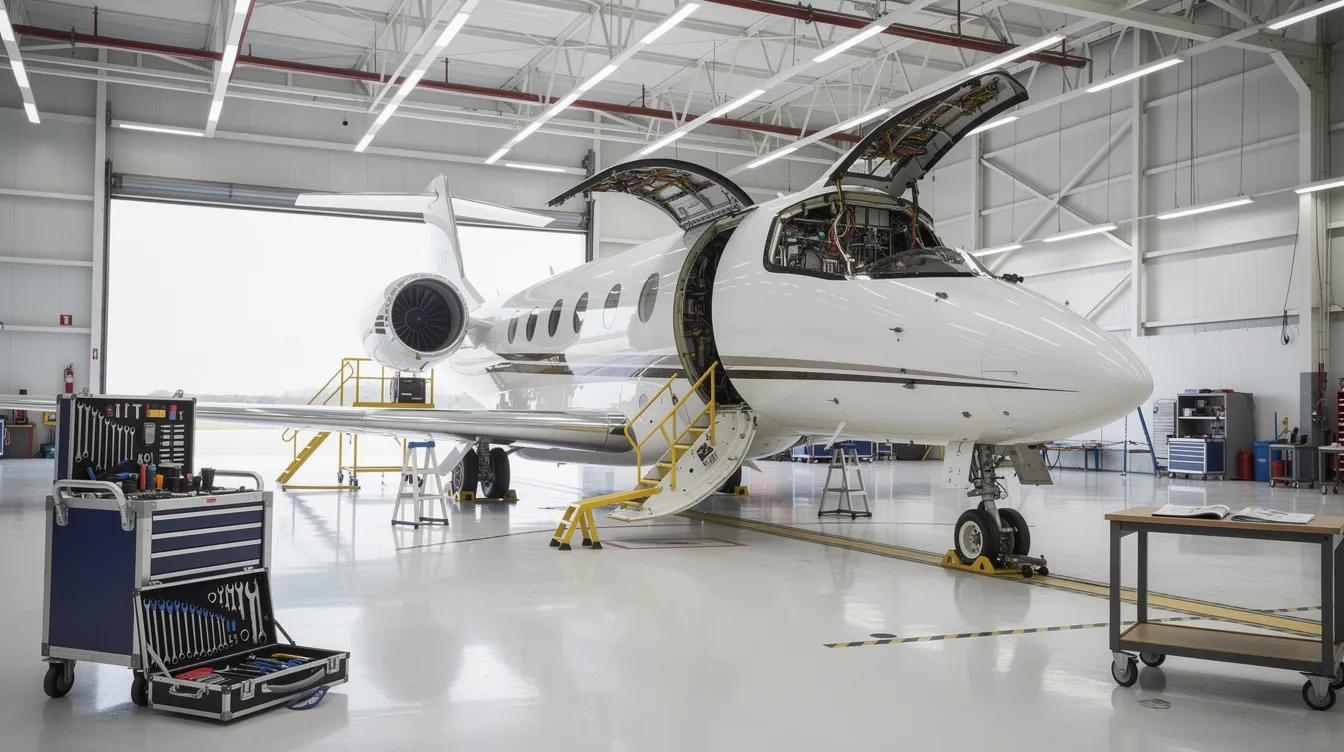
Pre-owned jets often require significant attention to maintenance history and inspections before purchase. Maintenance management and compliance are ongoing responsibilities for jet owners-not a one-time checkbox. Modern avionics enhance safety and operational efficiency in private jets, and aircraft lacking current-generation systems may face reduced insurance options and lower resale value.
BlackJet partners with professionally managed fleets where maintenance status, inspection cycles, and records are proactively handled for fractional owners and members.
Insurance underwriting for turbine aircraft heavily weighs pilot experience, training history, and whether the aircraft will be owner-flown or professionally crewed. Insurance costs for jets can range from $15,000 to $50,000 annually, and many buyers underestimate insurance hurdles and pilot experience requirements when budgeting for their first aircraft.
First-time owners seeking coverage on light jets and very light jets often face requirements for simulator training, supervised flight hours with a safety pilot, and minimum instrument-flight-time thresholds. Carriers may decline coverage or price premiums punitively for low-experience applicants.
Crew costs add another layer. Some older jets and most midsize jets require two pilots by certification, adding $150,000–$300,000+ annually in salaries and benefits. Business aviation continues to experience pilot shortages, driving up wage expectations and complicating scheduling through 2025–2026. Crew salaries can exceed $100,000 per year for a single pilot, and that figure climbs substantially for captain-level professionals in competitive markets.
Airport infrastructure presents its own challenges. Hangar space can cost $25,000 to $60,000+ per year at major airports, and hangar shortages at major airports can lead to waiting lists that stretch months or even years. Hangar logistics at secondary airports may be easier, but basing at a less convenient field adds ground transportation time and can negate some of the efficiency gains of flying private.
Flight schedules, smaller airport access, and privacy are key advantages of private jet ownership-but only if the operational infrastructure is in place. BlackJet's management approach removes these logistical burdens for fractional owners: crew, insurance, and hangar solutions are integrated into the program.
The core question is not "can I buy a $2 million jet?" but rather "is owning one the smartest way to access 25–150 flight hours per year?" Here is how the options compare:
Access Model | Capital Required | Best For | Key Tradeoff |
|---|---|---|---|
Full ownership | ~$2M+ purchase + $400K–$800K/yr operating | 250–300+ hrs/year | Maximum control; highest total cost |
On-demand charter | None (pay per trip) | Occasional travelers | Flexible; variable pricing, no asset |
Jet cards | $100K–$500K prepaid blocks | 25–100 hrs/year | Predictable rates; no ownership upside |
Fractional ownership | $500K–$800K buy-in (share) | 50–200 hrs/year | Partial ownership; lower capital, managed ops |
Charter services offer pay-per-trip flexibility without asset risk but come with inconsistent aircraft availability and no guarantee on peak days. Jet cards provide guaranteed availability at fixed hourly rates, and many jet card programs suit travelers in the 25–100 hour band.
Fractional ownership can offer flexibility and lower access costs compared to full ownership while preserving some tax advantages and asset participation. Aircraft owners face challenges with depreciation and resale risks that fractional models mitigate through professional management and diversified fleet exposure.
For travelers flying fewer than 150–200 hours per year, evaluating charter, jet cards, or fractional access before committing a full $2 million to a single aircraft is almost always the prudent path.
Ownership becomes economically rational under specific conditions:
Flight volume: High frequency of use-200 to 300 hours annually-makes jet ownership economically viable. At this level, high fixed costs are spread across enough hours to bring the per-hour cost in line with or below charter rates.
Consistent routes: A regional CEO flying weekly between company locations, or a family with regular seasonal commutes between two fixed homes, benefits from the own schedule flexibility of a dedicated aircraft.
Stable passenger profile: When the typical passenger count and cabin requirements are predictable, owning a specific aircraft makes logistical sense.
Owning a private jet provides significant time savings for high-frequency travel. Non-financial factors also matter: the desire for branding, privacy of a known crew, and customized interiors motivate some owners despite higher total costs.
However, travelers whose destinations, group sizes, or mission lengths vary widely often benefit more from fleet access via membership or fractional programs like BlackJet's Reserve Fleet, which provides access to multiple aircraft types without being locked into a single airframe.
Flying less than 150 hours annually generally favors charter or jet cards over full ownership.
How many private jets exist globally? Roughly 23,000–25,000 business jets are registered worldwide as of the mid-2020s, with thousands of pre-owned jets trading each year. The $2 million segment-predominantly light jets and high-end turboprops-represents a small but active slice of this market, driven by owner-operators and small corporations.
Buyers should narrow choices by mission profile:
Average stage length and runway requirements
Typical passenger count and baggage needs
Primary operating region (United States, Europe, Caribbean)
Tolerance for single-engine vs. twin-engine operations
Common aircraft with larger fleets-Citation CJ series, Phenom 100/300, Pilatus PC-12-are often safer choices for parts availability, training infrastructure, and resale liquidity. Older jets or niche models with low hours on the used market may look attractive on price but can carry higher long-term risk from patchy parts supply and thin maintenance networks.
BlackJet leverages relationships with multiple operators and aircraft owners to match clients with aircraft types that fit actual usage patterns rather than brochure fantasies.
BlackJet Fractional Jet Ownership offers two core models designed for travelers who want light jet and business jet access without committing $2 million to a single asset:
Equity Fleet: Purchase a fractional share of a specific aircraft. Entry shares (1/16 or 1/8) require $500,000–$800,000 in capital-a fraction of full ownership-with guaranteed annual flight hours, professional management, and potential tax advantages tied to fractional aircraft ownership (consult a tax advisor for specifics).
Reserve Fleet: Access professionally managed light jets and business jets on demand, paying only for actual flight hours used each year. No asset purchase, no fixed costs beyond membership.
Both models remove the burdens of crew management, insurance procurement, hangar logistics, and maintenance oversight that come with whole aircraft ownership.
Example scenario: A company needs 100–150 hours annually on light jets for regional travel across the United States. Full ownership of a $2 million Vision Jet-class aircraft would cost roughly $500,000–$750,000 per year in total operating costs. A fractional share through BlackJet's Equity Fleet requires less capital upfront, predictable monthly and hourly fees, and zero exposure to engine overhaul surprises or hangar waiting lists. Empty leg flights and charter operations can supplement access for occasional longer missions on larger aircraft.

How much does it cost per flight hour to operate a typical $2 million light jet in 2026?
All-in variable operating costs for a Vision Jet-class aircraft typically run $1,100–$1,500 per flight hour, including fuel, maintenance reserves, and insurance allocation. When annual fixed costs of $200,000–$350,000 are spread across 150 hours, the effective cost per flight hour climbs to $2,500 or more. Fuel economy varies by power setting; the Vision Jet burns roughly 50–70 gallons per hour.
Can I offset costs by putting my $2 million aircraft on charter?
Placing a brand new light jet or pre-owned light jet on a charter certificate can generate revenue during idle periods. However, charter fleets demand strict maintenance compliance, accelerate airframe wear, and charter operations rarely cover the full annual operating costs unless the aircraft flies 300+ hours. Many owners find the wear, scheduling conflicts, and insurance complications outweigh the revenue from leg flights.
How long will a $2 million jet remain viable before major reinvestment?
This depends heavily on whether engines are enrolled in a maintenance program. An aircraft with engines enrolled in ESP Gold or JSSI can spread overhaul costs across its operating life. An off-program aircraft may face a $300,000–$600,000+ engine overhaul within 1,500–2,500 hours. Annual maintenance budgets of 5% to 10% of aircraft value provide a reasonable planning baseline, but deferred maintenance on a bargain-priced pre-owned jet can create sudden, large bills.
What role do modern safety systems play in insurance and training requirements?
Advanced avionics, CAPS, synthetic vision, and autoland systems like Safe Return can reduce insurance premiums and simplify training pathways. Insurers increasingly view these safety features favorably, sometimes offering lower rates for aircraft equipped with whole-airframe parachute systems or emergency autoland. These systems do not eliminate the need for thorough pilot training, but they reduce risk profiles meaningfully.
Should a first-time buyer start with full ownership or a fractional program?
For most first-time entrants into private aviation, starting with charter, jet cards, or fractional access provides real-world flight data-actual hours flown, preferred routes, passenger comfort preferences-before committing $2 million to a specific airframe. The National Business Aviation Association recommends that prospective owners thoroughly assess their travel patterns over 12–24 months before purchasing. Fractional programs like BlackJet's Reserve Fleet let new flyers build that data without capital risk.
A 2 million dollar private jet can be a powerful tool for regional business and family travel. It opens the door to the speed, privacy, and flexibility of private aviation. But it is not a shortcut to the capabilities of larger aircraft like a Gulfstream G700 or Bombardier Global 8000, and the purchase price alone does not tell the full financial story.
Total cost of ownership-fixed and variable costs, maintenance programs, crew costs, fuel costs, and hangar expenses-often equals or exceeds the original $2 million purchase over several years. Owning a private jet costs $400,000 to $800,000 annually, and for travelers who fly fewer than 200 hours per year, that math rarely works in ownership's favor.
Fractional jet ownership and membership programs-particularly BlackJet's Reserve Fleet and Equity Fleet-offer a smarter, more flexible path for many high-net-worth individuals and companies to access light jets and other business jets. Before committing capital, analyze your past 12–24 months of travel, estimate your annual flight hours honestly, and speak with an aviation advisor who can compare the numbers side by side.
Ready to explore a smarter alternative to buying a $2 million jet? Visit FractionalJetOwnership.com to learn how BlackJet Fractional Jet Ownership can tailor access to the right aircraft, flight hour profile, and budget for your needs.
