August 5, 2026
For many business owners and families, an 88-passengerairplane represents the ideal balance of capacity, range, and per-seat economics in private aviation. It is large enough to carry a full executive team or a multi-generational family, yet small enough to access thousands of regional airports that commercial airlines never serve. The per-person cost of an 8-passenger aircraft can be competitive with business-class airline tickets when filled, making private aviation an efficient option beyond luxury appeal. But the real challenge is not picking the airplane—it is choosing the right way to access one.
This guide breaks down aircraft types, realistic ownership costs, fractional programs, and the key factors that determine whether buying, sharing, or reserving an 8-seat airplane makes the most financial sense for your specific travel patterns.
An 8-passenger airplane typically refers to a small business jet or turboprop designed for private travel, with models ranging from the Beechcraft King Air 360 (new at roughly $7.9 million) to the Bombardier Challenger 300 (pre-owned at $9.5–$13.25 million), all optimized for groups of six to nine travelers.
For most individuals and companies flying 25–150 hours per year, fractional jet ownership or shared-use programs are more cost-effective than full ownership of an 8-seat private jet. Owners typically fly fewer than 150 hours annually, making full ownership economics difficult to justify.
Realistic annual operating expenses for midsize jets range from $1.25 million to $1.5 million, with fixed costs alone spanning $800,000 to $1.8 million annually depending on aircraft type and utilization. Hangar fees typically range from $30,000 to $100,000 annually.
BlackJet Fractional Jet Ownership's Reserve Fleet (pay-as-you-go) and Equity Fleet (fractional ownership) let clients use 8-seat aircraft without managing pilots, maintenance, or regulatory compliance.
Key factors in choosing an 8-passenger airplane include mission profile, cabin layout, fuel efficiency, airport access, and tax treatment—making expert guidance and a thorough pre-buy inspection essential before any purchase or share commitment.
In private aviation, the phrase "8 passenger airplane" does not refer to a commercial cabin with eight rows. It describes aircraft certified for approximately seven to nine passengers plus crew, typically configured to carry up to eight passengers in comfort rather than maximum density. These are the turboprops and midsize jets that form the backbone of corporate and family flying.
Common use cases include executive team travel to project sites or investor meetings, multi-city roadshows, and multi-generational family trips across the United States and to nearby international destinations such as the Caribbean, Mexico, and Canada. Private jets can access over 5,000 U.S. public airports and over 14,000 airports worldwide, many of them far closer to final destinations than commercial hubs.
Certification versus practical seating matters here. A King Air 360 is certified for up to 11 occupants, but business configurations typically seat seven to nine for adequate baggage space and balanced fuel efficiency. Similarly, a Challenger 300 seats up to nine or ten but is most commonly flown with eight for greater comfort.
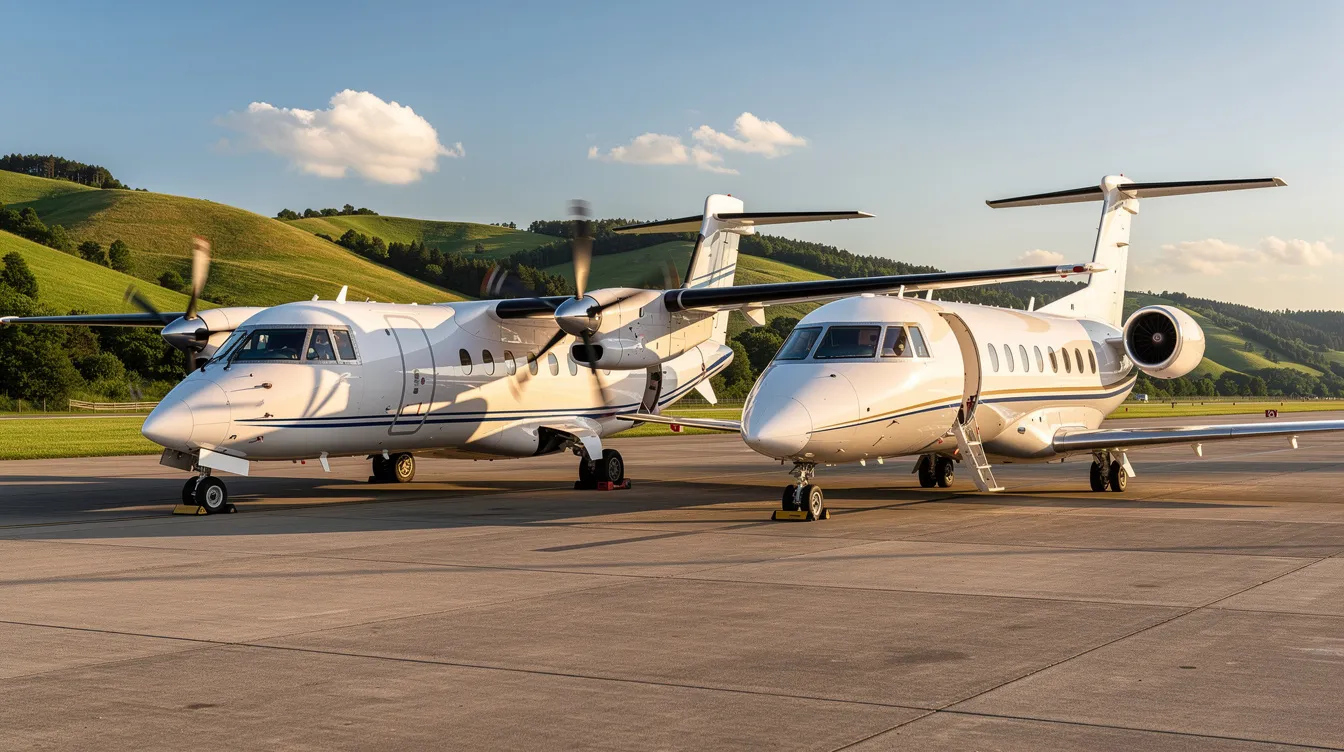
The aircraft fall into two broad families. Turboprops like the Beechcraft King Air 250, 350, and 360 cruise slower but access shorter runways and burn significantly less fuel per hour than jets, contributing to sustainability and lower operating costs averaging around $1,000 per flight hour. Turboprops have a range from 1,200 to 1,800 nautical miles depending on the model and can operate from runways as short as 2,500 to 3,200 feet, utilizing thousands of regional airfields that larger jets cannot access. Midsize jets like the Bombardier Challenger 300, Cessna Citation XLS+, and Embraer Praetor 500 fly faster and farther—typically covering 2,000 to 3,500 miles non-stop—but require longer runways (approximately 3,300 to 5,000 feet) and carry higher fuel costs ranging from $1,400 to $2,100 per flight hour.
BlackJet Fractional Jet Ownership primarily focuses on these six-to-nine-passenger aircraft because they match the needs of most business and family flyers at 25–150 flight hours per year, and its fractional jet ownership glossary of essential terms helps prospective owners understand how these programs are structured and billed.
Four main categories of aircraft realistically serve eight passengers. Each sits at a different point on the spectrum of acquisition cost, speed, range, and airport access.
High-performance piston aircraft. Models like the Cessna 421C Golden Eagle can be configured for up to eight seats. Acquisition costs are far lower than turboprops, but cruise speeds top out near 200–240 knots, cabin pressurization is limited, and range and payload are modest. These piston aircraft suit budget-constrained operators on short regional legs. Turboprops are capable of lower speeds near 300 mph compared to light jets but outperform piston twins in nearly every operational metric.
Single-engine turboprops. The Pilatus PC-12 NGX stands out with eight-to-nine-seat layouts, a large rear cargo door, and strong short-field performance. It appeals to operators who prioritize access to smaller airports and fuel-efficient operations from a single powerplant. The PC-12 NGX seats 8–9 passengers and has a range of about 1,800 nautical miles.
Twin turboprops. The Beechcraft King Air family—King Air 250, 350, and 360—dominates this segment, combining reliability, two-engine redundancy, and cabins that comfortably fit seven to nine passengers. The King Air 250 cruises at 280–310 knots and offers a cabin volume of roughly 300 to 400 cubic feet. These aircraft can operate from runways as short as 2,500 to 3,200 feet, allowing them to utilize thousands of regional airfields that larger jets cannot access. Operating an 8-seat turboprop can provide a favorable price-to-performance ratio for regional flights.
Midsize jets. The Cessna Citation XLS+, Embraer Praetor 500, and Bombardier Challenger 300 define this class with cruise speeds generally between 400 to 500 mph (420 to 450 knots), longer range, and stand-up cabins. Light jets require approximately 4,000 to 5,000 feet of runway, and midsize jets often need similar or slightly longer strips. Light jets offer a range of 1,400 to 1,800 nautical miles non-stop, while many 8-passenger aircraft can operate from airports inaccessible to larger airliners, giving private travelers a decisive advantage over commercial airlines. The Cessna Citation XLS+ has a range of about 2,100 nautical miles, and the Gulfstream G200 extends to roughly 3,400 nautical miles. The Embraer Legacy 450 features fly-by-wire controls for smooth rides.
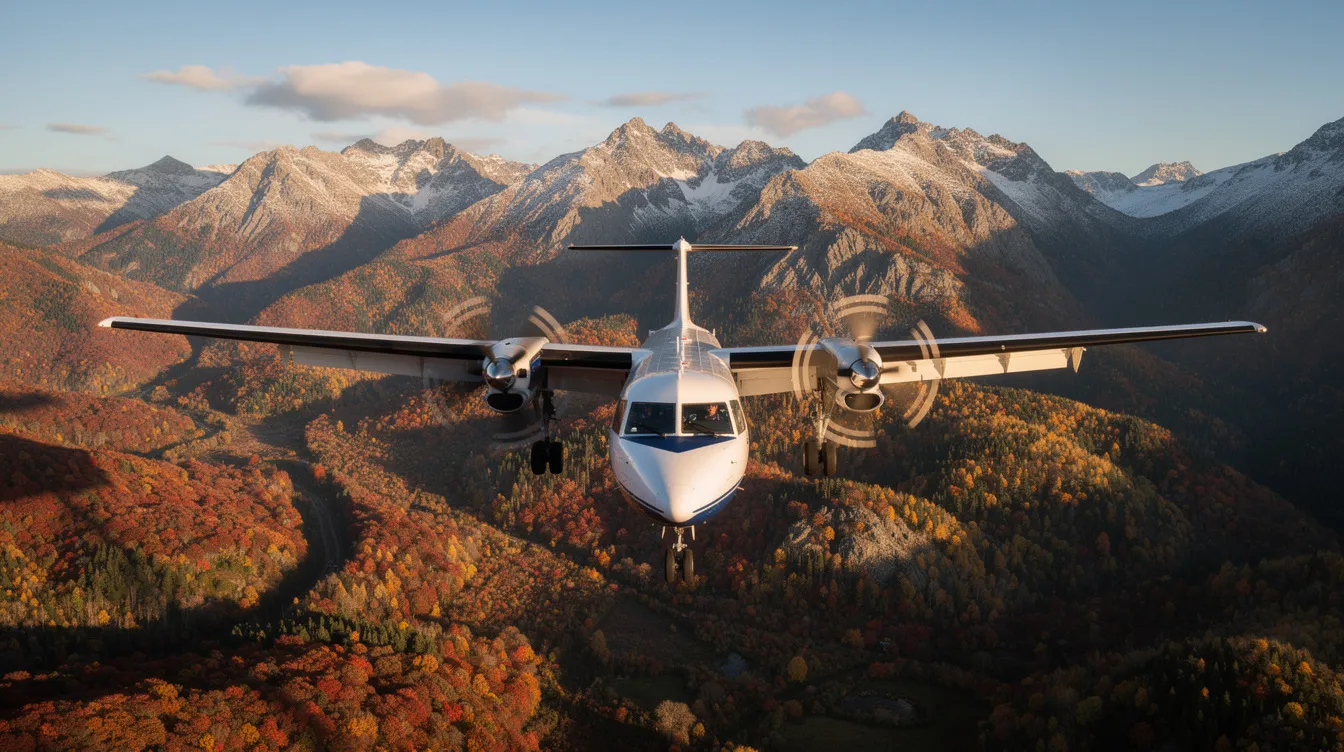
Eight-passenger turboprops remain among the most practical platforms in private aviation for regional business and leisure travel. Their ability to operate from shorter runways, combined with lower hourly fuel burn, makes them the default choice for operators who fly legs under 1,000 nautical miles.
The Beechcraft King Air 250 cruises at 280–310 knots and offers a cabin suited to club-four seating plus additional belted seats. Turboprops generally cruise at speeds of 260 to 310 knots, and the King Air family sits at the top of that band. Turboprops have a range from 1,200 to 1,800 nautical miles depending on the model, and the King Air 360—the newest variant—pushes closer to the upper end of that envelope with full seats and IFR reserves.
The Beechcraft King Air 360 introduced several upgrades: Collins Pro Line Fusion avionics (the latest avionics package in the turboprop class), IS&S ThrustSense Autothrottle for safer takeoff and climb, enhanced digital pressurization, and a modernized interior with USB/USB-C power at every seat and an enclosed lavatory aft. The cabin measures roughly 19 feet in length, 4 feet 6 inches wide, and 4 feet 9 inches high—compact but well-appointed.
The Beechcraft King Air family's production history exceeds 7,600 aircraft delivered since 1964. That translates into deep parts networks, predictable maintenance schedules, and strong resale values for both full and fractional owners. Charter costs for King Air-class turboprops range from $2,500 to $3,500 per hour, providing a useful benchmark for evaluating ownership break-even.
An alternative worth considering is the Pilatus PC-12 NGX, which offers single-engine simplicity and a large cargo door. The Pilatus PC-12 NGX has a range of 1,803 nm, and its lower acquisition and hourly costs appeal to operators willing to trade twin-engine redundancy for operational savings.
Many corporate flight departments view an 8-seat midsize jet as the perfect blend between smaller light jets and large-cabin, long-range aircraft. When trip distance regularly exceeds 1,500 nautical miles and passengers need to work productively in a spacious cabin, a midsize jet becomes the logical step up.
The Bombardier Challenger 300 is the reference platform in this class. It seats eight to ten in a cabin standing 6 feet 1 inch tall and 7 feet 2 inches wide, with roughly 106 cubic feet of baggage space. Range with full seats and IFR reserves reaches approximately 3,100 nautical miles—enough for New York to Los Angeles or Dallas to Bogotá non-stop. Cruise speed sits near 459 knots. 8-seat jets typically have a range of 2,000 to 3,500 miles, and midsize jets can cover distances of 2,000 to 3,500 miles, placing the Challenger 300 firmly at the top of this band.
The Cessna Citation XLS+ seats 8–9 passengers comfortably in a lighter, slightly shorter-range airframe, with used acquisition prices ranging from roughly $6.5 to $10.25 million. The Embraer Praetor 500 pushes into super-midsize territory with range exceeding 3,000 nautical miles and a new-equipped price near $19 million. For comparison, the Gulfstream G200 has a range of about 3,400 nautical miles, illustrating how the broader category stretches. A deeper look at the Challenger 350 variant shows how Bombardier refined the platform further.
These jets balance speed (440–470 knots), cabin comfort, and operational flexibility to reach thousands of airports across the U.S. and globally. BlackJet Fractional Jet Ownership frequently sources aircraft in this class for Equity Fleet clients who need reliable 8-passenger performance on demanding business schedules.
Passenger capacity matters, but so does cabin layout. An airplane that technically seats eight can feel cramped or spacious depending on how those seats are arranged.
Common configurations include:
Double club: Two sets of four facing seats, ideal for business meetings and group conversations.
Club plus divan: One club-four section plus a three-seat divan or side-facing couch, offering flexibility for relaxation.
Mixed layout: Forward galley, mid-cabin club seating, and aft lavatory, which maximizes privacy and workflow.
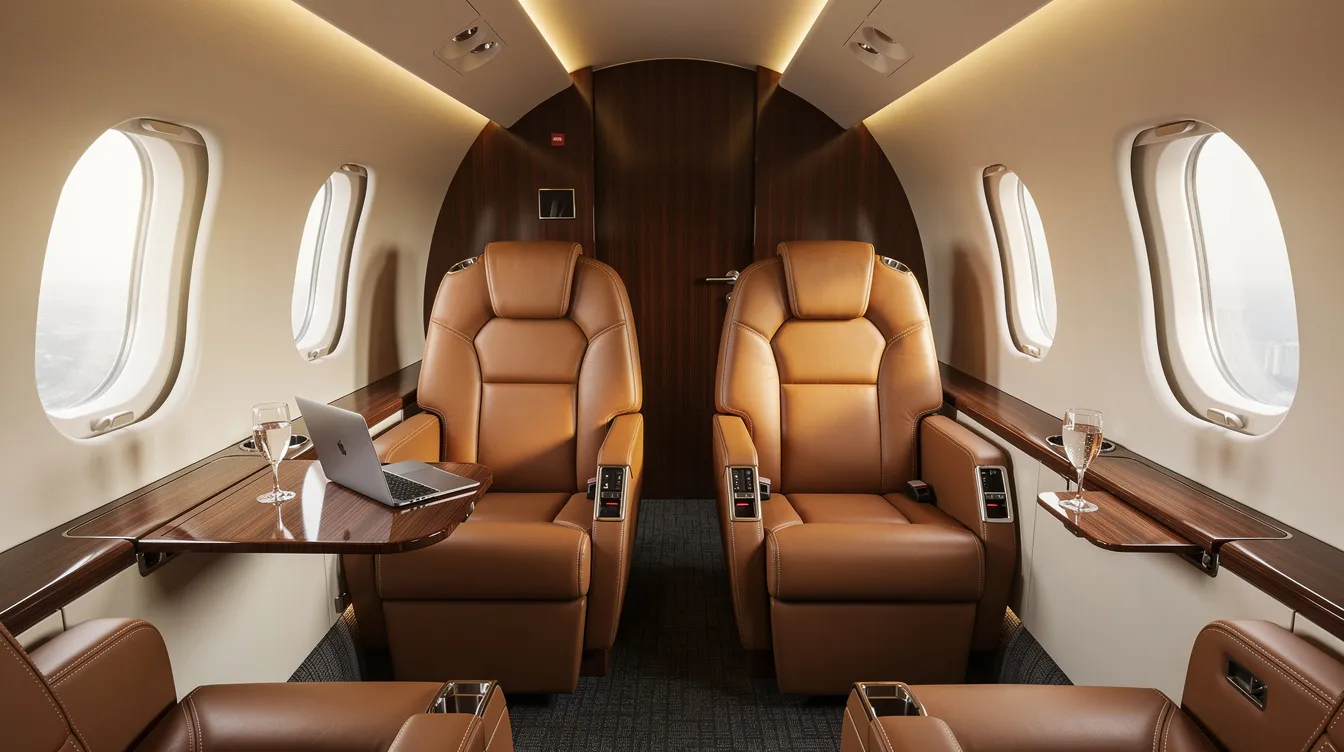
An 8-passenger aircraft typically has a cabin volume of about 300 to 400 cubic feet. In turboprops like the Beechcraft King Air 360, refined materials, improved soundproofing, and thoughtful LED lighting create a comfortable experience despite smaller physical dimensions versus jets. Baggage space in 8-passenger aircraft typically ranges from 40 to 60 cubic feet for turboprops, while jets like the Challenger 300 offer over 100 cubic feet.
Premium features expected in this class include pull-out work tables, power outlets and USB charging at every seat, Wi-Fi connectivity for the technology connection many executives demand, and quiet cabins suited to confidential discussions. Cabin noise remains lower in jets at cruise altitude, though modern turboprops have narrowed the gap significantly.
Before committing to a multi-million-dollar purchase, prospective buyers should test different cabin layouts through charter or fractional programs. BlackJet can arrange evaluation flights across multiple aircraft types so clients can compare experiences firsthand.
Fuel efficiency directly affects hourly operating costs, environmental footprint, and total cost of ownership for 8-passenger planes. Understanding the trade-offs between turboprops and jets helps buyers match aircraft to missions rather than marketing brochures.
A King Air 360 burns approximately 120–130 gallons per hour. A Challenger 300 burns roughly 266–280 gallons per hour—about double—while traveling roughly 1.5 times faster. Fuel costs for midsize jets range from $1,400 to $2,100 per flight hour, making fuel the single largest variable cost line item. Turboprops burn significantly less fuel per hour than jets, contributing to sustainability and meaningfully lower hourly rates.
Typical range for an 8-passenger aircraft is 1,500 to 2,200 miles without stopping in the turboprop class, while jets push that to 2,000–3,300+ nautical miles. Concrete examples: a King Air 360 handles Chicago to Miami comfortably; a Challenger 300 flies Los Angeles to New York non-stop with reserves. Newer airframes and engines—modern turbofans on midsize jets, latest PT6 variants on turboprops—deliver measurably better fuel efficiency than older models, which is one reason BlackJet prioritizes current-generation aircraft for its fleets.
Buyers should view performance holistically. Balancing fuel efficiency, climb rate, runway performance, and dispatch reliability matters more than chasing maximum range alone. A fuel-efficient turboprop that can operate from your home field may save more time and money than a larger jet requiring a 45-minute drive to a different airport.
The mission profile—typical trip distance, passenger count, and frequency—is the single most important factor when selecting an 8-passenger airplane or access program.
Common mission types include:
Regional hub-to-spoke: Under 400 nm, such as headquarters to a satellite office or manufacturing plant.
Cross-country U.S.: 1,500–2,000 nm legs between coasts or major cities.
International: Caribbean, Mexico, Central America, or occasional transatlantic with a fuel stop.
8-passenger aircraft enable direct routes between regional airports, avoiding layovers and the hassle of ground transportation connections. Small group private aviation provides flexible scheduling compared to commercial airlines, and private aviation allows direct flights without layovers or connections. Private jets can fly at higher altitudes than commercial airliners, often resulting in smoother rides and reduced turbulence.
Many travelers and businesses flying 25–150 hours per year find full ownership of an 8-passenger jet uneconomical. Chartering is ideal for travelers flying under 200 hours annually, and the break-even between ownership and charter or reserve programs typically falls around 200–300 hours per year for a midsize jet. BlackJet's Reserve Fleet model suits clients with variable or seasonal demand, while its Equity Fleet fractional shares fit those with recurring, predictable missions.
Prospective owners should document 12–24 months of travel patterns before committing to a purchase. Using flexible access through BlackJet to "test drive" different aircraft against real-world missions is a practical first step toward an informed decision.
Understanding the true cost of aircraft ownership requires separating capital costs from ongoing operational costs—a distinction that often surprises first-time buyers.
Aircraft Type | New Price | Typical Used Price |
|---|---|---|
King Air 360 (turboprop) | ~$7.9 million | $6.5–$8 million |
Pilatus PC-12 NGX | ~$5.5–$6 million (est.) | $5–$7 million |
Cessna Citation XLS+ (midsize) | Out of production | $6.5–$10.25 million |
Bombardier Challenger 300 (midsize) | ~$17.4 million (historical) | $9.5–$13.25 million |
Embraer Praetor 500 (super-midsize) | ~$19 million equipped | Varies |
For a broader view of purchase price ranges, see this comprehensive cost guide.
Annual ownership expenses range from $1.25 million to $1.5 million for a typical midsize jet. Fixed costs can range from $800,000 to $1.8 million annually, covering crew management, insurance, scheduled maintenance reserves, and hangar fees. Operating costs average $1,000 per flight hour for turboprops, while fuel costs for midsize jets range from $1,400 to $2,100 per flight hour. Maintenance reserves average $300 to $600 per flight hour on top of fuel.
For travelers comparing access models, understanding the full cost breakdown of fractional jet ownership alongside whole-aircraft ownership and charter is essential to benchmarking the right solution.
Fractional jet ownership and membership models let clients pay a fraction of acquisition and fixed costs aligned with their actual usage. For under approximately 200 flight hours per year, fractional ownership or a Reserve Fleet pay-as-you-go program is usually more economical and flexible than buying a whole aircraft outright. Jet membership programs offer flexible pay-as-you-go options, guaranteed access to aircraft, and reduced financial risk compared to full ownership. Membership options also allow access to a diverse fleet of jets.
To explore how total costs break down in fractional programs, the math often favors shared access for moderate-usage flyers.
Three main models give clients access to 8-passenger airplanes. Each fits a different usage level and risk tolerance.
Full ownership offers maximum control over aircraft selection, cabin customization, and scheduling. But it also means hiring crew, managing maintenance, ensuring regulatory compliance, and bearing all fixed costs even during months the airplane sits idle. This model is most viable above 200 flight hours per year or for companies operating a corporate shuttle.
Fractional aircraft ownership (the Equity Fleet concept) means clients purchase an equity share in a specific aircraft type. Fractional ownership provides guaranteed access to aircraft, potential tax benefits including depreciation deductions and operational cost write-offs, and professional crew and operational management services. Fractional ownership reduces financial risk compared to full ownership and allows sharing costs and responsibilities across multiple stakeholders—a structure that aligns expenses with actual usage. It is ideal for high-frequency travelers who typically fly fewer than 150 hours annually, and many clients find that 1/8 fractional jet ownership at around 100 hours per year closely matches their real-world flight patterns.
Reserve Fleet access requires no ownership stake. Jet card and membership programs provide flexible pay-as-you-go options, guaranteed aircraft availability, and access to a broad fleet without capital commitment. This model suits variable flight patterns, seasonal peaks, or individuals testing private travel before committing equity, and parallels the trade-offs highlighted when comparing fractional jet ownership vs membership programs across the wider private aviation market.
Annual Flight Hours | Recommended Model |
|---|---|
Under 50 hours | Reserve Fleet / Charter |
50–150 hours | Fractional ownership (Equity Fleet) |
200+ hours | Full ownership with management support |
For a detailed comparison, review fractional program structures to see how costs scale with usage.
Buying an 8-passenger airplane is a multi-million-dollar, multi-year commitment. Disciplined evaluation of key factors upfront prevents expensive regret later.
Annual flight hours. This single metric determines whether ownership, fractional, or reserve access makes economic sense. Lower hours spread fixed costs across fewer trips, dramatically inflating per-trip expense.
Typical stage length. Short regional hops favor turboprops; cross-country or international legs demand jets. A mismatch here wastes money on capability you do not use—or forces fuel stops that erase time savings.
Preferred departure airports. If your home base has shorter runways, turboprops like the King Air or PC-12 may be the only practical choice. Jets need more infrastructure, including longer runways, adequate fuel service, and hangar space.
Cabin comfort level. For many travelers, a spacious cabin with stand-up headroom, enclosed lavatory, and full galley is non-negotiable on legs exceeding two hours. For shorter missions, a well-appointed turboprop may suffice.
Infrastructure costs. Hangar fees typically range from $30,000 to $100,000 annually depending on location. Fuel pricing varies significantly by region. De-icing requirements for winter operations at northern airports add further expense.
Financial planning. Understand your appetite for depreciation, acceptable annual operating cost, and how fractional aircraft ownership may deliver better alignment between cost and usage. Prospective buyers should also be clear on fractional jet ownership financing costs and benefits before committing capital or arranging credit. An independent aviation advisor and tax professional should be part of the evaluation team, particularly given potential bonus depreciation rules under current IRS guidelines and the broader tax implications specific to fractional jet owners, including business-use documentation and sales-tax treatment.
A thorough pre-buy inspection is non-negotiable before closing on any 8-passenger airplane, whether turboprop or midsize jet, new or pre-owned. Skipping this step is the fastest way to inherit someone else's deferred maintenance problems.
A comprehensive pre-buy typically includes:
Detailed airframe and engine inspections, including borescope of hot sections
Review of all logbooks and maintenance records for completeness
Confirmation of compliance with airworthiness directives and service bulletins
Assessment of avionics condition and whether current regulatory mandates (ADS-B, TCAS II) are met
Evaluation of interior condition, soundproofing, and cabin systems
Pre-buy specialists often focus on specific types. A technician experienced with the Beechcraft King Air knows where to find corrosion on specific serial numbers. A Bombardier Challenger specialist understands common landing gear and environmental system issues. These insights materially affect value.
Buyers should include engine programs in their evaluation. Whether an aircraft is enrolled in a prepaid engine maintenance program—and whether that program is paid up—can swing post-acquisition costs by hundreds of thousands of dollars. Maintenance reserves average $300 to $600 per flight hour, and a gap in engine program coverage multiplies that exposure. Equally important is understanding essential contract terms in fractional jet ownership agreements so that maintenance obligations and cost-sharing mechanics are clearly defined before you sign.
BlackJet can coordinate third-party technical due diligence and help benchmark candidate aircraft against fleet experience, helping clients avoid problematic serial numbers or incomplete records. Reviewing aircraft listings without this step is like buying a house without an inspection.
Private aviation—including 8-passenger airplanes—operates under rigorous FAA and international regulations. In many respects, the oversight is comparable to commercial airlines, with dedicated certification standards for structure, powerplants, and avionics redundancy.
Popular 8-passenger types undergo extensive design testing. Turboprops like the Beechcraft King Air are certified under FAR Part 23, while jets like the Bombardier Challenger series meet FAR Part 25 standards, which include structural load testing, engine-out performance demonstrations, and what amounts to a rigorous flight test program before any aircraft enters service.
Operational rules add another layer. Part 91 governs private, non-commercial operations. Part 135 covers charter flights with stricter crew duty and maintenance requirements. Fractional providers often operate under Part 91K, which adds scheduling, maintenance tracking, and crew training mandates specific to shared-use operations, making robust liability coverage for fractional jet owners a critical part of program design.
Operator safety ratings from organizations such as ARGUS and IS-BAO provide independent verification. BlackJet partners only with rigorously audited operators for its Reserve Fleet and supports best practices in its Equity Fleet operations. The air force pioneered many of the safety protocols that now protect civilian operators, and modern private aviation continues to build on those foundations.
When properly managed, 8-passenger airplanes have an excellent safety record, with innovative new technologies and training standards that continue to improve year after year. For more on safety-focused aircraft selection, the details matter.
Spec sheets rarely capture how an 8-passenger airplane actually feels and performs on your specific routes. A real-world test flight on multiple platforms is invaluable before any multi-million-dollar decision.
A structured evaluation plan might look like this:
Regional trips: Charter or reserve a Pilatus PC-12 NGX for short legs under 500 nm. Evaluate short field performance, cabin comfort, and baggage capacity.
Multi-leg itineraries: Use a Beechcraft King Air 250 or 360 for a two- or three-stop day trip. Observe turnaround speed, fuel stops, and passenger feedback.
Longer non-stop missions: Fly a Challenger 300 or Citation XLS+ on a coast-to-coast route. Compare cabin noise, speed, Wi-Fi performance, and how baggage space handles skis, golf clubs, or large luggage.
During each flight, note what matters most: entry and exit ease, legroom, lavatory access, climb rates from shorter fields, and overall fuel efficiency versus time saved. Your first flight on a turboprop versus a midsize jet will likely clarify preferences faster than any brochure.
BlackJet's Reserve Fleet can be used intentionally as a flight test program—flying several 8-passenger aircraft types across 6–12 months before a client decides on a specific airplane for Equity Fleet fractional jet ownership. Keep simple trip logs and passenger feedback notes so decision-makers can compare experiences objectively.
Mid-market and large companies across the U.S. and globally rely on 8-passenger airplanes to move dispersed teams and compress time-critical project timelines. The value is not luxury—it is productivity.
Consider these scenarios:
An executive team conducting an investor roadshow across four cities in two days, something impossible on commercial airline schedules.
A deal team rotating between New York, Chicago, and Dallas on tight closing timelines.
Engineers and managers visiting manufacturing plants or construction sites located near smaller airports with no scheduled airline service.
Private aviation saves 3–6 hours per flight segment when factoring in security lines, layovers, and ground transportation to distant commercial hubs. Travelers can arrive just minutes before departure for private flights, and private jets allow travelers to avoid major commercial hubs and security lines entirely. 8-passenger midsize jets and turboprops allow meetings en route, protect confidentiality, and compress multi-day commercial itineraries into a single productive day.
The per-person cost of an 8-passenger aircraft can be competitive with business-class airline tickets when filled—particularly when factoring in the opportunity cost of executive time. Many corporations avoid tying up capital in full ownership and instead use fractional aircraft ownership or Reserve Fleet access to align travel spend with actual utilization. For a deeper look at how business jets serve corporate needs, the financial case often surprises CFOs accustomed to thinking of private aviation as a pure luxury expense.
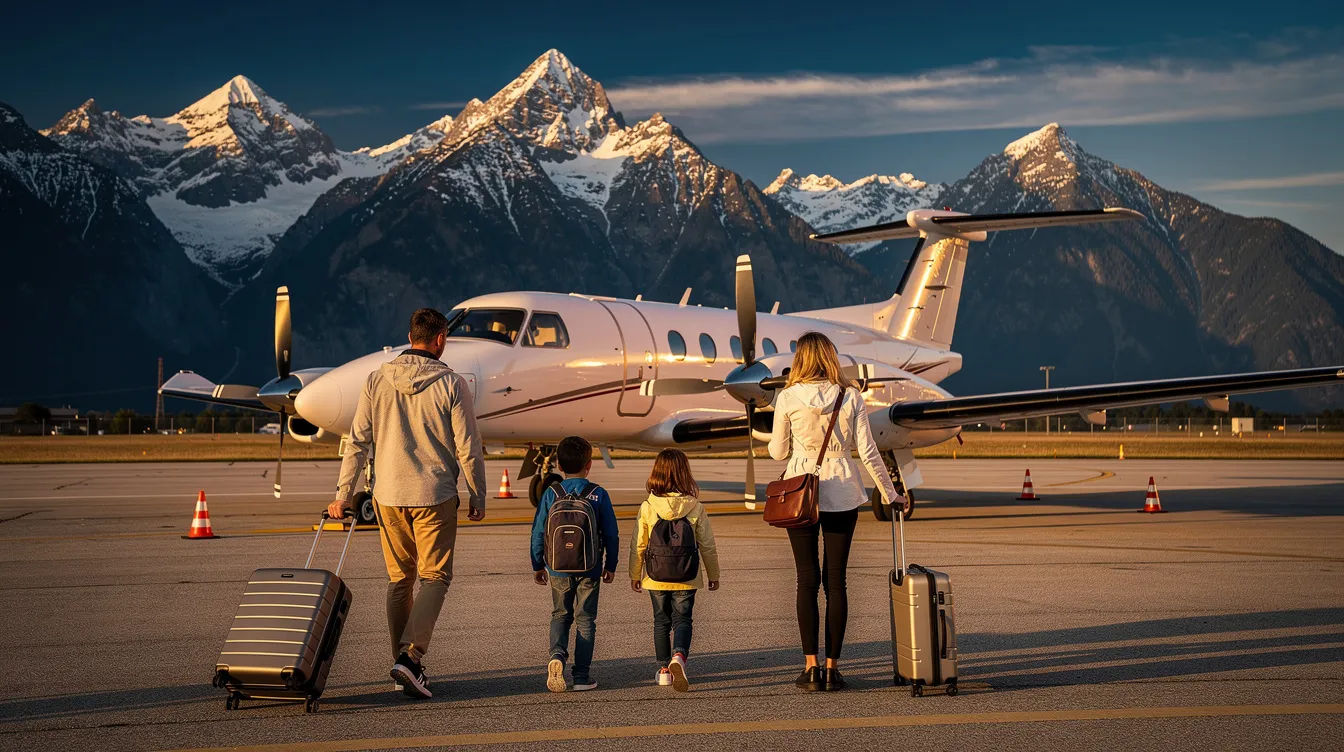
Eight-passenger airplanes are not exclusively for boardrooms. They fit multi-generational trips, ski vacations, and holiday travel where commercial connections are inconvenient or simply unavailable.
Picture a family ski trip from Los Angeles to Jackson Hole on a King Air 360 or PC-12, landing at an airport surrounded by mountains with a runway too short for most jets. Or a New York-based family flying a Challenger 300 to Vail, Nassau, or Turks and Caicos with luggage, ski gear, and golf bags—all stowed in baggage space that dwarfs what commercial airlines offer.
Cabin features that matter for families include flexible seating for children, easy access to the lavatory, Wi-Fi for streaming during flight, and catering tailored to younger or older relatives. The ability to fly direct to a destination without layovers eliminates the stress of herding eight people through busy terminals like Boeing Field or Paine Field connections.
Members can leverage BlackJet's Reserve Fleet to mix vacation and business travel—using the same 8-passenger airplanes for board meetings one week and a beach holiday the next. The time savings and reduced travel stress versus coordinating multiple commercial tickets, layovers, and tight connections for a group of eight can transform a trip from exhausting logistics exercise into genuine relaxation. Explore more private plane options for leisure destinations to see how aircraft match vacation needs.
Modern cabin technology is a core expectation for today's private aviation customers, particularly business travelers who treat the aircraft as a mobile office at 40,000 feet.
Premium 8-passenger airplanes now offer:
Connectivity: Ka- or Ku-band high-speed Wi-Fi, satellite phone, and integrated cabin management systems controllable from a smartphone or touchscreen panel.
Power: USB, USB-C, and AC outlets at every seat position.
Entertainment and environment: LED mood lighting, noise-dampening materials, and automated temperature control.
On the flight deck, safety-enhancing cockpit technologies common in newer King Air and midsize jet models include advanced avionics suites like Collins Pro Line Fusion, synthetic vision systems, multi-scan weather radar, and traffic collision avoidance systems. These systems reduce pilot workload and improve dispatch reliability.
These capabilities allow productive flight time—conducting video conferences, reviewing large presentations, and maintaining a technology connection with global teams—even during cruise above weather. When BlackJet specifies aircraft for its Equity Fleet or recommends planes for clients, modern connectivity and the latest avionics are weighed heavily due to their impact on both daily experience and long-term residual value. Aircraft with outdated systems depreciate faster and may require expensive retrofits.
An 8-passenger airplane should be evaluated not only as a transportation tool but as a capital asset with a life cycle, upgrade path, and eventual exit value.
Key drivers of resale value include:
Aircraft age, airframe hours, and engine cycles
Maintenance pedigree and whether engine programs are current and paid up
Accident or incident history
Whether avionics and interiors have been modernized
Popular platforms like the Beechcraft King Air series and Bombardier Challenger 300/350 benefit from strong secondary markets. Historical data suggests five-year-old Challenger 300s retain roughly 64% of original value in North America, making them safer long-term bets for equity-oriented buyers. For many, viewing fractional jet ownership as an investment with shared costs and professional management frames how residual values and exit timing fit into an overall capital-allocation strategy. The types of private jets and their pricing dynamics vary widely, so choosing a model with strong demand reduces exit risk.
Common upgrades that preserve or enhance value include next-generation avionics (ADS-B, WAAS/LPV), cabin refurbishments, Wi-Fi installations, and engine program enrollments. Conversely, delaying these upgrades compresses resale value and may eventually force costly compliance-driven retrofits. In fractional arrangements, a well-drafted aircraft fractional ownership sample contract should spell out how upgrade decisions are made and funded among co-owners.
BlackJet helps clients plan an ownership horizon—typically a 5–7 year fractional jet ownership cycle—with scheduled review points to re-evaluate aircraft type, share size, and exit strategy as travel needs evolve. A well-structured plan avoids the scenario where a larger jet or different platform would have served better, and it protects the residual investment when the time comes to sell or transition, especially if you follow best practices for selling a fractional jet ownership share when market conditions are favorable.
BlackJet Fractional Jet Ownership is a specialist in fractional aircraft ownership and flexible access programs—not a traditional broker or one-off charter platform. The focus is on matching each client's actual travel patterns to the most efficient combination of aircraft and access model.
Equity Fleet. Clients buy a share in carefully selected aircraft—often six-to-nine-seat turboprops or midsize jets—gaining predictable access, professionally managed scheduling, and potential tax benefits associated with aviation assets in the U.S. Fractional ownership includes operational management services covering crew management, maintenance coordination, and regulatory compliance, so clients never need to build their own flight department.
Reserve Fleet. A pay-as-you-go program that offers guaranteed access to a curated pool of 8-passenger airplanes and other types without ownership commitment. This model is ideal for those under 75–100 hours per year or still exploring private aviation as an alternative to charter options.
Advisory approach. BlackJet evaluates each client's mission profile, budget, and risk tolerance, then recommends a mix of aircraft types and program structures. Rather than pushing a single solution, the team runs booking and cost simulations to find where the break-even between reserve access and equity ownership falls for each client's unique pattern. This might mean starting with Reserve Fleet access and transitioning to an Equity Fleet share once usage and preferences are validated.
Ready to explore the smarter way to fly private? Visit FractionalJetOwnership.com to request a confidential consultation about the best way to access 8-passenger airplanes for your specific needs.
These questions address practical concerns that frequently arise once buyers understand aircraft types, costs, and ownership models.
In many cases, yes. When used for legitimate business purposes, certain 8-passenger aircraft may qualify for accelerated depreciation or 100% bonus depreciation under current IRS rules, particularly for aircraft placed in service after January 19, 2025. Section 179 deductions may also apply when business use exceeds 50% and the 25% passenger business-relationship test is met. However, specifics depend on ownership structure, entity type, and documented usage. Non-qualified personal use can jeopardize deductions, so contemporaneous flight logs and passenger records are essential. Prospective owners should consult both an aviation-savvy tax advisor and providers like BlackJet to correctly structure fractional jet ownership or full ownership in line with current regulations, and may also want to compare the top fractional jet ownership programs for smart investors to understand how competing providers structure access, pricing, and service levels.
Many midsize jets in the 8-seat category—such as the Challenger 300 or Praetor 500—can comfortably handle non-stop legs across North America and to parts of the Caribbean and Latin America. The Challenger 300's approximately 3,100-nautical-mile range covers routes like New York to the Bahamas or Dallas to Bogotá without stopping. Some models are capable of transatlantic routes under favorable wind and payload conditions. Ultra-long-range intercontinental flights to destinations like Tokyo or Dubai typically require a larger jet, fuel stops, or different fleet solutions, which BlackJet can help coordinate when needed.
With well-structured fractional ownership or Reserve Fleet access, many trips can be confirmed with 24–72 hours' notice. Peak holiday periods, major sporting events, and destinations with limited airport slots may require longer lead times. BlackJet works with clients to forecast high-demand periods and build schedules that protect availability on preferred aircraft types and departure windows. Booking flexibility is one of the primary advantages over commercial airline schedules.
One advantage of using flexible programs instead of owning a single 8-passenger airplane is the ability to right-size the aircraft to each trip. For a team of four, a smaller light jet may be more cost-effective. For a group of twelve, a super-midsize or large-cabin aircraft fits better. BlackJet can design a usage plan where an Equity Fleet share is centered on an 8-passenger type, supplemented by Reserve Fleet options for trips where the group size changes—ensuring clients never pay for unused passenger capacity.
The most effective path starts with 6–12 months of on-demand or Reserve Fleet flying to validate actual flight hours and aircraft preferences. Track routes, passenger counts, and which aircraft types performed best. Then work with BlackJet to translate that real-world data into an optimal share size and aircraft type. Historical charter data makes it far easier to build a fractional aircraft ownership plan that avoids paying for unused capacity while still delivering guaranteed access when it matters most. For more on how fractional ownership works, the transition is smoother than most buyers expect.
An 8 passenger airplane offers a compelling blend of capacity, range, and operational flexibility that suits both business and lifestyle travel needs. Whether choosing a turboprop for regional efficiency or a midsize jet for longer non-stop missions, these aircraft provide access to thousands of airports and deliver significant time savings compared to commercial airlines. While full ownership remains viable for very high utilizers, fractional ownership and Reserve Fleet programs from BlackJet Fractional Jet Ownership present cost-effective, lower-risk alternatives tailored to most travelers flying 25–150 hours annually. These models combine guaranteed availability, professional management, and potential tax benefits, making private aviation more accessible and predictable.
Prospective buyers and travelers should carefully evaluate their mission profiles, budget, and operational preferences, leveraging expert guidance and thorough pre-buy inspections. Testing aircraft types through charter or reserve programs before committing to ownership can clarify priorities and reduce risk. Ultimately, the right 8-passenger solution balances convenience, efficiency, and financial prudence to transform private air travel into a seamless extension of your lifestyle or business.
Ready to explore the smarter way to fly private? Visit FractionalJetOwnership.com to learn how fractional ownership can transform your travel experience.
