May 1, 2026
Understanding private jet cost in 2026 requires looking beyond sticker prices. This guide is designed for executives, business owners, and high-net-worth individuals seeking to understand the full financial implications of private jet travel in 2026, helping you make informed decisions about ownership, charter, or fractional options. Whether considering full aircraft ownership, fractional jet ownership, or on-demand charter, the true cost depends on how often you fly, where you travel, and which access model fits your needs. Strategic travel and financial planning are essential for maximizing the value of private aviation, and understanding these costs is crucial for aligning your travel needs with your financial goals. This guide breaks down what executives and business owners actually pay—and where the real value lies.
For 2026, here is where the private jet cost stands across the United States:
Purchase prices range from approximately $1.1 million to over $90 million for new aircraft, with pre-owned jets available from around $250,000 to $25 million, depending on age and condition
Annual operating costs for full ownership of a private jet typically range from $500,000 to $1 million or more, covering crew, maintenance, insurance, and hangar fees.s
Charter costs range from $1,200 to more than $10,000 per flight hour, depending on the aircraft type and route.
Fractional shares require capital investments of $500,000 to $2.5 million or more, plus monthly and hourly fees.
The average cost to charter a private jet in the United States typically ranges from $5,000 to $10,000 for a standard 2-hour domestic flight on a midsize jet. Most charter providers require a minimum booking of two flight hours, so the starting price to hire a private jet is generally around $4,000 to $7,000, even for shorter trips.
A common rule of thumb is that flying at least 200 to 400 hours per year justifies the costs associated with owning a private jet. Owning a private jet involves significant ongoing expenses, which can range from $500,000 to $1 million annually, including maintenance, crew salaries, and insurance, making it a substantial financial commitment.
For individuals and companies flying 25 to 150 hours annually, fractional aircraft ownership or structured membership programs—such as BlackJet Fractional Jet Ownership’s Reserve and Equity Fleets—often deliver better economics than buying a whole aircraft.
Private jet cost breaks down into three layers: acquisition (or access), operating costs, and financing or tax structure. Each layer varies based on several key factors.
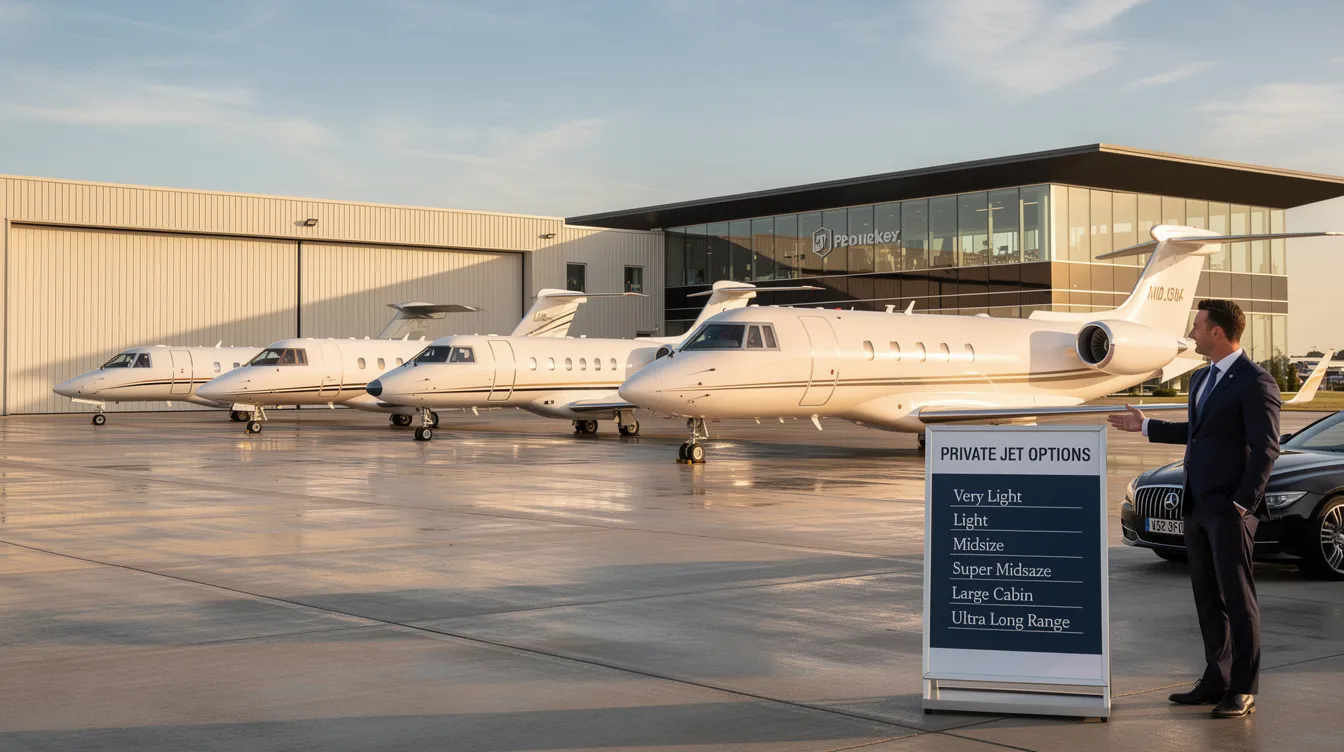
Aircraft category and size: Very light jets, light jets, midsize jets, and ultra-long-range aircraft carry dramatically different price tags and hourly costs
Aircraft age: New aircraft command premium prices but have lower maintenance needs, while older planes are cheaper to buy but cost more to maintain
Annual flight hours: Higher utilization spreads fixed costs across more trips, lowering the effective cost per hour
Home base geography: Hangar fees at smaller regional airports in the Midwest might run $30,000 annually versus $180,000 or more at high-demand hubs like Teterboro
Crew requirements: A light jet with two pilots differs significantly from a larger aircraft requiring flight attendants and crew members
Management approach: Self-managing versus professional fleet management affects both direct costs and administrative burden
For business use in the United States, the net cost can change materially through depreciation benefits. Section 179 and bonus depreciation treatment—which can reach up to 100% in qualifying years—apply especially to fractional ownership and equity programs where ownership stakes qualify as depreciable assets. Fixed costs for private jet ownership include insurance, hangar fees, and crew salaries, which remain constant regardless of flight hours, while variable costs fluctuate with usage.
The capital outlay for private aviation varies enormously based on the access model. Full aircraft ownership requires the largest down payment and ongoing commitment. Fractional ownership pro-rates that investment across multiple owners. Charter and jet cards eliminate acquisition costs but shift the expense to per-trip pricing.
Very light jets (e.g., Cirrus Vision Jet): The least expensive new private jet for sale is the Cirrus Vision Jet, with a sticker price of $2 million, while used jets can be found for as low as $250,000
Light and midsize jets (e.g., Citation CJ3+, Embraer Praetor 500): Typically $9 million to $22 million new
Large-cabin and ultra long range jets (e.g., Gulfstream G700, Global 7500): $70 million to $90 million or more new
Pre-owned jets: The initial cost of a private jet can range from $1.1 million to over $90 million for new aircraft, while used jets can cost millions depending on age and condition
Pre-owned jets can cost 20% to 50% less than new models, but typically have higher maintenance costs. Aircraft age impacts costs significantly—newer planes have higher initial costs but lower maintenance needs, while older planes are cheaper to buy but cost more to maintain.
Fractional aircraft ownership offers a middle path. Clients purchase a share—commonly 1/16 (25 hours), 1/8 (50 hours), or 1/4 (100 hours)—with upfront capital ranging from $500,000 to $2.5 million or more for light and midsize jets. For example, a 1/8 fractional jet ownership structure typically provides around 100 hours of annual access. Monthly management fees and occupied hourly rates replace the full burden of ownership costs.
BlackJet Fractional Jet Ownership offers two distinct models:
Equity Fleet: The client acquires an equity stake in a specific aircraft or fleet pool with upfront capital, enjoying depreciation benefits and potential resale value while aligning with the total cost structure of fractional jet ownership
Reserve Fleet: Access without equity, featuring lower upfront commitment and pay-as-you-go flight hour pricing for those who want to fly privately without asset ownership
Charter and jet cards carry no acquisition cost but expose clients to higher per-hour rates and less predictable pricing unless locked in through a membership structure.
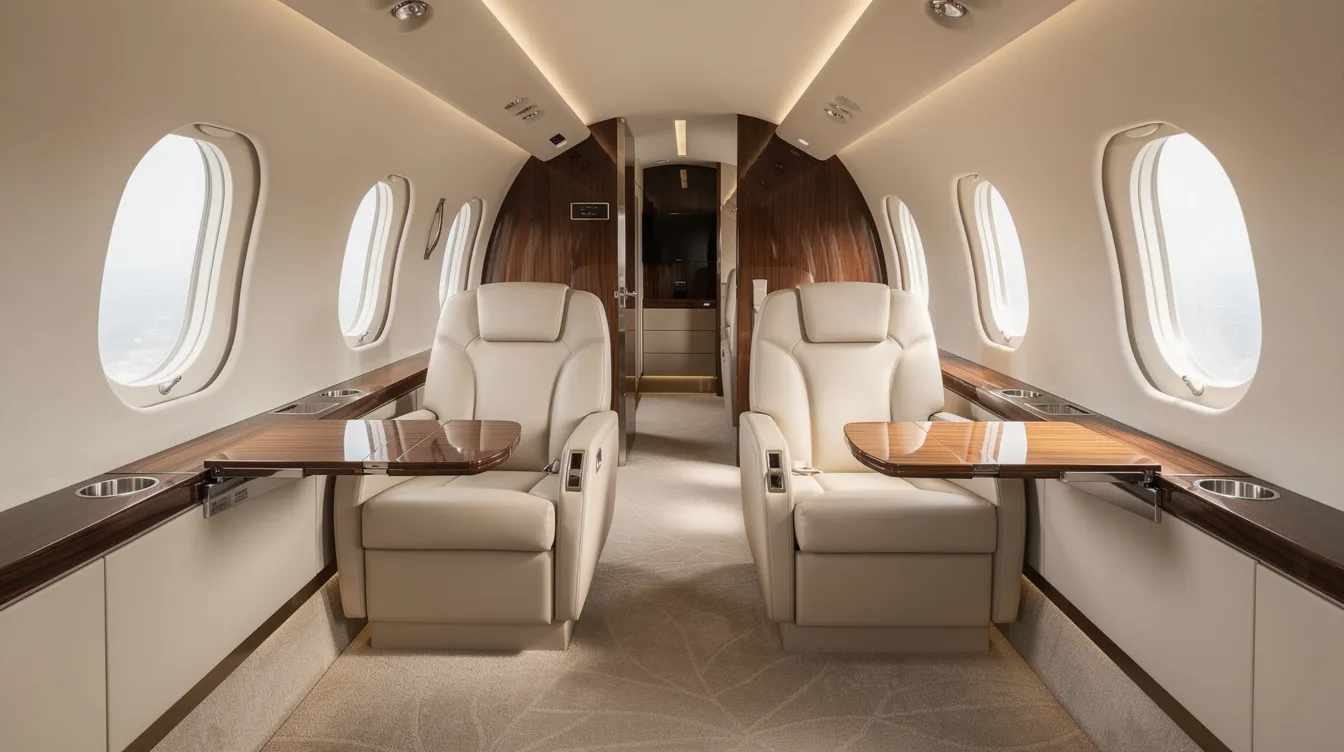
Even an unused aircraft still generates six-figure annual expenses. Understanding the cost structure between fixed costs and variable costs is essential for anyone evaluating private jet ownership.
Cost Category | Typical Annual Range |
|---|---|
Insurance | $15,000 to over $85,000 |
Hangar fees | $30,000 to $200,000+ |
Crew costs (two pilots) | $200,000 to $500,000+ |
Management and compliance | $50,000 to $250,000 |
Third-party firms for managing logistics, staffing, and regulatory compliance charge between $5,000 to $20,000 per month. Expect to spend 5% to 10% of the aircraft’s value annually on upkeep, which includes routine inspections and unexpected repairs.
Fuel costs: The largest variable expense, representing 25-35% of total operational costs. Fuel consumption for jets ranges from 120 gallons per hour for light jets to 500+ gallons per hour for heavy jets. With 2026 Jet-A prices around $6 per gallon at major FBOs, this translates to $720 to $3,000+ hourl.y
Maintenance costs and engine programs: $400 to $1,000+ per flight hour, ur depending on aircraft category, with unscheduled maintenance adding unpredictability
Landing fees: Fees airports charge vary by aircraft weight and facility type—a few hundred dollars at regional fields versus $1,000+ at major airports or congested business hubs
Additional costs: Catering, crew expenses including per diems and hotels, de-icing in winter, and international handling fees for cross-border travel
Maintenance and repair costs for aircraft can exceed $1 million annually, especially for large jets. Operating costs for private jets can range from $500,000 to $1 million annually, depending on the type of jet and usage patterns.
Practical example: A midsize jet flown 200 hours per year may generate all-in operating costs in the $600,000 to $900,000 range before financing and depreciation. This underscores the importance of the utilization level, which is crucial—underabsorbed fixed costs make full ownership inefficient below 200 to 400 annual hours.
Fractional owners with BlackJet do not bear 100% of these ongoing expenses. Instead, they pay predictable monthly management fees and occupied hourly rates, benefiting from economies of scale across a professionally managed fleet staffed by
Cost per flight hour looks dramatically different depending on the access model. A jet owner flying 400 hours annually sees very different economics than someone chartering a private jet twice a year.
Aircraft Category | Hourly Rate Range |
|---|---|
Turboprops and very light jets | $1,500–$3,000 |
Light jet | $2,600–$4,000 |
Midsize and super-midsize | $3,500–$7,000 |
Heavy and long-range | $8,000–$15,000+ |
Complex transatlantic missions on ultra-long-range aircraft can exceed $150,000 all-in, factoring in taxes, positioning, and sustainable aviation fuel surcharges amid rising environmental mandates, making floating fleet fractional options appealing for those seeking flexibility and cost efficiency across a broader network.
Chartering a private jet involves several mandatory and optional fees that can add 20–40% on top of the base hourly rate, including aircraft positioning fees, fuel surcharges, landing fees, crew expenses, and applicable taxes. The IRS applies a 7.5% Federal Excise Tax (FET) to all domestic charter flights booked under FAR Part 135, along with a per-segment fee of approximately $4.80 per segment in 2025. Landing fees at airports vary based on aircraft weight and facility type, with major commercial airports charging higher fees than smaller reliever airports, and fixed base operators (FBOs) adding ramp and handling fees that typically range from $150 to $500 per visit.
Very light jets typically have operating costs ranging from $661 to $1,800 per flight hour
Light and midsize jets: approximately $1,800 to $3,200 per hour
Heavy jets can exceed $7,600 per hour
Fractional ownership programs like BlackJet’s Equity Fleet spread fixed costs across multiple owners and flight hours. This often delivers an all-in, predictable hourly rate—including most operational procedures and operating elements—that can undercut ad-hoc charter for clients flying 50 to 150 hours per year, especially when you understand the complete cost of fractional jet ownership.
BlackJet’s Reserve Fleet provides a transparent occupied hourly rate without capital outlay, suitable for companies or individuals testing private jet travel before committing to equity. This eliminates exposure to the hidden costs that often surprise first-time charter users.
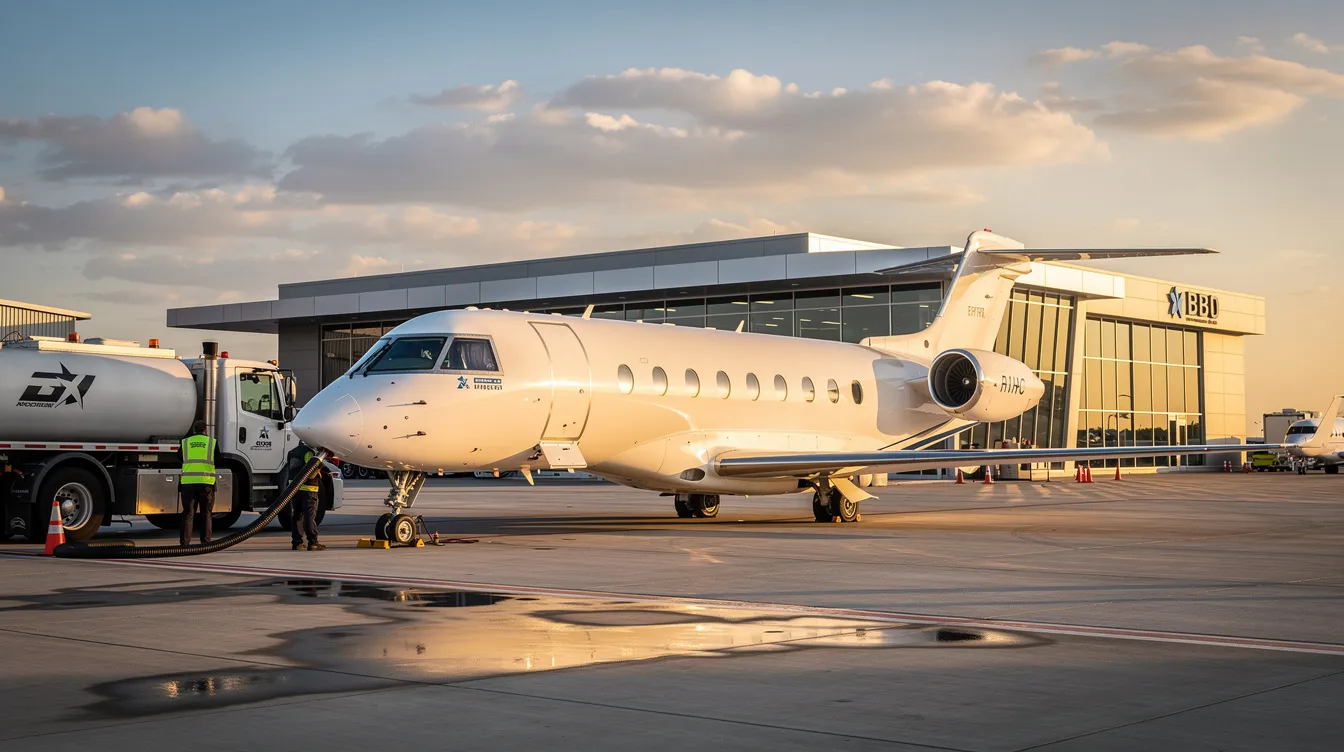
Hours flown tell only part of the story. Trip type, routing, and schedule flexibility can materially shift total cost for any private flight.
One-way vs. round-trip dynamics: Many charter scenarios must factor in repositioning or empty leg flights. A one-way New York–Miami trip may still be billed as 3–4 hours due to minimums and reposition time, even though actual flight time is around 2.5 hours.
Extended stays: Multi-day business trips or vacations can trigger crew hotels ($500 to $1,000 per night), per diems, and potential repositioning to avoid high parking or hangar fees at certain airports that charge premium rates.
Peak-period pricing: Holidays, Davos, Super Bowl, and Art Basel Miami create demand surges that can add 20–40% to charter pricing or significantly increase lead time requirements. Aircraft availability becomes constrained during these windows.
Larger jets have much higher fuel burn and require more crew, significantly impacting hourly and annual costs for long-haul flights or complex international missions.
Fractional programs with guaranteed availability—such as BlackJet’s Equity Fleet—help insulate clients from some of these spikes through locked-in hourly rates and defined peak-day rules.
Scenario example: A corporate client flying 80 hours annually on U.S. East Coast circuits (New York–DC–Boston–Charlotte) might find fractional jet ownership delivers better predictability than booking ad-hoc charters for each short-notice meeting. Executives based in the Southeast can align closely with these usage patterns. The elimination of repositioning uncertainty and a charter broker’s variable pricing creates meaningful cost stability.
Fractional jet ownership represents the middle ground between full ownership and charter—a carefully structured model governed by Federal Aviation Administration guidelines as a timeshare alternative to full Part 91 ownership.
Client purchases a share corresponding to a fixed number of annual flight hours (25, 50, 100, or 200 hours)
Pays a monthly management fee covering crew, hangar, insurance, and most fixed costs
Pays an occupied hourly rate when the aircraft is in use, often with fuel surcharges clearly itemized
Gains access without bearing 100% of the ongoing management burden or operational complexity
BlackJet Fractional Jet Ownership positions two models: prospective buyers can first review a glossary of key fractional jet ownership terms to understand how these structures work.
Equity Fleet: For clients wanting tax benefits, depreciation based on pressurization cycles, and a defined exit strategy with potential resale value
Reserve Fleet: For clients prioritizing access and flexibility without asset ownership commitment, similar in spirit to membership-style private jet programs
Cost advantages versus whole ownership for 25–150 annual hours: these reflect the broader investment case for fractional jet ownership compared to full aircraft ownership.
No need to fund 100% of capital and residual value risk, and access to specialized financing options for fractional jet ownership
Lower administrative overhead as BlackJet manages scheduling, maintenance, and regulatory compliance
Ability to scale up or down aircraft type across a managed fleet, avoiding the mismatch of owning a single fixed aircraft type
For individuals who fly fewer than 150 hours annually, chartering or fractional ownership is often more economical than full ownership due to the high fixed costs associated with owning a private jet.
Potential to use bonus depreciation for qualifying business use through equity programs
Ability to align share size and hours with the company travel budget instead of funding idle capacity
Property taxes and federal excise taxes vary by state and structure, and dedicated guidance on the tax implications for fractional jet owners is essential for accurate planning, alongside a clear understanding of liability and insurance coverage in fractional jet ownership.
BlackJet helps clients evaluate when fractional ownership beats charter or full private jet ownership on a cost-per-hour and cost-per-trip basis, using data-driven analysis of actual routes and passenger loads, and tools that let you side by side.
Different profiles call for different private aviation solutions. The infrequent leisure traveler has different needs than a regional executive or a global corporation.
No long-term commitment or capital requirement
Best suited for sporadic trips under 25 hours per year
Exposure to variable pricing, positioning fees, and seasonal surcharges from the charter company
A charter broker can help source options, ns but adds another layer to the cost structure
Jet card and membership programs: when evaluating these against fractional options, understanding the total cost makeup of fractional ownership provides a useful benchmark.
Typically require deposits starting around $50,000 to $250,000 for fixed hourly rates and guaranteed availability. ity
Provide better price certainty, but may have blackout dates and aircraft category restrictions.
Good fit for clients flying 25–75 hours per year who want simplicity without equity ownership
Often include an air carrier certificate holder managing the fleet under Part 135, much like the leading fractional jet ownership programs for smart investors
BlackJet’s Reserve Fleet functions as an advanced membership solution: guaranteed access to a curated fleet, transparent hourly pricing, and dedicated support. It is engineered for users in the 25–150 hour range who want fractional-like reliability without tying up balance sheet capital.
Unlike commercial airlines, all private aviation models offer direct routing to smaller regional airports, avoiding the delays and connections that erode productivity.
BlackJet can help compare each model using client-specific data—historical routes, passenger counts, and meeting schedules—rather than rule-of-thumb averages, and can also review an aircraft fractional ownership sample contract so terms align with those needs.

Private jets are rarely investments in the traditional sense. They are tools that can generate time savings, revenue opportunities, and strategic flexibility. How much does it cost to own compared to what it returns in productivity?
Depreciation for private jets is typically measured by pressurization cycles, meaning the number of times the aircraft is pressurized for flight, which impacts its value over time. Depreciation of aircraft occurs over time and is based on these "pressurization cycles," which are a key factor in determining the aircraft's residual value.
Depreciation of aircraft occurs over time, but recovered hours, multi-site visits in a single day, and reduced hotel nights create tangible value
Teams traveling together in business or first class on commercial airlines still face delays, connections, and schedule constraints
Older aircraft have lower purchase prices but much higher unscheduled maintenance risks and lower fuel efficiency
Example scenario: A regional CEO visiting manufacturing plants in three states in one day might save two hotel nights, multiple missed workdays, and the opportunity cost of delays—turning a $12,000 to $18,000 private jet flight day into net productivity gains that exceed the charter costs.
When full ownership can be justified, in all other cases, understanding essential contract terms in fractional jet ownership becomes critical to structuring the right alternative.
Typically 300–400+ hours annually with consistent mission profiles
Organization requires immediate dispatch control, bespoke cabin configuration, or sensitive cargo handling
Access to brand new planes with specific avionics or interior requirements, while existing fractional owners may instead choose to sell a fractional jet ownership share and transition into a different solution
Fractional ownership and BlackJet’s programs allow companies flying 25–150 hours to access similar benefits—time efficiency, confidentiality, direct routing—without taking on full capital risk and operational complexity. Private jet financing options exist for those pursuing their own private jet strategies, including personal loans and aircraft-specific lending, but the significant financial commitment often exceeds what moderate users need.
The Cirrus Vision Jet starts around $2 million new. Pre-owned very light jets begin near $1 million, with older jets occasionally available in the $700,000 to $900,000 range—though these carry higher maintenance needs and unscheduled maintenance risks.
Generally, 200–400 hours per year. Below approximately 150 hours, fractional ownership or membership typically makes more financial sense due to underabsorbed fixed costs.
Plan for $500,000 to $1 million or more annually, covering crew costs, hangar fees, insurance, fuel costs, and maintenance costs—excluding financing and purchase price.
Yes, but this requires Part 135 certification, introduces market demand variability, and accelerates wear. A managed fleet program often proves simpler than navigating this as jet owners independently.
Highly predictable. Fixed monthly management fees, defined occupied hourly rates, and clear peak-day rules eliminate much of the pricing volatility in ad-hoc charter.
Total private jet cost depends on aircraft type, annual utilization, and whether access comes through full ownership, fractional ownership, or charter.r
For executives and business owners flying 25–150 hours per year, fractional aircraft ownership or a structured membership program often delivers the optimal balance of cost, flexibility, and predictability.
Professional fleet management significantly reduces operational risk, administrative burden, and ongoing costs while optimizing fuel, maintenance, and crew expense.s
BlackJet Fractional Jet Ownership specializes in helping clients map their historical and projected travel patterns into a clear cost comparison across ownership, fractional, and Reserve Fleet membership models, including tailored options such as customized share sizes, aircraft types, and usage flexibility. Their expert advisors analyze variables like annual flight hours, preferred routes, and passenger requirements to recommend the most cost-effective and convenient private aviation solution. This data-driven approach ensures clients optimize their investment while maintaining the highest standards of service and availability. Whether seeking the full control of equity ownership or the simplicity of pay-as-you-go access, BlackJet provides transparent pricing and personalized support to align private jet costs with individual or corporate travel strategies.
Ready to explore the smarter way to fly private? Visit FractionalJetOwnership.com to request a personalized private jet cost analysis based on your routes, passenger loads, and travel frequency.
Private aviation is not about excess—it is about strategic time management, privacy, and business agility. Whether you are based near, leveraging, or flying frequently from there, the right access model turns private jet travel from a significant financial commitment into a calculated advantage.
