August 21, 2026
The phrase "affordable private jet" sounds like a contradiction until you look at the numbers. In 2026, private jet rental costs range from $2,300 to $17,000 per hour depending on aircraft size and mission. At the lower end of that spectrum, turboprop aircraft and very light jets put private aviation within reach of far more travelers than most people realize.
Affordability in this market is not about buying the cheapest private plane on the lot. It is about choosing the right access model-fractional ownership, reserve memberships, or strategic use of empty leg flights-so the cost per flight hour drops to a predictable, justifiable figure. Private jets have access to around ten times as many airports as commercial airlines, which means direct routing, fewer overnights, and less wasted time. For executives and business owners flying 25 to 150 hours per year, those efficiency gains often offset the hourly premium over first class.
BlackJet Fractional Jet Ownership focuses specifically on this middle ground: economical private jets matched with shared-use programs tailored to real-world travel patterns. Whether through its Reserve Fleet (pay-as-you-go hours) or its Equity Fleet (fractional ownership with asset equity), the goal is the same-make flying privately a predictable business tool rather than an unpredictable luxury expense.
Not every traveler needs a private jet. But for certain profiles, private aviation becomes the more rational choice once the math is done.
The clearest candidates are business owners running multi-city operations, executives on weekly regional routes, and families taking eight to ten leisure trips per year. Frequent flyers typically need 25 to 150 flight hours per year, and it is within that band that the economics of private travel start to favor shared access models over commercial first class. Private jets allow customized travel schedules for passengers, eliminating the rigidity of scheduled airlines.
Consider an executive flying from Miami to New York twice per month. That is roughly 50 to 60 flight hours annually-enough to make a fractional share or reserve membership significantly cheaper per trip than ad-hoc charter, while saving four to six hours of travel time per round trip compared with commercial flights. Or take a company with weekly Dallas-to-Denver runs: private aviation offers direct access to thousands of smaller airports, cutting ground transportation time that commercial connections would add.
Here is a quick guide to matching expected annual flight hours with the right model:
Under 25 hours per year: on-demand charter or empty leg flights
25 to 75 hours per year: jet memberships, reserve fleet programs, or small fractional shares
75 to 150 hours per year: fractional ownership (1/16 to 1/8 share) for best per-hour economics
150+ hours per year: large fractional shares or full ownership, often with backup charter
Private jet seating offers flexibility in departure time and airport choice-advantages that compound as annual flight hours increase.
Four primary models define how people fly privately in 2026. Each fits a different budget, schedule, and tolerance for commitment.
On-demand charter pricing fluctuates based on demand and aircraft availability, making it unpredictable for regular travelers. Empty-leg flights can offer discounts of up to 75% off standard rates but come with rigid schedules and route constraints. Jet membership programs can offer predictable aircraft access through fixed hourly rates, though monthly or annual minimums apply. And fractional ownership gives buyers equity in an aircraft with guaranteed hours, trading upfront capital for lower ongoing per-hour costs.
Shared private flights also allow purchasing individual seats on a flight, an option growing in popularity for leisure routes. Booking through multiple marketplaces can help find competitive charter pricing, though consistency and safety vetting become the buyer's responsibility.
Model | Ideal Hours/Year | Typical Hourly Cost | Pros | Cons |
|---|---|---|---|---|
On-demand charter | Under 25 | $2,800–$6,000+ | No commitment; pay per trip | Unpredictable pricing; repositioning fees |
Empty leg flights | Flexible/leisure | 30–75% below charter | Deeply discounted | Fixed routes and times; cancellation risk |
Jet card / membership | 25–75 | $3,500–$5,500 | Predictable rates; guaranteed access | Non-use fees; limited fleet choice |
Fractional ownership | 50–150+ | $2,800–$4,500 (occupied) | Equity; lowest per-hour at scale; tax benefits | Upfront capital; monthly management fees |
BlackJet's Reserve Fleet operates as a pay-as-you-go membership, while its Equity Fleet provides fractional ownership with priority access. Both are designed to keep the affordable private equation balanced between cost and flexibility. VIP airliners, by contrast, can cost $18,000 to $23,000 per hour to rent-a tier far beyond what most business travelers require.
Economical private jets are aircraft with lower acquisition and operating costs that still deliver genuine business jet capability. Turboprops and very light jets are more cost-effective for regional trips, while light jets and midsize jets serve longer routes with more cabin space.
Here is how the main categories compare in the 2026 U.S. market, and many fractional programs now use floating fleet structures for flexible access across these aircraft types:
King Air 350i, PC-12: 5–9 seats, ~1,000–1,500 nm range, charter rates ~$2,300–$3,000 per hour
Vision Jet, Phenom 100: 4–6 seats, ~1,100–1,400 nm range, charter rates ~$3,000–$3,500 per hour
CJ3+, Phenom 300E: light jets can carry 6 to 8 passengers comfortably, ~1,500–2,000 nm range, charter rates ~$3,750–$4,600 per hour
7–10 seats, 2,000–3,800 nm range, charter rates ~$4,700–$8,000 per hour
Aircraft age, engine programs, and maintenance enrollment heavily influence whether a given aircraft model stays "economical" over a five- to ten-year window. A newer airframe on a full maintenance program depreciates more predictably and avoids the budget-breaking surprise overhauls that plague older jets off-program. The total number of private jets in operation worldwide is approximately 24,270, and a growing share of those are maintained under hourly cost programs that stabilize ownership costs.
Very light jets are the most affordable private jets available for buyers who want jet speed and jet altitude without the cost profile of larger cabin aircraft. A typical VLJ seats four to five passengers, covers 1,000 to 1,200 nautical miles, and handles one- to three-hour missions with ease.
Common 2026 VLJ routes include Los Angeles to San Francisco, Dallas to Houston, and London to Geneva city pairs where scheduled airlines involve disproportionate connection time or where travelers need to access smaller airports that commercial carriers skip. The Embraer Phenom 100 has a range of 1,178 nautical miles, making it a strong fit for most regional U.S. and European missions.
Key advantages of VLJs for cost-conscious private aviation enthusiasts include single-pilot capability (reducing crew salaries), low fuel burn compared with twin-engine light jets, and the ability to operate from short runways at regional airports. These factors combine to make the very light jet category the entry point for anyone looking to experience private aviation without midsize-jet expenses.
VLJ models BlackJet frequently monitors and sources for its membership and fractional programs include the Embraer Phenom 100, the Eclipse 500, and the Cirrus Vision Jet SF50, each offering a distinct balance of range, cabin space compared with larger aircraft, and low operating costs.
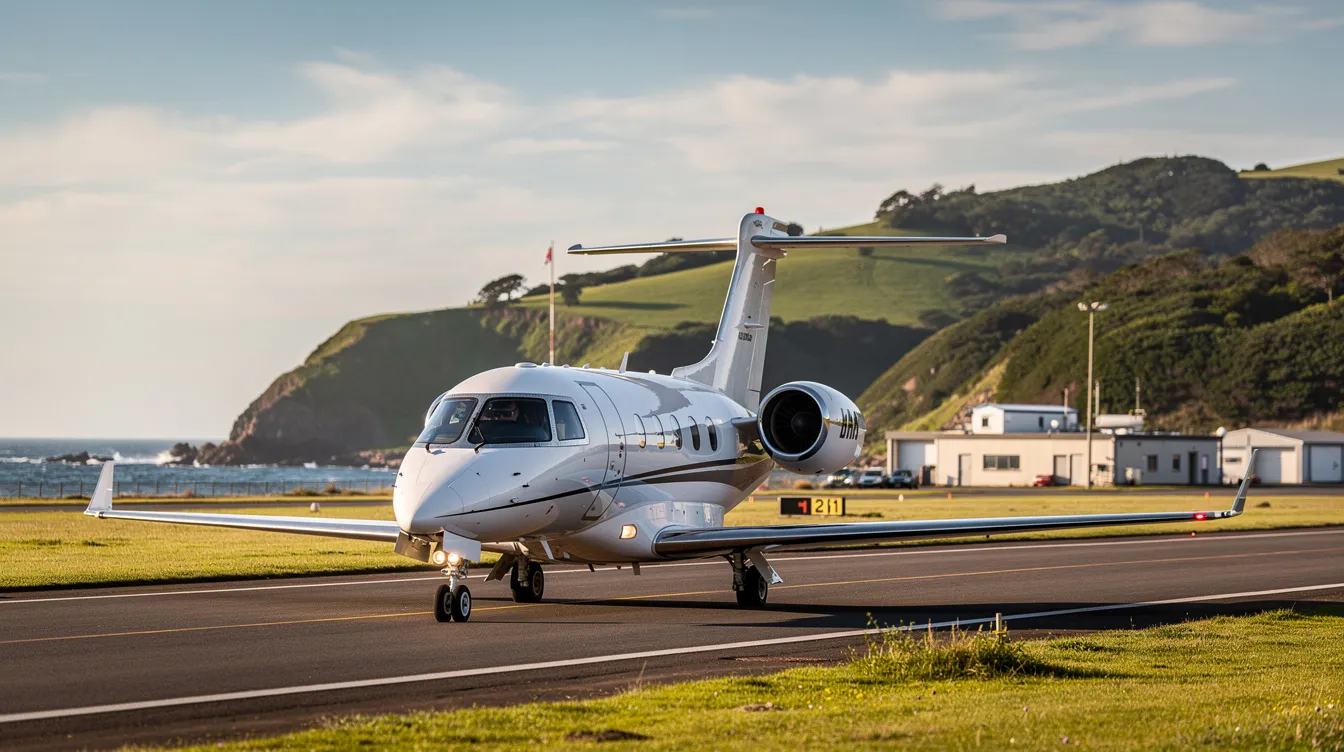
The Cirrus Vision Jet is often cited as the cheapest private jet for buyers seeking a brand-new, modern aircraft. The Cirrus Vision Jet costs around $2 million new for the base configuration, with the G2+ variant and options pushing toward $3.5 million. Late-model pre-owned examples typically sell in the $2.1 to $2.7 million range depending on hours and avionics.
The specs support its reputation as an efficient aircraft: a single Williams FJ33-5A engine, maximum range of approximately 1,275 nautical miles, a cruise speed of around 311 knots, and a cabin configured for five adults plus two children. It includes advanced avionics (Garmin Perspective Touch+) and the Cirrus Airframe Parachute System (CAPS), a whole-aircraft recovery parachute that remains unique among certified jets.
For owner-pilots, the Vision Jet is a compelling, affordable aircraft: single-pilot certified, low fuel burn, and capable of using runways that many twin-engine business jets cannot. However, most business clients flying 50-plus hours per year find fractional ownership or membership programs more practical than full private jet ownership, rather than buying an entire Vision Jet outright. The reason is straightforward: tying up $2 to $3.5 million in a depreciating asset only makes financial sense at very high utilization, and fractional or reserve models spread that cost across multiple users while eliminating pilot and crew salaries, hangar fees, insurance, and scheduling headaches.
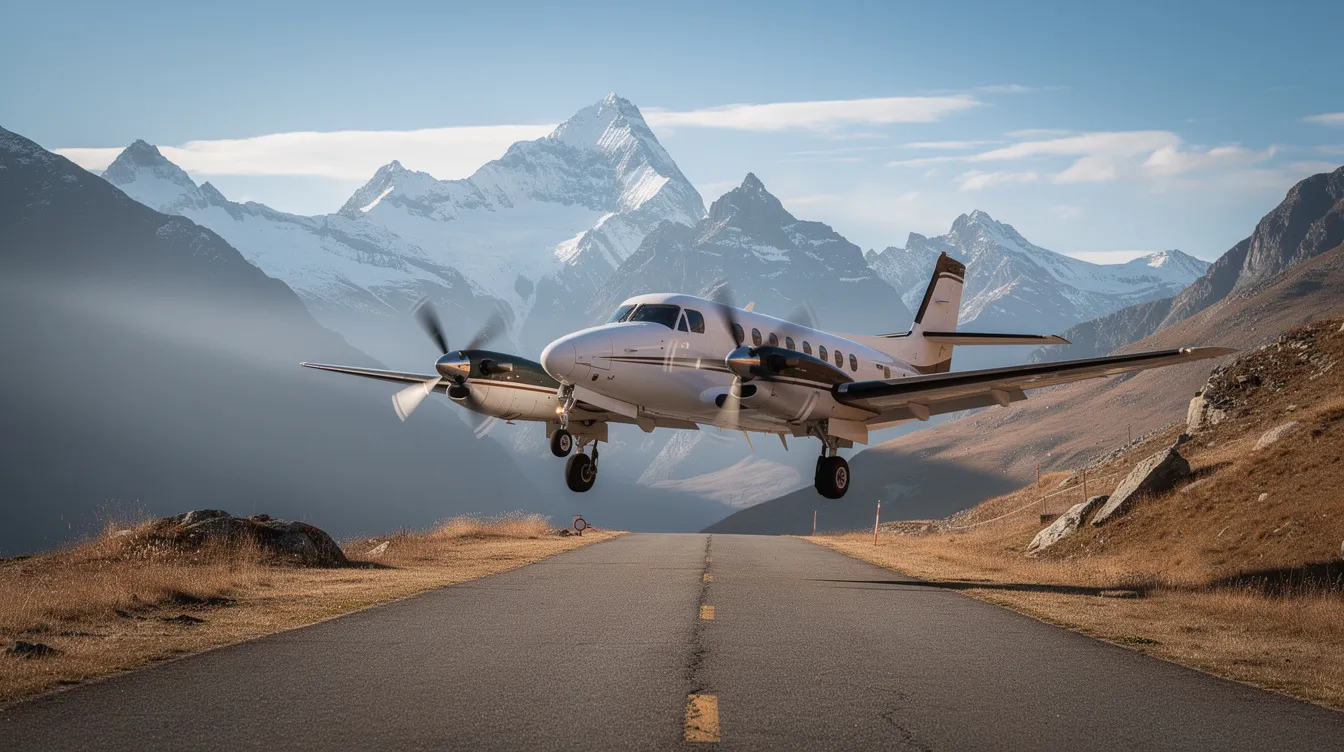
Turboprop aircraft like the Beechcraft King Air and Pilatus PC-12 remain among the most economical private jets on a per-hour basis. Hourly rates for turboprops start at $2,300 per hour in 2026, and even fully loaded King Air 350i charters rarely exceed $3,000 per hour for six to eight passengers.
The acquisition math is equally attractive. Older King Air 90 models are available under $1 million, making them a realistic purchase price for operators or fractional programs seeking affordable private fleet expansion. Turboprop aircraft are cost-effective for shorter trips-a fact that makes them the workhorse for routes like Aspen to Salt Lake City, Dallas to Santa Fe, and short Caribbean hops where runway performance and fuel efficiency matter more than top speed.
The King Air's ability to operate from unpaved and short runways unlocks destinations that even light jets cannot reach, giving travelers direct access to mountain towns, island strips, and rural corporate sites. BlackJet frequently sources turboprops within its Reserve Fleet model for clients prioritizing total cost over cruise speed, especially for medium-range flights under 800 nautical miles.
Older large jets can have surprisingly low sticker prices. A 1980s Dassault Falcon 50 lists between $750,000 and $4.75 million, depending on condition. Large jets like the Dassault Falcon 50 can fly over 3,000 nautical miles, offering transcontinental and international flight capability. Early 2000s Gulfstream V models sell for $8.8 to $11.1 million, a fraction of the replacement cost for an ultra long range large cabin aircraft.
But acquisition cost tells only half the story. Chartering large jets typically costs between $4,000 and $6,000 per hour, and ownership costs for fuel, crew, and heavy maintenance on older jets can push annual operating costs well above $1.5 million at 300 hours per year. Pilot and crew salaries alone for a heavy jet operation run $200,000 or more annually.
For corporations flying 400 to 600 hours per year on transcontinental routes, acquiring a depreciated large jet may be justifiable. For private jet owners logging 25 to 150 hours per year, however, fractional jet ownership as an investment in a longer range aircraft is almost always more economical than managing a full Gulfstream or Global alone. BlackJet can place clients into fractional shares of these large jets for predictable costs, spreading fixed expenses across multiple owners while still providing spacious cabin comfort and intercontinental range.
Empty-leg flights are repositioning legs that would otherwise fly without passengers. Charter operators offer these at steep discounts-typically 30 to 75 percent below standard rates-because any revenue on a deadhead leg is better than none.
Real-world examples illustrate the savings: a New York to Fort Lauderdale empty leg on a light jet in January 2026 might be priced at $6,000 to $8,000 total versus $16,000 or more for normal charter pricing. Flexibility in schedule can lead to significant savings on private flight costs, and for leisure travelers heading to popular snowbird routes, empty legs can make a private flight cheaper per person than first-class commercial tickets.
The limitations are real, though. Departure times and routes are set by the primary client's itinerary. Cancellation risk is high-if the primary trip changes, the leg flights disappear. Planning round-trip flights on empty legs is extremely difficult. These flights work best as occasional bonuses, not as a reliable travel strategy.
BlackJet curates empty leg opportunities within its Reserve Fleet network, alerting members to matching legs and handling rebooking if cancellations occur. This gives members occasional ultra-low-cost upgrades without the research burden of scanning multiple broker sites.
Aircraft age drives the initial purchase price down, but it can drive ongoing costs up dramatically. A 30-year-old jet with a $900,000 price tag may require a $500,000 engine overhaul within two years, plus $150,000 in avionics upgrades to meet current mandates. Meanwhile, a 15-year-old aircraft on strong maintenance programs may cost more upfront but deliver lower total cost over a five- to ten-year horizon.
Key maintenance and engine programs-JSSI, Rolls-Royce CorporateCare, Pratt & Whitney Eagle Service Plan-stabilize costs by spreading overhaul expenses into predictable hourly payments. Aircraft enrolled in JSSI programs tend to sell more quickly and for approximately 7 to 14 percent more than non-program aircraft, according to industry data.
Red flags that signal an older jet will cost more than it appears-and that should be reflected in fractional ownership contract terms and protections:
Overdue heavy inspections (10-year, 96-month structural checks)
Engines off hourly maintenance programs with high total time or cycles
Missing or incomplete maintenance documentation
Avionics non-compliant with modern avionics mandates (ADS-B, NextGen)
Low utilization history (corrosion risk from sitting)
Many clients opt for fractional or membership structures specifically to avoid these risks. The operator handles maintenance program enrollment, parts sourcing, and regulatory compliance-leaving the client with a predictable cost per flight hour rather than a ticking clock of deferred maintenance, especially when working with one of the top fractional jet ownership programs in the market.
Fractional ownership means buying a share, commonly 1/16 or 1/8-of a specific aircraft. That share entitles the owner to a set number of flight hours per year, typically 50 hours for a 1/16 share and 100 hours for a 1/8 share. Fractional ownership allows shared access to private jets while giving each owner equity and guaranteed scheduling priority, and understanding fractional jet ownership terminology and structure helps buyers evaluate these programs accurately.
The 2026 cost structure has three layers. First, the upfront acquisition: a 1/16 share in a light jet runs approximately $500,000 to $650,000, while midsize shares range from $1.4 million to $3.8 million, and many buyers use specialized fractional jet ownership financing options to fund that share purchase. Second, fixed monthly management fees cover crew, insurance, training, and hangar: roughly $6,000 to $10,000 per month for light jets. Third, an occupied hourly rate applies only when flying.
Fractional ownership reduces the hassle of full aircraft ownership by offloading crew management, scheduling, maintenance, and regulatory compliance to the program operator. For clients flying 50 to 150 hours per year, the total cost of fractional ownership per occupied hour often drops below what on-demand charter or jet cards charge, especially once fixed costs are amortized across guaranteed hours.
BlackJet's Equity Fleet offers priority access and custom aircraft sourcing, meaning clients can specify the aircraft model, age, and configuration they want rather than accepting whatever the program has available. Fractional ownership includes tax benefits for jet owners as well—potential bonus depreciation under current U.S. tax law can offset a meaningful portion of the share acquisition cost in the first year, making it critical to understand the tax implications of fractional jet ownership before committing.
The Reserve Fleet model is designed for clients who want affordable private jet access without committing capital to an aircraft share. It functions as a membership with predictable, transparent hourly pricing-no share purchase, no monthly management fee, and no long-term lock-in.
Ideal candidates are travelers flying 25 to 75 hours per year who need consistent private jet service but cannot justify fractional ownership costs at lower utilization. The Reserve Fleet aggregates business jets across multiple categories-turboprops, very light jets, light jets, and midsize jets-so BlackJet can right-size each mission to the most efficient aircraft available.
Member benefits include:
Transparent per-hour pricing with no hidden fuel surcharges or repositioning fees
Curated empty leg access within the network
All flights on ARGUS- or Wyvern-rated charter operators
24/7 trip support and scheduling flexibility
No capital at risk and no aircraft depreciation exposure
For clients unsure whether they need fractional ownership or a membership, the Reserve Fleet serves as a low-commitment starting point that can scale into an Equity Fleet share if flight hours grow.
The most affordable private jets are defined not by their purchase price but by their total cost over years of operation. A buyer focused solely on the initial purchase price can end up spending far more annually than someone who paid more upfront for a well-maintained, program-enrolled aircraft.
Here is what annual fixed and variable costs look like for a typical small jet in 2026:
Hangar fees: $1,000 to $3,000 per month ($12,000–$36,000 per year)
Insurance: $15,000 to $30,000 annually
Crew salaries: $80,000 to $200,000 per year, depending on aircraft type and crew size
Annual maintenance costs: $50,000 to $200,000
Fuel costs: approximately $300 to $700 per hour
At 100 flight hours per year, fuel alone runs $30,000 to $70,000. Stack hangar, insurance, crew, and maintenance on top, and a "cheap" jet with a $1.2 million sticker can cost $250,000 to $450,000 annually just to keep flyable. Private aviation pricing is influenced by aircraft positioning and demand, so chartering a private jet can cost between $2,300 and $17,000 per hour depending on the mission; for U.S. domestic trips, quotes also typically include federal excise tax as a mandatory government charge.
This is precisely where fractional ownership or membership programs create value: those fixed costs are shared among multiple owners or spread across a managed fleet, and the per-hour occupied rate reflects the true cost without surprise invoices, as outlined in our complete guide to fractional ownership costs. BlackJet advisors routinely run side-by-side cost scenarios for prospects-buy versus charter versus fractional versus Reserve Fleet-so clients see exactly where their money goes before committing.
Consider a six-person executive team traveling from New York to Detroit to Chicago and back to New York in a single day. On commercial airlines, that itinerary requires at minimum two connections, likely an overnight hotel stay, and six individual first-class tickets per leg. Total cost: easily $15,000 to $20,000 in airfare plus $2,000 in hotels plus an entire lost business day.
On a light jet, the same multi-stop trip costs roughly $14,000 to $18,000 in occupied flight time, departs and returns on the team's schedule, and reclaims a full day of productivity. Two-thirds of business jet passengers report increased productivity in-flight, according to industry surveys, because they can work, conduct calls, and review materials without interruption. Private aviation eliminates long security lines and crowded terminals, saving an additional one to two hours per trip.
Other high-value scenarios include attorneys needing same-day round-trip flights to depositions in secondary cities, medical device sales teams covering four hospitals in three states, and family offices managing properties across time zones. In each case, affordable private does not mean compromising on safety or comfort-it means selecting the right aircraft category and access model so the cost is proportional to the value of time saved.

Selecting the right aircraft starts with understanding mission requirements, not browsing aircraft brochures. The variables that matter most are stage length, passenger count, baggage volume, preferred airports, and weather profile at departure and arrival.
General guidance:
Sub-1,000 nm legs with 2 to 4 passengers: turboprops or very light jets offer the lowest cost
1,000 to 1,800 nm with 4 to 7 passengers: light jets balance speed, range, and economy
Coast-to-coast or transatlantic with 7+ passengers: midsize jets, super midsize jets, or large jets become necessary despite higher rates
Frequent hot-and-high operations (Aspen, Telluride, Mexico City): turboprops or longer-range aircraft with strong climb performance
Before contacting an advisor, run through this checklist:
What are your three most common city pairs?
How many passengers travel together on a typical trip?
Do you need access to smaller airports or short runways?
What are your expected annual flight hours?
Is schedule flexibility (same-day booking) important, or do trips follow a predictable calendar?
BlackJet performs this "mission matching" as part of its consultative process, combining aircraft category selection with the right program-Reserve Fleet or Equity Fleet-to control cost at each usage level.
Flying economically should never mean flying unsafely. Reputable providers operate under FAA Part 135 certification for charter or Part 91K for fractional programs, both of which impose strict maintenance, crew training, and operational standards.
BlackJet works exclusively with operators holding ARGUS Gold or Platinum ratings, Wyvern Wingman certification, or IS-BAO audit compliance. Pilot experience minimums, recurrent simulator training, maintenance tracking through systems like CAMP or Traxxall, and robust liability and insurance coverage in fractional arrangements are non-negotiable requirements.
Contrast this with "too good to be true" offers that surface on unvetted booking platforms. Some operators skip safety programs, defer maintenance, or operate in regulatory gray areas to offer rates well below market. First-time jet owners should always ask about operator certificates, safety ratings, pilot minimums, and insurance limits before booking any private flight-especially one marketed as deeply discounted.
The distinction matters: affordable private aviation means optimizing cost through smart access models and aircraft selection, not stripping safety infrastructure to hit a lower price.
Smaller, efficient aircraft like the Cirrus Vision Jet, HondaJet, Pilatus PC-12, and King Air naturally align cost savings with reduced environmental impact. A turboprop burns roughly 40 to 60 gallons per hour versus 150 to 250 gallons for a large cabin aircraft, which means lower fuel costs and a smaller carbon footprint per mission.
Sustainable aviation fuel (SAF) is now available at dozens of U.S. and European airports on popular business jet routes. Carbon offset programs allow travelers to neutralize remaining emissions at modest cost per flight hour. BlackJet can recommend greener aircraft types and offset programs for clients focused on ESG or corporate sustainability goals.
Practical steps to make private flying both more economical and more sustainable:
Choose nonstop legs over multi-stop itineraries to reduce total fuel burn
Right-size the aircraft to the passenger count (avoid flying a midsize jet for two passengers)
Book round trips or multi-leg days to minimize empty repositioning
Ask about SAF availability at departure airports
Consider turboprops for sub-500 nm missions where fuel efficiency gains are largest
The Eclipse 500 is the cheapest private jet in the current market, with pre-owned examples costing $1 million to $1.5 million. The Cirrus Vision Jet is the most affordable option among new-production jets. For first time jet owners considering outright purchase, these two models represent the lowest entry points, though operating costs for a Cessna Citation Mustang-another popular entry-level option-run $1,000 to $1,200 per hour, making it worth evaluating as well.
For travelers logging under 25 annual flight hours, on demand charter or empty leg flights offer the lowest commitment. Empty leg flights can offer discounts up to 75% off standard rates, though schedule flexibility is required. For slightly higher usage, a reserve fleet membership like BlackJet's provides predictable pricing without capital outlay.
At 50 to 75 hours per year, fractional ownership typically produces a lower effective hourly rate than jet card programs because fixed costs are amortized over guaranteed hours and the owner builds equity in the aircraft. Jet cards tend to be more economical below 25 hours but carry per-hour premiums above that threshold.
They can work for non-time-critical legs where the route and schedule happen to align. However, leg flights are not reliable for recurring business travel because departure times, routes, and availability are controlled by the primary client's itinerary. They are best used as supplemental savings opportunities rather than a core travel strategy.
A well-maintained aircraft in the 10- to 15-year range enrolled in engine and airframe maintenance programs generally offers the best balance of low acquisition cost and predictable ongoing costs. Older jets,25-5 t30-year-oldsds, may have lower sticker prices but often carry hidden liabilities in deferred maintenance, parts scarcity, and regulatory non-compliance, which also affect how easily you can sell or transfer a fractional ownership share later.
Absolutely. Turboprop aircraft like the King Air 350i and Pilatus PC-12 carry six to nine passengers, cruise at 300-plus knots, and operate from runways that many jets cannot use. For missions under 1,000 nautical miles, they are among the most affordable private jets in operation worldwide and are a staple of corporate flight departments and fractional programs, which rely on clear fractional ownership contract structures to allocate costs and usage among multiple owners.
BlackJet acts as an advisor, not just a broker. The team analyzes each client's routes, passenger counts, and annual flight hours to recommend whether the Reserve Fleet, Equity Fleet, or a mixed model delivers the best value. Clients can request custom cost comparisons before making any commitment.
The central lesson of affordable private jet travel in 2026 is straightforward: affordability comes from matching the right aircraft, access model, and usage pattern to actual travel needs. A turboprop owner flying 300 hours per year and a reserve fleet member logging 40 hours per year can both be flying at peak efficiency, because each chose the model that fits.
BlackJet's consultative process starts with a needs assessment: route analysis, hours projection, passenger profiles, and budget parameters. From there, the team recommends whether the Reserve Fleet, Equity Fleet, or a hybrid approach delivers the lowest total cost at the desired service level. Every recommendation includes a side-by-side cost scenario so clients see charter, fractional, and membership economics transparently.
Ready to explore the smarter way to fly private? Visit FractionalJetOwnership.com to schedule a consultation or request a custom cost comparison. Private aviation does not have to be an unpredictable luxury. With the right strategy, it becomes a measurable advantage-one that saves time, protects productivity, and keeps costs firmly under control.
