August 9, 2026
When corporate executives need to move a full team across the country-or across an ocean-without the inefficiency of commercial airlines, a 12-passenger private jet is often the answer. These aircraft deliver the cabin space, flight range, and onboard features that make private jet travel practical for larger groups. This guide breaks down the top aircraft models, real-world costs, and smarter access strategies for anyone evaluating private jets in this category.
12-passenger jets typically fall into super mid-size or large categories within broader aircraft categories, making them ideal for corporate executives, client-facing travel, and family groups who need more cabin space than midsize jets provide.
Common models include the Gulfstream G550 and Bombardier Challenger 605, along with the Dassault Falcon 2000LXS and Embraer Legacy 600/650. Typical flight distance ranges from roughly 3,000 to over 6,750 nautical miles depending on aircraft type.
Charter cost for a 12-passenger jet generally falls between $8,000 and $14,000 per flight hour in the United States, before federal excise tax, airport fees, and fuel surcharges are added.
Frequent flyers logging 25 to 150 hours per year often find better value through fractional jet ownership or membership programs-such as BlackJet Fractional Jet Ownership's Equity Fleet and Reserve Fleet models-compared to booking ad hoc private jet charter.
This article covers each aircraft model's strengths, cabin experience, cost structures, and additional fees including ground transportation, landing fees, and in flight catering, so readers can make informed decisions before their next flight.
Picture a New York-to-London corporate trip: twelve team members boarding a single aircraft, settling into separate work and lounge areas, and arriving rested after a nonstop crossing. That is the mission profile a 12-passenger private jet is built for.
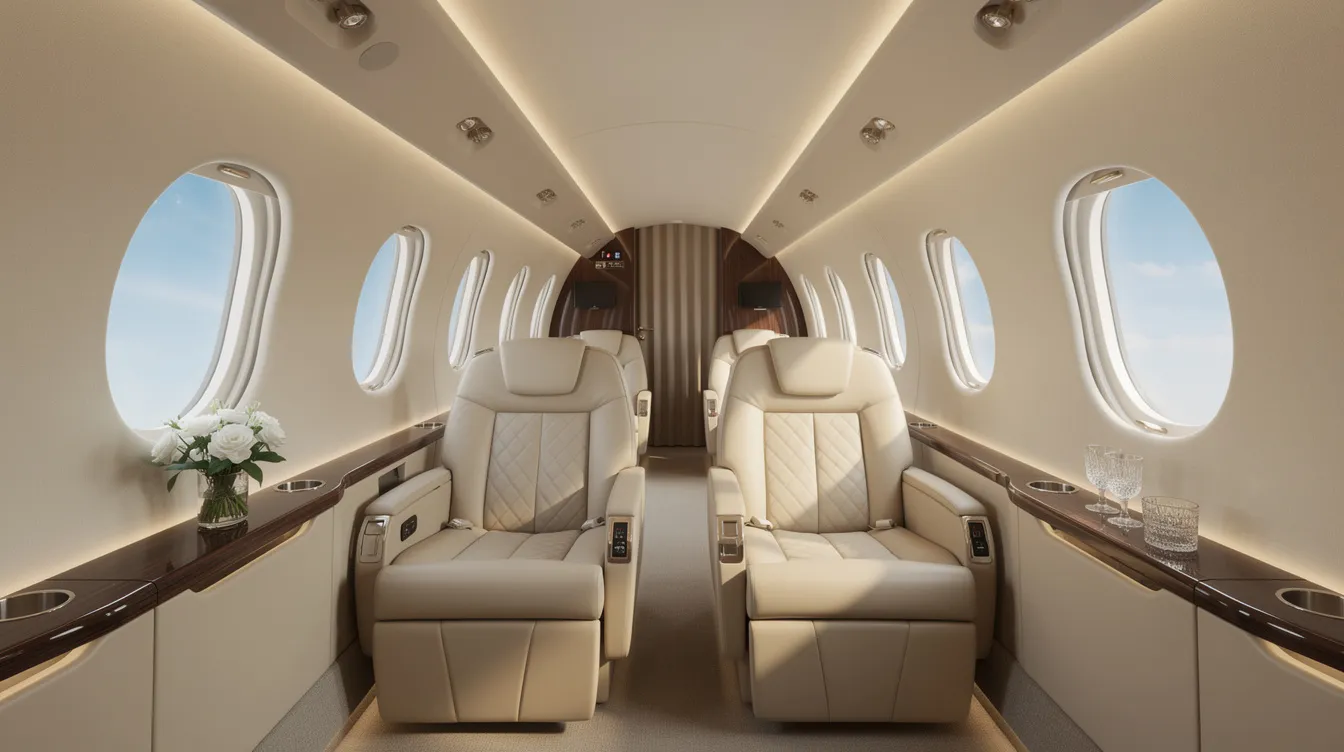
These aircraft are typically classified as super midsize jets or large cabin jets-designed to carry 10 to 13 passengers in stand up cabins with multiple zones for meetings, dining, and rest. A full stand-up cabin should be at least 6 ft in height, and most models in this category meet or exceed that standard. These jets offer spacious cabins with multiple living areas, separating productivity from relaxation even on long sectors.
12-passenger jets typically offer transcontinental or intercontinental range, with capabilities between about 3,000 and 6,750 nautical miles depending on the aircraft model. That range covers nearly every us domestic flight legs scenario and many international flights without a fuel stop. Super-midsize and heavy jets suit groups of 12 passengers, sitting above light and midsize options in terms of cabin dimensions, baggage capacity, and overall capability.
While "12-passenger" is a common marketing term, the real-world passenger count depends on interior configuration. Key features include actual seating configuration and maximum capacity-some layouts seat 10 in maximum comfort, while others stretch to 14 with denser arrangements. Knowing where these larger aircraft sit within the full spectrum of aircraft categories helps buyers avoid overshooting or undershooting their needs.
This section reviews specific 12-passenger models commonly selected by BlackJet clients and the broader North American market in 2026. Each can be configured around 12 seats and is widely available through charter and fractional programs, making them realistic options rather than rare outliers.
For every aircraft model below, expect key specs covering typical seating, maximum flight distance, cruise speed, and defining cabin or performance features. The focus is on practical, proven aircraft that balance operating cost, reliability, and passenger comfort. Use this section as a starting shortlist when discussing aircraft selection with a private aviation advisor or a fractional provider like BlackJet Fractional Jet Ownership.
The Gulfstream G450 and gulfstream g550 are benchmark large jets frequently carrying 10 to 14 passengers in business layouts, trusted by Fortune 500 companies and government agencies worldwide.
A typical 12-passenger configuration includes forward club seating, a mid-cabin conference group, and an aft divan or club pairs, plus a fully enclosed private lavatory and a sizeable galley capable of supporting fine dining on long haul flights. Cabin height reaches approximately 6 ft 2 in with a flat floor, and options like Ka-band high-speed satellite Wi-Fi and advanced avionics support global operations.
Performance is where these aircraft truly separate themselves. The G450 offers a range of roughly 4,200 nautical miles at long-range cruise, while the G550 can fly for up to 12 hours nonstop-approximately 6,750 nautical miles-enabling sectors like New York–London or Los Angeles–Honolulu with full reserves. For owners and fractional users, these sit at the upper end of the charter cost spectrum but offer exceptional flexibility for true intercontinental missions where fuel stops are unacceptable.
The bombardier challenger 600 series represents some of the most popular large-cabin jets for up to 12 passengers, owing to their wide cabins and competitive operating economics. The Bombardier Challenger 605 has a range of 4,000 nautical miles, covering routes like New York–Los Angeles or Paris–Dubai under favorable conditions, with cruise speeds near Mach 0.80.
The cabin feel is a standout. At approximately 7 ft 11 in wide, it is one of the widest in its class, with club seating, a conference area, divans, and fully flat sleeping options suitable for overnight flights. Large jets offer greater baggage capacity for international travel, and the Challenger series delivers-baggage compartments should ideally exceed 120 cubic feet, and the Challenger 650 provides roughly 115 cubic feet. The Challenger 650 requires 5,640 feet for takeoff, which is manageable at most major airports.
Updated avionics, improved soundproofing, and refined interiors on the Challenger 650 appeal to both charter and fractional ownership clients. These aircraft often represent a sweet spot between ultra-long-range Gulfstreams and smaller super midsize aircraft in terms of both charter cost and total private jet ownership costs.
The Falcon 2000, 2000LX, and 2000LXS are twin-engine large jets frequently configured for 10 to 12 passengers with impressive runway performance that opens up airports heavier jets simply cannot reach.
Approximate flight range sits at 3,800 to 4,000+ nautical miles depending on variant, enabling U.S. coast-to-coast and many Western Europe–Middle East routes in one hop. The cabin is quiet and comfortable-just under 7 ft 8 in wide with stand-up headroom, club seating, a conference table, and a full galley to support gourmet meals during longer flights.
Dassault's reputation for aerodynamic efficiency and short-field performance is well earned. Landing distance of approximately 2,260 ft on the LXS variant allows access to secondary or remote airports, expanding destination flexibility and reducing ground time. In 2026, many Falcon 2000 family aircraft on the market are enrolled in maintenance programs like FalconCare or MSP, which can improve predictability of ongoing expenses for fractional owners.
The Embraer Legacy 600/650 and Cessna Citation Sovereign are super midsize aircraft that can be configured for up to 12 passengers while offering a more modest charter cost than ultra-long-range jets. Super-midsize jets are best for domestic trips of about 4 to 6 hours, making these models well suited to mid range flights.
The Legacy 600/650 features three-zone cabins-forward club, mid-cabin conference, and aft lounge or private zone-with approximately 6 ft cabin height and a range around 3,400 to 3,900 nautical miles. The Embraer Praetor 600 is also noted for its advanced technology and efficiency, making it worth considering as a modern alternative. The Cessna Citation Sovereign cruises at speeds up to 460 knots with strong short-field performance and a range around 3,000 to 3,200 nautical miles, serving smaller regional airports that heavy jets may not access easily.
For clients flying 25 to 100 hours per year primarily on domestic flight legs, these aircraft can be an excellent fit within a fractional or membership structure, delivering ample room without overspending on capability that goes unused.
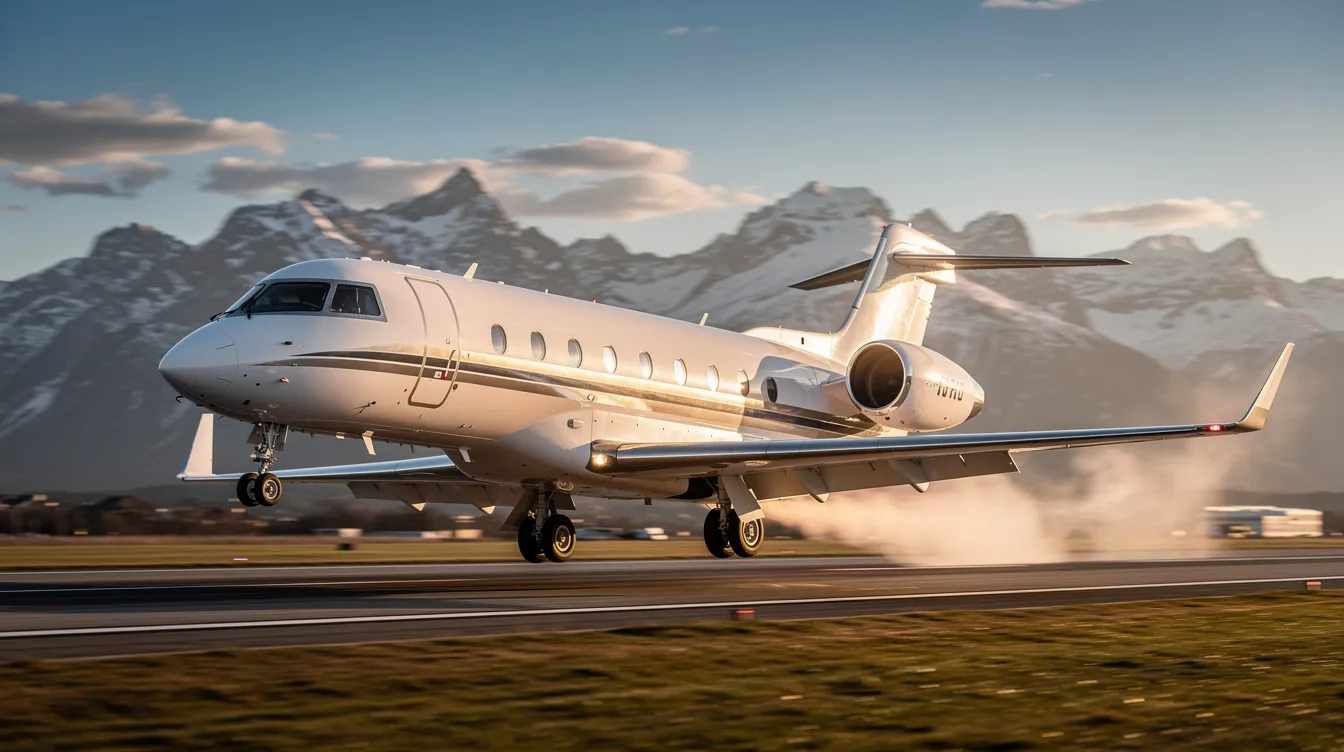
Beyond performance numbers, the onboard experience is what separates flying private from commercial airlines. 12-passenger jets often feature spacious, multi-zone cabins that allow simultaneous business meetings and quiet rest within the same flight. Ensuring cabin comfort includes assessing space for movement and multiple zones.
High-speed Wi-Fi: High-speed satellite Wi-Fi is crucial for work in the air, and high-speed Wi-Fi is standard on most 12-passenger jets. Connectivity features include high-speed Wi-Fi and power outlets at every seat.
Entertainment: Advanced entertainment systems are common in 12-passenger jets, including HD displays and airshow mapping.
Galleys: Many jets include a full galley for custom gourmet dining. They provide amenities like high-speed Wi-Fi and gourmet dining, enabling personalized service that rivals fine dining on the ground. In flight catering can be coordinated pre-flight to meet dietary-specific needs.
Sleeping: 12-passenger jets typically have lie-flat seating for comfort, with many cabins offering divans or dedicated stateroom-style aft sections suited to overnight transoceanic flights.
For longer flights and client-facing travel, the upgrade in cabin space and onboard features-from custom catering to private workspaces-justifies stepping up from smaller aircraft categories.
Understanding flight distance, cruise speed, and runway requirements is essential to choosing the right 12-passenger jet. A mismatch between aircraft and mission means unnecessary fuel stops, increased fuel consumption, or inability to reach a preferred airport.
Typical range bands break down as follows:
Category | Range | Example Routes |
|---|---|---|
Super midsize (12-seat) | 3,000–3,900 NM | LA–New York, Chicago–London (with stop) |
Large cabin | 4,000–4,500 NM | New York–LA, Miami–London |
Ultra long range jets | 5,500–7,000+ NM | New York–London, LA–Tokyo |
Some models-like the Citation Sovereign and Falcon 2000 variants-are optimized for shorter runways, allowing access to secondary airports and reducing total door-to-door time. Consulting an aviation advisor or BlackJet program specialist helps match typical trip profiles to appropriate ultra long range jets or right-sized alternatives.
Cost is never a single number. It is a combination of hourly aircraft rate, trip-specific charges, and regulatory fees that together determine what a given flight actually costs.
For 2025–2026, here are realistic U.S. ranges:
Cost Type | Range |
|---|---|
Hourly charter cost (12-seat super midsize/large) | $5,000–$9,000 (super midsize) to $8,000–$14,000 (heavy/large) |
Daily private jet rental rates | $20,000–$35,000 |
Cost Type | Range |
|---|---|
Outright purchase (pre-owned super midsize) | Under $10 million |
New large / ultra-long-range jets | $40–$70+ million |
Annual operating costs (heavy jet, 300–400 hrs/yr) | $2 million to $4 million |
Typical passenger jets range from roughly 3,000 to over 7,000 nautical miles, and 12-passenger jets can fly non-stop for up to 12 hours on the upper end. Aircraft need a range of at least 3,400 to 4,600 nautical miles for transcontinental flights. However, real-world flight range is reduced by headwinds, payload, and required fuel reserves. Key features for large jet operations include crew capacity and luggage management, both of which affect payload trade-offs. Fuel burn and fuel consumption rise with heavier loads.
Annual operating costs for a private jet can reach $2 million to $4 million, covering fuel, maintenance, crew salaries, insurance, and hangar fees. These are ongoing expenses that full owners must budget for regardless of how many hours they actually fly.
Fractional jet ownership and membership models-such as BlackJet's Equity Fleet and Reserve Fleet-offer ways to access 12-passenger aircraft without shouldering 100% of private jet ownership costs. For those comparing options, a detailed charter pricing guide and complete guide to the cost of fractional jet ownership can clarify where private jet rental, private jet charter, and fractional programs each make sense.
Beyond the base hourly rate, travelers need to understand the additional fees that inflate total charter cost. A charter flight quoted at $10,000 per billable flight hour rarely reflects the final invoice.
Key charges to expect:
Federal excise tax: 7.5% on domestic charter legs, plus per-passenger segment fees. International flights may carry overflight and customs charges classified as international fees.
Landing fees: Landing fees for private jets typically range from $150 to $500 at most airports, though larger facilities can charge up to $1,500 based on aircraft weight.
Fuel surcharges: Fuel surcharges can add $600 to $900 per hour to costs when jet fuel prices spike.
Airport fees: Ramp or parking charges and FBO handling fees vary by location.
Additional costs: Deicing costs in winter, crew member overnight expenses on multi-day trips, in flight catering upgrades, and premium Wi-Fi data packages.
Positioning: Empty leg flights or dead-head legs may be charged when the aircraft must reposition. Short leg fees may also apply on brief domestic flights.
Some providers bundle concierge services-including ground transportation coordination-into a single quote, while others bill them as separate line items. Always request a fully transparent estimate showing every line of additional fees to understand the true total charter cost before committing to a private charter.
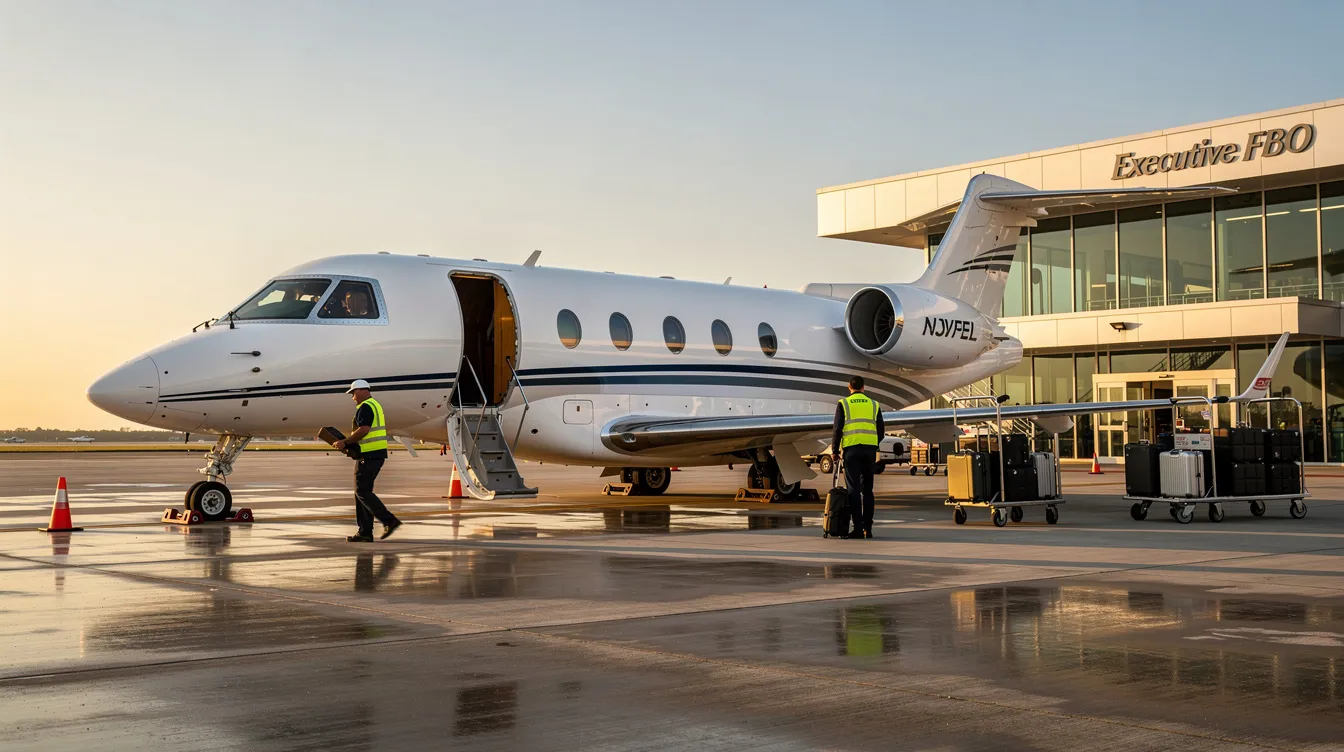
Fractional jet ownership allows shared access to private jets by purchasing a share in an aircraft or fleet that entitles the owner to a fixed number of flight hours per year for a specified duration. Owners typically fly 25 to 150 hours per year, making this model attractive to high net worth individuals and corporate teams who need consistent aircraft availability.
For those flying roughly 50 or more hours annually on 12-passenger-capable jets, fractional and membership programs can reduce effective per-billable flight time cost versus ad hoc charter. Private jet membership programs offer locked-in hourly rates, and members enjoy guaranteed availability without repositioning fees. Frequent travelers benefit from reduced rates through membership, and some programs offer significant discounts on longer commitments. Jet card services provide flexible access to private flights, while membership programs allow booking via app with zero middlemen.
BlackJet Fractional Jet Ownership structures access through two primary models, and understanding core fractional jet ownership terms helps clarify how each works:
Equity Fleet: Clients own a share with priority access to aircraft. Equity Fleet provides priority access to aircraft and may integrate with common aviation tax strategies for fractional jet owners. Fractional ownership offers tax benefits for jet owners when the aircraft is used for qualified business travel.
Reserve Fleet: Pay-as-you-go access without acquisition costs, designed for supplemental use or clients not yet ready for ownership who may be weighing fractional jet ownership vs membership programs.
Fractional ownership reduces hassle compared to full private jet ownership by eliminating responsibilities like hangar arrangements, crew employment, and compliance management while still offering many of the investment-style benefits and considerations of fractional jet ownership. For a deeper comparison of fractional ownership programs, BlackJet's advisory team can model specific scenarios against your travel patterns.
Selecting the right aircraft brings together everything discussed above: performance, comfort, and cost aligned to real travel patterns.
Start by mapping typical routes-New York to Chicago, Los Angeles to Tokyo, Miami to London-and their flight distance requirements. This immediately narrows the field to a preferred aircraft category. Comfort and operating costs should be evaluated over capacity alone; a jet with 12 seats but insufficient range forces fuel stops that erode productivity.
Consider these decision factors:
Route profile: Primarily domestic flights under 4 hours, or international sectors over 6 hours?
Cabin priorities: Private stateroom vs. open layout, conferencing vs. lounge, fine dining capability for client-facing trips?
Budget structure: Ad hoc charter, jet card, or fractional aircraft ownership? Each aligns to different flying frequencies and budget tolerance.
Airport access: Do you regularly fly into shorter runways or secondary fields?
The right preferred aircraft and access model depend on your specific mission. Speak with a BlackJet Fractional Jet Ownership specialist who can analyze your historic or projected travel patterns and match you with an optimal aircraft type and program.
These FAQs address practical planning questions that often arise after comparing 12-passenger jet models and pricing options.
Range varies widely by aircraft type. Many super midsize jets cover around 3,000 to 3,900 nautical miles, suitable for coast-to-coast routes like New York to Los Angeles. Ultra-long-range models like the Gulfstream G550 can reach approximately 6,500 to 6,750 nautical miles, enabling nonstop transatlantic crossings such as New York to London. Real-world flight distance is always affected by headwinds, passenger and baggage load, and required fuel reserves. A trusted private aviation provider can model typical trips with planning software to confirm which aircraft reliably fly them nonstop under varying weather conditions.
Not necessarily. Many clients choose 12-seat jets for the extra cabin space, separate work and relaxation zones, and the ability to add passengers at short notice. For consistently small groups flying short leg flights, light jets or midsize jets may be more cost-effective. However, for longer flights or client-facing travel, the upgrade in spacious cabins and more cabin space justifies the incremental cost. Consider not just seat count but also luggage needs, required range, and desired level of onboard service when selecting aircraft size. If you're exploring options for smaller or larger groups, different aircraft categories may be a better fit.
Booking at least one to four weeks ahead typically yields the best aircraft selection and pricing, especially during peak periods such as major holidays or large events. Last-minute charters are often possible but may involve higher charter cost, more positioning time via billable flight hour charges, or less choice of specific aircraft models and interior layouts. Fractional ownership or membership with a provider like BlackJet can provide guaranteed aircraft availability windows, reducing the stress of short-notice planning for frequent travelers.
Reputable operators of 12-passenger private jets in the United States must comply with FAA Part 135 regulations for charter or Part 91 Subpart K for fractional programs, covering crew member qualifications, maintenance, and operational procedures. Third-party safety audits from organizations like ARGUS, IS-BAO, and Wyvern provide additional oversight. Fractional providers typically partner only with operators and airframes that meet stringent, regularly audited standards. Always ask for safety ratings and maintenance program details before committing.
In the United States, certain business users may be able to deduct depreciation and operating expenses tied to fractional jet ownership when the aircraft is used for qualified business travel. The specifics depend on individual tax situations, usage patterns, and evolving IRS rules. BlackJet's Equity Fleet model is designed to integrate with common aviation tax strategies, but personalized professional advice is essential for compliance and optimization. Consult a tax advisor before relying on projected benefits.
Ready to find the right 12-passenger jet for your travel profile? Visit FractionalJetOwnership.com to learn how BlackJet's Equity Fleet and Reserve Fleet models can deliver predictable, private jet-level access without the complexity of full ownership.
Incorporating fractional jet ownership into your private aviation strategy offers a compelling alternative to traditional full ownership or ad hoc charter. Fractional ownership allows high-net-worth individuals and corporate executives to purchase a share of a private jet, using specialized financing structures to acquire a share and granting them access to a guaranteed number of flight hours annually without the burdens of sole ownership.
This model emphasizes flexibility and efficiency, enabling owners to fly on their schedule with priority access to aircraft. Compared to chartering, fractional ownership often reduces the effective private jet cost per hour, particularly for those flying between 25 and 150 hours per year. It also provides significant convenience by outsourcing aircraft management, including crew employment, maintenance, and regulatory compliance.
In the United States and the global private jet market, fractional aircraft ownership is gaining traction due to its blend of privacy, predictability, and cost-effectiveness. Programs like BlackJet Fractional Jet Ownership’s Equity Fleet offer tax benefits and require careful attention to liability and insurance considerations in fractional ownership for qualified business travel, enhancing the financial appeal of this approach.
When evaluating private aviation options, considering fractional ownership alongside leasing, charter, and outright purchase helps decision-makers align travel needs with budget and operational preferences, especially when they understand the total cost of fractional jet ownership. Fractional ownership stands out for those seeking a balance between control, luxury, and hassle-free access.
For executives and business owners exploring private aviation for the first time, fractional ownership provides an approachable entry point with expert guidance and tailored solutions, and options like 1/8th fractional jet ownership can right-size the commitment to typical annual flight hours. Seasoned flyers benefit from the consistent availability and personalized service that fractional programs deliver, and they can plan ahead for eventual sale or transfer of a fractional jet share as their travel needs evolve.
Ready to explore the smarter way to fly private? Visit FractionalJetOwnership.com to learn how fractional ownership can transform your travel experience.
Choosing the best 12-passenger private jet involves balancing range, cabin comfort, performance, and cost to suit your unique travel needs. Whether you prioritize nonstop intercontinental reach with aircraft like the Gulfstream G550 or seek efficient, spacious options like the Bombardier Challenger 650 or Embraer Legacy 650 for domestic and regional flights, there is a 12-passenger jet tailored to your mission profile.
For frequent travelers, fractional jet ownership and membership programs provide a compelling alternative to full ownership or ad hoc charter, delivering predictable access, tax benefits, and reduced operational hassle. These models offer the flexibility and convenience that align well with the demands of executives and business owners who fly 25 to 150 hours annually.
By partnering with a trusted provider such as BlackJet Fractional Jet Ownership, you gain expert guidance to select the ideal aircraft and ownership structure, ensuring your private aviation experience is efficient, comfortable, and cost-effective.
Ready to explore the smarter way to fly private? Visit FractionalJetOwnership.com to learn how fractional ownership can transform your travel experience.
