
August 21, 2026
Looking for the best private jet companies? This guide will help you choose the right partner for flying private.
Choosing among the best private jet companies comes down to one question: how do you actually fly? Your annual flight hours, route profile, and preferred access model determine which company delivers the best value - not brand prestige alone.
This guide is for business travelers, executives, and high-net-worth individuals considering private aviation. It covers how to evaluate the best private jet companies, compare access models, and match providers to your travel needs. Understanding these factors is crucial for making informed decisions that maximize value, safety, and convenience in private air travel, especially as you navigate key fractional jet ownership terminology and program structures.
The "best" private jet company depends on whether you need 25 or 150 flight hours per year, whether your flights are primarily domestic routes or international flights, and whether you prefer fractional ownership, jet cards, or on-demand jet charter. Here is a brief breakdown of where the leading brands fit.
Fractional ownership: NetJets and Flexjet are the two largest fractional operators, offering equity stakes in aircraft with guaranteed availability and fleet breadth from light jets to heavy jets.
Global charter and membership: Vista Global - including VistaJet, XO, Air Hamburg, Jet Edge, and Talon Air - serves the Vista members' fleet with a focus on long-range and intercontinental missions plus digital booking.
U.S. membership and jet cards: Wheels Up and Jet Linx provide domestic-focused jet card programs and membership access with fixed hourly rates and local service through regional bases.
Regional and specialty operators: Nicholas Air and similar providers serve niche markets with personalized service and strong regional coverage.
Tailored fractional and reserve access: BlackJet Fractional Jet Ownership combines an Equity Fleet (true fractional ownership with aircraft management and tax benefits) and a Reserve Fleet (flexible pay-as-you-go hours without ownership costs) for clients in the 25–150 hours per year range.
Once you pass roughly 25–50 hours flown per year, a structured fractional solution like BlackJet often beats ad-hoc charter on both cost and predictability.
This guide explains when each type of company fits and how to match the right aircraft and access model to your travel profile.
Private aviation eliminates the friction of commercial airlines: hub-and-spoke routing, security lines, fixed schedules, and cramped seating. Instead, clients access thousands of smaller airports across the United States and Europe, flying direct to destinations on their own timeline.
Time savings are significant — arrive 15–20 minutes before departure, board directly, and depart. No layovers, no connections.
Privacy matters for board meetings in the air, confidential conversations, or simply traveling with family without disruption. Private aviation provides a luxury experience with personalized service tailored to each passenger.
Private aviation offers access to over 2,400 airports worldwide, and private jets can reach remote destinations inaccessible to commercial airlines.
Private flights can be booked with as little as 4 hours' notice, giving executives and business travelers the ability to respond to opportunities in real time. Private aviation allows for flexible scheduling with minimal notice.
The typical client profile includes executives, business owners, family offices, and corporations with predictable private travel needs who have outgrown first-class on commercial airlines.
Once you understand why flying private is fundamentally different, the next step is choosing the right type of jet company and access model - which the sections below break down in detail.
The best private jet companies fall into several distinct business models. Private jet companies may use distinct models like fractional ownership and jet cards. Fractional ownership allows shared access to private jets, while jet cards provide a set number of flight hours on specific aircraft. In addition, companies offer on-demand charter and full aircraft management. Understanding the differences is essential before comparing providers.
Fractional ownership means buying a share in an aircraft for a set number of flight hours per year, typically 25–200 hours. Providers like NetJets, Flexjet, and BlackJet's Equity Fleet offer this model. Fractional ownership allows shared access to private jets, with potential tax and depreciation benefits for business-use aircraft.
Fractional ownership typically requires a substantial upfront cost - the capital purchase of a share - plus monthly management fees and occupied hourly rates. The tradeoff is guaranteed aircraft access and long-term cost savings versus retail charter.
Jet cards are prepaid blocks of flight hours at fixed hourly rates, without taking on aircraft ownership. Jet cards provide a set number of flight hours on specific aircraft types and are used by providers like Wheels Up, Sentient Jet, Jet Linx, XO, and others.
On-demand charter is a trip-by-trip booking with variable pricing through charter operators and brokers. No ongoing commitment, but costs fluctuate with seasonality, positioning, and aircraft type.
Aircraft management companies handle maintenance, crews, regulatory compliance, and insurance for whole aircraft owners. They may also place the aircraft into charter when not in use or operate within floating fleet structures in fractional ownership that optimize aircraft utilization. This model suits clients flying 200+ hours per year with very specific mission needs.
Private jet companies ensure availability with flexible scheduling, but the level of guarantee varies sharply by model. Fractional owners typically get priority; charter clients book based on what is available.
BlackJet Fractional Jet Ownership bridges the gap: its Equity Fleet provides true fractional ownership with full executive jet management, while its Reserve Fleet offers pay-as-you-go access for clients who want predictable pricing without capital commitment — ideal for the 25–150 flight-hours-per-year range and for those weighing fractional jet ownership vs membership programs.
Comparing private jet companies on hourly rate alone is misleading. Guaranteed availability, safety, fleet match, financial transparency, and service quality matter as much - or more - than the headline price.
Guaranteed availability: How far in advance must you book? Are there peak-day restrictions or blackout dates? Fractional programs generally guarantee access with a few hours' notice; jet cards may have similar windows; pure on-demand charter offers no guarantee. Private jet companies ensure availability through flexible scheduling, but the specifics differ.
Fleet breadth: Does the company's fleet include light jets, midsize/super-midsize jets, heavy jets, and ultra-long-range aircraft? Does the provider specialize in domestic or international flights? A provider with larger jets and global network coverage handles different missions than a regional operator.
Safety: Choosing a private jet company involves safety ratings and service reliability. Look for certifications like ARGUS Gold or Platinum, Wyvern Wingman, and IS-BAO Stage 2 or 3. Crew training standards and incident history are non-negotiable evaluation factors.
Pricing transparency: Understanding hidden costs is crucial for evaluating private jet pricing transparency and the total cost of fractional jet ownership. Ask whether rates are all-in or whether repositioning, de-icing, landing fees, international handling, and catering are billed separately. Fixed pricing removes surprises; variable pricing introduces risk.
Operational control: Operational control indicates whether a company manages its own aircraft or subcontracts to third parties. Knowing who actually operates your flight matters for consistency and accountability.
Contract structure: Review term length, exit options, how unused hours are handled, whether hours can be banked or transferred, and the essential contract terms in fractional jet ownership that govern these details. Multi-year commitments (common in fractional programs) require careful evaluation.
Customer experience: 24/7 support, digital booking tools, dedicated account managers, and the ability to handle complex multi-leg itineraries or last-minute changes all affect day-to-day satisfaction with your provider.
Consider aircraft quality, including age and cabin size, when choosing a provider - a newer airframe with modern avionics and connectivity delivers a meaningfully different experience than an older aircraft at a similar hourly rate.
Fractional ownership is the preferred model for clients flying 25–200 hours per year who want predictable aircraft access and potential tax advantages, rather than paying retail charter rates on every trip.
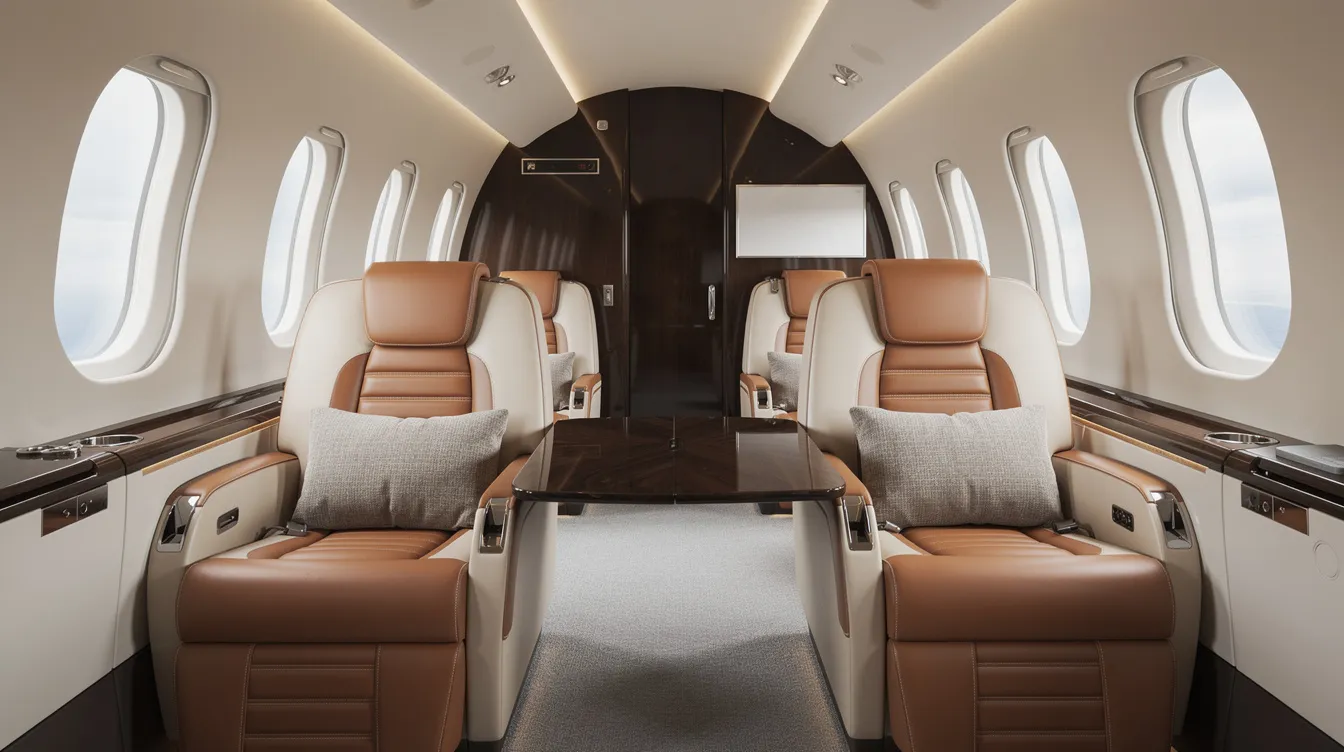
NetJets is the largest private jet operator by flight hours, with a fleet of roughly 792 aircraft - 668 in the U.S. and 124 in Europe. NetJets offers fractional ownership with substantial upfront costs and strong domestic plus international capability across Part 91K operations.
Flexjet offers fractional ownership and leasing options, with share sizes starting at 1/16th (approximately 50 hours per year). Flexjet emphasizes premium cabin interiors, short-leg waivers, and its "Red Label" service tier for clients who prioritize experience and consistency.
Vista Global operates a hybrid ecosystem through VistaJet, XO, Jet Edge, Air Hamburg, and Talon Air. VistaJet offers a subscription model instead of fractional ownership, and VistaJet guarantees access to aircraft for frequent flyers. VistaJet programs start at 50 hours per year, costing $12,000 to $18,000 per hour depending on aircraft type and route.
BlackJet Fractional Jet Ownership is positioned as a focused fractional and membership specialist for clients needing 25–150 hours per year. Its Reserve Fleet provides commercial-ownership-free, pay-as-you-go hours, while its Equity Fleet delivers true fractional ownership with aircraft management and potential tax benefits - aligning with the idea of fractional jet ownership as an investment and a structure designed to fill the gap left by providers whose minimums start at 50 hours.
For a deeper look at how BlackJet's structure compares to traditional jet cards and charters, the sections below break down cost savings and flexibility differences across models.
Vista America and other regional brands within the Vista Global family further extend the network for clients who need both domestic and intercontinental coverage, including destinations in the Middle East and Europe.
Jet cards offer prepaid access to a set number of flight hours at fixed hourly rates, without taking on aircraft ownership. They are attractive for clients flying 10–50 hours annually or those who need supplemental lift beyond a fractional share.
Wheels Up provides access to aircraft from anywhere in the world and offers jet cards starting at $100,000 for 20 hours, with strategic partnerships that align with commercial airlines for connectivity on longer itineraries. Wheels Up is U.S.-focused with a broad membership base.
Jet Linx operates through localized private terminals with a membership model and jet card structure. Its safety certifications (ARGUS Platinum Elite, Wyvern Wingman PRO, IS-BAO Stage 3) place it among the top 1% of operators globally.
XO offers instant booking for private flights at dynamic rates and provides a membership model for private jet travel through a digital-first app, giving access across a wide operator network with real-time pricing.
Jet card memberships start around $150,000 for 25 hours at many providers. Clients should check how hours are priced across light jets, midsize jets, and heavy jets, since rates vary significantly by aircraft size.
Vista Global and Flexjet integrate jet card-like offerings within broader ecosystems, giving cardholders access to both midsize and heavy jets for domestic and international flights without a full fractional commitment, while some programs also offer specific share sizes like 1/8 fractional jet ownership for around 100 hours per year.
BlackJet's Reserve Fleet model offers a contrast: instead of paying a large upfront deposit for a jet card, clients secure predictable access and hourly pricing through a structured membership backed by managed aircraft - without full ownership costs. For clients weighing their options, a side-by-side program comparison can clarify which model fits best.
On-demand jet charter means pay-per-trip booking with no long-term commitment. It works well for occasional private flyers or one-off international flights that fall outside a regular usage pattern - but costs add up quickly for frequent flights.
Vista Global is a key charter and membership group. Its brands - VistaJet, XO, Air Hamburg, Jet Edge, and Talon Air - offer global reach, especially for heavy jets and ultra-long-range aircraft on transcontinental and intercontinental routes. VistaJet pricing ranges from $12,000 to $18,000 per hour for its flagship heavy and long-range jets.
Paramount Business Jets and similar charter brokers do not own aircraft but access large charter operator networks to source the right aircraft and price for each mission. Paramount Business Jets can arrange flights with as little as 4 hours' notice, making them useful for urgent private charter needs.
Traditional operators and management companies like Solairus Aviation, Luxaviation (with ExecuJet FBOs), and Nicholas Air offer on-demand charter alongside management and membership-style products, providing both local service and broader coverage.
Charter pricing by aircraft type: light jets cost $2,000 to $3,500 per hour, midsize jets range from $4,000 to $6,000 per hour, and heavy jets can cost $7,000 to $15,000 per hour - plus extras for international handling, positioning, de-icing, and landing fees, all of which factor into fractional jet ownership financing and costs.
A serious investment in private aviation warrants obtaining multiple quotes for comparison. Always request all-in pricing rather than base-rate-only quotes to avoid surprise charges.
Once hours flown pass roughly 25–50 per year, fractional ownership or a structured membership with BlackJet often becomes more cost-effective and predictable than booking individual charter flights. The cost of fractional jet ownership typically compares favorably for regular travelers, and understanding how to sell a fractional jet ownership share later on is part of evaluating long-term flexibility.
The best jet company and aircraft choice depend heavily on your route profile. Short domestic hops require different capabilities - and different providers - than long-haul international flights across the Atlantic or to the Middle East and Asia.

For U.S. domestic and regional missions, companies like Wheels Up, Jet Linx, Nicholas Air, and regional charter operators excel. Their fleets typically emphasize turboprops, light jets, and midsize aircraft - aircraft built for efficiency on shorter legs.
Turboprops are ideal for short regional travel with lower costs, making them practical for frequent flights under 90 minutes. Very light jets are suitable for quick business trips under 3 hours.
Light jets seat 4–6 passengers for short-haul flights, while midsize jets accommodate 6–9 passengers with more cabin space for coast-to-coast or 5–6-hour legs. Super midsize jets bridge the gap between domestic comfort and international range.
Heavy jets can seat 10–16+ passengers for international flights and are essential for true intercontinental routes. Providers known for long-range missions - NetJets, Flexjet, VistaJet, XO, and Air Hamburg - bring experience with customs, overflight permits, and in-flight services tailored to long sectors. Consider international capabilities when choosing a jet company for global travel.
Aircraft categories by route length: turboprops and light jets for flights under 3 hours, midsize and super midsize jets for U.S. cross-country, and heavy jets and ultra-long-range aircraft for transatlantic and beyond. A Bombardier Challenger or similar aircraft handles most coast-to-coast domestic routes; a King Air turboprop covers regional hops efficiently.
BlackJet Fractional Jet Ownership structures fractional shares and Reserve Fleet access around a client's actual route mix - for example, 70% domestic and 30% transatlantic - to ensure the right aircraft type and pricing for each mission.
Before picking a jet company, map your typical year of travel: city pairs, frequency, and hours flown. Aircraft and company choice should always follow the mission profile, not the other way around.
Some clients consider buying an entire aircraft, then hiring an aircraft management company to operate it. This approach can make sense at scale, but it carries full capital and operational risk.
Aircraft management includes crew hiring and training, maintenance oversight, insurance, scheduling, regulatory compliance, and possibly placing the aircraft into a private charter program to offset fixed costs when the owner is not flying.
Whole ownership plus aircraft management typically makes sense for aircraft owners flying 200–300+ flight hours per year with very specific mission needs or preferences for bespoke interiors. Below that threshold, fractional ownership through providers like BlackJet, NetJets, or Flexjet is more efficient - avoiding full exposure to maintenance, depreciation risk, and crew staffing and instead relying on a structured aircraft fractional ownership sample contract to define rights and obligations.
Management companies like Solairus Aviation and Luxaviation serve family offices and corporations that already own aircraft. BlackJet's Equity Fleet approach helps clients step into ownership via fractional shares instead of buying an entire jet, with the Spirit Education Trust and similar institutional structures sometimes used for tax-efficient arrangements.
Tax and depreciation considerations are meaningful: U.S. bonus depreciation rules allow fractional share owners to treat their share as a business asset, front-loading deductions when the aircraft is used for business more than 50% of the time. Clients should coordinate closely with their tax advisors and review tax implications for fractional jet owners in addition to the financial details covered in FAA regulations and ownership guidance.
BlackJet also handles scheduling, maintenance coordination, and overall aircraft management for its fractional owners, providing the control of ownership with the simplicity of a managed solution, robust liability and insurance coverage in fractional ownership, and wholesale pricing advantages from fleet-level operations.
The most important factor in choosing the right private jet company is aligning your annual flight hours and budget with the right model. The economics shift meaningfully at specific thresholds.
Under 25 hours per year: Occasional on-demand charter is usually the most efficient option - no upfront capital, no fixed monthly fees. Cost savings over ownership models are real at this usage level.
25–50 hours per year: Jet card programs or Reserve Fleet-style membership with predictable hourly rates begin to win. Fixed pricing removes the variability of charter, and providers offer guaranteed availability that ad-hoc booking cannot match.
50–150 hours per year: Fractional ownership through companies like BlackJet delivers better economics and access guarantees. The capital commitment is offset by potential tax benefits, priority scheduling, and the ability to fly privately on your terms.
To estimate hours flown, convert your typical trips into flight time: New York to Miami is roughly 2.5 hours, Los Angeles to Dallas is about 3 hours, London to Geneva is around 1.5 hours. Add a 10–15% buffer for repositioning segments and last-minute trips.
Compare all-in costs, including hourly rates, monthly management fees, fuel surcharges, international fees, and potential tax benefits from fractional aircraft ownership. Headline rates often understate the true cost of private jet flights.
Request side-by-side proposals from multiple providers - including BlackJet Fractional Jet Ownership - showing 12-month cost projections based on your actual flight patterns, not just published hourly rates.
A well-matched program should feel predictable: consistent pricing, clear rules, and a service team that knows your preferred airports, aircraft type, and flexible scheduling patterns. High-net-worth individuals and frequent flyers benefit most from this level of personalized service, especially those attending cultural events or managing businesses across multiple cities.
Safety and regulatory compliance are non-negotiable criteria when comparing private jet companies. The largest operators are tracked by independent organizations that monitor flight hours and safety performance across the industry.
FAA classifications define how operators are regulated: Part 91 covers private owner flights, Part 91K governs fractional ownership programs, and Part 135 covers charter operations and many jet card flights. Reliable private jet operators require FAA Part 135 authorization for charter activity.
Industry data sources such as ARGUS TRAQPak track total flight hours for major fractional operators across Part 91K and Part 135, highlighting market leaders like NetJets, Flexjet, and Vista operators by volume.
Verify safety ratings through third-party audits like ARGUS or Wyvern. Standards like ARGUS Gold/Platinum, Wyvern Wingman, and IS-BAO Stage 2 or 3 indicate that an operator meets rigorous crew training, maintenance, and operational benchmarks.
Some flight hours statistics exclude off-fleet charter broker activity. Clients should understand whether a company will use its own fleet or third-party aircraft for their trips - this affects consistency, safety oversight, and the overall experience.
New aircraft tend to have better safety records and more modern avionics than aging airframes, a factor worth weighing alongside certifications.
BlackJet Fractional Jet Ownership partners exclusively with thoroughly vetted operators and managed aircraft that comply with strict safety and oversight standards, giving fractional owners and members added peace of mind.
There is no single "best" private jet company for everyone. The right choice depends on your travel patterns, annual flight hours, the balance of domestic versus international flights, and whether you value ownership benefits or prefer pure pay-as-you-go private air travel.

On-demand jet charter makes sense for very occasional use or unique one-off routes where committing to a program would be wasteful.
Jet cards are helpful for steady but modest annual hours (10–50) with a preference for fixed pricing and no capital commitment.
Fractional ownership or structured membership delivers the best mix of cost, control, and aircraft access once you pass 25–50 hours per year — especially for business travelers who need the right aircraft at the right time without managing the complexity themselves.
BlackJet Fractional Jet Ownership serves as both an expert guide and provider for high-net-worth individuals and corporations seeking a tailored fractional or membership solution. Its Reserve Fleet and Equity Fleet options are designed around 25–150 hours per year, filling a gap that many of the largest private jet providers overlook.
To take the next step, review your last 12–24 months of travel, estimate your upcoming flight hours, and schedule a consultation with BlackJet to compare scenarios against traditional jet cards and charter. A few hours of planning can save tens of thousands of dollars annually - and eliminate the guesswork from how you fly.
Ready to explore a smarter way to fly private? Visit FractionalJetOwnership.com to learn how fractional ownership and tailored membership programs can transform your travel strategy.
