May 4, 2026
This guide explores the best small aircraft available in 2026, comparing personal planes, turboprops, and light jets, and explaining access models from outright ownership to fractional jet programs. It is designed for executives, entrepreneurs, and high-net-worth travelers seeking to optimize private aviation for business or personal use.
When evaluating the best small aircraft for personal or business use, the Cirrus SR22T has been the best-selling personal aircraft every year since 2003, with over 8,000 units produced, making it one of the most popular choices among private pilots and business travelers. Similarly, the Cessna 172 Skyhawk holds the distinction of being the most produced aircraft in history, with over 44,000 units built since its introduction in 1955. Its reliability and ease of handling have made it a favorite among new pilots worldwide.
When choosing a personal aircraft, affordability is a key factor. Generally, the more affordable the aircraft, the fewer features it may offer, often due to increased maintenance costs and upkeep. Cruising speed is another critical consideration, as it significantly impacts both travel time and operational costs.
Modern small aircraft commonly feature integrated glass cockpits like the Garmin G1000, which enhance pilot situational awareness and overall flight management. Safety remains paramount; notable features such as the Cirrus Airframe Parachute System (CAPS) provide a last-resort recovery option, having successfully deployed in over 100 real-world emergencies. Additionally, advanced avionics with synthetic vision, autopilot capabilities, and envelope protection systems help prevent loss-of-control scenarios, reducing pilot workload and improving flight safety.
For those flying less than 50 hours annually, on-demand charter services and Jet Card programs offer flexible access to a variety of aircraft without the capital investment or maintenance responsibilities of ownership. These options provide a cost-effective solution for occasional flyers seeking private aviation benefits without the complexities of owning an aircraft.
Among popular personal aircraft, the Piper Archer (PA-28) is favored for its simple systems and durable design, making it an excellent choice for pilots prioritizing reliability and ease of operation.
Small aircraft now rival commercial first class in both time savings and flexibility, routinely cutting a 5–7 hour airline journey to just 2–3 hours door-to-door. But selecting the best small aircraft depends entirely on how you fly—whether you’re an owner-pilot commanding a high-performance piston, a business traveler accessing turboprops through charter, or an executive leveraging light jets via fractional jet ownership.
This guide profiles the top small planes for 2024–2026, covering real-world specs, typical use cases, and how each fits into personal ownership or access programs like BlackJet Fractional Jet Ownership. The focus is practical: helping executives, entrepreneurs, and high-net-worth travelers in the United States and global markets make informed decisions about private aviation.
Small private aircraft (from the Cirrus SR22T to the HondaJet Elite II) routinely save 4–6 hours per round trip compared with commercial airlines on 300–800 nautical miles routes.
Top picks by role: SR22T as benchmark piston, Diamond DA40 NG as fuel-efficient trainer/commuter, Pilatus PC-12 NGX and TBM 960 as leading turboprops, and Vision Jet/HondaJet/Citation M2 as standout light jets.
For professionals flying 50–150 hours per year, fractional jet ownership or a Reserve/Jet Card-style program is often more cost-effective than full aircraft ownership.
Ownership of a small aircraft is often justified when utilization exceeds 200-300 hours annually, making the total cost of ownership more economical than chartering.
BlackJet Fractional Jet Ownership offers predictable access to light jets and turboprops without the capital burden of owning—via Equity Fleet (fractional shares) or Reserve Fleet (flexible pay-as-you-go hours).
High-performance pistons, turboprops, and light jets cut total travel time by avoiding hubs, TSA lines, and layovers. With access to 5,000+ U.S. airports versus roughly 500 major commercial hubs, private aircraft users reach destinations that commercial flights simply cannot serve efficiently.
Consider a concrete example: New York–Charlotte (~450 nm) takes 5+ hours on commercial airlines, including security, boarding, and ground transport. In a Phenom 100EV or Citation M2, that same trip takes approximately 2 hours door-to-door. Dallas–Nashville (~430 nm) shows similar advantages for business travel.
Time savings of 4–6 hours per round trip on regional routes
Schedule control with 90%+ on-time performance versus airlines’ 80%
Access to secondary cities and suitable airport options closer to final destinations
Privacy for confidential discussions and in-flight productivity
Direct routing without connections or layovers
Wi-Fi and modern avionics standard on 2024–2026 models
Modern safety features include synthetic vision (reducing controlled flight into terrain incidents by 50% per FAA studies), autoland systems, and airframe parachute system CAPS technology on Cirrus aircraft.
Understanding the three main categories helps match the best small aircraft to your mission profile.
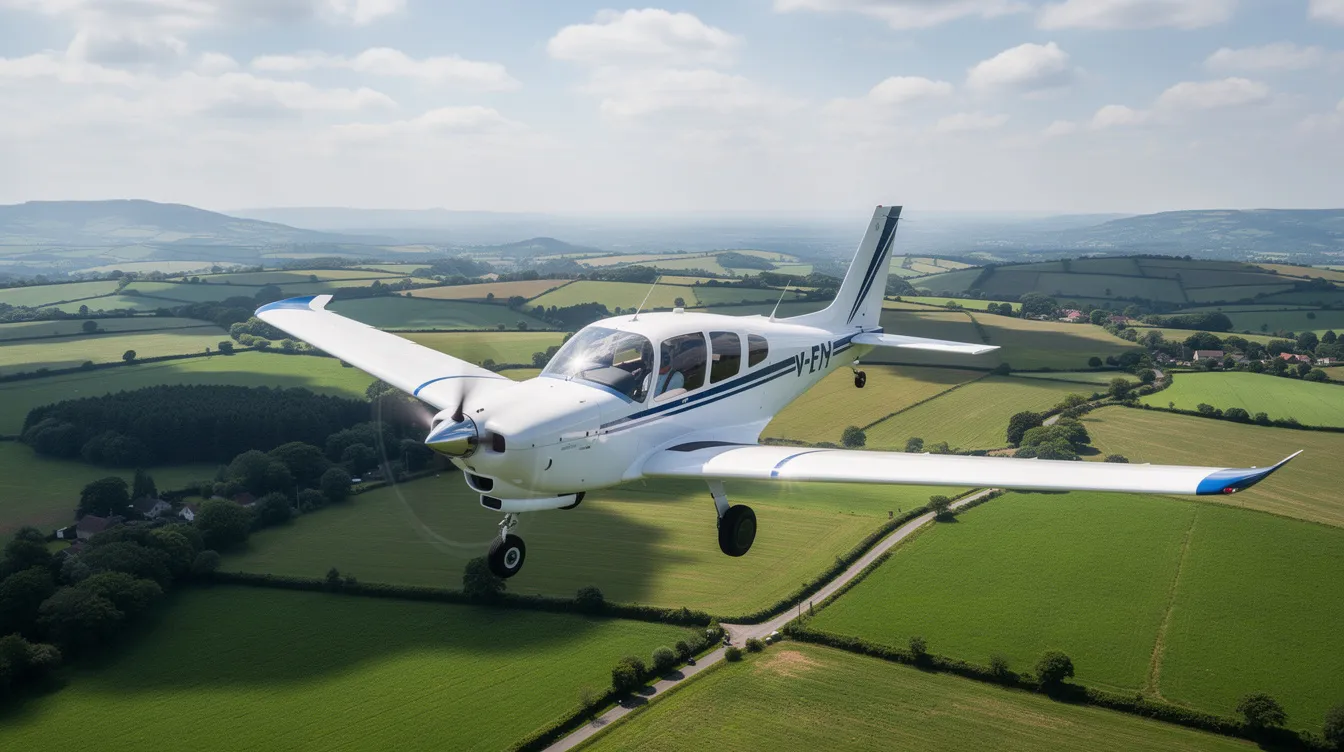
High-Performance Piston Singles (e.g., Cirrus SR22T, Cessna 182, Diamond DA40 NG):
Cruising speed: 150–210 knots true airspeed (KTAS)
Maximum range: 600–1,100 nautical miles
Passenger capacity: 2–4 occupants
Acquisition: Low to mid six figures
Best for owner-pilots on regional trips
Turboprops (Pilatus PC-12 NGX, Daher TBM 960):
Cruising speed: 260–330 KTAS
Max range: 1,400–1,800 nm
Seats: 4–9 passengers
Acquisition: ~$5–6M new
Short-field capability and cargo flexibility
VLJs and Light Jets (Cirrus Vision Jet, HondaJet Elite II, Phenom 100EV, Citation M2 Gen2):
Cruising speed: ~300–450 KTAS
Maximum range: 1,000–1,600 nm
Seats: 4–7 occupants
Acquisition: $3.3M–$7.5M new
Ideal for professionally flown operations via charter or fractional programs
Each category aligns with different usage patterns—owner-pilots typically fly pistons and turboprops, while light jets are often accessed through jet card programs or fractional ownership like BlackJet’s Equity Fleet.
This section profiles standout small aircraft across pistons, turboprops, and jets with real-world 2024–2026 specifications and typical use cases.
Selection criteria:
Safety record and advanced safety features
Mission flexibility across business and family travel
Range/speed balance for efficient performance
Cabin experience and comfort
Availability in fractional or charter fleets
These aren’t simply the fastest or cheapest options—they represent the best overall value for serious travelers.
The Cirrus SR22T has consistently been the best-selling personal aircraft each year since 2003, with over 8,000 units produced, establishing it as the standard by which other aircraft in its category are judged.
Performance: Turbocharged Continental engine, typical cruise 180–213 KTAS, max range ~1,000–1,100 nm with reserves, 4–5 seats
Safety: The Cirrus Airframe Parachute System (CAPS) has successfully deployed in over 100 real-world emergencies, saving more than 240 lives. FIKI certification and Garmin Perspective+ avionics with synthetic vision standard
Pricing: $950K–$1.1M new (2024–2026 G6/G7 models)
Operating costs: $30K–$80K annually at 150–250 hours
Ideal missions: 300–800 nm regional trips like Atlanta–Chicago or LA–Salt Lake City
The SR22T suits owner-pilots seeking the most popular personal aircraft with cutting-edge avionics and unmatched safety systems. Non-pilot executives can access similar performance via managed fleets or begin flight training as a stepping stone to jets.
The Cessna 172 Skyhawk is the most produced aircraft in history, with over 44,000 units built since its introduction in 1955. It remains in production as of 2026 as the most popular training airplane and the first personal aircraft for new pilots.
Specs: 180 hp Lycoming, cruise ~120 KTAS, 600–700 nm range, 4 seats
Design: High-wing monoplane with fixed gear monoplane configuration, forgiving flight characteristics
Pricing: $450K–$550K new; used G1000 NXi models $300K–$450K
Why it’s best: Low complexity, strong safety record, easy insurability, abundant flight schools, and support infrastructure
Cruising speed is a critical factor in the decision-making process for personal aircraft, as it can significantly affect travel time and operational costs. Cruising speed is a critical factor for personal aircraft, as it directly impacts travel time; an aircraft cruising at 140 knots covers 284 nautical miles in about 1 hour and 57 minutes, compared to 2 hours and 26 minutes at 110 knots. The Cessna 172 Skyhawk has a maximum range of approximately 600 to 700 nautical miles, depending on fuel capacity and load.
Many owners pair a Skyhawk for local flying with fractional jet access for longer flights and business travel.
The Diamond DA40 NG is known for its fuel efficiency and modern design, utilizing composite materials and a diesel engine, which allows it to burn Jet-A fuel and achieve lower emissions compared to traditional gasoline aircraft.
Specs: Cruise 145–150 KTAS, range ~900–940 nm, 4 seats, 5–6 gph at training power
Technology: Garmin G1000 NXi glass cockpit, excellent visibility, benign handling
Pricing: $520K–$650K new with strong resale value
Fuel advantage: 30–40% lower fuel costs using Jet-A ($4/gallon) versus avgas ($6/gallon)
The composite airframe reduces weight for low drag and benign stall behavior. Ideal for cross-country flights, efficient commuting with 1–3 passengers, and eco-conscious owners prioritizing fuel efficiency and reduced CO2 per mile.
An upgraded step from the 172, the Cessna 182 Skylane offers more power, load, and versatile aircraft capability for pilots who need additional payload.
Specs: 230 hp Lycoming IO-540, useful load ~1,100 lbs, 4 seats, 900+ nm max range, cruise 140–150 KTAS
Pricing: $500K–$600K new; late-model G1000 aircraft strong in the used market
Annual costs: $40K–$70K at 150 hours
Piston aircraft like the Cessna 172 and Beechcraft Bonanza have a lower purchase price and maintenance costs compared to jets, making them attractive for pilots wanting fixed landing gear simplicity with backcountry-capable performance. The Skylane suits family weekends to mountain destinations or mixed business/leisure trips across the central and western U.S.
The Texas Aircraft Colt represents modern light sport aircraft design and is considered one of the best small aircraft for sport pilot rules compliance, offering low acquisition cost and advanced avionics.
Specs: Rotax 912 ULS engine (100 hp), cruise ~110–115 KTAS, range ~800+ nm, 2 seats
Cabin: Wider than legacy Cessna 150/152 trainers with plush seating
Technology: Standard Garmin G3X Touch, optional full-aircraft ballistic parachute
Pricing: $140K–$170K new
Operating costs: 4–5 gph, $10K–$20K annually at 100 hours
Lighter aircraft typically have lower operating costs but may be sensitive to wind and turbulence. The Colt excels for recreational flying, helping new pilots build hours, and serves as a cost-effective complement for travelers who use fractional jets for longer business flights in the light sport aircraft category.
Diamond’s flagship single-engine retractable received FAA certification with U.S. deliveries ramping through 2024–2026. The Diamond DA50 RG burns Jet-A fuel and features retractable gear for high-performance efficiency.
Performance: 300 hp Continental diesel, cruise ~180–190 KTAS, 750–800+ nm range
Cabin: 5 seats with rear clamshell door, wider than SR22T
Technology: Garmin G1000 NXi with modern avionics and added safety features
Pricing: $1.3M+ new
This aircraft offers jet-like cabin volume for executives wanting upscale family and business travel within ~700 nm without turboprop complexity. It’s particularly popular in Europe and increasingly in the U.S. market.
The PC-12 series has logged millions of flight hours globally. The Pilatus PC-12 NGX is capable of operating from remote mountain strips and offers a pressurized cabin, making it the “Swiss Army knife” of general aviation.
Specs: Pratt & Whitney PT6E-67XP, cruise ~285 KTAS, range 1,700–1,800 nm
Capacity: 6–9 passengers plus a large cargo door
Pricing: $5.8M–$6M new; $150K–$250K annual costs at 400–600 hours
Capability: 2,000 ft takeoff rolls, rough-field operations
Turboprops like the Daher TBM series, including the TBM 850, and Pilatus PC-12 are more fuel-efficient than jets on short flights. Companies and families commonly access PC-12s via charter, jet card programs, or fractional ownership rather than full ownership—a natural fit for BlackJet-style fleet models.
The TBM 960 delivers near-jet top speed with turboprop economics for experienced pilots upgrading from SR22T or Baron-level aircraft.
Specs: PT6A-66D engine, cruise up to ~330 KTAS, ~1,700–1,730 nm range, FL310 ceiling
Cabin: 4–6 passengers
Technology: Garmin G3000 with autothrottle, automated engine management, HomeSafe autoland
Pricing: $5M–$5.2M new
Many non-pilot executives experience TBM performance via curated charter or membership programs, benefiting from the aircraft design without the commitment of ownership or type rating.
The Cirrus Vision Jet SF50 is the world’s first single-engine personal jet designed specifically for owner-pilots and remains the most affordable new-production certified jet at roughly $3.3M–$3.5M in 2024–2026.
Specs: Williams FJ33-5A, cruise ~300 KTAS, max range ~1,200 nm, 5 adults plus 2 children
Safety: CAPS parachute (first for jets), Safe Return autoland system, Garmin G3000 flight deck
Missions: 300–900 nm trips—Chicago–Northeast, Florida–Caribbean, West Coast regional pairs
Single-engine personal jets often feature advanced safety systems such as Emergency Autoland, making them accessible for transitioning pilots. Vision Jets increasingly appear in premium charter and fractional fleets, allowing access without full ownership responsibilities.
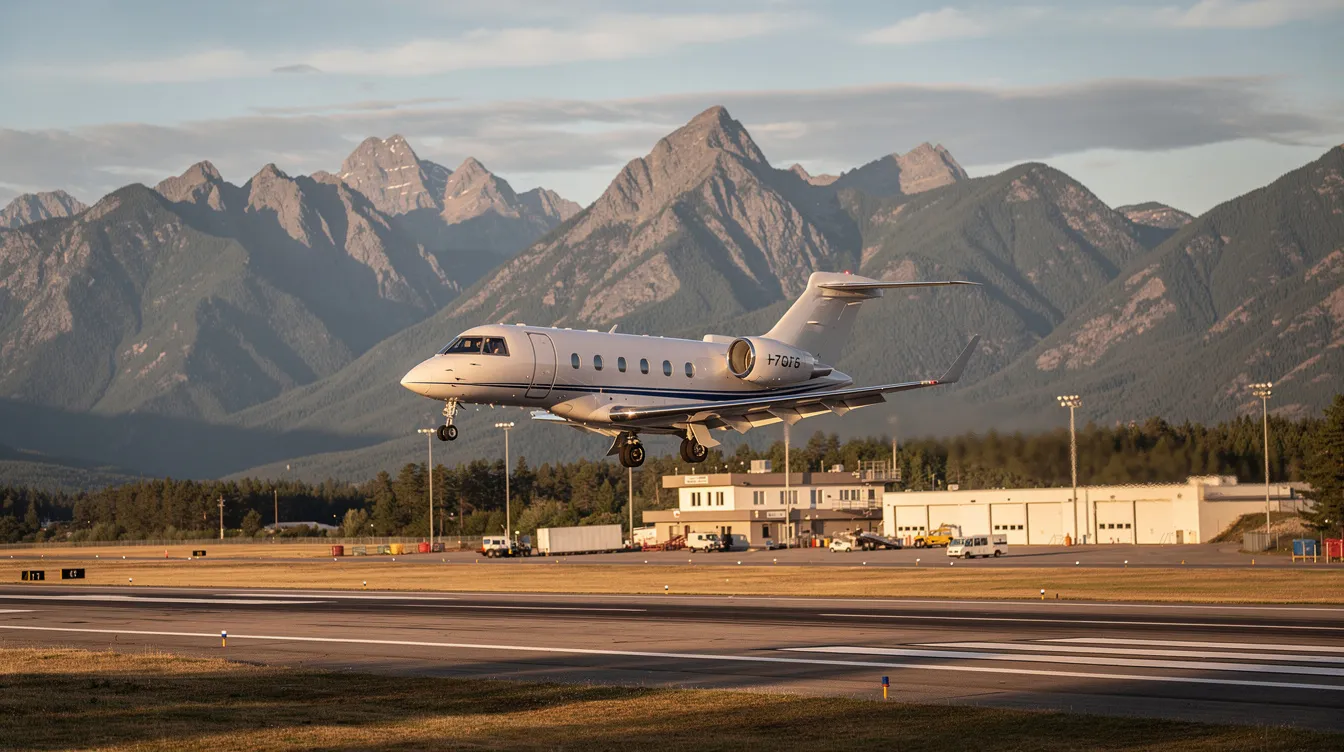
The over-the-wing engine mount (OTWEM) design gives the HondaJet Elite II a quiet cabin and efficient performance that sets it apart among light jets.
Specs: Cruise ~422 KTAS, range ~1,500+ nm, 4-seat club plus belted lavatory seat
Engines: Two GE Honda HF120 turbofans, ~110 gph at high-speed cruise
Cabin: Enclosed lavatory, Bongiovi audio, low noise levels for longer flights
Pricing: $6.9M–$7.5M new
Jet aircraft generally have high initial purchase prices and operating costs compared to piston aircraft, but the HondaJet’s efficiency makes it ideal for frequent 500–1,200 nm trips. It’s widely available in upscale charter and fractional programs, making it a logical aircraft type within BlackJet’s Equity or Reserve Fleets for those looking to own a fractional share of the HondaJet.
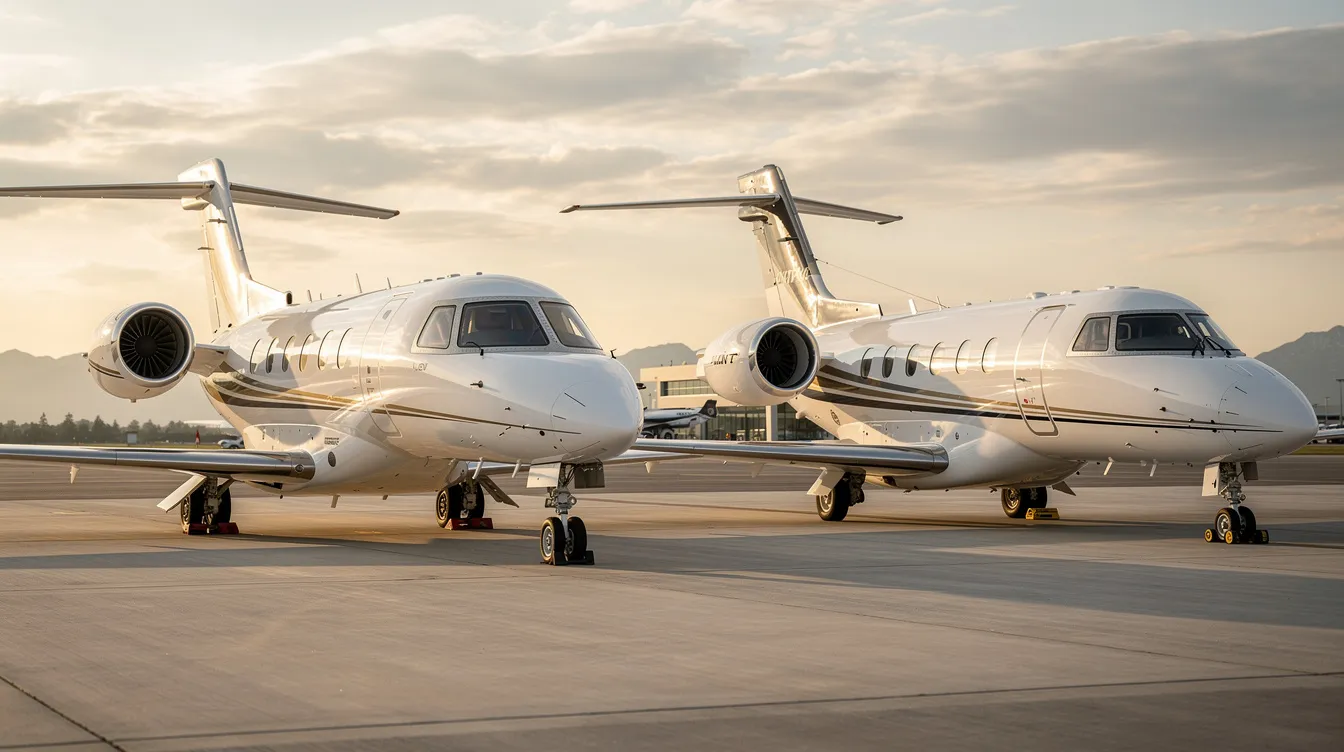
These complementary choices anchor the entry-level light jet category for corporate and private use.
Twin PW617F1-E engines, ~400 KTAS cruise, ~1,200 nm range
4–6 seats, Prodigy Touch (G3000-based) cockpit
New price: ~$4.5M–$5M
Twin FJ44-1AP-21 engines, ~404 KTAS, ~1,550 nm range
Up to 7 occupants, Garmin G3000
New price: ~$6.3M–$6.7M
Both are single-pilot certified with 99%+ dispatch reliability, making them favored choices in jet card programs for regional business. Many fractional and jet membership programs lean on these types for predictable, repeatable missions.
Aircraft selection should follow mission requirements, not the other way around. Avoid “over-airplaning”—buying more capability than needed—while ensuring the right aircraft adequately serves your flying experience requirements.
Define mission profile (typical routes, passengers, frequency)
Understand budget and ownership appetite
Prioritize safety and technology
Decide between owning and accessing via fractional or membership programs
Key factors to weigh include average leg length, peak passenger capacity, airport runway lengths, weather environment, pilot vs. professionally flown operations, and annual hours.
Start by quantifying actual trips: most common city pairs, longest expected nonstop, and weekly/monthly cadence.
250–400 nm hops with 2–3 people (Southeast U.S.): Well served by SR22T or Vision Jet, often embedded within top-tier fractional jet ownership programs
800–1,200 nm trips with 4–6 passengers: Better matched to PC-12, TBM 960, HondaJet, or M2, while super-midsize options like the Falcon 2000EX in fractional form become compelling for longer or higher-capacity missions
Runway constraints (3,500 ft strips vs. 4,500+ ft fields): May point toward turboprops over jets
Maximum range is crucial for personal aircraft owners who plan to conduct frequent cross-country flights, as it is directly linked to weight, fuel consumption, and power. List 10–20 representative trips from the past year and map them against aircraft profiles.
Purchase price is just the starting point. Total cost includes fuel, maintenance, flight training, insurance, hangar space, crew (for jets), and capital cost.
High-performance pistons: $30K–$80K at 100–200 hours
Turboprops: $150K–$250K+ at ~300 hours
Light jets: $500K+ at 300–400 hours
Under ~50 hours/year: On-demand charter typically best value
50–150 hours: Jet card or Reserve Fleet programs excel
200–300+ hours: May justify fractional or whole-aircraft ownership
For individuals or companies flying less than 50 hours per year, on-demand charter is typically more economical than ownership due to fixed costs. Charter services and Jet Card programs provide flexibility and access without capital commitment.
Fractional ownership can unlock tax benefits (potential U.S. bonus depreciation for qualifying business travel)—consult a tax professional and review tax implications for fractional jet owners.
Operator quality, pilot training, and maintenance culture matter as much as aircraft type. Modern small aircraft often include advanced avionics with synthetic vision and autopilot capabilities, enhancing situational awareness and reducing pilot workload.
Integrated glass cockpits like Garmin G1000 improve pilot situational awareness
Envelope protection features preventing loss-of-control scenarios
Autothrottle and autoland (TBM 960, Vision Jet, CJ4 Gen3)
Airframe parachutes (Cirrus aircraft)
Certified FIKI for flight into known icing
Look for ARGUS, Wyvern, or IS-BAO ratings when evaluating operators. Newer 2020–2026 aircraft feature better human-factors design, potentially justifying premium access via fractional programs, provided you also account for liability and insurance considerations in fractional ownership.
Corporate responsibility and environmental awareness increasingly influence private aviation decisions.
Diamond DA40 NG and DA50 RG (Jet-A diesel, composite airframes)
PC-12, TBM 960 (turboprop efficiency on shorter routes)
VLJs with lower fuel burn per passenger-mile
Sustainable Aviation Fuel (SAF) compatibility is expanding, and carbon offset programs are standard in premium fractional fleets. A well-utilized fractional or Reserve Fleet share can be more sustainable than owning an aircraft that flies only 50–75 hours annually.
Passenger capacity is an important consideration when choosing a personal aircraft, as many cannot accommodate full seating and luggage while still carrying adequate fuel.
Three primary access models serve different needs: outright ownership, on-demand charter, and structured solutions like fractional aircraft ownership and jet card access, which BlackJet structures through the Reserve Fleet, Equity Fleet, and Lease Program.
Under 50 hours/year: On-demand charter is typically most economical; fractional ownership vs membership program comparisons can clarify options as your flying increases
50–150 hours: Membership/Reserve Fleet programs ideal
75–150+ hours with scheduling needs: Fractional ownership is attractive, but be sure you understand essential contract terms in fractional jet ownership before committing
BlackJet Fractional Jet Ownership offers two distinct paths: Equity Fleet for true fractional ownership with priority access and potential tax advantages, and Reserve Fleet for flexible, pay-as-you-go access without ownership, all built on clearly defined fractional jet ownership terms and concepts.
When selecting a personal aircraft, it is essential to consider the balance between comfort and functionality. Think about liquidity, balance sheet impact, and whether you prefer asset ownership versus pure service access, and ensure that any option involving shared ownership is backed by a robust fractional ownership contract framework.
Ideal candidates for ownership: passionate pilots, businesses with repeat routes, or families with predictable seasonal travel flying 200–300+ hours/year.
Total schedule control and aircraft configuration
Home basing near the residence or headquarters
Potential U.S. tax benefits for qualified business use
Capital tied up and market cycle exposure
Regulatory compliance, maintenance oversight, crew management (jets)
Hybrid approaches work well: own a piston or turboprop while using BlackJet Reserve Fleet for weather-sensitive or peak-capacity jet trips, treating fractional jet ownership as a structured investment in access rather than a full-aircraft purchase. When your needs change, understanding how to sell a fractional jet ownership share ensures a smooth transition between programs or into whole-aircraft ownership. The Piper Cherokee (PA-28) is favored for its simple systems and durable design among other aircraft for training and personal ownership.
Fractional jet ownership and jet membership represent the “smart middle ground” between ad-hoc charter and full ownership.
Guaranteed aircraft availability
Standardized cabin and service standards
Fixed or predictable hourly rates
No direct maintenance or crew management
BlackJet’s Equity Fleet offers fractional aircraft ownership with customizable sourcing and tax planning support. The Reserve Fleet provides pay-as-you-go access with predictable hourly pricing and availability commitments—no capital investment required, while tools that break down the total cost of fractional jet ownership help align these options with your budget.
Affordability is a key factor in choosing a personal aircraft, as the more affordable the option, the fewer features available. Guides that explain the full cost of fractional jet ownership show how fractional access often delivers the perfect aircraft experience without ownership burdens.
Frequent travelers should evaluate cabin comfort, noise, and connectivity as carefully as speed and range.
Category | Headroom | Lavatory | Noise Level | Seats |
|---|---|---|---|---|
Pistons (SR22T, DA40) | Limited | None | Moderate | 2–4 |
Turboprops (PC-12, TBM) | Good | Optional/Yes | Low-Moderate | 4–9 |
Light Jets (Vision, HondaJet, Phenom, M2) | Good | Enclosed | Low | 4–7 |
Seat design and plush seating options
Noise levels (HondaJet advantage with OTWEM design)
Cabin altitude at cruise
Wi-Fi/inflight connectivity
USB/110V power for productivity
Passenger capacity is an important consideration when choosing a personal aircraft, as many cannot accommodate full seating and luggage while carrying adequate fuel. Align aircraft selection with expected onboard activity—presentations, confidential discussions, or family relaxation.
Evaluate the availability of in-flight Wi-Fi, advanced avionics, and power outlets to ensure productivity and comfort during travel.
A same-day out-and-back for a 3–4 person executive team with morning and afternoon meetings.
Aircraft | Flight Time | Lavatory | Door-to-Door Savings |
|---|---|---|---|
SR22T | ~3.5–4 hours | No | 2–3 hours vs. airline |
Phenom 100EV | ~1.7 hours | Yes | 4–6 hours vs. airline |
Citation M2 | ~1.6 hours | Yes | 4–6 hours vs. airline |
A fractional share or jet membership focused on light jets reliably supports this recurring mission, eliminating red-eye flights and reclaiming productive hours.
Houston–Austin–Midland routing with 3–5 passengers and time-sensitive meetings.
A turboprop like the TBM 960 or PC-12 excels here: short-field performance, quick turnarounds at smaller airports, and a comfortable cabin for onboard briefings. The Cessna 206 Turbo Stationair HD can carry nearly 1,600 lbs of useful load for similar utility missions.
Reserving through a Reserve Fleet or fractional program with dedicated flight plan support eliminates operational complexity. Such multi-stop days are impossible on commercial schedules without overnight stays.

Whether you own or use fractional/charter, effective trip planning preserves safety, budget discipline, and productivity.
Aircraft selection based on payload vs. range trade-offs
Fuel stops and weather considerations
Airport access and FBO selection
Ground transport coordination
Modern avionics and service platforms simplify this for fractional clients. BlackJet Fractional Jet Ownership provides dedicated scheduling teams and standardized operating procedures for a consistent experience, trip-to-trip, whether you’re based in national hubs or regional centers like Atlanta-focused fractional jet programs.
The Cirrus Vision Jet remains the least expensive new-production certified jet (~$3.3M–$3.5M) for 2024–2026. Used VLJs like older Phenom 100s or Citation Mustangs occasionally appear under $2M but may require costly retrofits.
For flyers under ~150 hours/year, buying a fractional share or using a jet membership like BlackJet’s Reserve Fleet can be more economical than outright ownership. Consider total cost, including flight training, insurance, and hangar space—not just acquisition price.
Most VLJs and light jets (Vision Jet, HondaJet, Phenom 100, Citation M2) aren’t intended for routine nonstop transatlantic flights due to limited range (~1,200–1,600 nm).
Ferry routes with multiple fuel stops exist, but aren’t practical for passenger travel. Transatlantic missions require midsize or super-midsize jets with 3,000+ nm range, typically accessed via charter. Keep fractional shares focused on North American missions.
Simple guidelines
Under 50 hours/year: On-demand charter
50–150 hours: Jet cards or Reserve Fleet
75–150+ hours with scheduling needs: Fractional ownership
200–300+: May justify whole-aircraft ownership
Corporate users should factor tax treatment, internal cost-of-capital, and balance sheet effects. BlackJet advisors can run comparative scenarios or reference fractional jet ownership financing guides to understand how leverage and terms affect total cost. Revisit this analysis annually as travel patterns evolve.
Notable aircraft for consideration include the Tecnam P2010, which blends Italian design with carbon-fiber construction and advanced avionics, and the Mooney M20V Acclaim Ultra, recognized as the fastest certified piston single in production with a cruise speed of 242 KTAS. The CubCrafters XCub is designed for rugged backcountry adventures with extreme STOL capabilities for those seeking fly solo adventures in remote terrain, while travelers flying around 100 hours annually might find that a 1/8 fractional jet ownership structure balances cost and access better than owning outright.
Major airlines have outstanding safety records, but professionally operated small jets and turboprops under Part 135/91K with a strong oversight approach similar to that of the major airlines.
Risk correlates more with operator standards, pilot experience, and maintenance than with aircraft size. Look for ARGUS/Wyvern/IS-BAO ratings, experienced professionally trained pilots and crews on jets, modern avionics, recurrent training, and SMS programs.
Fractional and premium jet membership providers like BlackJet prioritize standardized safety protocols across fleets.
Most serious jet card and fractional providers guarantee aircraft within 12–24 hours’ notice, sometimes faster in major markets. Reserve-style programs often allow same-day departures when booking early, especially when they leverage flexible, floating fleet structures to position aircraft efficiently.
Compare this to commercial airline constraints: limited schedules, sold-out first-class cabins, and missed-connection risks. Evaluate SLAs and blackout policies before committing to any program.
The best small aircraft is the one matching your mission profile, budget, safety expectations, and desired involvement as a pilot or passenger. Options span from owning pistons like the Cirrus SR22T or Diamond DA40 NG, to leveraging turboprops and light jets via fractional jet ownership, to fully flexible jet membership programs.
The cruising speed of high-performance piston singles typically ranges from 150 to 210 knots true airspeed (KTAS), while maximum range for personal aircraft varies significantly—many high-performance pistons offer ranges between 900 and 1,100 nautical miles. Match these capabilities to your actual travel needs.
Treat aircraft selection and access model as a strategic business decision, not just a lifestyle choice, given the impact on productivity and operational efficiency. Whether you need low operating costs for local flying or premium cabin experiences for long-distance travel, the right aircraft exists—often accessible without full ownership burdens.
Ready to explore the smarter way to fly private? Visit FractionalJetOwnership.com to request a personalized analysis of your travel patterns and explore BlackJet’s Equity Fleet and Reserve Fleet options.
