June 16, 2026
Buying a jet is one of the most consequential financial decisions a business owner or high-net-worth individual will make. In today's market, where pre-owned jets hold elevated values and annual operating costs continue to climb, the calculus of private jet ownership demands more than enthusiasm—it demands precision. This step-by-step guide walks through every dimension of the decision: aircraft categories, true cost of ownership, legal requirements, and the increasingly popular alternative of fractional ownership.
Buying a jet typically makes financial sense only above approximately 200–250 flight hours per year. Below that threshold, fractional jet ownership and membership programs deliver more cost-effective access for most frequent travelers.
Mission profile—defined by typical routes, passenger capacity, and airport access—matters more than brand prestige when choosing between very light jets, light jets, midsize models, and large jets with a large cabin.
Over an 8–10-year ownership horizon, ongoing costs such as crew salaries, hangar rental, insurance, routine maintenance, and management frequently exceed the initial purchase price.
Fractional aircraft ownership through BlackJet Fractional Jet Ownership provides predictable access to aircraft like the Cessna Citation and Bombardier Challenger families without the burdens of full ownership.
Engaging an experienced broker, aviation attorney, and tax advisor is non-optional for due diligence, legal compliance, and maximizing tax benefits on any private jet purchase.
In 2026, prospective buyers must weigh full private jet ownership against fractional jet ownership, jet cards, memberships, and on-demand charter before committing millions in capital. Each model carries different risk, flexibility, and cost profiles—and the right answer depends entirely on how the aircraft will actually be used.
Ownership tends to become financially justifiable once a private owner consistently exceeds roughly 200–250 flight hours per year. Below that range, the fixed costs of ownership—crew, insurance, hangar, management—spread across too few hours, inflating the per-hour cost far above what fractional programs or charter would charge. Chartering is often cheaper for those flying under 200 hours annually because it avoids fixed costs like crew salaries and hangar fees. Additionally, charter flights can be arranged within hours, unlike ownership, providing unmatched flexibility to choose different aircraft types per trip.
For many aircraft owners flying fewer hours, the math simply does not work. BlackJet Fractional Jet Ownership is designed for clients flying 25–150 hours per year: enough to justify predictable, priority access but not enough to absorb the overhead of sole ownership. This is the target audience where partial ownership or reserve fleet membership delivers the greatest efficiency.
Consider a U.S.-based executive team flying from New York to Dallas monthly (roughly four flight hours round-trip) plus four quarterly international missions (about ten hours each). That totals approximately 88 flight hours per year. At that volume, a midsize jet's fixed costs alone would exceed $600,000 annually, making fractional aircraft ownership significantly more capital-efficient while still meeting every mission.
That said, lifestyle preferences can still tip the scales. Full ownership offers complete control over scheduling, the ability to depart from smaller airports on your own schedule, and maximum privacy during private travel. These intangible benefits can justify ownership or larger fractional shares even when the cost comparisons are close.
Before evaluating specific aircraft options, every prospective buyer should define their mission profile. This means answering four questions: Where do you fly? How often? With how many passengers? And from which airports?
Passenger capacity is a major decision driver. Very light jets typically seat 4–6 passengers and start at around USD $1.5M–$2M, serving owner-pilots and very small groups on short-range missions—a niche but attractive option for regional flexibility. Light jets typically seat 4–8 passengers in compact cabins suited for regional trips. Large private jets can carry up to 18 passengers across multiple cabin zones—separate areas for work, meetings, and rest—enabling passengers to maintain productivity throughout long flights.
Route length directly influences the aircraft category required. Midsize jets have a range of 2,000–3,500 nautical miles, ideal for coast-to-coast U.S. flights, while large jets with large cabins and ultra-long-range models serve transoceanic missions. Matching range to routes avoids costly fuel stops and scheduling delays.
Airport access is another key consideration. Private jets can access around 10 times more airports than commercial airlines, including many smaller airfields. Many light jets and some super-midsize types operate from shorter runways at smaller airports, cutting ground transportation time and improving schedule flexibility. For executives shuttling between secondary business hubs, this advantage can save hours per trip.
Comfort and productivity factors matter, especially for those using a private plane as a flying office. Cabin altitude, noise levels, Wi-Fi connectivity, and baggage space all affect fatigue and output. Newer aircraft equipped with advanced technology—better pressurization, sound insulation, and satellite internet—deliver measurably better experiences on longer sectors.
Finally, resale value deserves attention. Popular models from manufacturers with strong support networks—Cessna's Citation series, Bombardier's Challenger line, and the Dassault Falcon family—tend to depreciate more slowly. A deep understanding of the secondary market helps buyers protect their investment over time.
Choosing the right aircraft category is where mission profile meets budget. Here is how the major categories compare for buyers evaluating different aircraft in the U.S. and global markets.
Very light jets such as the Cirrus Vision SF50 or HondaJet Elite II seat 4–6 passengers with ranges around 1,000 nautical miles and entry prices starting near $1.5 million.
Light jets like the Cessna Citation CJ3/CJ4 and Embraer Phenom 300 seat 4–8 passengers with approximately 1,500–2,200 nautical miles of range. They represent the entry point for jet ownership and are widely available in fractional programs.
Midsize and super-midsize jets such as the Citation Latitude, Bombardier Challenger 300/350, and Praetor 600 offer stand-up cabins, coast-to-coast U.S. range, and 7–10 passenger capacity. For many businesses, this category hits the sweet spot of cabin configuration, range, and operating cost.
Large jets and long-range models like the Bombardier Challenger 605, Dassault Falcon 2000/7X, and Gulfstream G450 feature large cabin layouts with transoceanic range and 10–18-seat configurations, configured for intercontinental missions.
Luxury private jets often cost between $50 million and $70 million, with flagship models like the new Gulfstream G700 priced around $80 million.
Approximate 2026 operating costs per flight hour:
Category | Direct Operating Cost (Owner) | Typical Charter Rate |
|---|---|---|
Very light jets | $1,200–$2,000/hr | $2,500–$4,000/hr |
Light jets | $1,900–$2,500/hr | $3,000–$5,500/hr |
Midsize jets | $3,000–$5,000/hr | $4,500–$9,500/hr |
Large cabin / ULR jets | $4,500–$7,000+/hr | $8,000–$20,000+/hr |
Moving up a category multiplies both purchase price and ongoing expenses significantly.
The initial purchase price is only the beginning. Buyers must plan for both fixed and variable costs over at least a 5–10-year horizon to understand the true cost of ownership.
2026 acquisition price bands:
Very light jets: starting around $1.5–$2 million
Pre-owned light jets (older Cessna Citation models): approximately $2–3 million
Midsize and large jets (Bombardier Challenger 300/605): $10–25 million
New luxury private jets: $50–70+ million, with the Gulfstream G700 near $80 million
Among private jets for sale in the pre-owned market, condition, total flight hours, avionics upgrades, and the aircraft's maintenance history heavily influence pricing.
Fixed annual costs include crew salaries (typically two pilots, ranging from $300,000 to $600,000 annually), hangar rental, insurance premiums, routine maintenance (which can range from $50,000 to $200,000 annually), and management fees. For light jet owners, these run $300,000–$500,000 per year. For midsize and large jets, expect $800,000 to well over $1 million annually—before flying a single hour.
Variable costs per flight hour encompass fuel ($5.00–$8.50 per gallon at U.S. FBOs in 2026), maintenance reserves, landing and handling fees, and catering. Operating costs can exceed the initial purchase price over time.
Down payments for private jets typically range from 15% to 25% of the aircraft's value.
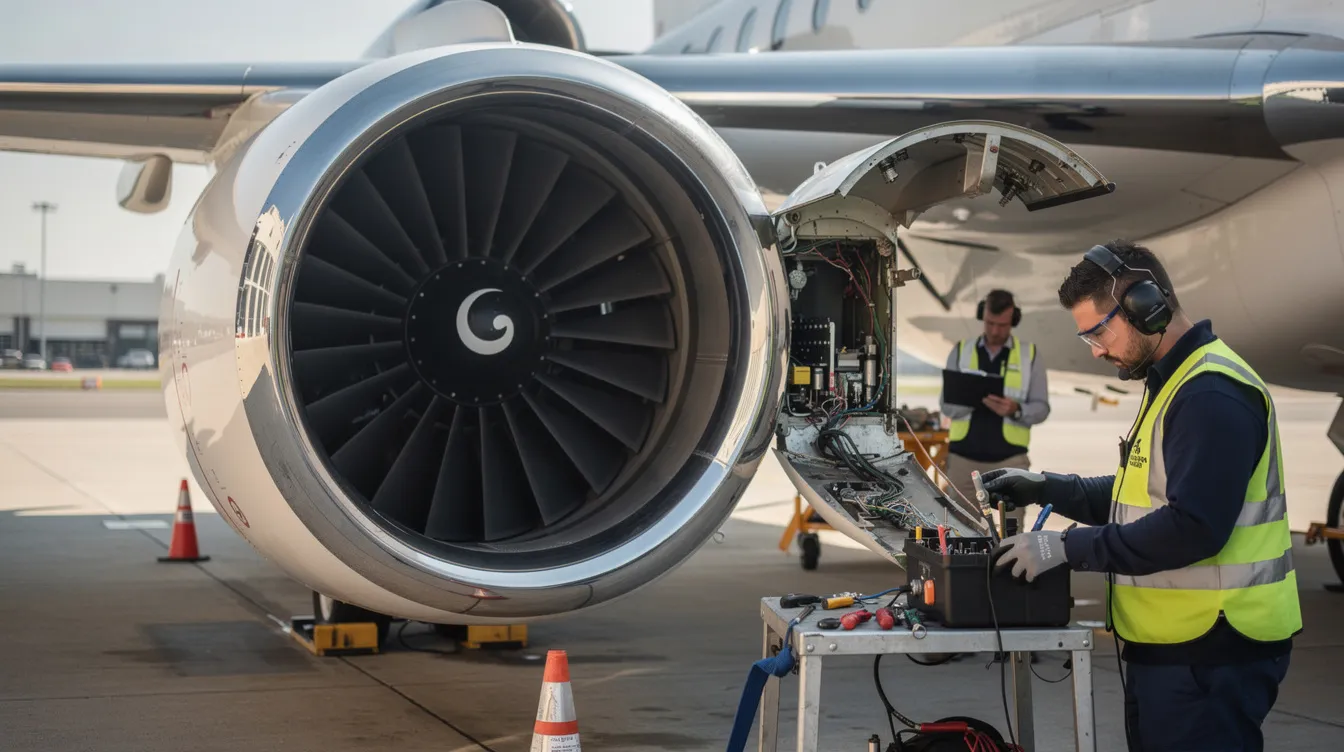
Many private jet owners protect resale value and smooth costs through hourly maintenance programs. When owners enroll engines in programs like those offered by Pratt & Whitney or Rolls-Royce—ensuring engines receive coverage for scheduled and unscheduled events—they reduce financial surprises. Similar programs exist for auxiliary power units (APUs) and airframes. These matters especially for upcoming maintenance events that can run into six- or seven-figure territory on older jets.
Compared to these ownership figures, fractional jet ownership or BlackJet's Reserve Fleet membership—where clients pay predictable monthly fees plus occupied hourly rates—often eliminates seven-figure annual overhead entirely.
Modern private aviation offers several ways to access a private jet, from whole-aircraft ownership to fractional shares and pay-as-you-go membership structures. Understanding fractional jet ownership as a cost-effective alternative is essential when weighing these paths.
Full ownership gives a private owner maximum control—aircraft selection, crew hiring, cabin customization, and the freedom to fly on their own schedule with no blackout dates. However, it also means shouldering all fixed costs, variable costs, crew management, and regulatory responsibilities. Annual ownership costs can exceed $1 million. Some owners offset ongoing costs by chartering the aircraft under Part 135 when not in personal use, though this introduces additional complexity.
Fractional ownership involves purchasing a share (commonly 1/16 or 1/8) of a specific aircraft type, translating into a defined block of flight hours per year. For those new to the space, a fractional jet ownership glossary of essential terms can make program documents much easier to interpret. The management company handles operations entirely. Cost volatility in fractional programs tends to be lower than full ownership (±8–15% versus ±10–18% annual swings), providing financial predictability.
BlackJet's Equity Fleet model structures fractional shares with key advantages: tax benefits (including potential bonus depreciation), priority access to specific aircraft categories, and tailored sourcing of popular models like the Cessna Citation or Bombardier Challenger families based on client missions.
BlackJet's Reserve Fleet offers membership-style access without taking title. Clients pay for flight hours as needed across light jets, midsize jets, and large jets—ideal for those whose annual travel fluctuates and who are comparing fractional jet ownership vs. membership programs.
How do these compare to jet cards and ad hoc charter? Jet cards for super-midsize aircraft run $11,000–$13,500 per hour in 2026, with less scheduling priority and no ownership equity. Charter provides ultimate flexibility but the highest per-hour cost. For those flying 75–150 hours per year, fractional ownership typically emerges as the most cost-effective path, balancing access, predictability, and financial efficiency; understanding the complete cost of fractional jet ownership helps validate that conclusion.
This section serves as a practical roadmap covering approximately 60–120 days from initial research to first flight after closing—a step-by-step guide for anyone seriously evaluating a private jet purchase.
Phase 1: Research and requirements (Weeks 1–3). Define your mission profile, set a realistic budget including operating costs, and shortlist aircraft categories. Determine whether very light jets, light jets, midsize, or large jets best match your routes and passenger needs. Review maintenance records and market pricing for specific models.
Phase 2: Broker engagement (Weeks 3–6). An experienced aircraft broker identifies both on-market and off-market options. They compare total flight hours, damage history, upgrade status (including ADS-B Out compliance, WAAS/LPV approaches, and cabin connectivity), and overall condition. When evaluating shared-access solutions, the same rigor should be applied to essential contract terms in fractional jet ownership. A broker's market intelligence is critical for identifying private jets for sale that match both performance requirements and budget.
Phase 3: Pre-purchase inspection (Weeks 6–10). A thorough pre-purchase inspection—conducted by an independent maintenance facility—covers airframe, engines, avionics, and a full logbook review. The pre-purchase inspection findings feed directly into price negotiation. Any discrepancies in the aircraft's maintenance history or damage history are flagged here. Buyers should also verify ADS-B compliance and MSP Gold or equivalent maintenance program enrollment status. Pre-purchase inspections usually take 3 to 5 days to complete.
Phase 4: Legal and closing (Weeks 10–14). An aviation attorney structures the letter of intent, purchase agreement, escrow, and closing documents. For shared aircraft, reviewing an aircraft fractional ownership sample contract highlights how rights and obligations are typically allocated among co-owners. Title searches confirm clear ownership and identify any liens, ensuring a smooth transaction. Most private jet transactions require a thorough title search before closing.
Phase 5: Post-closing. Register the aircraft with the applicable civil aviation authority (FAA in the United States), bind insurance, hire crew or engage a management company, and complete initial training. Many owners choose professional aircraft management to handle scheduling, crew oversight, and aviation regulations compliance from day one.
High-value aircraft transactions involve complex legal, tax, and regulatory frameworks. Missteps here can cost hundreds of thousands of dollars or create serious liability exposure.
An aviation attorney is essential for drafting purchase contracts, addressing risk allocation, and ensuring compliance with FAA regulations. Buyers should also conduct a thorough title search through specialized aviation title and escrow companies to confirm that no outstanding liens or encumbrances exist.
Key tax considerations include, and become even more nuanced when evaluating tax implications for fractional jet owners:
Sales and use tax exposure, which varies significantly by U.S. state; sales tax exemptions may be available for aircraft purchases.
Bonus depreciation: as of mid-2025, 100% bonus depreciation has returned for qualifying business aircraft under current IRS guidelines.
Operational structure: whether the aircraft is held personally, through an LLC, or via a trust impacts both liability protection and tax treatment.
Tax deductions may apply for business use of jets, and depreciation can reduce taxable income for jet owners.
Tax implications vary based on aircraft usage and ownership structure. Consulting tax professionals can optimize jet ownership benefits.
Operationally, buyers must understand the distinction between Part 91 (private, noncommercial use) and Part 135 (commercial charter). Flying under Part 91 offers flexibility, while Part 135 imposes stricter maintenance, crew duty, and safety management requirements. In fractional arrangements, essential liability and insurance coverage must be coordinated with these operational frameworks. Choosing to charter the aircraft out changes regulatory obligations substantially.
International buyers and cross-border operations face additional complexity: export/import rules, customs duties, VAT, overflight permits, and compliance with foreign aviation regulations all require professional management.
The capital outlay and complexity of whole-aircraft ownership push many frequent travelers toward fractional programs. For individuals or companies flying roughly 25–150 hours per year, fractional jet ownership offers guaranteed availability and consistent aircraft quality without the burden of being an operator, provided they fully understand the total cost of fractional jet ownership.
BlackJet Fractional Jet Ownership structures its Equity Fleet to deliver predictable access, priority scheduling, and potential tax benefits. Prospective clients can evaluate fractional jet ownership financing, costs, and benefits to determine the right share size and capital structure. BlackJet manages crew, maintenance, and regulatory compliance, freeing clients to focus on their business rather than aircraft operations.
The Reserve Fleet model serves members who prefer flexibility without taking equity positions—accessing different aircraft from very light jets for regional hops to large jets for longer missions, paying only for hours flown.
Scenario comparison: Company A buys a pre-owned Dassault Falcon or Bombardier Challenger outright for $15 million, then spends $1.2–1.5 million annually on fixed costs at 100 hours per year. Company B takes a 1/8 fractional jet ownership share through BlackJet, investing roughly $1.2 million in equity with predictable monthly and hourly fees. Over five years, Company B preserves significantly more capital while meeting identical travel needs—and avoids the operational burden that many owners underestimate.
For many high-net-worth individuals and corporations, fractional aircraft ownership is the smarter way to access private aviation because it aligns cost, usage, and convenience more effectively than sole ownership. It avoids the scenario where a private plane sits idle for weeks, consuming hangar fees and insurance premiums without generating value, and it also preserves flexibility when it comes time to sell a fractional jet ownership share.
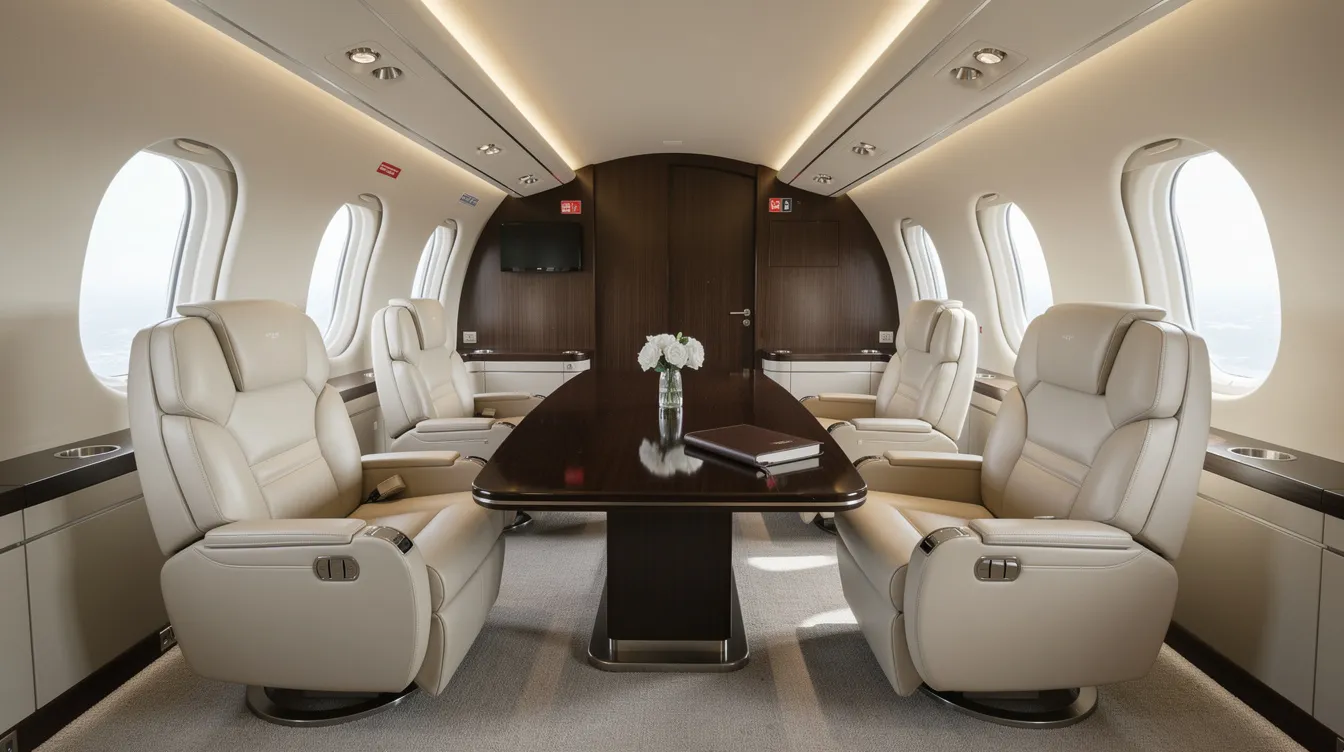
Beyond range and cost, cabin experience drives satisfaction—especially on long sectors where productivity and rest determine whether private travel delivers its full return.
Luxury private jets like the Bombardier Challenger 605 or Dassault Falcon 7X can be configured with club seating, conference tables, lie-flat beds, and dedicated quiet zones. The cabin configuration transforms based on mission: a four-hour domestic flight may prioritize meeting space, while an overnight transatlantic sector calls for sleeping berths and reduced lighting.
Modern connectivity expectations have evolved rapidly. Aviation technology like Starlink satellite internet now allows passengers to videoconference, access cloud applications, and stream content throughout the flight—erasing the productivity penalty that once came with time aloft.
Design trade-offs matter too. Larger galleys and lavatories reduce available seating while maximizing baggage space, benefiting passengers on ski trips or extended international travel. Every square foot involves compromise.
Fractional and membership clients of BlackJet still enjoy customized cabin experiences tailored to their typical missions, even without owning 100% of the aircraft. A well-chosen cabin layout can turn every flight hour into productive or restorative time, strengthening the business case for choosing private aviation over scheduled airlines.
Some readers exploring buying a jet may ultimately find that flexible access solutions better match their travel and financial profile. That conclusion is not a failure—it is smart capital allocation.
On-demand charter provides access to a full spectrum of aircraft—from very light jets to large-cabin intercontinental types—paying only for flight hours on each trip. Charter rates in 2026 range from $3,000/hr for light jets to $20,000+/hr for ultra-long-range platforms. It works best for those flying under 30–50 hours per year or needing occasional access to aircraft categories outside their primary type.
Empty leg flights are repositioning segments offered at 30–60% below standard rates. They suit opportunistic travelers with flexible schedules who do not require guaranteed availability.
Hybrid strategies offer the most sophisticated approach. A client maintains a fractional share with BlackJet for core, predictable travel—such as executive shuttles between headquarters and regional offices—and supplements with ad-hoc charter for irregular or overflow trips. Over a 10-year projection, this hybrid model frequently outperforms full ownership at equivalent flight hour levels by avoiding the carrying cost of an underutilized asset.
The right solution is often a blend, optimized around unique flight patterns, cash-flow preferences, and the desire for operational simplicity. What matters is matching the model to actual usage rather than aspirational usage.
Buying a jet—whether outright or through a fractional share—is a major decision where expert guidance protects capital and ensures the solution fits long-term needs.
BlackJet Fractional Jet Ownership begins with an initial consultation, analyzing recent and projected travel data—routes, passenger counts, flight hours—to recommend the optimal mix of Equity Fleet shares and Reserve Fleet membership. BlackJet assists with aircraft selection across very light jets, light jets, midsize, and large jets, comparing popular models like the Cessna Citation and Bombardier Challenger families against each client's mission requirements.
For corporate clients, BlackJet coordinates with existing tax and legal advisors to align ownership structures with business objectives and aviation regulations.
Ready to explore the smarter way to fly private? Visit FractionalJetOwnership.com to explore programs, request a tailored proposal, or schedule a one-on-one advisory call.

For many buyers in 2026, whole-aircraft ownership tends to make financial sense above roughly 200–250 flight hours per year, depending on jet size and financing. Between about 25 and 150 flight hours per year, fractional jet ownership or membership programs like BlackJet's Equity and Reserve Fleet models typically deliver better value with less operational complexity. Before deciding, analyze at least 12–24 months of historical and projected travel to estimate your true annual flight hour requirement.
Super-midsize and midsize jets—such as the Bombardier Challenger 350 or Cessna Citation Latitude—are often ideal for nonstop U.S. coast-to-coast routes carrying 6–9 passengers. Light jets may require fuel stops on longer legs, while large jets provide extra comfort and range at significantly higher operating costs. Prioritize nonstop capability, passenger capacity, and cabin comfort over brand alone when selecting an aircraft category.
Some owners place their aircraft under Part 135 commercial management to generate charter revenue that offsets a portion of fixed costs. However, higher utilization adds wear, ongoing expenses, and stricter regulatory oversight. Charter revenue rarely turns the aircraft into a profit center after all expenses are accounted for. Consult both an aviation attorney and an experienced management company to model realistic net cost impacts before pursuing this strategy.
A typical timeline from initial search to closing and first operational flight ranges from 60 to 120 days, assuming financing and inspections proceed smoothly. This breaks down into market research, aircraft selection, pre-purchase inspection, legal negotiation, and closing with registration. Fractional programs and memberships with providers like BlackJet can often be established faster, giving clients access to aircraft within days or weeks.
Changing missions—such as opening new international offices or scaling a team—may require a shift to a different aircraft category or adjusted flight hour commitments. Whole-aircraft owners must navigate the resale market and potential depreciation on a new aircraft sale. Fractional jet ownership programs often provide defined pathways to adjust share sizes or aircraft types with less friction. Discuss future growth or downsizing scenarios with BlackJet during initial planning so the chosen structure remains flexible over a 5–10-year horizon.
Buying a jet is a significant investment that requires careful evaluation of your travel needs, budget, and long-term goals. While full ownership offers unparalleled control and privacy, it comes with substantial fixed and variable costs that often exceed the initial purchase price over time. For most travelers flying under 200–250 hours annually, fractional jet ownership or membership programs like BlackJet Fractional Jet Ownership provide a more cost-effective, flexible, and hassle-free way to enjoy private aviation.
By clearly defining your mission profile—considering passenger capacity, typical routes, and airport access—you can select the right aircraft category, from very light jets to large-cabin aircraft, that aligns with your lifestyle and business demands. Engaging experienced brokers, aviation attorneys, and tax advisors ensures a smooth purchase process and maximizes the financial benefits of ownership.
Whether you choose full ownership, fractional shares, or flexible membership programs, BlackJet Fractional Jet Ownership stands ready to guide you through the complexities of private aviation. Explore smarter paths to private jet access and discover how fractional ownership can transform your travel experience.
Ready to explore the smarter way to fly private? Visit FractionalJetOwnership.com to learn more and schedule a consultation.
