
May 4, 2026
The private aviation industry has grown significantly in recent years, driven by the need for secure, efficient, and convenient travel. This guide is for business and leisure travelers considering private aviation options. A charter airline company operates aircraft on a non-scheduled basis, allowing for customized itineraries and schedules. We cover how charter airline companies operate, compare them to fractional jet ownership, and explain how BlackJet can meet your private aviation needs. For travelers weighing options between commercial flights and private access, understanding how a charter airline company operates—and when to transition beyond one—can unlock substantial time savings and flexibility. To learn more about how charter airline companies work and how BlackJet Fractional Jet Ownership can meet your needs, explore our services.
A charter airline company operates aircraft on a non-scheduled basis, allowing for customized itineraries and schedules that commercial carriers simply cannot match. Private aviation elevates air travel by offering unparalleled flexibility, convenience, and accessibility, enabling travelers to create their own itineraries and travel on their own schedule. When considering a charter airline company, travelers have the choice to select from a range of aircraft, services, and providers, ensuring their air travel experience is tailored to their specific needs. Charter services are advantageous for corporate travel, emergency transport, or high-priority travel where speed and reliability are essential.
Feature | Charter Flights | Commercial Flights |
|---|---|---|
Schedule | On-demand schedules with departures often within hours | Fixed schedules |
Airport Access | Access to over 5,000 airports in the US | About 500 are used by commercial airlines |
Route Flexibility | Tailored routes to smaller regional destinations | Limited to major hubs and set routes |
Layovers | Typically, they do not have layovers, minimizing the risk of missed connections and delays. | Often require layovers and connections |
Privacy | Enhanced privacy; passengers control the passenger list | Shared with the public |
Charter flights deliver a comfortable and seamless experience, with private charter and private flights providing the freedom to travel on your own terms. Booking is easy, and the process is designed to be straightforward and accessible. Passengers enjoy a luxurious travel experience, often featuring high-end amenities such as gourmet catering, reclining leather seats, and personalized service not available on commercial flights.
Private jet costs vary significantly based on aircraft size, route, and services, with light jets costing between $2,000 and $3,500 per hour, midsize jets ranging from $4,000 to $6,000 per hour, and heavy jets costing $7,000 to $15,000 or more per hour. While charter flights are generally more expensive than commercial flights, the convenience, comfort, and premium experience often justify the investment for business and leisure travelers alike.
Factor | Commercial | Charter | Fractional Ownership |
|---|---|---|---|
Cost Predictability | High | Variable | High |
Availability | Fixed schedules | On-demand | Guaranteed windows |
Experience | Standard | Personalized | Consistent premium |
BlackJet Fractional Jet Ownership provides a smarter alternative to ad-hoc charter for clients flying 25–150 hours per year, combining predictability with flexibility across the globe, and resources like fractional jet ownership terminology explained can help prospective owners understand key concepts before they commit.

Many travelers begin their journey with charter airlines, then transition to fractional aircraft ownership once flying becomes more frequent. Jet cards have emerged as a favored option for many travelers, providing a predetermined number of flight hours on a particular aircraft or across a fleet, delivering both cost efficiency and flexibility. When selecting between a charter airline company and fractional ownership, aircraft performance—such as range, speed, and passenger capacity—is an important consideration alongside cost and usage needs.
Usage Level | Charter | Jet Cards | Fractional Ownership |
|---|---|---|---|
Under 25 hours/year | On-demand, no commitment | Not typically used | Not cost-effective |
25–100 hours/year | Possible, but less efficient | Prepaid blocks with fixed rates | Entry-level may be considered |
50–400+ hours/year | Expensive for high usage | May be less cost-effective | Multi-year contracts, best for frequent use |
Light jets cost between $2,000 and $3,500 per hour, midsize jets range from $4,000 to $6,000 per hour, and heavy jets cost $7,000 to $15,000 or more per hour. Under fractional programs, effective hourly rates can drop 20–40% through shared fixed expenses, and understanding the complete cost of fractional jet ownership is essential when modeling long-term budgets.
BlackJet’s Equity Fleet gives owners priority access and potential tax benefits when structured correctly, referencing IRS Section 168(k) bonus depreciation; deeper insight into tax implications for fractional jet owners and essential liability coverage in fractional jet ownership can inform how you structure business versus personal use. The Reserve Fleet model offers charter-like, pay-as-you-go access with standardized safety and service levels—contrasting purely ad-hoc charter brokers who lack owned fleets.
A typical charter airline company functions by owning or managing aircraft, holding an air carrier certificate, and providing flights on demand. Both charter and commercial airlines must hold an FAA Air Carrier Certificate to operate legally, ensuring strict safety and maintenance standards.
Internal departments include: The operations control center (24/7 dispatch) is ready to handle any matter that arises.
Maintenance teams with substantial annual budgets
Crew scheduling with pilots meeting minimum hour requirements
Safety management system (SMS)
Customer service and charter sales are dedicated to resolving any matter for clients.
Charter flights can be classified into private charters, public charters, affinity charters, and cargo charters, each serving different purposes and clients. The aircraft used in these charters often include luxury features such as reclining seats, gourmet catering, and advanced entertainment options to enhance the flying experience, all supported by highly trained private jet pilots and crews who deliver consistent safety and service. Many “charter airline companies” are actually brokers connecting clients with certified operators rather than Part 135 certificate holders themselves.
Process flow: Client request → Aircraft sourcing → Safety and compliance checks → Contract and payment → Flight execution (with the ability to customize flight options and in-flight amenities) → Post-flight review
BlackJet partners with top-tier certified operators while focusing on ownership structures, fleet planning, and member experience.
Booking a private jet typically involves a four-stage process: getting a quote, choosing a jet, finalizing the flight, and preparing for the flight day. Charter flights provide flexibility, enabling customers to dictate departure times and select destinations.
Step 1: Inquiry – To start the charter request process, travelers need to provide information such as their route, date, and preferences to receive a quote. Specify how many passengers, luggage requirements, and preferred departure window—quotes often arrive within 60 minutes.
Step 2: Aircraft Selection – Options presented include light, midsize, super-midsize, and large cabin jets such as Citation XLS+, Challenger 350, and Gulfstream G450.
Step 3: Confirmation – Sign a charter agreement with pricing inclusive of positioning, crew, and standard catering. Payment is typically required before departure.
Step 4: Day-of Experience – On the day of the flight, passengers can often schedule their arrival at the Fixed Base Operator (FBO) just 15 minutes before departure, streamlining the boarding process with simple ID checks and direct board access. Private terminals and vetted operators are used to minimize contact points, enhancing both safety and convenience.
BlackJet streamlines this flow for owners and members through dedicated scheduling teams, reducing search-and-quote friction for key bases such as fractional jet ownership clients in Atlanta.
Private jets come in various categories, including light jets, midsize jets, heavy jets, and turboprops, each designed for different travel needs and passenger capacities. Charter airline companies offer thousands of aircraft options, providing people with a luxurious travel experience that features high-end amenities such as gourmet catering, reclining leather seats, and personalized service.
Light and very light jets (Embraer Phenom 300, Citation CJ3+) are suitable for short-haul flights of 2-3 hours and typically seat 4-6 passengers, making them ideal for quick business trips like New York–Boston or Dallas–Houston.
Midsize and super-midsize jets (Hawker 900XP, Citation Latitude, Challenger 350) can fly for 5-6 hours and accommodate 6-9 passengers, offering more cabin room and amenities such as enclosed lavatories—perfect for routes serving fractional jet ownership travelers in Nashville or Los Angeles–Chicago itineraries.
Heavy jets and long-range jets (Gulfstream G550, Bombardier Global 6000) are designed for transcontinental and international flights, seating 10-16+ passengers and featuring full-service galleys and luxury interiors with spacious room for comfort, making them especially attractive for fractional jet ownership users based in Orlando who frequently fly longer leisure or business routes.
Turboprops, pistons, and helicopters are used for short regional travel within and between cities, especially in areas with limited runway access, and generally have lower operational costs—ideal for Caribbean islands, congested urban areas, or regional markets like fractional jet ownership in Pittsburgh.
BlackJet focuses its Equity and Reserve Fleets primarily on light, midsize, and super-midsize categories to balance cost-efficiency and comfort for 25–150 hour users, while specific options like fractional ownership of a TBM 850 turboprop can appeal to travelers prioritizing efficiency on shorter runways.
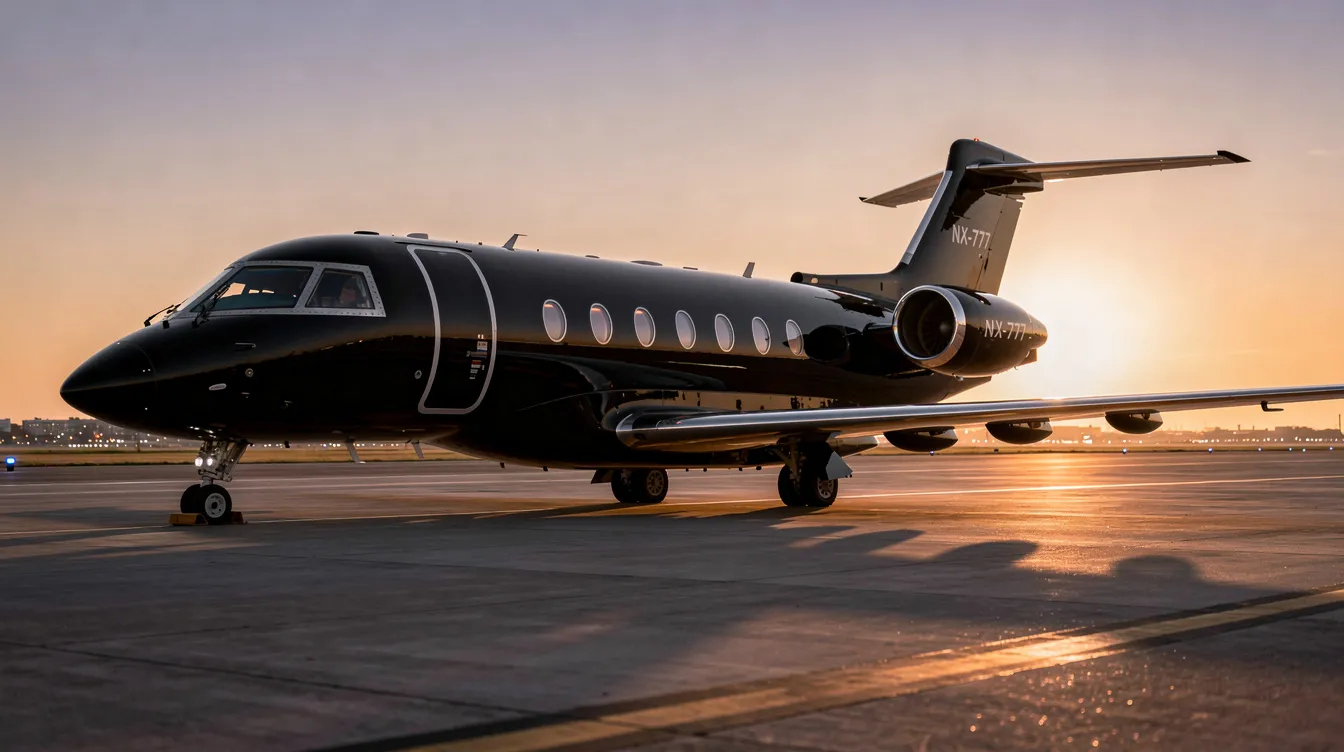
Not all charter airline companies operate to the same standards. Due diligence is essential when entrusting them with frequent business or family travel.
Comparing different access models and providers side by side using tools such as fractional jet program comparisons helps ensure the structure matches your flying profile.
Third-party audit standards (ARGUS, Wyvern, IS-BAO)
Pilot minimums of 3,000+ total hours on larger jets
Documented Safety Management System
24/7 operations support with quick response times
Consistent in-flight Wi-Fi and catering quality
Cabin crew availability and aircraft cleanliness
Value assessment: Additional costs associated with charter flights may include landing fees, crew overnight costs, fuel surcharges, and catering, which can increase the overall price. A New York–South Florida round trip on a light jet might range $15,000–$25,000 charter versus $12,000–$18,000 effective under fractional programs.
BlackJet focuses on long-term value by locking in predictable structures and leveraging consistent operating partners.
Frequent charter users booking similar routes repeatedly may be overspending on pure on-demand charter, making it important to understand the total cost of a fractional jet share before committing to a long-term solution.
Flying more than 25–50 hours annually on comparable aircraft
Needing guaranteed availability on peak days (Thanksgiving, major events)
Requiring a consistent cabin layout and connectivity
A 50-hour per year executive based in New York or Los Angeles could save 25–35% over a 3–5 year horizon through fractional ownership versus ad-hoc charter, with structures like 1/8 fractional jet ownership for about 100 hours often aligning to this usage level. For clients under 25 hours annually, charter or BlackJet’s Reserve Fleet membership remains optimal.
Analyze your last 12–24 months of charter invoices to identify patterns—BlackJet can provide this analysis during consultation, and broader overviews of top fractional jet ownership programs can offer context as you compare structures and providers.
BlackJet Fractional Jet Ownership serves as aviation experts helping clients move beyond one-off charter into strategic, ownership-aligned solutions, helping travelers decide between fractional ownership and private jet membership programs based on how often and how far they fly.
Travelers evaluating whether to commit capital can benefit from reviewing fractional jet ownership as an investment, including how depreciation, liquidity, and usage affect long-term value.
Fractional ownership shares in specific aircraft types, supported by flexible fractional jet ownership financing options
Priority booking windows (48–96 hours)
Potential tax advantages with expert structuring
No-equity, pay-as-you-go access
Standardized safety and service
Predictable pricing structures
Charter airlines operate in various regions, including the US, UK, Europe, and the Caribbean, providing access to popular destinations and personalized travel solutions. BlackJet supports both US-based and international travelers across corridors like New York–South Florida, Los Angeles–Las Vegas, and key European and UK connections.
BlackJet handles aircraft management, scheduling, maintenance oversight, and crew standards—removing operational burdens from owners, while clear fractional ownership contract terms define responsibilities, scheduling rules, and exit options.
Short-term, charter avoids capital expenditure. Long-term, fractional ownership reduces effective costs through shared expenses for travelers flying 50+ hours annually.
Jet cards offer prepaid hours at fixed rates, while flight-by-flight charter has variable pricing subject to availability and market conditions; some programs also incorporate floating fleet structures in fractional ownership, which can influence how aircraft are allocated and priced.
Owners may access accelerated depreciation under IRS Section 168(k). Seek independent tax advice for structuring and review an aircraft fractional ownership sample contract guide to understand how legal terms interact with tax planning.
An ad-hoc charter may require 7–14 days; fractional programs like BlackJet offer 48-hour guaranteed windows, and if your travel patterns change, guidance on selling a fractional jet ownership share can be crucial for exiting efficiently.
Charter airline companies serve as ideal entry points into private aviation, but frequent flyers and corporations often achieve better value through fractional aircraft ownership and structured memberships. BlackJet analyzes historic charter usage, compares models, and designs tailored solutions combining Reserve Fleet and Equity Fleet access.
Ready to explore the smarter way to fly private? Visit FractionalJetOwnership.com to see how BlackJet Fractional Jet Ownership can transform your travel experience. The team assists both individuals and corporate flight departments across the world to optimize cost, schedule reliability, and fleet strategy.
