November 23, 2025
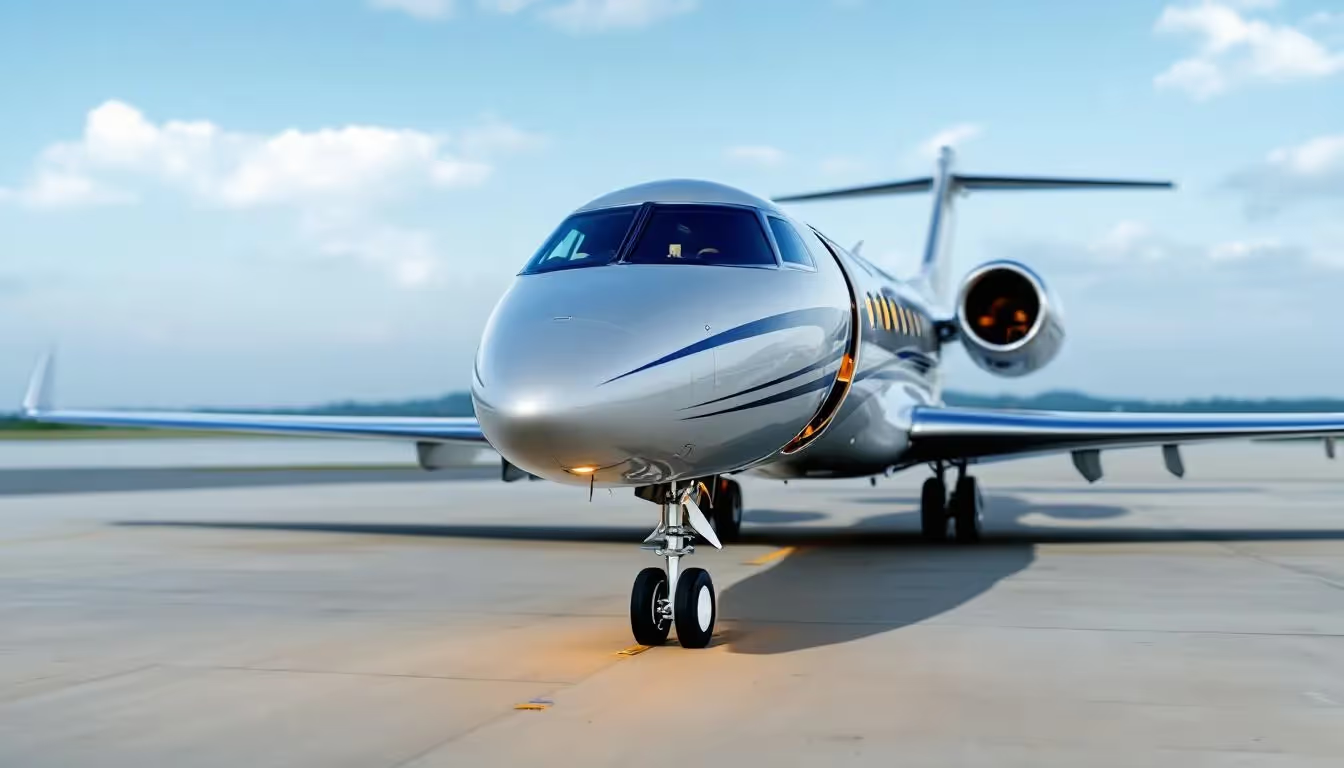
Private jet charters have become a preferred travel solution for business leaders, high-net-worth individuals, and families looking for efficiency, privacy, and flexibility in the air. As the global private aviation market expands, travelers now have access to thousands of aircraft across the United States and worldwide, each tailored to unique mission requirements, cabin layouts, and operational capabilities and operated by highly trained pilots and crews. Private jets can be categorized by size and range into light, midsize, and heavy jets.
Choosing the right charter plane is essential for ensuring a seamless travel experience. The aircraft type affects everything from travel time and cost to in-flight comfort and available amenities. Unlike commercial airlines—where schedules, routes, and aircraft types are predetermined—private jet charters allow travelers to curate nearly every element of the journey. This elevated level of customization is a defining benefit of private aviation, enabling travelers to fly on their schedule, select the optimal aircraft, and enjoy point-to-point travel without traditional airport bottlenecks.
Additionally, private jet membership programs offer guaranteed fixed rates for flights, providing further predictability and convenience for frequent travelers. These programs also typically allow members to access a diverse range of aircraft, ensuring flexibility for various travel needs. Members of private jet membership programs often benefit from personalized concierge services, further enhancing the travel experience. Many private jet memberships offer limited or no additional fees for services such as de-icing or maintenance. Booking for a private jet can be done within 3-6 hours of the requested departure time for last-minute flights.
Private aviation advisors play a pivotal role in guiding clients through aircraft selection. These experts analyze variables such as passenger count, mission profile, runway length, weather conditions, and international regulations to determine the most suitable aircraft for each itinerary. The dedicated account manager helps to choose the right aircraft based on specific trip needs. When done correctly, selecting the right charter plane transforms a routine trip into a smooth, efficient, and highly personalized travel experience.
This comprehensive guide outlines top tips for choosing the best charter aircraft, including how to compare jet categories, evaluate mission needs, and navigate the differences between charter and commercial airline travel.
Selecting the right charter plane begins with understanding the primary aircraft categories offered within the private jet charter market. Each category serves distinct travel requirements, making it crucial to match mission needs with aircraft capabilities.
Light jets remain one of the most popular choices for short to medium-range private travel. They typically carry 4–7 passengers and offer impressive speed and efficiency. Light jets usually seat 4 to 8 passengers and are suitable for regional travel, often with a range of up to 1,500 miles. These jets have cruising speeds averaging between 400 and 480 mph, making them an efficient choice for shorter routes. Heavy jets, on the other hand, can reach cruising speeds of up to 500 mph, making them ideal for longer journeys.
Regional business trips
Weekend leisure getaways
Cost-conscious travelers seeking private aviation flexibility
Flights under approximately 1,500 miles
These aircraft offer an attractive balance of performance and affordability, making them a practical solution for executives and families flying between major metropolitan areas or secondary airports where convenience is key. Many light jets can access smaller runways, expanding airport options and reducing ground travel time. Turboprop aircraft are cost-effective for shorter distances, operating efficiently over 600 to 1,000 miles, and usually seat 6 to 8 passengers.
When travelers require additional cabin space, stand-up height, or extended range, midsize and super-midsize jets become the preferred option. Midsize jets can accommodate 6 to 9 passengers and usually have a range of approximately 2,450 miles, making them ideal for coast-to-coast flights. These categories offer:
Seating for 7–10 passengers
Increased baggage capacity
Comfortable cabins suitable for longer domestic routes
Enhanced in-flight amenities, such as Wi-Fi and executive workspaces
Super midsize jets combine the benefits of range and passenger capacity, seating around 8 to 10 passengers and covering distances of up to 3,500 miles.
Super-midsize jets are particularly valued for cross-country missions within the United States, offering nonstop capabilities between cities such as New York and Los Angeles.
Heavy jets elevate the experience further with spacious cabins, premium amenities, and long-range performance. They are designed for:
Long-haul domestic routes
International travel
Larger groups of 10–14 passengers
Travelers requiring lie-flat seating, conference tables, and enhanced privacy
With an average range of around 7,000 miles, heavy jets are particularly suitable for international travel, offering unmatched comfort and efficiency for long-distance journeys. Heavy jets are designed to transport more passengers over longer distances, with an average range of around 7,000 miles, suitable for international travel.

Ultra Long Range (ULR) aircraft represent the pinnacle of private aviation performance. With the ability to travel up to 7,000 miles nonstop, ULR jets are engineered for intercontinental travel. Their features include:
Exceptionally spacious cabins
Multiple living zones
Dedicated sleeping quarters
Gourmet galley configurations
State-of-the-art technology and in-flight entertainment
For flights between the United States, Europe, the Middle East, and Asia, Ultra Long Range aircraft provide seamless, uninterrupted travel without the inconvenience of refueling stops.
Private aviation advisors often recommend ULR jets for travelers who prioritize comfort on 10–15-hour flights or require the efficiency of nonstop routes for business engagements. With continuous advancements in avionics and cabin pressurization systems, these aircraft provide an unmatched travel environment for long-distance journeys.
Private jet charters provide a range of advantages unmatched by commercial airline travel. These benefits are especially valuable for executives, entrepreneurs, family offices, and high-net-worth individuals who prioritize time savings and convenience. Charter flights significantly reduce total travel time by allowing passengers to arrive at the private terminal just 15–30 minutes before departure. Additionally, private jet travelers often have more flexible baggage allowances compared to commercial airline passengers. Private flights offer a luxurious and comfortable environment with ample legroom and personalized service.
Private charters allow travelers to define their departure times, adjust itineraries, and accommodate unplanned schedule changes. Flights can often be arranged with minimal notice, a distinct advantage for business leaders or families needing rapid mobility. Membership programs often provide faster access to aircraft compared to non-member bookings, ensuring that travelers can secure flights even on short notice. Many private jet membership programs also provide flexible cancellation policies, adding another layer of convenience for travelers. Additionally, private jet charters allow passengers to avoid long security lines and crowded terminals.
Private jets can land at thousands of airports across the United States—far more than commercial airlines serve. This enables travelers to save significant time by bypassing long security lines and boarding the aircraft minutes after arriving at the private terminal.
Reduced ground travel time
Closer access to remote or regional destinations
Avoidance of hub-and-spoke airline networks
Many private charters also offer pet-friendly options, allowing pets to travel in the cabin, enhancing convenience and comfort for pet owners.
Private cabins support confidential conversations, secure business operations, and uninterrupted rest. For organizations with sensitive information or high-profile passengers, the isolation of private aviation is indispensable. The cabin of a charter plane is a private environment, allowing for confidential business meetings and personal conversations without interruptions. The private cabin environment is equipped with reliable Wi-Fi and spacious seating, making it ideal for work and maximizing productivity during travel.
Charters can be tailored to each passenger’s preferences, including meal options. Travelers can often customize their in-flight experience according to their preferences. A personal account manager will manage the details of your private jet flight and be contactable 24/7. This personalization enhances comfort and elevates the overall travel experience.
Catering selections
Specific seating arrangements
Cabin configurations
Onboard technology
Ground transportation coordination
This personalization enhances comfort and elevates the overall travel experience.
Passengers bypass:
Long security lines
Crowded terminals
Layovers
Lost baggage risks
Instead, travelers arrive at private terminals (FBOs), often boarding within minutes.
Understanding the contrast between charter and commercial air travel is essential for anyone evaluating private aviation solutions.
Commercial travel involves schedules dictated by airlines, limited routes, and frequent delays. Private charters allow travelers to depart on their terms and fly directly to their destination.
While commercial airlines offer premium cabins, even first-class passengers share space with hundreds of travelers. Private jets deliver a controlled, quiet environment designed for both relaxation and work.
Commercial airports are often congested, with wait times that can exceed the flight itself. Private travelers access discreet terminals with expedited processes, significantly reducing total travel time.
Private jets can land at airports that commercial airlines do not serve, making them ideal for:
Remote destinations
Short business hops
Resort communities
Private islands and exclusive retreat locations
For business travel, time savings alone often justify the investment. A two-day trip by commercial airline can frequently be completed in a single day via charter.
International private aviation involves additional planning elements that must be considered when selecting the right aircraft. Intercontinental routes demand aircraft capable of flying long distances without fuel stops. Ultra-long-range jets are designed for long-haul flights and can accommodate a larger number of passengers, typically 12 or more, covering distances beyond 7,000 miles.
Intercontinental routes demand aircraft capable of flying long distances without fuel stops. Ultra-long-range and heavy jets are typically required for these missions.
Private aviation advisors coordinate:
Pre-clearance documentation
Expedited customs procedures
Overseas handling arrangements
Slot allocations at international airports
Expert guidance ensures compliance and minimizes the risk of travel delays.
International flights involve strict duty time regulations. Experienced operators manage crew scheduling to maintain safety while optimizing travel efficiency.
Global routes require aircraft capable of handling varying climates and long oceanic crossings. Advanced avionics, pressurization, and performance metrics become essential considerations.
Premium operators arrange services such as:
Chauffeured transportation
Baggage handling
VIP terminal access
Catering tailored to international preferences
Hotel accommodations for crew and passengers as needed
Private aviation specialists streamline these components to ensure seamless journeys across continents.

Selecting the most suitable charter plane involves a thoughtful evaluation of mission requirements, passenger expectations, and operational constraints. These guidelines help ensure the right aircraft is chosen for every trip. Charter flight costs can increase with multi-night stays or changes to the itinerary, so careful planning is essential to optimize both cost and convenience. Pricing for flights can fluctuate on peak travel days, influencing the overall rental cost. Private jet charter estimates might include same-day round-trip pricing that considers various trip specifics.
Determine key elements such as:
Number of passengers
Distance to destination
Required cabin space
Luggage volume
Preferred amenities
Budget and operational costs
Clear parameters create a foundation for selecting the ideal jet category.
Short hops often require light or midsize jets, while long-haul flights demand heavy or Ultra Long Range aircraft. Choosing a jet with an appropriate range avoids unnecessary fuel stops and maximizes time efficiency.
Some airports have:
Short runways
High elevation
Noise restrictions
Aircraft must be compatible with these characteristics to ensure safe operations. Advisors analyze runway lengths, weather conditions, and airport performance requirements before making recommendations.
Cabin layout significantly affects the passenger experience. Travelers should assess:
Seating styles
Workspace needs
Sleeping arrangements
Privacy zones
Noise levels
For long journeys, spacious cabins with lie-flat seating or divided living areas enhance comfort dramatically.
Safety should always be the primary consideration. Look for:
ARGUS or Wyvern safety ratings
Experienced pilot teams
Modern aircraft with updated avionics
Strong maintenance oversight
Reputable operators maintain rigorous standards aligned with FAA regulations.
Charter pricing includes private jet rental costs that range from $2,000 to over $20,000 per hour, depending on aircraft type and services. On-demand private jet rentals are charged by the hour, typically between $3,500 and $18,000, varying by aircraft type. Charter rates for a 12-seater private jet usually range from $5,000 to $9,000 per hour.
Additional costs such as international handling fees, overnight parking charges, and custom catering options can increase the price of private jet rentals. The average cost for a short flight in a small jet can start around $2,800 for a 40-minute flight. Understanding the all-in cost prevents surprises and ensures accurate budgeting.
Flight time
Fuel surcharges
Crew fees
Landing and handling fees
Ramp or overnight charges
Understanding the all-in cost prevents surprises and ensures accurate budgeting.
Industry experts offer data-driven insights and operational knowledge, helping travelers avoid common pitfalls and select aircraft that perfectly match their objectives. Advisory services are especially valuable for international missions, large-group travel, or complex multi-city itineraries.
Choosing the best charter plane is ultimately about aligning aircraft capabilities with travel goals. With the proper guidance and a clear understanding of aircraft categories, travelers can enjoy the full benefits of private aviation—flexibility, privacy, efficiency, and comfort—while optimizing cost and operational performance. As the demand for private aviation continues to rise across the United States and globally, selecting the appropriate aircraft ensures each journey is safe, seamless, and tailored to individual preferences.
While generally more expensive than commercial flights, chartering can provide significant value by saving time and increasing efficiency. Platforms like Jettly streamline the booking process for private jet charters, making it accessible and efficient for users. Charter planes can wait for delayed travelers, enhancing flexibility.
Visit FractionalJetOwnership.com to learn how expert advisors can help you choose the ideal aircraft for your charter needs or explore long-term fractional ownership solutions designed for frequent private flyers.
