May 4, 2026
Finding the cheapest jet card program in 2026 requires looking beyond headline hourly rates. This guide is for private aviation flyers seeking the most cost-effective jet card options in 2026. We cover pricing, hidden fees, safety considerations, and when fractional ownership may be cheaper—ensuring you make an informed decision that balances value and safety. If you’re searching for the cheapest jet card program, you’ll find actionable comparisons and expert insights tailored to your travel needs.
Jet cards are prepaid private aviation programs that allow users to deposit funds and book flights on demand, providing predictable costs without the commitment of aircraft ownership. With over 80 providers in North America alone, the real challenge is identifying which program delivers genuine value for your specific travel patterns—not just the lowest advertised price.
In 2026, entry-level jet card deposits typically start around $75,000–$100,000 for light jets with capped hourly rates in the $7,000–$10,000 range in the U.S. market. Entry-level or least expensive jet card options often focus on light jets, with 25-hour cards starting around $165,000 to $225,000. Light jet programs within jet card offerings are often seen as a benchmark for entry-level options in private aviation.
However, the cheapest jet card depends entirely on your mission profile. A program optimized for short regional hops differs dramatically from one designed for coast-to-coast flights or international itineraries. There is no single universal provider that wins on price across all use cases. This is why private jet card comparisons are essential—comparing features, rates, flexibility, and contract terms helps you identify the best value for your specific needs.
Many flyers searching for the cheapest jet card can actually lower their effective hourly cost with a well-structured fractional ownership share. BlackJet Fractional Jet Ownership offers both an Equity Fleet for 25–150 hours annually and a Reserve Fleet for pay-as-you-go access—often modeling lower all-in costs than traditional jet cards burdened by surcharges and hidden fees.
Provider Type | Aircraft Category | Minimum Commitment | Starting Price (25 Hours) | Average Hourly Rate (Q1 2025) | Lowest Hourly Rate (Select Programs) |
|---|---|---|---|---|---|
Entry-Level Jet Card | Light Jet | 25 hours | $165,000–$225,000 | $15,197 | $10,000 |
Standard Jet Card | Light Jet | 50 hours | $300,000–$750,000 | $15,197 | $10,000 |
Entry-level or least expensive jet card options often focus on light jets, with 25-hour cards starting around $165,000 to $225,000.
The average hourly rate for jet card flights was reported to be $15,197 at the end of Q1 2025, with some providers offering rates as low as $10,000 per hour for specific programs.
The cost of a 50-hour jet card generally ranges from $300,000 to $750,000, depending on aircraft types and additional fees.
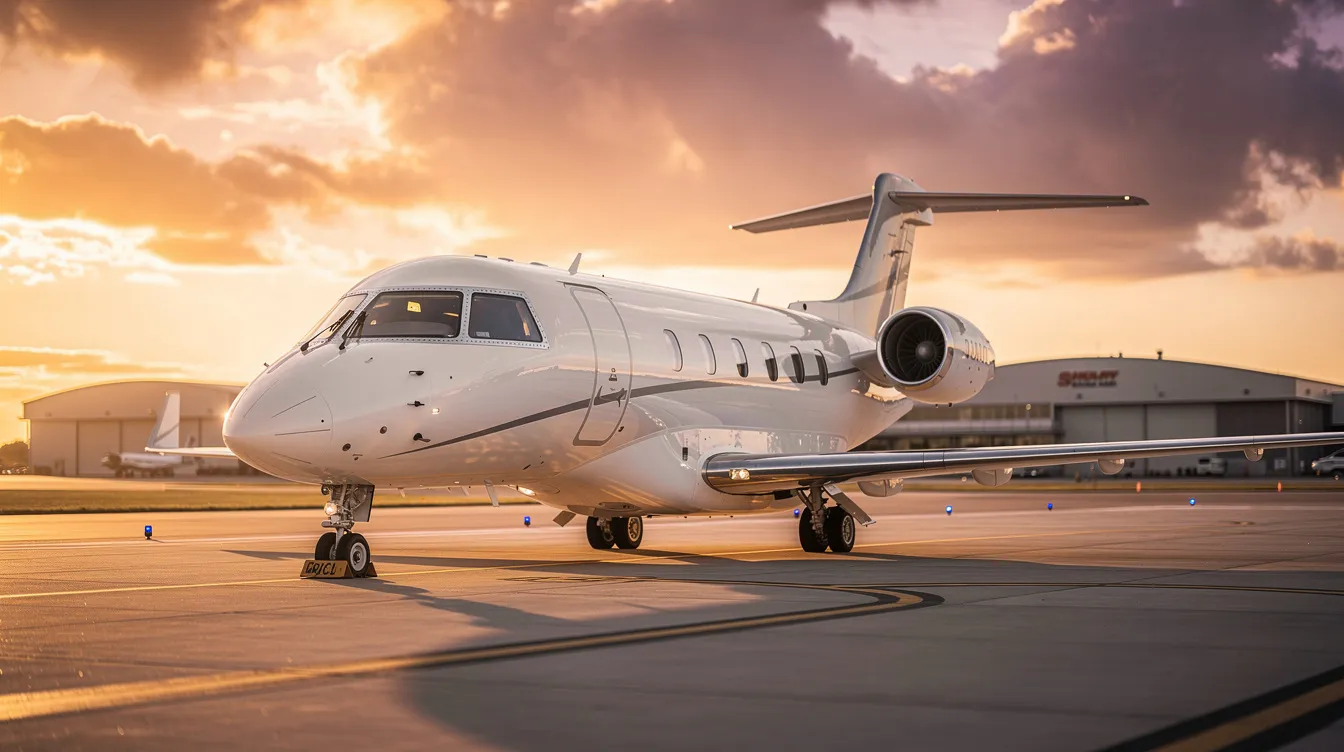
Jet cards are prepaid private aviation programs that allow users to deposit funds and book flights on demand, providing predictable costs without the commitment of aircraft ownership. Guaranteed availability ensures access to an aircraft with as little as 24-48 hours’ notice, even during busy periods.
Common structures in 2026 include deposit-based funds (typically $100,000+ fully refundable balances) versus block-hour cards requiring 25-hour or 50-hour commitments. Many jet card programs include an upfront membership fee that typically ranges from $10,000 to $25,000, granting access to the provider’s fleet and benefits like guaranteed access. Some jet card programs offer rollover hours, allowing unused hours to carry over to the next period, while others have strict expiration policies that require hours to be used within a set timeframe.
Many jet card programs offer fixed hourly rates, which simplify budgeting for users, although additional fees such as fuel surcharges may apply. The publicized hourly rate represents only one component of total cost—typical add-ons include de-icing, catering, repositioning, and peak day surcharges.
Here’s how jet cards compare to alternatives:
On-demand charter: More flexibility on a flight-by-flight basis, but less price predictability
Fractional ownership: Higher commitment, lower effective hourly rates for frequent flyers
Membership broker models: Annual fee plus trip-by-trip dynamic pricing
BlackJet Fractional Jet Ownership positions its Equity Fleet and Reserve Fleet for clients who demand transparent pricing and long-term predictability rather than teaser rates that mask poor peak performance.
Private aviation costs have risen 15–25% since 2024 amid supply chain delays and sustained demand. Evaluating the cheapest option now requires weighing safety, aircraft category, and usage patterns against raw numbers.
Current 2026 U.S. domestic benchmark ranges:
Turboprops: Fixed hourly rates around $4,000–$6,000. Some providers offer turboprop jet card programs specifically for regions east of the Mississippi River, catering to travelers in those areas.
Light jets: Approximately $7,000–$10,000 per hour
Super midsize jets: Roughly $10,000–$15,000 per hour
Large cabin aircraft: Frequently $15,000–$25,000+ per hour
The average hourly rate for jet card flights was reported to be $15,197 at the end of Q1 2025, with some flight providers offering rates as low as $10,000 per hour for specific programs. The cost of a 50-hour jet card generally ranges from $300,000 to $750,000, depending on aircraft types and additional fees.
Higher deposits ($500,000–$1,000,000 tiers) often unlock 10–20% lower hourly rates and waived management fees. U.S.-only cards typically undercut global or Europe-included programs by 20–30% due to lower crew duty costs and international handling fees.
For many flying 25–75 hours annually, the cheapest route may actually be a fractional share where higher upfront capital produces lower all-in costs than low-commitment jet cards, particularly when leveraging efficient structures like floating fleet options in fractional ownership that optimize aircraft utilization and reduce repositioning costs.
Two cards with identical published hourly rates can produce radically different real costs due to hidden or variable charges. Understanding these drivers is essential before committing to any program.
Aircraft category and age: Newer, larger aircraft cost more but may save flight time on long legs, affecting total mission cost.
Hourly rate structure: Fixed rates provide certainty, while dynamic pricing risks significant peaks. Jet card options vary widely, with some programs offering guaranteed availability and fixed rates, while others may have restrictions such as peak days and additional fees.
Daily minimums: Budget cards may charge a daily minimum for at least 60–90 minutes,s even if the flight duration is only 30 minutes. A 35-minute hop on a card with 90-minute daily minimums at $8,000/hour costs $12,000 effective versus $4,667 on actual billing—nearly tripling your cost per minute.
Peak surcharges and blackout dates: Peak day surcharges often trigger additional costs of 5%–15% during holidays or other busy periods in jet card programs. The average number of peak days for jet card bookings has decreased, dropping to 35.4 days at the end of Q1 2025, down from 44.6 days at the end of 2024.
Excluded fees: Many jet card providers include additional fees for services such as de-icing, catering, or landing fees on international flights. Ground transportation is another component that may incur additional fees or be tailored to client preferences as part of comprehensive private aviation offerings. Jet card programs often include hidden fees such as fuel surcharges and special event fees, which can significantly increase the overall cost of private flights.
Initiation and monthly fees: Many jet card contracts now include clauses for fuel surcharges and special event fees, which can affect the overall flexibility and cost of bookings.
Jet card programs are becoming more flexible, with fewer peak days and lower daily minimums, allowing for easier booking and cancellation. BlackJet advisors help clients model total annual spend across jet cards, ad hoc charter, and fractional ownership to avoid being misled by low advertised rates.
The least expensive way to fly via a jet card depends heavily on the mission: short-haul hops, transcontinental U.S. flights, turboprop-suitable routes, or international itineraries. Different providers excel in different segments.
BlackJet focuses on fractional ownership and tailored membership solutions rather than commodity jet cards. However, for many mission types—especially consistent business routes in the United States—a fractional jet share with BlackJet’s Equity Fleet can deliver a lower effective hourly cost than even the cheapest general-market jet card through ownership-based pricing and tax advantages, making it worth evaluating fractional jet ownership as an investment rather than viewing it purely as an expense.
For short flights under 500–700 miles or under one hour of flight time, the cheapest programs typically feature very low or no daily minimums, billing based on actual flight time plus minimal taxi time, and access to turboprops and efficient light jets.
Established providers likNicholas Airir have become benchmarks for cost-effective short hops by offering 30–60 minute minimums instead of 90–120 minutes. Many jet card programs include flights starting or ending at the provider’s home base without charging for empty repositioning legs.
Turboprop-inclusive cards—particularly in Northeast U.S., Florida, and Bahamas corridors—can significantly reduce cost per leg compared with midsize jets, especially from shorter runways. Programs from Tradewind Aviation and similar regional specialists excel here, as do flexible shared-ownership solutions such as fractional jet ownership in Orlando for frequent Florida-based flyers and fractional jet ownership in Virginia Beach for travelers along the Mid-Atlantic coast.
A client flying frequent 40–60 minute business trips between nearby cities could achieve lower cost per seat-mile via a fractional share in a light jet than via a nationwide private jet card with high minimums, especially when leveraging regional options like fractional jet ownership in Atlanta.
Non-stop flights such as New York–Los Angeles can exceed $100,000 one-way on traditional jet cards using large cabin aircraft with guaranteed type. This makes flexible travel plans essential for managing costs.
Some operators reduce costs by guaranteeing a category (super midsize) rather than a specific model, using high-speed aircraft like Citation Latitude or Challenger-class with slightly smaller cabins instead of ultra-long range jets. Providers such as Northern Jet, Flexjet, Nicholas Air, and VistaJet offer super midsize jets with stand-up cabins and tailored amenities, enhancing comfort and service for travelers. Several programs bundle Wi-Fi, standard catering, and recovery aircraft at no additional cost.
A business owner flying 20–30 transcon legs annually might enjoy lower all-in costs with a BlackJet Equity Fleet share on a super midsize jet, thanks to predictable costs and lower marginal hourly rates. However, travelers making only one or two coast-to-coast trips yearly may find that a lower-commitment jet card or private charter remains cheaper.
For intercontinental routes, the cheapest solution rarely involves the headline jet card pricing but rather programs with global coverage, reasonable ferry and positioning policies, and fair cancellation rules, particularly for travelers originating from secondary hubs that increasingly rely on fractional jet ownership in Nashville and similar regional bases.
Global players with strong card offerings for long-haul trips—whether through Vista Global affiliates or Magellan Jets—typically charge premium rates but offset them with reliability, short-notice availability, and included personalized service, which can be complemented by regionally focused solutions like fractional jet ownership in Pittsburgh for domestic positioning.
For U.S.-based clients with predictable international patterns (six or more Europe trips annually), combining fractional ownership for domestic legs plus selective long-range charter may yield lower average costs than an international jet card alone. BlackJet advisors help design blended solutions pairing domestic fractional shares with pay-as-you-go international access rather than forcing one-size-fits-all solutions.
Recent years have seen legal disputes and service failures among certain low-cost operators that over-promised and under-delivered. Recent litigation against some jet card operators highlights the risk of not receiving flights that have been paid for, raising concerns about service reliability in the industry.
Key risk categories include financial stability (risk of deposits with undercapitalized providers), operational reliability (aircraft sourcing during peak holidays), and contract fine print (broad force majeure clauses, aggressive expiration terms). Many jet card programs have “use it or lose it” clauses, meaning unused hours may not be refundable after 12-24 months, and some low-cost providers may not maintain the same rigorous standards for highly trained pilots and crews that premium fractional programs prioritize—reinforcing the importance of understanding essential contract terms in fractional ownership before you commit capital.
Many jet card contracts now have clauses that allow for fuel surcharges and limit the amount covered for recovery flights, which can lead to unexpected costs for users.
Before committing, verify whether client deposits are held in segregated accounts, confirm safety ratings (ARG/US, Wyvern, IS-BAO) of underlying direct air carrier operators, and review historical performance during peak days and special events.
BlackJet advocates conservative, sustainable pricing and transparent ownership structures. True value balances cost, safety, and certainty—not simply the lowest advertised rate from programs that may lack the resources to deliver when you need to book flights most, and it also considers how easily you can sell or exit a fractional jet ownership share and whether you have adequate liability coverage in fractional jet ownership if your travel needs change.

While jet cards are marketed as flexible, low-commitment solutions, frequent flyers in the 25–150 hours/year range often see lower all-in costs with fractional ownership and gain access to exclusive benefits unavailable through standard cards.
Fractional aircraft ownership works by purchasing a share (1/16 or 1/8) of a specific aircraft, paying a combination of acquisition cost, monthly management fees, and occupied hourly rates. This structure offers guaranteed access with defined notice and interchange options, and understanding the core fractional jet ownership terminology and concepts, as well as specific share sizes like 1/8 fractional jet ownership, will help you compare these structures accurately against jet cards.
Key economic advantages compared to even the best program among “cheap” cards include lower effective hourly cost at moderate to high usage (often $6,000–$8,000 effective for light jets after all factors), potential U.S. tax benefits such as depreciation under Section 168(k), and better alignment of the perfect aircraft type with consistent mission profiles; evaluating fractional jet ownership financing costs and options, the tax implications for fractional jet owners, and the overall cost of fractional jet ownership is essential to understanding your true long-term outlay.
Consider this scenario: A business owner flying 75 hours annually between New York, Chicago, and Dallas might find that over three years, the total cost of a fractional share through BlackJet’s Equity Fleet is materially lower than equivalent hours on mid-range jet cards—potentially 15–30% savings—before considering tax advantages, once the total cost of fractional jet ownership is modeled accurately.
BlackJet offers two models: Equity Fleet for owners seeking a true share with priority access and tax planning opportunities, and Reserve Fleet for clients wanting pay-as-you-go hours with predictable costs but without ownership responsibilities or long-term commitment.
Moving from generic searches to data-based decisions requires a structured evaluation framework tailored to your travel needs.
First, quantify annual hours and trip frequencies—business versus leisure, one-way versus round-trip patterns. Map typical routes and aircraft size requirements, including passenger count, baggage, and range needs that vary based on your specific use cases.
Decide whether you prioritize flexibility (no commitment), predictability (fixed costs), or ownership benefits (equity and tax planning). Then compare all-in hourly rates,s including initiation fees, minimums, surcharges, and likely peak-day usage across different providers, using a structured comparison of fractional jet ownership versus membership programs to clarify which model fits your profile.
Create a simple annual-use model: estimate total annual hours, multiply by each program’s true all-in cost (including hidden fees), then compare against a fractional share proposal. Most providers will supply sample contracts—request fee schedules, confirm how funds are held, and verify fleet sourcing and safety standards, reviewing an aircraft fractional ownership sample contract to understand typical clauses before you sign.
Use BlackJet Fractional Jet Ownership as a neutral benchmark. By obtaining fractional and Reserve Fleet quotes, you can determine whether a “cheap” jet card or private jet membership is actually cheaper once all variables—from membership fee to unused hours penalties—are included, compare those findings with independent reviews of the best fractional jet ownership programs, and then compare BlackJet’s own fractional ownership programs to see how Equity Fleet, Reserve Fleet, and lease options stack up.
Entry-level deposits for reputable programs typically range from $75,000–$150,000 for light jets. Some programs like SentientJet or Fly Alliance offer lower entry points, while the NetJets card and similar heavy jets programs require substantially higher commitments.
No genuinely fee-free cards exist. Costs simply shift to higher hourly rates, fuel surcharges, or variable charges. Always read the fine print before committing.
Yes, but verify ARG/US ratings and deposit protection. Lower-commitment programs may have restrictions on guaranteed availability during peak periods.
Empty legs offer sporadic savings ($3,000–$5,000/hour) but lack reliability for consistent travel plans. Jet cards provide predictable access; empty legs suit opportunistic travelers only.
On-demand charter typically proves more cost-effective for under 25 hours annually, avoiding unused hours expiration and membership fees.
Generally above 25–50 hours annually. BlackJet’s Equity Fleet becomes increasingly advantageous as usage rises toward 75–150 hours, where ownership-based pricing and tax benefits substantially reduce effective hourly costs.
The cheapest jet card program is not a single product but the program that best matches your actual flying habits, safety expectations, and financial strategy. Headline rates tell only part of the story—the demand for transparency requires examining every component from daily minimums to peak surcharges.
Many high-frequency travelers and businesses across the United States achieve lower long-term costs and better predictability through fractional aircraft ownership or structured membership models like BlackJet’s Equity Fleet and Reserve Fleet. Before selecting any card purely on advertised hourly rates, model your next 12–36 months of travel with professional guidance.
Ready to explore the smarter way to fly private? Visit FractionalJetOwnership.com to learn how fractional jet ownership and tailored membership solutions can provide a cost-effective path to private aviation—often delivering better value than chasing the lowest advertised jet card price.
