
May 1, 2026
Private aviation has never been more accessible—or more confusing to price. Whether you’re exploring your first private jet flight or evaluating whether fractional ownership makes sense for your travel patterns, understanding the real cost to fly private requires looking beyond simple hourly rates. This guide breaks down exactly what you’ll pay in 2026, what drives those costs, and how to structure your access for maximum value.
The cost to charter a private jet can range from $1,200 to over $14,000 per flight hour, depending on factors such as aircraft size, route, and onboard services. Private jet charter rates vary widely based on aircraft category and trip specifics, so understanding these rates is key to evaluating affordability. For 2026, expect realistic hourly ranges of roughly $2,000–$3,000 for turboprops and very light jets, $3,000–$6,000 for light and midsize jets, and $8,000–$14,000+ for heavy and ultra-long-range jets operating within the United States.
Private jets are categorized into different classes based on their size and capabilities, including Very Light Jets (VLJs), Light Jets, Midsize Jets, Super Midsize Jets, Heavy Jets, Ultra Long Range Jets, and VIP Airliners.
Here’s what that looks like for common routes:
New York to Miami (light jet, ~3 hours): $12,000–$18,000 one way
Los Angeles to Aspen (midsize jet, round trip): $18,000–$25,000
New York to London (heavy jet, round trip): $80,000–$120,000
These figures represent total trip costs, not just hourly rates. The formula is straightforward: total cost equals hourly rate multiplied by billable flight hours, plus taxes and fees. Airport fees—including landing, ramp, and parking fees—are set and collected by the airport authority, and these can significantly impact the total cost. Additional costs associated with private jet charters can include landing fees, crew overnight charges, and fuel surcharges, which can add 20-40% to the base rate.
When considering longer trips or international routes, flight range and the ability to operate international flights play a major role in aircraft selection and overall cost, as certain jet categories are better suited for intercontinental travel and may incur extra expenses for customs, immigration, and landing permits.
For travelers flying private 25–150 hours annually, structured programs change the economics significantly. Fractional jet ownership and membership options—like BlackJet Fractional Jet Ownership’s Reserve Fleet and Equity Fleet—require higher upfront commitment but deliver more predictable pricing and often lower effective hourly costs than ad-hoc charter.
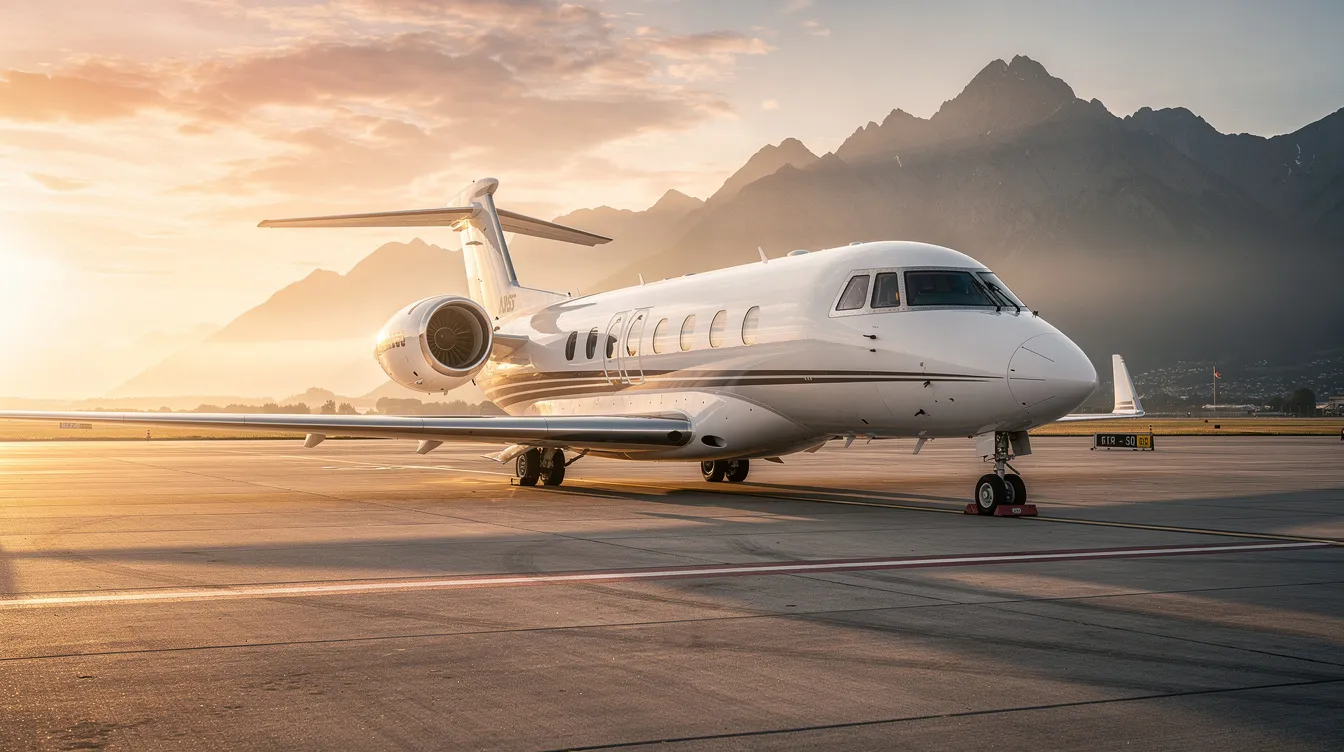
Flying private isn’t priced like commercial airlines, where you buy a seat on a scheduled route. Instead, private jet pricing reflects the economics of operating an entire aircraft for your specific mission—aircraft type, trip logistics, and how the operator structures their business model.
Core cost drivers include:
Aircraft type and size: Aircraft size and type are significant factors influencing operating costs, as larger and faster planes with higher luxury levels tend to be more expensive to operate. Operational costs include ongoing expenses such as maintenance, fuel, storage, and staffing. Annual maintenance costs for aircraft can range from $500,000 to $4 million.
Flight distance and duration: Private jet charter costs vary based on flight time and distance, with longer flights generally costing more due to increased fuel consumption. Flight duration and distance influence costs, where longer trips incur higher costs related to fuel, crew, and maintenance.
Billable flight time rules: What you pay for isn’t always identical to wheels-up to wheels-down time.
Aircraft positioning: Positioning fees may apply if an aircraft must fly empty to the departure airport.
Market conditions: Market demand can cause fluctuations in rates based on the popularity of flight routes and timing.
U.S. private flights typically operate under FAR Part 135 (charter) or Part 91K (fractional programs). Both frameworks yield similar direct operating costs, but pricing structures differ based on the operator’s business model. Savvy frequent flyers compare “all-in” cost per hour across a realistic 12-month schedule rather than focusing solely on headline hourly rates.
Aircraft category is the single biggest predictor of private jet cost. Private jets are categorized into different classes based on their size and capabilities, including very light jets (VLJs), light jets, midsize jets, super midsize jets, heavy jets, ultra long range jets, and VIP airliners. Very light jets are ideal for short trips with a small number of passengers, while super midsize jets offer a balance of size, comfort, and flight range, making them suitable for medium to long-haul international flights. Flight range is a key differentiator between categories—super midsize and ultra long range jets provide greater range for longer, intercontinental trips, while smaller aircraft are more cost-effective and efficient for short regional flights.
Hourly rates for private jet charters vary significantly by aircraft type: Turboprops and very light jets (VLJs) represent the most affordable entry point into private aviation, with hourly rates running from $1,200 to $2,500. Very light jets typically cost around $2,000 to $3,000 per hour, light jets range from $2,500 to $4,000, and heavy jets cost between $8,000 and $14,000 per hour.
Hourly rate: $1,200–$2,500
Example models: Pilatus PC-12, King Air 250, Phenom 100 (very light jet)
Ideal routes: Los Angeles to Las Vegas, New York to Boston
Passengers: 4–8
Range: 1,000–2,000 nautical miles
Turboprops and Very Light Jets (VLJs) represent the most affordable entry point into private aviation, with hourly rates running from $1,200 to $2,500. A very light jet is ideal for short trips with a small number of passengers, offering cost-effectiveness compared to larger jet categories and making them especially suitable for short regional hops.
Hourly rate: $3,000–$4,500
Example models: Citation CJ3+, Phenom 300, Learjet 75 Liberty
Ideal routes: New York to Chicago, Dallas to Denver
Passengers: 6–8
Range: 2,100–2,300 nautical miles
Hourly rate: $4,500–$7,500
Example models: Hawker 800XP, Citation XLS+, Challenger 350, Citation Longitude
Ideal routes: New York to Palm Beach, New York to Los Angeles
Passengers: 7–10
Range: 2,200–4,200 nautical miles
A super midsize jet offers a balance of size, comfort, and range, making it ideal for medium to long-haul and international flights. Compared to smaller jets, super midsize jets provide increased passenger capacity, enhanced cabin amenities, and are well-suited for cross-country or international trips. These jet categories offer full stand-up cabins and enclosed lavatories, with super midsize variants providing transcontinental reach.
Hourly rate: $8,000–$14,000+
Example models: Gulfstream G450/G500, Global 6000/7500
Ideal routes: New York to London, Los Angeles to Honolulu, New York to Dubai
Passengers: 9–19
Range: 3,500–7,800 nautical miles
Heavy jets typically require a flight attendant on board to enhance passenger comfort and provide premium service during flights. The extended flight range of these aircraft makes them ideal for intercontinental and international travel, allowing nonstop flights between distant cities.
Hourly rate: $15,000–$25,000+
Example models: Boeing Business Jet (BBJ), Airbus Corporate Jet (ACJ)
Passengers: 30–50+
Use case: Corporate roadshows, large group travel
Right-sizing guidance: Choose the smallest aircraft category that safely and comfortably covers your route and aircraft type requirements. A heavy jet for a New York to Chicago run wastes money; a light jet attempting New York to London won’t make it nonstop.
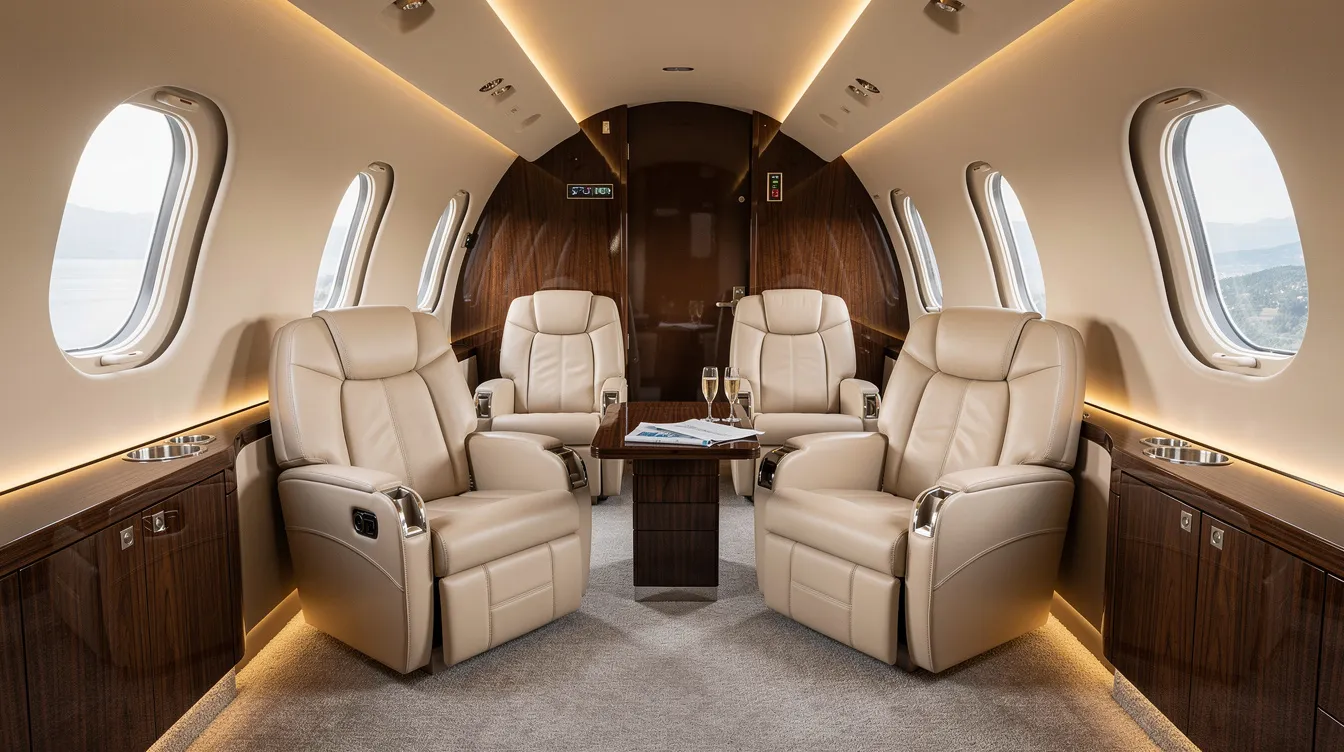
Understanding private jet flight costs requires looking at complete trip scenarios, not isolated hourly rates. Private jet charter costs vary based on flight time and distance, with longer flights generally costing more due to increased fuel consumption, crew expenses, and maintenance. Here’s what actual missions cost in 2026:
New York to Miami (Light Jet, 2.5 hours each way): $18,000–$22,000 round trip.
Los Angeles to Aspen (Midsize Jet, 2 hours each way): $22,000–$28,000 round trip.
Chicago to Las Vegas (Super Midsize Jet, 3.5 hours each way): $32,000–$40,000 round trip.
New York to London (Large Cabin Jet, 7 hours each way): $120,000–$150,000 round trip. For international flights like this, expect additional costs for customs, immigration, and landing permits, as well as higher expenses due to the longer distance and increased fuel, crew, and maintenance requirements.
Flight time: ~3 hours
Base cost: $9,000–$13,500 ($3,000–$4,500/hour)
Taxes and fees: +20–30% (FET, landing, handling)
Total: $11,000–$17,000
Billable time: 4–5 hours total
Base cost: $18,000–$22,500
Additional fees: Landing, handling, crew overnights, and potential deicing
Total: $20,000–$30,000
Billable time: 12–14 hours total
Base cost: $96,000–$140,000
Additional fees: International permits, overnights, catering, handling
Total: $110,000–$180,000
For international flights like this New York to London route, additional costs arise from required permits, customs and immigration handling, and specific regulations, all of which increase the total cost compared to domestic trips.
Per-seat perspective: Split among 6–10 passengers, the New York to London round trip works out to $11,000–$18,000 per person—competitive with last-minute international business class on commercial flights, with dramatically better time efficiency and privacy.
Fractional comparison: Under a fractional ownership program, those same missions typically price at lower marginal hourly rates, though with fixed monthly management fees and upfront capital costs spread across the year.
What you pay for is “billable flight time”—and it differs from what you might see in a flight tracking app. Most aircraft operators bill from engine start to shutdown, which adds a few minutes beyond actual airborne time.
More significantly, charter services often have a 2-hour daily minimum flight time requirement, regardless of the actual flight duration. Additionally, if a flight segment falls below the operator's minimum duration, 'short leg fees' may be applied as extra charges to offset operational costs such as crew and maintenance, as well as increased fuel burn during take-off and landing. This means:
A 40-minute Boston to New York hop gets billed as 1.0–2.0 hours
Very short trips become disproportionately expensive per mile
Aircraft positioning fees add billable hours when the jet must reposition to your departure or return empty after drop-off
Frequent flyers mitigate these dynamics through jet cards or fractional ownership, which lock in fixed hourly rates and often include more favorable minimum structures. When evaluating any quote, request a breakdown showing total billable flight hours by leg, including any empty positioning flights.
Beyond the hourly rate, a predictable set of taxes and fees adds 20–40% to the total cost to fly private. Airport fees—including landing, ramp, and parking fees—are set and collected by the airport authority, and can vary significantly depending on the airport and aircraft size. Understanding these components prevents surprises and enables accurate comparisons.
Federal Excise Tax: A 7.5% Federal Excise Tax is applied to all domestic flights within the United States
Segment fees: ~$4.50–$5.00 per passenger, per leg
Landing fees: Airport landing fees, set by the airport authority at each location, typically range from $100 to $1,500 per flight, depending on the airport and the size of the aircraft.
Ramp/handling fees: $150–$500+ per visit at fixed base operators, as determined by the airport authority.
Overnight parking: $500–$1,500 per night, with higher rates in winter climates requiring hangar fees, all established by the airport authority.
Deicing: $1,500–$15,000+ depending on aircraft size (winter operations)
International permits: $500–$5,000+ for overflight and landing permits
Fuel surcharges: Fuel surcharges may apply when fuel prices exceed a certain threshold, typically starting at around $300 per hour
In-flight catering: $250–$2,000+ per leg for custom catering
Ground transportation: $200–$1,000+ per reservation
Wi-Fi charges: $1,000–$3,000 per leg on some aircraft
Pet fees: $250–$500
In-flight catering and incidentals, such as Wi-Fi and de-icing fees in winter, incur additional costs during flights.
Premium membership and fractional programs often simplify billing by bundling many fees airports charge into predictable hourly or monthly structures, reducing invoice complexity and budget uncertainty.
For travelers deciding between equity and flexibility, comparing fractional jet ownership vs. membership programs clarifies how long-term commitments, aircraft access, and cost structures differ.
Three primary models exist for accessing private jet travel, each with distinct economics suited to different usage patterns. Private jet charter rates vary significantly across charter, jet card, and fractional ownership models, depending on aircraft type, trip length, and service level. Understanding these rates helps travelers evaluate affordability and choose the most cost-effective private aviation solution for their needs.
Structure: Pay-as-you-go for each trip
Best for: Under ~25 hours per year or highly irregular travel
Pros: Maximum flexibility, no commitment
Cons: Variable pricing, peak-period availability challenges, highest effective cost per hour for frequent users
Travelers flying under 25 hours per year typically find on-demand charter to be the most affordable option.
Structure: Pre-paid deposits ($50,000–$250,000+) for blocks of flight hours at fixed rates
Best for: 25–75 hours per year
Pros: Locked hourly charter rates, guaranteed aircraft availability within program rules, simplified booking
Cons: Capital tied up in deposits, program restrictions
Membership programs, such as jet cards, allow travelers to purchase flight hours in bulk at fixed rates, which can lead to significant savings for frequent flyers. Prepaying for a set number of flying hours at a fixed rate is often more cost-effective than on-demand chartering for those who fly 25–50 hours per year.
Understanding the core fractional jet ownership terminology around shares, management fees, and occupied hours makes it easier to evaluate different programs and compare their true costs.
Structure: Purchase a share (e.g., 1/16 = ~50 hours/year) with monthly management fees and lower occupied hourly rates
Best for: 75–150+ hours per year
Pros: Guaranteed same-fleet access, consistent service, potential tax advantages
Cons: Significant upfront capital, ongoing management fees
Fractional ownership involves purchasing a share of a specific aircraft, such as 1/16th, which provides equity in the plane and lower hourly rates, but requires significant upfront capital and monthly management fees, all of which contribute to the overall cost of fractional jet ownership.
BlackJet Fractional Jet Ownership offers both models: the Equity Fleet for true fractional ownership with all associated benefits, and the Reserve Fleet as a hybrid—pay-as-you-go hours with membership benefits, ideal for clients wanting predictable service without asset ownership, which can be attractive if you’re weighing fractional jet ownership as an investment against other capital uses.
Model | Annual Hours | Effective Hourly Cost | Upfront Capital | Best For |
|---|---|---|---|---|
Charter | Under 25 | $4,000–$12,000 | None | Occasional flyers |
Jet Cards | 25–75 | $4,500–$9,000 | $50K–$250K deposit | Semi-frequent |
Fractional | 75–150+ | $3,000–$8,000 | $500K–$5M+ | Frequent flyers, businesses |
The optimal private aviation solution depends on annual flight hours, trip profile, and whether you’re an individual or a business seeking potential tax advantages.
Before locking in your hours, reviewing the best fractional jet ownership programs and their minimum commitments can help you benchmark value across providers.
Under 25 hours/year: Charter or occasional jet card use typically wins
25–75 hours/year: Membership models and smaller fractional shares become attractive
75–150+ hours/year: Fractional ownership programs like BlackJet’s Equity Fleet often deliver the best economics, especially for U.S. businesses
High-usage flyers focus on the total cost of fractional jet ownership—including purchase price, management fees, and hourly rates—rather than just headline hourly numbers.
Guaranteed availability: 99%+ access even during peak periods
Consistent cabin type: Always the same aircraft category you purchased
Standardized service: Uniform crew training and cabin configuration
Lower all-in cost: Reduced effective hourly cost compared with charter flights on peak days, especially when fractional jet ownership financing is structured to match your expected usage
Tax advantages: Potential bonus depreciation for qualifying U.S. businesses (consult current IRS Section 168(k) rules) and other tax implications for fractional jet owners
Regional CEO: Flying 2–3 times monthly between New York, Chicago, and Dallas (~60 hours annually). Charter cost: approximately $300,000. Fractional cost: approximately $220,000—a 25%+ savings with better availability.
Family with dual residences: Splitting time between New York and Palm Beach with regular weekend private flight patterns (~40 hours annually). Charter cost: ~$180,000. Fractional or Reserve Fleet: ~$140,000, with some families evaluating whether a 1/8th fractional jet ownership share better matches their annual hours.
A detailed cost-per-hour analysis over a realistic 12-month schedule is the most reliable way to compare charter vs. fractional. BlackJet provides this modeling for prospective clients.

Private aviation is ultimately an efficiency tool. Here’s how to lower your effective private jet rental cost without compromising the experience.
Empty Leg Flights: When a private jet is repositioning without passengers, these "empty leg flights" can offer significant savings—typically 25–75% off standard charter rates—making them a cost-effective option for flexible travelers.
Semi-Private Options: Semi-private aviation services allow passengers to buy individual seats on shared flights, rather than chartering the entire aircraft. The typical cost for semi-private flights per seat ranges from $119 to $2,000+, depending on the route and provider.
Choose the smallest jet category that safely covers your route and passenger count. For short regional flights, smaller aircraft are more operationally efficient and cost-effective compared to larger jets, making them ideal for these missions. A light jet handles most domestic missions under 1,500 nautical miles. Avoid booking larger aircraft for the capabilities you won’t use.
Flying into Teterboro (TEB) instead of JFK, or Van Nuys (VNY) instead of LAX, typically saves $500–$2,000 in fees airports charge while cutting ground time significantly. Many smaller regional airports offer faster processing and closer proximity to final destinations.
Avoid Q4 holidays, major events (Super Bowl, Davos), and Monday morning/Thursday evening corporate peaks when private jet charter prices spike 20–50%.
Empty leg flights, which occur when a private jet is repositioning without passengers, can offer discounts of 25–75% off standard charter rates, making them a cost-effective option for flexible travelers. Industry data suggests 10–20% of these flights get canceled or rescheduled, so flexibility is essential.
Semi-private aviation services allow passengers to buy individual seats on shared flights, which can be a more affordable alternative to chartering an entire aircraft. The typical cost for semi-private flights per seat ranges from $119 to $2,000+, depending on the route and provider.
For frequent users, structured programs like BlackJet’s Reserve Fleet and Equity Fleet reduce rate volatility and yield lower average private jet flight costs over the year compared with ad-hoc charter.

Transparency in private jet pricing separates reputable operators from those who bury costs in fine print. Comparing only headline hourly rates leads to surprises. Understanding private jet charter rates is essential, as these rates vary by aircraft type, size, and trip details, helping travelers make informed decisions about private jet rentals.
Every quote should include:
Base hourly rate by aircraft type
Estimated billable flight hour count (including positioning legs)
Federal excise tax and segment fees
Landing fees and ramp charges by destination airport
Crew fees and overnight costs, if applicable
Optional services (catering, ground transportation, Wi-Fi)
Confirm the operator holds a valid air carrier certificate under Federal Aviation Administration Part 135 regulations. Third-party safety ratings from ARGUS or Wyvern (Platinum or Gold) indicate operators meeting enhanced standards.
Request 2–3 quotes for the same date, time window, and aircraft category. Ensure all-in pricing with no “TBD” line items. Watch for international handling fees on cross-border flights.
BlackJet Fractional Jet Ownership provides clear side-by-side comparisons of charter, Reserve Fleet access, and Equity Fleet fractional shares for any travel profile—ensuring you understand exactly what each option costs for your specific flying patterns.
The cost to fly private in 2026 ranges from a few thousand dollars for regional turboprop flights to six figures for intercontinental heavy jet missions. Aircraft type, flight distance, and how you structure access (charter vs. membership vs. fractional ownership) determine what you’ll actually pay.
For individuals and companies flying roughly 25–150 hours per year, solutions like BlackJet Fractional Jet Ownership deliver more predictable costs, guaranteed aircraft availability, and potential tax advantages compared with ad-hoc charter. The private aviation industry offers more access models than ever—the key is matching the right structure to your actual travel patterns.
Ready to explore the smarter way to fly private? Visit FractionalJetOwnership.com to request a personalized cost analysis comparing charter, Reserve Fleet access, and Equity Fleet fractional ownership based on your actual travel needs. Schedule a consultation with a BlackJet aviation advisor to model 12-month scenarios and identify the most cost-effective path to private aviation for your specific situation.
