August 8, 2026
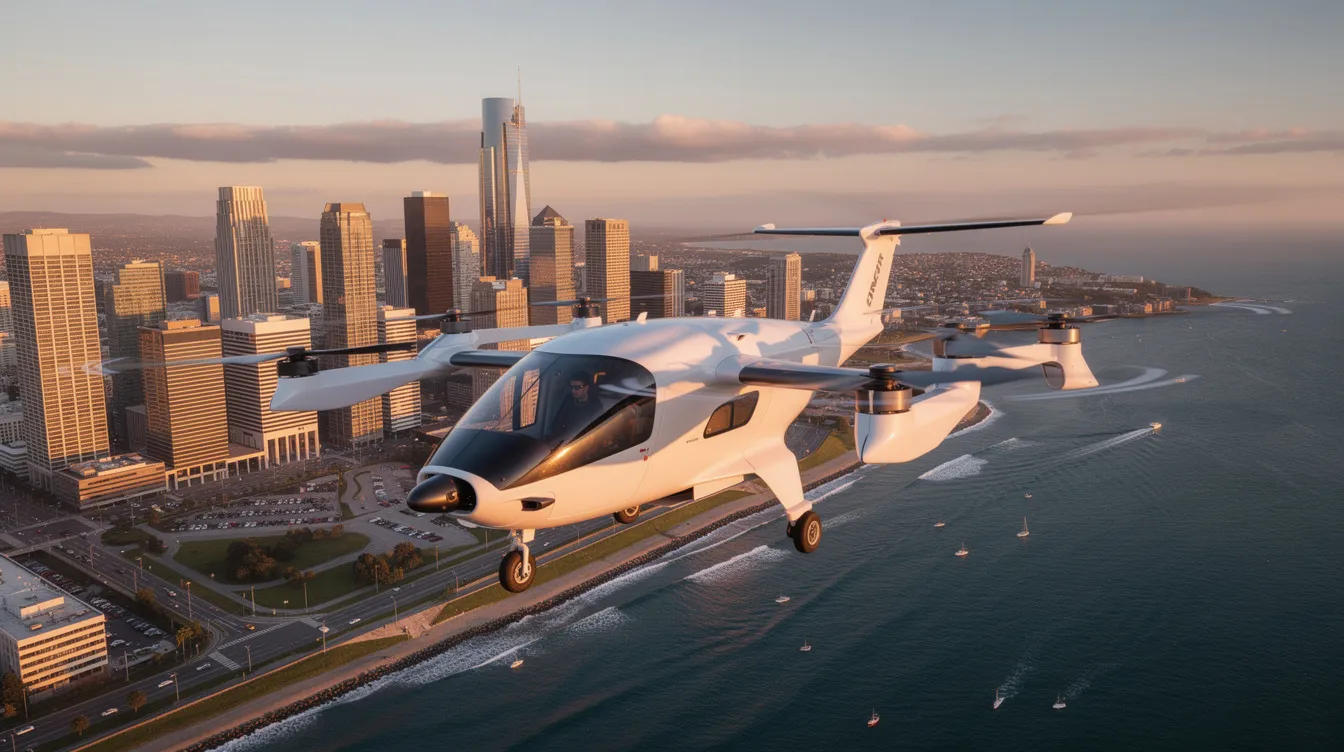
A new category of aircraft is approaching commercial reality, and it has the potential to reshape how private aviation clients move through congested cities, reach remote destinations, and connect to their jets. eVTOL stands for electric vertical takeoff and landing—these aircraft use electric motors to lift off vertically like helicopters and then transition to efficient forward flight like traditional airplanes. eVTOL aircraft can operate without runways, enabling access to locations traditional aircraft cannot reach. They are no longer a concept sketch. They are flying, testing, and progressing through certification. Here is what business travelers and fractional jet owners need to know right now.
eVTOL stands for electric vertical takeoff and landing. These aircraft use electric motors to lift off vertically like helicopters and then transition to efficient forward flight like traditional airplanes.
eVTOL aircraft can operate without runways, enabling access to locations traditional aircraft cannot reach.
Advanced air mobility will enable urban air taxis, short-haul city-to-city hops, and feeder flights that complement private jets and fractional jet ownership.
The Federal Aviation Administration is actively certifying eVTOL aircraft and operations, with early commercial services expected in the United States before the end of the decade.
eVTOL aircraft are designed to operate without runways, opening access to vertiports in dense urban environments where traditional aircraft cannot reach.
Companies like BlackJet Fractional Jet Ownership are monitoring eVTOL development to integrate these vehicles into future Reserve Fleet and Equity Fleet access models when the technology and regulations mature.
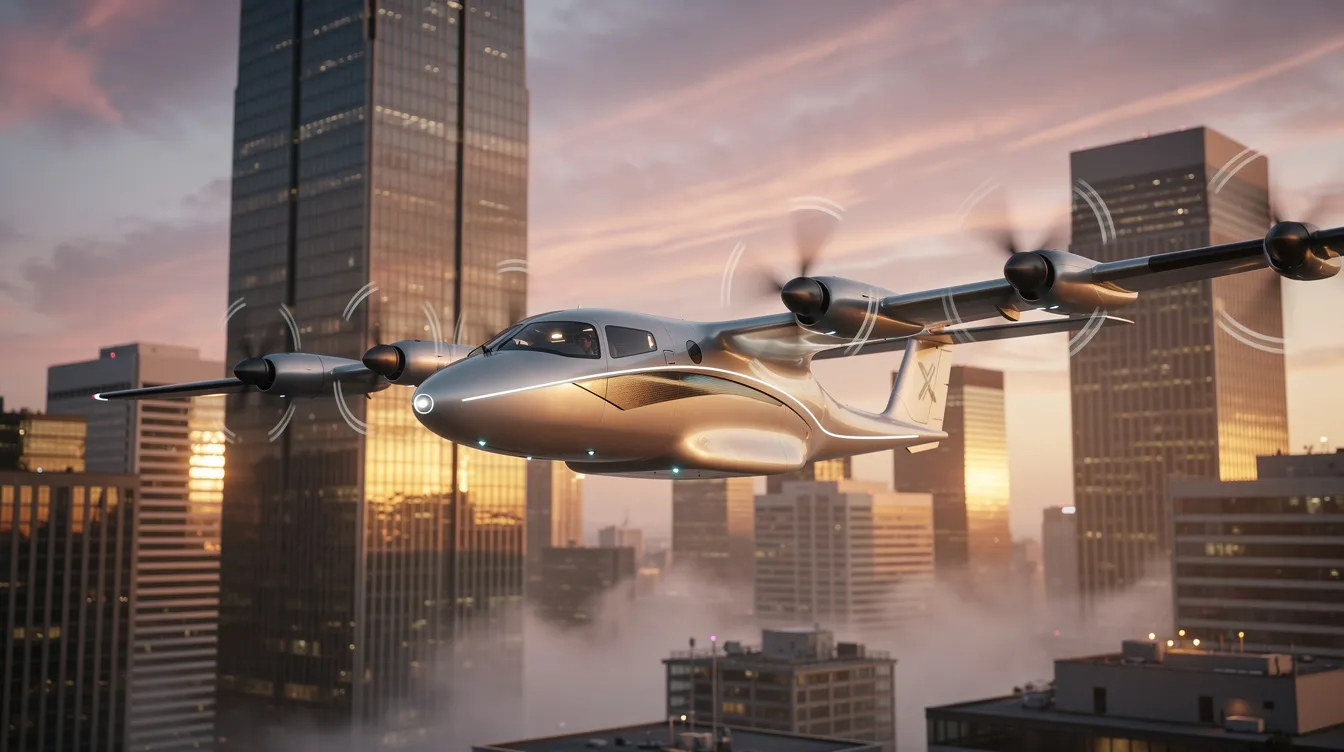
The term eVTOL stands for "electric vertical takeoff and landing," describing a new class of electric rotorcraft designed for short-range, point-to-point air mobility. These aircraft combine vertical takeoff and landing capability with wing-borne forward flight, replacing traditional turbine engines with multiple electric motors. eVTOLs are a key component of Advanced Air Mobility (AAM), the broader ecosystem that includes air taxi service, regional connections, and cargo operations.
As of 2025, the Vertical Flight Society's directory tracks over 1,100 distinct eVTOL and electric aircraft concepts from more than 450 companies worldwide. Yet only a small group of manufacturers—including Joby Aviation, Archer Aviation, Volocopter, and Lilium—are in advanced test and aircraft certification phases. The gap between concept and certified product is enormous, and that distinction matters for anyone evaluating this technology seriously.
For private jet travelers and those exploring fractional ownership programs, eVTOLs are less about replacing jets and more about reshaping the first and last 50 miles of the journey. Think airport-to-downtown transfers, short regional hops, and connections that currently involve unpredictable ground transportation in congested metropolitan areas.
eVTOL performance rests on three pillars: vertical takeoff and landing, forward-flight efficiency, and fully electric propulsion. Understanding each helps clarify what these new aircraft can and cannot do for time-sensitive travelers.
eVTOL aircraft utilize distributed electric propulsion for lift. Instead of a helicopter's single large main rotor, eVTOLs deploy multiple rotors—some configurations use six, others use eight or more—spread across the airframe. This arrangement provides stable vertical lift and critical redundancy: if one motor fails, the remaining motors keep the aircraft controllable. eVTOLs primarily use electric motors powered by batteries or hydrogen fuel cells, with current leading designs relying on high-energy-density lithium-based battery packs.
Once airborne, eVTOLs transition from vertical flight to forward wingborne flight. This shift takes different forms depending on the design. Tilt-rotor configurations physically rotate their propellers from vertical to horizontal orientation. Lift-plus-cruise designs use separate rotors for hover and fixed wings with dedicated cruise propellers for forward flight. Joby Aviation's S4, for example, uses six tilting electric propellers, targets a cruise speed around 200 mph, and aims for a range of roughly 100 miles per charge. Archer Aviation's Midnight targets approximately 150 mph and a similar 100-mile range.
Private flyers should understand the trade-offs: battery weight directly limits range and payload. More range means heavier batteries, which reduces cabin space and luggage capacity. Current challenges for eVTOL include battery limitations and infrastructure needs, both of which constrain useful load. First-generation cabins typically seat four to five passengers with modest baggage capacity—practical for short transfers, not for intercontinental trips with heavy luggage.
Advanced air mobility is an ecosystem of new aircraft, infrastructure, and digital systems enabling short-haul, on-demand air transportation in and around cities. eVTOLs are expected to transform urban transportation systems, and their use cases extend well beyond a single application.
Urban air taxis are the flagship application. eVTOLs are designed for urban air taxi services connecting downtown vertiports with major airports or business districts in 10- to 20-minute hops. Planned initial routes in Los Angeles, New York, Miami, and Dallas aim to cut 60- to 90-minute car trips to under 20 minutes. Urban air mobility promises to compress the most frustrating segments of business travel.
eVTOLs also offer potential applications in emergency medical services and cargo logistics. On the cargo side, the range is striking: Wing's eVTOL drones can carry up to 1.5 kg for lightweight last-mile delivery, the VoloDrone can transport up to 200 kg over 40 km for industrial logistics, and the Sabrewing Rhaegal can carry 5,400 pounds of cargo for heavy freight. JumpAero is developing a one-seater eVTOL for emergency services, and eVTOL aircraft can assist in firefighting and search operations where rapid vertical access is critical.
For private jet clients specifically, the value lies in last-mile transfers from FBOs to city centers, quick hops between corporate campuses, or short regional trips where deploying a business jet is uneconomical. Typical eVTOL flight time per leg will run 15 to 45 minutes—optimized for frequency and density of AAM operations rather than long-range missions.
eVTOL aircraft are designed to meet commercial airline safety standards before carrying paying passengers. The certification path is rigorous and involves three core approvals: type certification for the aircraft itself, production certification for the manufacturer, and operating certification for the airline or operator.
The Federal Aviation Administration (FAA) has made significant progress. The FAA updated air carrier definitions in July 2023 to include powered-lift operations, encompassing airlines and other operators. The FAA issued final rules for powered-lift operations in October 2024 through SFAR No. 120 and Part 194, establishing pilot certification, instructor training, and operational requirements for this entirely new category—the first such framework since helicopters. The European Union Aviation Safety Agency (EASA) published SC-VTOL-01 for VTOL aircraft certification in July 2019, establishing Europe's parallel regulatory path.
As of March 2026, 14 out of 23 electric propulsion type certification projects submitted to the FAA are eVTOL designs under the special class pathway. Only two—Joby Aviation's S4 and Archer Aviation's Midnight—have had their special class airworthiness criteria issued. Joby has entered Stage 5 (Type Inspection Authorization), with FAA-conforming aircraft flying. Archer has achieved 100% Means of Compliance acceptance and is conducting piloted flight envelope testing.
The safety advantages of distributed electric propulsion are tangible: multiple independent motors and battery systems mean a single component failure does not compromise the ability to land safely. The quiet operation of electric motors also reduces noise levels substantially compared to helicopters, which is essential for community acceptance and vertiport siting. The FAA issued vertiport design standards in September 2022 to guide the development of landing aircraft facilities in urban environments.
Understanding how eVTOL aircraft compare to helicopters and traditional aircraft helps clarify where each fits in a private traveler's itinerary.
Attribute | eVTOL | Helicopter | Light Jet |
|---|---|---|---|
Vertical access | Yes (vertiports, helipads) | Yes (helipads) | No (runway required) |
Cruise speed | 110–200 mph | 120–160 mph | 400–500+ mph |
Range per leg | 25–100 miles | 200–400 miles | 1,000–2,000+ miles |
Noise | Significantly quieter | Loud | Moderate |
Emissions | Zero tailpipe; eVTOL aircraft are 100% electric and produce no emissions during flight | High | High |
Operating cost | Lower (projected) | High | Higher |
Cabin size | 2–4 passengers | 4–6 passengers | 4–8+ passengers |
eVTOL aircraft are 100% electric and produce no emissions during flight, offering helicopter-like access to helipads, vertiports, and rooftop sites but with much quieter electric motors and simplified mechanical systems. Helicopters still excel at longer vertical flight missions, while private jets and different types of jet airplanes remain the clear choice for medium- and long-haul travel.
Consider a practical scenario: a fractional jet owner flies from Dallas to Houston by jet—a 240-mile leg ideally suited to a super midsize jet. Upon landing, instead of a 60-minute car ride through Houston traffic, they transfer to an eVTOL air taxi for a 12-minute flight directly to a vertiport near their downtown meeting. Passenger comfort in first-generation eVTOL cabins will resemble premium short-haul service—compact but functional—rather than the space of a midsize airplane cabin.

For companies like BlackJet Fractional Jet Ownership, eVTOL technology is a strategic complement—not a replacement—to private jets in both Reserve Fleet and Equity Fleet programs. The core value proposition of fractional jet ownership for individuals and corporations centers on speed, flexibility, and predictable access for 25 to 150 flight hours per year. eVTOLs extend that value by eliminating ground-level bottlenecks.
Future membership or jet card-style offerings could bundle itineraries where a fractional jet handles the core flight segment, and eVTOLs manage short-range spokes. A door-to-door itinerary might combine chauffeured ground transport to a city vertiport, an eVTOL transfer to a nearby airport, a jet leg for the primary distance, and another eVTOL hop at the destination.
Early adoption will likely focus on corporate shuttle routes between campuses, airport-to-downtown connectors used by C-suites in congested cities, and premium resort access where local terrain makes ground travel slow—similar to how travelers today weigh fractional jet ownership vs membership programs for longer legs. High-frequency travelers stand to gain the most: reduced total travel time, more predictable arrival windows, and the ability to use smaller airfields closer to final destinations.
BlackJet Fractional Jet Ownership does not yet offer eVTOL access as of 2026, but it is actively monitoring certification milestones, infrastructure build-out, and demand trends to determine when these services can be offered with the same reliability standards clients expect from their jets.
Detailed pricing is still evolving, but the economic structure of eVTOL air mobility is coming into focus, much like understanding the total cost of fractional jet ownership helps clarify private jet economics. Industry projections suggest initial eVTOL aircraft unit costs between $1.2 million and over $4 million, depending on size, range, and complexity.
Core economic drivers favor eVTOLs on short legs: electric motors require less maintenance than turbines, there is no jet fuel burn during flight, and lower vibration reduces airframe fatigue—paralleling how fractional jet ownership financing structures seek to optimize lifecycle costs for jet users. However, battery replacement cycles, vertiport infrastructure investment, and the capital cost of the vehicles themselves remain substantial.
Likely early pricing models include:
Per-seat air taxi fares on fixed routes (downtown to airport)
On-demand charter pricing for the full aircraft
Corporate shuttle subscriptions for high-frequency routes
Bundled hour-blocks combining eVTOL legs with fractional jet hours
A 15-mile downtown-to-airport trip taking 10 to 15 minutes by eVTOL might cost a multiple of a black car service but deliver major time savings during rush hour. The value for private aviation clients is less about replacing an expensive jet hour and more about compressing total door-to-door journey time—reducing unproductive minutes that add up across dozens of annual trips.
eVTOL operations depend on a network of vertiports—specialized facilities for takeoff and landing, battery charging, passenger processing, and maintenance. The FAA issued vertiport design standards in September 2022, and early operations will leverage existing heliports, FBOs, and underused general aviation airport space before purpose-built rooftop and urban infill vertiports scale up.
For travelers accustomed to private aviation, the experience will include private or semi-private lounges, fast screening where required, and seamless transfers to jets or ground vehicles. Rapid charging or battery swap turnaround is critical to keeping service reliable, with industry targets measured in tens of minutes rather than hours.
Advanced scheduling platforms will allow travelers and flight departments to coordinate eVTOL and jet legs in a single itinerary, much as floating fleet options in fractional ownership coordinate aircraft availability across networks today. Think of it as multimodal travel planning built to private aviation service standards—integrated apps that book the vertiport, the eVTOL hop, and the jet segment in one workflow.
While the United States and Europe lead in regulation, eVTOL and advanced air mobility are global. The Civil Aviation Administration of China (CAAC) approved eVTOL type certification for passenger flight in October 2023, making China an early mover with certified vehicles like the EHang EH216-S. The CAAC issued airworthiness standards for eVTOLs in December 2025, further solidifying Asia-Pacific's momentum.
High-visibility initiatives include planned services around the 2028 Los Angeles Olympics, advanced trials in Dubai and Abu Dhabi (where Joby has a certified four-node vertiport network), and pilot projects in Paris, Singapore, and Tokyo. Collaborations between the FAA, EASA, the UK CAA, Transport Canada, and regulators in Japan, South Korea, and the UAE aim to harmonize certification and operational standards across the aviation world.
Multinational corporations and globally mobile families using fractional jet ownership may first encounter eVTOL services at international hubs where adoption moves fastest, just as they already evaluate the best fractional jet ownership programs when choosing providers. Dense Asian megacities are focusing on urban congestion relief, European cities emphasize low-noise tourism corridors, and U.S. markets are combining business and lifestyle routes.
Many developers view piloted eVTOL aircraft as a bridge to a future of highly automated or fully autonomous operations. Wisk aims to launch commercial air taxi services by 2030 with an autonomous approach. Autonomy could help alleviate pilot shortages, enable higher aircraft utilization, and reduce per-mile costs—factors directly relevant to corporate travel planners and family offices evaluating long-term transportation strategies.
Sustainability is a core advantage. All-electric propulsion means zero tailpipe emissions during flight, with potential use of renewable electricity to further reduce carbon footprints. Reduced noise levels versus traditional rotorcraft make operations in urban environments more viable and sustainable from a community standpoint. eVTOLs mark a new era for short-range air mobility and its environmental profile.
For long-range flying, sustainable aviation fuel, more efficient engines, and optimized routing remain critical for jets, while fractional jet ownership as an investment continues to frame how many private flyers access those aircraft. eVTOLs and fractional jet ownership are complementary strategies in decarbonizing travel—one addresses the short segments, the other handles speed, range, and flexibility for core business missions.
BlackJet Fractional Jet Ownership expects eVTOL and advanced air mobility to reshape trip design over the coming decade. The company's focus remains on delivering predictable, high-quality jet access today while positioning to integrate emerging options as they prove capable, certified, and reliable.
Below are answers to questions that private flyers and corporate travel managers are asking as eVTOL technology approaches commercial reality.
As of 2026, most eVTOL operators plan to launch as separate air taxi services rather than integrating directly into fractional fleets. Over time, however, integration with fractional aircraft ownership programs and jet membership models is expected as utilization data, infrastructure density, and regulatory certainty improve.
Companies like BlackJet Fractional Jet Ownership are closely tracking certification progress, fleet performance, and vertiport build-out to determine when eVTOL access can be offered with the same reliability standards as jets, while also monitoring evolving tax implications for fractional jet owners. Early collaborations will likely take the form of preferred partnerships or coordinated scheduling rather than direct eVTOL ownership inside a fractional jet fleet.
Most first-generation commercial eVTOLs target ranges of roughly 25 to 100 miles per leg, with cruise speeds in the 100 to 150 knot (115–170 mph) range depending on design. Effective range will vary with payload, weather, routing, and reserve energy requirements, so operators will likely schedule typical flights toward the middle of that range rather than at theoretical maximums.
These performance profiles make eVTOLs ideal for airport-city transfers and regional hops, not for cross-country or international segments where private jets remain essential.
In the early years, many eVTOL flights will depart from existing heliports, FBOs, or dedicated sections of general aviation airports—often co-located with private jet facilities. Over time, purpose-built vertiports will appear closer to business districts, stadiums, and resort destinations, but connectivity to traditional airports will remain central to advanced air mobility planning.
When integrated into private aviation itineraries, transfers between a jet and an eVTOL aircraft will typically be managed by the operator or service provider to minimize connection risk and hassle, similar to how providers manage liability coverage in fractional jet ownership behind the scenes.
Like helicopters and small aircraft, eVTOL operations will be sensitive to local weather conditions including low visibility, strong winds, and thunderstorms. Advanced flight control systems, robust dispatch centers, and integration with air traffic management will help operators manage these risks, but conservative operating envelopes are likely in the early years of service.
Business travelers planning time-critical itineraries should continue building realistic buffers, treating eVTOL as a tool to reduce average door-to-door time rather than eliminate all timing uncertainty—just as careful review of essential contract terms in fractional jet ownership helps set realistic expectations for jet access.
Start by mapping your most frequent short-haul and airport-transfer routes where eVTOL could add value once available. Evaluate which ground segments cost you the most time, and consider how a 10- to 15-minute flight could replace a 60-minute drive.
Work with trusted advisors like BlackJet Fractional Jet Ownership to build flexible travel strategies and ownership structures that can incorporate eVTOL options as they reach commercial maturity, whether through traditional shares or models like 1/8th fractional jet ownership. Ready to explore the smarter way to fly private? Visit FractionalJetOwnership.com to learn how fractional ownership today can be aligned with tomorrow's advanced air mobility solutions.
eVTOL aircraft represent a transformative leap in private aviation, offering electric vertical takeoff and landing capabilities that complement traditional jets by solving the “last mile” challenge in congested urban and regional travel. Their ability to operate without runways, combined with quieter, emission-free electric propulsion and rapid vertical takeoff and landing, positions eVTOLs as essential components of the evolving Advanced Air Mobility ecosystem.
For high-net-worth individuals and corporations engaged in fractional jet ownership, integrating eVTOL services promises to enhance flexibility, reduce total travel time, and create seamless multimodal itineraries. While eVTOLs are not replacements for jets, they extend the reach and convenience of private aviation, especially for short hops and airport transfers.
BlackJet Fractional Jet Ownership is committed to guiding clients through this new era by monitoring regulatory progress, infrastructure development, and technological advances. As eVTOL aircraft become commercially viable and certified, BlackJet aims to incorporate these innovative aircraft into its Reserve Fleet and Equity Fleet programs, ensuring clients benefit from the most efficient and forward-looking private aviation solutions.
To learn more about how fractional jet ownership can provide immediate access to private jet travel while positioning you for the future of advanced air mobility, visit FractionalJetOwnership.com. Explore how combining traditional private jets with emerging eVTOL technology can redefine your travel experience with unmatched convenience, reliability, and efficiency.
