
January 24, 2026
Private aviation has long been viewed as a luxury reserved for celebrities and ultra-high-net-worth individuals. In reality, modern private aviation has evolved into a practical, cost-conscious travel solution for business leaders, entrepreneurs, and frequent travelers seeking efficiency, flexibility, and reliability.
Today, flying private can rival — and in some cases outperform — the cost and value of commercial travel when time, productivity, and convenience are factored in. Fractional ownership, shared charter models, and strategic flight planning have reshaped how private aviation fits into everyday business and personal travel across the United States and globally.
This guide explores how private aviation works, how costs compare, and why fractional jet ownership has become one of the most compelling alternatives to traditional airline travel.
Private aviation offers a fundamentally different travel experience from commercial airlines. Instead of rigid schedules and crowded terminals, travelers gain control over departure times, routing, and onboard experience.
Private flights allow access to thousands of regional and executive airports, many of which are not served by commercial airlines. This reduces total travel time by eliminating long drives, layovers, and congested hubs.
Business travelers benefit from avoiding TSA lines, boarding delays, and last-minute gate changes. Flights depart from private terminals where security procedures are streamlined and personalized.
The result is a stress-free, time-efficient travel experience that prioritizes reliability, discretion, and comfort without unnecessary complexity.
Private aviation includes a range of charter options designed to meet different travel needs and budgets. These models allow travelers to experience private flying without owning an aircraft outright.
Semi-private flights involve sharing a private aircraft with a limited number of passengers traveling along a similar route. This option significantly reduces costs while preserving the core benefits of private aviation.
Empty leg flights occur when an aircraft must reposition without passengers. These flights are often offered at steep discounts and can make private travel surprisingly affordable when schedules align.
Shared charter allows multiple parties to split the cost of a flight while maintaining privacy, flexibility, and comfort. This is particularly attractive for business teams or families traveling together.
Established charter operators such as Tradewind Aviation provide access to a range of aircraft, from light jets for short hops to larger cabin aircraft for cross-country travel.
Private flying becomes cost-effective when total travel economics are evaluated holistically.
Commercial airfare may appear cheaper upfront, but delays, lost productivity, hotel stays due to missed connections, and wasted time often inflate the real cost. Private aviation minimizes these inefficiencies.
Small groups traveling together can find private flights competitive with first-class or last-minute commercial fares, particularly on high-demand routes. Costs are influenced by aircraft size, flight duration, airport fees, and departure timing.
Strategic use of empty legs, shared charters, and optimized routing allows travelers to control expenses without sacrificing quality.
Certain routes consistently attract strong demand due to business activity, entertainment travel, and time sensitivity.
Popular private aviation routes include:
New York to Las Vegas
Los Angeles to Las Vegas
Chicago to New York
Miami to New York
London to Paris
Private aviation offers unmatched efficiency on these corridors by eliminating connections and minimizing ground delays. One-way and round-trip options allow travelers to design itineraries around their schedules rather than airline availability.

The private flight experience is designed around comfort, privacy, and efficiency.
Boarding typically takes minutes rather than hours. Passengers arrive shortly before departure and board the aircraft directly. Cabins are spacious, quiet, and configured for productivity or relaxation.
Personalized catering, adjustable seating, and attentive crew service elevate the journey without unnecessary formality. From booking through arrival, private aviation offers a seamless, predictable experience.
Access to smaller airports often places travelers closer to their final destination, reducing ground transportation time and improving overall trip efficiency.
Commercial air travel remains effective for mass transportation but introduces challenges that private aviation eliminates.
Commercial flights require early arrival, extensive security screening, crowded terminals, and fixed schedules. Delays and cancellations can cascade into missed meetings or lost opportunities.
Private aviation offers flexibility, privacy, and reliability. Flights depart on the traveler’s schedule, routes are customized, and service is tailored to individual needs.
For frequent travelers and decision-makers, private aviation becomes a strategic asset rather than a luxury indulgence.
When considering private aviation, several factors influence cost and experience.
Aircraft selection matters. Light jets are ideal for short regional trips, while midsize and super-midsize jets balance range and efficiency for longer routes.
Departure timing affects availability and pricing, especially during peak travel periods. Flexible schedules can unlock cost savings through empty legs or shared charters.
Understanding potential fees — such as overnight crew costs or airport handling charges — ensures transparency and better planning. Working with a knowledgeable aviation advisor simplifies these decisions.
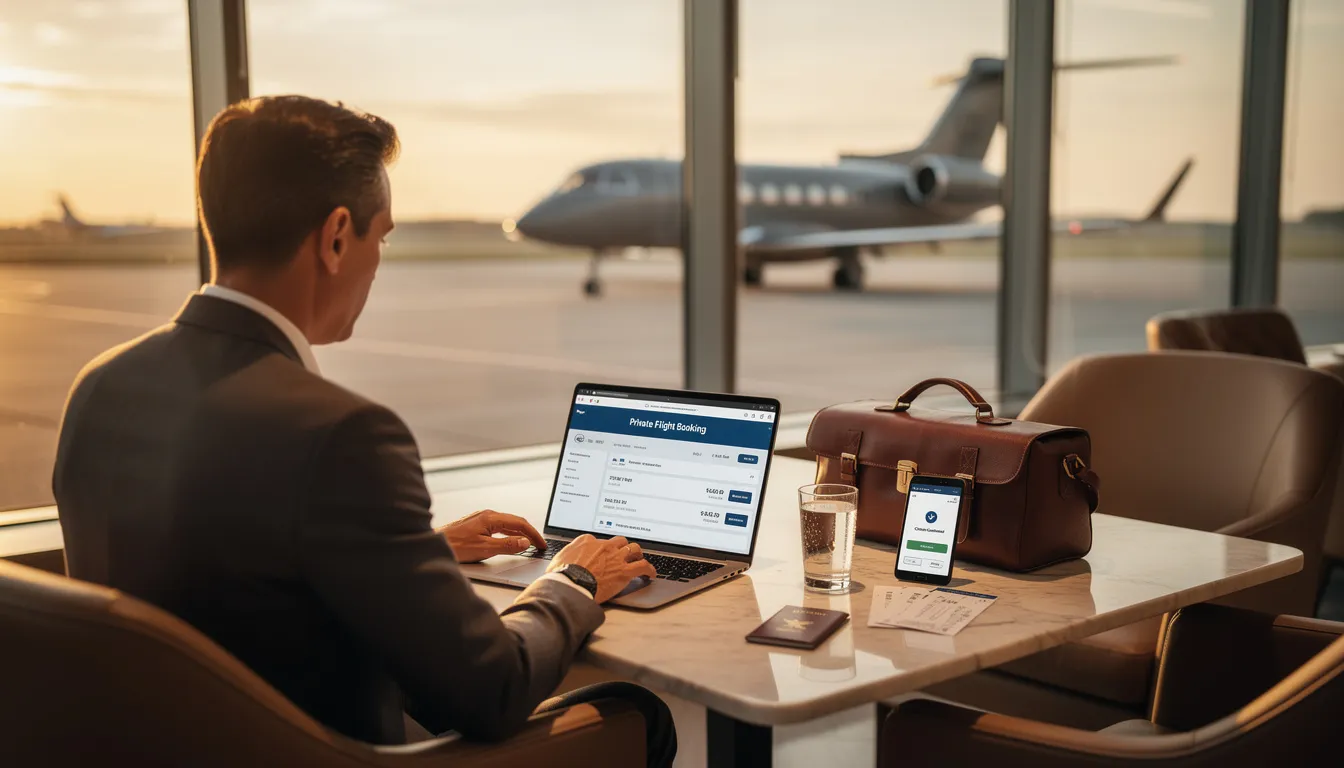
Booking a private flight involves selecting a route, aircraft type, and departure schedule. Ground transportation, catering preferences, and onboard amenities can be arranged in advance.
Frequent travelers may benefit from structured access models such as jet cards or fractional ownership programs, which offer predictable pricing and guaranteed availability.
Maintenance, operational oversight, and compliance considerations are handled by the provider, allowing travelers to focus on the journey rather than logistics.
Clear communication and upfront cost disclosure are essential for a smooth booking experience.
Flexibility is one of private aviation’s greatest advantages.
Flights can be scheduled with minimal notice, rerouted mid-trip, or adjusted to accommodate changing priorities. This agility is invaluable for business leaders managing dynamic schedules.
Empty leg availability often arises from last-minute adjustments, creating opportunities for cost-efficient private travel.
From departure to arrival, private aviation adapts to the traveler — not the other way around.
Las Vegas remains one of the most popular private aviation destinations in the United States.
Private flights to Las Vegas serve entertainment travel, corporate events, and leisure trips. Access to executive airports reduces congestion and improves arrival efficiency.
With quicker boarding and minimal airport delays, private aviation offers a convenient and refined way to travel to one of the country’s busiest destinations.
New York is a major hub for private aviation, supporting financial services, corporate headquarters, and international travel.
Private flights provide access to smaller regional airports, allowing travelers to bypass congested commercial hubs. This results in faster departures and arrivals, particularly for business-critical travel.
The private aviation experience in New York emphasizes efficiency, discretion, and reliability.
The terms “private charter” and “private flight” are often used interchangeably. Both describe on-demand air travel using dedicated aircraft rather than commercial airlines.
Private charter typically refers to the service model, while private flight describes the experience itself. Regardless of terminology, both provide personalized service, flexible scheduling, and private terminals.
Private aviation providers offer a range of access models tailored to different usage patterns and travel needs.
Flying private from New York allows travelers to avoid some of the world's most congested airspace and terminals.
Charter operators provide access to light, midsize, and large cabin jets capable of regional and cross-country missions. This versatility supports both short business trips and long-haul travel.
The experience prioritizes speed, privacy, and seamless coordination from departure to arrival.
Private aviation services encompass far more than just flights.
Providers manage aircraft operations, maintenance, crew staffing, regulatory compliance, and safety oversight. Travelers benefit from a turnkey experience without operational complexity.
Fractional jet ownership, in particular, offers shared access to professionally managed aircraft fleets with predictable costs and guaranteed availability.
These services are designed to meet the needs of executives, entrepreneurs, and families who value efficiency and control.
You can fly private for the cost of a commercial flight by using options such as empty-leg flights, shared-charter flights, and semi-private jet flights. These alternatives allow you to share costs with other travelers or take advantage of discounted repositioning flights, making private aviation a cost-effective option.
Empty-leg flights occur when a private jet needs to reposition without passengers, either to pick up new customers or to return to its base. These flights are offered at significantly reduced prices, sometimes up to 75% off, providing an affordable way to experience private jet travel.
Shared charter flights allow multiple travelers to purchase seats on an already scheduled private flight. This option reduces individual costs while still providing many of the key benefits of private aviation, such as avoiding long security lines and enjoying a spacious cabin.
Semi-private flights combine the luxury and privacy of private jets with the cost-sharing benefits of shared flights. Passengers share the aircraft with a limited number of other travelers, offering a premium travel experience at a lower cost than fully private charters.
Booking a private flight typically involves selecting your route, aircraft type, and preferred schedule through private aviation operators or booking platforms. Many services offer transparent pricing, a seamless booking process, and dedicated teams to assist with custom routes and travel plans.
Reputable private aviation providers emphasize transparent pricing to avoid hidden fees. However, it’s important to clarify all potential additional fees, such as maintenance costs, airport handling charges, and catering, to ensure a hassle-free travel experience.
Yes, private aviation offers the flexibility to book one-way flights, which is ideal for travelers with dynamic schedules or those taking advantage of empty leg flights. This flexibility contributes to the overall convenience of flying private.
Flying private offers numerous benefits, including avoiding long lines and crowded terminals, flexible scheduling, access to smaller airports closer to your destination, personalized service, and a more exclusive and comfortable travel environment.
Private flights can often be scheduled on short notice and adjusted mid-trip if necessary. This flexibility allows travelers to tailor their travel plans according to changing priorities, making it a key benefit over fixed commercial airline schedules.
Yes, many private aviation operators offer membership plans that offer benefits such as guaranteed availability, lower-cost options, and streamlined booking processes. Membership plans are a popular way to access private flights more conveniently and cost-effectively.
Most private flights allow pets on board, often with personalized accommodations to ensure their comfort. It’s best to check with your private aviation provider regarding specific pet policies.
Choosing established private aviation operators with dedicated teams, transparent pricing, and positive reviews helps ensure a seamless journey and high customer satisfaction. Clear communication throughout the booking process and travel experience is key.
Flying private no longer means high cost or unnecessary extravagance. Through fractional ownership, shared charter, and strategic planning, private aviation has become an intelligent alternative to commercial air travel.
When time savings, flexibility, and reliability are considered, private aviation often delivers superior value for frequent travelers and business leaders.
Ready to explore the smarter way to fly private? Visit https://www.fractionaljetownership.com/ to learn how fractional ownership and tailored aviation solutions can transform the way travel is experienced.
