June 24, 2026
For decades, the four-seater plane has been the backbone of general aviation in the United States and around the world. Whether the goal is a weekend trip with the family, a regional business hop, or building cross-country hours toward a commercial certificate, these aircraft deliver a practical blend of performance, utility, and accessibility that no other category quite matches. But choosing the right model-and knowing when to graduate beyond piston aircraft entirely-requires a clear understanding of what today's market offers.
This guide compares five of the most important four-seat aircraft flying today, breaks down the real costs of ownership, and explains how fractional jet ownership fills the gap when a single-engine piston airplane can no longer keep up with your travel demands.
Four-seat models are the most popular aircraft class in general aviation, serving as the default choice for families, private owners, and business travelers across the United States.
The Cessna 182 Skylane, Cirrus SR22T G6, Diamond DA40, Mooney Ovation, and Piper Arrow each represent distinct strengths in payload capacity, technology, efficiency, cruise speed, and complex training.
Typical cruise speed ranges fall between roughly 120 and 190 knots for mainstream four-seaters, with purchase price bands spanning about $80,000 on the used market to over $900,000 for a new, fully equipped high-performance single.
For travelers flying 25 to 150 hours per year on business or multi-city trips, stepping up from four-seaters to fractional jet ownership with BlackJet Fractional Jet Ownership can deliver dramatically more range, speed, and comfort with predictable costs.
The article compares headline models and then walks through ownership, charter, and fractional jet access so readers can match their mission profile to the smartest aviation solution.
A four-seater plane in general aviation is a light aircraft, typically a single-engine piston model certified under FAA Part 23, with seating for one pilot and up to three passengers. These four-place airplanes are designed for personal travel, flight training, time-building, and small business missions where commercial airline service is inconvenient or unavailable.
Common use cases include weekend family trips of 200 to 500 nautical miles, regional business hops between smaller airports, and cross-country flying for pilots working toward advanced ratings. Many pilots use four-seaters as their primary means of transportation, while others keep them for recreation and fly commercially or via private jets for longer, time-sensitive trips.
Four-seaters accommodate family, friends, or extra luggage more easily than two-seaters, making them generally considered more versatile than two-seat trainers. At the same time, four-seater planes often have weight constraints limiting capacity, particularly when full fuel is aboard, forcing owners to choose between range and passengers. They also have higher fuel consumption and maintenance costs compared to two-seaters.
Interestingly, most private pilots fly alone roughly 60% of the time, which means the back seat often carries bags rather than people. Still, having the option to fill all the seats when needed is what makes a four-seat airplane the practical sweet spot for owner-pilots.
Performance envelopes across the category are broad. Cruise speed ranges from about 110 knots in entry-level models to 190 knots or more in high-performance singles. Cruise speed ranges from about 110 knots in entry-level models to 190 knots or more in high-performance singles. For example, the Cessna 182 Skylane cruises between 130 and 140 knots, while the Cirrus SR22T G6 reaches approximately 180 knots, and the Mooney Ovation 2 GX can cruise between 185 and 190 knots. Range typically falls between 500 and 1,000 nautical miles, with the Cessna 182 Skylane offering a maximum range of about 900 miles. Takeoff distances vary as well, with the Diamond DA40 requiring roughly 1,200 feet.
Four-seater planes offer a balance of utility and performance and are generally considered more versatile than two-seaters. They accommodate family, friends, or extra luggage more easily, though weight constraints often limit capacity. Owning a four-seater plane provides unmatched travel flexibility, allowing pilots to depart on their own schedule without the hassles of commercial travel. However, these aircraft tend to have higher fuel consumption and maintenance costs compared to two-seaters.
Ownership involves significant recurring expenses, including hangar rental, insurance, mandatory annual inspections, fuel, and unexpected breakdowns. Typical annual inspection costs range from $1,500 to $5,000, insurance runs between $1,500 and $3,000 annually, and hangar fees vary from $200 to $2,000 monthly, depending on location. Fuel costs range from $50 to $150 per flight hour, while engine overhaul reserves add another $15 to $25 per flight hour. For example, the Diamond DA40 burns approximately 8 gallons of fuel per hour, contributing to its reputation as an efficient four-seater.
For pilots flying under 50 to 100 hours annually, chartering is often a better option. Charter rates include crew, fuel, and maintenance costs, eliminating fixed ownership expenses such as hangar fees, insurance, and depreciation. Additionally, charter provides access to various aircraft types as needed, offering flexibility without the commitment of ownership.
Fractional ownership bridges the gap between charter and full ownership, reducing costs while offering predictable access to professionally managed aircraft. Ideal for those flying 25 to 150 hours annually, fractional ownership provides flexibility in aircraft access, tax benefits, and the ability to use multiple aircraft types, and prospective owners benefit from understanding fractional jet ownership terminology and core concepts. This option allows owners to enjoy the benefits of private aviation with fewer responsibilities and more convenience compared to full ownership. Range typically falls between 500 and 1,000 nautical miles, and useful load is sufficient for two to four adults plus baggage, depending on fuel load. Four-seater planes offer a balance of utility and performance that sits neatly between simple trainers and larger cabin-class twins or light jets.
Owning a four-seater plane offers unmatched travel flexibility for pilots who want to depart on their own schedule, from their home airport, with no security lines or layovers. While BlackJet Fractional Jet Ownership focuses on private jets rather than piston four-seaters, understanding this segment helps readers identify exactly when it makes sense to graduate from a four-seat airplane to fractional jet access.
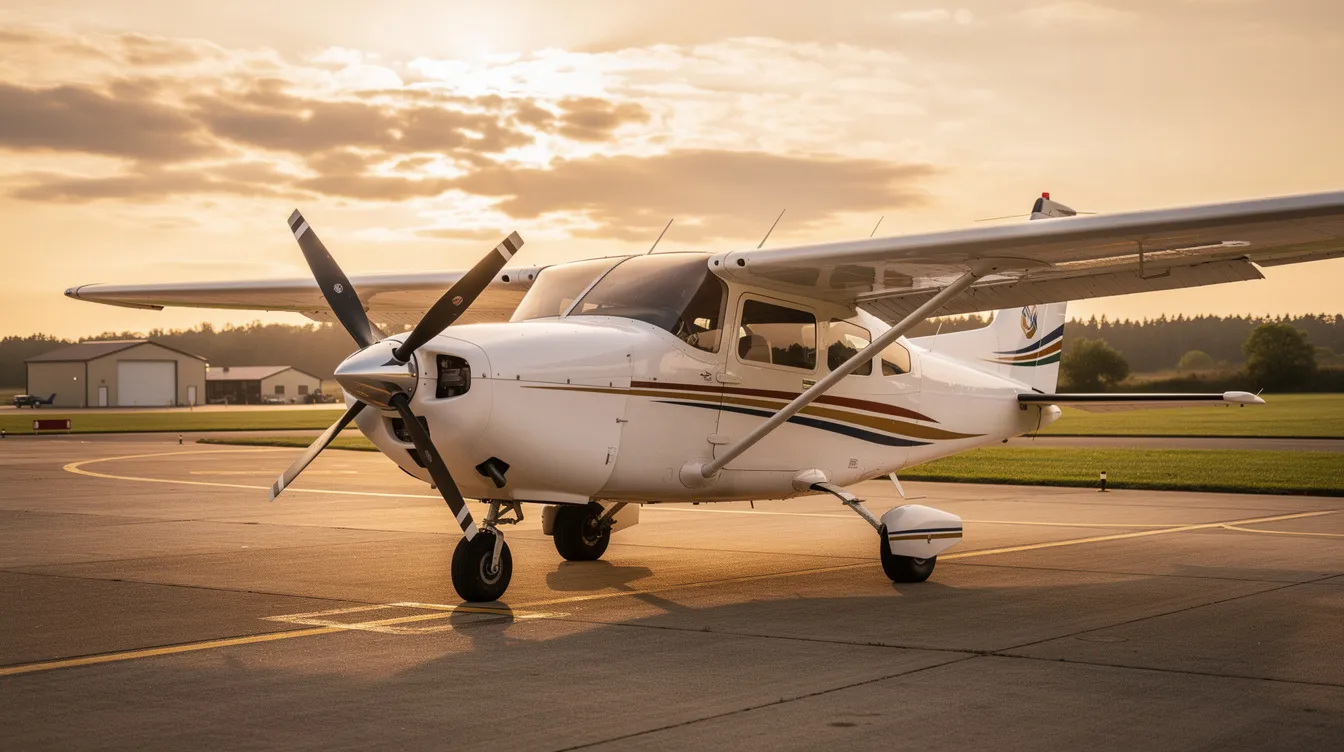
The Cessna 182 Skylane, introduced in 1956, remains one of the most popular four-seater planes for pilots who need a rugged, high-wing workhorse with a strong useful load. Its combination of payload, short-field capability, and broad industry support has kept it in continuous production for nearly seven decades.
The Cessna 182 Skylane has a cruise speed of 130 to 140 knots in normally aspirated form, and the turbocharged version pushes into the mid-160-knot range at higher altitudes. The Cessna 182 Skylane has a maximum range of about 900 miles with reserves, making it a capable cross-country machine for weekend and business trips.
Key specifications include a 230 hp engine (the Lycoming IO-540 in later models), fuel tank capacity of up to 88 usable gallons, and a useful load between roughly 1,110 and 1,228 pounds depending on equipment. That useful load means the Skylane can realistically carry four adults with bags on medium-range trips-a claim not every four-seater can make with full fuel aboard.
Operational strengths set the 182 apart:
Short-field performance with takeoff distance near 800 to 1,100 feet of ground roll
High-wing design providing excellent visibility and easy boarding
Stable IFR platform, especially with modern avionics upgrades
Suitability for grass strips and rough fields popular in U.S. backcountry flying
Electric flaps and a roomy interior that gives passengers more room than many competitors
Ownership considerations favor the Skylane as well. Parts are widely available, and the active used market offers 1960s through 1980s models trading between $80,000 and $150,000, with newer G1000 glass-cockpit aircraft from the late 1990s onward ranging from $250,000 to $400,000 or more. This broad price band makes the 182 accessible to both first-time private buyers and experienced owners looking for a great plane with proven reliability.
Compared with the other four-seaters covered in this guide, the Cessna 182 Skylane trades top-end cruise speed for superior payload and lower-field performance. It is slower than the Cirrus SR22T or Mooney Ovation but costs significantly less to acquire and operate, a tradeoff that makes perfect sense for many missions.
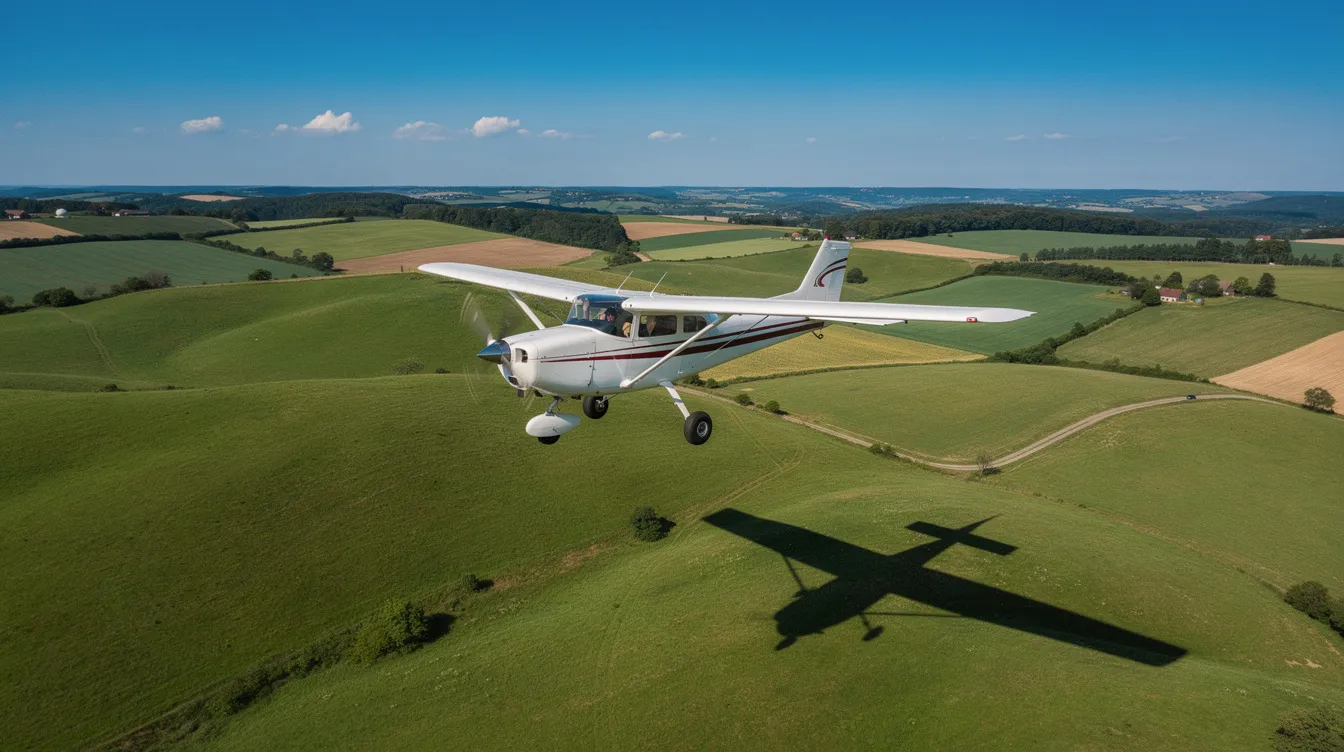
The Cirrus SR22T G6 represents the premium end of the four-seat aircraft market. This composite, fixed-gear airplane pairs a turbocharged 315 hp Continental TSIO-550-K engine with some of the most advanced avionics and safety systems available in any single-engine piston airplane.
The Cirrus SR22T G6 can reach cruise speeds of approximately 180 knots true airspeed at altitude, with a service ceiling of 25,000 feet and range sufficient for non-stop trips like New York to Chicago or Dallas to Denver under typical loading. That performance envelope places it firmly among high-performance singles, a category of four-seater aircraft built for serious cross-country travel.
Technology features define the SR22T experience:
Garmin Perspective+ flight deck with synthetic vision and envelope protection
CAPS whole-airframe parachute system, a differentiator no competitor matches
TKS known-ice certification on many G6 examples, offering hypoxia protection and the ability to reach altitudes above weather that would ground lesser aircraft
Air conditioning, leather interiors, and connectivity options that bring creature comforts closer to turbine aircraft standards
Pricing reflects the SR22T's position at the top of the segment. A well-equipped new SR22T G6 in the mid-2020s can approach or exceed $900,000, with a base price that already includes the Perspective+ suite. Late-model used examples often trade between $700,000 and $850,000, depending on options and total time.
The tradeoffs are real. Superior speed, technology, and resale value come with higher acquisition cost, higher fuel burn (12 to 15 gallons per hour at cruise), and a more demanding insurance and training profile compared with basic four-seaters. Insurers frequently require manufacturer-approved transition training before covering new SR22T owners.
Compared with the Mooney Acclaim (faster cruise speed but retractable-gear complexity) and the now-discontinued Cessna TTx (very fast but no parachute), the Cirrus SR22T serves as the benchmark for modern four-seat piston aircraft, particularly for buyers who want a new generation airplane with integrated safety systems.
The Diamond DA40 has earned a reputation as one of the most efficient aircraft in the four-seat category. Built by Diamond Aircraft in Austria and Canada, the DA40 family, including XLT and NG variants, appeals to flight schools and private owners who prioritize fuel efficiency, a strong safety record, and predictable handling over maximum cruise speed.
Performance numbers tell the efficiency story clearly. The Diamond DA40 cruises at 135 to 140 knots with a fuel burn of approximately 8 gallons per hour in NG diesel models, making it one of the lowest-cost four-seaters to operate on a per-mile basis. Practical range with reserves sits near 600 nautical miles with passengers, extending further when flying light. That makes it a solid cross-country machine for training missions and weekend travel alike.
The low-wing design features a large composite canopy that delivers excellent visibility in all directions-a characteristic that benefits both student pilots and touring owners. Interior layouts optimize for three adults plus baggage when tanks are full, though the back seat gets tight with four larger passengers. Later models equipped with the Garmin G1000 NXi flight deck bring glass-cockpit capability to a price point well below the Cirrus SR22.
Safety is a cornerstone of the DA40's appeal. Its composite construction provides strong crashworthiness, and industry safety statistics consistently rank the DA40 among the safest small aircraft in production. These numbers attract both schools and cautious first-time owners.
Price context for recent DA40 models places new aircraft in the mid-$300,000s to mid-$700,000s, depending on variant and avionics, with used aircraft often available under $300,000. That makes the DA40 competitive with the Cessna 172 and Piper Archer for buyers who want modern composite construction without the purchase price of a Cirrus.
Against other four-seaters in this guide, the Diamond DA40 does not match the cruise speed of a Mooney Ovation or Cirrus SR22, but its operating costs and training characteristics are superior for many missions, particularly those where hourly economy matters more than raw speed.
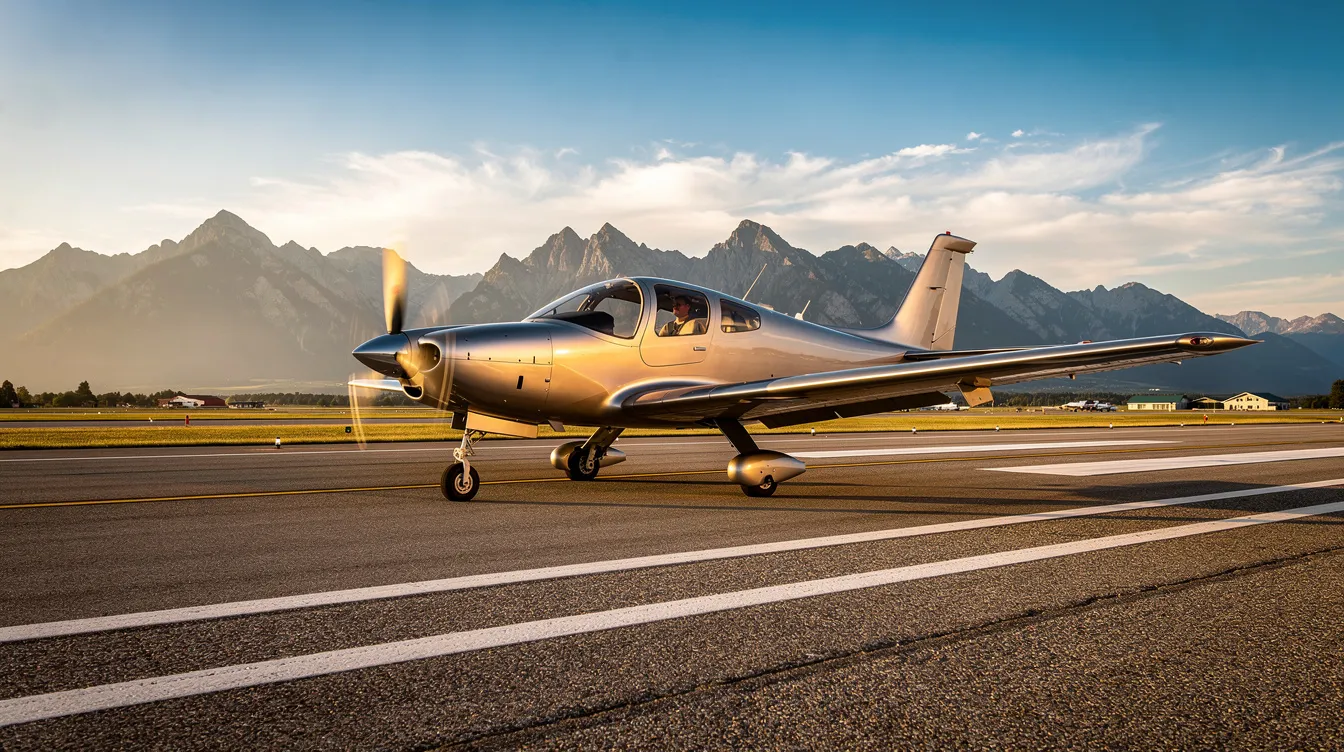
Mooney has built its reputation on a simple premise: go faster on less fuel. The Mooney Acclaim Ultra and Mooney Ovation 2 GX exemplify this philosophy, standing as some of the fastest single-engine four-seaters ever produced, aircraft that can cruise near light-turboprop speeds on piston fuel burns.
The numbers back up the claim. Mooney Acclaim variants with a turbocharged 310 hp engine achieve cruise speed figures around 230 knots true airspeed at altitude, while the Mooney Ovation 2 GX has a cruise speed of 185 to 190 knots on a 280 hp normally aspirated engine. High-performance piston singles like these represent a category of four-seater aircraft built specifically for serious cross-country travel where minimizing en-route time is the priority.
Design features that enable this performance include retractable landing gear, a sleek laminar-flow wing, composite cabin shells in "Ultra" models, and a constant-speed prop. Later models received Garmin G1000 NXi avionics and available FIKI systems that extend all-weather utility.
Real-world range and mission profile data are compelling. The Mooney Ovation 2 GX has a range of 500 to 800 nautical miles depending on payload and power settings, while Acclaim models with long-range fuel tank options can cover over 1,000 nautical miles non-stop in still air. For business travelers or owners whose mission profile demands fast, long legs, few four-seat aircraft compete.
Tradeoffs exist. Mooney cabins are narrower and more snug than a Cessna 182 or Cirrus, with less extra room for large passengers. Approach speeds are higher, and the stall speed demands more attention on short runways. Retractable gear and turbocharging on Acclaim models add maintenance complexity that fixed gear designs avoid entirely.
Used market realities matter too. Mooney's production history includes pauses and restarts around 2010 and later, and the current market for used examples ranges from $250,000 to $700,000 depending on year, avionics, and model. Thorough pre-buy inspections are essential given the speed-oriented operation these aircraft tend to see. A Beechcraft Bonanza often draws comparisons in this segment, but the Mooney's aerodynamic efficiency gives it a measurable speed advantage at similar power settings.
The Piper PA-28R Arrow-including the well-known Arrow III-is a classic four-seat complex trainer that bridges simple fixed-gear trainers and higher-performance touring aircraft. In production since the late 1960s, it remains one of the most widely used platforms for pilots pursuing complex endorsements.
Typical configurations include 180 to 200 hp engines, retractable tricycle landing gear, a constant-speed prop, and cruise speed in the 130 to 140 knot range. That places the Arrow between a Cessna 172 and a Mooney Ovation in performance-fast enough for regional touring, but primarily valued for the systems experience it provides.
The Arrow's role in complex training is central to its identity. Its systems-gear retraction, propeller control, and cowl flaps in some models-make it a common platform for pilots seeking complex endorsements and experience before moving to high-performance singles and twins. Many pilots who log hours in an Arrow go on to fly turbine aircraft or private jets, making it a stepping stone in a broader aviation career.
Ownership considerations favor the Arrow for budget-conscious buyers. The Piper Arrow has a used price range of approximately $80,000 to $180,000 depending on year and avionics, making it one of the most affordable ways into a four-place aircraft with retractable gear. Maintenance is well understood across the type, though buyers should pay close attention to landing gear inspection history and service bulletins. Annual inspections on an Arrow typically run toward the middle of the $1,500 to $5,000 range common across four-seaters, and buyers weighing it against jet solutions should also understand the total cost structure of fractional jet ownership.
In the larger four-seat market, the Arrow is not the fastest or most spacious seat airplane available. But it offers an accessible path into complex training and regional touring for owner-pilots who want to build experience without a six-figure-plus commitment.
Many pilots who train in four-seaters like the Arrow ultimately migrate to faster aircraft or private jets, where solutions like fractional jet ownership become relevant for their expanding travel needs, often starting with models such as 1/8 fractional jet ownership for around 100 hours per year.
Mission profile, budget, and pilot experience matter more than any single "best" model. Buyers should start with three questions: how far do you typically fly, how often, and with how many people?
Cruise speed versus fuel burn is the fundamental tradeoff. A Cessna 182 Skylane burns roughly 10 to 12 gallons per hour for 130 to 140 knots, while a Mooney Acclaim burns 15 to 20 gallons per hour for 230 knots. Takeoff distance and climb performance at high-density altitudes also vary significantly-the 182 excels at grass strips and rough fields, while the Mooney needs more room and smoother runways.
Understanding useful load calculations is critical. Fuel payload decisions-how much fuel versus how many passengers and bags-define real-world capability. Some four-seaters are effectively "three plus bags" when tanks hold full fuel. The Cirrus SR22T and certain Diamond DA40 configurations face this tradeoff, while the Cessna 182's generous useful load lets it carry four adults with enough fuel for 500-plus-mile legs. Weight limits vary by model and should be checked against your typical passenger count. A roomy interior and more room in the back seat matter on longer flights, especially for families.
Modern glass cockpits-Garmin G1000, NXi, Perspective+-along with autopilots, ADS-B, and de-icing or FIKI systems for all-weather IFR operations are increasingly expectations rather than luxuries. Safety features like the CAPS parachute system in Cirrus aircraft can influence insurance rates and peace of mind. A new generation of avionics has made even entry-level four-seaters more capable in instrument conditions than many older six-place aircraft.
Ownership involves significant recurring expenses, including hangar rental and insurance. Here is a realistic breakdown for most four-seaters:
Cost Category | Typical Range |
|---|---|
Annual inspections | $1,500–$5,000 |
Insurance | $1,500–$3,000 per year |
Fuel expenses | $50–$150 per flight hour |
Hangar fees | $200–$2,000 per month |
Engine overhaul reserves | $15–$25 per flight hour |
Total operating costs (blended) | $150–$400+ per flight hour |
Ownership involves paying for mandatory annual inspections, fuel, and unexpected breakdowns. These fixed costs persist whether the aircraft flies 50 hours or 200 hours per year, making annual utilization a key factor in per-hour economics. For a deeper look at how these numbers compare with private jet alternatives, the Private Aviation Cost Comparison guide offers a useful framework alongside a complete guide to the cost of fractional jet ownership.
Insurers may require make-and-model transition training for high-performance four-seaters like the Cirrus SR22T or Mooney Acclaim, adding both time and budget for new owners. Complex training requirements for retractable-gear aircraft like the Piper Arrow or Mooney also factor into the total cost equation. Even a place aircraft with up to six seats in its category may require additional endorsements if systems are more advanced than what a pilot has previously flown.
While owning a four-seat airplane is ideal for some pilots, many business travelers and families ultimately need more seats, more range, and higher cruise speed than piston four-seaters can provide. The question is not whether to fly privately-it is which model of private aviation access makes the most sense.
Chartering is better for flying under 50 to 100 hours annually. Charter rates include crew, fuel, and maintenance costs in a single price, and chartering eliminates depreciation costs associated with ownership. Charter also provides access to various aircraft types as needed-a turboprop for a short hop, a midsize jet for a coast-to-coast trip. The downside is inconsistency: aircraft availability, cabin configuration, and pricing can vary from trip to trip. For a look at how charter stacks up financially, the Private Jet Cost Breakdown Guide provides detailed comparisons, and travelers comparing options can review top fractional jet ownership programs and providers for a structured alternative.
Fractional ownership reduces costs compared to full ownership while offering predictable access to professionally managed jets. Programs like those offered through BlackJet Fractional Jet Ownership allow clients to buy a share in a private jet (Equity Fleet) or access reserved hours (Reserve Fleet) for 25 to 150 hours per year without the full ownership burden, and a comprehensive overview of fractional jet ownership costs helps clarify what that commitment looks like in practice.
Key benefits of fractional jets over four-seaters for certain missions include, especially when programs use flexible floating fleet structures in fractional ownership:
Higher cruise speed (400 to 500 knots versus 120 to 190 knots in piston aircraft)
Ability to carry more passengers and baggage in comfort
Non-stop capability on routes like New York to Miami, Los Angeles to Dallas, or Chicago to Aspen
Professional crews handling all flight operations
Tax benefits available with fractional ownership of jets, including accelerated depreciation, are explored in detail in this guide to tax implications and deductions for fractional jet owners
Fractional ownership provides guaranteed aircraft availability, removing scheduling uncertainty, while some travelers may prefer membership-style jet access instead of fractional ownership, depending on how often they fly
Fractional ownership offers flexibility in aircraft access, letting clients match aircraft size to trip needs
Upgrading from a four-seater to fractional jet access makes sense when travel patterns involve frequent trips over 500 to 700 nautical miles, multiple city pairs in a single day, or the need to carry more than four passengers in comfort. Executives visiting multiple cities on tight schedules, families regularly flying coast-to-coast, and companies needing predictable availability and tax benefits all benefit from comparing Reserve Fleet and Equity Fleet structures and understanding fractional jet ownership as an investment, with its benefits and tradeoffs.
BlackJet Fractional Jet Ownership can also help existing four-seater owners run a parallel strategy: keep a four-seater for local flying and personal enjoyment while using fractional jets for longer, time-critical national or international travel. Sling aircraft or light sport planes might handle the fun weekend flying, while a jet share covers the business miles, supported by smart financing options for fractional jet ownership shares that smooth the upfront cost.
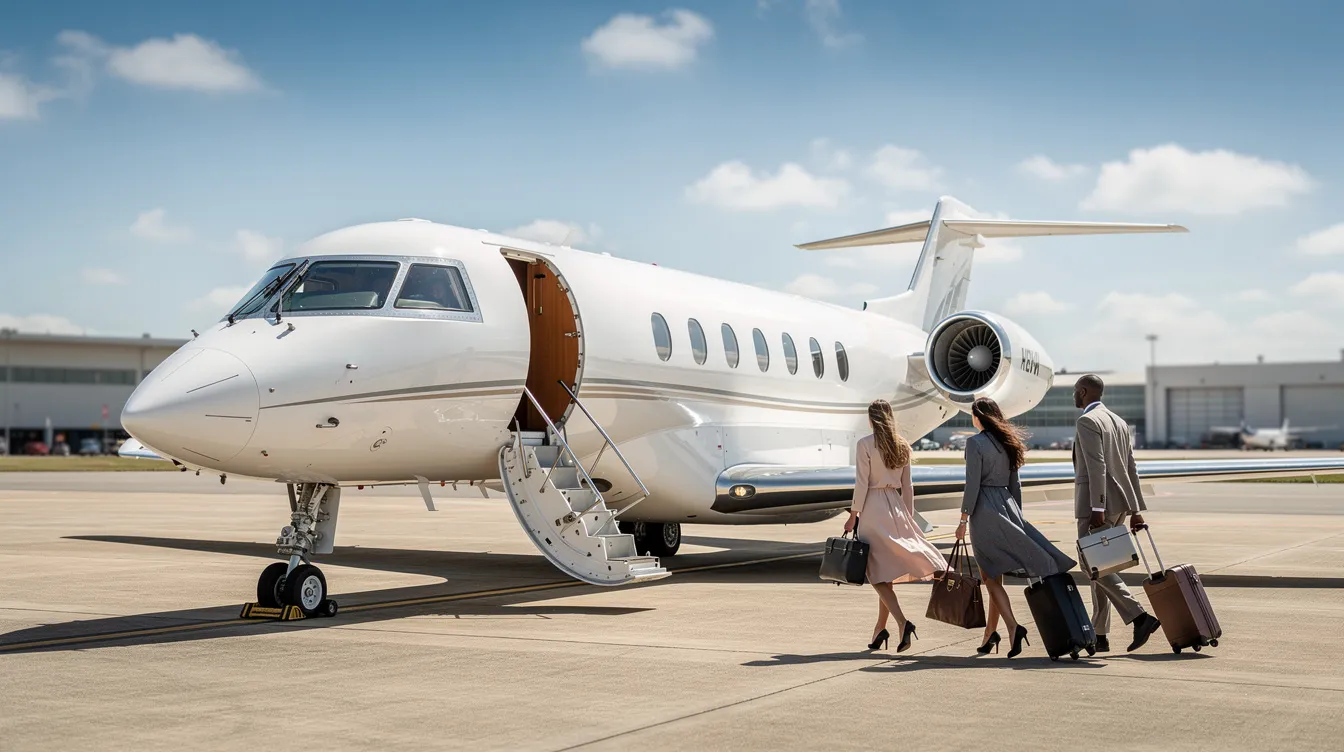
Readers interested in four-seaters are often exploring private aviation more broadly, including fractional aircraft ownership, jet card programs, and the economics of stepping up from piston aircraft.
Related topics worth exploring include:
Guides comparing four-seaters with light jets for business travel
Deep dives into cruise speed and range planning for cross-country missions
Explainers on complex training and high-performance endorsements
Case studies of business owners who transitioned from four-seaters to fractional jets
For foundational knowledge on how fractional programs work, the Fractional Jet Ownership Basics guide covers program structures, costs, and what to expect. Owners considering the leap from piston aircraft to jets will find the Four-Seater to Fractional Jet Transition resource particularly useful, along with an essential sample contract guide for aircraft fractional ownership that highlights how rights and responsibilities are structured.
Explore more posts and resources at FractionalJetOwnership. com, an educational hub for both piston pilots and newcomers to private jet solutions.
These FAQs address common questions not fully covered in the main article, focusing on practical decisions around four-seaters and private jet alternatives.
Mainstream four-seaters like the Cessna 172, Cessna 182 Skylane, Diamond DA40, and Piper Archer typically cruise between about 115 and 145 knots true airspeed. Higher-performance models like the Cirrus SR22T and Mooney Ovation or Mooney Acclaim can cruise between roughly 170 and 230 knots depending on altitude and power settings. Practical range with reserves for many four-seaters falls in the 500 to 900 nautical mile band, though some Mooney and Cirrus models can exceed 1,000 nautical miles under ideal conditions. Loading passengers and bags reduces usable fuel and, therefore, range, so planning with enough fuel for the intended mission plus reserves is essential.
Four-seaters certified under modern regulations and maintained properly have strong safety records. Models like the Diamond DA40 and the Cirrus family stand out, with the Cirrus CAPS parachute system providing an additional layer of protection unique in the segment. Pilot proficiency, recent experience, weather decision-making, and aircraft maintenance standards remain the biggest drivers of safety outcomes. Some families choose to combine piston travel for fair-weather leisure trips with private jet solutions, such as fractional ownership, for critical business travel in challenging weather conditions, paying particular attention to liability and insurance coverage in fractional jet structures.
A reasonable planning range for four-seat piston aircraft is about $150 to $400 per flight hour, encompassing fuel, maintenance reserves, engine overhaul accrual, insurance, and hangar or tie-down costs amortized over annual hours. Efficient aircraft like the Diamond DA40 or Cessna 172 sit near the lower end of that range, whereas high-performance four-seaters such as the Cirrus SR22T or Mooney Acclaim lie toward the upper end due to higher fuel burn and more complex systems. Fuel expenses alone can range from $50 to $150 per flight hour, depending on the engine and avgas or Jet-A prices in your region.
Once travel patterns involve frequent trips over 500 to 700 nautical miles, multiple city pairs in a single day, or the need to carry more than four passengers in comfort, fractional jet ownership becomes more compelling than relying solely on a four-seater plane. Fractional ownership typically requires 25 to 150 flight hours annually, and clients value predictable availability, professional crews, and the ability to access a managed jet fleet rather than shouldering the pilot, maintenance, and scheduling responsibilities of owning and flying a four-seat piston aircraft themselves.
Start by listing your typical trip distances, number of passengers, frequency of travel, and whether you intend to pilot the aircraft or fly as a passenger. If most trips stay under 500 nautical miles with two to three people and you enjoy flying yourself, a well-chosen four-seater may be the right answer. If trips regularly exceed that distance, involve time-sensitive schedules, or require carrying more people in the current market of increasingly busy skies, fractional jet access likely makes more sense. Contact BlackJet Fractional Jet Ownership via FractionalJetOwnership.com for a personalized consultation that compares the total cost and convenience of four-seat ownership, charter, and fractional jet options based on your actual travel profile, and use their guide to essential fractional jet ownership contract terms to frame the right questions.
Four-seater planes like the Cessna 182 Skylane, Cirrus SR22T, Diamond DA40, Mooney Ovation, and Piper Arrow cover most general aviation needs for personal and training missions. Each trades off cruise speed, range, operating costs, and payload capacity differently, and the right choice depends entirely on how you plan to use the airplane.
As travel requirements grow in distance, frequency, or passenger count, private jet solutions-and especially fractional jet ownership-offer a logical next step beyond traditional four-seat piston ownership. Fractional programs eliminate the management burden of aircraft ownership while delivering the speed, comfort, and reliability that piston aircraft simply cannot match on longer routes.
Evaluate your own mission profile over the next three to five years. Consider business expansion plans, family travel expectations, and the time-sensitivity of your trips. If a four-seater still fits, this guide should help you choose the right one. If your needs have already outgrown piston aircraft, the answer may be closer than you think, and you should also understand how to sell or exit a fractional jet ownership share if your strategy evolves again in the future.
Ready to explore the smarter way to fly private? Visit FractionalJetOwnership.com to explore BlackJet Fractional Jet Ownership's Reserve Fleet and Equity Fleet programs, download educational resources, or schedule a one-on-one consultation about the smartest way to structure your private aviation strategy.
