July 7, 2026
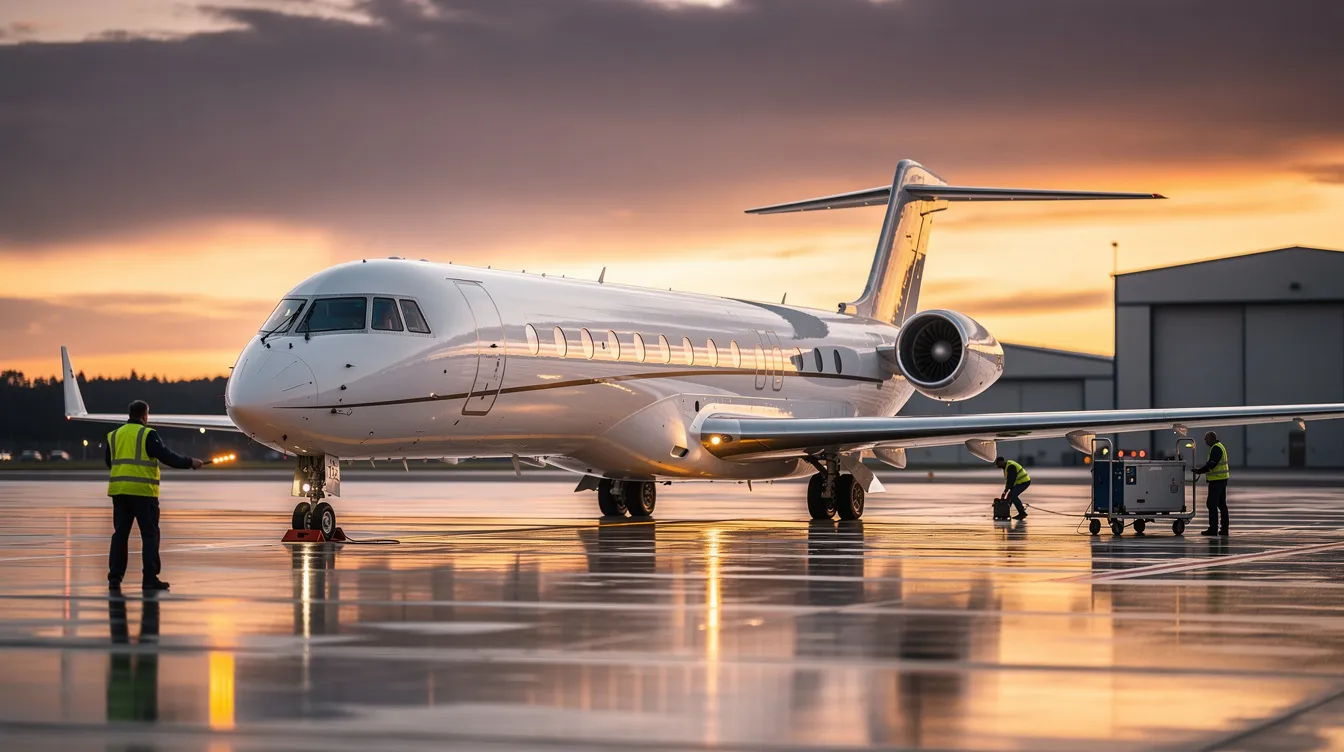
The Gulfstream G700 price in 2026 starts around $78 million to $81 million for a new aircraft, while pre-owned listings can run roughly $88 million to $95 million, and annual ownership costs can exceed $7 million. For high net worth individuals and corporations evaluating ultra-long-range private jet access, that makes the G700 a major capital decision—one that often leads buyers to compare full ownership with fractional ownership or membership programs.
This guide breaks down the full financial picture behind a Gulfstream G700, including new versus pre-owned pricing, operating and ownership costs, tax considerations, aircraft features, financing, market outlook, and the tradeoffs between buying outright and using alternatives that offer more predictable, accessible access to G700-class travel.
The Gulfstream G700 price for a new production aircraft in 2026 falls in the range of $78 million to $81 million, depending on interior configuration and options. The Gulfstream G700 is priced between $75 million and $80 million at base, though most completed aircraft trend toward the higher end of that range. Early launch contracts were historically closer to $75 million, but inflation and post-certification demand have pushed current pricing upward.
Well-equipped, low-time pre-owned G700s are typically advertised between $88 million and $95 million due to long factory wait times and limited supply. Total annual ownership cost for a whole aircraft commonly runs $7 million to $10 million or more per year for active users flying 250 to 400 hours.
Key numbers at a glance:
New list price: $78M–$81M before taxes
Pre-owned (2025–2026 models): $88M–$95M asking
Annual ownership cost: $7M–$10M+ at moderate utilization
Fractional alternative: a fraction of capital outlay through programs like BlackJet Fractional Jet Ownership's Equity Fleet or Reserve Fleet
The Gulfstream G700 is an ultra-long-range business jet and Gulfstream's flagship, with the G700 receiving FAA certification in March 2024. The first G700s were delivered to customers in April 2024, and Gulfstream had stockpiled over 30 G700 aircraft during certification to accelerate initial delivery timelines.
Maximum range of 7,750 nautical miles at Mach 0.85
Maximum operating speed of Mach 0.935, with high-speed cruise at Mach 0.925
It features the largest cabin in its class, measuring 57 feet long, with approximately 8 ft 2 in cabin width and 6 ft 3 in height
The G700 can accommodate up to 19 passengers, with sleep capability for up to 13
Up to five distinct living zones, including a grand suite and forward galley
The G700 sits alongside the Bombardier Global 7500/8000 and Dassault Falcon 10X in the top tier of business aviation
The price is driven by performance, technology, and cabin space rather than luxury extras alone.
New G700s ordered from Gulfstream in 2026 generally land in the high-$70M to low-$80M range before taxes. Factory options, including connectivity packages, galley upgrades, grand suite configurations with a shower, and custom finishes, can add $5 million to $8 million above the base price.
Early public guidance around $75 million has trended upward with inflation, certification investments, and strong demand in the business aviation market.
Corporate and high-net-worth individuals often budget an additional 5–10% for completions, customizations, and initial spares.
Sales and use tax or VAT, depending on the registration country and structure, can add millions to the purchase.
The Gulfstream G700 price is a range because no two completed aircraft are identical in configuration.
Because deliveries began in April 2024, the pre-owned market in 2026 is thin but active. Most available aircraft are low-time 2025–2026 models, often listed between $88M and $95M for jets with fewer than 200 hours.
Less than 3% of the fleet tends to be for sale at any given time
Long factory lead times push used prices at or above the new list price
Flight hours, maintenance program enrollment (e.g., Rolls-Royce CorporateCare for engines), and cabin configuration influence the actual transaction price
Buyers should budget for pre-purchase inspections, legal structuring, and ferry costs on top of the advertised aircraft price
For broader context on private jet pricing, see this private jet price list covering multiple categories.
The G700's pricing reflects its position at the pinnacle of the business aviation market. Its ultra-long range performance supports nonstop missions such as New York to Tokyo or London to Buenos Aires. The G700 has a range of 7,750 nautical miles at Mach 0.85, with a high-speed cruise range of approximately 6,650 nm at Mach 0.90.
Technical investments that justify the price include the Rolls-Royce Pearl 700 engines, the Gulfstream Symmetry Flight Deck with advanced avionics, and the most spacious cabin in Gulfstream's lineup. FAA and EASA certification in 2024, combined with Gulfstream's global service network, adds brand prestige and residual value strength that customers pay a premium for across the world.
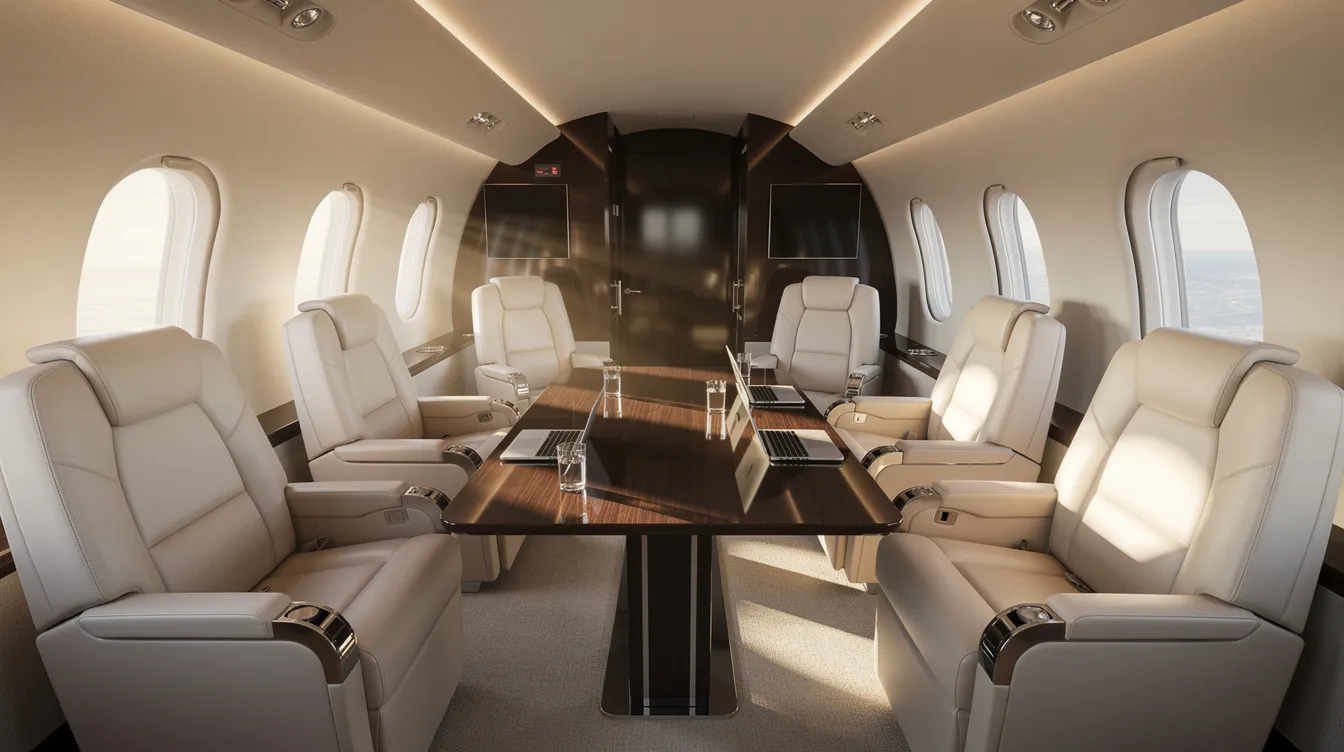
The G700 offers one of the longest and widest cabins in business aviation, optimized for both work and rest on flights that can exceed 15 hours. Key measurements include approximately 57 feet of cabin length, 8 ft 2 in cabin width, and 6 ft 3 in height, creating generous cabin space across up to five living zones.
Configurations range from 13-seat executive layouts to 17–19 passenger high-density arrangements, with lie-flat sleeping for up to 13
Premium zones influencing price and resale: forward galley, conference area, entertainment lounge, and aft grand suite with shower and full-size bed
Interior choices matter for both enjoyment and residual value, and buyers often pay a premium for well-designed, customized layouts.
The purchase price is only the beginning. Operating costs for a business aircraft of this class can run several million dollars annually.
At 300 flight hours per year, a realistic annual budget looks roughly like this:
Cost Category | Estimated Annual Range |
|---|---|
Fixed costs (crew, hangar, insurance, management fees) | $1.1M–$1.7M |
Variable costs (fuel, maintenance, reserves) | $2.0M–$2.5M |
Total (before depreciation/financing) | $3.1M–$4.2M |
Note:
Fuel burn runs approximately 440 to 510 gallons per hour, depending on cruise regime.
Higher annual utilization lowers cost per hour but raises total annual spend, which is why many private users consider shared solutions. For a deeper look, see Understanding the Total Cost of Fractional Jet Ownership.
Variable operating cost per flight hour (fuel, maintenance, engine reserves): approximately $6,500–$8,000 depending on fuel prices
All-in cost per hour including fixed costs amortized over usage: $12,000–$15,000 at 200–300 hours per year.
At a cruise speed near 550–600 mph, the cost per mile ranges from roughly $15 to $23 depending on utilization.
Example Calculation:
Flying 300 hours annually with $1.5M in fixed costs and $7,500 per hour variable yields an all-in cost of approximately $12,500 per hour
Fractional ownership can provide clearer, guaranteed hourly pricing without exposure to all fixed costs.
Evaluate annual flight hours and mission profiles, not just per-hour numbers, when assessing value.
The Gulfstream G700 competes with the Bombardier Global 7500 in performance, along with the Global 8000 and Dassault Falcon 10X as direct rivals in the industry.
Aircraft | Approximate List Price | Cabin Length | Max Range |
|---|---|---|---|
Gulfstream G700 | $78M–$81M | ~57 ft | 7,750 nm |
Bombardier Global 7500 | $80M–$90M+ | ~54 ft | 7,700 nm |
Dassault Falcon 10X | Expected ~$80M+ | ~54 ft | 7,500 nm |
The G700 offers one of the longest cabins in its class. Gulfstream aircraft historically maintain strong resale values due to brand strength, operator familiarity, and a robust global service network. Buyers should compare not just the purchase price but also the operating costs, residual value, and cabin layout flexibility. Existing fractional owners should also understand how to sell a fractional jet ownership share if they plan to transition to a different aircraft or ownership structure. Operators like Qatar Executive have adopted the G700 platform, signaling broad market confidence.
Many individuals and companies flying 25 to 150 hours per year do not need full G700 ownership. Whole ownership offers complete control and availability, but ties up approximately $80M in capital with full exposure to depreciation and all fixed and variable costs.
Fractional jet ownership involves purchasing a share (e.g., 1/16 to 1/4) of an ultra-long-range jet, with guaranteed hours and professional management. A clear grasp of fractional jet ownership terms and concepts helps buyers compare programs and understand how costs and responsibilities are allocated. BlackJet Fractional Jet Ownership's Equity Fleet model allows clients to secure a share in a large-cabin or ultra-long-range private jet with customized sourcing and scheduling.
Fractional aircraft ownership converts an $80M+ acquisition decision into a proportional investment based on expected usage. For example, 1/8 fractional jet ownership structures offer around 100 hours per year while sharing capital and operating costs with other owners. A 1/16 share representing approximately 50 hours per year requires a fraction of the full purchase price, plus monthly management fees and per-hour rates.
By contrast, an underused wholly owned G700 results in a very high cost per hour because fixed expenses are spread over a few flights. Predictable hourly rates and shared fixed costs make budgeting more straightforward for businesses and frequent travelers. BlackJet's Reserve Fleet model can supplement ownership by giving access to other aircraft types without added capital, helping clients save on missions where a smaller jet suffices.
Jet card programs and on-demand charter offer ultra-long-range capability without ownership. Some membership programs provide guaranteed access to large-cabin private jets priced by the hour with no equity stake. Comparing fractional jet ownership vs membership programs clarifies which model fits your flying frequency, budget, and need for guaranteed access. Hourly rates may appear higher, but these models avoid capital outlay and residual value risk.
Access to a specific model like the G700 may be limited in jet card structures, but aircraft in a similar class (G650, Global 6000+) are often available. BlackJet combines equity-style access with flexible Reserve Fleet solutions to match mission needs. For a comparison, see fractional jet ownership vs charter.
Private jets, including the G700, are depreciating assets. The steepest value drop typically occurs in the first 5 to 7 years after delivery. However, strong demand and limited supply can temporarily support higher pre-owned values, as seen in the current market where used G700s sell above the new list price.
Gulfstream aircraft historically maintain competitive residual values due to brand strength, an extensive support network, and a large installed base. Fractional ownership helps align capital commitment with actual usage, reducing the impact of investing in more aircraft than needed. Understanding tax implications for fractional jet owners and working with aviation tax and financial advisors is essential to model the after-tax cost of ownership versus fractional ownership as an investment.
Tax treatment can significantly influence the effective cost of a new aircraft or fractional jet ownership stake. Well-drafted aircraft fractional ownership contracts should align legal structure, usage rights, and tax planning from the outset. Potential U.S. advantages include accelerated depreciation or bonus depreciation for qualifying business use under current IRS rules.
Ownership structure (corporate entity, personal use, chartering out unused time) affects deductibility and compliance.
Fractional aircraft ownership interests may offer many of the same tax benefits as whole ownership when structured correctly.
Aviation tax planning is complex, and readers should consult specialized advisors before committing to a purchase or share program.
The best business aircraft depends on mission needs, not prestige or cabin size alone. The G700 excels for regular intercontinental trips (U.S. to Europe, U.S. to Asia, Middle East to North America), multi-city international tours, and high-duty-cycle corporate shuttle operation.
For primarily domestic U.S. or regional European flying, a super midsize jet may deliver better value. BlackJet Fractional Jet Ownership helps clients map travel patterns and propose the most cost-effective aircraft share or membership solution, whether that means a G700-class jet or something more targeted.
The G700's spacious cabin is designed for productivity and rest on flights lasting 12 to 15 hours. The cabin altitude is maintained at 4,850 feet at 51,000 feet, which the G700 cabin maintains as the lowest altitude in business aviation. Combined with 100% fresh air and quiet interior design, passengers arrive measurably more rested.
Key cabin features include the G700's circadian lighting system to reduce jet lag, 20 panoramic oval windows for natural light, 4K displays, immersive audio, Ka-band high-speed Wi-Fi, and intuitive cabin management controls. The forward galley supports full meal service while the aft grand suite creates a private retreat. These features help executives arrive ready to work, reinforcing the business rationale for ultra-long-range private jets.
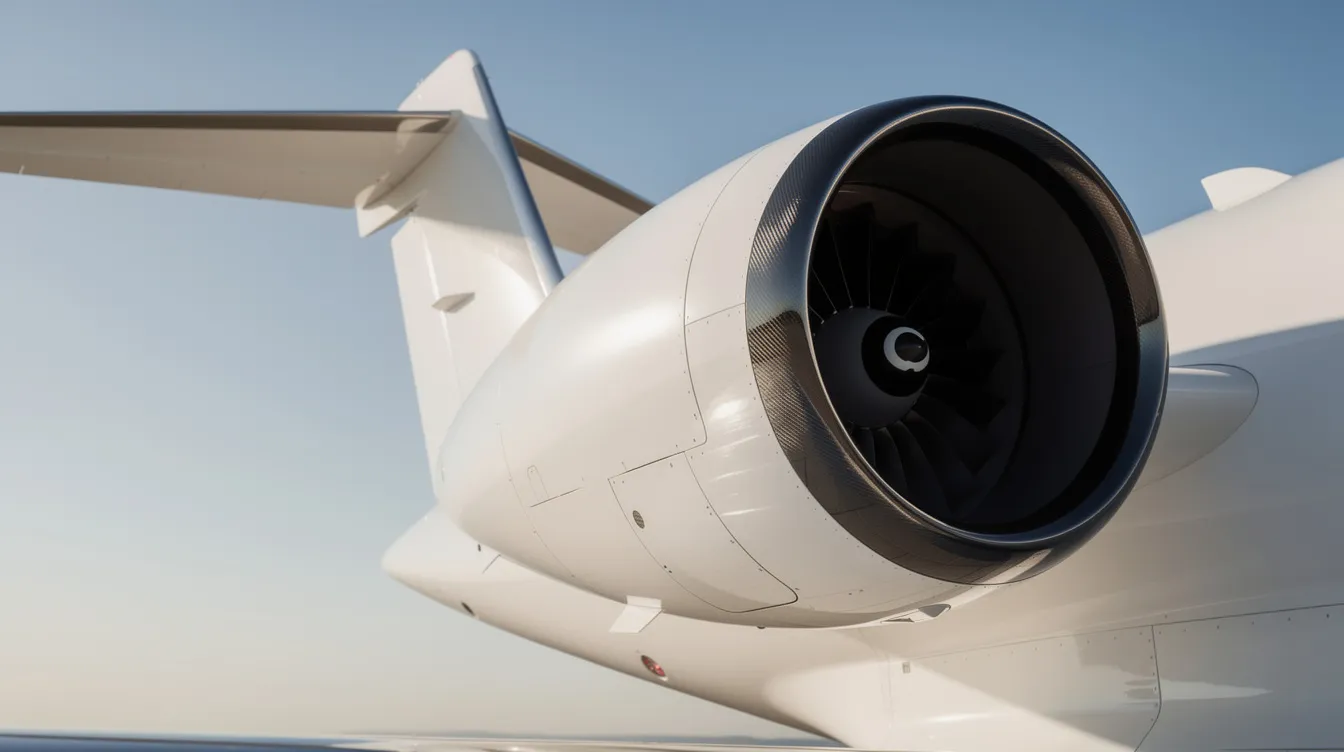
Advanced engineering plays a direct role in fuel burn, maintenance costs, and long-term efficiency. The G700 is powered by two Rolls-Royce Pearl 700 engines (the Rolls-Royce Pearl 700 engines deliver approximately 3–5% fuel efficiency improvements over previous-generation BR725 turbofans and meet modern emissions standards).
The G700 has an advanced safety system with Predictive Landing Performance built into the cockpit avionics. The Gulfstream Symmetry Flight Deck features touchscreens and active control sidesticks that reduce crew workload and improve operational safety. Clean-sheet wing aerodynamics and winglets contribute to the aircraft's top speed capability and range efficiency. Faster cruise speeds near Mach 0.90 can lower total flight hours across a year, indirectly reducing maintenance-related downtime.
Three core paths lead to G700-level access. Buying a new aircraft means the latest options, full warranty, and custom interior, but longer lead times and the highest capital requirement. Buying nearly new pre-owned offers quicker delivery and access to popular layouts already configured, though demand can push prices at or above list.
Fractional aircraft ownership provides scheduled access without full ownership costs, ideal for 25 to 150 hours per year. Understanding the full cost of fractional jet ownership is critical when comparing it to buying new or nearly new aircraft. BlackJet Fractional Jet Ownership helps clients evaluate all three paths objectively, including sourcing off-market aircraft or structuring customized share programs through its Equity Fleet and Reserve Fleet models.
BlackJet Fractional Jet Ownership specializes in tailoring private aviation solutions for high-net-worth individuals and corporations. The Equity Fleet model allows clients to purchase fractional ownership in carefully selected aircraft, including large-cabin and ultra-long-range jets comparable to the G700. The Reserve Fleet model provides pay-as-you-go access to a curated fleet without equity.
Services include aircraft selection, management, scheduling, crew coordination, and transparent cost reporting. BlackJet's advisory approach focuses on matching aircraft capability with each client's actual travel profile rather than defaulting to a one-size-fits-all model.
Consider a U.S.-based company flying 130 hours per year with several annual trips between New York and Europe or Asia. Owning a G700 outright would tie up $80M in capital plus roughly $3M to $5M in annual operating costs at that utilization, creating a cost per flight hour well above $30,000.
A fractional jet ownership share in an ultra-long-range aircraft covering the same hours requires far less capital and shared fixed costs. Some providers use a floating fleet and fractional ownership models to maximize aircraft utilization and offer greater scheduling flexibility across multiple jets. Access to a broader fleet for shorter domestic hops further reduces wasted capacity. The key is aligning ownership structure with actual usage rather than aspirational maximums.
Before signing, clarify your needs:
What are your typical trip lengths, and how many international flights do you take per year?
How many seats do you regularly need, and is a grand suite or shower a priority?
How much capital are you comfortable allocating, and what is your appetite for depreciation risk?
Do you need guaranteed availability, access to different aircraft sizes, or global service coverage, and have you compared leading fractional jet ownership programs against membership or charter options?
Have you analyzed your last 12–24 months of travel data to identify actual patterns?
An independent advisor or a provider like BlackJet can help analyze these questions with real flight data and interpret essential contract terms in fractional jet ownership before you sign a long-term agreement.
The G700 sits near the top of Gulfstream's lineup, which includes the G400, G500, G600, G700, and G800. Models like the G650 offer lower acquisition and operating costs while still providing long-range capability suited for transatlantic missions. The G800 exceeds the G700 in maximum range but features a slightly shorter cabin. Some clients use a mix of aircraft through fractional or membership programs rather than relying on one flagship jet.
Common financing options include cash purchase, aircraft-secured loans (typically 5.5–7.0% APR for qualified buyers), operating leases, and special purpose entities. Lenders evaluate collateral, borrower profile, and residual value forecasts when structuring loans on $80M+ jets. For shared solutions, fractional jet ownership financing structures introduce different capital requirements, repayment terms, and risk profiles compared to whole-aircraft loans. Aviation-savvy legal and financial advisors should be involved early in the production of any deal to avoid costly structuring mistakes.
A significant portion of the G700's cost reflects Gulfstream's investment in safety, reliability, and global support infrastructure. Enrolling engines and APUs in manufacturer maintenance programs controls long-term costs and protects residual value. Professional management handles crew training, regulatory compliance, and safety oversight. Robust liability and insurance coverage in fractional ownership is equally important to protect multiple stakeholders. Fractional and membership programs like those offered through BlackJet typically include these protections by default, giving clients peace of mind without the administrative burden.
Aircraft pricing is shaped by macroeconomic factors, production rates, and demand cycles in business aviation. Continued high demand for ultra-long-range jets could keep both new and pre-owned G700 prices firm through the late 2020s. Potential downward pressures include the introduction of competing models like the Global 8000 and Falcon 10X, rising interest rates, or economic slowdowns. Early-build G700s may eventually diverge in value from later production aircraft if significant upgrades or performance packages launch. Prospective buyers should consider timing and liquidity when deciding between a new order, a pre-owned sale, and a fractional commitment.
New Gulfstream G700 jets in 2026 generally start between $78 million and $81 million before taxes and customization options.
Annual operating costs typically range from $7 million to $10 million, depending on flight hours, maintenance, crew, and other fixed expenses.
Yes, fractional ownership programs like BlackJet Fractional Jet Ownership offer shares in ultra-long-range jets comparable to the G700, reducing capital outlay and providing guaranteed flight hours.
The G700 and Global 7500 have similar price ranges and ultra-long-range capabilities, but the G700 offers a longer cabin and slightly higher maximum speed, while the Global 7500 has a marginally longer range.
Fractional ownership lowers upfront investment, shares fixed costs, offers professional management, and provides flexible access without the full financial risk and responsibility of whole aircraft ownership.
Buying new ensures the latest features and customization but involves longer wait times and higher prices. Pre-owned G700s offer quicker delivery but may command premiums due to limited availability and demand.
Fractional ownership can offer similar tax benefits to full ownership, including accelerated depreciation under IRS rules, but tax treatment depends on structure and usage; consulting a tax advisor is recommended.
BlackJet provides tailored fractional ownership and Reserve Fleet programs, handling aircraft management, scheduling, and cost transparency to match clients’ travel needs with G700-class aircraft.
Ready to jump from research to action? Start by gathering your last 12–24 months of travel data, including routes, passenger counts, and frequency. BlackJet can model scenarios comparing whole ownership of a G700, fractional aircraft ownership of a large-cabin jet, and Reserve Fleet solutions.
Consultations typically cover aircraft selection, cost projections, tax considerations, and scheduling flexibility in a confidential discussion designed to create clarity, not pressure.
Request a private aviation cost and fleet analysis at FractionalJetOwnership.com →
The G700 is one of the most capable and expensive private jets in the world, with new prices around $80M and full ownership costs reaching several million dollars per year. For many high net worth individuals and companies, fractional ownership or structured membership can unlock G700-class capability with far less capital at risk.
The smartest decision balances cabin size, ultra-long-range performance, and operating costs against actual travel needs. Ready to explore the smarter way to fly private? Visit FractionalJetOwnership.com to learn how fractional ownership can transform your travel experience and position BlackJet as your long-term partner in optimizing private aviation strategy.
