
August 23, 2026
Flying privately to Europe typically costs between $100,000 and $250,000 for a transatlantic round trip, but the actual number depends on aircraft type, departure city, season, and how the trip is structured. For executives, families, and business owners weighing private jet travel against premium commercial alternatives, understanding where that range falls for a specific mission is the first step toward making a sound decision.
This guide breaks down the real costs of transatlantic private jet flights in 2026, explains the factors that move the needle on pricing, and compares access models including on-demand charter, jet card programs, and fractional jet ownership through providers like BlackJet Fractional Jet Ownership.
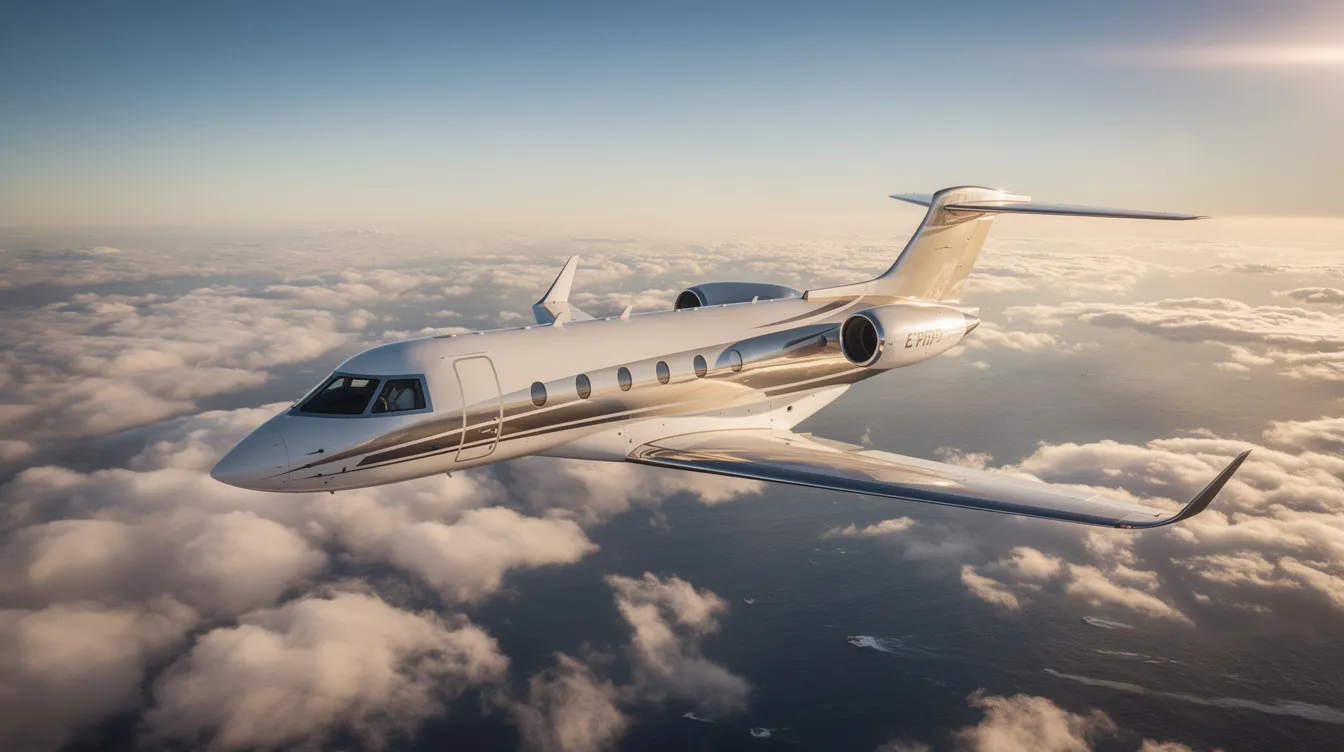
So how much does it cost to fly privately to Europe? For New York–to–Western Europe trips, private jet charter costs usually range from about $85,000 to $250,000 or more for a round trip in 2026, depending on aircraft category, season, and exact routing. Estimated trip costs for heavy jets typically range from $90,000 to $150,000 for one way to Europe, and private jet charter prices rise further with crew wait time and European handling, which can push a round trip well past $180,000.
Here are concrete examples to anchor expectations:
Super midsize jets (e.g., Challenger 350, Citation Longitude): New York to Dublin with one fuel stop each way, approximately $75,000–$120,000 round trip.
Heavy jets (e.g., Gulfstream G450, Challenger 605): New York to London nonstop, roughly $120,000–$170,000 round trip.
Ultra-long-range jets (e.g., Gulfstream G650, Global 7500): New York to Geneva nonstop, often $190,000–$260,000 round trip.
West Coast departures (Los Angeles, San Francisco) to Europe typically run 20–30% higher due to extra flight time and fuel burn.
Private jets are priced per entire aircraft, not per seat. That means the private jet cost per person drops sharply for groups. A heavy jet at $140,000 round trip carrying 10 passengers works out to $14,000 per person, while the same trip with just two travelers is $70,000 each.
For travelers who cross the Atlantic several times a year, fractional ownership and membership programs through BlackJet can reduce the effective cost versus repeated ad-hoc chartering, offering fixed hourly rates and priority aircraft availability.
Private jet cost to Europe is primarily driven by aircraft category, total flight hours, season, and operational costs specific to international missions. Flight distance and route impact costs due to fuel requirements and international airspace fees, making the departure city one of the biggest variables.
Core cost drivers include:
Distance and routing: East Coast departures save 3–4 flight hours each way versus the West Coast. Midwest origins fall in between.
Aircraft size: Choosing between super midsize jets, heavy jets, and ultra-long-range jets directly sets the hourly rate and determines whether a fuel stop is needed.
Airport choices: Landing at London Farnborough versus Heathrow, or Paris Le Bourget versus Charles de Gaulle, changes handling fees, slot costs, and ground logistics.
Trip pattern: A simple round trip costs less than a multi-city European itinerary requiring repositioning and intra-Europe hops.
International flights incur additional fees beyond the base hourly rate. These include North Atlantic oceanic procedures, overflight permits, Eurocontrol en-route charges, and European ground handling. Crew expenses may apply if the aircraft waits in Europe for return flights, adding hotel stays, per diems, and ground transportation.
Seasonality and travel demand significantly influence charter pricing for private jets. Booking during peak demand periods-June through August, Christmas, and major events like Art Basel or the Monaco Grand Prix-drives prices higher due to limited aircraft availability. The advertised hourly rate for private jets may not reflect the total cost due to extra fees. Additional costs may include catering, de-icing, and specific taxes based on the itinerary.
Fractional jet ownership and membership programs smooth out these variables by offering fixed hourly rates and predictable budgeting for frequent Europe flyers, eliminating the uncertainty of spot-market pricing and raising important considerations when comparing fractional ownership vs membership programs.
Only certain jet categories can safely and comfortably handle nonstop or single-stop U.S.–Europe routes. Aircraft size and capability affect the feasibility of non-stop transatlantic flights, and choosing the wrong category can mean unexpected fuel stops, routing constraints, or safety concerns.
Light jets and very light jets, including the super light jet category, are generally unsuitable for ocean crossings. Their range tops out at around 2,000 nautical miles, falling far short of the 3,000+ miles required for most transatlantic routes. These aircraft are instead used for intra-Europe legs or U.S. feeder flights connecting to a transatlantic departure point.
A midsize jet and super midsize jets can handle shorter transatlantic legs with a tech stop. For example, a Challenger 350 flying Boston to Shannon to London adds roughly 90 minutes of ground time but can lower the total private jet cost for small groups compared to booking a heavy jet. That said, super-midsize jets have a limited range and may need a fuel stop for transatlantic flights, which adds handling fees and extends the travel day.
Heavy jets and ultra-long-range jets are the standard for nonstop service between New York and London, Paris, Geneva, Zurich, Frankfurt, and similar business hubs. Heavy jets have a good nonstop transatlantic range, and chartering a private jet for a transatlantic flight requires an aircraft capable of a nonstop crossing for maximum schedule reliability. Transatlantic flights require larger, heavier, or ultra-long-range aircraft for safety-there is no practical shortcut around this requirement.
The trade-off is clear: smaller aircraft reduce the hourly rate but may require more fuel stops and routing constraints. Larger jets increase the hourly rate but improve comfort, range, and scheduling flexibility.
Private jet rental costs range from $2,300 to $23,000 per hour, depending on the aircraft category. For transatlantic missions, only the upper end of that spectrum applies, but understanding the full range helps contextualize where Europe-bound travel sits.
Here is a breakdown of hourly charter rates by aircraft type:
Turboprops: $2,300 to $3,500 per hour (domestic flights and short hops only)
Light jets: $2,500 to $3,500 per hour (not suitable for transatlantic)
Midsize jets: $3,500 to $6,000 per hour
Large/heavy jets: $6,000 to $10,000 per hour
Ultra-long-range jets: $10,000 to $15,000 per hour
Ultra luxury VIP airliners: $18,000 to $23,000 per hour
Current European charter data indicates ultra-long-range aircraft cost around €14,300–€22,500 per block hour, reflecting higher fuel prices and operating costs on the European side.
For a New York–to–Western Europe round trip with one week in Europe, realistic 2026 all-in estimate ranges by category look like this:
Super midsize jets (Citation Longitude, Challenger 350): $75,000–$120,000 with one stop each way on many routes. Ideal for groups of 4–6 who can accept a brief fuel stop.
Heavy jets (Gulfstream G450, Falcon 900EX, Challenger 605): $120,000–$170,000 for nonstop East Coast–to–Western Europe. The workhorse category for transatlantic business travel.
Ultra-long-range jets (Gulfstream G700, Bombardier Global 7500): $180,000–$260,000+ for nonstop or extended-range itineraries such as New York–Athens or Los Angeles–London.
These estimates typically include aircraft and crew, standard fuel, basic in-flight catering, and most airport fees. They generally do not cover de-icing, ultra-premium catering, or last-minute schedule changes.
Aircraft age can increase rental rates by $100 to $1,000 per hour, meaning a newer heavy jet with modern avionics and cabin amenities commands a premium over an older model of the same type.
BlackJet's membership and fractional programs can bring those per-hour figures down for clients flying 25–150 flight hours a year, especially on repeat New York–Europe routes where positioning efficiencies and predictable scheduling reduce waste, and a clear view of the total cost of fractional jet ownership helps determine whether these structures make sense.
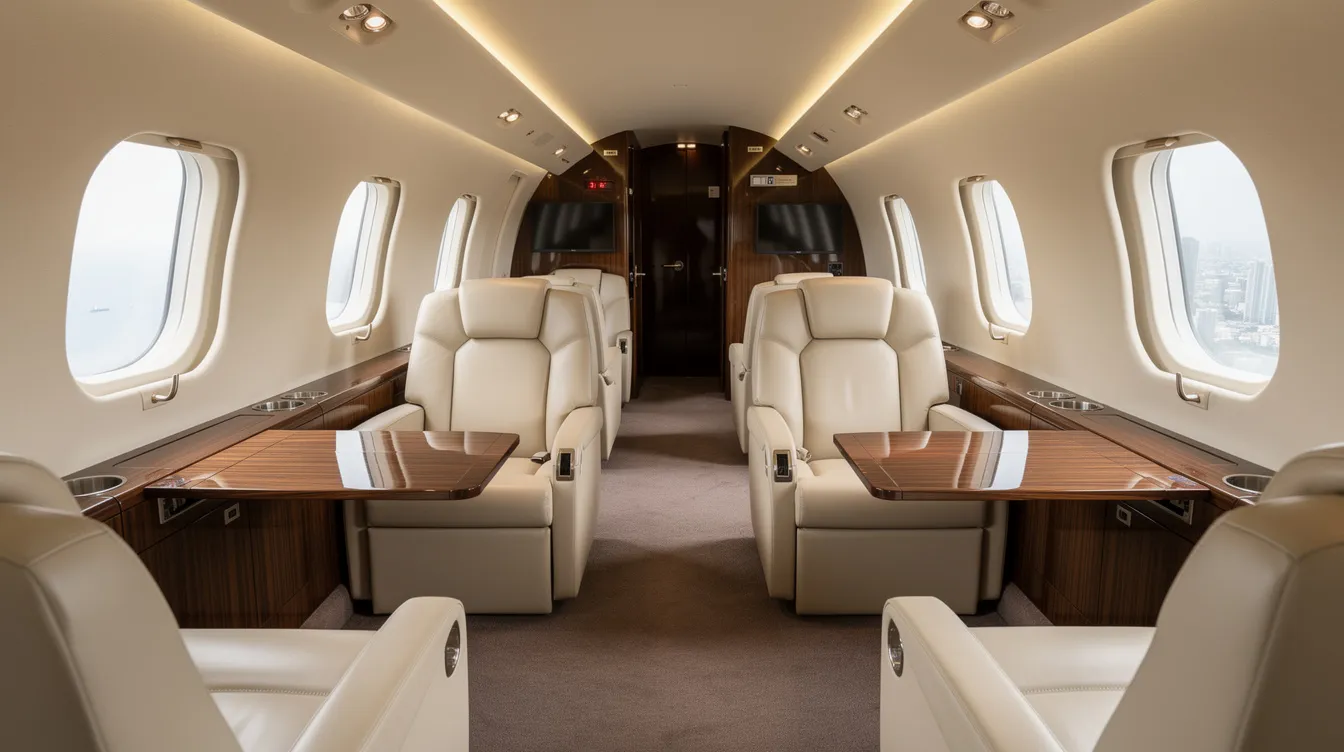
New York to London remains the most common transatlantic private jet flight corridor, with departures typically from Teterboro (TEB) or Westchester (HPN) and arrivals at Farnborough (FAB), Luton (LTN), or London City (LCY).
Super midsize example: A Challenger 350 flying Teterboro to London Luton with one fuel stop (Shannon or Keflavik), approximately 7–8 hours total each way, comes in around $90,000–$120,000 all-in for a round trip in shoulder season. This option suits groups of 5–7 who prioritize budget over eliminating the tech stop.
Heavy jet example: A Gulfstream G450 or Falcon 900EX covers the route nonstop in 6–7 hours each way, totaling 14–15 billable flight hours. Chartering a private jet for a Sunday-to-Thursday business week on this route typically runs $120,000–$160,000 all-in, factoring in overnight crew expenses, handling at both ends, and standard in-flight entertainment and catering provisions.
Ultra-long-range example: A Gulfstream G650 or Bombardier Global 7500 for a C-suite roadshow, with extra onboard staffing, premium catering, and a flight attendant, can push the total private jet cost to $200,000–$230,000, especially during June–July or December peak periods.
Private flights save 4–6 hours compared to commercial flights on this route. Passengers can arrive just 15 minutes before departure at FBOs and use private terminals that bypass the congestion of Heathrow or JFK. And because private jets can access over 3,000 European airports, travelers can land closer to their final destination-Farnborough for central London meetings, or Oxford for the Cotswolds-cutting ground transportation time further.
With a BlackJet Equity Fleet fractional share on a heavy or ultra-long-range jet, the effective per-trip cost on New York–London can be substantially lower over time than booking the same mission on demand several times a year.
Beyond New York–London, several transatlantic routes see consistent private jet charter demand for both business and leisure.
Business hubs:
New York to Paris Le Bourget (LBG): Similar flight distance to London, typically $125,000–$170,000 round trip on heavy jets. Le Bourget is one of Europe's premier business aviation airports, with streamlined handling that keeps ground time short.
New York to Zurich (ZRH) or Geneva (GVA): 7.5–8.5 hours each way; heavy jets usually run $135,000–$185,000, with ultra-long-range jets higher. Geneva is particularly busy during the World Economic Forum in Davos.
Chicago to Frankfurt (EDDF): A slightly longer duty day adds 10–20% to costs compared with New York–Frankfurt departures.
Leisure destinations:
New York to Nice (NCE) on a heavy jet in peak August: approximately $145,000–$190,000 round trip. Landing fees and slot restrictions at Nice during summer can add materially to costs.
New York to Ibiza (IBZ) or Mykonos (JMK) via a tech stop or secondary European hub: $150,000–$210,000 depending on aircraft type and weekend versus midweek travel.
West Coast departures from Los Angeles or San Francisco to Europe are typically 3–4 hours longer each way, adding $30,000–$70,000 to the total private jet travel cost versus East Coast departures. For medium-haul flights within Europe after the transatlantic leg, switching to a smaller aircraft category is often more cost-efficient.
BlackJet advisors analyze route, season, and aircraft options to suggest whether super midsize, heavy jets, or ultra long range jets offer the best value for a specific mission profile.
Operational costs on international flights differ meaningfully from those on domestic flights within the United States. These charges vary significantly depending on routing, European destination, and how long the aircraft and crew remain abroad.
Key international operational costs include:
Oceanic procedures: North Atlantic Tracks require specific communication equipment, crew certification, and coordination with both FAA and Eurocontrol air traffic management.
Overflight and en-route charges: Eurocontrol route charges are calculated based on aircraft weight and flight distance through each country's airspace. These add fixed sums to every transatlantic crossing.
Landing fees: Airport fees can range from $200 to $2,000 per landing, with premium business aviation airports like Farnborough and Le Bourget at the higher end. European handling fees can range from hundreds to several thousand euros per movement.
Fuel surcharges: Fuel prices at European FBOs often exceed U.S. prices. Fuel surcharges may be added during periods of high fuel costs, and these adjustments are standard in both charter and fractional contracts.
Crew-related expenses add up quickly on transatlantic missions. Crew overnight costs range from $200 to $600 per crew member per night. If the aircraft waits in Europe for a return flight days later, those overnight crew expenses compound, and ground transportation and per diems add further.
Aircraft positioning and ferry flights also affect the total. When a private aircraft needs to reposition from another base to New York, or from a secondary European airport back to its home field, that repositioning time may be charged as part of the Billable Flight Hour calculation. Minimum billable time on short repositioning flights can lead to higher costs than expected.
Fractional aircraft ownership and reserve-fleet-style membership programs like BlackJet's Reserve Fleet can mitigate some of these operational cost spikes by leveraging a managed fleet and better positioning efficiencies.
While premium cabin seats on a commercial flight can be far cheaper per seat, private jet travel offers time savings, privacy, and schedule control that matter to executives and families traveling on their own schedule.
On a New York–London route, flying privately saves 4–6 hours door-to-door. Travelers use private terminals, skip security lines, clear customs faster at general aviation facilities, and can land at regional airports closer to their final meeting or hotel. That time difference can mean the difference between arriving ready for a morning meeting and losing an entire business day.
Per-passenger cost comparison: A heavy jet at $140,000 round trip carrying 10 passengers costs $14,000 per person. Ten round-trip first-class commercial airline tickets on the same route run $6,000–$12,000 each ($60,000–$120,000 total). The cost gap narrows significantly with larger groups, and private jet charter flights eliminate the logistical complexity of coordinating 10 separate commercial bookings.
Private jet travel offers enhanced privacy for sensitive meetings-conversations in the cabin stay in the cabin. Private flights allow for personalized catering and flexible schedules, including the ability to change departure times, reroute to secondary airports, or add intra-Europe legs without rebooking through commercial carriers.
For organizations concerned with productivity, constant connectivity, and confidentiality, the higher direct cost of private charter may be offset by recovered executive hours and business outcomes that a commercial flight simply cannot deliver.
Transatlantic private jets represent a major investment, but strategic planning can meaningfully reduce total spend without sacrificing safety or comfort.
Right-size the aircraft. Right-sizing your jet can save thousands per hour. Choosing a super midsize jet instead of an ultra-long-range jet when a single fuel stop is acceptable can reduce the hourly rate by $4,000–$8,000. Avoid booking a heavy jet when only 4–5 passengers are traveling if a super midsize handles the route.
Travel on flexible dates. Midweek departures and shoulder-season travel consistently yield lower private charter costs. Thursdays through Sundays in June, July, August, Christmas, and during major events like the Monaco Grand Prix drive peak private jet costs upward by 20–40%.
Use secondary airports. Choosing secondary airports can lower landing and ramp fees. London Farnborough versus Heathrow, Paris Le Bourget versus CDG, and smaller regional airports across Europe often provide faster handling, lower hangar fees, and more available slots.
Explore empty legs. Empty leg flights can offer up to 75% off standard rates-and in some cases discounts of up to 75%-but alignment with your schedule is rare and unpredictable. They work best for flexible leisure travelers, not mission-critical business trips.
Reduce repositioning costs. Booking floating-fleet aircraft can reduce repositioning fees by 30%, since the jet is already positioned near your departure point rather than ferrying from a distant base.
Book early. Booking 30 to 60 days in advance secures better rates and broader aircraft availability, especially during peak European travel season.
For mission-critical travel, predictable models like fractional jet ownership or a jet card program offer more reliability than chasing empty-leg flights or last-minute charter deals, and treating fractional jet ownership as an investment can clarify long-term value versus repeated ad hoc charter.
For clients flying 25–150 hours per year, fractional jet ownership offers a structurally different approach to private aviation than repeatedly chartering a private jet for each Europe trip, and understanding fractional jet ownership terminology makes it easier to evaluate competing programs.
Fractional ownership involves buying a share of a private jet-typically a 1/16 or 1/8 interest-in a managed fleet. This share entitles the owner to a set number of flight hours annually, guaranteed aircraft access, and consistent service standards. The cost structure includes three components: an upfront share purchase, a monthly management fee covering insurance, maintenance, and crew, and an occupied hourly rate charged only when flying; exploring fractional jet ownership financing costs and benefits helps buyers decide how best to fund that commitment.
On-demand charters allow flexible, single-trip bookings with variable, trip-by-trip pricing that fluctuates with season, aircraft availability, and market demand. Jet cards offer prepaid access to private jets with fixed rates, sitting between charter and fractional ownership in terms of commitment.
The comparison for frequent Europe flyers breaks down like this:
Charter: Maximum flexibility per trip, but no price predictability, no guaranteed availability in peak season, and full exposure to repositioning and fuel surcharges.
Fractional ownership: Fixed hourly rates, guaranteed scheduling, consistent aircraft type and cabin experience, and potential U.S. tax benefits including depreciation opportunities that improve the net cost versus ad-hoc private jet rental.
BlackJet Fractional Jet Ownership balances the equity-based benefits of private jet ownership with the flexibility and fleet access of charter through its managed operator network. Clients who compare programs often find that fractional ownership begins to outperform repeated chartering somewhere around 50 flight hours per year on transatlantic routes.
BlackJet offers two primary models for accessing private jet service on U.S.–Europe routes: Reserve Fleet and Equity Fleet. Each serves a different travel profile, and both handle the operational complexity of transatlantic missions.
Reserve Fleet is a non-ownership membership model. Clients access vetted private aircraft across heavy and ultra long range categories on a pay-as-you-go basis, with transparent pricing and no capital commitment. This option suits travelers who are not ready for ownership but want predictable private jet rental prices and reliable private jet charter services without the volatility of the open charter market.
Equity Fleet is BlackJet's fractional ownership program. Clients purchase a fractional share of a specific aircraft type, gaining priority access for regular transatlantic missions, tailored scheduling, and potential tax efficiencies through asset depreciation. This model aligns with the needs of executives and corporations that fly to London, Paris, Frankfurt, or Zurich multiple times per quarter.
Both programs handle flight planning, crew, international permits, landing permits, and scheduling centrally. Members are freed from the day-to-day complexity of aircraft operators managing overflight permits, Eurocontrol charges, and crew logistics across time zones.
Which profile fits which option?
Reserve Fleet: Occasional Europe trips layered on top of domestic missions—perhaps 2–4 transatlantic round trips per year plus regular U.S. travel.
Equity Fleet: Executives or companies traveling to Europe multiple times per quarter, where guaranteed access, consistent billable flight time rates, and ownership benefits justify the capital commitment, often through structures such as 1/8th fractional jet ownership that align flight hours with real-world usage.
Understanding how access models affect total annual spend requires looking at real travel patterns, not just single-trip quotes. Here are three scenarios that illustrate the differences.
Scenario 1: CEO flying New York–London six times per year plus two leisure trips to Nice.
On-demand charter for eight round trips on a heavy jet, at approximately $140,000–$170,000 per round trip, yields an annual charter spend of roughly $1.1–$1.4 million. An equivalent Equity Fleet fractional share in a heavy jet, covering approximately 100–120 flight hours annually, carries an upfront share investment, predictable monthly management fees, and a fixed occupied hourly rate. Over a five-year term, the fractional approach typically delivers lower total cost and eliminates the scramble for aircraft availability during peak London and Riviera seasons.
Scenario 2: Family making two European vacations yearly-New York to Geneva for skiing and New York to Rome in summer.
Two on-demand private jet charter bookings at $150,000–$200,000 each total $300,000–$400,000 per year. Using BlackJet's Reserve Fleet membership with preferential rates and simplified planning can reduce this by improving positioning efficiency and locking in rates ahead of peak season. For a family flying under 50 hours annually, the Reserve Fleet model avoids the fixed overhead of ownership while delivering private jet rental costs well below last-minute charter rates.
Scenario 3: Mid-sized company with U.S.–Europe sales teams flying 40–60 private jet flight hours annually.
Last-minute chartering during peak business travel seasons inflates costs unpredictably. A fractional aircraft ownership solution provides stable private jet costs, guaranteed scheduling, and the ability to plan multi-leg itineraries-say New York to Frankfurt to Milan to New York-under a single coordinated plan, similar to leading fractional jet ownership programs for smart investors. The predictability alone can justify the investment for CFOs managing travel budgets.
Interested in modeling your own travel patterns? BlackJet offers custom flight-hour and cost analyses to identify the most economical structure for any combination of routes and frequency, and prospective owners should understand both the process of selling a fractional jet ownership share and the protections built into an aircraft fractional ownership sample contract before they commit.
The private aviation industry offers several tiers of service, and it helps to understand where each option fits on transatlantic routes.
Fully private planes provide exclusive use of the entire aircraft, complete schedule control, and access to thousands of airports. Semi-private by-the-seat services remain limited on U.S.–Europe routes as of 2026 compared to domestic U.S. corridors, and they generally cannot replicate the full flexibility of chartering a private jet or flying on your own schedule.
Business-class and first-class commercial flights on commercial airlines may be more financially efficient for solo travelers or couples, particularly when schedule flexibility is less important. But as passenger count and schedule complexity rise, private jets become increasingly attractive on a per-person basis.
Fractional jet ownership and membership programs occupy a middle ground between sporadic charter and full aircraft ownership, balancing flexibility and cost control for frequent Europe-bound travelers, especially when built around floating fleet options in fractional ownership that optimize aircraft positioning. BlackJet focuses on full private jet access-via Reserve Fleet and Equity Fleet models-rather than selling single seats, ensuring control over schedule, aircraft type, and privacy for every private flight.
Crossing the Atlantic on private aircraft involves strict aviation regulations that reputable aircraft operators treat as non-negotiable. These requirements influence both the standard of service and the total private jet cost.
In the U.S., fractional ownership programs operate under FAA Part 91 Subpart K, which sets standards for crew qualifications, maintenance programs, and operational oversight that exceed basic private flying requirements, and understanding the tax implications for fractional jet owners is equally critical for cross-border business travelers. In Europe, EASA regulations govern landing, crew duty times, and aircraft maintenance for arriving private jets.
A 7.5% federal excise tax applies to U.S. domestic flights, affecting the domestic leg of any transatlantic itinerary that originates with a positioning flight within the United States. Direct flights crossing into international airspace carry their own fee structures.
Documentation requirements include valid passports and, once implemented, the ETIAS travel authorization for U.S. citizens entering EU and Schengen countries. Overflight and landing permits, slot reservations at constrained airports like London City, Geneva, or Nice in summer, and noise or curfew restrictions add complexity and require advance planning, mirrored by the need to master essential contract terms in fractional jet ownership before committing to a program.
BlackJet handles these compliance aspects behind the scenes through its unmatched service approach, working only with top-tier operators and ensuring that all private jet charter flights meet or exceed the private aviation industry's safety benchmarks.
International private jet flights carry a higher per-passenger environmental impact than commercial flights, and responsible travelers increasingly factor this into their decisions. This is an honest reality of business aviation.
Emerging tools for mitigating impact include carbon offset programs through Gold Standard or similar environmental projects, as well as the growing availability of sustainable aviation fuel at major North American and European business aviation hubs. SAF can reduce lifecycle carbon emissions by up to 80% compared with conventional jet fuel.
Right-sizing aircraft is both cost-efficient and more sustainable. A super midsize jet burning less fuel per hour than an ultra long range jet on a route where a single tech stop is acceptable reduces both the direct cost and the environmental footprint. Shared use through fractional ownership also means aircraft fly more efficiently across a broader base of owners, reducing the number of private planes sitting idle, but it also requires careful attention to liability coverage in fractional jet ownership so risks are properly managed.
BlackJet aligns with carbon-conscious practices by favoring efficient aircraft, promoting shared use via fractional ownership, and supporting offset or SAF initiatives where available. Travelers should ask specifically about sustainability measures when planning Europe trips, making environmental performance part of the overall private jet cost evaluation.

International private jet travel benefits from more lead time than a typical domestic charter flight, especially during peak European travel seasons.
Recommended booking windows:
Spring and autumn: 2–3 weeks ahead generally secures good aircraft availability and competitive rates.
June through August, Christmas/New Year, and major events (Davos, Cannes Film Festival, Monaco Grand Prix): 4–6 weeks or more. Booking 30 to 60 days in advance secures better rates and ensures access to preferred aircraft.
Airport selection matters. Choosing flexible arrival and departure airports early-London Farnborough versus Heathrow, Paris Le Bourget versus CDG-optimizes slots and reduces fees. Regional airports across Europe often provide faster customs clearance and lower operational costs.
Finalize details early. Passenger lists, passport details, pets, and special requests such as specific in-flight catering or meeting setups should be confirmed at least a week before departure to avoid rush fees and logistical complications.
BlackJet advisors build multi-leg itineraries-U.S. departure, Europe city-hopping on light jets, and return legs-under a single plan, giving clients a clear total private jet cost in advance and eliminating the fragmented quoting process that comes with booking each flight duration and leg separately through different charter brokers.
The cost to charter a private jet to Europe typically runs from roughly $85,000 to $250,000 or more per round trip. But the "right" solution depends on frequency of travel, passenger count, and flexibility needs-not just the sticker price of a single trip.
One-off private jet rental or on-demand charter is ideal for occasional trips. Fractional jet ownership and membership programs like BlackJet's Reserve Fleet and Equity Fleet are better suited to regular transatlantic flyers who value predictable costs, guaranteed scheduling, and transparent pricing.
A practical first step: audit the past 12–24 months of Europe and long-haul travel-both commercial and private-to understand your true annual cost profile. Many travelers discover that their actual spending on premium commercial tickets, lost productivity, and schedule disruptions already approaches what a structured private aviation program would cost.
Ready to explore the smarter way to fly private to Europe? Visit FractionalJetOwnership.com to request a bespoke cost comparison between chartering a private jet, jet cards, and fractional aircraft ownership for your specific U.S.–Europe travel patterns. A short consultation with a BlackJet advisor can clarify the most cost-efficient, time-efficient, and strategically sound path to accessing private jets for regular travel to Europe.
