August 5, 2026
For executives closing deals across continents and families coordinating global itineraries, the ability to fly nonstop between distant cities changes the calculus of travel entirely. Intercontinental private jets remove layovers, security queues, and rigid schedules from the equation, replacing them with direct routing, onboard productivity, and arrival-ready comfort. This guide covers what defines these aircraft, how their performance metrics compare, what intercontinental missions actually cost, and how BlackJet Fractional Jet Ownership gives clients access without the burden of owning a $70 million airplane outright.
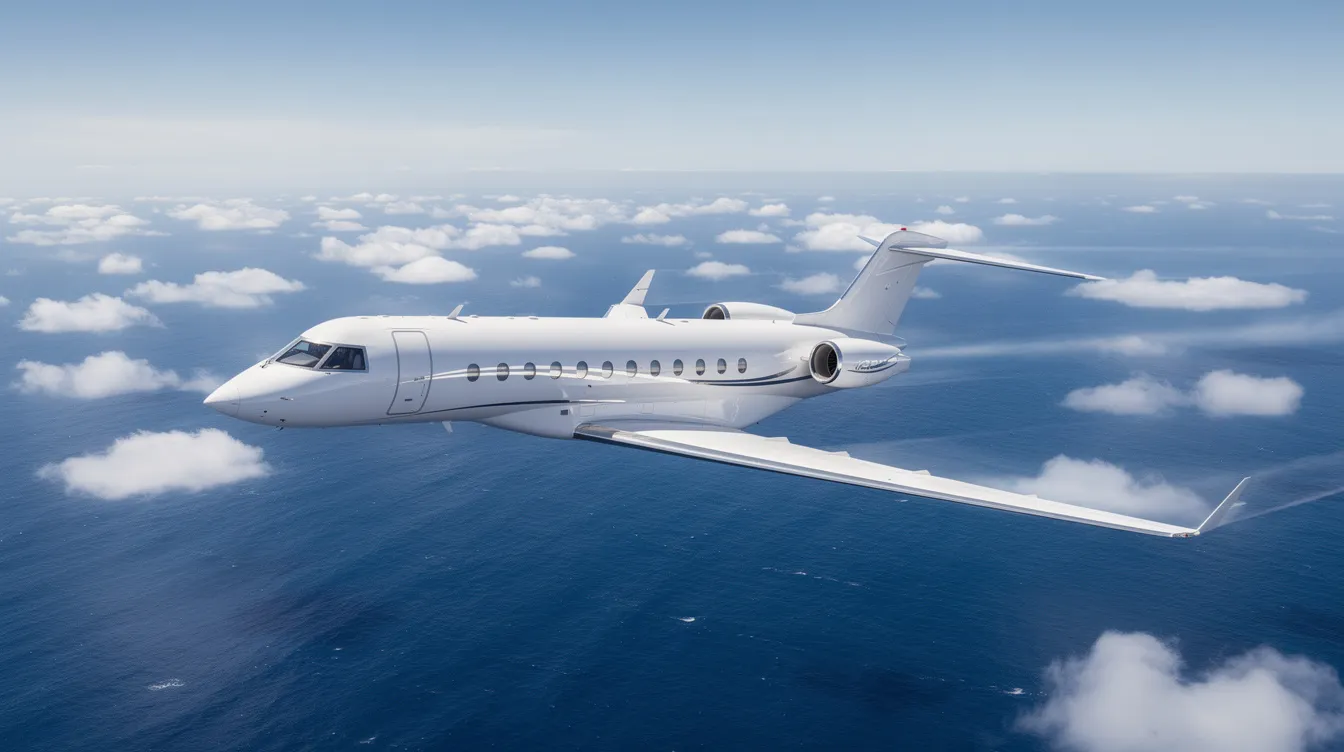
Intercontinental private jets are heavy and ultra long range jets with a flight range of 5,500 to 8,000 nautical miles nonstop, enabling direct flights on routes like New York–Tokyo, Los Angeles–Sydney, and London–Buenos Aires.
BlackJet Fractional Jet Ownership provides access to long range private jets and ultra long range jets through jet cards and fractional equity shares, ideal for clients flying 25–150 flight hours per year.
Long haul flights on large jets feature low cabin altitude (4,000 to 4,850 feet), multiple distinct zones for work and sleep, high-speed Wi-Fi, and fully flat sleeping accommodations.
BlackJet handles mission planning end to end, determining whether a route can fly nonstop or requires a fuel stop and confirming how much luggage and how many passengers can be accommodated per aircraft type.
This article compares ownership, charter, and jet cards, provides realistic pricing for intercontinental flight missions, and answers practical questions on customs, fuel stops, and baggage.
Intercontinental private jets are heavy-cabin aircraft designed for non-stop flights over 6,000 miles, connecting cities separated by oceans and entire continents. The category breaks into two tiers: long range jets with a maximum range of roughly 5,000–6,500 nautical miles, and ultra long range jets capable of 6,500–8,000+ nautical miles. Both tiers serve intercontinental flight profiles, but the ultra long range segment handles the most demanding city pairs like New York–Hong Kong (~7,000 nm) and Dubai–Los Angeles (~8,200 nm).
Ultra long-range jets typically seat 10 to 18 passengers comfortably in cabins divided into three or four distinct zones: a forward lounge or club area, a mid-cabin conference and dining section, an aft private suite or bedroom, and dedicated crew rest on many models. These layouts separate intercontinental aircraft from super midsize jets and smaller jets, which lack the cabin volume for multi-zone configurations.
Typical cruise speeds range from Mach 0.85 to Mach 0.92, with maximum endurance around 12–16 flight hours under favorable conditions. Real-world headwinds, air traffic routing, and passenger count can reduce published range figures by 10–20%. BlackJet's Reserve Fleet and Equity Fleet programs are built around these long range private missions, giving U.S.-based and global travelers priority access to the right aircraft without full ownership.
Private aviation travel is generally more costly than commercial flights, but the value extends far beyond ticket price. Private jets provide significant schedule flexibility compared to commercial airlines, allowing travelers to depart within flexible windows tailored to tight business or personal schedules. This flexibility eliminates missed connections and delays common in commercial travel.
Private jets access over 5,000 airports globally, including smaller airports not served by commercial airlines, often closer to final destinations. This access saves 3 to 6 hours compared to commercial flights by reducing ground travel and eliminating layovers. Private terminals and Fixed-Base Operators (FBOs) reduce check-in and security wait times to minutes, enhancing convenience and privacy.
Private aviation also offers improved productivity by enabling work during flights. The quiet, dedicated cabin environments allow confidential calls, board meetings, and document reviews without exposure to public cabins. High-speed internet supports secure video conferencing across oceans, helping executives stay connected and productive.
Several factors determine whether a specific aircraft can handle an intercontinental mission: maximum range, typical cruise speed, cabin altitude, passenger capacity, and luggage volume. Each metric directly affects flight planning and passenger experience.
Range bands define aircraft capabilities:
Long range: approximately 5,000–6,500 nautical miles (e.g., London–Los Angeles, New York–Dubai)
Ultra long range: approximately 6,500–8,000+ nautical miles (e.g., Singapore–Zurich, New York–Tokyo)
The Bombardier Global 7500 has a range of 7,700 nautical miles, while the Gulfstream G800 can reach approximately 8,000 nautical miles, currently the longest-range purpose-built business jet available. Modern jets maintain cabin altitudes of 4,000 to 4,850 feet at cruise, compared to 6,000–8,000 feet on most commercial airliners. This lower cabin altitude measurably reduces fatigue and improves sleep quality on 10–15 hour long flights. Higher humidity levels in ultra-long-range jets further help reduce dehydration and jet lag.
Takeoff and runway performance also matters. The Dassault Falcon 8X can operate from runways as short as approximately 5,000 feet for landing, opening access to arrival airports that larger competitors cannot reach. In prose comparison: the Bombardier Global 7500 offers roughly 7,700 nm of range at Mach 0.85–0.90 cruise, while the Gulfstream G700 matches that at approximately 7,750 nm with a slightly higher high speed cruise near Mach 0.90. The Falcon 8X trades some range (6,450 nm) for superior short-field performance and tri-engine redundancy—a meaningful distinction depending on the specific aircraft and departure and arrival airports involved.
BlackJet members commonly access a curated set of long range and ultra long range jets proven on demanding corporate and governmental intercontinental missions. While BlackJet does not manufacture aircraft, its Equity and Reserve arrangements typically utilize aircraft from the Bombardier Global, Gulfstream, and Dassault Falcon families, among other fractional aircraft types.
The Bombardier Global 7500 has a range of 7,700 nautical miles and seats up to 19 passengers in a four-zone cabin with a dedicated lounge, dining area, entertainment space, and full private suite with closing door. This aircraft handles routes like New York–Hong Kong and Dubai–Los Angeles nonstop.
The Gulfstream G650ER and G700 cover approximately 7,500–7,750 nautical miles at cruise speeds above Mach 0.90, with one of the lowest cabin altitudes in the industry (the G700 maintains roughly 2,840 feet at 41,000-foot cruise). These aircraft typically carry 13–17 passengers and serve routes such as New York–Tokyo or London–Buenos Aires nonstop.
The Dassault Falcon 8X reaches approximately 6,450 nautical miles with its three-engine configuration providing redundancy similar to ETOPS standards. Its standout feature is short-field performance—landing in around 2,220 feet—allowing passengers to access constrained airports while still covering transatlantic routes.
For large delegations, VIP airliner-based jets such as Boeing Business Jets and Airbus ACJ models offer massive cabins and 6,000–8,000+ nautical mile range. These are available through BlackJet's partner operators, though operating costs are substantially higher per hour than purpose-built business jets.
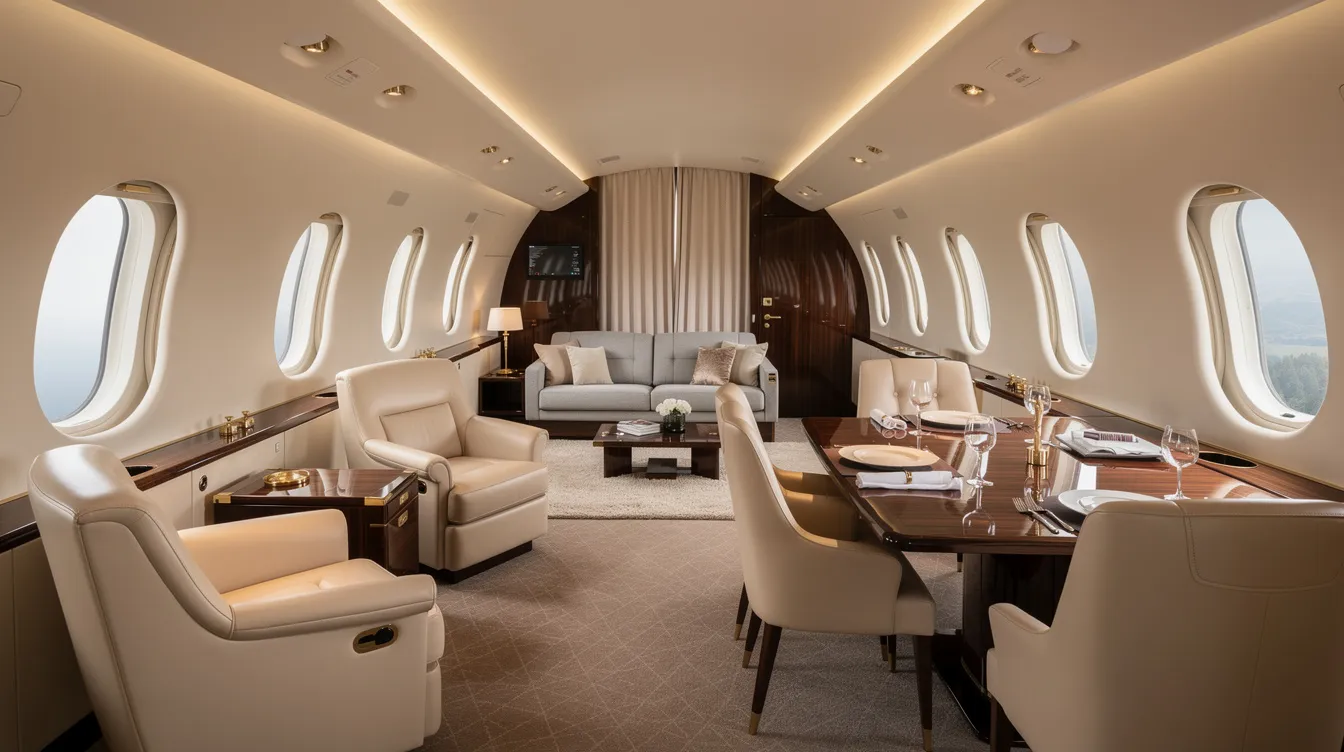
The cabin of a modern ultra long range private jet is organized into separate zones—a concept that distinguishes these aircraft from anything available in commercial alternatives. A typical layout includes a forward lounge with spacious seating, a mid-cabin conference and dining table, an aft private suite with a full bed, and crew rest areas for very long flights. Intercontinental jets feature multi-zone layouts for work and relaxation, allowing passengers to move between environments during a 12–15 hour mission.
Higher humidity in ultra-long-range jets helps reduce fatigue and dehydration, a significant advantage on long flights where commercial cabins typically maintain humidity below 15%. Dedicated cabin environments in private jets combat jet lag with advanced systems controlling lighting, temperature, and cabin pressure. Cabin noise levels run well below typical airline cabins, and advanced technology air filtration with HEPA or equivalent systems ensures clean, recirculated air.
High-speed internet supports secure video conferencing during flights. Ku-band and Ka-band connectivity enables VPN access, real-time market data, and video calls—capabilities that directly support productivity on transoceanic sectors. Cabin features include gourmet meals and professional crew service, with customized catering menus sourced from recognized restaurants in gateway cities. Private jets offer customizable gourmet catering based on dietary requirements, served on proper china and glassware.
Many jets include lie-flat seating for comfortable sleeping options, and larger aircraft like the Global 7500 include private bedrooms with closing doors. Crews coordinate lighting and cabin temperature for rest periods, and private jets can offer a personalized onboard experience tailored to preferences. Luxury amenities in intercontinental jets aim to ensure comfort on long flights without relying on the one-size-fits-all approach of commercial first class.
Published maximum range assumes optimal conditions: light payload, minimal reserves, and favorable winds. Operational range may be 10–20% shorter due to headwinds, routing constraints, runway performance at departure and arrival airports, and actual passenger and luggage loads. This gap between published and real-world range is the reason flight planning matters.
Fuel stops become necessary when conditions push a mission beyond an aircraft's practical range. For example, strong winter headwinds on westbound North Atlantic routes can turn a nonstop New York–Paris leg into a quick stop in Gander, Newfoundland or Reykjavik. A typical fuel stop takes about 45–60 minutes on the ground, including refueling, cabin service, and crew checks. BlackJet operations arrange handling in advance to minimize ground time.
On the luggage question—how much luggage can intercontinental travelers actually bring? Large jets designed for long range travel typically carry 1,500–2,500 pounds of total baggage for 10–14 passengers. That translates to roughly one large checked bag plus one carry-on per person, with room for special items like golf bags, skis, or product samples. Bulky or oversized items (camera trunks, musical instruments, trade show equipment) can be accommodated but may reduce total passenger count or require a larger aircraft, particularly on very long routes where fuel weight is maximized.
BlackJet recommends that clients share detailed flight details including luggage weight and dimensions during the inquiry stage. This allows advisors to match the mission to an aircraft with sufficient cargo volume and weight margin, avoiding last-minute surprises.
There are four primary access models for long range private jets: full ownership, on-demand charter, jet cards, and fractional jet ownership. For travelers new to this model, understanding fractional jet ownership terminology and concepts helps clarify how shares, hours, and management structures actually work. BlackJet focuses on jet cards and equity-based programs that serve the 25–150 hour per year traveler.
Full ownership of a new ultra long range jet typically costs $60–75 million at acquisition, plus $3–5 million annually in crew, maintenance, insurance, and hangar costs. This model makes sense for users flying 300–400+ hours per year with complex global schedules, but leaves most travelers significantly overcommitted. Calculating the total cost of fractional jet ownership shows how sharing the asset can dramatically lower effective hourly costs, and a complete guide to fractional jet ownership costs helps compare these obligations against full ownership and charter options. Fractional jet ownership reduces hassle compared to full ownership by sharing fixed costs across multiple owners, offering tax benefits and priority access to jets.
On-demand charter offers maximum flexibility with no long-term commitment, but pricing varies based on repositioning, crew overnights, and seasonal demand. For some travelers, floating fleet structures within fractional programs offer a middle ground—improving aircraft availability and pricing consistency without requiring whole aircraft ownership. Aircraft options may also be limited during peak periods for intercontinental missions.
Jet cards provide prepaid blocks of hours at fixed hourly rates by aircraft category—typically large cabin or ultra long range—with guaranteed access within defined notice periods. For travelers considering a longer-term commitment, understanding fractional jet ownership financing, costs, and benefits is essential before choosing an equity-based solution. Clients can access fractional ownership or shared-use programs through BlackJet's two primary models: the Reserve Fleet offers pay-as-you-go hours without ownership costs, while the Equity Fleet provides fractional ownership with priority access, custom aircraft sourcing, and potential tax benefits. A dedicated comparison of fractional jet ownership versus membership programs can help determine which structure best matches expected flight hours and flexibility needs. Fractional jet ownership allows shared access to private jets, making intercontinental travel predictable and manageable for frequent flyers.
Private aviation travel is generally more costly than commercial flights, but the pricing structure rewards informed planning. Charter pricing for ultra-long-range jets ranges from $5,000 to $50,000 per hour depending on the model, age, and region. For most modern ultra long range jets, realistic hourly rates fall between $10,000 and $20,000 per flight hour.
Charter costs vary based on aircraft type, flight distance, and passenger count. Factors influencing pricing include aircraft type, route length, and crew duty limits, along with landing and handling fees, de-icing, and international overflight charges. Round-trip intercontinental missions typically cost $160,000 to $400,000, with the wide range reflecting differences in aircraft size, mission complexity, and crew requirements.
To illustrate: a New York–London round trip on a long range jet might run $120,000–$170,000. A Los Angeles–Sydney round trip on an ultra long range jet would sit toward the upper end of that spectrum due to extended flight time and international handling. For a deeper breakdown, see this guide to private jet costs.
Jet cards smooth costs for frequent flyers by providing fixed hourly rates and eliminating surprise repositioning fees on most itineraries. For CFOs and family offices, this predictability simplifies annual budgeting for global travel. To further manage costs and optimize costs, BlackJet advisors highlight opportunities like choosing nearby but less expensive airports, traveling on flexible dates, and utilizing empty leg flights when available.
An empty leg is a repositioning flight where the aircraft would otherwise fly without passengers—for example, returning from London to New York after dropping clients. Empty-leg flights can save travelers up to 75% on private jet travel, though discounts on intercontinental routes more commonly fall in the 30–50% range.
Empty leg availability on intercontinental routes is less predictable than on shorter domestic segments. However, for last-minute or opportunistic travelers with flexible schedules and route preferences, these segments can deliver significant savings. Traditional charter often prices a round trip even for one-way missions. Programs like BlackJet's mitigate these inefficiencies through shared fleets and floating aircraft that cover the same route in both directions.
Fuel stop strategies also affect cost. Planning an intentional brief fuel stop can allow a smaller, more cost-effective jet to handle a very long mission that would otherwise require a more expensive ultra long range jet. BlackJet operations teams analyze winds aloft, payload, and airport performance to recommend whether paying for a larger aircraft to fly nonstop or accepting a single fuel stop yields the best balance of cost and convenience. Many operators take this approach to deliver the right aircraft for each mission without over-specifying.
Intercontinental private flights cross oceans, polar regions, and remote airspace, requiring advanced avionics, long-range communication systems (HF radio, satcom), and specific crew qualifications for ETOPS and oceanic operations. These requirements go well beyond what domestic private jet services typically involve.
BlackJet aligns members with partner operators certified under FAA Part 135 in the United States, EASA equivalents in Europe, and verified through third-party safety audits such as ARGUS and Wyvern. Prospective owners should not only review this overview of aircraft fractional ownership contracts but also understand essential contract terms in fractional jet ownership and the scope of liability and insurance coverage in fractional programs before committing to an agreement.
Crew duty limits on long haul flights typically cap at around 14 hours of duty time, with minimum rest periods of 10–12 hours. On ultra long range sectors, many private jet operators staff additional pilots or utilize onboard crew rest compartments to maintain safety margins throughout the flight.
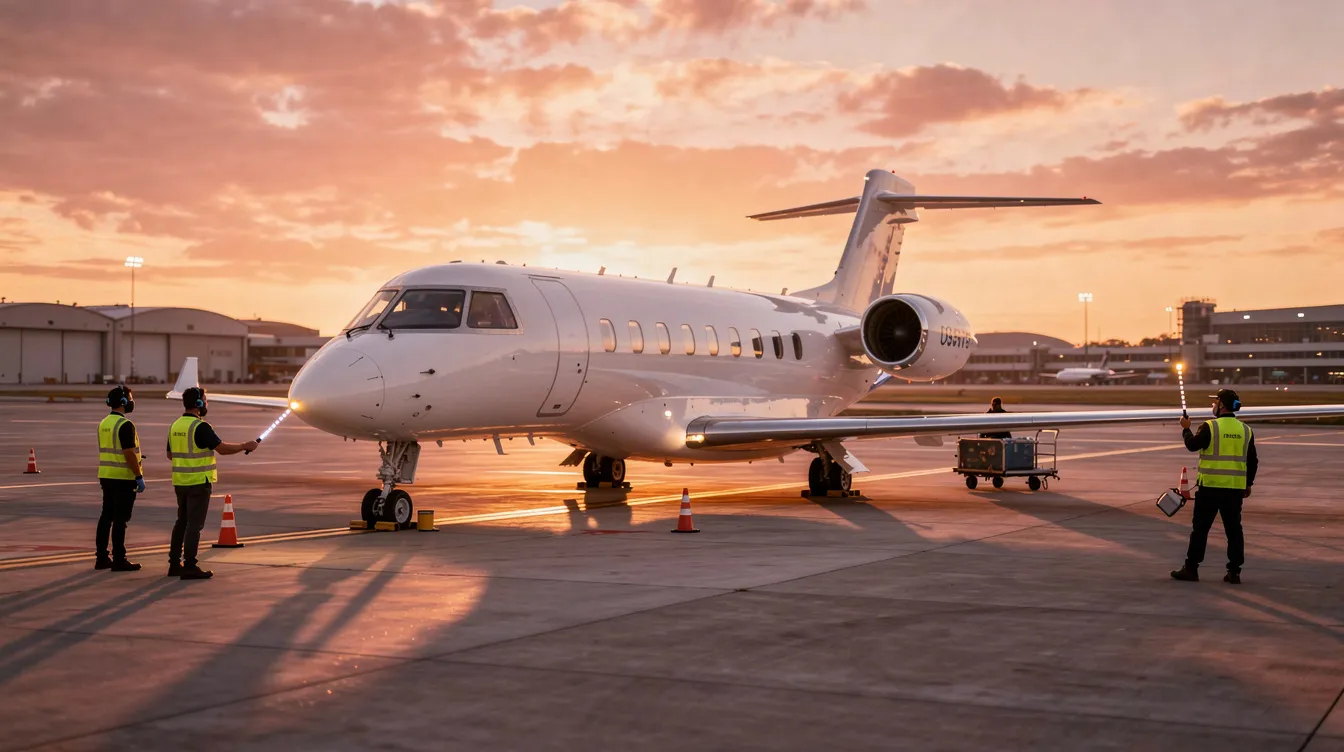
Global operations logistics add complexity: slot-controlled airports like London Heathrow require advance coordination, overflight permits for regions such as Russia, China, and parts of the Middle East must be secured ahead of time, and alternate airport planning accounts for weather and diversions. BlackJet's role is to manage these variables and provide real-time updates to travelers throughout their intercontinental journeys.
A typical 12–14 hour intercontinental flight on a large jet consumes approximately 10,000–12,000 gallons of jet fuel. A single 14-hour flight emits approximately 100 to 120 metric tons of CO2—a figure that underscores the importance of mitigation strategies for sustainability-minded clients.
Modern jets use high-bypass turbofan engines to lower fuel burn, improving operational efficiency. Sustainable aviation fuel (SAF) reduces lifecycle CO₂ emissions by 50–80% compared to conventional jet fuel, depending on feedstock and production pathway. SAF is increasingly available at major hubs including Los Angeles, Amsterdam, and Singapore, and its adoption is accelerating as the European Commission aims for a 55% reduction in aviation emissions by 2030.
Carbon offset programs allow private jet clients to balance emissions through verified projects in reforestation, renewable energy, or methane capture. These offsets complement—but do not replace—operational fuel efficiency and SAF adoption. BlackJet prioritizes efficient routing, weight management, and advanced technology to reduce fuel burn where possible, treating carbon emissions as an operational variable to minimize rather than ignore.
Sustainability-minded clients should ask about SAF uplift options at departure and arrival airports, seat configuration choices that reduce weight and improve fuel efficiency, and optimal long haul flight planning windows that minimize greenhouse gas emissions through favorable wind routing.
A typical planning timeline for an intercontinental private jet mission begins 1–3 weeks before departure. Complex multi-leg itineraries or travel during peak seasons (late June through August, major global events) benefit from earlier inquiry. Booking at least 1 to 3 weeks in advance helps secure optimal pricing and aircraft availability.
Key details clients should provide during initial contact:
Origin and destination pairs
Preferred dates and departure windows
Number of passengers and passenger count details
How much luggage, including any oversized items
Special catering, medical requirements, or pets
BlackJet advisors match these requirements to long range jets or ultra long range jets, weighing safety margins, nonstop versus fuel stop options, and budget parameters. The confirmation process includes review of the proposed aircraft, route, estimated flight time, and pricing—including any fuel stop or overnight costs—followed by signing of a charter or usage agreement under the member's Jet Card or fractional program.
Travelers can request quotes through online forms or customer service. Payment options include card and bank transfer during booking. Across the broader market, platforms like Jettly allow users to filter aircraft by size, range, or manufacturer, and Jettly's booking process involves searching, comparing, and confirming flights—though BlackJet's advisory model provides a more hands-on, consultative approach for intercontinental missions.
Ready to explore the smarter way to fly private? Many clients first evaluate fractional jet ownership as an investment, looking at how shared usage, depreciation, and potential exit options compare with charter and jet cards. It is equally important to understand tax implications for fractional jet owners, from business-use deductions to bonus depreciation opportunities on long range aircraft. Travelers comparing providers can review the top fractional jet ownership programs for smart investors to benchmark service levels, fleet mix, and contractual structures. Those already in a program should be aware of the process for selling or transferring a fractional jet share if travel needs change, and may consider whether 1/8 fractional jet ownership for around 100 hours per year provides the right balance of access and cost. Visit FractionalJetOwnership.com to request a consultation, review intercontinental access options, or evaluate whether Reserve Fleet or Equity Fleet solutions best fit your long range travel patterns.
This FAQ addresses practical questions about long haul flights, luggage, customs, jet cards, and booking lead times with BlackJet that extend beyond the topics covered above.
Many ultra long range jets in BlackJet's network can fly 6,000–7,700 nautical miles without refueling, covering routes like New York–Tokyo, London–Los Angeles, or Dubai–New York under normal conditions. Intercontinental jets can fly 5,500 to 8,000 nautical miles nonstop depending on the aircraft model selected.
Actual nonstop feasibility depends on season, winds aloft, passenger count, and how much luggage is on board. Operations teams always build in fuel reserves for diversions or holding patterns. BlackJet will confirm whether a specific requested route can be flown nonstop or whether a short fuel stop is recommended for safety margins and passenger comfort.
Large jets designed for long range private missions typically carry 1,500–2,500 pounds of baggage for 10–14 passengers. This usually equates to one or two large checked bags plus a carry-on per person on most long distances.
Bulky items like golf clubs, skis, product samples, or film equipment are often accommodated but may reduce total passenger count or require a larger aircraft, especially on very long routes where fuel payload is maximized. Clients should share detailed luggage information in advance so BlackJet can propose a suitable specific aircraft and confirm whether all items can remain accessible during the flight.
All international flights on private jets must clear customs and immigration. However, the process occurs in dedicated private terminals or FBOs with minimal lines and significantly faster processing than commercial terminals. This is one of the key advantages over commercial airlines for global travel.
Arriving into the United States from Europe or Mexico requires entry at a designated Port of Entry such as Teterboro, Miami Opa-Locka, or Los Angeles, where CBP officers meet the aircraft directly. BlackJet and its partner operators coordinate customs paperwork, arrival slots, and any visa requirements in advance, keeping the experience efficient and allowing passengers to clear quickly and reach their ground transportation without delay.
BlackJet Jet Cards are prepaid blocks of flight hours in specific aircraft categories—such as large cabin or ultra long range jets—with fixed hourly rates applicable to both domestic and intercontinental missions. For a comparison of jet cards versus fractional equity, see this detailed breakdown of key differences.
Hours are debited based on actual flight time plus any agreed minimums. Cardholders benefit from guaranteed availability within a defined notice period and simplified booking via email or phone, with immediate assistance available for urgent requests. Jet Card structures can be tailored to clients who regularly fly transatlantic or transpacific routes, aligning aircraft type and rate structure with their 12–24 month travel projections. Fractional ownership is ideal for 25–150 flight hours per year, making these programs well-suited for executives and families connecting major European cities, Asia-Pacific hubs, and destinations across long distances.
Booking intercontinental jets typically requires 1 to 3 weeks advance notice to secure preferred aircraft and departure times, particularly during peak seasons like late June through August and periods around major global events. This lead time allows BlackJet to coordinate overflight permits, crew scheduling, and handling at international airports.
Shorter-notice flights within 24–72 hours are often possible for members, but may limit aircraft choices or slightly increase positioning costs on complex long haul routes. Clients with fixed meeting dates or family holidays should contact BlackJet as soon as dates are known. Early planning lets advisors lock in optimal aircraft and pricing while confirming whether light jets, super midsize jets, or ultra long range models best match the mission profile and aircraft size requirements.
Intercontinental private jets represent the pinnacle of private aviation, delivering unmatched range, comfort, and flexibility for business meetings, leisure travelers, and executives navigating complex global schedules. BlackJet Fractional Jet Ownership offers a sophisticated solution that balances the benefits of private jet ownership with cost efficiency and operational simplicity. By sharing access to a curated fleet of long range and ultra long range jets, clients enjoy predictable availability, priority scheduling, and tailored cabin experiences without the burdens of full ownership.
Whether flying nonstop on critical business missions or embarking on luxury travel across continents, BlackJet’s programs provide seamless end-to-end support—from mission planning and regulatory compliance to customized onboard service and sustainability options. For travelers seeking to optimize time, privacy, and comfort while reducing complexity, fractional ownership combined with jet card flexibility presents a compelling alternative to charter or outright purchase.
Ready to transform the way you fly intercontinental? Visit FractionalJetOwnership.com to explore ownership options, request a consultation, and discover how BlackJet Fractional Jet Ownership can elevate your private aviation experience worldwide.
