June 24, 2026
The global private jet market in 2026 is defined by tight inventory, rising demand, and more ways to access luxury aviation than ever before. Whether a first-time buyer is exploring private jets for sale or a seasoned traveler is reconsidering the economics of full ownership, the decisions involved are significant - and the wrong choice can tie up millions in capital without matching real travel needs. This guide breaks down the aircraft categories, cost structures, and access models that matter most when evaluating luxurious jets for sale today.
This page is a practical guide to luxury jets for sale in 2026, written for U.S. and global buyers comparing full ownership, private jet charter, and fractional ownership. It covers how to evaluate aircraft, understand costs, and choose the access model that fits.
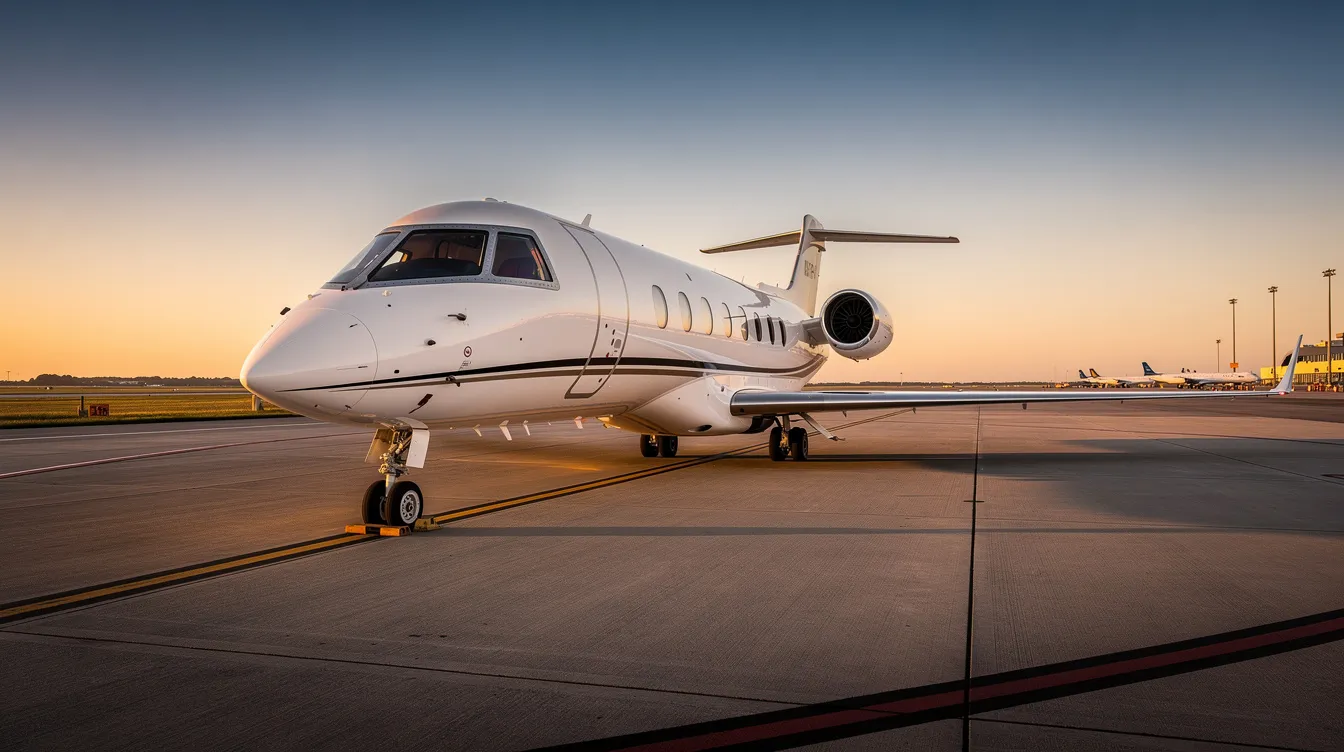
Luxury private jets range from efficient light jets like the Embraer Phenom 300E to ultra-long-range jets such as the Gulfstream G700 and Bombardier Global 7500. Each aircraft category serves a different travel profile, and private jets can be categorized by size and range to simplify the selection process.
Many travelers flying 25–150 hours per year - the high-frequency range where most executives and families fall - are better served by fractional jet ownership or membership programs like BlackJet Fractional Jet Ownership rather than buying a whole aircraft outright. Fractional ownership offers lower hassle than full aircraft ownership while still providing guaranteed availability and flexibility.
The three core decisions when evaluating any luxury jet are mission profile (routes, passenger count, long-range needs), total cost of ownership, and access model (ownership vs. charter vs. fractional). Defining a mission profile is critical for selecting a private jet that aligns with both lifestyle and financial goals.
Read on to learn how to evaluate luxury aircraft, compare ownership options, and take the next steps toward a smarter private aviation solution.
The term "luxury jets" describes private aircraft built with premium cabins, advanced avionics, and tailored service standards that go well beyond commercial first class. Global demand for these jets has remained strong from 2020 through 2025 and has carried firmly into 2026, supported by constrained supply and a growing base of new entrants to private aviation.
Understanding the market means distinguishing among several aircraft types. A private jet or business aircraft typically seats 4–19 passengers and is used for non-commercial travel across light, midsize, super midsize, and heavy categories. VIP airliners - think Boeing Business Jets (BBJ) or Airbus Corporate Jets (ACJ) - convert commercial airframes into expansive flying suites with multiple zones, designed for heads of state or ultra-high-net-worth principals. Between those extremes sit the jets most buyers actually evaluate: purpose-built business aircraft from Gulfstream, Bombardier, Dassault, Embraer, and Cessna.
In 2026, well-known models on the market include the Gulfstream G500 and G700, Bombardier Challenger 3500 and Global 7500, Dassault Falcon 8X and the upcoming Falcon 10X, and the Embraer Praetor 600. Each model represents a different balance of cabin size, range, and operating cost.
Listings for luxury private jets for sale include brand-new aircraft from manufacturers, nearly new jets (1–5 years old) with low hours, and older but upgraded aircraft featuring modern interiors and connectivity. Pre-owned jets offer lower costs and immediate availability compared to new models, which often come with multi-year production backlogs. Before listing a private plane, over 100 rigorous checks are performed to ensure quality and safety, reflecting the importance of maintenance history and aircraft age in valuation.
BlackJet Fractional Jet Ownership focuses on giving clients access to these aircraft categories through fractional ownership and shared-use programs, rather than functioning as a traditional brokerage alone. Market options for private jets include fractional ownership and chartering, and BlackJet is structured to serve both paths.
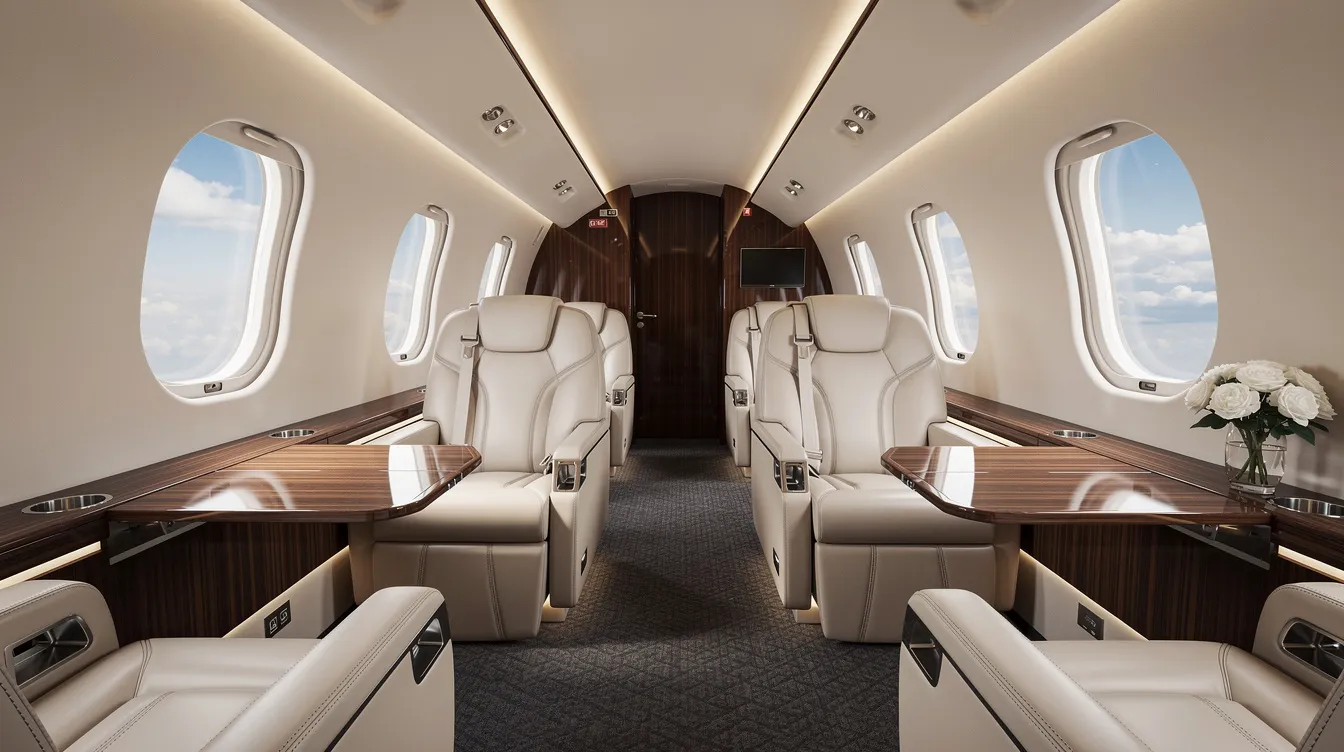
Luxury jets fall into four categories: light, midsize, super midsize, and heavy. Understanding these categories is the fastest way to align an aircraft type with the routes, passenger loads, and budgets that define a buyer's actual travel needs. The sections below break down each class with concrete specs, popular models, and the kinds of missions they handle best.
Many of the same categories used in jets for sale listings - light, midsize, long range - also appear in private jet charter and fractional aircraft ownership programs. For readers new to this space, a solid grasp of fractional jet ownership terminology and concepts makes it easier to evaluate which category and program fit best. These categories also underpin the fleet structures offered by programs like BlackJet.
Light jets are ideal for regional travel and executive mobility, typically carrying 2–6 passengers on routes up to roughly 1,200–2,000 nautical miles. Think New York to Miami (~1,090 nm), Los Angeles to Aspen (~1,100 nm), or Dallas to Chicago (~850 nm) - missions where speed, privacy, and access to smaller airports matter more than cabin square footage.
Popular luxury light jets in 2026 include the Embraer Phenom 300E, Cessna Citation CJ4 Gen2, and Pilatus PC-24. These aircraft types blend performance with operating efficiency: lower fuel burn, smaller crew requirements, and the ability to operate from regional airfields that larger jets cannot reach. Light jets have lower operating costs compared to larger models, with annual fixed expenses typically running $500,000–$900,000 and variable hourly costs in the $1,800–$3,200 range. They are suitable for short to medium trips and remain in strong demand for regional travel.
For many clients flying under 75 hours per year on regional routes, fractional jet ownership in a light jet or a Reserve Fleet membership can deliver all the benefits of private aviation without a full purchase.
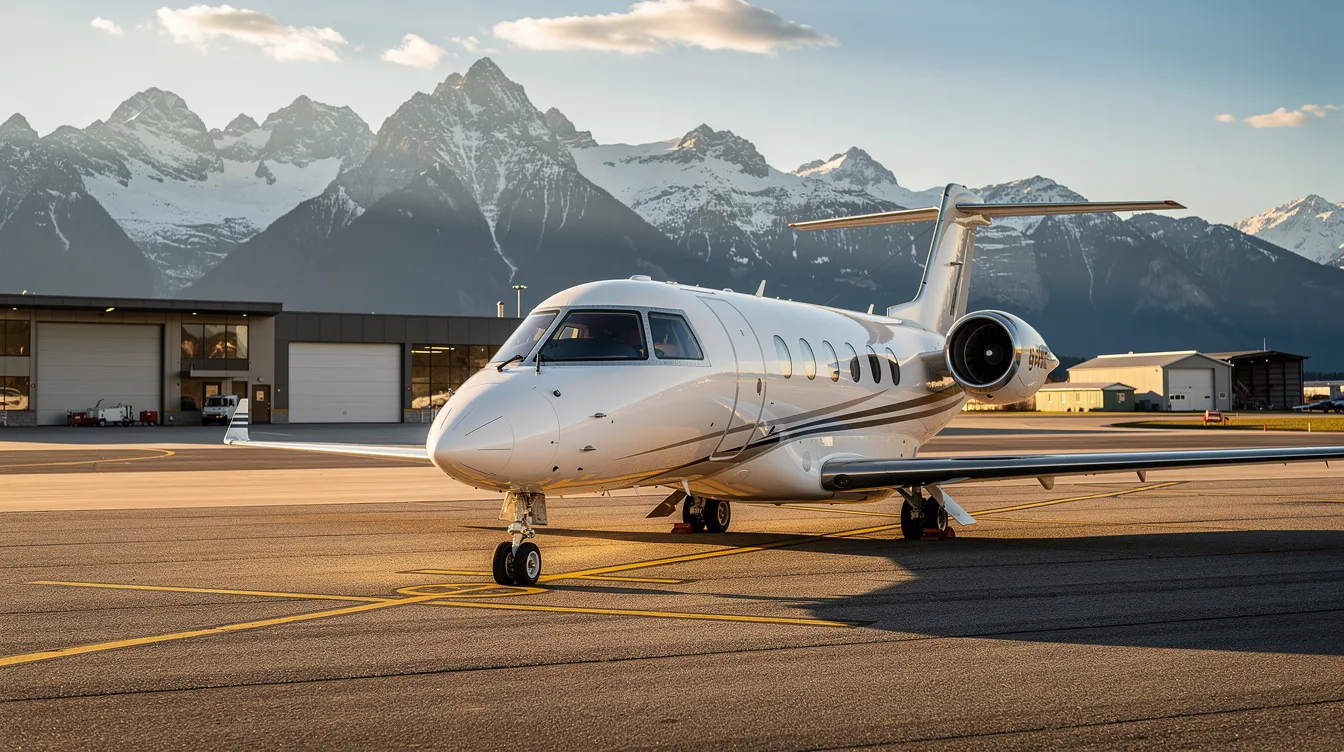
Midsize and super midsize jets are the workhorse category for executives and families who frequently travel coast-to-coast in the United States or to the Caribbean, Mexico, and parts of South America. Midsize jets offer more comfort and range for longer domestic flights, while super midsize aircraft push the envelope into true transcontinental capability.
Concrete examples include the Bombardier Challenger 3500, Cessna Citation Longitude, and Embraer Praetor 600. These jets typically seat 8–10 passengers with ranges around 3,000–3,900 nautical miles. Cabins in this category usually allow full stand-up height for most passengers, better baggage capacity, and often feature club seating, divans, and fully enclosed lavatories. Midsize jets offer expanded range and cabin space for cross-country travel - a meaningful step up from light jets for anyone whose itinerary extends beyond regional hops.
Super midsize jets handle nonstop flights such as New York–Los Angeles, Chicago–San José del Cabo, or London–Marrakesh, making them attractive for both business and lifestyle travel. New acquisition costs in this segment run $18–$35 million, with pre-owned examples available from roughly $10–$25 million, depending on model and condition. Super midsize jets dominate fractional ownership fleets for good reason: they hit the sweet spot of range, cabin comfort, and operating cost for the majority of frequent flyers, and they are prominently featured in several of the best fractional jet ownership programs for private travelers.
BlackJet's Equity Fleet model is well-suited for frequent U.S. and transcontinental flyers who value predictable access to this segment without managing a whole aircraft.
Heavy and ultra-long-range jets represent the pinnacle of private aviation - large cabin aircraft built for 10–19 passengers and nonstop intercontinental routes. These are the jets that arrive in Tokyo, London, or Sydney without a fuel stop, carrying executives, families, or delegations in full comfort across time zones.
Relevant 2026 models include the Gulfstream G600 and G700, Bombardier Global 6500 and Global 7500, and Dassault Falcon 8X, alongside the upcoming Falcon 10X. Ranges regularly exceed 6,000 nautical miles, with ultra-long-range jets capable of traveling up to 7,700 nautical miles, such as the Bombardier Global 7500. The Falcon 8X offers a range of 6,450 nautical miles. Heavy jets allow nonstop international travel with spacious cabins, private suites, conference tables, separate crew rest areas, and full galleys.
Ownership in this category comes at a premium. New acquisition costs often reach $60–$80+ million, with the Gulfstream G650ER priced around $70 million. Pre-owned examples such as the Gulfstream G650ER trade in the $31–$41 million range. Heavy jets often require complex financing structures, and specialized lenders offer tailored loan products to accommodate buyers. Annual operating costs for 200 hours of utilization can exceed $2 million.
Some buyers now pursue fractional shares in ultra-long-range jets instead of 100% ownership to achieve global reach with shared risk and more efficient aircraft utilization. Ultra-long-range jets are required for frequent international excursions, but not every owner needs that capability year-round.
Jet Category | Typical Passenger Capacity | Range (nautical miles) | New Acquisition Cost (Million $) | Annual Fixed Operating Cost (Million $) | Hourly Operating Cost ($) | Ideal Use Case |
|---|---|---|---|---|---|---|
Light Jets | 2–6 | 1,200–2,000 | 5–15 | 0.5–0.9 | 1,800–3,200 | Regional travel, short to medium trips |
Midsize & Super Midsize | 8–10 | 3,000–3,900 | 18–35 | 1.2–1.8 | 3,500–5,000 | Cross-country, transcontinental flights |
Heavy Jets | 10–19 | 6,000+ | 60–80+ | 1.5–3+ | 8,000–14,000+ | Nonstop international, large groups |
Once a buyer has identified the right aircraft category, the next decision is how to access it. There are three primary paths: buying a whole aircraft, chartering on demand, or joining a fractional jet ownership vs. a membership program structure that matches their usage profile.
Full ownership offers maximum control over scheduling, cabin customization, and aircraft selection - but it also carries the highest fixed costs and administrative responsibilities. Private jet charter provides flexibility with no asset exposure, though availability and pricing can fluctuate, especially during peak travel periods. Fractional aircraft ownership and shared-use programs, such as BlackJet's Equity Fleet and Reserve Fleet, sit in the middle by combining predictable access with proportionate, manageable costs.
Many high-net-worth individuals flying 25–150 hours per year find that fractional jet ownership as an investment can deliver a better return on capital than buying a full luxury jet for occasional use.
Private jet ownership generally makes financial sense for over 350 flight hours per year, particularly for individuals or corporations with consistent schedules and recurring routes. Some industry analyses place the break-even threshold at 200–300+ hours, depending on aircraft type and mission, but the economics tighten considerably below those levels.
Buyers considering a Gulfstream, Global, or Falcon for sole use should budget well beyond the purchase price. Total cost of ownership includes fuel, maintenance, and crew salaries, along with hangar space, training, insurance, and periodic refurbishments. For heavy jets, annual operating costs can run $1.5–$3 million or more. Ongoing costs include maintenance, management, and operational readiness. Aircraft management services can handle scheduling, regulatory compliance, and maintenance, easing owner responsibilities.
Owners often place their aircraft with a management company to handle scheduling, regulatory compliance, and charter revenue opportunities. This adds convenience but also management fees, and it introduces wear from third-party use. While the cabin experience can be fully customized, aircraft depreciation and market cycles can significantly affect the long-term economics of full luxury jet ownership. Private jet owners can deduct operating expenses from taxes, and like-kind exchanges can optimize tax outcomes for aircraft owners under certain conditions - but these advantages require careful structuring with qualified advisors or, for shared owners, a clear understanding of the tax implications for fractional jet ownership.
Those flying well below 200 hours annually should compare the full-ownership model with fractional and charter options before committing capital.
On-demand private jet charter is a pay-as-you-go solution well suited to occasional travelers who prioritize flexibility and want to avoid long-term commitments. Private jet charter allows flexible scheduling for travelers across a wide variety of aircraft, and private jets can be scheduled for immediate departure in many cases, accommodating last-minute travel requests when aircraft are available.
Charter clients can access everything from light jets to long-range and VIP airliners on a trip-by-trip basis. Hourly rates in 2026 range from approximately $3,000–$5,000 for light jets up to $8,000–$14,000+ for heavy and ultra-long-range aircraft, plus positioning costs, handling fees, and peak-period surcharges.
Common pain points include variable aircraft quality, fluctuating pricing around holidays, and no guaranteed availability compared with dedicated ownership or fractional programs. Waiting for confirmation on a busy travel weekend - or finding that the only available aircraft doesn't meet expectations for sophistication or comfort - is a familiar frustration for charter-dependent travelers.
Frequent charter users who see their annual hours approaching 25–50 should evaluate whether a fractional jet ownership cost structure or membership program would deliver better predictability and cost transparency. BlackJet's Reserve Fleet functions as an advanced alternative to ad-hoc charter by securing access to vetted aircraft with clearer pricing and consistent service standards.
Fractional ownership allows shared access to private jets by letting a buyer purchase a share - for example, 1/8 or 1/16 - of a specific aircraft or pooled fleet. That share entitles the owner to a contracted number of flight hours per year, with typical allocations of roughly 50 hours (1/16 share) to 200 hours (1/4 share).
Programs like BlackJet's Equity Fleet provide owners with tax advantages, priority scheduling, and predictable access, while aircraft management services handle scheduling and maintenance along with crew and compliance. Members can access fractional ownership of a jet share without bearing the full weight of whole-aircraft responsibilities, and detailed modeling of the total cost of fractional jet ownership helps align expectations with real-world budgets.
Reserve Fleet or jet membership programs offer guaranteed availability for flights and flexible pay-as-you-go hours without an equity stake - ideal for clients who prefer to keep their balance sheet light. Jet membership programs reduce hassle compared to full ownership while still ensuring a consistent experience aboard quality aircraft, in some cases using floating fleet options in fractional and shared-use programs to maximize flexibility and aircraft availability.
Imagine a family that flies 40–60 hours per year for vacations and business trips. Rather than booking traditional private jet charter each time and accepting the uncertainty around aircraft quality and pricing, Reserve Fleet access provides a more predictable experience with the style and comfort they expect.
The Reserve Fleet can also serve as a gateway solution for clients who may later choose to step into 1/8 fractional jet ownership for around 100 annual hours or other Equity Fleet fractional jet ownership structures once their travel patterns stabilize and their annual hours increase.

Turning research into action requires a structured approach. The steps below translate the concepts covered in this guide into a simple, actionable process any prospective buyer or fractional owner can follow - from the beginning of their search through final execution.
The process covers clarifying travel needs, setting budget parameters, comparing access models (ownership, charter, fractional), evaluating aircraft categories, and speaking with an advisor. A structured approach prevents costly misalignment between the aircraft chosen and the owner's real-world usage.
Start by listing the past or expected 12–24 months of trips:
Routes (origin and destination cities)
Number of passengers per trip
Frequency and seasonal patterns
Special requirements (pets, oversized luggage, onboard meetings)
Set realistic annual hour estimates - for example, 30, 75, or 120 hours - to see whether private jet charter, fractional jet ownership, or whole aircraft purchase aligns best. Establish a combined acquisition and annual operating budget range before looking at specific luxury jets or programs, ensuring expectations stay anchored in financial reality rather than aspiration alone.
This is an ideal point to have an initial conversation with a BlackJet advisor to validate assumptions and refine which aircraft categories to consider. More precise data leads to more tailored recommendations.
Create a shortlist of 1–2 ownership models (e.g., fractional share vs. Reserve Fleet membership) and 1–2 aircraft categories (e.g., light jet vs. midsize) that fit the identified mission and budget.
This comparison should highlight key financial and structural differences, and for buyers focused on shared models, an understanding of fractional jet ownership financing and options is particularly important:
Total cost of access over 5–10 years
Expected availability and booking lead times
Flexibility to upgrade or downgrade aircraft per trip
Tax or accounting implications
Consider whether having a dedicated tail number and cabin customization matters more than fleet flexibility and operational simplicity. BlackJet can provide side-by-side comparisons showing full ownership, fractional, and charter costs over 5–10 years for a given usage profile. This step narrows the field before detailed contract review or technical inspection of any specific luxury aircraft.
Once a path is chosen - whether buying a jet for sale or entering a fractional program - clients should involve specialized aviation attorneys, tax advisors, and technical inspectors. An independent pre-purchase inspection verifies the aircraft's condition and validates the seller's representations.
Key items to review include:
Title and lien searches
Maintenance records and inspection reports
Management or fractional ownership contract terms
FAA or international regulatory compliance
For U.S. clients, particular attention should be paid to potential tax benefits and compliance under current IRS rules and state sales or use tax regimes. BlackJet works alongside clients' existing advisors to assist and ensure that the chosen structure integrates smoothly with their corporate or personal financial planning.
A disciplined due-diligence process is essential in a high-value transaction like a luxury jet or fractional share purchase, and many clients find value in reviewing an aircraft fractional ownership sample contract with counsel before signing. The speed at which buyers can arrive at a sound decision depends on the quality of their advisory team.
The following FAQ addresses common questions not fully covered in the main sections, focusing on practical concerns from first-time and experienced private flyers. Answers apply to readers considering both whole aircraft purchases and fractional jet ownership or membership options. For personalized answers about specific travel needs, readers can contact BlackJet directly.
In 2026, new light jets range from roughly $5–$15 million, midsize and super midsize jets run $18–$35 million, and new ultra-long-range jets can reach $60–$80+ million. Pre-owned aircraft are available at lower entry points depending on age, hours, and condition.
Industry-average hourly operating costs vary significantly: light jets run approximately $1,800–$3,200 per flight hour (variable plus allocated fixed costs), while heavy and ultra-long-range jets often fall in the $8,000–$14,000+ range. Owners should also budget for annual fixed costs - crew, hangar, insurance, and scheduled maintenance - which can reach several hundred thousand dollars for light jets and well over $2 million for large cabin aircraft.
Fractional ownership and membership models allow clients to access luxury aircraft while paying only their share of operating and management expenses, rather than bearing the full burden of sole ownership, provided that liability and insurance are structured correctly to address the essential liability coverage needs in fractional jet ownership.
Fractional jet ownership generally becomes compelling for clients flying more than 25–50 hours per year, who want guaranteed access, consistent service, and more predictable pricing than ad-hoc charter. Former charter clients often appreciate the ability to reserve aircraft with shorter lead times and enjoy standardized cabin layouts and amenities across the fleet.
Frequent charter customers should request a side-by-side cost and service comparison from BlackJet to determine whether an Equity Fleet share or Reserve Fleet membership would better match their actual usage. That said, occasional flyers who travel only a few times per year may still find on-demand charter sufficient and more economical than any ownership structure.
Purchasing a pre-owned private jet can often be completed in 30–90 days, assuming clear title, satisfactory inspections, and efficient coordination among legal, tax, and financing teams. Buying a brand-new aircraft from a manufacturer may involve multi-month or even multi-year lead times, depending on production slots and customization choices.
Entering a fractional jet ownership or membership program is typically faster. Many clients are able to begin flying within a few weeks of contract execution and funding, and they should also understand how selling or transferring a fractional jet ownership share might work if their needs change over time. Those who need near-term access may prefer a fractional or Reserve Fleet solution while exploring longer-term ownership strategies in parallel.
Many owners and fractional shareholders use their aircraft for a mix of corporate and personal trips. However, regulatory, insurance, and tax rules can differ depending on whether the aircraft is operated under corporate structures, for charter revenue, or solely for personal transportation. Establishing clear company policies and documentation practices ensures that the value of flights is allocated properly between business expenses and any taxable personal benefit.
BlackJet can coordinate with a client's advisors to structure usage patterns and reporting in a way that aligns with their broader financial and compliance objectives.
Start by outlining expected annual flight hours, typical routes, and comfort preferences. Then schedule a consultation with a BlackJet Fractional Jet Ownership advisor. During this consultation, BlackJet can model scenarios comparing full ownership, private jet charter, Equity Fleet fractional shares, and Reserve Fleet memberships based on actual client data.
Discover more about available programs, download detailed guides, and request a personalized proposal by visiting FractionalJetOwnership.com. A conversation with an expert is often the most efficient way to move from browsing luxurious jets for sale to choosing a tailored private aviation solution - get in touch today and find the ultimate path to smarter private travel.
Choosing the right luxury jet requires balancing mission needs, budget, and access models in today’s dynamic private aviation market. Whether considering full ownership, fractional aircraft ownership, or jet membership programs, each option offers distinct advantages in flexibility, security, and innovation. Fractional ownership, in particular, allows buyers to protect capital while gaining predictable access to a fleet of premium aircraft, making it an increasingly popular choice for high-frequency travelers.
The aircraft you select not only represents a significant investment but also an extension of your lifestyle and business efficiency. Partnering with trusted advisors like BlackJet Fractional Jet Ownership ensures you navigate complex decisions with confidence, filling knowledge gaps and safeguarding your interests throughout the process.
Ready to explore how fractional ownership or membership programs can transform your travel experience? Visit FractionalJetOwnership.com to learn more and connect with experts who can guide you to the ideal private aviation solution.
