May 3, 2026
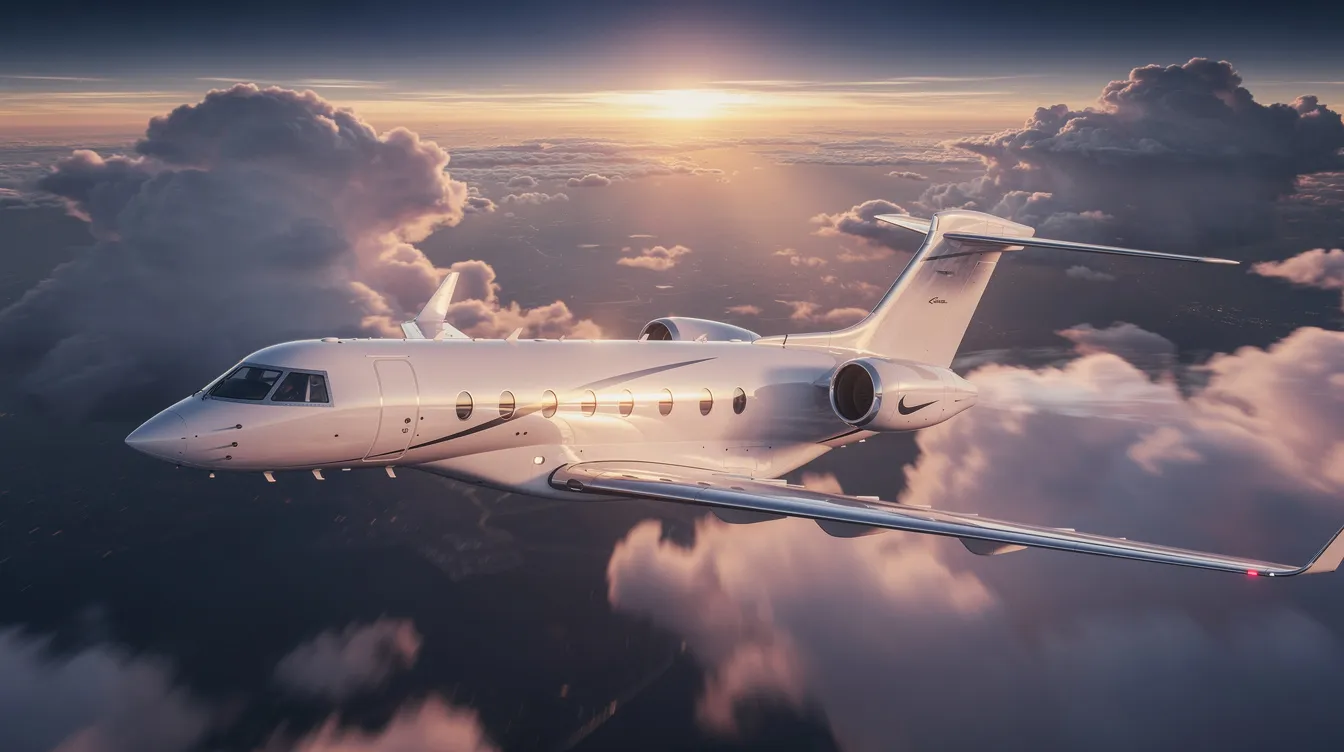
A luxury private jet is more than an aircraft—it’s a mobile headquarters, wellness retreat, and productivity tool capable of connecting distant cities without compromise. The evolution of luxury private jets marks a significant milestone in aviation history, as ultra-long-range flagships like the Gulfstream G700, Bombardier Global 7500, and Boeing Business Jet 787 have redefined what discerning travelers expect from business aviation. The Bombardier Global 8000 is recognized as the world’s longest-range private jet, with a range of 8,000 nautical miles and a maximum speed of Mach 0.94, making it the fastest business jet currently available.
These aircraft now enable nonstop routes that seemed impractical a decade ago: New York to Singapore, Los Angeles to Sydney, London to Buenos Aires. With intercontinental range measured in thousands of nautical miles and cabins rivaling five-star hotels, luxury private jet travel has evolved from status symbol to strategic advantage for high-net-worth individuals and multinational corporations alike.
This article examines the top luxury models flying today, their cabin technologies, true ownership costs, and modern access options, including fractional ownership through BlackJet Fractional Jet Ownership. Whether you fly 50 hours annually or 300, understanding these aircraft and access structures will help you make smarter decisions about private aviation.
The current generation of opulent private jets represents aviation history’s most capable and refined flying machines. From ultra-long-range twins to converted commercial airliners, these aircraft serve everyone from heads of state to touring artists to Fortune 500 executives. Each model balances range, speed, cabin space, and operating economics differently—making aircraft selection a strategic decision rather than a purely aspirational one.
The Bombardier Global 8000 leads the category with 8,000 nautical miles of maximum range (calculated with NBAA IFR reserves) and Mach 0.94 top speed. Its four true living zones include a principal suite, a dedicated dining area, ana d forward club section. Wellness-focused features include low cabin altitude around 4,000 feet and HEPA filtration delivering 100% fresh air—technologies that combat jet lag on marathon flights.
The Bombardier Global 7500 offers 7,700 nautical miles at Mach 0.925, excelling on missions like Los Angeles to Dubai or New York to Hong Kong. The Bombardier Global 7500 can reach a maximum speed of Mach 0.925, establishing it as one of the largest and fastest personal jets in operation. Its four-zone cabin includes a full-size galley and crew rest area, allowing passengers to arrive rested for same-day meetings.
The Gulfstream G700 offers a range of 7,500 nautical miles and a maximum speed of Mach 0.925, making it one of the top contenders in the luxury private jet market. The Gulfstream G700 has a maximum speed of Mach 0.935, making it one of the fastest private jets available. With five living areas, including a private stateroom with en-suite shower, it delivers circadian-rhythm lighting and advanced Symmetry Flight Deck avionics that reduce pilot workload while enhancing all-weather safety.
Executive airliners represent aircraft designed for those who need airline-sized airframes configured as private flying residences. The Boeing Business Jet 787 offers roughly 9,900+ nautical miles of long range thanks to its composite fuselage, with interior options spanning boardrooms, master suites, and spa-style bathrooms including full showers. The Boeing Business Jet (BBJ) 777X will offer over 3,000 square feet of space upon its launch around 2026-2027.
The BBJ 737 provides 6,500-7,000 nautical miles with 800+ square feet of spacious cabin, including walk-in closets and cinema lounges. The Airbus ACJ319neo mirrors this capability with 1,000+ square feet featuring dining rooms and conference areas. The Airbus ACJ350 features multiple bedrooms, full-size bathtubs, private cinemas, and medical operating rooms for emergencies.
Typical private jet owners of these aircraft include royal families, heads of state, and global brands needing airborne headquarters for 10-50 passengers in complete privacy. These jets serve as private offices in the skies, enabling work and rest across multiple time zones.
The Gulfstream G800 delivers 8,000 nautical miles with AI-optimized flight paths and advanced noise reduction, positioning it for corporate transpacific needs. Its Smooth Flëx Wing technology reduces turbulence perception significantly.
The Dassault Falcon 8X has a range of 6,450 nautical miles and a maximum speed of Mach 0.90, making it a popular choice among executives for its balance of performance and luxury. Its tri-jet design enables steep-approach capability into airports like London City and challenging alpine strips. The Dassault Falcon 7X offers 5,950 nautical miles for similar flexibility in European and Asian business travel. Worth noting: the Dassault Falcon 10X has the widest cabin in purpose-built business aviation, over 9 feet wide, and features high-precision fly-by-wire flight controls.
The Embraer Lineage 1000E provides 4,600 nautical miles as a cost-effective flying residence with multiple living spaces. The Embraer Lineage 1000E is based on a commercial airliner frame and provides significantly more space than traditional business jets, making it ideal for routes like London to New York with lower operating costs than widebody executive airliners.
Luxury in 2026 is defined by comfort, wellness, customization, and productivity—not merely gold fixtures or crystal chandeliers. Modern cabins function as highly efficient environments where executives can work, rest, dine, and arrive refreshed for critical meetings. Passenger comfort is prioritized through features such as noise reduction, advanced climate control, and customizable interiors, all designed to enhance the overall passenger experience and well-being. Advanced technology and thoughtful design transform long-haul flights into productive or restorative experiences.
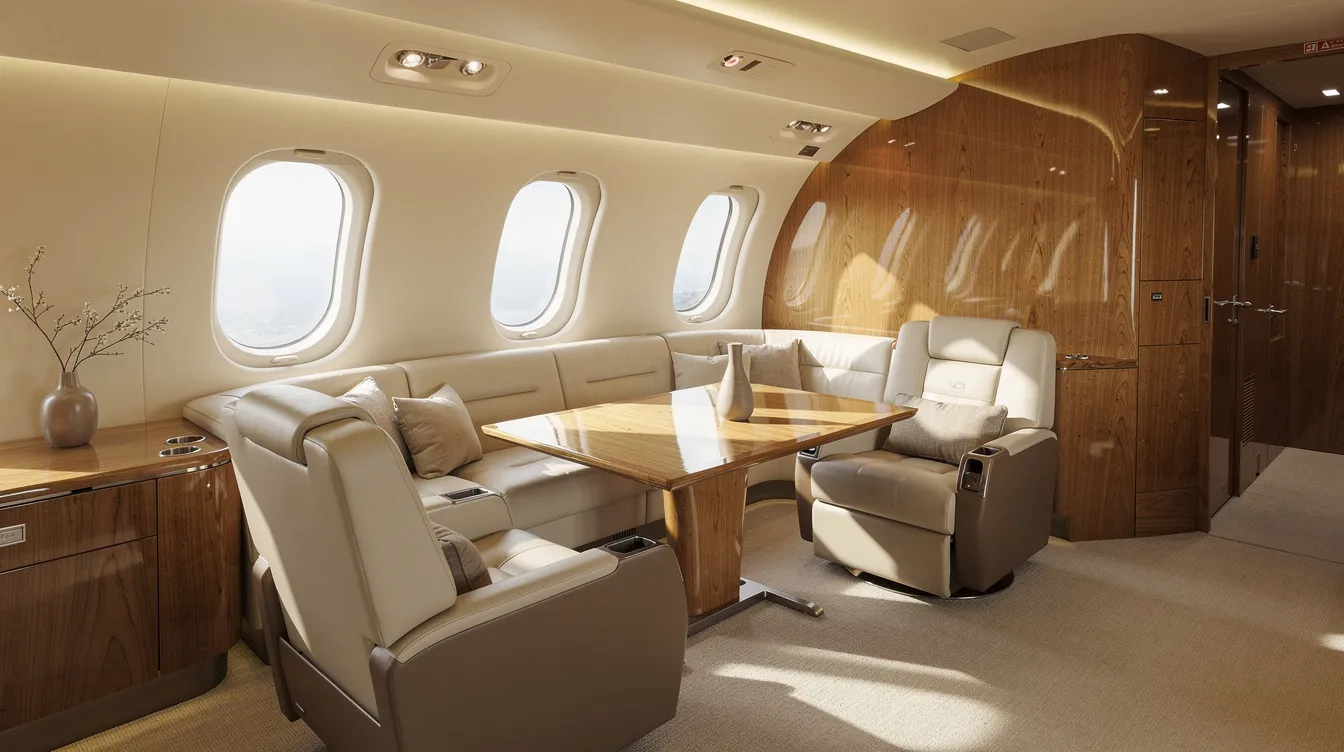
Luxury private jets typically offer multiple designated living spaces, including master bedrooms, dining areas, and entertainment rooms, transforming the cabin into a luxurious hotel-like experience. A typical four-zone layout includes:
Forward club/meeting zone: Plush seating configured for conversation or work
Dining or conference room: 4K displays for presentations and secure video conferencing
Entertainment lounge: Media systems with Dolby Atmos and comfortable seating
Principal suite: Full-size bed, wardrobe, and en-suite shower with crew quarters forward
The principal suite on aircraft like the Global 8000 includes a true bedroom with wardrobe storage and a private bathroom. Business travelers often configure one zone as a flying boardroom with every finest detail considered—from neutral palettes to indirect lighting to flush-mounted storage, keeping the space uncluttered.
The interiors of luxury private jets are often designed with high-end materials such as handcrafted leather, exotic woods, and polished stone, creating a sophisticated and inviting atmosphere. Standard builds feature hand-stitched leathers, cashmere-wool textiles, stone countertops, and brushed metal accents.
More opulent private jets—particularly ACJs and BBJs—may include gold-plated fixtures, crystal chandeliers, inlaid marquetry, and custom art collections. Owners integrate personal branding through monogrammed linens, discrete logos, and custom color schemes tied to family offices or corporations.
BlackJet advises clients toward refined, timeless luxury that preserves resale value rather than ostentatious décor. Bespoke amenities should enhance function and comfort rather than simply signal wealth.
Health systems in business jets can provide 100% fresh, plasma-ionized air every two minutes and maintain low cabin altitudes to minimize physical fatigue. This low cabin altitude—often 4,000-4,500 feet equivalent—dramatically reduces jet lag on 12-16 hour flights.
Luxury private jets often feature advanced air purification systems that continuously cleanse the cabin air, removing allergens, viruses, and bacteria, ensuring a healthy environment for passengers. Dynamic LED lighting programs track local time zones, supporting circadian rhythms so passengers feel adjusted upon landing.
Smooth-wing designs and advanced winglets reduce turbulence impact, while acoustic insulation and active noise-cancellation features create genuinely quiet cabins. An executive stepping off a Gulfstream G700 after an overnight Atlantic crossing can walk directly into a board meeting feeling rested rather than depleted.
Many fleets are integrating high-speed Starlink Wi-Fi for seamless 4K streaming and video calls at cruising altitudes. Smart controls for lighting, temperature, and entertainment systems are standard in luxury private jets, allowing passengers to customize their environment for maximum comfort through smartphone apps or touchscreens.
A fully equipped kitchen—comparable to a professional kitchen on the ground—can be found on Global 7500-class jets, featuring convection ovens, espresso bars, and wine storage. This allows for a true gourmet dining experience at altitude. Many luxury private jets are equipped with fully stocked galleys and onboard chefs, enabling the preparation of gourmet meals tailored to passenger preferences during flights. Fine dining at 45,000 feet is now routine.
Consider two scenarios: an overnight New York to Paris flight with a working dinner, secure video calls, and six hours of quality sleep before a breakfast landing—or a West Coast to Tokyo journey with a full sleep cycle, nuage seat comfort, and breakfast preparation before touchdown. These experiences define modern luxury private aviation.
Understanding the true cost of luxury jet ownership requires examining three categories: acquisition price, annual operating costs, and long-term capital risk. The gap between purchase price and lifetime operating spend surprises many first-time private jet owners, especially those considering entry-level options like 1/8th fractional jet ownership structures.
Owning a luxury private jet involves significant ongoing expenses, including fuel, maintenance, crew salaries, insurance, and hangar fees. Utilization—measured in flight hours per year—drives cost efficiency and explains why fractional ownership has gained traction among executives flying 25-150 hours annually, especially when you account for the full cost structure of fractional jet ownership.
Current market pricing for 2026’s flagship models:
Aircraft | Approximate Base Price |
|---|---|
Bombardier Global 7500 | $70-75M |
Gulfstream G700 | $75-80M |
Dassault Falcon 8X | ~$60M |
Embraer Lineage 1000E | $50M+ |
BBJ 737 (equipped) | $90M+ |
ACJ319neo / BBJ 787 | $200-400M+ (with interiors) |
Customization and completion costs for private jets can vary widely, with prices depending on the level of personalization and materials used, often adding millions to the initial purchase price. Complex certifications and advanced technology packages can push final costs tens of millions above the initial purchase price for the aircraft alone
The difference between “green” aircraft pricing and completed VVIP configurations explains why media reports often cite dramatically different figures for the same model.
Annual operating costs for a private jet can range from $500,000 to over $4 million, depending on the size and type of the aircraft. A large ultra-long-range jet operating 400-500 hours annually can easily exceed $3-5M in yearly costs. Key expense categories include, and are often detailed in fractional jet ownership contract terms and agreements, and a comprehensive aircraft fractional ownership sample contract guide:
Fuel: 40-50% of total costs ($5,000-10,000+ per flight hour)
Maintenance: $1-2M annually (scheduled and unscheduled)
Crew: $500K+ for salaries, training, and benefits
Insurance: $200-500, K depending on hull value, with additional considerations for liability coverage in fractional jet ownership
Hangar and parking: $100-300K
Navigation and handling fees: Variable by region
Depreciation significantly impacts the resale value of private jets, with the rate varying based on age, condition, and market demand. A $70-100M asset may depreciate 5-10% annually, representing substantial capital risk. Widebody BBJs and ACJs incur proportionally higher costs due to their scale, which is why many buyers review leading fractional jet ownership programs for smarter access instead of purchasing outright.
Some aircraft illustrate the outer boundaries of private jet extravagance. Drake’s Boeing 767 “Air Drake” conversion reportedly cost approximately $185M. Kim Kardashian’s custom Gulfstream G650ER totals roughly $150M, including a $45M interior. Prince Al Waleed Bin Talal’s concept A380—featuring throne rooms, full gyms, and concert-hall spaces—was valued at north of $500M.
These aircraft represent less than 1% of the market and include impressive features like grand staircases, private cinemas, and even garages for luxury cars. While fascinating, they contrast sharply with how most high-net-worth individuals approach private aviation. BlackJet’s philosophy emphasizes efficiency-driven solutions rather than maximum opulence.
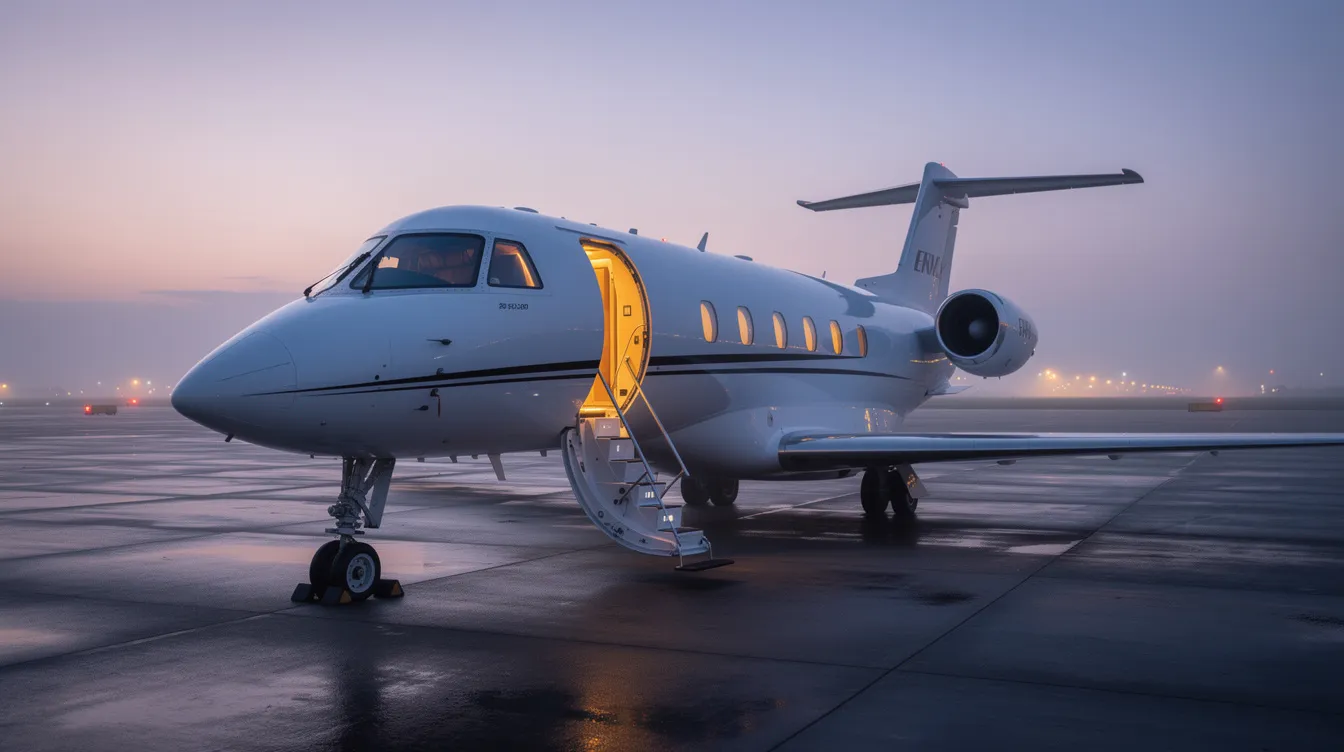
Private aviation access structures range from ad-hoc charter to full ownership, with fractional programs and jet card memberships occupying the strategic middle ground. The right choice depends on annual flight hours, mission profiles, and appetite for capital commitment.
BlackJet Fractional Jet Ownership specializes in flexible, predictable access through its Equity Fleet and Reserve Fleet models—helping clients right-size their aviation strategy and evaluate fractional jet ownership as an investment.
Full ownership delivers total control over schedule, cabin design, crew selection, and aircraft branding. Owners can customize interiors to the finest detail and access their jet with zero notice.
However, this model carries significant drawbacks:
High capital outlay ($50-400M+ depending on aircraft)
Under-utilization risk if flying fewer than 300-400 hours annually
Full responsibility for maintenance oversight and crew management
Exposure to residual value swings of 10-20%
An executive team flying 150 hours annually rarely optimizes full ownership economically. BlackJet can advise such owners on complementary Reserve Fleet solutions for overflow and right-sizing missions, including floating fleet fractional ownership options.
Chartering private jets gives users ultimate flexibility, ideal for occasional travel or trying different aircraft types without the commitment of ownership. Charter works best for users flying under 25-50 hours per year.
Jet card memberships provide access to a fleet of private jets on an as-needed basis, with customers pre-purchasing flight hours at a fixed hourly rate, offering greater flexibility than fractional ownership; many buyers compare fractional jet ownership versus membership programs before committing. Benefits include:
Guaranteed availability windows on specific cabin classes
Predictable hourly rates
Access to a diverse fleet and charter options
Limitations include less tax efficiency and minimal influence over specific tail numbers or customizable interiors. BlackJet’s Reserve Fleet delivers similar flexibility with higher predictability for frequent travelers, and can be an attractive destination for those selling an existing fractional jet ownership share.
Fractional ownership programs allow individuals or companies to purchase a share of a private jet, entitling them to a set number of flight hours per year, providing many benefits of full ownership at a lower cost and with fewer responsibilities. They are best evaluated once you understand key fractional jet ownership terms and concepts.
Key advantages include (particularly once you’ve modeled the total cost of a fractional jet share
Guaranteed availability to a consistent aircraft class
Predictable annual costs
Professional fleet management
Potential U.S. tax benefits, including accelerated depreciation for those who understand fractional jet ownership tax implications
Typical usage bands of 25-150+ hours per year represent the sweet spot where fractional ownership proves more efficient than either full ownership or frequent charter. BlackJet Fractional Jet Ownership specializes in structuring these programs for individuals and corporate flight departments, including advising on fractional jet ownership financing options and structures.
Equity Fleet involves purchasing an equity share in a specific aircraft or fleet—such as a Global 7500 or Gulfstream G700—gaining priority access, custom sourcing, and potential tax advantages tied to ownership.
Reserve Fleet offers pay-as-you-go access to late-generation luxury jets without capital investment, ideal for those exploring private aviation or valuing maximum flexibility.
Two example profiles:
A CEO flying 120 hours annually leverages Equity Fleet for a Global 7500 share, enjoying a consistent cabin experience and ownership benefits
A founder flying 40 hours uses Reserve Fleet, mixing super-midsize and large-cabin jets based on mission requirements
BlackJet handles scheduling, crew management, maintenance oversight, and carbon-offset initiatives on behalf of all clients.
Aircraft selection should match actual travel patterns rather than aspirational scenarios. Key decision factors include typical route lengths, passenger counts, departure/arrival airports, and whether productivity or rest takes priority onboard.
Geographic needs matter: U.S. domestic shuttles require different capabilities than transpacific flying. Access to short runways like Aspen or London City demands aircraft with specific performance characteristics. Think in terms of annual flight hours and mission profiles.
Concrete mission examples illustrate how aircraft types align with travel needs:
Mission | Distance | Recommended Aircraft | Approx. Hourly Cost |
|---|---|---|---|
New York–Miami | ~1,000 NM | Super-midsize (Citation Longitude) | $4,000-5,000 |
Chicago–London | ~3,500 NM | Large-cabin (Falcon 7X, G500) | $6,000-8,000 |
Los Angeles–Singapore | ~8,000+ NM | Ultra-long-range (Global 7500, G700) | $10,000-12,000 |
Tri-jets like the Dassault Falcon 8X and 7X access airports closer to city centers via steep-approach capability. This matters for frequent European travel or destinations with challenging terrain. Winter operations and mountain airports demand both capable aircraft and experienced operators for maximum reliability
Many 2026 clients prioritize efficiency and well-being over ostentatious features. Quiet cabins, sleep quality, and reliable Wi-Fi deliver more value than gold fixtures for business travelers on long-haul flights. Ultimate comfort means arriving ready to perform.
Modern sustainability approaches include:
Newer engines with 15-20% better fuel efficiency
Composite airframes reduce weight
Sustainable aviation fuel (SAF), where available
Certified carbon-offset programs
BlackJet’s programs can be structured around sustainability preferences, including carbon-neutral flying options for environmentally conscious clients.
The Bombardier Global 8000 and Gulfstream G800 both offer 8,000 nautical miles of maximum range. This enables city pairs like New York to Singapore or Los Angeles to Melbourne with favorable winds, eliminating fuel stops that add hours to journey times.
Most luxury jets cruise at a speed of Mach 0.85-0.925. The Bombardier Global 8000 achieves Mach 0.94 maximum speed, saving approximately 30 minutes on transatlantic routes versus slower aircraft—meaningful time savings multiplied across dozens of annual flights.
Ownership spans celebrities like Drake, family offices, Fortune 500 companies, and government users. Corporate flight departments and heads of state represent significant market segments alongside individual billionaires.
Fractional ownership typically delivers 20-30% lower cost-per-hour versus ad-hoc charter at this usage level, plus guaranteed availability and cabin consistency. Jet card programs fall between these options in terms of flexibility and commitment.
Equity Fleet ownership through BlackJet allows specification of aircraft types and layouts. Reserve Fleet and charter models offer less customization but access to diverse late-generation aircraft.
Current advances include highly efficient engines, SAF blends up to 50%, and comprehensive offset programs. BlackJet integrates sustainability initiatives, including carbon-neutral flying options for clients,s prioritizing environmental responsibility.
Luxury private jets represent tools for time efficiency, privacy, and global reach—whether through a Global 7500-class aircraft connecting distant cities nonstop or a light jet handling regional missions with ultimate comfort for passengers. The smartest path for many executives isn’t necessarily owning an entire jet but aligning access with actual usage patterns.
Fractional ownership through BlackJet Fractional Jet Ownership delivers the benefits of world-class aircraft—Bombardier Global flagships, Gulfstream G700S, and other fleet leaders—without the capital burden and operational complexity of full ownership. Whether Equity Fleet or Reserve Fleet suits your profile depends on flight hours, mission requirements, and financial preferences.
Ready to explore the smarter way to fly private? Visit FractionalJetOwnership.com to analyze your travel patterns and design a tailored solution. Speak with an aviation advisor about your next step in private aviation—whether that’s downloading detailed guides on Equity versus Reserve Fleet or scheduling a consultation to create your custom access program.
