June 16, 2026
This guide is for U.S.-based executives, entrepreneurs, and frequent flyers considering NetJets or alternative private aviation solutions. Understanding NetJets' costs of ownership is crucial for making informed decisions about private aviation, as the financial commitment and structure can significantly impact your travel budget and flexibility.
Picture a U.S.-based executive flying 75–100 hours per year who is weighing whether to buy into NetJets. The core question is straightforward: how much do NetJets' costs of ownership really amount to once every line item is accounted for? This article will help you break down the true NetJets costs of ownership so you can compare options and make the best decision for your needs.
NetJets, the Berkshire Hathaway subsidiary that pioneered fractional jet ownership in 1964, operates over 800 aircraft globally. The company offers fractional ownership, lease programs, and jet card programs—each with a distinct cost profile. Understanding the interplay of fixed costs, hourly rates, and additional costs is critical before signing a long-term commitment.
BlackJet Fractional Jet Ownership helps clients run exactly this analysis, comparing NetJets-style costs against newer fractional and membership models designed for capital efficiency.
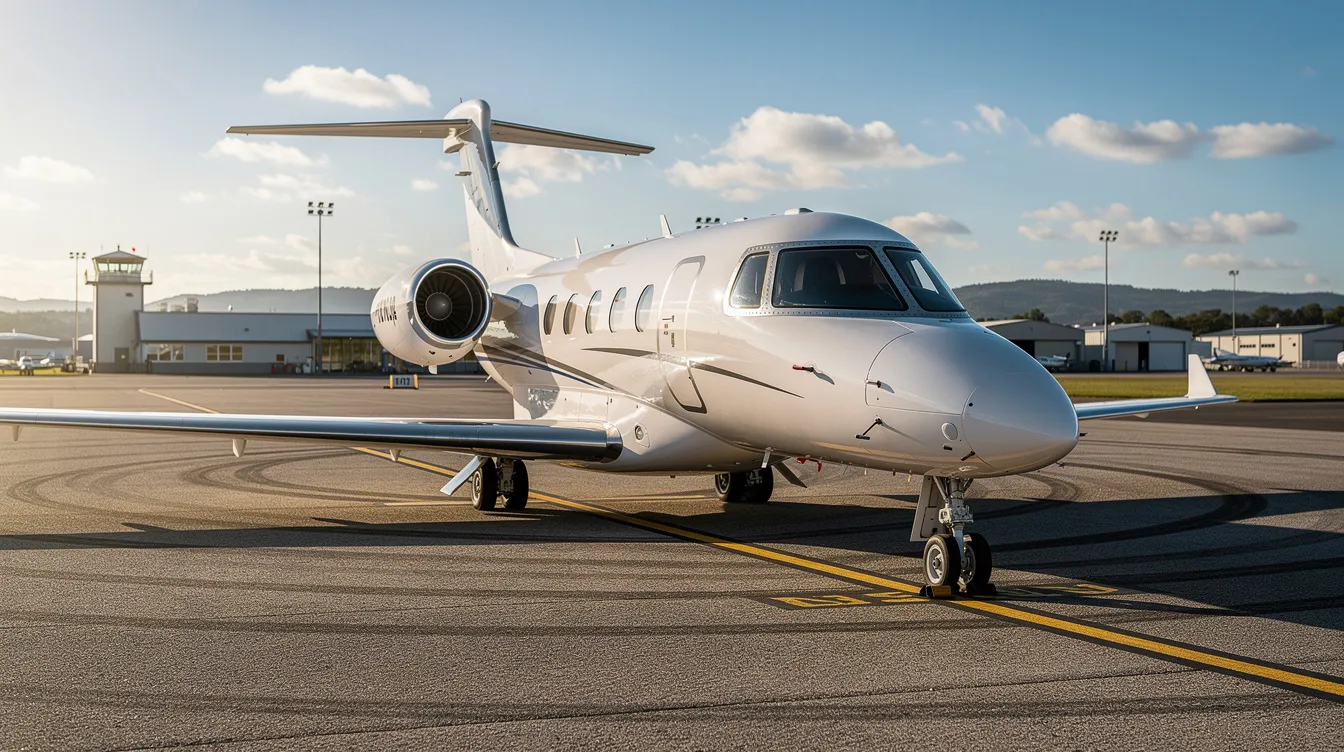
NetJets fractional ownership combines an upfront share purchase, fixed monthly management fees, and occupied hourly rates that typically push first-year costs for a 1/16 share above $1M as of 2026—even for a light jet like the Phenom 300.
Ongoing annual costs in years 2–5 still commonly run $350K–$800K+ per year depending on aircraft size, usage volume, and additional costs such as fuel surcharges and federal excise tax.
NetJets jet card programs avoid the upfront capital outlay but carry higher per-hour rates, potential blackout dates, and peak surcharges that can erode savings for frequent travelers.
NetJets is often the most expensive fractional provider among private jet companies, with NetJets pricing justified by fleet size, guaranteed availability, and brand reputation.
BlackJet Fractional Jet Ownership structures fractional jet ownership costs differently—aiming to reduce capital risk and improve cost per hour for U.S.-based flyers needing 25–150 flight hours per year.
Fractional ownership means buying an equity share—often 1/16, 1/8, or 1/4—of a specific aircraft. NetJets offers fractional ownership starting at a 1/16th share, which provides approximately 50 flight hours per year. A 1/8 fractional jet ownership structure doubles that to roughly 100 hours, and so on. For readers new to the space, a fractional jet ownership glossary of key terms can clarify how these share sizes translate into usage and cost.
A standard NetJets fractional agreement typically runs five years, with options to renew, upgrade the aircraft type, or sell shares back under a contractual buyback formula. Owners benefit from a guaranteed buyback at contract end, though the sale price reflects depreciation. Aircraft management in fractional ownership is typically handled by the service provider—meaning the management company covers crew scheduling, maintenance, insurance, and regulatory compliance, which minimizes operational responsibilities for owners.
Three core cost components define the NetJets cost structure: the initial acquisition cost, fixed monthly management fees, and occupied hourly rates. A broader view of the total cost of fractional jet ownership also considers depreciation, resale value, and ancillary fees across the full term.
NetJets guarantees aircraft availability even during peak travel periods by dispatching one aircraft of the same cabin category within the NetJets fleet—not necessarily the exact tail number. Customers can book flights with as little as 48 hours’ notice, and NetJets offers the fastest guaranteed availability in the industry at 4 hours on many share programs, providing a significant advantage for time-sensitive private jet travel. This type of fleet-wide access resembles floating fleet fractional ownership models, where flexibility and utilization across many aircraft help support guaranteed availability. Fractional ownership also allows for flexible access to different aircraft types, and owners can access a fleet of over 800 aircraft worldwide.
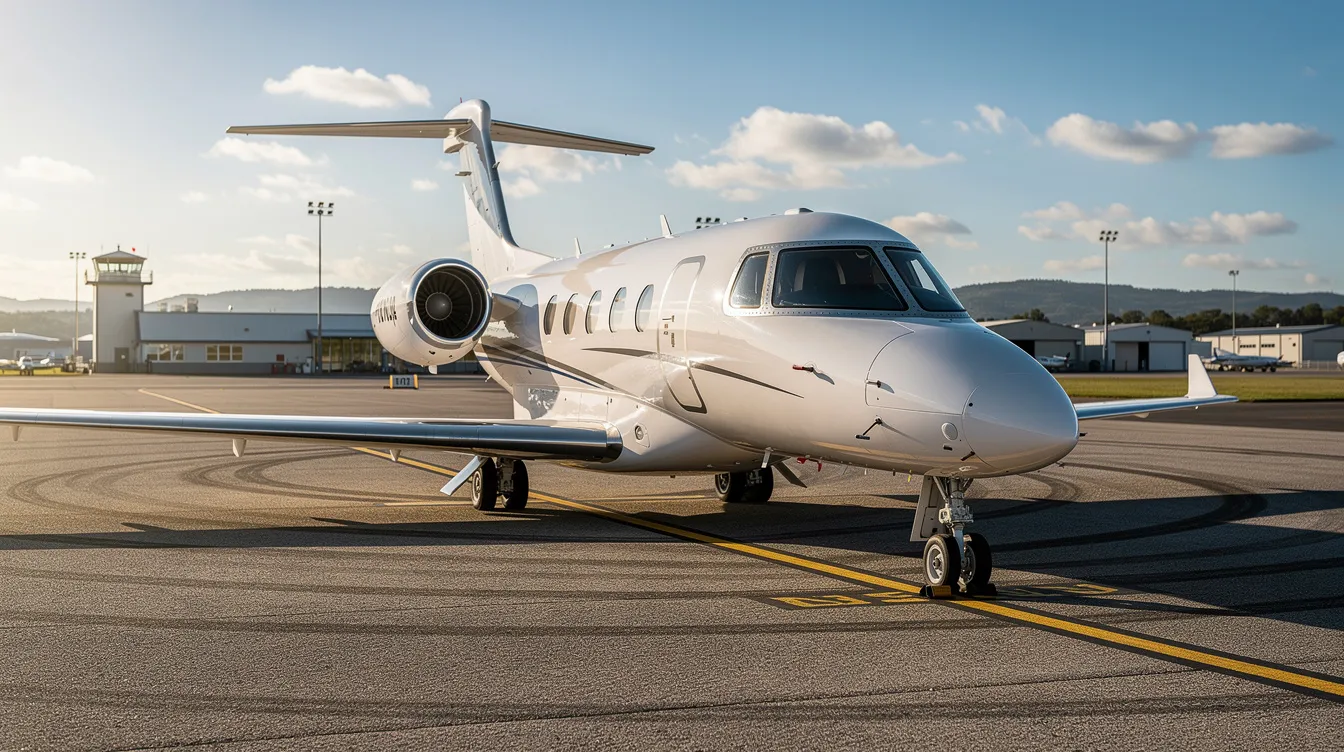
Acquisition Cost: The upfront payment required to purchase your fractional share of the aircraft. This is a one-time capital outlay at the start of your agreement.
Monthly Management Fee: A fixed monthly charge that covers pilot salaries, scheduling, hangar, insurance, maintenance reserves, and administrative costs. This fee is due every month, regardless of how much you fly.
Occupied Hourly Rate: The variable cost charged per hour of flight, covering operational expenses such as fuel and crew costs. This is billed only for the hours you actually fly.
These three components—acquisition cost, monthly management fee, and occupied hourly rate—make up the core structure of NetJets' costs of ownership. Types of costs in fractional jet ownership include acquisition cost and hourly flight rates. Owning a fractional share requires upfront acquisition costs and monthly management fees. Hourly flight rates cover variable operational expenses like fuel and crew costs. Monthly management fees cover pilot salaries and scheduling for fractional ownership.
NetJets operates a diverse fleet of over 800 aircraft worldwide, spanning light, midsize, super-midsize, large cabin, and ultra-long-range jets. Aircraft size and model directly influence both fixed costs and hourly rates.
The Phenom 300 light jet seats 6 passengers with a 3,200 km range—ideal for domestic hops. The Citation Longitude super-midsize jet accommodates 8 passengers with a 5,600 km range for longer regional missions. The Challenger 650 large cabin jet seats 11 passengers with a 6,800 km range, while the Global 7500 ultra long-range jet seats 14 passengers with a 12,000 km range, suitable for transatlantic and transcontinental routes.
Choosing a larger aircraft than your specific flying needs require is one of the fastest ways to inflate NetJets' costs of ownership. A single aircraft upgrade from light to super-midsize can double both the share purchase price and monthly management fees.
A 1/16 share generally provides around 50 flight hours per year, with options to scale up. Realistic 2026 ranges for 1/16th shares vary based on cabin class:
Light jets: roughly $500K–$850K
Midsize: approximately $800K–$1.2M
Super-midsize: about $900K–$1.5M
Large cabin / long-range: $1.5M–$3M+
NetJets contracts usually assume a 30–50% depreciation over the five-year term. For example, buying a 1/16 light jet share at $700K in 2026 and selling back in 2031 might yield 60–70% of that price—meaning a net capital loss of $210K–$280K. This depreciating asset risk is real and often underestimated, and it’s a core consideration when evaluating fractional jet ownership as an investment rather than just a travel tool. Guaranteed liquidity through the buyback clause helps, but it does not eliminate the loss, so understanding how to sell a fractional jet ownership share and what drives resale value is critical.
Monthly management fees cover pilot salaries, hangar, insurance, maintenance reserves, scheduling, and administrative costs. They are due every month, whether or not the owner flies, and may be financed alongside the share purchase in some fractional jet ownership financing structures.
Approximate 2026 monthly fee ranges for a 1/16 NetJets share:
Light jets: $12K–$15K per month
Midsize: $15K–$20K
Super-midsize: $18K–$24K
Large cabin: $24K–$28K+
Over a five-year term, these fixed costs alone total $720K+ for a light jet and well over $1M for a large cabin. For owners who fly fewer hours than their allotment, these fees drive up the effective cost per occupied hour dramatically—unused hours still carry the full management fee burden.
Occupied hourly rates are charges from engine start to shutdown. Hourly flight rates cover variable operational expenses like fuel and crew costs. NetJets does not charge for aircraft repositioning fees within its collective service area, which removes a common cost driver found with other private jet companies. Among top fractional jet ownership programs like NetJets, Flexjet, and PlaneSense, policies on repositioning, fuel, and peak surcharges are major differentiators in effective hourly cost.
Typical 2026 rates:
Light jets: approximately $8,500 per hour
Midsize: $10K–$12K/hr
Super-midsize: $12K–$14K/hr
Large cabin / long-range: $16K–$18.5K+/hr
For a 50-hour light jet user, that translates to roughly $425,000 in annual variable spend before taxes and surcharges. Some programs carry minimum flight charges that apply even on short legs.
The most common additional costs include:
7.5% U.S. federal excise tax on eligible flight charges
Fuel surcharges that move monthly with fuel costs
International handling and landing fees
De-icing in the northern U.S. and Canada during winter
Peak-period premiums around holidays and major events
Catering upgrades, Wi-Fi on select private jets, and ground handling at smaller airports may not be fully included. A "headline" hourly fee of $12,000 for a midsize jet can effectively become $13,000–$14,000 once taxes and typical fuel surcharges are factored in—a 10–15% uplift that surprises many first-time owners, especially once tax implications for fractional jet owners such as federal excise tax and potential depreciation benefits are fully accounted for.
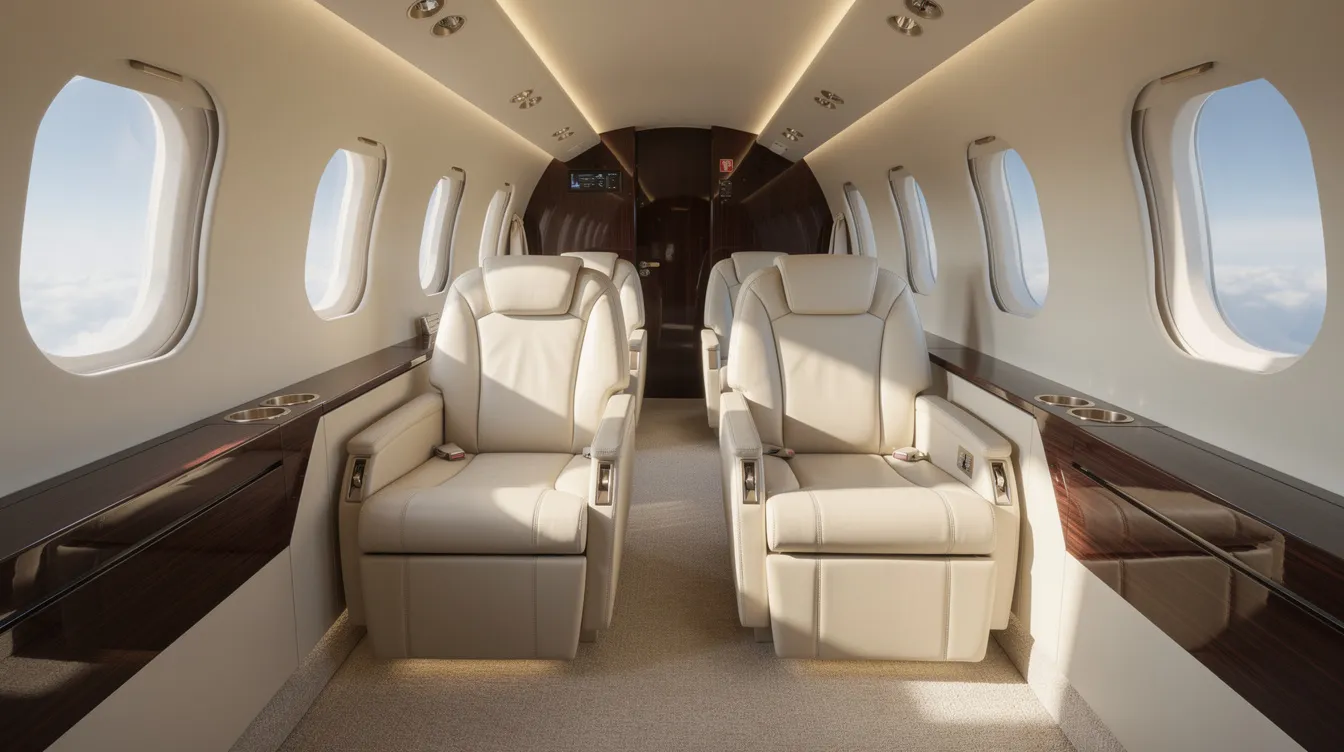
Light jet: Year 1 total cost exceeds $1 million (including buy-in). Annual costs in years 2–5 run $350K–$400K for light jets. Five-year total: roughly $1.9M–$2.6M.
Midsize jet: Year 1 around $1.3M–$1.5M, then $450K–$550K per year. Five-year total: approximately $3.1M–$3.7M.
Large cabin: Year 1 exceeds $2M, followed by $650K–$800K per year. Five-year total: $4.6M–$5.2M+.
Industry analyses estimate the all-in effective hourly cost for a 50-hour Phenom 300 share—including purchase, depreciation, and all operating costs—at roughly $8,900 per hour. If actual usage drops to 35 hours, that figure climbs past $11,000, making NetJets more expensive than on-demand charter on a per-hour basis. Flight time utilization is the single biggest lever on effective cost.
NetJets jet card programs start with prepaid blocks of 25 flight hours, offering annual access without ownership. The Card275 costs $215,000 for 25 hours on a Phenom 300, making it an entry point for travelers who want predictable pricing without capital risk. Jet cards allow access to multiple aircraft types without ownership and sit on the membership side of the fractional jet ownership vs membership program spectrum.
Jet card users avoid the initial share purchase and monthly management, but pay higher effective hourly rates. NetJets card products also come with blackout dates—approximately 90 days per year for the Card275—and peak surcharges. Other jet card providers may offer fewer restrictions but lack NetJets' guarantees on fleet depth and minimal notice call-outs.
Clear usage bands help guide the decision:
Under ~25 hours/year, on-demand charter is typically the most cost-effective
25–50 hours: a jet card often makes sense
50–150 hours: a fractional ownership program or equity-based structure like BlackJet's Equity Fleet can deliver better economics
200+ hours: full ownership or a larger share becomes the cost-effective option
For someone flying just 30–35 hours per year, a 25-hour NetJets card at $215K plus a supplemental card or charter trip will likely cost less than a 1/16 share, where $144K–$180K in annual fixed costs accrues regardless of usage. Jet cards can also serve as a trial before committing to fractional jet ownership.

BlackJet Fractional Jet Ownership offers two models that differ structurally from NetJets' legacy fractional ownership program. The Reserve Fleet provides guaranteed availability on a pay-as-you-go basis—no share purchase, no monthly management, and no depreciation exposure. The Equity Fleet offers fractional ownership with enhanced exit mechanisms, custom aircraft sourcing, and predictable pricing designed to lower capital risk.
Where NetJets depends on a five-year lock-in with high upfront capital and substantial fixed costs, BlackJet's Equity Fleet aims for more favorable cost per hour by optimizing acquisition, offering optional tax benefits such as eligibility for depreciation, and providing flexible exit terms. The Reserve Fleet eliminates ownership entirely for flyers who value access over equity.
The typical NetJets client is a global corporation or ultra-frequent flyer needing consistent international access and willing to pay a premium for a company that operates worldwide infrastructure. The typical BlackJet client is a U.S. executive, entrepreneur, or family office flying 25–150 hours per year within North America, seeking high reliability but focused on capital efficiency and total cost.
The right solution depends on trip profile, aircraft size needs, corporate tax strategy, and tolerance for tying capital into a depreciating asset. Understanding essential contract terms in fractional jet ownership, the scope of liability and insurance coverage in fractional programs, and how a well-drafted aircraft fractional ownership contract allocates rights and responsibilities can be as important as the headline hourly rate. A side-by-side comparison using projected 3–5-year schedules is the most reliable way to evaluate.
Key evaluation criteria include annual hours flown, typical mission profile, preferred aircraft size, appetite for fixed versus variable operating costs, and desire for tax advantages. Fractional jet ownership is a more cost-effective option for low-frequency flyers compared to full ownership and provides guaranteed aircraft access even on peak days. Owners can sell their share back with guaranteed buyback, minimizing operational responsibilities.
Whole aircraft ownership can make sense above approximately 250–300 hours per year, as detailed in the 400-Hour Rule analysis. On-demand charter and membership programs like BlackJet's Reserve Fleet often suit 10–75-hour flyers. For qualifying business use, U.S. bonus depreciation or Section 179 opportunities may apply—structures that Equity Fleet programs can leverage while pure jet card programs cannot. NetJets lease options and private jet lease structures offer yet another path for those seeking to avoid ownership entirely.
These are common questions about NetJets' cost and how they compare to fractional and membership programs like BlackJet's.
NetJets can be more economical than ad-hoc charter once usage reaches roughly 100–150 hours per year, especially for travelers needing guaranteed access and consistent aircraft quality. For travelers flying under approximately 75 hours annually, on-demand charter or a membership model like BlackJet's Reserve Fleet often delivers a lower effective cost per hour with no capital depreciation. Actual breakeven varies by aircraft type, routing, and how fully the owner uses contracted hours.
Common surprises include ongoing monthly management fees during months with no flying, fuel surcharges, international handling and landing fees, de-icing charges, and higher-than-expected peak day surcharges. The 7.5% federal excise tax on eligible flight charges also adds up quickly. A detailed pro forma including all likely additional costs is essential before signing any fractional ownership agreement.
NetJets contracts are structured around a five-year term. While mechanisms exist to sell back or transfer shares, they may involve restrictions, timing windows, and crystallized depreciation losses. Early exits can trigger administrative fees or waiting periods. BlackJet's Equity Fleet is designed with more flexible exit structures to reduce lock-in risk.
NetJets jet cards require a large prepayment for 25 flight hours with fixed hourly rates and program restrictions, while BlackJet's Reserve Fleet is structured as pay-as-you-go with guaranteed availability and no upfront share purchase. BlackJet focuses on transparent pricing and the ability to adjust aircraft size per trip, optimizing cost versus comfort on a mission-by-mission basis.
Key data points include anticipated annual flight hours for the next 3–5 years, typical routes, preferred aircraft size, peak-season travel needs, and whether flights are primarily business or personal for tax purposes. Recent charter invoices or jet card statements help model real-world comparative costs. Share this information via a consultation request to receive a tailored side-by-side cost analysis.
NetJets offers a premium, high-certainty private aviation solution—but it consistently sits at the top end of the cost spectrum for fractional jet ownership and jet card programs. First-year NetJets cost for a 1/16 share typically exceeds $1M, ongoing annual spend can rival or exceed charter alternatives, and under-flying magnifies effective cost per hour.
BlackJet Fractional Jet Ownership serves as a trusted advisor that can benchmark NetJets costs of ownership against more flexible Reserve Fleet and Equity Fleet options tailored to 25–150 hours per year.
Ready to see exactly how your numbers compare? Visit FractionalJetOwnership.com to request a personalized cost comparison and explore smarter ways to structure your private aviation strategy.
