May 18, 2026
NetJets, founded in 1964 and owned by Berkshire Hathaway, is a world leader in fractional jet ownership across the United States and Europe. Understanding the NetJets fleet helps owners, executives, and family offices compare fractional aircraft ownership, jet card programs, and membership access.
This closer look explains each aircraft category, from light jets to ultra-long-range business jets, and what each means for flight hours, passengers, destination planning, and cost per hour. BlackJet uses this benchmark to help clients flying 25–150 hours per year choose smarter access.
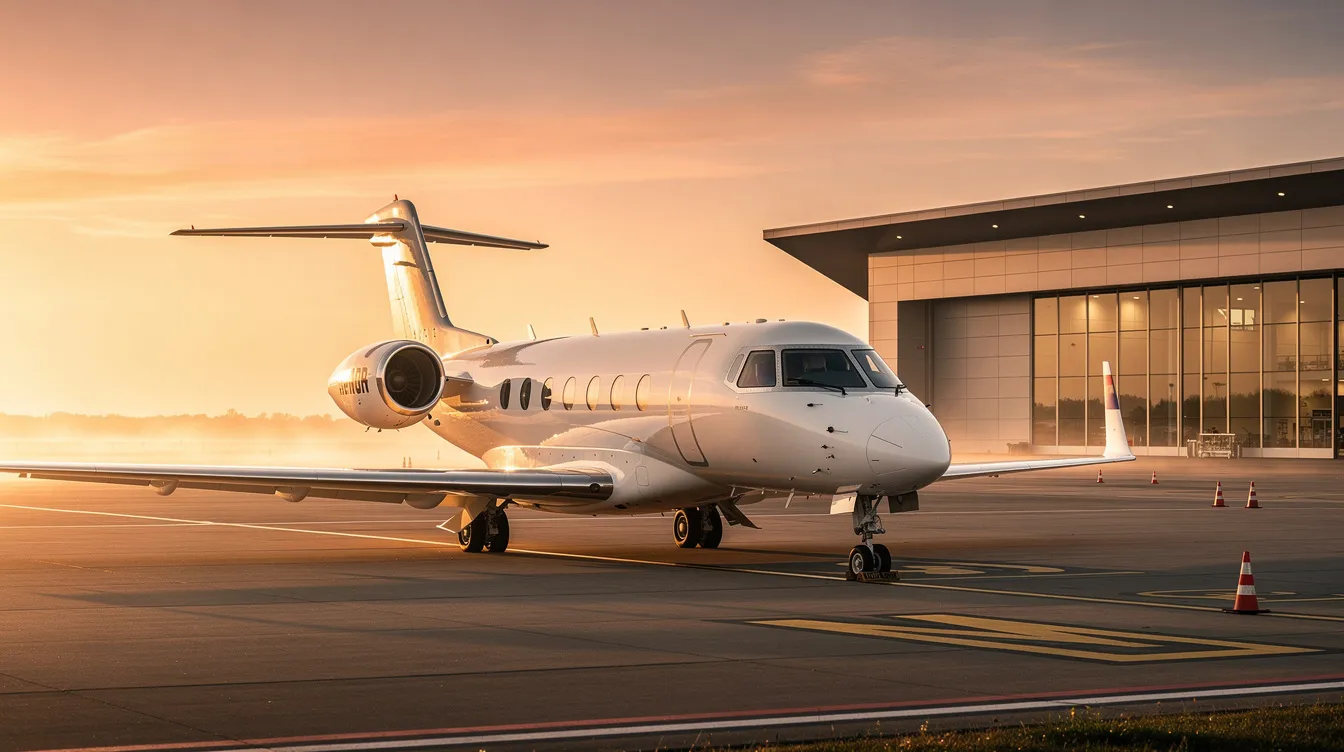
NetJets operates the world’s largest and most diverse private business jet fleet, encompassing over 800 aircraft worldwide, with more than 10 aircraft types across five jet classes.
Core models in the NetJets fleet include the Embraer Phenom 300, Cessna Citation Latitude, Cessna Citation Longitude, Bombardier Challenger 350/3500, Challenger 650, Global 6000, and Global 7500.
Fleet variety affects range, runway access, cabin space, private jet cost, and whether a trip is best suited to 500–1,000 nm flying or nonstop intercontinental travel. NetJets customers can expect ongoing fleet growth and new aircraft deliveries as the company continues to expand and modernize its offerings.
BlackJet Fractional Jet Ownership uses Reserve Fleet and Equity Fleet programs as alternatives for clients seeking guaranteed access, ownership benefits, and less in-house fleet complexity, supported by clear explanations of essential fractional jet ownership terms that help buyers compare options.
NetJets owns, maintains, and standardizes its own fleet, ensuring a predictable experience for passengers. NetJets operates a modern fleet of over 750 aircraft spanning five jet classes to fit various mission profiles, and globally, the company exceeds 800 aircraft.
As of March 2026, NetJets has a fleet of 424 Textron Aviation aircraft, which represents just over half of its total fleet. NetJets operates a total of 175 Embraer aircraft in its fleet as of March 2026, plus a large Bombardier presence and select Dassault aircraft through NetJets Europe.
NetJets operates a diverse fleet of aircraft, including ultra-long-range business jets, heavy jets, super-midsize jets, midsize jets, and light jets.
The fleet includes several hundred Cessna Citation jets, over 150 Phenom 300s, nearly 100 Longitudes, and more than 200 Bombardier business jets.
In 2026, NetJets expects to add around 80 new private jets to its fleet, continuing its trend of expansion in the private aviation market.
Guaranteed aircraft availability with 10 to 24 hours' notice domestically is possible due to NetJets’ fleet depth.
Users can experience minimal delays as NetJets’ volume of aircraft allows rapid routing of backup planes.
NetJets is a dominant player in the United States private aviation market, with a fleet and operational scale that surpasses many competitors, including executive jet airways and boutique providers.
Jet Class | Aircraft Examples | Typical Range (nm) | Passenger Capacity | Notes |
|---|---|---|---|---|
Ultra-Long-Range Jets | Global 6000, Global 7500 | 6,000 - 7,700 | Up to 14 | Nonstop intercontinental travel |
Heavy Jets | Challenger 650 | ~4,000 | Up to 11 | Long-range, high-demand corporate routes |
Super-Midsize Jets | Challenger 350/3500, Citation Longitude | 3,200 - 3,500 | 8–9 | Coast-to-coast missions |
Midsize Jets | Praetor 500, Citation Latitude, Sovereign | 2,700 - 3,250 | 6–9 | Balanced comfort and operating cost |
Light Jets | Phenom 300 | ~2,000 | Up to 6 | Ideal for short regional hops |
The ultra-long-range category is built around Bombardier Global aircraft for nonstop transatlantic and many transpacific routes. The flagship aircraft of the NetJets fleet is purpose-built for nonstop, intercontinental travel.
Global 6000: typically configured for up to 14 passengers, with about 6,000 nautical miles of range, separate lounge or conference zones, and advanced avionics including Rockwell Collins Pro Line Fusion-style systems. Its ability to perform nonstop long-range flights makes it ideal for intercontinental missions.
Global 7500: announced in 2010, entered service in 2018, and launched as the longest-range purpose-built business jet at roughly 7,700 nm, with a four-zone cabin. The Global 7500’s ability to carry up to 14 passengers on nonstop flights between far-flung cities is a key feature.
The ultra-long-range business jets in the NetJets fleet include the Bombardier Global 6000 and Global 7500, which are capable of flying up to 14 passengers.
These jets suit corporations, global families, and ultra-frequent flyers who purchase larger shares for fewer but longer missions.
BlackJet can source comparable aircraft through its Equity Fleet model when a client needs Global-class control without joining a fixed house fleet. NetJets’ first Global 8000 delivery was reported in March 2026 by AIN.
Heavy and super-midsize jets are the workhorses for longer North American trips and many transatlantic missions with fewer passengers.
Challenger 650: introduced in 2015, seats up to 11 passengers in NetJets configuration, has about 4,000 nm of range, and serves high-demand corporate routes.
Challenger 350/3500: super-midsize jets with roughly 3,200 nm of range, flat floors, strong cabin height, and the updated 3500 cabin features key elements such as the Nuage seat for enhanced comfort and advanced cabin technology.
The latest addition to the NetJets fleet includes the Challenger 3500, which is expected to be certified and introduced soon, enhancing their super-midsize jet offerings.
Cessna Citation Longitude: the largest purpose-built private jet from Cessna, with about 3,500 nm of range and typical seating for 8–9 passengers.
Step up from a Longitude or Challenger 350 when passenger count, baggage, altitude performance, or nonstop range make one aircraft class too tight.
Midsize business jets balance cabin comfort, operating cost, and range for common routes such as New York–Dallas or London–Marrakesh. This midsize fleet is often the practical center of private aviation.
Praetor 500: evolved from the Legacy 450, cruises around 466 knots, reaches about 3,250 nm with four passengers, and uses fly-by-wire control.
Citation Latitude: a flat-floor Cessna Citation model with about 2,700 nm of range and one of the most numerous positions in the NetJets fleet.
Citation Sovereign: a legacy Citation with roughly 3,000 nm of range, now operated in reduced numbers after 2024.
Citation Excel/XLS: several tails have been retired; the remaining group is near the low-50 range as Ascend is expected to replace older aircraft with improved avionics and larger windows.
BlackJet’s Reserve Fleet can mirror frequent 1–3 hour usage with pay-as-you-go access instead of full private jet ownership.

Light private jet options are ideal for one- to two-hour trips with small groups, keeping costs lower than midsize or heavy aircraft.
In the light business jet category, NetJets operates the Embraer Phenom 300, which is one of the most-flown private jets in the world, configured to fit up to six passengers.
The Phenom 300 cruises around 453 knots, offers roughly 2,000–2,100 nm of range, and has a 45,000-foot ceiling.
NetJets operates over 160 Phenom 300s, making it one of the largest single-type private jet fleets globally.
Choose a Phenom instead of a Citation Latitude or Longitude for 3–4 passengers, limited baggage, and short regional flying.
For Eastern U.S. or Western Europe trips, BlackJet may recommend light-jet fractional shares or membership access for efficiency.
Fleet management depends on new delivery slots, retirements, demand by cabin size, pilots, maintenance, and manufacturer support.
The fleet size of NetJets has increased by a net total of 19 private jets in 2026, with significant additions including seven Phenom 300 jets and four Cessna Longitude jets.
NetJets has increased its fleet size by a net of 19 private jets so far in 2026, with significant additions including seven Phenom 300s and four Latitudes.
Early-2026 planning also pointed to roughly 80 new jets, including Embraer, Textron Aviation, Global, and Challenger deliveries.
Citation Excel/XLS and Sovereign aircraft continue to phase down, while a stable Dassault Falcon 2000 group remains in Europe, around seven units.
Buyers should evaluate fleet age, safety systems, manufacturer service, and residual values before choosing between NetJets and BlackJet’s Equity Fleet sourcing strategy, using comparisons of the best fractional jet ownership programs as an additional benchmark.
NetJets is a benchmark among fractional jet ownership operators, but it is not the only model in the U.S. or global private aviation market. BlackJet compares fixed-fleet scale with flexible sourcing.
NetJets offers standardization, a large network, and broad aircraft availability, but buyers still need to understand the complete cost of fractional jet ownership and how to calculate the total cost of fractional jet ownership before committing.
BlackJet Reserve Fleet offers pay-as-you-go hours without ownership costs, making it a useful contrast when evaluating fractional jet ownership vs membership programs.
BlackJet Equity Fleet structures a customized aircraft share around the client’s routes, tax goals, and capital preferences, which often ties directly into fractional jet ownership financing considerations and essential liability coverage in fractional jet ownership.
NetJets-style jet card programs may require upfront commitment; BlackJet-style membership and equity models can adjust by usage, in contrast to more flexible floating fleet options in fractional ownership.
A traveler with 25–150 annual hours should compare routes, preferred aircraft, and terms before deciding whether to buy, lease, charter, or sell into a 1/8th fractional jet ownership model or sell an existing fractional jet ownership share.
The diversity of the NetJets fleet can feel overwhelming. The key is matching mission profile, passenger count, and budget to the correct class.
Short regional hops: light jets such as the Phenom 300.
Frequent 2–4 hour business trips: midsize jets such as the Latitude or Praetor 500.
Coast-to-coast missions: super-midsize jets such as the Challenger 3500 or Longitude.
Transatlantic and intercontinental travel: Challenger 650, Global 6000, Global 7500, and future Global 8000 aircraft.
Financially, taxi time, repositioning, share size, and hourly rate differences can matter as much as cabin preference.
BlackJet reviews each travel log, including city pairs, frequency, passengers, and airport runway limits, before recommending Reserve Fleet access, Equity Fleet ownership, or a blend.
Understanding Global 7500s, Challenger 650s, Cessna Citation Latitudes and Longitudes, Praetor 500s, and Phenom 300s gives buyers a useful reference point.
BlackJet helps clients compare NetJets-style fractional models with Reserve and Equity Fleet structures.
Advisors review tax benefits, capital outlay, control, and flexibility, often referencing key tax implications for fractional jet owners.
Clients can map the next 12–24 months of flying, including June meetings, October board travel, February ski trips to Colorado, and international destination needs.
If you want to hear a practical view and not miss the right opportunity, start the conversation today at FractionalJetOwnership.com.

NetJets operates one of the largest private jet fleets in the world, far larger than most regional charter and membership operators. Its scale supports availability, but boutique providers may customize aircraft selection more deeply.
NetJets generally structures access around fractional shares while owning, maintaining, and operating the fleet. Some aircraft may be company-owned for operational flexibility; BlackJet’s Equity Fleet instead sources shares around client needs, often documented through a detailed aircraft fractional ownership sample contract.
Global 6000, Global 7500, and Challenger 650 aircraft are best suited for nonstop routes such as New York–London. A Praetor 500 or Latitude may work with a fuel stop, but total trip time usually increases.
NetJets continually adds and retires aircraft to maintain reliability and service quality. Older Excel/XLS and Sovereign jets have declined, while Phenom, Latitude, Longitude, Challenger, and Global aircraft continue to expand, which can reshape how buyers view fractional jet ownership as an investment.
No. Similar aircraft are available through charter, jet card programs, membership, Reserve Fleet access, and fractional ownership. Additionally, future posts on this page will continue explaining how to compare each model before you purchase, and how to interpret essential contract terms in fractional jet ownership when you are ready to sign.
Choosing the right private jet fleet option is essential for maximizing the benefits of fractional ownership. NetJets’ extensive and diverse fleet, featuring everything from light jets like the Embraer Phenom 300 to ultra-long-range Bombardier Globals, offers unmatched availability and flexibility for a wide range of travel needs. However, fractional ownership is not one-size-fits-all. Evaluating your travel frequency, mission profiles, passenger counts, and budget will help determine whether a NetJets-style fixed fleet, a Reserve Fleet, or an Equity Fleet model best suits your lifestyle and business demands.
At BlackJet Fractional Jet Ownership, we provide expert guidance to navigate these choices with clarity and confidence. Our tailored solutions simplify access to private aviation, delivering ownership benefits, predictable availability, and personalized aircraft sourcing without the complexities of full fleet management.
Ready to explore the smarter way to fly private? Visit FractionalJetOwnership.com to learn how fractional ownership can transform your travel experience and help you select the ideal aircraft category and ownership model for your needs.
