
May 4, 2026
Many people search for “NetJets flights” expecting to find airline-style tickets they can purchase for a single trip. This reflects a common misconception: NetJets is not a traditional airline offering public fares but rather a private aviation company providing fractional jet ownership, lease programs, and jet cards.
Founded in 1964 as Executive Jet Airways, NetJets was established by Richard Santulli, who pioneered the fractional private jet ownership concept that transformed the industry. The company introduced fractional aircraft ownership in 1986 and became a subsidiary of Berkshire Hathaway in 1998. Columbus, Ohio, serves as the operational hub for NetJets, supporting its global operations. Today, NetJets Inc operates over 800 aircraft globally, logging hundreds of thousands of flight hours annually. The company’s executive team, led by its CEO, oversees a robust organizational structure that ensures leadership and operational excellence. The business model centers on long-term commitments—not one-off bookings.
For travelers comparing options, BlackJet Fractional Jet Ownership serves a similar customer profile: individuals and corporations flying 25–150 hours per year who want predictable aircraft access without the burdens of full ownership. This article will clarify what “NetJets flights” actually mean, compare fractional ownership against other private aviation models, and help readers find the right solution for their needs.
A “NetJets flight” refers to a trip taken under a fractional ownership, lease, or jet card program—not a ticket purchased through a public booking site, which is not available at the moment. Customers create and manage their accounts to enroll in structured programs with defined terms, hourly rates, and access guarantees, making it easy to get started and manage flights.
The typical customer includes Fortune 100 companies, family offices, entrepreneurs, and executives who prioritize privacy, schedule predictability, and global reach. These clients operate across the United States and international destinations, including NetJets Europe operations.
The fleet spans light planes like the Embraer Phenom 300, midsize planes such as the Cessna Citation XLS, and large-cabin planes,s including Gulfstream and Bombardier Global series. NetJets handles all aircraft management, crew scheduling, and maintenance under FAA Part 135/91K standards. This managed approach mirrors what BlackJet provides through its Equity Fleet and Reserve Fleet programs, including floating fleet options in fractional ownership for clients seeking similar service without extensive operational involvement.
NetJets does not publish simple ticket prices like major airlines. The price of flights with NetJets can vary significantly based on destination and travel period, but specific pricing details are not publicly available. Instead, costs are structured around program type, jet size, and usage.
Fractional ownership involves initial capital investment, monthly management fees, and occupied hourly rates, all of which can be structured through fractional jet ownership financing depending on the provider and client profile. For example:
The upfront purchase price for a 1/16th share of a light jet typically ranges from $500,000 to $850,000
Monthly management fees for a light jet can range from $12,000 to $15,000 per month
The occupied hourly rate for light jets is approximately $8,500 per hour
NetJets offers a jet card program that allows customers to purchase flight hours in advance, making it important to compare fractional jet ownership vs membership programs when evaluating long-term private aviation strategies. The NetJets 275Card offers access to the Embraer Phenom 300 at a rate starting from $8,600 per hour, which includes federal excise tax. The Ferry Waiver Program means no charge for repositioning flights within the contiguous U.S. and parts of Canada.
Public fare comparison tools cannot sell authentic NetJets program hours—these require direct enrollment. However, flight comparison tools allow users to filter results by criteria such as departure and arrival times, nearby airports, and price, helping travelers find the best options for their needs. When booking flights through comparison sites, users can compare prices across multiple airlines and travel agencies, but this applies to commercial carriers, not fractional providers.
For those considering NetJets flights, booking early presents an opportunity to secure the best deals and save money by choosing the right program or timing. BlackJet maintains transparent pricing for both Reserve Fleet and Equity Fleet solutions, allowing clients to model costs accurately before commitment.

Travelers who search for NetJets often want to find the best way to fly private rather than commit to a specific brand. Understanding the available options helps identify the right choice. When considering private aviation, it's important to compare NetJets' fractional ownership, jet card, and leasing programs with those of other private jet providers to make an informed decision.
On-demand charter: One-off trip booking with variable pricing and availability
Jet card programs: Prepaid hours at fixed rates without ownership
Aircraft leasing: Short-term access without equity benefits
Full ownership: Complete control over 400+ hours annually
Fractional jet ownership: Shared ownership with guaranteed access and potential tax advantages
NetJets pioneered fractional ownership and jet cards, offering scale through a global network. BlackJet Fractional Jet Ownership provides two pathways: Equity Fleet for clients wanting ownership benefits and Reserve Fleet for pay-as-you-fly flexibility. Key differences buyers should evaluate include contract length, minimum annual hours, fleet options, and service coverage.
Fractional ownership allows you to purchase a share of a specific aircraft rather than the entire plane, providing the benefits of ownership without the operational management of a private jet. Shares in fractional ownership typically start at 1/16th, equaling approximately 50 flight hours per year, with larger shares like 1/8th (100 hours) or 1/4th (200 hours) also available. In fact, NetJets flights are known for their rigorous aircraft maintenance and high safety standards, which further enhance the reliability and peace of mind for fractional owners.
Fractional ownership: 3–5 year commitment, predictable hourly rates, potential depreciation tax benefits, guaranteed access
Jet cards: Prepaid blocks (often 25 hours), no capital outlay, higher per-hour costs, minimal tax advantages
Ad-hoc charter: Maximum flexibility, variable pricing (often 20–50% higher), inconsistent aircraft quality
Charter estimate: $675,000–$825,000/year at $9,000–$11,000/hour
Jet card estimate: $562,500–$750,000 at $7,500–$10,000/hour prepaid
Fractional estimate: $450,000–$600,000, blending lower occupied rates with fixed fees
This illustrates potential 20–30% savings through fractional ownership for consistent flyers when you fully understand the cost of fractional jet ownership compared with charter and jet cards. BlackJet helps clients model these scenarios to find the most efficient structure.
Executives often compare private aviation options based on safety record, crew standards, and service consistency rather than brand recognition alone.
Typical operational standards in fractional programs include two-pilot crews, maintenance aligned with FAA Part 135/91K regulations, and 24/7 dispatch centers. NetJets pilots have reported that the company maintains a strong safety culture, with programs in place such as ASAP (Aviation Safety Action Program) and FOQA (Flight Operational Quality Assurance).
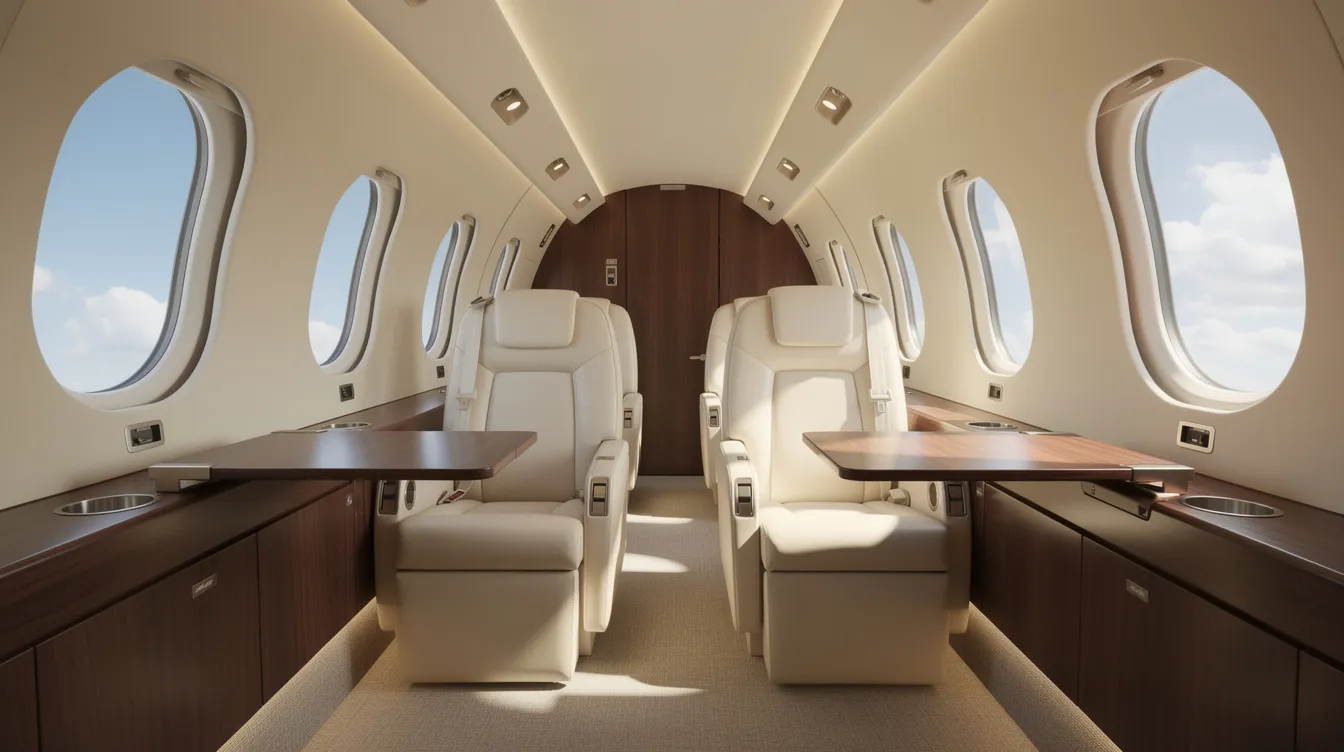
The flight experience bypasses TSA lines through private FBO terminals with 15–20 minute pre-departure arrivals. Passengers can work or rest in quiet cabins designed for productivity, and enjoy free amenities such as complimentary snacks, beverages, and Wi-Fi during their journey. BlackJet emphasizes consistent aircraft quality, tailored itineraries, and reliable scheduling, whether clients fly across the United States or internationally, including popular hubs for fractional jet ownership in Atlanta.
The typical work schedule for NetJets pilots is a 7/7 rotation, which is generally well-liked among the crew. Many pilots note that this schedule allows them to work about half as much as they would in traditional airline roles, leading to improved work-life balance. Pilots at NetJets reportedly enjoy a high level of job satisfaction, with many stating that they are happier compared to pilots at other fractional companies.
Competitive operators provide crew support,t including dispatch, trip planning, and crew meals. Stable rosters and professional scheduling reduce last-minute cancellations. For clients, the key metric is dispatch reliability and on-time performance—ensuring critical business meetings and events happen as planned. BlackJet maintains similar standards across its managed and partner fleets.
Large fractional fleets include diverse aircraft categories matched to mission profiles:
Light jets (Phenom 300, Citation CJ series): Regional flights, 2–4 passengers
Midsize jets (Citation XLS, Latitude): Cross-country routes, 4–7 passengers
Super-midsize jets (Challenger 350/3500): Coast-to-coast efficiency, 6–8 passengers
Large-cabin jets (Gulfstream G450/G500, Global series): Transcontinental and transatlantic, 8–12 passengers
When flying NetJets, clients benefit from one of the largest and most reliable private jet fleets in the world, with extensive operational capabilities and a wide range of aircraft models to suit any travel need.
New York to Miami: 2 hours on Phenom 300 or Citation Latitude for 4–6 passengers, a corridor frequently served by fractional jet ownership in Orlando and other Florida-based programs
Los Angeles to Dallas: 3 hours on Challenger 350 for business groups, a route well-suited to fractional jet ownership in Phoenix and other Southwest departure points
Chicago to London: 7 hours on Global or Gulfstream for executive teams departing from major Midwestern and East Coast hubs, such as those served by fractional jet ownership in Pittsburgh
BlackJet helps clients choose right-sized aircraft across Equity and Reserve Fleet options, avoiding over-buying capacity, for example,e when tailoring solutions for fractional jet ownership in Austin and other fast-growing business markets.
Large fractional operators fly thousands of segments annually linking business hubs and leisure destinations across North America and Europe. For example, fleet utilization statistics are often updated monthly, with operators reporting significant activity in February, March, June, and July to highlight seasonal fluctuations and growth milestones in key markets such as those served by fractional jet ownership in Nashville. High fleet utilization, when managed well, delivers better availability and more experienced crews.
For clients, this means faster aircraft access, shorter repositioning times, and flexible same-day departures, particularly in coastal regions supported by fractional jet ownership in Virginia Beach and similar locations. BlackJet focuses on aligning utilization with demand for customers flying 25–150 hours annually who want both flexibility and predictable access.
The best private aviation model depends on projected annual flight hours, tax situation, and planning horizon—not brand preference alone.
Fractional aircraft ownership can provide potential tax advantages in the United States, such as accelerated depreciation under current IRS rules for qualifying business use, while also raising broader questions about fractional jet ownership as an investment for high-net-worth travelers and businesses. Section 168(k) bonus depreciation may allow 80–100% first-year write-offs depending on applicable rules. Consult a tax advisor before making decisions.
Costs to forecast include: understanding the total cost of fractional jet ownership across both fixed and variable expense categories,ies such as:
Upfront acquisition or membership fees
Monthly or annual management fees
Hourly occupied rates by aircraft category
Fuel surcharges and potential repositioning fees
BlackJet assists clients in modeling 3–5 year total cost scenarios, comparing Equity Fleet and Reserve Fleet programs against charter or jet cards to find the most efficient structure, much like its dedicated page to compare fractional jet ownership programs.
Annual Hours | Recommended Model | Key Consideration |
|---|---|---|
25–50 hours | Jet card or charter | Flexibility without commitment |
50–150 hours | Fractional ownership | Cost efficiency and guaranteed access |
200+ hours | Full ownership | Maximum control, capital-intensive |
Long-term planning matters. Consider expected business expansion, additional offices, and global travel needs over the next 3–7 years when structuring any private aviation program.
This section addresses common misconceptions from people searching for “NetJets flights.” It also touches on issues that become relevant when selling your fractional jet ownership share, such as program rules and exit options.
No. Flight comparison tools allow users to filter results by criteria such as departure times and prices, but this applies to commercial airlines. Booking flights with NetJets cannot be done online through platforms that aggregate flight options—enrollment in a program is required.
Fractional owners typically receive guaranteed access with as little as 4–10 hours' notice. Jet card holders may need 10–48 hours,s depending on program terms.
Industry averages for 2024–2025: light jets $4,000–$6,000, midsize $6,000–$9,000, super-midsize $9,000–$13,000, large-cabin $13,000+.
NetJets can fly into more than 5,000 airports across 200+ countries, providing global access and anonymity for high-profile travelers. Smaller regional airports are a key advantage over commercial airlines.
Fractional aircraft ownership: Purchasing a share (1/16th, 1/8th fractional jet ownership) of a specific aircraft type with proportional usage rights
Jet card program: Prepaid flight hours on a fleet category without ownership
Occupied hour: Billable flight time when passengers are aboard
Management fee: Fixed monthly costs covering maintenance, crew, and operations, one of several core concepts explained in our fractional jet ownership glossary of aviation terms
Different providers use varying branding—comparing NetJets, Flexjet, Vista Global, Wheels Up, XO, and BlackJet requires understanding these core concepts and reviewing the best fractional jet ownership programs for smart investors. BlackJet simplifies options into Equity Fleet and Reserve Fleet pathways so clients focus on how they fly rather than memorizing industry jargon.
Searching for “NetJets flights” ultimately leads to one question: what’s the smartest way to access private aviation for specific needs? Fractional jet ownership remains one of the most effective solutions for frequent travelers seeking reliability, efficiency, and predictable costs.
The right choice depends on hours flown, budget, and control preferences—not brand recognition alone. A structured comparison across fractional, jet card, charter, and full ownership models is essential before commitment.
BlackJet Fractional Jet Ownership’s Equity Fleet and Reserve Fleet programs deliver predictable access, potential tax advantages, and reduced administrative burden for individuals and corporations, all supported by carefully structured aircraft fractional ownership contracts. Scheduling a consultation allows prospective clients to analyze their last 12–24 months of travel and model different ownership options.
Ready to explore the smarter way to fly private? Visit FractionalJetOwnership.com to learn how fractional ownership can transform your travel experience.
