August 13, 2026
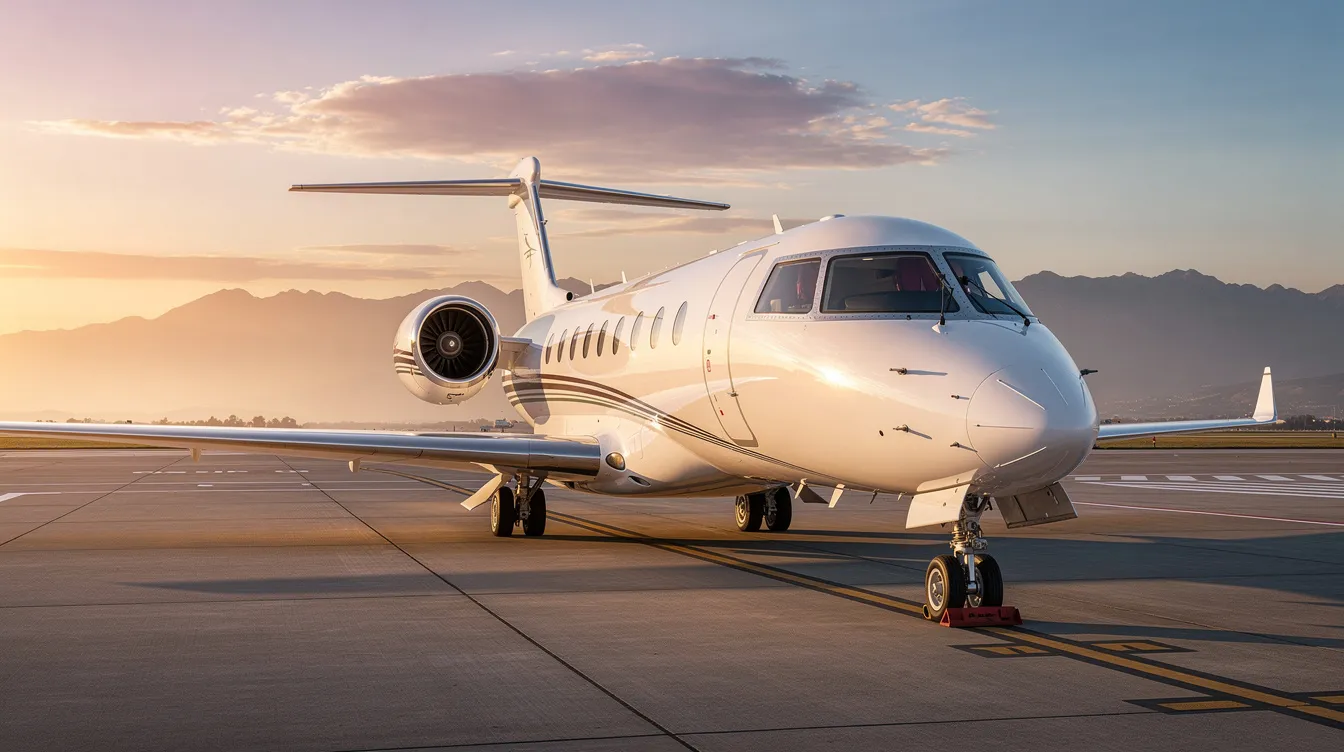
Private aviation isn't simply a luxury—it's a strategic lever. When two-thirds of passengers report being more productive on business jets than on scheduled airlines, and business aircraft users outperform non-users by 23% in revenue growth, the case for private travel becomes one of competitive advantage, not indulgence. This guide breaks down what serious buyers need to know about new private jets for sale in 2026, from pricing and operating costs to smarter alternatives like fractional ownership. Fractional ownership allows shared use of private jets, providing predictable access to aircraft without the full costs and responsibilities of ownership.
The private jet market features a broad spectrum of new-build aircraft, from light regional aircraft to ultra-long-range flagships. Private jets can access around 10 times more airports than airlines, and they reduce overall time away from home or office by eliminating connections, layovers, and rigid schedules. Here's what you need to know before entering today's market:
New private jets cost between USD $30 million and $80 million, depending on class. A 2023 Cirrus SF50 VisionJet starts at roughly $3.5 million, while the 2024 Gulfstream G700 commands approximately $80 million.
As of July 2024, there are 24,270 private jets in operation worldwide, with the US holding about 60–65% of all private jets. Private jet options range from light regional aircraft to ultra-long-range flagships.
Global new business jet deliveries reached 854 units in 2025-an 11.8% increase over 2024-yet demand continues to outstrip supply, particularly for large cabin and ultra-long-range models.
Inventory levels are about 60% of what they were in 2018, meaning fewer pre-owned jets and new aircraft are available at any given time. In August 2026, the average asking price for private jets listed for sale was about $6.1 million.
BlackJet Fractional Jet Ownership offers an alternative to whole aircraft purchase: predictable access through Equity Fleet and Reserve Fleet models, with no need to source, maintain, or manage a specific aircraft yourself, and resources that clearly explain fractional jet ownership terminology and core concepts.
The private aviation market in 2025–2026 is defined by persistent demand, constrained production, and residual supply-chain pressure. OEM backlogs for large cabin and ultra-long-range jets stretch into 2027–2028, and new jet shipments continue to climb even as manufacturers struggle with labor and materials. The private aviation industry includes both B2C and B2B services, from corporate flight departments to individual owners.
The private jet market is tight with limited pre-owned inventory availability. Late-model aircraft demand is projected to remain high in 2026, and 38% of business aviation missions involve multiple stops—meaning buyers increasingly need aircraft that handle more than one destination per trip. Market data shows that approximately 65% of all deliveries in 2025 went to North America, with Latin America and Europe following.
Key demand drivers include remote work executives shuttling between hubs, corporations valuing door-to-door productivity, and increasing use of private jets on transatlantic missions and transcontinental routes. For buyers, the lens through which to interpret this market is the mission profile, range, passenger count, runway length, and frequency. BlackJet helps clients match the right class to their actual travel patterns, avoiding the trap of overbuying or choosing an unsuitable aircraft.
Sophisticated buyers don't shop by price alone—they compare a handful of specific aircraft against their mission analysis. Major manufacturers include Gulfstream, Bombardier, Dassault, and Embraer. Here are the marquee models defining the market for new private jets for sale right now. Customized private jets can improve productivity for frequent travelers, and new aircraft offer customization benefits over pre-owned options. New private jets offer customization benefits over pre-owned options, allowing buyers to tailor cabin layouts, technology, and finishes to their preferences.
The Cessna Citation Longitude is a super-midsize jet with approximately 3,500 nm range and seating for 10–12 passengers, listed near $29.995 million new. Its stand-up cabin and Garmin G5000 avionics make it a favorite for US domestic and transcon missions. The Citation Latitude, another strong Cessna Citation option, lists around $20–22 million and is popular for shorter business aviation missions.
The Dassault Falcon 8X, with its trijet design and 6,450 nm range, remains a leading choice for routes like New York–Paris nonstop. The Dassault Falcon 10X, still in certification, features one of the widest and tallest cabins in business aviation. Dassault's EASy IV cockpit is standard across the Falcon line.
Gulfstream aircraft dominate the ultra-long-range segment. The Gulfstream G800 has an approximate range of 8,200 nautical miles and is recognized for its exceptional range and luxurious service. The Gulfstream G700 offers customizable cabin space with multiple living areas. The G700 can accommodate up to 19 passengers with multiple living area configurations.
The Bombardier Global 8000 offers an 8,000 nautical mile range and a maximum speed of Mach 0.95, making it known for its high-speed ultra-long-range capabilities. The Bombardier Challenger 3500 ($28–29 million new) is a compelling midsize jet with a redesigned cabin and standard sustainability features.
The Embraer Praetor 600E boasts advanced technology and a long-range capability, offering a competitive alternative in the super-midsize segment. Engine and avionics programs—MSP Gold, Honeywell MSP, Rolls-Royce CorporateCare, and Williams TAP Blue—are typically bundled or optional on new deliveries, and disciplined buyer approaches always insist on engine program enrollment before closing.
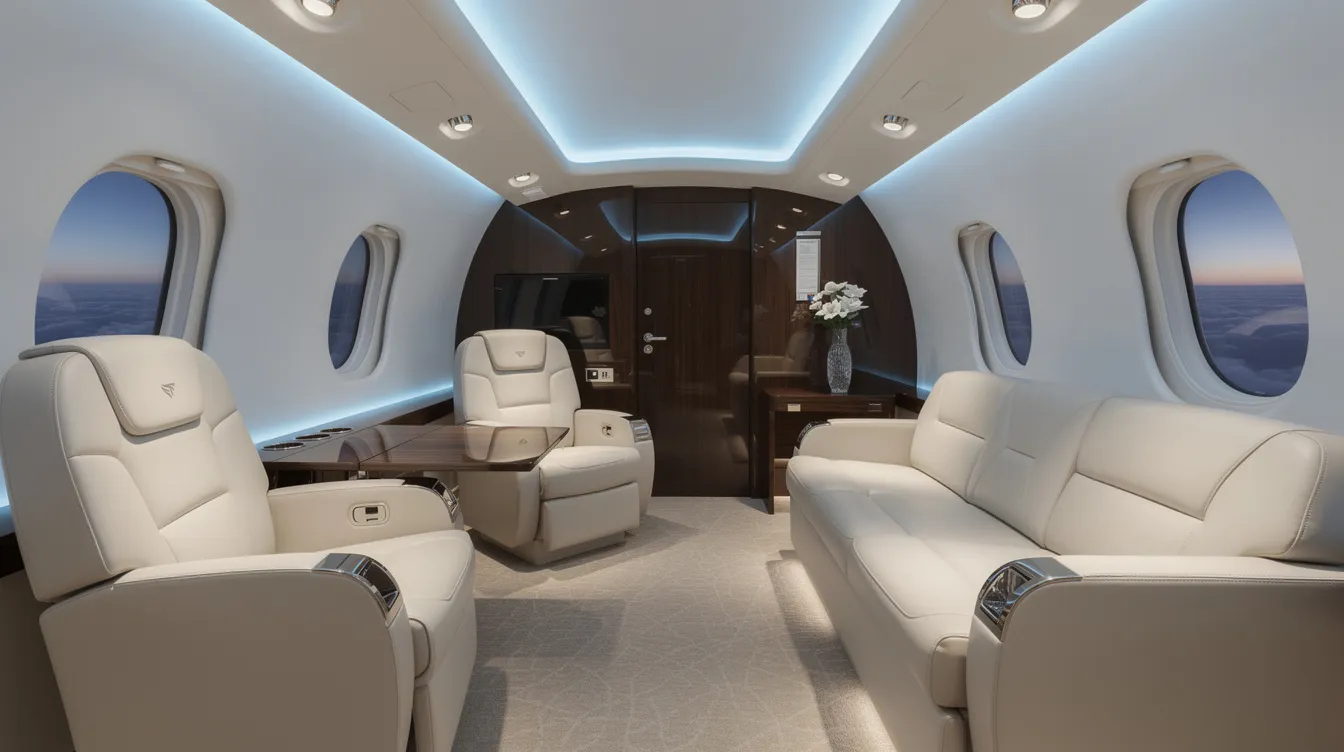
The purchase price of a new jet starts with a base airframe, but options like Ka-band Wi-Fi, upgraded interior packages, HUD/synthetic vision, and bespoke finishes can add millions to the final number. New aircraft acquisitions may qualify for favorable tax treatment, including accelerated depreciation, which can substantially offset the sticker price.
Here's how pricing breaks down by category for new private jets for sale in 2025–2026:
Very light jets: $3.5 million (Cirrus SF50 VisionJet) to roughly $7 million (Cessna Citation M2 Gen2). A pre-owned 2018 Embraer Phenom 300E is priced around $13.5 million, illustrating how light jets hold value.
Midsize and super-midsize jets: $20 million to $35 million. Most private jets today range from $5 million to $30 million across midsize categories.
Large cabin and ultra-long-range luxury jets: mid-$60 million and above, climbing past $80 million for flagship models.
Manufacturer delivery slots create additional pricing dynamics. Early delivery slots command premiums, while "white tail" aircraft built speculatively may offer slight discounts. For many buyers, the real question is opportunity cost: capital tied up in a new private jet versus allocating that capital elsewhere while using fractional jet ownership or jet cards, supported by tailored fractional jet ownership financing strategies and structures.
Total cost of ownership extends well beyond the sale price. Annual operating costs range from USD $800,000 to over $2 million, depending on aircraft class, utilization, and operation worldwide, mirroring the need to fully understand the total cost of fractional jet ownership when evaluating alternatives.
Annual fixed costs for a new midsize jet typically run between $800,000 and $1.2 million, covering crew salaries, recurrent training, hangar fees, insurance, avionics subscriptions, and management. Light jets are lower; a large cabin jet can push well past $1.5 million in fixed costs alone.
Variable costs add up per flight hour depending on mission length and aircraft type:
Light jets: $1,800–$2,200 per flight hour
Midsize jets: variable costs for midsize jets add $2,200 to $2,800 per flight hour
Long-range jets: $4,000–$5,000+ per flight hour
Fuel prices alone range from $1,000 to $4,000+ per flight hour, fluctuating with jet-A pricing and consumption rates. Maintenance reserves, landing fees, and handling charges add further.
Even factory-fresh aircraft benefit from engine and parts programs. Engines enrolled in programs like Honeywell MSP or Rolls-Royce CorporateCare stabilize long-term costs and preserve resale value-enrollment status is a critical factor for any future sale. Older jets without program coverage face unpredictable maintenance expenses and steeper depreciation.
BlackJet's Reserve Fleet and Equity Fleet models offer a contrast: members and fractional owners pay predictable hourly rates, and all management-from crew salaries to maintenance reserves-is handled for them, eliminating full ownership overhead.
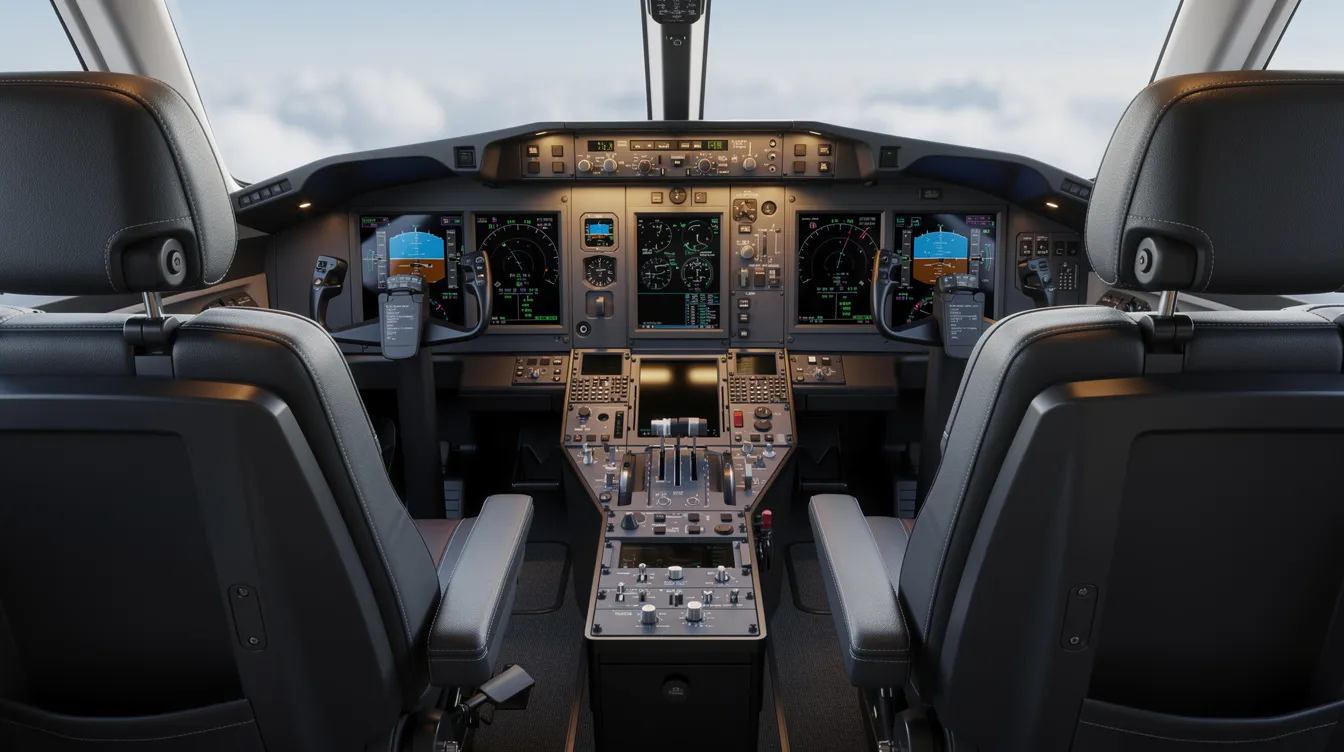
Modern private jets are engineered around safety, advanced avionics, and increasingly, sustainability. New private jets provide operational efficiency compared to older aircraft, offering improved fuel economy, lower emissions, and advanced avionics. New private jets provide operational efficiency compared to older aircraft, and purchasing new jets often provides better connectivity features than older models. ADS-B compliance is now standard, alongside synthetic vision, enhanced vision systems, autothrottles, and latest-generation collision avoidance.
OEMs like Dassault integrate EASy IV cockpits on the Falcon line, while Gulfstream aircraft push flight deck ergonomics and automation to reduce crew workload. Modern jets lower cabin altitude pressure to reduce travel fatigue-a meaningful benefit for executives flying transatlantic missions or managing multiple stops in a single day.
Sustainability trends include more efficient engines, winglets, lighter composite materials, and expanding availability of Sustainable Aviation Fuel. BlackJet partners with operators meeting strict safety certifications—ARGUS, Wyvern, and IS-BAO standards—and offers carbon-neutral or offset options as part of a premium, responsible travel ethos. These are not add-ons; they are non-negotiable pillars for aging aircraft versus modern jets.
Not all private jet listing entries are equal. Serious buyers must know which data points matter when evaluating a specific aircraft—whether factory-new, demo, or nearly new.
Core items to verify in any listing:
Year, model, variant, and serial number
Total airframe time (critical even on demo aircraft with engine time already logged)
Engine program enrollment and enrollment status (e.g., "on MSP Gold," "engines enrolled in CorporateCare")
Avionics suite: look for terms like "FANS/CPDLC," "WAAS/LPV," "HUD/EVS," ADS-B compliance
Interior configuration, connectivity options, and any "Part 135 capable" designation
One owner history is preferred—it simplifies the title search and maintenance record trail
Guardian Jet, Duncan Aviation, and known colleagues in acquisition advisory roles can help verify claims, while independent comparisons of top fractional jet ownership programs for investors help benchmark non-ownership alternatives. Experienced advisors or fractional providers like BlackJet also help clients interpret listings, benchmark against similar aircraft, or determine whether a more efficient class via fractional or membership models is the smarter play.
Even brand-new jets require a structured pre-buy inspection and acceptance process. This isn't a formality-it's the buyer's last opportunity to confirm that specifications, quality, and documentation match the purchase agreement.
Main steps of a pre-buy inspection for new or demo aircraft:
Build spec verification: Confirm every option, finish, and system against the original order or listing. Any squawk list items are documented.
Cosmetic and systems checks: Walk the airframe, cabin, and avionics. Expect three to five days for a thorough review at the delivery center.
Acceptance flight: A test flight to confirm performance, pressurization, and systems operation.
Snag resolution: Any discrepancies are resolved, including seller-funded repairs or price renegotiation if issues arise. Deal termination remains an option if material defects surface.
Key documents to review include logbooks, airworthiness certificates, conformity documents, warranty terms, and any included engine or support program contracts, much like scrutinizing essential contract terms in fractional jet ownership agreements before signing. New aircraft come with comprehensive manufacturer warranties. These warranties cover major components and systems, providing peace of mind for new owners. Third-party technical representatives or management companies should oversee the pre-purchase inspection, especially on complex long-range luxury jets, just as legal counsel should review an aircraft fractional ownership sample contract before you enter a shared-ownership structure.
Clients who opt for BlackJet's Equity Fleet fractional ownership avoid most of this complexity and can later rely on clear processes for selling or transferring a fractional jet ownership share if their needs change. BlackJet handles aircraft sourcing, pre-buy inspection, and ongoing management on their behalf.
Whole ownership of a new private jet is a significant capital commitment. The question isn't whether you can afford the aircraft—it's whether ownership is the most efficient use of that capital given your annual hours and flexibility needs.
Fractional ownership typically suits those flying 300+ hours annually when considering whole ownership economics, while fractional ownership programs provide predictable access to private jets without full ownership for clients flying 25–150 hours per year, making fractional jet ownership as an investment a compelling middle ground between charter and full ownership. Fractional ownership allows shared use of private jets, and users can access jets without full ownership costs, with options such as 1/8th fractional jet ownership for around 100 hours annually, aligning with many executive travel profiles. Flexibility is a key benefit of fractional ownership programs.
Scenario: A C-suite executive flying 120 hours per year on US domestic and transatlantic routes. Purchasing a new long-range jet at $65 million would result in annual fixed costs exceeding $1.5 million, plus variable costs of $4,000+ per flight hour, totaling roughly $2 million or more annually, before depreciation. Through BlackJet's Equity or Reserve Fleet, the same executive gains access to the right aircraft class for each trip, pays predictable hourly rates, and avoids locking capital into a depreciating asset. They fly on their own schedule without managing crew, hangar, or maintenance reserves.
Jet cards and on-demand charter provide further alternatives, but with less predictability regarding access to a specific aircraft type and greater exposure to market volatility, so weighing fractional jet ownership versus membership programs becomes essential before committing capital. BlackJet provides predictable aircraft access, tax-benefit-eligible equity options, and the ability to tailor aircraft class to each trip instead of locking into the most unsuitable aircraft for certain missions.

These questions address the most common concerns of both first-time and experienced private jet buyers in today's market.
As of the latest data, there are 24,270 private jets in operation worldwide. In 2025, 854 new business jets were delivered globally. At any given time, inventory available for sale—both new and pre-owned—represents a small fraction of the fleet. For models like the Citation Longitude, only 2–6 aircraft may appear in a global private jet listing at once.
Outright purchase gives full control but also full capital exposure, depreciation risk, and operational responsibility. Fractional jet ownership allows clients to benefit from shared usage flexibility—owning a share in a managed aircraft with priority access, potential tax benefits for fractional jet owners, and professional oversight. Learn more about how fractional ownership works.
Yes. Even new aircraft require a structured pre-purchase inspection to verify build specifications, documentation, warranty terms, and system function. Third-party oversight is standard practice.
For clients flying fewer than 150 hours per year, jet cards or membership schemes such as BlackJet's Reserve Fleet often deliver better cost predictability than whole ownership. They eliminate fixed costs, depreciation, and management overhead while maintaining access to modern, certified aircraft. Tax benefits are available through fractional ownership models as well.
BlackJet Fractional Jet Ownership is built for clients who want the benefits of new private jets-safety, technology, cabin comfort-without the complexity and capital burden of full ownership.
The Equity Fleet model offers fractional ownership shares in carefully selected, often late-model or new aircraft, leveraging a floating fleet structure in fractional ownership to maximize availability and efficiency. Owners receive priority access, potential tax advantages, and professional aircraft management. It's ownership with the weight lifted.
The Reserve Fleet model is a pay-as-you-go jet access program ideal for those needing 25–150 hours annually. Guaranteed access, predictable hourly rates, no maintenance reserves, no crew salaries, no hangar negotiations. Just fly when you need it—to any destination, through airports that airline service will never reach, serving even remote communities.
BlackJet leverages deep market expertise to source specific aircraft and negotiate favorable terms for fractional owners, effectively navigating the private jet market-including inventory scarcity and fuel prices-on their behalf, while ensuring that liability and insurance coverage in fractional ownership are appropriately structured. Whether you need a midsize jet for a regional hop or a large cabin jet for a transatlantic crossing, BlackJet ensures the aircraft matches the mission, not the other way around.
Discover how BlackJet can reshape your private travel. Explore tailored programs or schedule a confidential consultation to determine whether a new private jet purchase or BlackJet membership better suits your profile.
