June 15, 2026
The race to build the fastest, longest-range, and most comfortable business jet has never been more competitive. In 2026, three manufacturers are pushing boundaries with new aircraft that redefine what it means to fly private—and for travelers weighing their options, understanding these platforms is the first step toward smarter access.
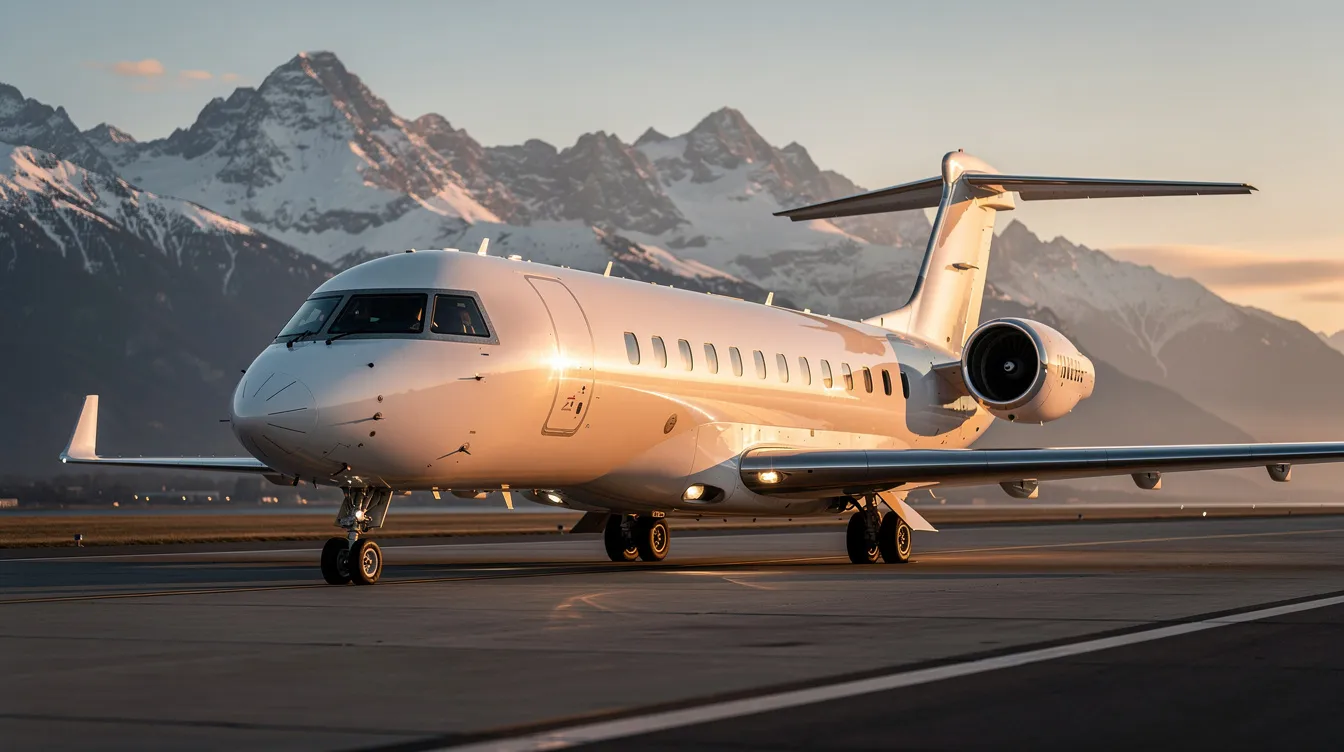
The Bombardier Global 8000 entered service in December 2025 as the fastest business jet in the world at Mach 0.95, with a range of 8,000 nautical miles and an industry-leading low cabin altitude designed around passenger wellness.
The Gulfstream G700 is now fully in service with five configurable living areas, while the Dassault Falcon 10X—featuring the widest cabin in business aviation—is on track for deliveries in 2027.
Across every size class, from light jets to ultra-long-range jets, next-generation aircraft bring meaningful improvements in range, cabin comfort, connectivity, and flight deck technology.
BlackJet Fractional Jet Ownership provides clients access to these newest private jets through Equity Fleet and Reserve Fleet programs, eliminating the need for full aircraft ownership.
Fractional ownership allows shared aircraft costs among users, with a quarter share costing one-fourth of the aircraft price, plus monthly management fees and incidentals. This model also offers tax benefits for owners.
Clients can buy flight hours in predetermined increments, while pay-as-you-fly models resemble commercial airline pricing, offering flexible access without full ownership.
Jet membership programs complement fractional ownership by offering flexible pay-as-you-go hours, guaranteed availability, and tax benefits for jet owners.
The right aircraft depends on mission profile—typical stage length, passenger count, airport requirements, and annual flight hours—not simply the newest headline specs.
The newest private jet commanding attention in 2026 is the Bombardier Global 8000, which received FAA certification in December 2025 and immediately entered service as the world's fastest civil business jet. Close behind, the Gulfstream G700 and G800 are ramping up global deliveries, while the Dassault Falcon 10X—Dassault's clean-sheet ultra-long-range design—completed its prototype rollout in early 2026, with customer deliveries expected in 2027.
In private aviation, "newest" means more than a press release date. It reflects a combination of certification milestones, first flight achievements, and actual delivery timelines between 2024 and 2026. Three aircraft define the current generation:
The Bombardier Global 8000, now in service with Mach 0.95 top speed and 8,000 nm range.
The Gulfstream G700, fully certified and delivering worldwide, offers 7,500 nautical miles of range and up to five living areas in its large cabin.
The Dassault Falcon 10X, a next-generation long-range platform with the widest cabin cross-section in the segment, targeting 7,500 nautical miles of range.
From a business aviation user's perspective, what matters is not novelty alone but real performance gains: longer range, lower cabin altitude, better connectivity, and quieter cabins that reduce jet lag after long flights. The Global 8000 currently represents the pinnacle of speed and range among civilian business jets—and it deserves a closer look.
The Global 8000 sits at the top of the Bombardier Global family and serves as the current benchmark for ultra-long-range jets. Building on the proven Global 7500 platform—which features four distinct living spaces and a maximum range of 7,700 nautical miles—the 8000 pushes every key metric further.
Performance facts that matter:
Specification | Global 8000 |
|---|---|
Maximum range | 8,000 nm |
Top speed | Mach 0.95 |
Long-range cruise | Mach 0.85–0.90 |
Cabin altitude (at 41,000 ft) | ~2,691 ft |
Passenger capacity | Up to 19 (high-density) |
Engines | 2× GE Passport (~18,920 lbf each) |
The aircraft holds the distinction of being the fastest civil business jet since Concorde, with record-setting high-speed demonstration flights sustaining Mach 0.94–0.95 on transcontinental routes during its certification campaign. That speed translates directly to shorter flight time on long hauls like New York to Johannesburg or Los Angeles to Singapore.
The cabin experience revolves around four true living spaces: a lounge area, a conference and dining section, a dedicated club zone, and a principal suite with a full-size bed and optional shower. A forward galley supports complete meal service on 15-plus-hour missions, and the spacious cabin provides ample room for both work and rest.
Wellness-focused features set this aircraft apart. The cabin altitude of approximately 2,691 feet at typical cruise is the lowest in its class, meaning passengers breathe easier and arrive with less fatigue. The Pũr Air system provides advanced HEPA-level filtration, while circadian-friendly Soleil lighting helps the body adjust across time zones.
On the flight deck, the Bombardier Vision system integrates fly-by-wire controls, synthetic vision, and high-speed connectivity options. The cockpit supports continuous inflight work through platforms like Ka-band satellite internet, reducing pilot workload while keeping passengers connected.
Compared to the Global 7500, the 8000 delivers extended range, higher top speed, and incremental refinements in cabin design and systems—all built on a proven airframe. For BlackJet Fractional Jet Ownership clients, this means true nonstop intercontinental capability with a cabin designed for arriving rested and ready to work.
While the Global 8000 leads on headline speed and range, the newest large cabin competitors from Gulfstream and Dassault push innovation in cabin design, runway performance, and flight deck technology. Each addresses a slightly different mission profile.
The Gulfstream G700 is a fully in-service ultra-long-range jet with a range of 7,500 nautical miles at Mach 0.85 and a high-speed cruise capability near Mach 0.90. Its maximum operating speed reaches Mach 0.935, making it one of the fastest private jets in the sky.
The G700's cabin stretches nearly 57 feet and can be configured with up to five living areas, including the grand suite with an optional stand-up shower and a full-size bed. The forward galley accommodates fine-dining-quality meal preparation, and flexible seating supports 13 to 19 passengers depending on layout. The cabin altitude sits at approximately 2,840 feet at cruise, combined with 100% fresh air circulation and high humidity to reduce fatigue on 14- to 17-hour missions.
The Symmetry Flight Deck features active control sidesticks, touchscreen avionics, and a Combined Vision System on a dual head-up display, enabling safer approaches to challenging airports in poor visibility. The Gulfstream G700 and G800 are ultra-large-cabin jets ramping up global deliveries, establishing Gulfstream's strongest-ever position in the large-cabin jet segment.
The Dassault Falcon 10X is Dassault's newest ultra-long-range design, targeting 7,500 nautical miles of range with a very wide and tall cabin. The Dassault Falcon 10X features the widest cabin in business aviation at 9 feet 1 inch across and 6 feet 8 inches tall, giving it the largest cross-section of any private aircraft in this class. Entry into service is anticipated around 2027.
Its four large living areas include a capacious forward galley for full fine-dining service, expansive windows roughly 50 percent larger than the Falcon 8X's, and a grand bedroom option comparable to an upscale hotel suite. Dassault's heritage in advanced aerodynamics shows in the carbon fiber advanced wing design with high-lift devices for strong short-field performance, including steep approach operations into airports like London City.
The next-generation digital flight deck incorporates FalconEye dual head-up displays for low-visibility approaches, plus fighter-derived smart throttle and HOTAS controls. These features support reduced pilot workload and broader airport access—a hallmark of the Dassault Falcon lineup.
These newest flagship business jets are expected to operate regularly on nonstop routes such as New York–Tokyo, London–Hong Kong, and Dubai–Los Angeles, redefining expectations for intercontinental capability in business aviation.
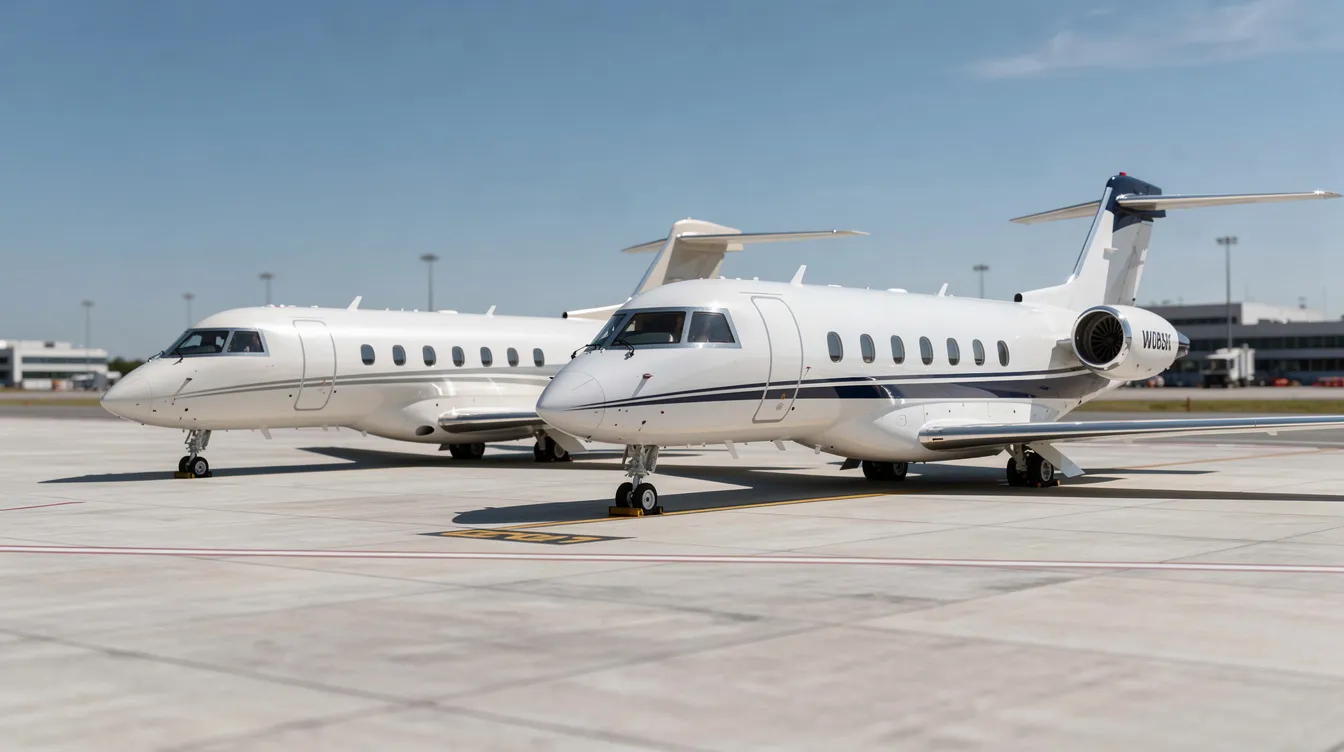
Not every traveler needs a Global 8000 or G700. The newest private jet options span every size class, and the right aircraft depends entirely on mission profile. Here is how recent models stack up across categories.
Light jets cover ranges between 1,200 and 2,500 nautical miles and serve 2- to 3-hour regional hops efficiently. The Embraer Phenom 300 is the best-selling light jet with a maximum range of 1,970 nautical miles. The HondaJet Echelon, currently under development with its first flight anticipated in 2026, targets a transcontinental light jet range of around 2,625 nm and single-pilot operation certification. Very light jets and light jets remain popular private jets for cost-conscious frequent travelers.
Mid-size jets and super midsize jets bridge the gap between regional efficiency and intercontinental reach. Super mid-size jets typically accommodate 10 to 11 passengers and handle 4- to 7-hour routes. The Cessna Citation Ascend, developed by Textron Aviation, earned type certification in November 2025 and features the Garmin G5000 avionics suite, a flat-floor cabin, and a belted lavatory. The Cessna Citation Longitude, with a range of 3,500 nautical miles, and the Challenger 3500 round out the super midsize category with strong range and cabin comfort.
Long-range jets and ultra-long-range heavy jets can operate efficiently on routes over 4,000 nautical miles. The Bombardier Global 7500, Global 8000, Gulfstream G700, and Dassault Falcon 6X and 10X represent the current top tier of luxurious private jets. The Gulfstream G550, while not the newest, remains relevant with a maximum range of 6,750 nautical miles. The Gulfstream G400 features Pratt & Whitney PW812GA engines for fuel efficiency, representing high performance in the large cabin space.
Mission profile drives the right choice: short-haul flights for up to seven or eight passengers versus 10- to 15-hour intercontinental missions for larger groups. Acquisition cost versus operating cost, speed versus fuel burn, and cabin size versus airport accessibility are the key trade-offs across types of private jets and prices.
BlackJet Fractional Jet Ownership curates a mixed fleet across multiple categories so clients can use smaller, cost-effective jets for domestic hops and reserve ultra-long-range aircraft for rare but critical global trips. Remember: "newest" does not always equal "best" for a given client. The right choice blends modern technology with the correct size and range for typical missions.
For high-net-worth travelers comparing the newest private jets, the cabin is the primary differentiator. Speed and range get headlines, but cabin experience—rest, productivity, and wellness—determines whether passengers arrive ready to perform or need a day to recover.
Cabin zoning has evolved rapidly. Where older aircraft offered two distinct areas, the latest flagships configure three to five zones that serve as a lounge, conference room, dining area, and grand suite or bedroom. The Global 8000 provides four dedicated living spaces, and the Gulfstream G700 offers up to five—including a grand suite with a queen-size bed and shower.
Wellness improvements are measurable. Cabin altitude in the newest jets often stays below 3,000 feet at cruise, compared to 6,000 to 8,000 feet in older designs. Combined with higher humidity, 100% fresh-air systems, and quieter cabins designed around long-haul passenger comfort, these changes meaningfully reduce jet lag. Power outlets and high-bandwidth internet at every seat support continuous productivity.
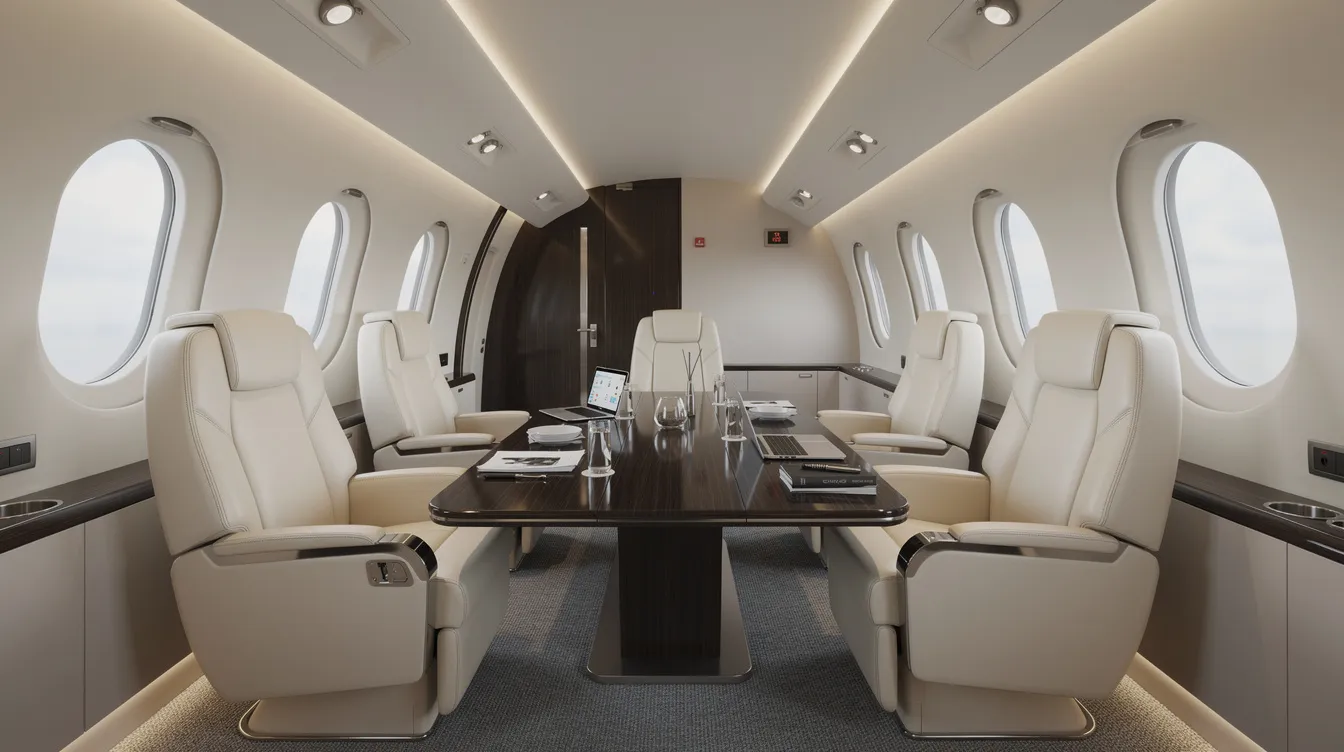
Specific design features worth noting include forward galley layouts optimized for full-service catering on ultra-long-range flights, principal suites with stand-up showers, and crew rest areas that support safe operations with NBAA IFR reserves on 15-plus-hour missions. Digital cabin innovations—app-based controls, customizable lighting schemes, and advanced sound systems—allow passengers to personalize their environment.
Families, executive teams, and solo travelers use these areas differently. BlackJet advisors help clients choose cabin layouts aligned with their typical passenger mix and work-versus-relaxation needs, ensuring the cabin experience matches how they actually fly. For a deeper look at what separates the safest private jet platforms, cabin engineering is a critical factor.
The newest private jets are defined as much by their avionics and flight control systems as by their interiors. Modern cockpits utilize touchscreen technology and enhanced situational awareness tools that would have been unimaginable a decade ago.
Common advances across the latest flagships include full fly-by-wire systems, predictive safety tools like turbulence detection and predictive landing performance calculations, and weather radar systems that provide real-time atmospheric data. These aircraft features collectively reduce pilot workload and improve dispatch reliability.
Gulfstream's Symmetry Flight Deck illustrates the trend well. Active control sidesticks, integrated touchscreen flight displays, and phase-of-flight automation allow pilots to manage complex approaches with greater precision. The result for passengers: more on-time departures and smoother operations.
Combined Vision and Enhanced Vision Systems deserve a simple explanation. Pilots see blended synthetic and infrared imagery on head-up displays, enabling safer operations in low visibility and access to more challenging airports. Dassault's FalconEye dual head-up displays on new Falcon jets and Bombardier Vision flight decks on the Global 8000 are concrete implementations. These systems can enable approaches into airports where operating rules would otherwise prevent landing in marginal weather.
Real-time maintenance monitoring and continuous software updates reduce unscheduled downtime, which directly benefits high-utilization business jets in shared fleets. For fractional ownership and membership users, this technology supports better on-time performance and safer operations across every new aircraft in the program, especially when paired with robust liability and insurance coverage in fractional ownership.
Many buyers admire jets like the Global 8000 or G700 but do not fly enough hours to justify full private jet ownership. Clients typically need 25 to 150 flight hours per year—a range where fractional jet ownership becomes the most practical path to accessing the newest aircraft.
Fractional ownership allows shared aircraft ownership among multiple parties. Each partner pays a share of the aircraft's purchase price—such as a quarter share costing one-fourth of the aircraft price—and receives a proportional allocation of annual flight hours. Monthly management fees cover operational costs like maintenance, crew salaries, insurance, and hangar space. Fractional owners can sell their equity position if needed, and fractional jet ownership terminology can include concepts like management fees, occupied hours, and fuel surcharges that prospective owners should understand. Fractional ownership can provide tax benefits through depreciation and operating deductions.
Clients can also buy flight hours in predetermined increments, and pay-as-you-fly models resemble commercial airline pricing, offering flexible access without full ownership. Jet membership programs offer flexible pay-as-you-go hours, guaranteed availability for flights, and tax benefits for jet owners.
BlackJet Fractional Jet Ownership offers two primary models, each governed by specific fractional jet ownership contract terms that outline purchase, management, and exit provisions:
Equity Fleet: True fractional ownership shares with potential tax benefits, priority access, and equity in a tangible asset. Members can access fractional ownership of a jet share scaled to their usage, often leveraging floating fleet structures in fractional ownership to balance flexibility, cost, and aircraft availability across markets.
Reserve Fleet: Pay-as-you-go style access with predictable hourly rates and no asset ownership.
Long-range jets such as the Bombardier Global 7500 and 8000, Gulfstream G700, and Dassault Falcon models are typically positioned as flagship options for transoceanic missions. Compared to on-demand charter, fractional programs provide guaranteed availability within contract terms, consistent cabin experience, and transparent private jet cost per hour.
Hourly operating costs range from $2,000 to $8,000 or more depending on aircraft size and mission. Average charter prices for a London to Paris trip highlight the cost differences: approximately £29,000 overall, £26,100 on a Gulfstream G550, £17,100 on a Bombardier Global Express XRS, and £14,300 on a Challenger 350. These costs add up quickly for ad hoc users, making the cost structure of fractional jet ownership a compelling alternative framework for frequent travelers.
Clients do not need to wait for years-long delivery slots. By joining an established fractional fleet or one of the leading fractional jet ownership programs, they can access the newest-generation business jets as soon as they enter service, without capital-intensive acquisition.
Even among the newest jets, the "best" option depends on mission profile rather than simple headline specs. A winning combination of range, cabin, and operating economics starts with understanding how you actually fly.
Main decision drivers to evaluate:
Typical stage length and flight distance
Passenger count and onboard work versus rest needs
Preferred airports and runway requirements
Annual flight hours, budget parameters, and fractional jet ownership financing options
Typical mission matches:
Light and super-light jets like the HondaJet Elite S and Cessna Citation models suit 2- to 3-hour regional business trips, seating up to seven or eight passengers with efficient hourly costs, while options like 1/8 fractional jet ownership structures can align annual access—often around 100 hours—with these shorter, more frequent missions.
Super midsize platforms like the Cessna Citation Longitude and Challenger 3500 handle 4- to 7-hour routes carrying 8 to 10 passengers with exceptional comfort and a balance of range and operating cost.
Long-range and ultra-long-range jets like the Global 7500, Global 8000, Gulfstream G700, and Dassault Falcon 6X and 10X deliver exceptional range and intercontinental capability for globe-spanning flights.
Airport access and runway performance matter more than many buyers realize. Dassault Falcon models and some Cessna Citation jets offer strong short-field capability, enabling access to smaller airfields closer to business centers where large cabin jets cannot operate. A new wing designed for high-lift performance can open airports that save an hour of ground transportation.
On operating economics: hourly operating costs range from $2,000 to $8,000 or more, depending on aircraft size and mission. Larger cabins and longer range mean higher hourly rates, but nonstop capability can save time and reduce hotel nights—a calculation that matters for corporate flight departments evaluating fractional jet ownership as an investment and tracking total cost of fractional jet ownership.
BlackJet advisors typically consult with prospective owners by reviewing 12 to 24 months of travel history, mapping likely future routes, and recommending a mix of aircraft access—fractional share plus reserve or membership structure—that fits both budget and performance needs. The actual range and requested jet type for each trip determine which platform delivers the best value.
New technology is most valuable when it supports real-world schedules: departing closer to home, arriving rested, and maintaining productivity during travel days.

The Bombardier Global 8000 is widely recognized as the newest ultra-long-range flagship, having entered service in December 2025 with 8,000 nm of range and Mach 0.95 speed. The Gulfstream G700 represents the latest competing design now fully in service, while the Dassault Falcon 10X is in its prototype phase with deliveries expected in 2027. "Newest" can refer to certification date, first flight milestones, or initial customer deliveries—all three platforms belong to the most recent generation of long-range business jets in commercial aviation and private aviation alike.
Full ownership is not required. Access is commonly arranged through fractional aircraft ownership, jet membership programs, or curated charter solutions. BlackJet Fractional Jet Ownership structures equity fleet shares and reserve fleet access so clients can use these newest business jets for key missions—whether a nonstop transoceanic flight or a domestic trip—without taking on full capital and management responsibilities.
Lower cabin altitude—often around 2,700 to 3,000 feet at cruise in jets like the Global 8000 and G700—allows the body to receive more oxygen compared to traditional cabins that feel closer to 6,000 to 8,000 feet. When combined with higher humidity, quieter cabins, and circadian-friendly lighting, this typically leads to less fatigue and faster recovery after long international flights. It is one of the most impactful yet underappreciated factors in exceptional comfort during air travel.
The latest Bombardier Global, Gulfstream, and Dassault Falcon aircraft generally offer improved fuel efficiency per passenger-mile thanks to advanced aerodynamics, new-generation engines like the GE Passport and Rolls-Royce Pearl series, lighter composite structures, and high-speed wing designs. Many new jets are certified to operate on high blends of sustainable aviation fuel, which can reduce lifecycle carbon emissions when SAF is available. High performance does not have to come at the expense of environmental responsibility.
Travelers flying roughly 25 to 150 hours per year are often in the sweet spot where fractional jet ownership provides better predictability and overall value than ad-hoc charter, especially for access to the newest, high-demand models like the Global 8000 or G700 with its high-performance capabilities and maximum takeoff weight optimized for long-range missions. Review your last 12 to 24 months of travel patterns, then speak with a BlackJet advisor who can compare projected total private jet cost, guaranteed availability terms, tax considerations, and aircraft type access across fractional ownership, reserve fleet use, and charter.
The newest private jets—the Bombardier Global 8000, Gulfstream G700, and Dassault Falcon 10X—push the frontiers of speed, range, and cabin comfort in ways that genuinely change how executives and families travel. But the best choice always depends on how each client actually flies, not which aircraft grabbed the latest headline.
Business aviation value comes from time savings, flexibility, and predictable access rather than owning the latest airframe outright. For travelers flying 25 to 150 hours per year, fractional jet ownership and reserve fleet access offer the most efficient path to these cutting-edge platforms.
BlackJet Fractional Jet Ownership helps clients tap into innovative solutions across the newest business jets—matching the right aircraft to each mission through equity fleet, reserve fleet, and advisory services without the complexity of full private jet ownership.
Ready to explore the smarter way to fly private? Visit FractionalJetOwnership.com to compare current fleet options, review fractional jet ownership against charter and jet card programs, and request a confidential consultation.
The most capable aircraft in the sky only matters if it fits your schedule, your routes, and your goals. That alignment is where real value begins.
