
May 17, 2026
The Embraer Phenom 300 jet stands as a benchmark in the private aviation industry, renowned for its blend of performance, efficiency, and comfort. Since its introduction, it has become one of the best-selling light jets worldwide, favored by fractional jet owners and corporate travelers alike. Its combination of speed, range, and a spacious cabin makes it an ideal choice for executives and high-net-worth individuals seeking a practical yet luxurious travel solution.
This guide explores why the Phenom 300 continues to dominate the market, offering a compelling balance of cost-effectiveness and advanced technology that meets the demands of today’s private aviation board. Whether for regional business trips or leisure travel, the Phenom 300 jet exemplifies the evolving standards of fractional aircraft ownership and private jet access.
The Embraer Phenom 300 and Phenom 300E are among the best-selling light jets globally, and a strong fit for BlackJet Fractional Jet Ownership’s fleet strategy.
The Phenom 300E offers a maximum range of nearly 2,010 nautical miles with four passengers, high-speed cruise of nearly 464 knots, and typical executive seating for up to 7 passengers.
The Embraer Phenom 300 is popular in fractional jet ownership because its private jet cost is materially lower than many midsize options while still delivering corporate-level performance.
Its interior design, efficient cabin, Garmin-based avionics, and safety technology balance comfort, awareness, and operating efficiency.
BlackJet helps clients access the Phenom 300 jet through Equity Fleet fractional ownership or Reserve Fleet non-ownership programs for roughly 25–150 annual flight hours.
The Embraer Phenom 300 is a light jet aircraft developed by Brazilian aircraft manufacturer Embraer as the larger member of the Embraer Phenom family. Since entering service in 2009, the Phenom 300 became the best-selling light jet and, in many years, the most delivered business jet in its class.
The Phenom 300 was the most-delivered business jet in 2013, 2014, and 2015, with close to 300,000 accumulated flight hours by the end of 2015. In plain language, that production record signals market trust, service familiarity, and easier support planning.
As a light jet aircraft, it typically seats 6–7 passengers, operates to a maximum altitude of 45,000 feet, and is efficient on routes such as New York–Miami, Dallas–Chicago, and Los Angeles–Aspen. Compared with many other light options, the Phenom combines speed, range, cabin size, and operating cost in a useful balance for U.S. private aviation users.
For BlackJet Fractional Jet Ownership, the aircraft is often recommended when clients want predictable access, smaller-airport flexibility, and lower cost than a midsize jet without sacrificing professional-grade flight capability.
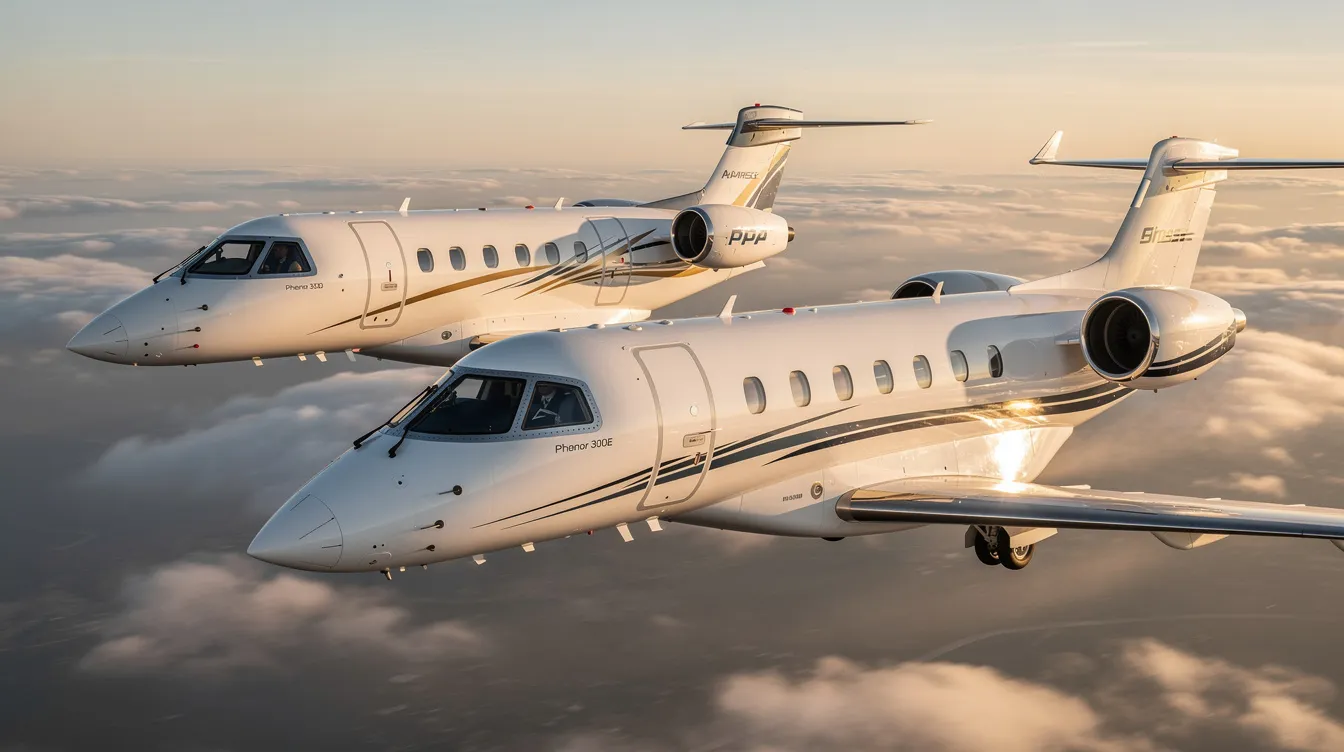
Embraer designed the Phenom 100 and Phenom 300 to bring airline-style reliability into private aviation. The program launched in the mid-2000s, followed by the first flight, certification, and customer deliveries in 2009, with continuing upgrades documented by sources such as Aviation Week.
The original Embraer Phenom 300 later evolved into the Phenom 300E, or “Enhanced,” with better cabin refinement, lower noise, improved avionics, and maximum speed near Mach 0.80. The prodigy touch system and Garmin-derived flight deck helped simplify the cockpit workload.
The Phenom 300 is powered by two Pratt & Whitney Canada PW535E engines, each providing 3,360 pounds of thrust. Later 300E variants use improved engines and systems, supporting dispatch reliability, single-pilot operations where permitted, and efficient crew planning.
These upgrades matter in fractional aircraft ownership because stronger support, modern systems, and continuing service investment can help residual values when an aircraft is remarketed.
The Phenom 300 jet delivers midsize-style performance in a light jet footprint. The Embraer Phenom 300 boasts a maximum cruise speed of 464 knots (Mach 0.80), giving it a high-speed cruise profile that reduces travel time on regional business routes.
Core metrics are practical: the maximum range of the Embraer Phenom 300 is 2,010 nautical miles with four passengers, while the aircraft has a range of 1,936 nautical miles when operating under NBAA IFR with four passengers and available fuel. With NBAA IFR reserves, real-world planning often depends on payload, weather, route, and alternate requirements.
The Embraer Phenom 300 has a maximum operating altitude of 45,000 feet (13,716 meters). The Phenom 300 maintains a cabin altitude of 6,600 feet at maximum cruising heights, enhancing passenger comfort on longer flight days.
The Phenom 300 features a short takeoff field length of 3,209 feet, helping it use smaller runway options. That take-off and landing flexibility is valuable for business owners trying to fly closer to factories, branch offices, or vacation homes.
Its efficiency is also notable: the Phenom 300 has superior fuel efficiency, burning up to 19% less fuel than its closest class competitors.
Specification | Embraer Phenom 300 | Embraer Phenom 300E |
|---|---|---|
Maximum Cruise Speed | 464 knots (Mach 0.80) | 464 knots (Mach 0.80) |
Maximum Range | 1,936 - 2,010 nautical miles | 2,010 nautical miles |
Maximum Operating Altitude | 45,000 feet (13,716 meters) | 45,000 feet (13,716 meters) |
Takeoff Field Length | 3,209 feet | 3,209 feet |
Fuel Consumption | Approx. 169 gallons per hour | Approx. 169 gallons per hour |
Engines | 2 x Pratt & Whitney PW535E | 2 x Pratt & Whitney PW535E |
Passenger Capacity | 6–7 passengers | 6–7 passengers |
Cabin Volume | 324 cubic feet | 324 cubic feet |
Baggage Capacity | 76 cubic feet (external) | 76 cubic feet (external) |
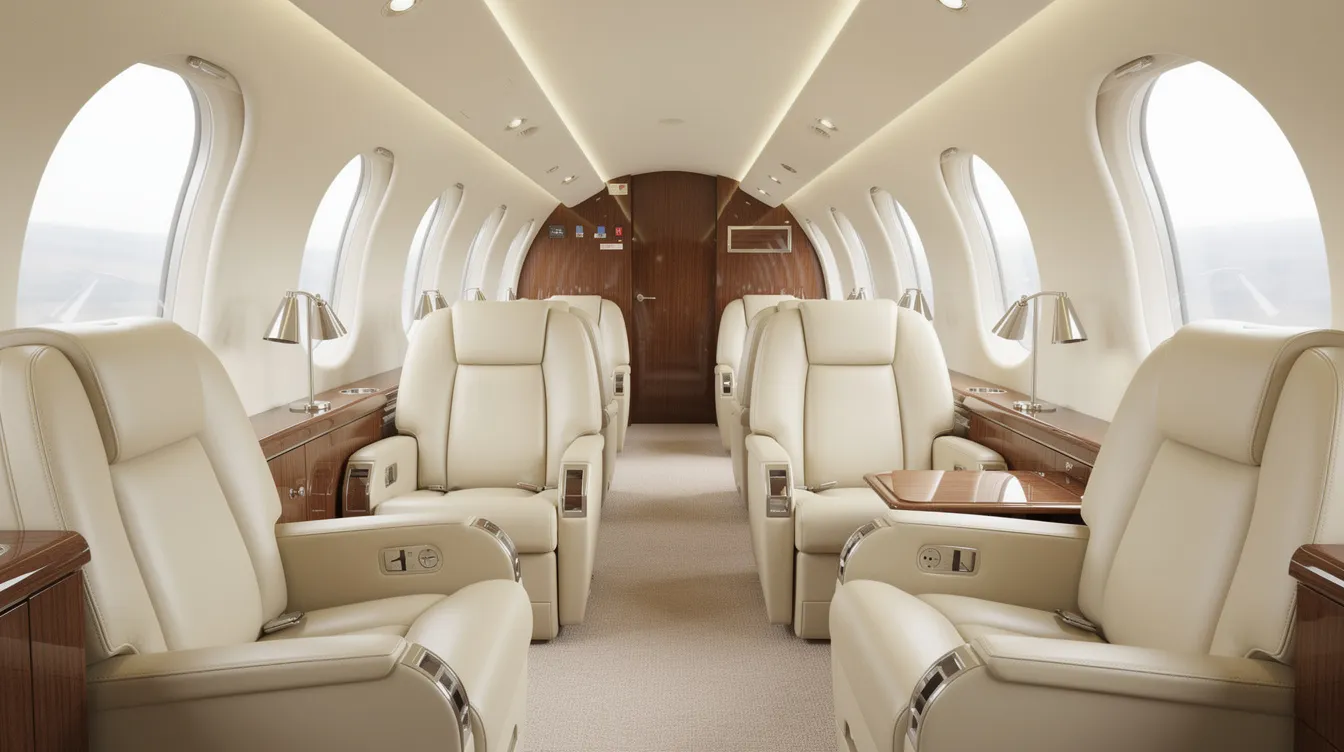
The Phenom 300E cabin emphasizes clean lines, ergonomic seat placement, and efficient use of space. The Phenom 300 features a highly customizable interior designed for both comfort and entertainment, including fully reclining leather chairs and a VIP chair with cabin temperature controls.
The cabin volume of the Phenom 300 is 324 cubic feet, typically configured to accommodate 7 passengers and 1 crew member. Key dimensions include a cabin length of about 17.2 feet, a cabin width of about 5.1 feet, and a cabin height of about 4.9 feet.
The cabin design of the Phenom 300 includes a modified vertical oval shape, allowing for increased headroom and comfort, with seats that recline, swivel, and track horizontally away from the bulkheads. This creates more room without enlarging the aircraft footprint.
The Phenom 300 offers best-in-class baggage capacity of 76 cubic feet externally, useful for roller bags, golf bags, skis, and business equipment. For Equity Fleet clients, BlackJet can prioritize aircraft with preferred connectivity, seating configuration, and interior design details.
Embraer built the cockpit to be pilot-friendly, supporting single-pilot operation in qualified settings while also working well with two pilots. The Phenom 300 features an Embraer Prodigy flight deck with two primary flight displays and one multi-function display, utilizing a Garmin G1000 all-glass avionics suite.
The flight management system of the Phenom 300 incorporates GPS/WAAS technology, providing positional accuracy of better than three meters 95% of the time, along with VHF navigation and an instrument landing system. The Phenom 300 is equipped with a digital weather radar and a satellite communications weather datalink, enhancing situational awareness for pilots during flight.
The Phenom 300e features autothrottles that integrate with the autopilot for normal operations and provide overspeed and underspeed protection. The Phenom 300 was the first business jet to feature the Runway Overrun Awareness and Alerting System (ROAAS), also described as runway overrun awareness, overrun awareness and alerting, and the awareness and alerting system ROAAS.
Other safety tools may include emergency descent mode, ground power mode for preflight comfort, synthetic vision, and enhanced weather awareness. According to Embraer, the 300E continues that focus with modern automation and cabin improvements.
Also important: 97% of Phenom 300 aircraft in operation have ADS-B Out installed, which is a requirement for compliance with modern air traffic management systems.
For frequent flyers, the Phenom 300’s economics are a major reason it appears in fractional fleets. The annual operating cost for the Embraer Phenom 300 is approximately $1,599,326, although actual operating costs for the Phenom 300 can vary based on factors such as aircraft condition, configuration, and operating environment, and should be viewed in the context of the broader cost of fractional jet ownership.
The Phenom 300 consumes about 169 gallons of fuel per hour during operation. Fixed costs include crew, hangar, insurance, training, and management; variable costs include fuel, maintenance, landing fees, and handling, all of which roll into the total cost of fractional jet ownership.
Fractional jet ownership spreads those costs across multiple owners. Compared with full private jet ownership, a 1/16 or 1/8 share can reduce capital exposure while preserving predictable aircraft access. For many prospective buyers, a clear grasp of the core fractional jet ownership terms and structure helps compare these models effectively.
BlackJet models cost with separated management fees, operating fees, and optional tax planning for fractional jet owners, coordinated with each client’s advisors.
The Embraer Phenom 300 is a cornerstone aircraft type for many U.S. fractional aviation programs because it matches common 25–150-hour travel patterns, whether a client leans toward fractional jet ownership or membership programs.
In BlackJet’s Equity Fleet, clients purchase a fractional share in a Phenom 300 or Phenom 300E and receive titled ownership benefits. In the Reserve Fleet, clients access a Phenom 300 jet or similar light aircraft without capital investment, often through flexible, floating fleet fractional options.
Typical uses include a CEO commuting weekly between regional offices, a family flying to seasonal homes, or a company completing three client meetings in one day across neighboring states. Multiple aircraft in a managed fleet help BlackJet handle overlapping schedule requests and peak-day planning, similar to the leading fractional jet ownership programs for frequent flyers.
The aircraft is only one decision; the access model matters too, especially if you view fractional jet ownership as an investment in both time and capital.
Compared with very light jets, the Phenom 300 offers more range, baggage, cabin room, and payload flexibility.
Compared with midsize jets, it often delivers a lower hourly cost and similar door-to-door time for sub-2,000 nm trips.
Compared with jet card programs, fractional aircraft ownership can provide more control over aircraft type, availability, and configuration, particularly when you understand fractional jet ownership financing options.
Compared with an ad-hoc charter, it reduces aircraft substitution risk but requires a greater commitment; for many travelers, a 1/8 fractional jet ownership structure balances commitment with flexibility.
BlackJet evaluates actual flight history before recommending a share, Reserve Fleet membership, or blended structure, then helps clients interpret key fractional jet ownership contract terms before they commit.
Safety is non-negotiable. As of January 2023, the Phenom 300 has been involved in three hull-loss accidents, causing five fatalities, underscoring the need for robust liability coverage in fractional jet ownership.
That figure must be interpreted in context: fleet size, total hours, operator standards, and training quality all matter. The most common bizjet accident involves a runway overrun or loss-of-control event, which can occur at under stall speed.
The aircraft’s ROAAS, ground proximity tools, weather radar, redundant systems, and professional maintenance programs help manage risk. BlackJet adds rigorous pilot selection, recurrent training, standard operating procedures, and proactive maintenance planning.

The key question is simple: how do you actually fly?
The Phenom 300 is ideal for 2–4 passengers on frequent regional missions, up to 7 passengers on shorter routes, corporate shuttles, and family travel to secondary homes. It is less suited to nonstop intercontinental missions or large teams, where larger aircraft may be better.
A review of airline receipts, charter invoices, and trip logs often shows that a light jet like the Phenom covers a surprisingly high percentage of real-world travel.
Most fractional layouts are optimized for 6–7 passengers, even when certified seating may be higher. For the best comfort, 4–5 passengers give the most productive cabin experience.
Although the brochure range can reach about 2,010 nm with four passengers, practical planning often assumes 1,600–1,800 nm with several passengers, baggage, reserves, and weather flexibility.
Yes. It can fly short international routes such as the United States to Canada, Mexico, or the Caribbean, and regional trips within Europe. Longer intercontinental missions usually call for a larger jet.
Fractional ownership lets clients buy only the portion they expect to use. Whole ownership may make sense above roughly 200–250 annual hours, but many 25–150-hour flyers find fractional programs more efficient, especially when structured under a well-drafted aircraft fractional ownership contract.
Shared aircraft are usually standardized for maintenance and consistency. However, BlackJet can source Equity Fleet aircraft with preferred connectivity, seating, cabin style, and upgrade packages when available, and can also advise owners who may eventually be selling a fractional jet ownership share and want marketable configurations.
The Phenom 300 and Phenom 300E consistently rise to the top for flyers who want performance, efficiency, and cost discipline. BlackJet begins with a consultation, models share sizes, compares Reserve Fleet options, and projects multi-year private jet cost across ownership, jet card, and charter alternatives.
Ready to explore the smarter way to fly private? Visit FractionalJetOwnership.com to schedule a confidential consultation and review current Phenom 300 and Phenom 300E opportunities.
The Embraer Phenom 300 jet continues to set the standard for light jets in the private aviation market, combining exceptional performance, efficiency, and passenger comfort. Its versatility makes it a perfect fit for fractional jet ownership programs, offering predictable access and lower costs without compromising on speed or cabin experience. For executives and high-net-worth individuals seeking a reliable, flexible, and cost-effective private aviation solution, the Phenom 300 delivers outstanding value.
Fractional ownership through BlackJet provides a unique opportunity to enjoy the benefits of private jet travel with reduced capital commitment and expert management support. Whether you prefer an Equity Fleet share or the flexibility of a Reserve Fleet membership, the Phenom 300’s proven track record and modern features make it an excellent choice.
To learn more about how fractional jet ownership can transform your travel lifestyle and to explore available Phenom 300 options, visit FractionalJetOwnership.com. Engage with trusted advisors who can tailor a private aviation solution to your specific needs and flight patterns, ensuring you experience the convenience and efficiency of private jet travel on your terms.
