
May 17, 2026
In today’s fast-paced world, private aircraft flights offer a convenient and efficient alternative to commercial air travel, particularly for high-net-worth individuals, executives, and business owners. Fractional jet ownership, jet card programs, and private charters provide tailored solutions that blend flexibility, privacy, and time savings. BlackJet Fractional Jet Ownership stands out as a global leader in delivering predictable and convenient private aviation options, combining the benefits of fractional ownership with innovative membership models. This guide explores the advantages, costs, and logistics of private aircraft flights, helping travelers make informed decisions about their next journey in the world of private aviation.
Private aircraft flights can be accessed through on-demand charter, jet card programs, corporate shuttles, and fractional ownership. BlackJet Fractional Jet Ownership specializes in predictable private aviation solutions for travelers who want more control than ad-hoc charter and less complexity than full private jet ownership.
BlackJet’s Equity Fleet supports fractional ownership with deeded aircraft shares, priority access, and managed operations, while the Reserve Fleet offers pay-as-you-go access without buying an asset.
These programs are designed for individuals, families, and business travelers flying roughly 25–150 hours per year who want stronger value and consistency than one-off air charter.
Private jet travel can reduce total travel time by 40–60% versus commercial airlines by using private terminals, flexible scheduling, direct routing, and more airports across the United States, including around New York.
Readers will learn how charter pricing works, what different aircraft types cost, and when fractional aircraft ownership or a jet card becomes more cost-effective than charter flights.
Ready to compare options? Visit FractionalJetOwnership.com to request a confidential consultation with BlackJet’s private aviation advisors.
Flying private is not simply a more comfortable version of a commercial airline trip. It changes the structure of the journey. A traveler flying from New York to Miami or New York to Los Angeles can choose the departure time, avoid crowded terminals, board near the aircraft, and continue confidential work in a secure cabin.
Private flights use smaller, private terminals known as FBOs, allowing for expedited security clearance and a calmer travel experience. Travelers can often check in for private jet flights much closer to departure times than commercial flights, sometimes as little as 15 minutes before takeoff. Private jet travel allows for significantly more flexible scheduling compared to commercial flights, enabling travelers to arrive at the airport just 15 minutes before departure in some cases.
Private jets can access over 7,000 smaller airports, providing travelers with more destination options and reducing travel time by avoiding congested commercial airports. That means a trip can often depart closer to home and arrive closer to the final destination, whether the route involves Teterboro, White Plains, San Antonio International Airport, or a smaller field near wine country.
This access matters most when time is scarce. Executives can visit multiple cities in a single day, families can fly directly to resort airports, and companies can operate corporate shuttles for employee routes that are not well served by scheduled service. Flying private also allows travelers to bypass long security lines and crowded terminals, significantly reducing wait times and enhancing convenience.
Private aviation provides total isolation from the public, ensuring a secure environment for confidential work. Private aviation also allows for complete control over who is in the cabin, ensuring privacy and exclusivity for passengers, guests, advisors, or board members. For BlackJet, the ideal client is not someone taking one celebratory trip, but a frequent traveler who needs access, predictability, and the right aircraft without the burden of full ownership.
There is no one-size-fits-all model for private aircraft flights. The main charter options include private jet charter services, jet card programs, corporate shuttles, and fractional aircraft ownership. Each model fits a different travel pattern, cost tolerance, and schedule requirement.
Charter flights are booked trip by trip. A traveler requests a route, passenger count, preferred aircraft, timing, catering, and other services, then receives quotes from a broker, operator, or marketplace. Private charter is flexible, but pricing can change quickly when demand rises or repositioning is required.
A jet card usually sells prepaid hours in a specific aircraft category. It can offer predictable rates, but some cards include blackout dates, peak-day rules, fuel surcharges, or unused-hour risk. This “breakage” is one reason high-frequency flyers often compare jet card programs against Reserve Fleet and Equity Fleet alternatives.
Corporate shuttles are scheduled private flights between fixed city pairs. A business may use them to move project teams from Dallas to Mexico City, executives from New York to Detroit, or a launch customer group to a new facility. These programs create an airline-like rhythm without relying on commercial flights.
Fractional ownership provides a deeded share of an aircraft, such as 1/16 or 1/8, with a corresponding number of annual flight hours, and understanding essential fractional jet ownership terms and key fractional jet ownership contract terms helps clarify how these programs are structured. The owner does not manage crew, maintenance, or scheduling directly; those responsibilities are handled through the program.
BlackJet fits into this landscape with two complementary models. Equity Fleet is built for clients seeking long-term fractional ownership, priority access, and potential tax benefits, while also benefiting from flexible floating fleet options that optimize aircraft availability. Reserve Fleet is designed for travelers who want to gain access to a curated fleet on a pay-as-you-go basis without purchasing an aircraft share.
An ad-hoc charter may involve no long-term commitments, while many fractional ownership programs use multi-year agreements. For example, a 50-hour-per-year traveler commuting between New York, Chicago, and Dallas may start with private jet charter, move to a jet card for predictability, and eventually choose BlackJet’s Equity Fleet when repeat usage makes ownership economics more attractive.
Charter flights are often the entry point for people new to flying private. The process of booking a private jet typically involves a four-stage approach, including inquiry, receiving quotes, confirming the booking, and receiving flight details. This can happen through private aviation operators, brokers, or air charter platforms.
Charter pricing depends on the hourly aircraft rate, flight distance, fuel costs, repositioning or empty-leg costs, crew expenses, airport and FBO charges, Federal Excise Tax (FET), de-icing, overnight fees, and peak day surcharges. Factors influencing charter flight pricing include aircraft type, flight distance, fuel costs, and additional fees such as Federal Excise Tax (FET) and peak day surcharges, which can increase overall expenses.
The cost of a private jet flight can vary significantly based on the distance traveled and the type of aircraft chosen, with short flights starting around $2,800 and longer flights in larger jets costing upwards of $34,500. Charter rates for turboprop aircraft typically range from $1,200 to $2,200 per flight hour, while light jets can cost between $4,000 and $6,000 per hour, depending on the specific model and flight duration.
Typical examples in the 2025 U.S. market include:
Route or Mission | Common Aircraft Category | Approximate Charter Range |
|---|---|---|
New York–Boston | Turboprop or light jet | $4,000–$7,000 |
New York–Nantucket | Turboprop or light jet | $5,000–$10,000 |
New York–Miami | Midsize or super midsize jet | $18,000–$35,000+ |
New York–Los Angeles | Super midsize or heavy jet | $35,000–$55,000+ |
Chartering a private jet allows for personalized travel itineraries, accommodating last-minute changes and specific passenger needs, which is not typically possible with commercial airlines. Private jet charters also allow for more luggage than commercial airlines, with travelers often able to take more personal items and equipment on board, subject to aircraft weight and cargo limits.
Private flights offer tailored catering and highly personalized service. They can also provide a more comfortable travel experience, with spacious cabins and the ability to customize in-flight services, catering to individual preferences.
Digital marketplaces and brokers can source aircraft from a global fleet and global network, enabling travelers to book private aircraft flights at a moment's notice for urgent or last-minute travel needs. However, last-minute and peak-day charters can become expensive at a moment’s notice. BlackJet uses charter strategically within its Reserve Fleet model when beneficial, while giving clients clearer expectations than purely ad-hoc quotes.

Choosing the right aircraft is one of the most important decisions affecting cost, comfort, range, and safety for any private aircraft flight. The best private jet is not always the largest jet; it is the aircraft that fits the trip.
Turboprop aircraft are known for their fuel efficiency and are particularly effective for regional flights, typically accommodating 6 to 8 passengers over distances of 600 to 1,000 miles. Aircraft such as the Pilatus PC-12 and King Air 350 are practical for New York to Washington, D.C., San Antonio to regional business destinations, or New York to Nantucket.
Light jets usually seat 4 to 8 passengers and are designed for shorter flights of up to 1,500 miles, making them a popular choice for regional travel. Models such as the Citation CJ3+ and Phenom 300 work well for routes like New York–Toronto or Los Angeles–San Francisco, especially when passengers want speed without a larger cabin.
Midsize jets are ideal for flights up to 2,450 miles, accommodating 6 to 9 passengers, and are often used for domestic travel between major cities. Super midsize aircraft such as the Challenger 3500 and Praetor 500 add range, cabin space, and baggage capacity for coast-to-coast business missions.
Heavy jets are designed for long-distance travel, typically offering a range of 7,000 miles and accommodating 10 to 18 passengers, making them suitable for international flights. A heavy jet may be appropriate for New York–London, executive roadshows, or trips requiring multiple passengers, extended range, and enhanced cabin amenities.
Ultra-long-range jets, such as the Gulfstream and Global series, can fly non-stop for over 6,000 nautical miles, accommodating 12 to 19 passengers, making them suitable for intercontinental travel. These aircraft support routes such as Los Angeles–Tokyo or New York–Dubai, though ownership and charter pricing rise materially.
Private aircraft often fly at higher altitudes than commercial jets, allowing for a smoother ride in many conditions. BlackJet typically aligns fractional ownership shares with aircraft categories that match 25–150 annual hours, helping clients avoid overpaying for more aircraft than their travel needs require.
Fractional ownership means buying a share of an aircraft in an Equity Fleet and receiving a corresponding number of annual flight hours. A 1/16 share often represents about 50 hours per year, while larger shares, such as 1/8 fractional jet ownership, support more frequent private flights, and specialized fractional jet ownership financing can help structure these acquisitions cost-effectively. The model provides ownership benefits without requiring the client to hire pilots, maintain the aircraft, or manage day-to-day operations.
BlackJet’s Equity Fleet focuses on deeded fractional aircraft ownership, transparent monthly management fees, occupied hourly rates, and priority access. For qualified business use in the United States, fractional ownership may offer potential depreciation and deduction opportunities, and understanding tax implications for fractional jet owners and reviewing an aircraft fractional ownership sample contract is essential, though clients should consult their own CPA or tax attorney before relying on any tax treatment.
BlackJet’s Reserve Fleet is a flexible, membership-style program without ownership. Clients gain access to a curated fleet on a pay-as-you-go basis, often with guaranteed availability, consistent service standards, and one point of contact for every flight. This structure can suit individuals who fly 30–40 hours per year for mixed business and leisure travel.
These models differ from traditional jet card programs because BlackJet aims to reduce unused-hour breakage and improve effective cost per hour for high-frequency flyers. Reserve Fleet can support travelers who need flexibility, while Equity Fleet can support those who want ownership economics and more predictable aircraft access, and comparing fractional jet ownership vs membership programs can clarify which structure best fits specific flying patterns.
Consider a company needing 100 annual hours between New York, Atlanta, and Houston. Equity Fleet in a super midsize jet may support predictable corporate shuttles and recurring executive travel. An individual flying 30–40 annual hours for business meetings, family trips, and a next journey to ski or coastal destinations may prefer Reserve Fleet.
Safety is central to every program. Alongside operational standards, robust liability coverage in fractional jet ownership helps protect owners and passengers in the event of unforeseen incidents. Private aviation safety is governed by strict regulations and standards set by organizations such as the FAA and EASA (European Union Aviation Safety Agency). The IS-BAO (International Standard for Business Aircraft Operations) certification is a recognized safety standard for private aviation operators, ensuring they adhere to best practices in safety management. Private aviation operators are required to conduct regular safety audits and maintenance checks to ensure compliance with safety regulations and to maintain operational integrity.
Flexible scheduling is one of private aviation’s core benefits. Private flights provide the flexibility to choose departure times and routes, allowing travelers to create personalized itineraries that suit their schedules. Traveling by private jet can save a considerable amount of time, as flights can be scheduled to avoid layovers and direct routes can be taken to the destination.
Most private aircraft flights require 24–72 hours of advance notice for standard trips, with more lead time recommended for holidays, international routes, major sporting events, and high-demand weekends. Fractional ownership clients often receive stronger availability guarantees than on-demand charter users because the program is structured around committed access.
Corporate shuttles operate as recurring private flights between fixed city pairs. They are useful for sports teams, project teams, executives, and companies that need to move passengers regularly between offices, plants, or client sites. A corporate shuttle can depart on a reliable schedule while still using private terminals and avoiding commercial airport congestion.
BlackJet supports ad-hoc point-to-point missions and recurring shuttle schedules. Its managed fleet and partner network help balance availability, service quality, and cost. For international routes and global fleets, BlackJet can coordinate the right aircraft for range, crew, regulatory, and time zone requirements while keeping a single point of contact.
This combination of flexible scheduling, operational oversight, and personalized services is why many travelers shift from private jet charter to a structured BlackJet program.
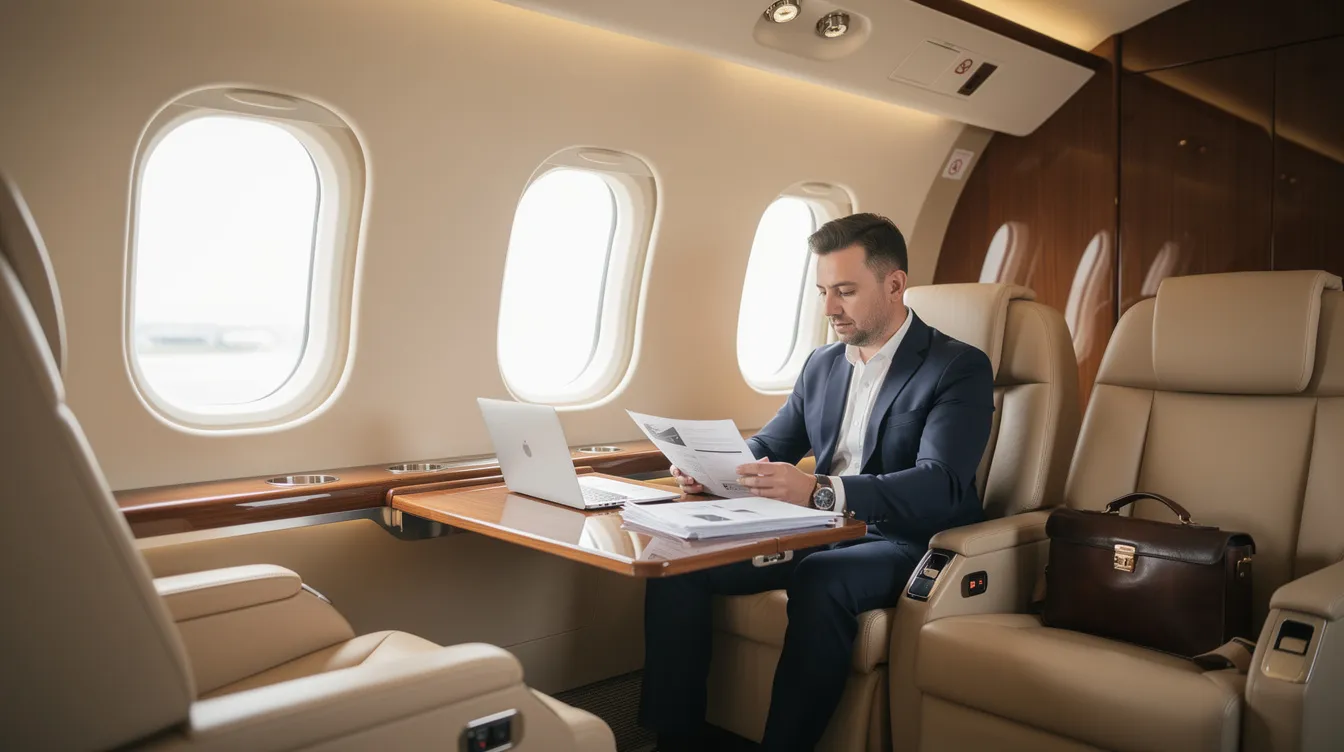
The best private aviation solution depends on annual flight hours, routes, cabin size, passenger count, schedule control, and tolerance for price volatility. A traveler flying once or twice a year has different needs than a business owner who must fly every other week, so understanding the complete cost of fractional jet ownership is crucial before committing to any long-term structure.
As a broad benchmark, private jet cost in the U.S. market often ranges from about $2,500 to $9,000+ per flight hour for many turboprop, light, midsize, and super midsize missions, with heavy jet and ultra-long-range flights costing more. The occupied hourly rate is only one part of the equation; total trip cost may include repositioning, FET, crew overnights, airport fees, and peak charges, all of which factor into the total cost of fractional jet ownership.
For low-frequency travelers under roughly 25 hours per year, occasional private jet charter or limited jet card use often remains the most economical path. For mid-frequency travelers in the 25–150 hour range, fractional jet ownership as an investment or a membership-like model, such as BlackJet’s Equity Fleet or Reserve Fleet, can often deliver better predictability, access, and effective cost per hour.
For very high-frequency operators above 300 annual hours, full aircraft ownership can sometimes be justified. Even then, many owners supplement with fractional shares or charter when they need different aircraft types, simultaneous missions, or temporary extra lift, and may eventually explore selling a fractional jet ownership share if their needs change.
Before choosing a provider, many travelers review the best fractional jet ownership programs in the market to benchmark service levels and pricing. A practical comparison should model at least three paths:
Ad-hoc charter for every trip
Jet card or Reserve Fleet style access
Fractional ownership through Equity Fleet
BlackJet’s aviation experts can build a side-by-side analysis using actual routes, passenger counts, aircraft preferences, and schedule patterns. That is often the clearest way to determine whether ownership, membership, or charter delivers the best value.
Travelers who currently rely on charter flights or commercial airlines can explore a more predictable way to fly private with BlackJet. The process begins with a confidential consultation, not a generic quote.
The first step is a discussion of the traveler’s goals, privacy needs, schedule, and service expectations. The second step is a travel pattern review covering routes such as New York–South Florida, New York–Aspen, Los Angeles–Seattle, or recurring business routes from San Antonio. The third step is a customized program design comparing Reserve Fleet and Equity Fleet options. The fourth step is onboarding, scheduling, and operational support for each flight.
Prospective clients should prepare recent and projected annual flight hours, typical departure and arrival city pairs, passenger counts, preferred cabin size, luggage needs, and whether trips are primarily business, personal, or mixed use. Details such as catering preferences, ground transportation, arrival timing, and whether travelers need to depart from specific private terminals also help design the right plan.
BlackJet is built around confidentiality, personalized service, and providing access to private aviation without unnecessary complexity. Its advisors support both B2C family travel and corporate business needs, helping clients choose the right aircraft, schedule efficiently, and control costs over time.
Ready to explore the smarter way to fly private? Visit FractionalJetOwnership.com to schedule a private consultation or request a custom proposal for BlackJet Equity Fleet or Reserve Fleet solutions.
These FAQs address common questions for readers who are new to flying private or comparing fractional ownership with charter, jet card programs, and full ownership.
Most fractional programs, including BlackJet’s, publish minimum lead-time guidelines, often 24–48 hours for domestic trips and longer for peak days or international flights. Earlier bookings generally provide better scheduling flexibility, especially when the trip involves holiday demand, customs, special catering, or multiple passengers.
Emergency or last-minute trips can often still be accommodated using reserve or partner aircraft from a broader global fleet. Specific aircraft types may be limited when a request is made at a moment’s notice.
Yes. Fractional ownership does not lock clients into private aviation only. Many BlackJet clients blend private aircraft flights for time-sensitive, confidential, or multi-city trips with commercial airline tickets for simple point-to-point journeys.
This hybrid strategy often delivers the best value. Private aircraft flights are most useful when schedule control, privacy, routing, or productivity materially improve the trip.
Many fractional ownership structures, including BlackJet’s, allow clients to trade hours across aircraft categories with an adjusted hourly rate. A client with a midsize jet share may be able to access a heavy jet for a transatlantic flight or a turboprop for a short regional trip.
This flexibility helps clients avoid multiple ownership arrangements. It also supports changing travel needs as a family, company, or executive schedule evolves.
U.S. tax law sometimes allows depreciation and other deductions for aircraft used primarily for qualified business purposes. Fractional aircraft ownership can, in some cases, participate in these benefits when properly structured and documented.
BlackJet does not provide tax advice. Clients should consult their own CPA or tax attorney, while BlackJet can work alongside professional advisors to help implement compliant ownership structures.
Private aviation has a higher per-passenger carbon footprint than most commercial airline travel. However, the industry is investing in Sustainable Aviation Fuel (SAF), carbon offset programs, more efficient aircraft, and better route planning.
BlackJet can help clients evaluate aircraft types, routing, passenger loads, and partnership options that reduce emissions per mile while still meeting mission-critical travel needs. The goal is a smarter travel experience that balances access, safety, privacy, and responsibility.
Private aircraft flights provide unparalleled flexibility, convenience, and privacy for discerning travelers seeking efficient and tailored travel solutions. Whether through on-demand charter, jet card programs, or fractional ownership, BlackJet Fractional Jet Ownership offers a spectrum of options designed to meet diverse travel needs and usage patterns. By choosing BlackJet, clients gain access to expertly managed fleets, predictable availability, and personalized service that elevates every journey.
For travelers flying 25 to 150 hours annually, fractional ownership and membership programs deliver significant value over ad-hoc charters or full ownership. These models combine the advantages of cost control, priority scheduling, and operational simplicity, supported by rigorous safety standards and a commitment to client confidentiality.
To explore how BlackJet Fractional Jet Ownership can transform your private aviation experience, visit FractionalJetOwnership.com. Schedule a confidential consultation with our expert advisors to design a customized program that fits your travel lifestyle, ensuring you fly smarter, safer, and more efficiently.
Ready to take the next step? Discover the smarter way to fly private with BlackJet Fractional Jet Ownership today.
