
July 7, 2026
Most travelers think of airports as crowded terminals with long security lines and rigid departure boards. But for the millions of private jet flights logged each year across the United States, a different kind of airport makes the experience possible. Private airports and dedicated general aviation facilities form the backbone of private aviation, offering speed, flexibility, and direct access that commercial hubs simply cannot match. Here is what every executive and business owner should know about how these airports work, who uses them, and why they matter.
A private airport is a landing facility that is not open to the general public without prior permission. Unlike commercial airports, which are designed to serve the public and host scheduled airline flights, private airports restrict access to approved operators, based aircraft, or pre-authorized visitors. This distinction is what gives private aviation its signature speed and discretion.
The United States has approximately 19,400 landing facilities. Of those, only about 5,000 to 5,300 are public-use airports, and fewer than 500 handle the vast majority of commercial airline traffic. The remaining 14,000-plus facilities support private aviation, corporate flight departments, and general aviation operations. Private aircraft can access thousands of smaller airports that commercial airlines do not serve, opening up direct routes to destinations that would otherwise require hours of additional ground travel.
It helps to understand three closely related but distinct terms:
Private airports are privately owned and typically restrict access. They require prior permission to land and lack TSA checkpoints.
General aviation airports are public-use facilities with little or no scheduled airline service. They welcome private pilots and business aircraft without prior permission.
Private terminals (often called FBOs, or Fixed Base Operators) are dedicated facilities within larger public airports. They offer private jet passengers a separate entrance, lounge, and ramp access, bypassing the main commercial terminal entirely.
Two of the most well-known business aviation hubs in the country illustrate how these facilities operate at scale:
Teterboro Airport (TEB) near New York handles over 200 daily private jet operations. It has no scheduled commercial airline service and is located just 20.4 km from Midtown Manhattan.
Van Nuys Airport (VNY) in Los Angeles logs more than 200,000 aircraft movements per year, making it one of the busiest general aviation airports in the world.
Private airports and general aviation fields are used daily by fractional owners, jet card members, and corporate flight departments. Clients of BlackJet Fractional Jet Ownership regularly fly from these facilities to maintain tight schedules across the country.
Private airports provide essential infrastructure for aviation activities and enhance air transportation connectivity, linking executives to meetings, job sites, and events in places that commercial airlines cannot efficiently reach. For a traveler departing from Teterboro instead of JFK, the difference can be one to two hours saved on every trip - time that adds up fast over dozens of flights per year.
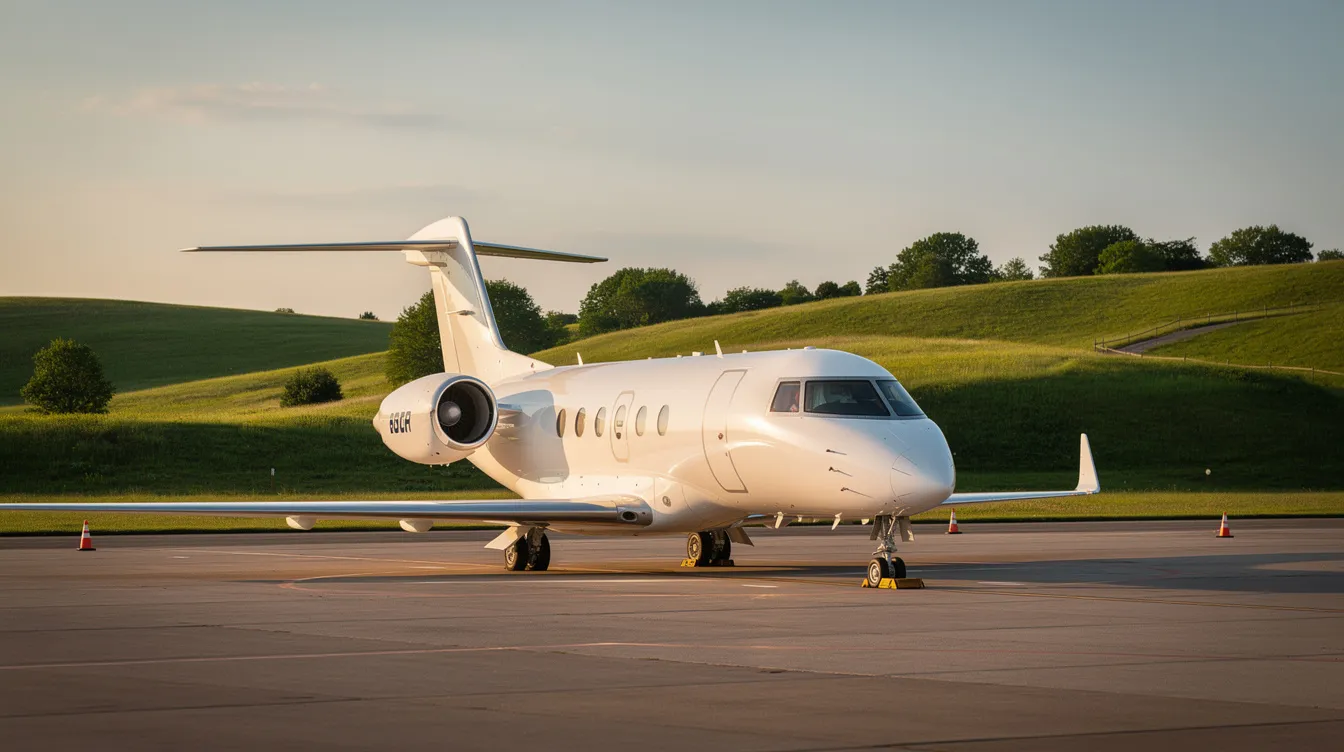
Private airports may feel like a world apart from the commercial terminal experience, but they still operate under robust FAA regulations. Every aircraft using U.S. airspace - whether departing a private grass strip or a major hub - must comply with federal airworthiness standards, pilot certification requirements, and airspace rules.
The main ownership models break down as follows:
Privately owned, public-use airports. A private entity owns the land and facilities but allows any licensed pilot to land without prior permission. These airports may accept federal grants and must comply with FAA grant assurances, including non-discrimination and revenue-use rules.
Privately owned, private-use airports. Access is restricted to the owner, based tenants, or approved visitors. These include corporate airfields, personal airstrips, and membership-only airparks. They carry fewer federal obligations than public-use facilities.
Municipally owned airports serving private aviation. Many city- or county-owned general aviation airports primarily serve business and private flights, even though they are technically public-use.
Access rules vary by facility. Private-use airports typically enforce a Prior Permission Required (PPR) protocol - pilots or operators must contact the airport before arrival. Some airparks operate on a membership basis, granting landing rights only to residents or co-owners. Public-use airports, by contrast, cannot impose PPR restrictions under FAA regulations.
In addition to access rules, private airports must meet specific infrastructure requirements. Runways at general aviation and private airports often range from 4,000 to 7,000 feet, though premium facilities stretch longer to accommodate large-cabin and ultra-long-range jets. Supporting infrastructure includes hangars, FBOs, maintenance shops, secure parking, and in some cases, customs clearance for international arrivals.
Facilities like Chicago Executive Airport north of the city and Austin Executive Airport in Texas serve as general aviation alternatives to the region's congested commercial hubs. Austin Executive Airport features a 6,025-foot runway and caters to business travelers who want to bypass Austin-Bergstrom International entirely.
Noise abatement and community agreements are another operational reality. Airports like Van Nuys and Teterboro maintain voluntary noise programs, preferred flight paths, and recognition systems for operators using quieter aircraft. These restrictions reflect the ongoing balance between supporting business aviation and being a responsible neighbor.
The decision to fly from a private airport comes down to three things: time, privacy, and control over the schedule. For executives and business owners, these are not luxuries - they are operational advantages.
Time efficiency is the most measurable benefit. Flying private generally allows passengers to arrive only 15 to 30 minutes before departure. There are no TSA checkpoints, no boarding groups, and no waiting at a gate. Private aviation allows for immediate ramp access to the aircraft - passengers walk from their vehicle directly to the plane. At a busy commercial hub, the same trip might require arriving two hours early and navigating a crowded terminal.
Privacy and security matter for high-profile travelers, deal teams, and anyone transporting sensitive information. Private terminals offer greater privacy with fewer people compared to commercial terminals. Arrivals and departures happen away from public view, and guests are not mixed with hundreds of strangers.
Flexibility is where private airports truly separate from the commercial model. Private flights operate on a flexible schedule that allows alterations based on passenger needs. If a meeting runs long or a connection point changes, the departure adjusts accordingly. Commercial airports feature amenities such as baggage handling and passenger terminals, but they cannot offer this level of responsiveness.
Travelers also enjoy access to comfortable lounges with reliable Wi-Fi, meeting rooms, and concierge services at leading FBOs. Some executives hold pre-flight briefings or work through presentations in these spaces, turning the journey itself into productive time.
It is worth noting that flying privately is significantly more expensive than commercial travel. But for travelers who value every hour in their day, the cost is weighed against measurable gains in productivity, schedule control, and reduced fatigue.
Private airports are strategic tools for business, not just lifestyle perks. The companies and individuals who use them most often are those for whom time has a direct and calculable value.
Typical usage patterns include:
Monthly shuttle flights between a company's headquarters and satellite offices or manufacturing facilities
Investor roadshows require three or four city stops in a single day
Site visits to remote facilities not served by any commercial airline
Last-minute deal meetings where events shift rapidly, and same-day travel is the only option
Private airports close to corporate headquarters - often located in suburban business parks - reduce ground transfer times by 60 to 90 minutes each way compared to driving to a distant commercial hub. That reduction compounds over dozens of trips per year.
High-frequency travelers logging 25 to 150 hours annually often find that fractional ownership or shared-use programs offer a better fit than full aircraft ownership. Understanding the core fractional jet ownership terms and concepts helps these travelers evaluate whether a given program aligns with their flying patterns and budgets. The fixed costs of owning and maintaining a whole aircraft are hard to justify below roughly 300–400 flight hours per year.
BlackJet Fractional Jet Ownership works with clients to plan itineraries that maximize the use of efficient private airports, avoiding congested commercial hubs and reducing repositioning costs. The result is a travel program that fits the way modern business actually operates - fast, flexible, and built around the executive's schedule rather than the airline's.
New York is one of the world's busiest private aviation markets, and for good reason. The metro area is home to the densest concentration of corporate headquarters, financial institutions, and media companies in the country. New York City has seven airports for private aircraft, giving travelers a range of options depending on where their meetings are and how much ground time they can afford.
Here is how the key airports compare for private plane travel to New York:
Teterboro Airport (TEB) is the flagship private aviation airport for the New York metro area. Teterboro Airport is 20.4 km from Midtown Manhattan, making it reachable in 20 to 35 minutes depending on traffic. It handles exclusively private and corporate traffic - no scheduled airline service - and serves over 200 operations daily through four major FBOs. For travelers heading to Midtown, Wall Street, or Midtown West, Teterboro is typically the fastest option.
Westchester County Airport (HPN) near White Plains is a strong alternative for travelers in Westchester County, southern Connecticut, or the northern suburbs. Westchester County Airport is 56.6 km from Midtown Manhattan, but it is often the closest option for residents and businesses in that corridor. It handles a mix of limited commercial and robust private traffic.
LaGuardia Airport (LGA) might seem like a purely commercial facility, but it also serves private aviation. LaGuardia Airport has a private terminal open 24/7, and at just 14 km from Midtown Manhattan, it offers the shortest distance to the city center. The trade-off is that airline traffic can create ground and airspace congestion.
Newark Liberty International Airport (EWR) is another option, particularly for travelers in New Jersey or headed to points south and west. Newark Liberty International Airport has no slots required for private flights, making it easier to schedule compared to the slot-controlled commercial operations at the field.
Republic Airport (FRG) on Long Island and Morristown Municipal Airport (MMU) in New Jersey round out the business aviation options for travelers who prefer to avoid the inner-ring congestion of Teterboro or LaGuardia.
BlackJet helps clients who are interested in fractional jet ownership in New York select the optimal airport based on meeting location, traffic patterns, runway length, and hangar availability. The right airport choice can save 30 to 60 minutes on every trip - a meaningful edge for a traveler making two or three New York runs per month.

Private airports are the critical infrastructure that makes fractional aircraft ownership work. Without reliable access to well-maintained facilities near owners' homes and destinations, the core promise of fractional programs - predictable, hassle-free private jet access - falls apart.
Here is how the two main program types interact with private airports, including how floating fleet options in fractional ownership use a broad network of fields to keep aircraft positioned close to where owners actually fly:
Reserve Fleet (pay-as-you-go hours). These programs use networks of private airports across the country to guarantee aircraft availability on short notice. When a member books a flight, the program manager positions an aircraft at the nearest suitable airport, often a general aviation field with minimal congestion and fast turnaround times.
Equity Fleet (fractional ownership). In this model, co-owners hold a deeded share in a specific aircraft that is typically based at a private airport near the primary owner's home or headquarters. Basing decisions factor in hangar costs, maintenance access, crewing, and fueling infrastructure.
Operational services at these airports - aircraft management, hangar storage, crewing, fueling, and scheduled maintenance - are coordinated on behalf of owners by the program manager. For many buyers, understanding fractional jet ownership financing, costs, and benefits is just as important as these operational details. This is a major advantage over full ownership, where the individual or company must negotiate each of these relationships directly.
At a high level, basing a fractional share aircraft at a business-friendly private airport in certain states can offer tax and operational advantages. Accelerated depreciation, potential Section 179 expensing, and favorable state tax treatment may apply, and understanding the broader tax implications for fractional jet owners is critical, though proper documentation of business use is essential.
Consider a practical scenario: a manufacturing company with offices in Ohio and plants in three Midwestern states logs 75 to 100 flight hours per year. By holding a fractional share based at a regional private airport near headquarters, the company eliminates repositioning fees, reduces deadhead time, and ensures its aircraft are available within hours of a scheduling request, all governed by a well-structured aircraft fractional ownership contract.
The private aviation market has grown significantly, and BlackJet Fractional Jet Ownership plays an advisory role in helping clients leverage private airport networks for more efficient and predictable travel. The goal is to match the right aircraft, the right ownership structure, and the right home airport to each client's specific travel pattern, whether that means a smaller share or a structure like 1/8th fractional jet ownership for roughly 100 hours of flying per year.
All three models - fractional ownership, ad-hoc charter, and full ownership - rely on the same private airport ecosystem. The differences lie in cost, control, and how much of the operational burden falls on the traveler.
Ad-hoc charter uses private airports on a trip-by-trip basis. Pricing depends on current aircraft availability and repositioning costs. If no aircraft is based near the departure airport, the client pays for the empty leg to get a plane in place. Charter offers maximum flexibility with zero long-term commitment but limited predictability on cost compared with more structured options like fractional jet ownership vs membership programs.
Fractional ownership secures guaranteed access to private jet flights from preferred private airports at predictable hourly rates. Owners commit to a set number of hours per year and share the fixed costs of aircraft management, maintenance, and crewing with other owners in the program, making fractional jet ownership as an investment a compelling alternative to full aircraft ownership for many executives.
Full ownership provides maximum control. The owner decides which airport to base the aircraft at, hires the crew, and manages every aspect of operations. But it also means direct responsibility for hangar contracts, insurance, maintenance scheduling, and regulatory compliance - all of which require significant time and expertise.
For travelers logging 25 to 150 hours per year, fractional aircraft ownership typically delivers the most efficient balance of cost, control, and consistent access to private airports. Understanding the complete cost of fractional jet ownership is essential to confirming that balance. Below 25 hours, charter or jet cards may be more practical. Above 300 hours, full ownership starts to pencil out.
Private airports and the operators that use them are held to rigorous safety standards. While the experience at a private terminal may feel more relaxed than a commercial airport, the regulatory framework behind the scenes is comprehensive and, in many areas, exceeds what most passengers would expect.
Safety frameworks governing private aviation include:
FAA oversight under 14 CFR Part 91K for fractional ownership programs, covering maintenance, crew training, and operational standards
IS-BAO (International Standard for Business Aircraft Operations) certification for operators committed to safety management systems
ARGUS and Wyvern ratings, which provide third-party audits of operator safety records, training, and fleet maintenance
BlackJet partners only with vetted operators and private airports that align with its safety, reliability, and service expectations. Given the shared nature of aircraft usage, understanding essential liability coverage in fractional ownership is equally important. Clients should always check whether their operator holds current third-party safety ratings before committing to any program.
Service standards at leading FBOs deliver a noticeably different experience from commercial terminals. Capabilities include rapid turnarounds, de-icing in winter operations, 24/7 support, and concierge services covering ground transport, hotel bookings, and catering. These services are designed to keep the travel experience seamless from door to door.
Community impact is an increasingly important part of private airport operations. Noise abatement procedures, voluntary curfews, preferred flight paths, and growing adoption of sustainable aviation fuel (SAF) reflect the industry's commitment to responsible growth. Private airports also generate significant local economic activity - employing crews, FBO staff, maintenance technicians, fuel suppliers, and ground service providers.
The geographic spread of private aviation activity underscores how widely these benefits are distributed. Florida has five airports ranked in the top 25 private jet airports nationally. Texas has four airports in the top 25 list, and California has three airports in the top 25 list. Travelers using these hubs often evaluate the best fractional jet ownership programs to match aircraft access with their most common routes. These states reflect both business demand and favorable operating conditions for year-round private aviation.
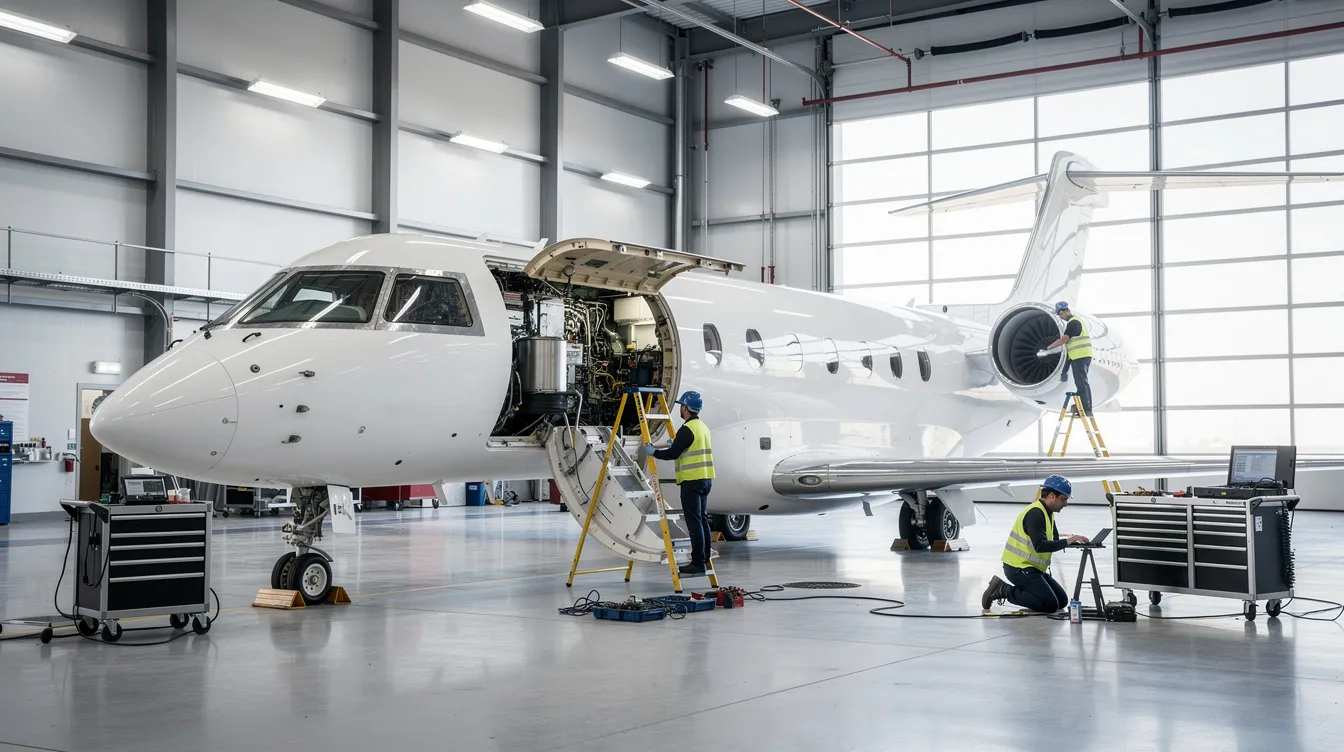
A private airport is typically privately owned and restricts access to approved operators or owners, often requiring prior permission to land. General aviation airports are public-use facilities that welcome private pilots and business aircraft without prior permission but usually do not host scheduled commercial airline service.
Fractional ownership programs usually base aircraft at specific private airports aligned with the owner's home or business location. While owners can request flights from various airports, the aircraft’s home base and availability depend on the program’s network and operational considerations.
Flying from private airports can save one to two hours per trip by eliminating long security lines, early check-in requirements, and crowded terminals. Passengers typically arrive 15 to 30 minutes before departure and enjoy immediate ramp access to their aircraft.
Private airports and their operators adhere to rigorous FAA regulations and safety standards, often exceeding commercial requirements. Certifications like IS-BAO and ARGUS Platinum ratings further ensure high safety and operational quality.
Basing a fractional share aircraft at certain private airports can provide tax advantages such as accelerated depreciation and favorable state tax treatment. Proper documentation of business use is essential to maximize these benefits.
Private airports contribute to local economies by creating jobs for crews, maintenance staff, and service providers. They also implement noise abatement programs and support sustainable aviation initiatives to minimize environmental impact.
Some private airports offer U.S. Customs and Border Protection services, enabling international arrivals to clear customs on-site. Availability varies by airport, so it is important to confirm customs facilities when planning international travel.
Reserve fleet programs use a network of private airports to position aircraft near members’ departure points on short notice. Equity fleet owners base their aircraft at a designated private airport, optimizing hangar access, maintenance, and crew availability.
Selecting the right private airport is a strategic decision that affects time, cost, and convenience on every trip. It is not simply a matter of picking the closest field - the best choice depends on a combination of operational factors, personal travel patterns, and an understanding of essential fractional ownership contract terms that can shape where and how your aircraft is based.
Key selection factors include:
Proximity to the final destination. The airport closest to a meeting place or home saves ground transfer time. In dense metro areas like New York, the difference between airports can be 30 to 60 minutes each way.
Runway length and performance requirements. Light jets need 4,000 to 5,000 feet. Super midsize and heavy jets may need 5,500 feet or more. Not every private airport can accommodate every aircraft type.
Customs availability. For international private jet flights, the arrival airport must have U.S. Customs and Border Protection access. Not all private fields offer this.
Ground transport options. A private airport in a convenient place means little if ground transport is unreliable. The best facilities coordinate car service, helicopter transfers, or rental vehicles as part of the FBO experience.
Peak-time congestion and slot restrictions. Some of the busiest private airports, especially around New York, experience congestion during weekday mornings and Friday afternoons. Planning departures outside peak windows can save significant taxiing and hold time.
For travelers who book 25 or more flights per year, working with an experienced private aviation advisor makes the difference between a smooth program and a frustrating one. The right advisor evaluates trade-offs between fees, access, and flexibility at different airports and helps identify an ideal home base.
BlackJet Fractional Jet Ownership helps clients evaluate their travel patterns, choose the right aircraft for their requirements, and identify the private airports that will deliver the most value across their schedule. This includes modeling the total cost of fractional jet ownership so that airport choices, aircraft type, and share size all align financially. Whether the priority is reaching New York, covering a multi-state territory, or connecting to seasonal destinations, the airport strategy is built around the client's life and business - not the other way around.
The things that redefine how executives fly are often the details that happen on the ground: which airport, which FBO, and which ownership model. Getting those decisions right is what turns private aviation from an occasional indulgence into a dependable part of how a company operates.
Ready to explore the smarter way to fly private? Contact BlackJet Fractional Jet Ownership to learn how fractional ownership and the right private airport strategy can transform your travel experience. Visit FractionalJetOwnership.com to get started.
