May 3, 2026
For travelers exploring private aviation, the question of private flight club membership cost often leads to more confusion than clarity. The reality is that private jet membership costs typically start around $50,000, with some high-end memberships reaching up to half a million dollars for structured jet card and fractional programs. On the lower end, seat-based and empty-leg clubs may charge as little as $1,000 to $5,000 per year in membership fees—but these come with trade-offs in availability and route selection.
This guide is for executives, frequent travelers, and anyone considering private aviation membership options. Understanding these costs is crucial for making an informed decision and avoiding unexpected expenses.
This article focuses on private flight club membership cost structures, comparing subscription clubs, empty-leg access programs, and more structured fractional and membership hybrids. Many programs exist in the market, each with its own restrictions, limitations, or unique offerings that can significantly impact the user experience. The goal is not to discuss full aircraft ownership but rather to help readers understand what they actually pay—and receive—across different membership plans designed to make flying private more accessible.
<div class="definitions-box" style="border:1px solid #ccc; padding:16px; margin:24px 0; background:#f9f9f9;"> <strong>Quick Definitions: Main Types of Private Jet Memberships</strong> <ul> <li><strong>Jet Cards:</strong> Jet card memberships allow members to prepay for flight hours at a locked-in hourly rate, providing predictable pricing and access to private jets without the commitment of ownership.</li> <li><strong>Fractional Ownership:</strong> Fractional ownership programs enable individuals to purchase a share of a private jet, allowing them to enjoy the benefits of private aviation without the full costs and responsibilities of sole ownership.</li> <li><strong>Charter Memberships:</strong> Charter memberships provide the highest level of flexibility, allowing members to book flights on various aircraft with significant discounts compared to market rates.</li> <li><strong>On-Demand Memberships:</strong> On-demand private jet memberships allow members to fly where and when they want, providing significant flexibility compared to traditional membership models. On-demand memberships often come with few or no restrictions on aircraft size, allowing members to choose from a wide range of aircraft options for their flights.</li> <li><strong>Seat-Based Clubs:</strong> Seat-based clubs offer individual seats on pre-scheduled or repositioning flights, often at lower entry costs but with less control over availability and routes.</li> <li><strong>General Classification:</strong> Private jet memberships can be classified into several types, including jet cards, fractional ownership programs, and charter memberships, each offering different structures and benefits.</li> </ul> </div>
BlackJet Fractional Jet Ownership specializes in fractional aircraft ownership and membership-style access, serving as a trusted advisor helping travelers compare flight club costs against fractional jet ownership and reserve-style programs. Whether you fly 25 hours or 150 hours annually, understanding the true cost structure is essential before you join any program.
Every private flight club operates on the same basic cost levers: membership fees, per-flight pricing, and ancillary charges. The differences lie in how each program structures and combines these elements, which ultimately determines total annual spend for members.
Key cost components include:
Annual or monthly membership dues: Annual dues for private jet programs typically range from approximately $2,500 to over $100,000 for high-tier programs, depending on access level and fleet quality.
Per-seat or per-hour flight pricing: US flight clubs selling per-seat access on light jets often charge $500–$2,000+ per seat for short-haul routes, while hourly-based programs quote $4,000–$10,000+ per hour depending on the class of aircraft selected. The class—such as light, midsize, or large cabin jets—determines mission range, passenger capacity, and luxury level, directly impacting both cost and the travel experience.
Operational surcharges: These may include fuel surcharges ranging from $500 to $1,500 per hour, federal excise taxes of 7.5% in the US, and peak-day premiums of 5% to 25% for travel during holidays.
Optional add-ons: Catering, ground transportation, and de-icing fees can add hundreds or thousands to each trip.
BlackJet Fractional Jet Ownership structures costs differently through its Reserve Fleet (no ownership, pay-as-you-go hours) and Equity Fleet (fractional ownership with predictable hourly and fixed fees), all detailed in its overview to compare fractional jet ownership programs. This contrasts with club-style subscriptions, where variable charges can create unpredictable total costs.
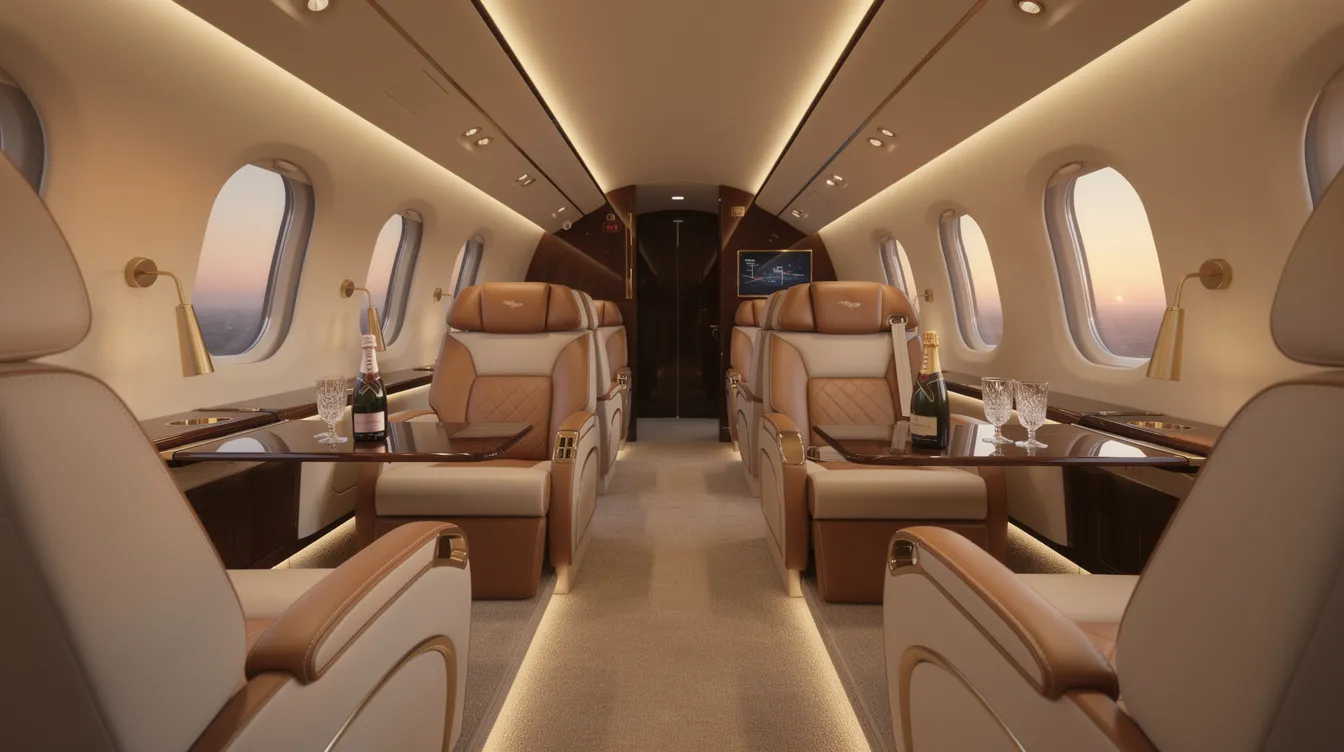
Not all private flight clubs are alike. Private jet memberships can be classified into several types, including jet cards, fractional ownership programs, and charter memberships, each offering different structures and benefits. Some are low-commitment empty-leg or seat-sharing clubs ideal for occasional leisure travelers, while others resemble structured jet card programs with higher buy-ins but greater reliability.
Additionally, some programs are centered around a specific aircraft type—such as HondaJets—which can significantly influence mission range, passenger capacity, and the overall travel experience. Members of private jet programs enjoy greater fleet availability, ensuring that they have access to aircraft regardless of their location. The following breakdown covers each membership type with clear cost bands and guidance on who they fit best.
Seat-based and unlimited private flight clubs sell individual seats on pre-scheduled or repositioning flights. These programs often market unlimited access, but actual availability depends on capacity limits, blackout dates, route restrictions, and fleet positioning needs. Some clubs regularly introduce new flights to popular destinations, offering members immediate and exclusive travel options and appealing to those seeking fresh and spontaneous travel experiences, while others in sunbelt markets like fractional jet ownership in Phoenix prioritize consistent aircraft access over spontaneity.
Initiation fees for private jet memberships can range from $2,995 to $30,000, with high-end corporate tiers reaching up to $150,000. Per-seat fees typically run $500–$2,500 for one-way flights on popular routes like New York–South Florida, Dallas–Aspen, or Los Angeles–Las Vegas. Some promotional offers advertise limited-time unlimited access, though blackout days and route caps often apply.
These clubs rely heavily on empty flights and shared capacity. While marketing may promise members can fly as often as they wish, real-world availability is determined by load factors and the operator’s route network. A member expecting to book flights to specific destinations may find that dynamic pricing kicks in for off-network routes, significantly increasing cost.
BlackJet’s Reserve Fleet offers guaranteed aircraft access with per-hour pricing and no restrictions on routes, operating more like a tailored version of floating fleet options in fractional ownership than a traditional seat-based club. Seat-based clubs provide opportunistic access at lower entry costs but less control, making them suitable for flexible leisure travelers rather than executives who need priority access for business-critical travel.
Empty-leg memberships capitalize on repositioning fees—when jets fly empty to their next assignment—offering heavily discounted private flights for flexible travelers. Notice periods typically range from 24 to 72 hours before departure, making this approach unsuitable for fixed schedules.
Membership fees for empty-leg programs generally run $2,000–$10,000 per year, with individual empty legs discounted 50–80% off standard charter rates. Some clubs charge per seat, while others provide access to the entire plane at reduced prices. A spontaneous weekend trip from Miami to Aspen might cost a fraction of normal charter rates, but cancellation rates can reach 30% due to operator changes.
The trade-off is clear: outstanding cost per flight for those who can adjust to short-notice availability, but no guaranteed routes or dates. For executives needing set meeting times in cities like New York, Chicago, or San Francisco, empty-leg memberships are best viewed as a supplemental option rather than a primary travel solution, especially when compared with programs that emphasize top-tier pilots and crews in fractional jet ownership to support mission-critical travel.
Comparing an empty-leg membership’s projected savings against the predictability of fractional ownership or a structured Reserve Fleet program reveals significant differences for frequent flyers who value schedule control.
On-demand charter memberships charge a modest membership fee in exchange for access to wholesale charter pricing across large brokered fleets. On-demand private jet memberships allow members to fly where and when they want, providing significant flexibility compared to traditional membership models.
Members of on-demand charter programs typically pay an upfront fee for the right to book flights at discounted rates, which can lead to substantial savings for frequent travelers. On-demand memberships often require an upfront fee that can range from $20,000 to six figures, along with discounted rates for each trip booked. The annual or monthly membership fee for on-demand programs can range significantly, often from $20,000 to six figures, depending on the level of service and benefits offered.
On-demand memberships often come with few or no restrictions on aircraft size, allowing members to choose from a wide range of aircraft types for their future flights. Hourly rates for light jets generally range from $5,000 to $7,000, while heavy jets can cost between $11,000 and $14,000 per hour as of 2026. Additional fees may include management or booking fees (5–10% of flight cost), fuel surcharges, and ground transport.
For example, a New York–Miami round-trip on a light jet through an on-demand charter membership might total $18,000–$25,000 all-in, depending on fees and travel dates. On-demand charter memberships provide the highest level of flexibility, allowing members to book flights on various aircraft with significant discounts compared to market rates.
BlackJet’s Reserve Fleet offers predictable, program-level hourly rates and guaranteed aircraft standards instead of ad-hoc sourcing on each trip—a key difference for travelers who value consistency over pure flexibility.
Membership Type | Typical Membership Fee | Flight Pricing | Aircraft Flexibility | Best For |
|---|---|---|---|---|
Seat-Based Clubs | $1,000–$5,000 per year | $500–$2,500 per seat | Limited to scheduled routes | Occasional leisure travelers |
Empty-Leg Memberships | $2,000–$10,000 per year | 50–80% off standard charter rates | Whole aircraft or seats | Flexible travelers |
On-Demand Charter | $20,000 to six figures | $5,000–$14,000 per flight hour | Wide range, few restrictions | Frequent travelers seeking flexibility |
Jet Cards | $50,000–$500,000+ upfront | $5,000–$12,000+ per flight hour | Restricted by jet category | Frequent flyers need predictability |
Fractional Ownership | $350,000+ upfront + monthly fees | $2,000–$4,000+ per occupied hour | Specific aircraft share | High-frequency flyers and business users |

Jet cards represent prepaid programs where clients deposit a fixed amount or purchase flight hour blocks in advance, receiving a fixed hourly rate and defined service standards on specified aircraft categories. Jet card memberships allow members to prepay for flight hours at a locked-in hourly rate, providing predictable pricing and access to private jets without the commitment of ownership.
Jet card memberships usually require an initial payment starting around $50,000 to $200,000, with some premium options exceeding $500,000. Many private jet programs require a refundable or non-refundable deposit to unlock fixed hourly rates, often starting at $50,000. Hourly rates typically range from $5,000–$12,000+, depending on aircraft category, with potential peak surcharges of 5–20% and minimum daily usage requirements.
Membership tiers in private jet clubs typically offer benefits like priority booking during peak days, access to larger aircraft, and lower hourly rates in exchange for higher annual fees. Some flight clubs blur the line between membership and jet cards by marketing flight-based memberships that effectively sell fixed-rate hours with guaranteed availability.
These programs suit individuals or companies flying roughly 25–100+ hours per year who value predictability and schedule control, including travelers evaluating whether 1/8th fractional jet ownership or a jet card block of hours better fits their needs. BlackJet’s Equity Fleet and Reserve Fleet solutions target similar profiles, with fractional ownership potentially bringing effective hourly cost below typical jet card rates over several years—especially when tax advantages under current US rules are utilized, a point that becomes clear when you understand the total cost of fractional jet ownership.
Fractional jet ownership is not a club in the casual sense, but many high-end membership offerings are actually fractional equity programs with club-like member benefits: concierge service, fixed hourly rates, and guaranteed availability—terms that are easier to navigate with a fractional jet ownership glossary of key concepts. Fractional ownership programs enable individuals to purchase a share of a private jet, allowing them to enjoy the exclusive benefits of private aviation without the full costs and responsibilities of sole ownership.
Acquiring a 1/16th share of a light or midsize jet might start around $350,000+ in the US, with monthly management fees from several thousand dollars and occupied hourly rates in the $2,000–$4,000+ rang,e depending on aircraft and program—figures that align with the complete guide to the cost of fractional jet ownership. This represents a high upfront cost compared to low-commitment flight clubs, but the cost per flight hour is often lower over time.
BlackJet’s Equity Fleet fractional program follows this model: clients purchase a fraction, gain priority access and custom aircraft sourcing, and may realize tax benefits such as bonus depreciation when used for qualifying business travel, especially when thoughtful fractional jet ownership financing and a clear understanding of the tax implications for fractional jet owners is part of the plan. Readers should consult their tax advisor for specific guidance on depreciation rules under Section 168(k), ensure that essential liability coverage in fractional jet ownership is properly structured, and review an aircraft fractional ownership sample contract guide to understand how rights and obligations are typically structured.
For serious travelers flying 25–150 hours annually, fractional jet ownership as an investment represents the strategic alternative to club-style memberships—treating private aviation as a business asset rather than an occasional convenience, while also preserving flexibility should you later decide to sell your fractional jet ownership share.
The headline membership fee tells only part of the story. The real calculation involves total annual cost versus hours flown and the value of predictability. Private jet memberships provide members with preferred rates, which can make flying private more affordable compared to standard market rates.
If you are interested in private jet travel, consider which membership type best aligns with your needs and travel frequency as you review the following traveler profiles:
Occasional leisure traveler (5–10 trips, 10–20 hours annually): Seat-based or empty-leg clubs with $3,000–$10,000 yearly fees may suffice, though ad-hoc charter could cost $20,000–$40,000 for similar usage. Fractional ownership exceeds practical value at this usage level.
Monthly business traveler (25–50 hours annually): Jet cards might run $150,000–$300,000 annually at $6,000/hour, while ad-hoc private charters could push higher during peak periods. Fractional ownership at $200,000–$400,000 total, including fixed fees,s offers better cost control and convenience.
Corporate team (75–150 hours annually): Structured programs optimize at $500,000–$1M, where BlackJet bridges with predictable spends 15–25% below typical clubs for volume users.
Many clients discover that once they exceed roughly 25–50 hours of private flying annually, fractional jet ownership vs membership programs becomes the key comparison, with either fractional ownership or a well-structured membership program providing better cost control than seat-based clubs or sporadic charter.
Two memberships with similar annual fees can have radically different total costs due to hidden charges, aircraft category, and usage rules. Traveling during high-demand holidays may incur surcharges of 5% to 25% or reduced availability—a critical consideration for family travelers.
Some flight clubs advertise low seat prices but concentrate availability on a few leisure routes like New York–South Florida or Las Vegas, while dynamic pricing applies elsewhere, which is why many Florida-based travelers instead examine fractional jet ownership in Orlando for predictable access and pricing. BlackJet Fractional Jet Ownership emphasizes transparent cost structures: known management fees and hourly rates, clear scheduling rules, and no surprise surcharges, supported by clearly defined essential contract terms in fractional jet ownership.
Whether a private flight club membership delivers value depends on how often and how predictably you fly, and whether you prioritize flexibility, privacy, or pure cost optimization. Private jet memberships often include exclusive offers from partner brands, providing additional benefits such as discounts on luxury services and products.
Beyond direct costs, factor in soft benefits: time saved versus commercial flights (private aviation averages 4x faster door-to-door per industry studies), ability to combine multiple meetings across destinations like New York, Chicago, and Dallas in a single day, and complete control over your travel experience and schedule.
BlackJet can build a personalized cost projection for US-based and international travelers, comparing flight club, Reserve Fleet, and Equity Fleet options over a 3–5 year horizon, much like independent reviews of the best fractional jet ownership programs for smart investors compare leading providers. The goal is finding the right fit—not simply promoting the highest-priced option.
Private flight club membership costs depend on membership type, aircraft class, flight hours, operational surcharges, and optional add-ons like catering or ground transport. Programs may also charge initiation fees and variable per-flight pricing.
Fractional ownership requires a higher upfront investment but often results in lower hourly costs over time, plus tax benefits. Jet cards offer fixed hourly rates with less commitment but can be more expensive per flight hour for frequent travelers.
Yes, operational surcharges such as fuel fees, federal excise taxes, peak-day premiums, and repositioning fees can add to the total cost. Always review contract terms to understand all potential charges.
This depends on the program. On-demand memberships typically allow selection from a wide range of aircraft sizes, while some clubs or fractional ownership programs restrict access based on the aircraft type associated with the membership.
For occasional flyers, seat-based or empty-leg clubs with lower annual fees may suffice. However, for frequent or business-critical travel, structured programs like fractional ownership or jet cards offer better cost control and reliability.
Many programs apply surcharges of 5% to 25% during holidays or peak demand times. Availability may also be limited, so higher-tier memberships or fractional ownership often provide priority access during these periods.
Private flight club membership costs span from low four-figure annual fees plus per-seat costs on the accessible end to substantial six-figure commitments with fractional ownership on the premium end. The right solution depends entirely on your actual flight hours, route patterns, and how much you value reliability over opportunistic savings.
Structured programs like BlackJet’s Reserve Fleet and Equity Fleet exist precisely to bridge the gap between casual flight clubs and the complexity of full ownership. For travelers flying 25–150 hours annually, these solutions offer predictable access, transparent pricing, and the kind of cost visibility that makes private aviation a sustainable long-term choice rather than an occasional splurge.
Ready to explore the smarter way to fly privately? Visit FractionalJetOwnership.com to request a personalized cost comparison between private flight clubs, charter, and fractional ownership based on your actual routes and flight hours. Executives, family offices, and business owners in the United States and abroad are encouraged to schedule a consultation to review potential tax advantages, fleet options, and long-term private aviation strategy. The right program transforms how you operate—flying smarter, not just more luxuriously.
