
March 4, 2026
Private aviation continues to grow across the United States and globally as executives, entrepreneurs, and high-net-worth travelers prioritize efficiency and control over their schedules. Industry reports from organizations such as the National Business Aviation Association (NBAA) consistently show increased demand for private jet flights, particularly for time-sensitive business travel and premium leisure routes. Air charter and aircraft charter services have emerged as flexible, on-demand alternatives to commercial flying, offering unparalleled convenience, tailored itineraries, and luxury amenities.
This comprehensive guide explains the private jet flight conceptually, sets clear expectations for charter-focused services, and walks through the logistics, pricing, aircraft types, and booking considerations. The goal is to provide an authoritative overview for those exploring fractional jet ownership terminology and concepts, private jet charter, or other private aviation solutions. Private jet flights offer global reach, enabling travelers to access a vast network of airports worldwide and expand their travel capabilities far beyond regional limits.
It is important to note that private travel is significantly more expensive on a per-seat basis, with charter rates ranging from $1,300 to over $13,000 per hour, depending on the aircraft size.
Private jets are aircraft designed specifically for non-commercial, personalized air travel. Unlike commercial airline aircraft that operate on fixed routes and schedules, private jets are chartered or owned for exclusive use by individuals, corporations, or partnerships.
They range from light jets suitable for short domestic trips to ultra-long-range aircraft capable of intercontinental nonstop flights.
Flying private means traveling on an aircraft that is not open to the general public. The aircraft is either:
Fully owned
Fractionally owned
Leased
Accessed through jet card programs
Reserved via on-demand charter
Passengers depart from private terminals, follow flexible schedules, and travel with significantly greater privacy and operational control. Many private jet providers also offer concierge services, arranging in-flight amenities, hotel bookings, and other personalized travel support to enhance the luxury and convenience of private jet flights.
Commercial airline travel requires early airport arrival, security screening, boarding queues, and potential delays. Flying private typically allows:
Arrival at the terminal 15–30 minutes before departure, often much closer than commercial flights
Direct boarding from the tarmac
Access to smaller regional airports closer to final destinations, with private jets able to land at over 5,000 airports in the U.S., compared to only about 500 for commercial airlines
For executives flying frequently across the United States, this can save several hours per trip.
Private jet flights provide confidentiality that commercial airlines cannot match. A private flight ensures that only your invited guests are on board, further enhancing privacy and exclusivity. Conversations remain private, passenger lists are not public, and sensitive business discussions can continue uninterrupted.
Commercial airlines operate on fixed timetables. Private jet charters operate on the traveler’s timetable. Flexible scheduling allows for last-minute bookings and custom route planning, enhancing convenience for travelers.
A private jet charter is an arrangement where an individual or company rents an aircraft for a specific trip without owning the aircraft. An air charter service is a professional provider offering customizable, on-demand flying options for both business and leisure travelers.
Charter flights are:
Booked for a defined itinerary
Priced per flight hour
Operated by certified charter operators who prioritize safety and compliance with industry standards
The aircraft is exclusively reserved for the charter client during the trip. Clients can choose from a range of charter options, including different aircraft types and tailored services to meet specific travel needs.
Executive business travel
Family vacations
Leisure travel, such as personal getaways and vacations
Special events
Medical transport
Multi-city roadshows
Charter remains one of the most flexible entry points into private aviation.
Private jet charter services often provide a dedicated account manager to assist with the booking process and ensure a smooth, personalized experience. This professional helps coordinate all aspects of the trip, from selecting the right aircraft to arranging additional services.
On-demand charter allows clients to book flights as needed. There are no long-term commitments, and pricing is typically calculated per flight hour. On-demand charters can often be arranged at a moment's notice, catering to urgent or last-minute travel needs.
Jet card programs involve pre-purchasing flight hours at a fixed hourly rate. Benefits often include:
Guaranteed availability
Locked-in pricing
Simplified booking
Fractional aircraft ownership allows multiple owners to share an aircraft. Owners purchase a share—often 1/16th or 1/8th fractional jet ownership—and receive a set number of annual flight hours. This approach balances the advantages of private jet ownership with lower capital exposure.
Many private jet charter services offer a range of additional amenities as part of the booking process, including in-flight catering with customizable gourmet menus, ground transportation, and concierge services. These enhance the luxury experience and provide seamless door-to-door travel.
Private jet charters often allow for more luggage and equipment than commercial flights, accommodating travelers’ specific needs such as sports gear, musical instruments, or business equipment. Additionally, private flights have significantly fewer restrictions on liquids and bulky items compared to commercial airlines.
The charter process begins with:
Departure and destination airports
Passenger count
Dates and times
Luggage requirements
Many providers also offer a charter flight cost calculator online, which allows users to quickly estimate the cost of their private jet charter based on real-time aircraft and flight searches.
A broker or operator provides aircraft options and pricing.
When reviewing quotes, consider:
Aircraft type
Age and condition
Operator safety certifications
Total cost including fees (Understanding private jet pricing involves considering factors such as aircraft type, flight distance, and additional services.)
Once selected:
A charter agreement is signed
Payment terms are finalized
Passenger manifests are submitted
Preflight tasks include:
Catering requests
Ground transportation arrangements
International permits and customs coordination

Private jet cost varies significantly depending on aircraft size and route. Private jet rental prices generally range from $1,800 to $18,000 per billable flight hour, with charter rates influenced by several important factors. An approximate cost can be obtained using online tools, but actual pricing depends on aircraft size, route, and additional services.
Hourly charter rates cover a wide spectrum of aircraft, ranging from versatile turboprops to the most luxurious executive jets available today. Generally, smaller aircraft come with more affordable hourly rates and overall charter prices. These costs can vary, especially during peak travel days, and typically do not include additional fees, daily minimums, or extra services.
The price of a private jet charter is largely influenced by flight distance, as longer trips consume more fuel, increasing overall expenses. Additional charges may include repositioning fees, crew overnight stays, airport handling costs, and applicable taxes. Compared to owning a private plane, charter rates are significantly more economical. For instance, turboprop charters typically start around $2,000 per hour, while heavy jet charters can approach $10,000 per hour—useful benchmarks when comparing with the cost structure of fractional jet ownership.
Light jets: $3,000–$5,000 per hour, accommodating 4–8 passengers for short to medium-range flights
Midsize jets: $5,000–$8,000 per hour, carrying 6–9 passengers, ideal for flights up to 2,450 miles
Super-midsize jets: $6,500–$9,000 per hour, seating 8–10 passengers for flights up to 7 hours
Heavy jets: $8,000–$15,000 per hour, designed for long-haul flights with 10–16 passengers over distances up to 7,000 miles
Ultra-long-range jets: $12,000–$20,000+ per hour, capable of flying 12 or more passengers nonstop for over 10 hours
Turboprops: $2,000–$4,000 per hour, cost-effective for regional travel with 6–8 passengers
Landing fees
Handling fees
Crew overnight expenses
Fuel surcharges
Aircraft repositioning costs, which are also important inputs when calculating the total cost of fractional jet ownership
If the aircraft must fly empty to pick up passengers, positioning charges apply. These can meaningfully impact total trip cost. However, travelers can take advantage of cost-saving opportunities by booking 'empty legs' or 'leg flights'—these are repositioning flights that are available at significantly reduced rates for those with flexible schedules.
Airports charge fees based on aircraft weight and airport infrastructure.
Fixed-base operators (FBOs) charge handling fees for ground services, including ramp parking and coordination.
If the crew remains overnight away from base, hotel and transport costs are billed to the charter client.
Daily allowances cover crew meals and incidental expenses.
Fuel pricing fluctuates. Some operators apply surcharges when fuel prices exceed benchmark levels.
Private jets are categorized based on size, range, and passenger capacity:
Very Light Jets (VLJs): Designed for 2–4 passengers, ideal for short trips lasting up to 2 hours
Light Jets: 4–8 passengers, short to medium-range flights
Midsize Jets: 6–9 passengers, ideal for flights up to 2,450 miles
Super-Midsize Jets: 8–10 passengers, flights up to 7 hours
Heavy Jets: 10–16 passengers, designed for long-haul flights up to 7,000 miles
Ultra-Long-Range Jets: 12+ passengers, capable of nonstop flights over 10 hours
Turboprops: 6–8 passengers, cost-effective for shorter regional flights
Private jets can fly at higher altitudes (up to 51,000 feet) than commercial airliners, resulting in fewer weather-related disruptions and smoother flights. Cabins offer superior legroom, luxurious leather seating, and customizable catering options, often including gourmet food and drinks. The entirely private cabin environment provides a quiet space for working or relaxing, enhancing productivity by allowing meetings or focused work while in transit.
Private jets have access to thousands of smaller airports and private terminals, enabling direct flights closer to final destinations, which commercial airlines cannot serve.
For larger groups or special occasions, private jet charter services can provide airliners with VIP seating configurations, accommodating more passengers with the same level of luxury and personalized service.
Each aircraft has a certified maximum range. Weather, winds, and passenger load can reduce effective range.
Fuel stops add:
30–60 minutes ground time
Potential crew duty implications
Ultra-long-range jets enable nonstop routes such as New York to London or Los Angeles to Tokyo, reducing total travel time.
For travelers planning their next journey, choosing a private jet charter ensures a seamless and luxurious experience from departure to arrival.
New York
Los Angeles
Miami
Aspen
Las Vegas
London
Paris
Dubai
Geneva
Caribbean islands
Winter increases demand for ski destinations. Summer peaks include Mediterranean and coastal U.S. routes.
Flights depart on demand and adjust to client schedules.
Passenger information remains discreet. Aircraft cabins allow confidential discussions.
Reduced airport dwell time and direct routing dramatically improve efficiency.
Private jets feature superior legroom, luxurious leather seating, and customizable catering options, often including gourmet food and drinks. The cabin is entirely private, providing a quiet environment for working or relaxing.
Private aviation enhances productivity by allowing travelers to conduct meetings or work while in transit, making the most of their travel time.
Travelers can bring more luggage and specialized equipment compared to commercial flights, with fewer restrictions on liquids and bulky items.
Charter operators provide:
Licensed pilots
Maintenance programs
Operational dispatch support
Reputable operators maintain certifications such as:
FAA Part 135 compliance
Third-party audits (ARGUS, Wyvern)
Cross-border flights require:
Landing permits
Overflight clearances
Customs compliance
Private flights operate from Fixed Base Operators (FBOs). These terminals provide:
Discreet lounges
Quick security screening
Direct aircraft access
Private jets accommodate pets in-cabin. Luggage limits vary by aircraft type.
Catering ranges from premium boxed meals to fully customized gourmet requests.
Arriving 15–30 minutes before departure is standard for domestic private flights, significantly shorter than commercial airline check-in times.
A charter cost estimator typically requires:
Departure and arrival airports
Travel dates
Passenger count
One-way or round-trip status
Hourly rate estimates should be compared against total trip cost, including repositioning and ancillary fees, especially if you are evaluating how charter compares with fractional jet ownership financing and costs.
Estimators may not include:
Overnight crew charges
Peak day surcharges
International handling fees
As environmental awareness grows, the private jet charter industry is taking significant steps to reduce its carbon footprint and promote sustainable travel. Many private jet charter services are now incorporating Sustainable Aviation Fuel (SAF), which can cut carbon emissions by up to 80% compared to traditional jet fuel. In addition to adopting SAF, leading private jet charter companies offer carbon offset programs, allowing passengers to balance out their travel emissions by supporting global projects that reduce greenhouse gases.
Operators are also investing in newer, more fuel-efficient aircraft and implementing eco-friendly practices throughout their operations, from optimized flight planning to sustainable ground handling. By selecting a private jet charter service that prioritizes sustainability, travelers can enjoy all the benefits of private jet travel—luxury, flexibility, and convenience—while making a conscious effort to minimize their environmental impact. This commitment to greener skies ensures that flying private can be both indulgent and responsible.
One of the standout advantages of private jet charter is the unparalleled global access it provides. With a vast global network and a diverse fleet of aircraft, private jet charter services can take you virtually anywhere in the world, often at a moment’s notice. Whether you need to reach a remote business destination or plan a spontaneous getaway to a secluded island, jet charter services offer the flexibility to tailor your travel plans to your exact needs.
Unlike commercial air travel, which is often hampered by long security lines, crowded terminals, and limited flight schedules, private jet charter allows you to bypass these hassles entirely. You can depart from smaller regional airports, avoid lengthy check-ins, and enjoy a seamless, luxurious experience from start to finish. With access to thousands of airports worldwide and a wide range of aircraft options, private jet charter services ensure that your next flight is as convenient and comfortable as possible, no matter where your journey takes you.
Private jet charter is the ultimate way to elevate any special occasion, whether it’s a milestone birthday, a romantic anniversary, or a lavish wedding celebration. With the ability to accommodate both intimate gatherings and larger groups, private jet charter services offer a personalized and luxurious travel experience tailored to your event’s unique requirements.
From the moment you step aboard, you and your guests can enjoy exceptional service, gourmet in-flight dining, and a host of premium amenities designed to make your journey unforgettable. Jet charter providers can customize every detail, from cabin décor to entertainment options, ensuring your special event begins the moment you take off. For those seeking to create lasting memories and celebrate in style, private jet charter delivers an unmatched level of comfort, privacy, and exclusivity.
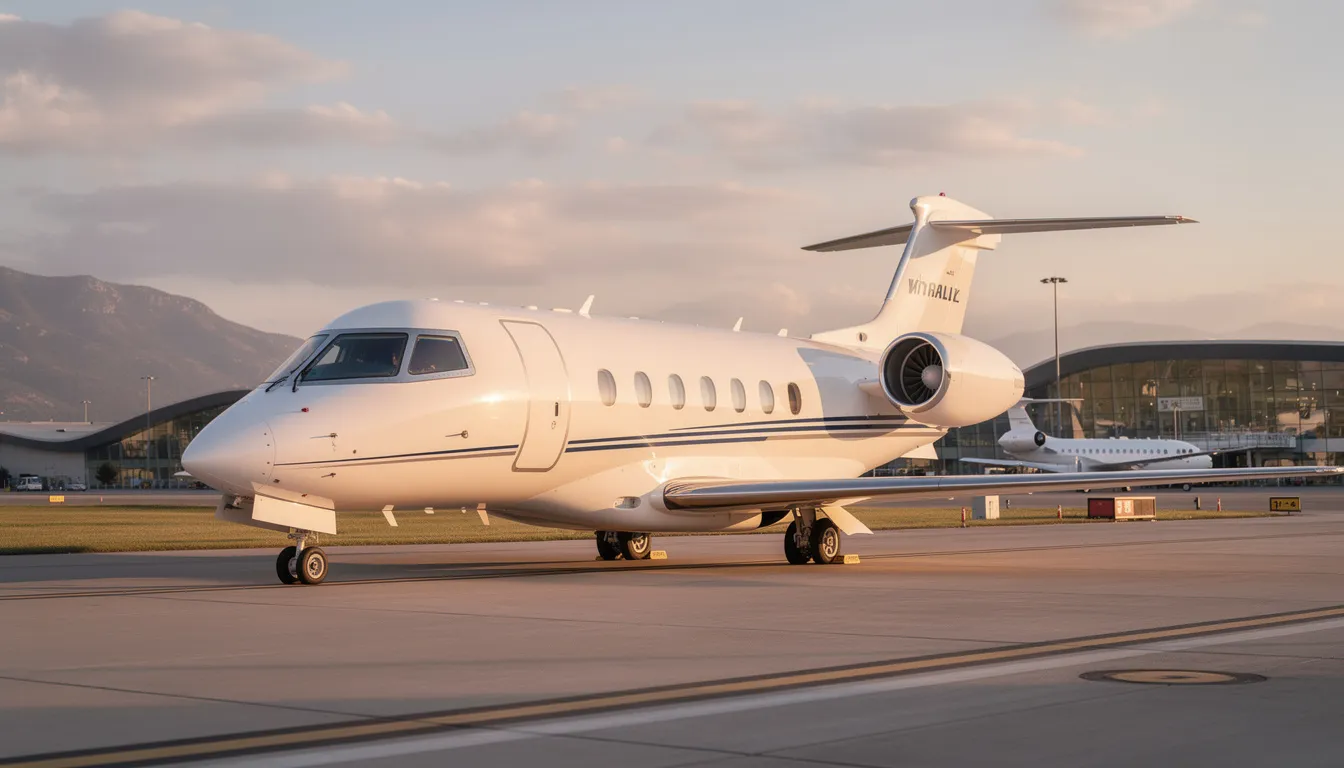
The private jet charter industry has seen remarkable growth in recent years, fueled by increasing demand for flexible, convenient, and luxurious travel solutions. With a global fleet exceeding 20,000 aircraft, private jet charter services offer access to an extensive range of destinations and aircraft types, catering to every travel need and preference.
While a handful of major players dominate the market, many boutique private jet charter companies provide specialized, highly personalized services for discerning clients. The industry continues to innovate, with advancements in aircraft efficiency, digital booking platforms, and bespoke in-flight amenities enhancing the overall jet charter experience. Whether you’re a frequent flyer or exploring private aviation for the first time, private jet charter stands out as the premier choice for those seeking comfort, flexibility, and exceptional service in their travels.
Most operators apply a 1.5 to 2.0-hour billing minimum per leg.
Yes. Multi-day trips often require 2–3 billable hours per day minimum.
Yes, subject to international health and documentation requirements.
Yes. Passenger data is managed privately, and charter flights are not publicly listed.
To begin:
Request an instant quote online
Provide passenger and luggage details
Clarify catering and ground transport needs
Comparing multiple charter providers ensures transparency on pricing and aircraft options.
For frequent flyers evaluating long-term value, fractional jet ownership as an investment may offer cost efficiency and guaranteed availability compared to repeated on-demand charter.
Private jet flights offer flexibility, efficiency, and discretion that commercial airlines cannot match. Flying privately offers a unique blend of convenience, exclusivity, and luxury for discerning travelers. Charter services provide immediate access to private aviation, while jet card programs and fractional aircraft ownership vs membership programs offer structured alternatives for frequent travelers.
Understanding aircraft types, pricing structures, and operational logistics ensures informed decision-making in a rapidly evolving private aviation market across the United States and globally.
Ready to explore the smarter way to fly private? Visit https://www.fractionaljetownership.com/ to learn how fractional ownership can transform your travel experience and discover which private aviation solution aligns best with your travel needs, from top fractional jet ownership programs and comparing BlackJet’s Reserve, Equity, and Lease options to innovative structures like floating fleet fractional ownership models.
