
May 17, 2026
In today’s fast-paced business world and luxury travel market, private jet leasing has become an increasingly popular option for those seeking flexibility, convenience, and privacy without the full commitment of ownership. Whether you’re a high-net-worth individual, executive, or corporate travel manager, understanding the true cost of leasing a private jet is essential to making informed decisions that align with your travel needs and financial goals.
This comprehensive guide breaks down the factors influencing private jet lease costs in 2026, including aircraft types, lease structures, and operational expenses. It also compares leasing with fractional ownership, jet cards, and on-demand charter options, helping you evaluate the smartest and most cost-effective ways to access private aviation. With real-world examples and expert insights, you’ll gain clarity on what to expect financially and how to optimize your private jet experience.
Explore the realities behind the sticker price, uncover hidden fees, and discover how innovative fractional programs like BlackJet’s Equity and Reserve Fleets can offer significant financial benefits and operational ease. Whether you’re flying 50 hours a year or 500, this guide equips you with the knowledge to navigate the private aviation landscape confidently.
Private jet lease cost in 2026 ranges from roughly $80,000 per month for a light jet to more than $1M per month for large cabin jets and ultra-long range jets. The base monthly lease is only the starting point: fuel, crew salaries, maintenance fees, insurance, federal excise tax, and airport fees often add 30–60% on top of the monthly lease payment.
Leasing a private jet can provide predictable costs and guaranteed aircraft availability, but it generally works best for frequent flyers with consistent annual flight hours.
The private aviation industry often uses the 50-hour rule to determine when leasing becomes more economical than chartering; if you fly 50 or more hours annually, leasing may be a better option than trip-by-trip charter in some cases.
In practice, traditional dry leases usually become more cost-effective above 200–250 annual flight hours; below that, fractional jet ownership, jet card programs, or BlackJet Fractional Jet Ownership often provide a lower effective private jet cost.
Light jets such as the Citation CJ3+ and Embraer Phenom 300 are common for U.S. business travelers, while large cabin jets are usually leased by corporations with global travel networks.
BlackJet’s Equity Fleet and Reserve Fleet programs are designed to replicate many benefits of a private jet lease with less capital risk, clearer pricing, and no need to manage a flight department.
The typical annual cost to lease a private jet ranges from $500,000 to several million dollars, depending on the jet type and lease agreement details. According to 2026 market benchmarks from Jettly, light jets often lease for about $80,000–$160,000 per month, midsize jets for $160,000–$300,000, super midsize jets for $250,000–$450,000+, and large-cabin aircraft for $400,000–$1M+ per month.
A common market shorthand is that leasing a light jet can range from $75,000 to $150,000 per month, while midsize jets can cost between $150,000 and $400,000 per month, and large jets can exceed $1 million monthly. For a typical business user flying 200–300 annual flight hours, total annual spend on a leased private jet can range from roughly $1M in efficient light-jet cases to $4M+ for a large-cabin Gulfstream or Bombardier Global.
These private jet lease costs do not eliminate variable costs. Lessees must still budget for fuel costs, crew salaries, maintenance fees, liability insurance, airport landing fees, hangarage, ground transportation, and international fees.
Leasing a private jet is often more cost-effective for individuals or businesses that fly frequently, as it provides predictable costs and guaranteed access to an aircraft, unlike chartering, which is typically pay-per-use. Leasing a private jet is frequently more economical than owning one, as it avoids the significant upfront capital expenditures, ongoing maintenance responsibilities, and depreciation costs that come with ownership.
However, for travelers flying 25–150 hours per year, BlackJet Fractional Jet Ownership generally focuses on smarter shared-use models rather than traditional private jet lease agreements. Fractional jet ownership and Reserve Fleet hours can give clients reliable private jet travel without locking them into one aircraft, one monthly lease, or one long-term balance-sheet commitment.
Many U.S. corporate lessees sign 36–60 month private jet lease agreements with fixed monthly payments and annual escalators of 2–4% tied to inflation, labor, or operating indices.
Leasing a private jet can mean several different structures. The main private jet lease arrangements are dry leases, wet leases, ACMI leases, and hybrid structures, and each one changes who controls the aircraft, who pays which additional costs, and who carries operational risk.
Most business users are effectively choosing between a dry lease, where the lessee manages operations, and a managed dry lease, where a management company assists with crew, scheduling, maintenance, and compliance. This is very different from on-demand private jet rental, where a client books a specific trip through an operator or private jet charter company.
Private jet travel under a lease may fall under FAA Part 91 for non-commercial operations or Part 135 when commercial carriage is involved. These rules influence liability, tax treatment, insurance, and regulatory complexity; the FAA provides the core U.S. regulatory framework.
BlackJet does not sell traditional leases. Instead, it uses the same cost logic-aircraft size, annual flight hours, route pattern, and availability-to design fractional aircraft ownership and membership structures.
Private jet leasing generally breaks down into Dry Leases and Wet Leases, depending on the frequency of flights and the desired level of operational responsibility. Understanding the different types of leases, such as wet and dry leases, is essential for selecting the right leasing strategy that fits your operational needs and financial goals.
Lease type | What it includes | Best fit |
|---|---|---|
Dry lease | Aircraft only | Experienced lessees with operational support |
Wet lease | Aircraft, crew, maintenance, insurance | Turnkey access with less management burden |
ACMI lease | Aircraft, Crew, Maintenance, Insurance | Seasonal, corporate, or group transport needs |
Hybrid lease | Custom split of duties and costs | Complex travel programs |
A dry lease provides only the aircraft, with the lessee responsible for hiring the crew and covering operational costs such as maintenance and insurance. In a dry lease, the lessee assumes complete operational control, including hiring a flight crew and arranging maintenance and insurance. Put simply, the dry lease provides just the aircraft, or only the aircraft, while the lessee carries the rest.
Dry leases usually become more cost-effective if you fly more than 200 hours per year. Below that level, the fixed costs often push the effective hourly private jet price above private jet charter prices or fractional program rates, making it important to understand the full cost structure of fractional jet ownership.
A wet lease includes the aircraft, crew, maintenance, and insurance, providing a comprehensive service package for the lessee. Wet leases can be useful for a corporation that wants a dedicated private jet service without building an in-house aviation department.
ACMI leases include Aircraft, Crew, Maintenance, and Insurance, but the lessee is responsible for certain variable costs like fuel and airport fees. A sports team needing seasonal aircraft capacity in 2026 is a typical ACMI example.
Short-term leases are ideal for those needing aircraft for limited periods, such as a few days or weeks, while long-term leases are suited for frequent travelers and can offer better cost efficiency over time. Short-term lease programs of 6–18 months usually carry higher monthly rates than long-term leases because the leasing company has less certainty.
Jet card programs and BlackJet’s Reserve Fleet model can mimic some wet lease benefits, such as all-in hourly rates and no crew management, without multi-year lock-in.
Private jet charter is trip-by-trip. A traveler can rent a private jet when needed, compare private jet rental prices, and avoid a fixed monthly lease payment. For those who fly less frequently, chartering is often more economical than leasing, as it avoids the fixed costs associated with a lease agreement, making it a flexible option for occasional travelers.
Jet card programs typically provide prepaid hours at fixed or semi-fixed rates. They can reduce volatility in private jet rental costs, although private jet charter costs still depend on aircraft category, peak days, fuel surcharges, and availability.
Fractional jet ownership gives the client an equity-based share and access to a fleet. BlackJet’s Equity Fleet is built for clients who want ownership benefits, potential tax benefits, priority access, and professional aircraft management, and can be weighed against jet membership-style programs for flexibility.
A practical rule of thumb:
Under 50 hours per year: charter or private jet rental may be enough.
50–150 hours per year: fractional jet ownership, Reserve Fleet, or jet card programs usually fit better, with structures such as 1/8 fractional jet ownership around 100 hours annually often matching this band.
200–300+ hours per year: a private jet lease or full aircraft ownership may begin to make sense.
The 50-hour rule suggests that if you fly 50 or more hours each year, leasing a private jet may be a more cost-effective option compared to chartering. However, for many modern clients, that “lease vs. charter” rule should also include fractional ownership as a third option.
The biggest drivers of private jet lease costs are aircraft type, aircraft size, age, maintenance history, lease duration, contracted flight hours, geography, and private aviation market conditions. Understanding these factors helps a family office or CFO benchmark quotes and avoid vague lease agreements.
Before signing, buyers should gather at least three indicative quotes for similar aircraft and terms. Those numbers should then be compared with fractional options from providers such as BlackJet.
Different classes of jets are designed for different operational purposes: Turboprops and Light Jets for regional hops, Midsize and Super-Midsize for transcontinental ranges, and Heavy and Ultra-Long-Range jets for intercontinental flights.
Aircraft category | Typical 2026 base monthly lease costs |
|---|---|
Turboprops / very light jets | $55,000–$110,000 |
Light jets | $80,000–$160,000 |
Midsize jets | $160,000–$300,000 |
Super midsize jets | $250,000–$450,000+ |
Large cabin / ultra long range jets | $400,000–$1M+ |
The specific jet type and size are significant factors in determining lease costs, with larger jets generally incurring higher expenses due to increased fuel consumption and maintenance needs. Larger jets, such as heavy jets and ultra-long-range models, cost significantly more to lease, fuel, and maintain compared to light jets or turboprops.
Light jets such as the Citation CJ3+ and Embraer Phenom 300 work well for 1–3 hour U.S. trips. Large cabin jets such as the Gulfstream G600 or Global 6500 are chosen for New York–London, Los Angeles–Tokyo, and similar international flights.
For example, a leased light jet at $120,000 per month equals $1.44M in annual lease payments before fuel and other operational costs. A large cabin jet at $500,000 per month equals $6M annually before fuel, crew, insurance, and maintenance reserves.
Newer aircraft delivered from 2019–2025 command higher monthly lease payments, but they may save 10–20% on fuel and reduce downtime compared with early-2000s models. Older aircraft can look attractive on paper, but lower rent may be offset by higher maintenance reserves and more unexpected costs.
Heavy maintenance matters. C-checks, gear overhauls, structural inspections, and major avionics work can cost $400,000–$700,000 on many aircraft and much more on large cabin jets.
Before signing any jet lease, review:
Engine program status
Airframe and engine logbooks
Upcoming inspections
Service bulletins and airworthiness directives
Interior, avionics, and connectivity condition
Business-critical private jet travel depends on reliability. A cheaper aircraft that is frequently offline can cost more than a newer aircraft with a premium price tag.
Typical private jet lease agreements run 24–60 months, with 36 months common for light and midsize aircraft. Lease duration affects overall costs, with short-term leases typically having higher monthly rates than long-term leases, which can offer better pricing due to stability and predictability for the lessor.
Annual flight hour blocks also shape economics. A contract may include 200, 300, or 400 contracted flight hours per year, with rollover rules, underuse limits, and overage rates.
For example, a 36-month light jet lease at $120,000 per month costs $1.44M per year before variable costs. At 300 annual flight hours, the base lease alone equals $4,800 per hour. At 250 hours, that rises to $5,760 per hour; at 350 hours, overage may be billed at 1.5x the standard rate.
Negotiating lease terms, including flight hour minimums and payment structures, is crucial for ensuring that the lease agreement aligns with your travel needs and budget. For some travelers, understanding fractional jet ownership financing structures is equally important before deciding whether to commit capital to a lease or a share. BlackJet’s Equity Fleet can often allow more flexibility in shifting annual flight hours across aircraft types than a single leased private jet.
Base airport matters. A leased private jet based at Teterboro, Van Nuys, or Miami-Opa Locka will usually face higher hangar, handling, and landing fees than an aircraft based at a secondary regional airport.
Typical U.S. monthly hangar ranges in 2026:
Secondary airports: $3,000–$6,000
Major business aviation hubs: $10,000–$20,000+
Major international airports: often higher, especially for large aircraft
Positioning is another major cost. If the aircraft is based in Dallas but the client frequently starts trips in Chicago, additional empty leg flights create extra fuel burn, crew time, maintenance wear, and airport fees. To maximize value in private jet leasing, consider strategies such as optimizing flight hours, negotiating lease terms, and, where appropriate, leveraging floating fleet access within fractional programs alongside empty leg flights.
BlackJet’s distributed fleet model helps reduce reliance on one home-based aircraft and can reduce unnecessary positioning costs.
The private jet leasing market remains above 2019 pricing levels because the supply of new aircraft is limited, and corporate demand for private aviation remains strong. Peak periods-Christmas, New Year, U.S. spring break, European summer, the Super Bowl, and Monaco Grand Prix-can push minimums and rates 15–40% higher.
The private jet leasing industry is also adjusting to higher labor costs, fuel volatility, and environmental requirements. Negotiating during slower periods, such as late Q1 or Q3, can sometimes yield concessions, such as included maintenance reserves or lower deposits.
Dynamic options like fractional jet ownership as an investment-style alternative and private jet charter can hedge against market cycles because the client is not locked into a fixed lease payment if travel drops.
Base lease payments are only one part of private jet lease costs. A complete budget should separate fixed costs from variable costs and show the full total cost before commitment.
You must factor in upfront capital outlays and annual operating costs-crews, maintenance, insurance, and hangarage-for long-term commitments, which can add $500,000 to $1,000,000 annually. Lessees must budget for several moving line items beyond the base contract rate, including fuel adjustments, repositioning fees, crew logistics, and airport fees.
A CFO or family office should request a pro-forma invoice that includes base rent, fuel, crew, insurance, maintenance reserves, landing fees, international fees, deicing, Wi-Fi, catering, and ground transportation.

The base lease payment is often calculated as a percentage of the aircraft’s market value, commonly around 0.8–1.5% per month. It is due whether the aircraft flies or sits idle.
Reference ranges for 2026 remain:
Light jets: $80,000–$160,000 per month
Midsize jets: $160,000–$300,000 per month
Super midsize jets: $250,000–$450,000+ per month
Large cabin jets: $400,000–$1M+ per month
Many lease agreements include 2–4% annual escalators and require a security deposit equal to 1–3 months of lease payments. The effective hourly cost of this base payment should be compared directly with fractional jet ownership and jet card hourly rates.
Fuel is usually the largest variable expense. According to direct operating cost benchmarks from OMNIJET, light jets often run around $1,900–$2,500 per flight hour in direct operating costs, while midsize and large-cabin aircraft climb sharply.
Indicative 2026 operating ranges:
Light jets: $1,800–$3,000 per flight hour
Midsize jets: $2,500–$4,500 per flight hour
Large cabin jets: $4,000–$8,000+ per flight hour
Variable costs associated with leasing a plane include fuel prices, airport landing fees, and crew accommodations, which fluctuate independently of the base lease rate. Common trip charges include landing fees of $150–$1,500 per airport, ramp and handling fees of $200–$800 per stop, and navigation or overflight charges on international routes.
A Chicago–Miami round trip on a midsize jet may involve 5–6 flight hours. At $3,500 per hour, direct operating costs alone can be $17,500–$21,000 before catering, ground handling, airport fees, and crew expenses.
For dry leases, the lessee typically covers crew salaries, benefits, recurrent training, and travel. Wet leases may include crew in the monthly rate, but still pass through hotel, meal, or per-diem costs in some cases.
Typical 2026 crew salary ranges:
Captains: $140,000–$280,000+
First officers: $90,000–$160,000
Flight attendants: $60,000–$110,000
Leasing provides the benefits of having a dedicated aircraft and crew, which can enhance the private jet experience by offering consistency and familiarity, while chartering may involve different aircraft and crews for each private jet flight.
Multi-day trips add crew hotels, meals, ground transportation, and sometimes positioning flights. BlackJet programs build crew costs into the hourly structure, so clients do not need to manage HR, training, or scheduling logistics.
Maintenance reserves are hourly or monthly amounts set aside for engine overhauls, avionics upgrades, and scheduled inspections. They often total $200–$600 per engine hour, depending on aircraft type.
The total cost of leasing a private jet extends beyond the base rent, with additional expenses such as fuel costs, crew salaries, maintenance fees, liability insurance, and airport fees often adding 30–60% on top of the monthly lease payment. The total cost of leasing a private jet can extend beyond the base rent, with additional expenses such as fuel, crew salaries, maintenance fees, and airport fees often adding 30% to 60% on top of the monthly lease payment.
Larger aircraft carry heavier financial obligations due to enhanced fuel consumption, higher maintenance reserves, and specialized crew requirements. Fractional platforms aggregate maintenance risk across a managed fleet, which can produce more predictable cost exposure than one leased private jet.
Lessees usually need hull and liability insurance. Premiums often range from 0.5–1.5% of hull value annually, with higher premiums for commercial operations, international flights, or high-risk regions.
A mandatory 7.5% Federal Excise Tax applies to the domestic air transportation segment in the United States. Federal excise tax and segment fees depend on structure, operational control, and whether transportation is taxable commercial carriage.
International tax rules also matter. In the United Kingdom, a high Air Passenger Duty targets private departures, particularly on long-haul routes. In the European Union, strict environmental and passenger solidarity levies apply to non-scheduled flights.
Aviation-specific legal and tax advisors should review any private jet lease agreements, fractional aircraft ownership contracts, and expected tax treatment, including the tax implications specific to fractional jet owners. BlackJet works with clients and their advisors when comparing fractional ownership, Reserve Fleet commitments, and traditional lease alternatives.
Reputable operators avoid true hidden fees, but vague contracts can bury costly line items. These may include deicing, Wi-Fi overages, after-hours handling, fuel surcharges, minimum daily charges, repositioning flights, and special cleaning.
Typical add-ons include:
Deicing: $1,500–$15,000 per event
International handling: varies widely by airport and country
Wi-Fi on longer flights: sometimes billed separately
Higher landing fees at constrained or premium airports
Catering and ground transportation
Ask for an all-in sample monthly invoice based on the actual travel pattern. One advantage of BlackJet’s Reserve Fleet is clearer upfront pricing and fewer surprise extras.
The following ranges are quick-reference estimates for 2026, assuming 200–300 annual flight hours and standard U.S. basing. They are based on monthly lease costs and exclude variable costs that can add 30–60% or more.
Use these ranges to sense-check a quote from a broker, operator, or leasing company, then compare the total private jet price with the full cost structure of fractional jet ownership.
Popular turboprops such as the Pilatus PC-12 NGX and King Air 260, plus very light jets such as the HondaJet and Citation M2, typically lease for $55,000–$120,000 per month in 2026.
These aircraft are ideal for 1–2 hour regional hops with 4–6 passengers. They offer lower fuel burn and access to shorter runways than many larger private jets.
High-frequency regional travelers often compare these leases with BlackJet-style shared-use blocks for 25–75 hours per year. Even when monthly lease costs are lower, occasional flyers may prefer private jet rental to avoid fixed costs.
Light jets such as the Embraer Phenom 300, Cessna Citation CJ3+, and HondaJet Elite II usually lease between $80,000 and $160,000 per month for late-model aircraft.
Their typical mission profile is 2–3.5-hour legs, such as New York–Miami, Dallas–Chicago, or Los Angeles–Aspen, with 6–8 passengers. They provide efficient private aviation access for regional executives and owner-managed businesses.
At 250 annual flight hours, total annual spend on a leased light jet can approach $1.5M–$2.5M after operating costs are included. Many BlackJet clients in this range instead use fractional shares or Reserve Fleet hours to reduce operational burden.
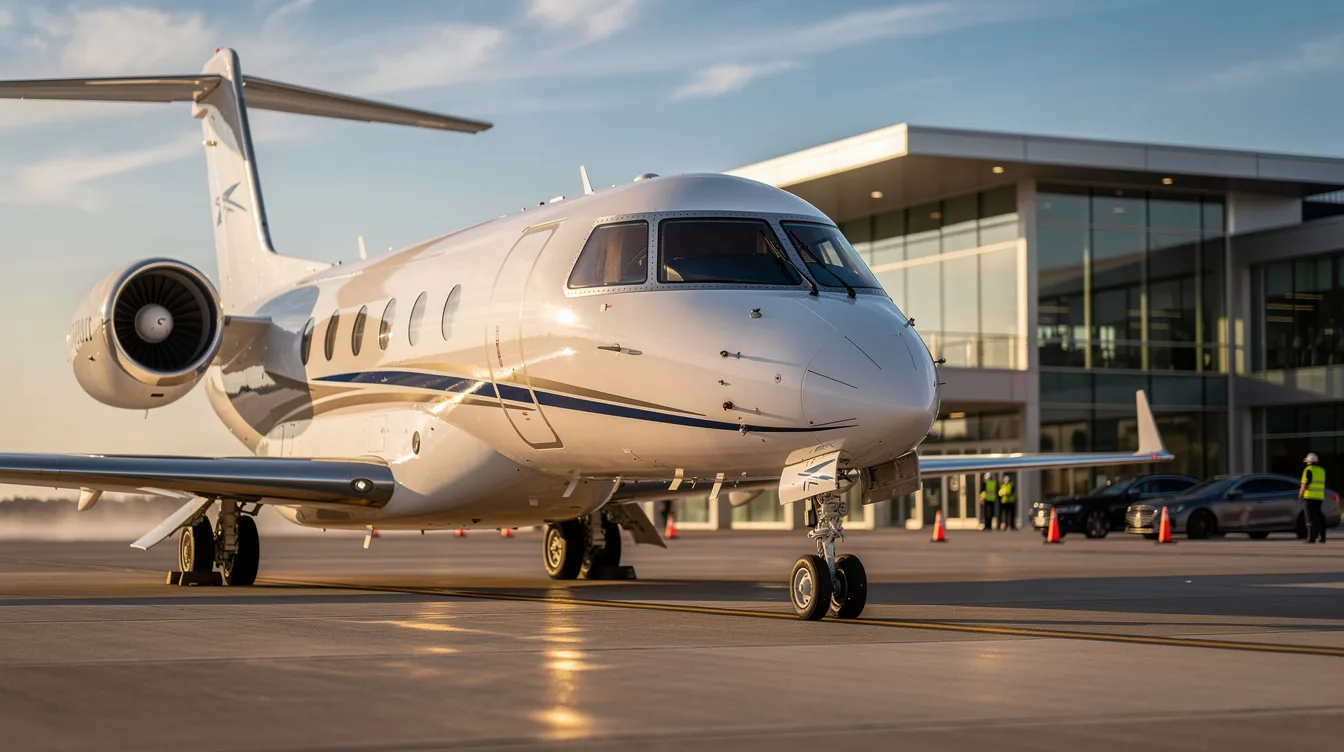
Midsize jet examples include the Citation XLS+, Learjet 60XR, and Hawker 900XP, often leasing in the $160,000–$300,000 monthly range. Super midsize jets such as the Challenger 350, Praetor 600, and Gulfstream G280 often run $250,000–$450,000+ per month.
These aircraft carry 7–10 passengers and support longer missions, including U.S. coast-to-coast routes and North America–Caribbean travel. A super-midsize leased private jet at 300 annual flight hours can easily exceed $2.5M annually after fuel, crew, and maintenance are added.
This category is a common decision point for corporations comparing full leasing with BlackJet Equity Fleet shares.
Large-cabin and ultra-long-range aircraft such as the Gulfstream G550, G600, G700, Bombardier Global 6000, Global 6500, and Global 7500 commonly lease for $400,000–$1M+ per month in 2026.
They support nonstop intercontinental routes such as New York–London, Los Angeles–Shanghai, and Dubai–Singapore with 12–16 passengers and full in-flight amenities. Total annual budgets for a leased large-cabin aircraft at 350–400 hours can exceed $4M–$6M and, in some cases, more.
These commitments are usually viable for multinational corporations, ultra-high-net-worth families, and organizations that need aircraft control every week. For many others, global fractional programs or long-range charter on specific trips may be more efficient.
Leasing is only one path to private jets. Private jet charter, jet card programs, fractional aircraft ownership, and BlackJet’s Reserve and Equity Fleet models can all solve different problems.
The right answer depends on actual annual usage, route patterns, tax preferences, capital tolerance, and how much control the client needs.
Leasing can make sense for corporations, family offices, sports teams, government agencies, or operators flying 250–500+ hours per year on predictable routes. It can provide aircraft availability, branding control, consistent crew, and a familiar cabin.
It may also provide potential tax benefits when structured correctly for business use. Some clients also value the ability to configure the cabin, control schedules, and build processes around one dedicated aircraft.
The trade-off is complexity. A lessee must be comfortable with operational costs, maintenance risk, market changes, and long-term commitments. Even strong lease candidates may use BlackJet for overflow lift, special missions, or aircraft-size flexibility.
Fractional jet ownership is often better for individuals and companies flying roughly 25–150 hours per year. It offers predictable access, professional management, and potential tax benefits without the full overhead of a private jet lease.
Jet card programs and BlackJet’s Reserve Fleet provide fixed or transparent hourly pricing for private jet travel with no need to manage crew salaries, maintenance, or aircraft downtime, and can be evaluated alongside leading fractional jet ownership programs in the market. This can be especially useful when schedules change, or aircraft needs vary.
BlackJet’s Equity Fleet can also provide fleet interchange. A client may use a light jet for a regional board meeting and a larger aircraft for a transcontinental family trip without signing multiple lease agreements.
The best analysis uses the last 12–24 months of travel. Compare lease payments, private jet charter prices, private jet rental costs, fractional share costs, taxes, and service levels side by side, and be mindful of how easily you could sell or transfer a fractional jet ownership share later.
BlackJet Fractional Jet Ownership offers two core paths and should be understood in the context of a well-drafted aircraft fractional ownership sample contract:
Equity Fleet: fractional jet ownership shares with priority access, potential tax advantages, and asset participation.
Reserve Fleet: flexible, on-demand hours without traditional ownership or a long-term private jet lease.
Both models are built for travelers in the 25–150 annual flight hour band who want better predictability than ad-hoc charter but do not want to operate their own private jet or manage a lease. BlackJet handles aircraft management, scheduling, crew, and maintenance.
For many clients, this delivers the control benefits of leasing without turning the traveler into a de facto flight department. Readers can visit FractionalJetOwnership.com to request a side-by-side comparison of lease, fractional ownership, and Reserve Fleet options.
Private jet lease costs are not only financial. Corporate boards and high-net-worth travelers increasingly review emissions, carbon reporting, hidden fees, and operational risk before committing to a long-term private aviation strategy.
Well-structured contracts and modern aircraft choices can reduce both volatility and environmental impact over the lease term.
Many operators now offer carbon offset programs, often charging $5–$25 per ton of CO₂. On a long-haul private jet flight, that may add several hundred dollars depending on the route and aircraft type.
Some operators also offer Sustainable Aviation Fuel blends, which can reduce lifecycle emissions by up to 70–80% but may carry a 20–50% premium over conventional jet fuel. The question is whether offsets and SAF are optional line items, bundled into operating costs, or charged through fuel adjustments.
BlackJet can help clients integrate offsets or SAF into a broader private aviation strategy, whether they choose fractional ownership or another structure.
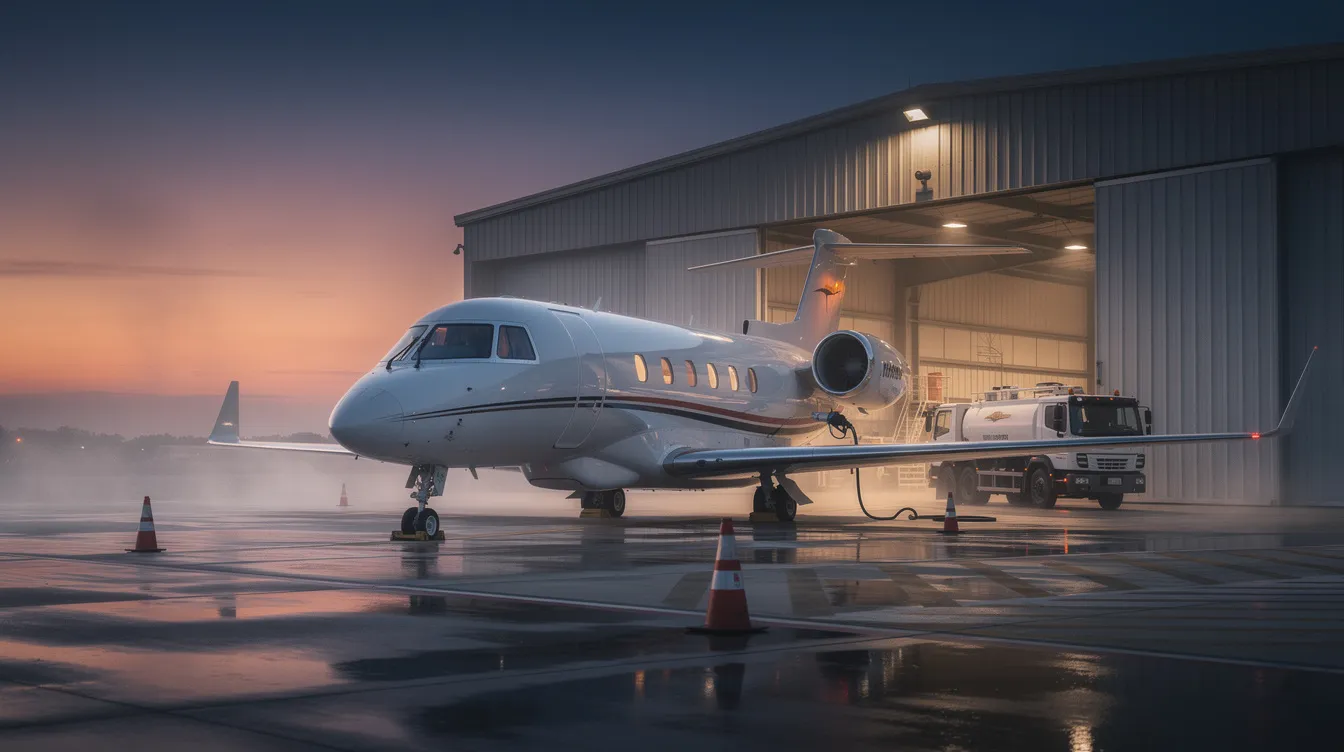
Common hidden-fee areas include fuel surcharges tied to market indices, minimum daily flight hours, short-leg fees, repositioning charges, Wi-Fi overage, and after-hours FBO handling. These items can materially change the total cost.
Before signing, request:
A full schedule of ancillary charges
A sample monthly invoice
Clear positioning rules
Caps or thresholds on variable fees
Written treatment of empty leg flights
Transparent programs such as BlackJet’s shared-use models aim to limit surprise add-ons by clarifying pricing before travel begins, much as clear fractional jet ownership contract terms help prevent unexpected costs.
A multi-year private jet lease creates exposure to changing travel needs, regulatory shifts, fuel prices, and unforeseen maintenance events. If travel drops, the client may still owe fixed monthly payments for unused capacity.
Risk can be reduced with exit clauses, rollover provisions, aircraft upgrade or downgrade options, clearly defined overage rates, and appropriate liability and insurance coverage in fractional structures. Some clients hedge by combining a smaller fractional share or membership program with chartered or leased capacity during peak seasons.
Aviation-specialized legal counsel and tax advisors should review private jet lease agreements before signature.
These are the questions high-net-worth individuals, executives, and corporate travel managers often ask when comparing private jet lease costs with fractional ownership, jet cards, and private jet rental.
Leasing can be cheaper per hour at very high utilization levels, often 300+ annual hours, because the fixed monthly lease is spread over more flying. Below that threshold, fractional ownership and jet cards usually spread fixed costs more efficiently across multiple users. BlackJet can prepare a side-by-side analysis using actual routes, aircraft needs, and annual flight hours.
In current 2026 market conditions, leasing usually makes economic sense beyond roughly 200–250 annual flight hours, and sometimes closer to 300 depending on aircraft type and fuel prices. Below 150 annual hours, fractional jet ownership or BlackJet membership programs should usually be reviewed first. The 50-hour rule is useful for comparing lease-style access with basic charter, but it does not replace a full cost model.
Many U.S. businesses can deduct legitimate business-related private jet travel expenses, including lease payments, fuel, crew salaries, and maintenance, subject to IRS rules. Business and personal use must be allocated carefully, and entertainment-related disallowances can apply. Clients should consult aviation-savvy tax advisors before relying on any deduction assumptions for leasing, fractional ownership, or charter.
A private jet lease often takes 30–90 days to negotiate, inspect, insure, document, and close. Fractional ownership or membership access can often begin within days or a few weeks after contracts and funding are complete. Some clients use BlackJet fractional or Reserve Fleet access as an interim solution while evaluating a longer-term lease.
Most private jet lease agreements include early termination provisions, but penalties can be substantial if the client exits mid-term without a replacement lessee. If travel needs decrease, the client may overpay for unused annual flight hours while still carrying fixed monthly obligations. Travelers with uncertain plans should model best-case and worst-case usage before committing to a 3–5 year lease.
Private jet lease cost in 2026 can deliver value for very high-usage flyers, but only when the full budget is understood. Base rent is just one line item; fuel, crew, maintenance, taxes, airport fees, positioning, and hidden fees determine the real total cost.
For many individuals and companies flying 25–150 annual hours, fractional ownership, jet card programs, or structured membership solutions like BlackJet’s Reserve Fleet and Equity Fleet provide a stronger balance of cost, flexibility, and simplicity. They also avoid the burden of managing crew, maintenance, insurance, and operational compliance.
The best next step is to audit the last 12–24 months of travel, estimate realistic future annual flight hours, and compare a leased private jet, fractional jet ownership, and private jet charter side by side.
Ready to explore the smarter way to fly private? Visit FractionalJetOwnership.com to learn how BlackJet Fractional Jet Ownership can help design a private aviation strategy that fits your budget, schedule, and risk tolerance.
