
May 2, 2026
The private aviation market tracked approximately 1.7 to 1.9 million flight hours across the 30 largest U.S. operators in 2025. In fact, the private jet industry recorded a total of 1,725,728 flight hours in 2025, with the top 30 companies capturing 30.84% of all flight hours across Part 135, Part 91K, and Part 91 operations. The delta from 2024 to 2025 shows that the 30 largest U.S. private jet companies accounted for 1,725,728 total flight hours in 2025, an increase of 127,771 hours compared to 2024, and up from 30.61% market share in 2024. The largest private jet operators have also shown a trend of consolidation, with many being roll-ups of several operators under corporate parents, reflecting the industry's fragmented nature. Yet with over 1,000 fractional and charter jet operators across North America, selecting the right partner can feel overwhelming. This guide breaks down how private jet operators work, what separates the largest operators from specialized programs, and how to match your usage profile with the most efficient access model.
Private jet operators fall into three primary categories: Part 91K fractional ownership programs, Part 135 charter operators, and aircraft management companies. Many large aviation groups now operate across all three, creating complex ecosystems that can confuse even experienced travelers. Executive jet management is often integrated into these groups, playing a key role in industry consolidation and M&A activity as multiple private jet providers are rolled up into larger corporate structures. For business owners and corporate teams logging 25 to 150 flight hours annually, understanding these distinctions directly impacts total cost, scheduling reliability, and service quality.
The market has experienced significant post-pandemic stabilization with robust growth in fractional ownership segments. Part 91K departures rose by almost 10% in 2025 and have climbed 118% over the past five years compared to 2020 levels. This indicates sustained demand rather than a temporary spike.
Despite the dominance of a few giants—NetJets, Flexjet, Vista Global, Wheels Up, and FlyExclusive—the market remains fragmented. This fragmentation creates opportunities for tailored programs like BlackJet Fractional Jet Ownership, which curates access across multiple vetted operators rather than relying solely on proprietary fleet capacity.
Fractional ownership operators (NetJets, Flexjet, AirSprint)
Part 135 charter and on-demand operators
Aircraft management companies coordinating maintenance and crew
Most travelers do not interact directly with operators in the traditional sense. Instead, they access private aviation through structured programs offered by fractional providers, membership platforms, or brokers. Understanding the three core roles—aircraft operators (who hold certificates and crew planes), brokers (who match clients to available aircraft), and fractional ownership providers (who manage shared ownership stakes)—clarifies how the industry actually functions.
Part 91 covers owner-operated aircraft where the individual bears full safety responsibility. Part 91K governs fractional jet ownership programs where the operator manages pools of aircraft with multiple owners, often using specialized fractional jet ownership terminology and structures. Part 135 applies to charter and commercial operations with strict FAA safety standards.
On-demand charter: Book available aircraft flight by flight; ideal for under 25 hours annually
Jet card programs: Prepaid flight hour bundles at fixed hourly rates with defined notice periods
Fractional aircraft ownership: Purchase a percentage share, such as 1/8 fractional jet ownership, with around 100 hours per year, with guaranteed availability and monthly management fees
Whole-aircraft ownership: Full purchase with a professional management company
Membership models: Annual fees with standardized hourly rates and access guarantees. Members of these programs often receive exclusive access, privileges, and incentives such as event tickets or premium fleet access.
Membership Jet Cards are recommended for those who fly 20+ hours per year, offering fixed hourly rates and guaranteed availability.
BlackJet Fractional Jet Ownership operates as a specialist fractional and shared-use platform with two core offerings: Reserve Fleet (pay-as-you-go hours without ownership costs) and Equity Fleet (fractional ownership with priority access and potential tax benefits), built on top of carefully vetted operators and a broader suite of private aviation programs.
The period from 2021 to 2025 reveals a market characterized by consolidation at the top and steady growth among established fractional operators. NetJets’ flight hours grew from 542,831 in 2021 to 719,086 in 2025, representing a 32.4% cumulative increase. This growth was not linear—year-over-year rates ranged from 1.6% to 8.08%—suggesting recovery from temporary slowdowns while maintaining market leadership and reinforcing their position among the top fractional jet ownership programs for investors.
Flexjet demonstrated even more dynamic growth, climbing from 178,327 hours in 2021 to 284,533 in 2025, a 59.6% cumulative increase with particularly strong 19.64% year-over-year growth in 2025. Vista Global consolidated its position through acquisitions of Air Hamburg, Apollo Jet, Talon Air, Jet Edge, and Red Wing Aviation, though its North American flight hours showed some contraction.
Rankings are typically based on annual hours flown, fleet size, and geographic reach. Note: When comparing private jet operators, flight hours may include or exclude certain types of flights, such as repositioning legs or brokered activity, which can affect how operator performance is interpreted. However, being among the largest operators does not automatically mean the best fit for every traveler’s specific needs.

The top five private jet operators—NetJets, Flexjet, Vista Global, Wheels Up, and FlyExclusive—have seen notable shifts in relative positioning over the past five years. A table summarizing operator rankings, flight hours, and year-over-year delta would help visualize these shifts and provide a clear comparison of market dynamics. NetJets and Flexjet together captured more than half of all gains in flight hours among the 1,000+ operators in 2025, illustrating significant market concentration.
Wheels Up experienced a pronounced contraction, with hours falling from 167,641 in 2022 to 82,318 in 2025, a 50.9% delta reflecting well-publicized financial restructuring. Meanwhile, NetJets’ incremental growth alone (176,255 additional hours over five years) exceeds the total 2025 flight hours of nearly all competitors except Flexjet.
Some operators’ actual activity is understated because off-fleet charter brokered on third-party operators is not fully captured in traditional tracking. A sophisticated traveler should look beyond brand size toward access terms, cost structure, and scheduling flexibility—areas where BlackJet Fractional Jet Ownership focuses its value proposition.
An operator holds the FAA certificate, crews the aircraft, and bears regulatory responsibility for safety. Operators are responsible for delivering specialized, premium private jet flights, offering reliability, customization, and a superior experience for a range of travelers. A broker matches clients to available operators but does not hold a certificate or own aircraft. A fractional provider manages shared ownership programs and guarantees access to defined aircraft types, often holding its own operating certificates while also partnering with other carriers.
Private jet operators and their services fall under different regulatory categories. Part 135 regulations govern charter flights, jet card programs, and the private flights of aircraft owners whose airplanes are available for charter, ensuring a structured framework for private jet services.
ARGUS TRAQPak and similar data sources track operators but typically exclude pure broker activity, which matters when interpreting claims about the largest operators. Vista Global exemplifies consolidation by combining VistaJet, XO, Jet Edge, and Talon Air under one umbrella. Flexjet owns Sentient Jet and FXAir. Wheels Up links with various broker networks to extend capacity.
Role | Controls Aircraft | Holds Certificate | Guarantees Access |
|---|---|---|---|
Operator | Yes | Yes | Varies |
Broker | No | No | No |
Fractional Provider | Often | Often | Yes |
BlackJet Fractional Jet Ownership positions itself not as a simple private jet charter broker, but as a structured access and ownership platform that leverages multiple high-quality operators under standardized safety, pricing, and service expectations, supported by clear fractional aircraft ownership contract frameworks.
Part 91 applies to owner-operated general aviation where the aircraft owners bear full responsibility for safety and compliance. Part 91K governs fractional aircraft ownership and structured share programs, where the fractional provider is responsible for crew, maintenance, and scheduling. Part 135 covers charter and commercial operations with the highest regulatory standards, including mandatory maintenance intervals and crew rest requirements. These rules extend to highly trained pilots and professional crews who must meet rigorous qualification and recurrent training thresholds. Private jets in these categories are known for delivering luxury, safety, and tailored aviation solutions for a variety of client needs.
High-end private jet providers should have a guaranteed recovery plan for aircraft mechanical issues, sourcing a replacement aircraft without extra cost to the client. It is also crucial for operators to be transparent about aircraft history, including maintenance records and any past incidents, to ensure reliability. Additionally, operators often work with safety rating organizations such as ARGUS, Wyvern, and IS-BAO to ensure that every aircraft, crew, and protocol meets strict safety criteria, supported by robust liability and insurance coverage frameworks in fractional ownership.
Data sources often aggregate fractional flights, commercial charter, and empty-leg positioning under the same operator name, especially when aircraft participate in floating fleet fractional ownership structures. Operators with more than 50% of their fleet in fractional shares are typically classified as fractional operators by ARGUS, while others are classified as charter operators.
BlackJet’s Equity Fleet relies on reputable Part 135 and Part 91K operators with BlackJet handling structure, scheduling, and client experience
Reserve Fleet hours similarly operate through vetted certificated carriers, including solutions for fractional jet ownership in Pittsburgh, with tailored options for fractional jet ownership in Orlando, supporting frequent travelers in key markets via fractional jet ownership services in Atlanta
Flight hours include owner use, charter use, and empty-leg positioning flights. This means a fractional-owned aircraft flying an owner on a 3-hour trip and then deadheading 2 hours to the next location are both counted as 5 flight hours. Rankings do not differentiate, inflating perceived utilization.
Aircraft-specific tracking under Part 135 does not separate a shareholder’s private trip from a paid charter flight. High hours alone do not equal better service. Aviation experts recommend evaluating safety ratings, on-time performance, maintenance standards, and client satisfaction—metrics that BlackJet weighs heavily when selecting operating partners.
Consider a business owner based in Miami flying 75 hours annually to New York, Dallas, and occasional Caribbean destinations versus a multinational team coordinating 150 hours across domestic routes and international flights. Their needs differ dramatically from someone doing 5 hours of ad-hoc private charter.
Predictable access during peak travel days
Aircraft type consistency across private flights
Total cost per occupied hour, including management fees, is evaluated against a clear view of the overall cost structure of fractional jet ownership
Tax implications for qualifying business use
Contract exit flexibility and understanding essential fractional ownership contract terms
On-demand charter works for infrequent flyers under 25 hours. A jet card makes sense for 25 to 75 hours with budget predictability. Fractional jet ownership through programs like BlackJet’s Equity Fleet becomes financially optimal for 100+ hours when total cost per occupied hour drops below charter rates and tax benefits apply, especially when you weigh the investment-style benefits and tradeoffs of fractional ownership.
BlackJet’s two models serve different profiles:
Equity Fleet: Fractional ownership shares with potential U.S. tax benefits, priority access, and custom aircraft sourcing
Reserve Fleet: Non-ownership pay-as-you-go hours with predictable pricing and guaranteed availability
Contact BlackJet for a personalized cost comparison based on your anticipated corporate travel or vacation patterns, and to understand strategies for selling or exiting a fractional jet ownership share if your needs change over time.
Main cost components for fractional jet ownership include acquisition of the share, monthly management fees covering crew and maintenance, and occupied hourly fees for fuel and operational costs, all of which factor into the total cost of fractional jet ownership. At 100 hours annually, fractional ownership typically reaches cost parity or savings versus pure charter while providing guaranteed availability.
U.S. tax rules can enable accelerated depreciation for qualifying business use under bonus depreciation provisions, which interact with fractional jet ownership financing, costs, and benefits, and broader tax implications for fractional jet owners. Clients should consult their own tax advisors while BlackJet coordinates to ensure proper documentation.
Scheduling benefits include guaranteed aircraft availability within defined notice periods, access to supplemental lift through partner networks, and consistent service standards that ad-hoc charter variability cannot match, especially when comparing fractional jet ownership versus membership programs for different flying patterns. Request a detailed pro forma from BlackJet for estimates tailored to your usage.
Safety and operational quality vary significantly across private jet operators, making due diligence essential for any frequent flyers or corporate travel managers. Industry benchmarks include ARGUS ratings (Platinum, Gold, Silver), Wyvern audits, and IS-BAO certification.
While many large operators maintain high standards, not all regional carriers are equal. Program providers like BlackJet apply strict vetting before including any operator in their network, evaluating crew experience thresholds, maintenance practices, and safety records. Note: Thorough operator vetting is crucial to ensure that only those meeting the highest safety standards are selected, providing peace of mind for clients. This ensures consistency for both Equity and Reserve Fleet clients.
Premium private travel extends beyond the plane itself. Core elements include proactive trip planning, contingency management, discreet ground handling, and consistent in-cabin standards. Generic charter booking may vary flight to flight, while program-based relationships standardize expectations.
BlackJet delivers a trusted advisor experience with dedicated support for scheduling, route optimization, and multi-city business itineraries. Whether arranging a last-minute board meeting across coasts or coordinating a hotel and ground transportation for a family vacation, personalized service differentiates structured programs from transactional charter.
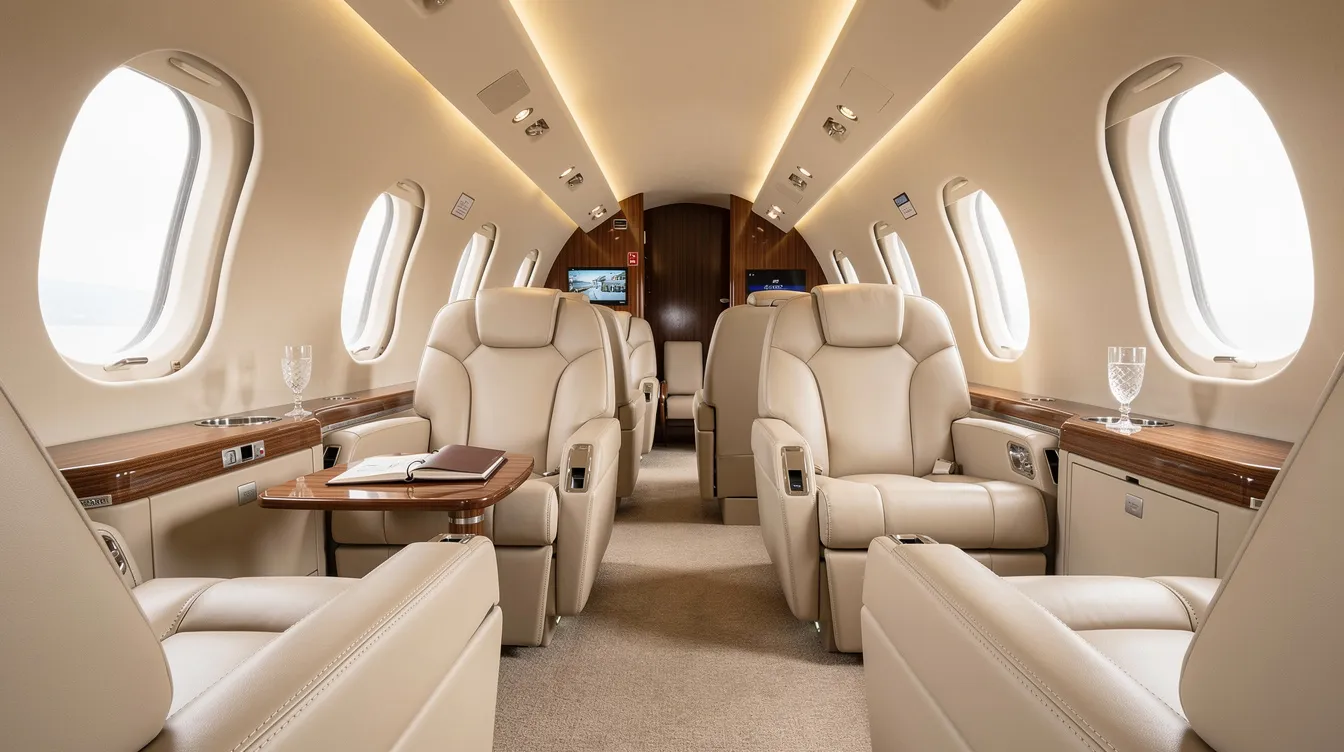
Major U.S. private jet operators extend their reach into Canada, the Caribbean, Latin America, and transatlantic routes through combinations of U.S. and European certificates. United, as one of the four largest U.S. airlines, holds a significant market share in the broader commercial aviation market, according to Statista, underscoring the scale of major players in the industry. Vista Global and NetJets consolidate multiple operators across regions, while others arrange partnerships for long-range missions.
When planning international flights, verify traffic rights, customs handling, crew duty limits, and aircraft range versus payload for routes such as New York to London or Los Angeles to Hawaii. BlackJet structures global access by selecting operators with proven records in international sectors, ensuring service continuity from U.S. bases to destinations around the world.
Private jet categories serve different mission profiles:
Category | Range | Typical Routes |
|---|---|---|
Light jets | 1,200–2,000 nm | Miami–New York, short hops |
Midsize jets | 2,000–3,000 nm | Dallas–San Francisco |
Super-midsize | 3,000–4,000 nm | Coast-to-coast U.S. |
Large-cabin | 4,000–6,000 nm | New York–London |
Ultra-long-range | 6,000+ nm | Transpacific |
The right program aligns fleet access with your most common stage lengths. BlackJet’s Equity Fleet can source specific premium aircraft models—Embraer Praetor, Bombardier Challenger, Gulfstream G-series, or arrange fractional shares of super-midsize jets like the Falcon 2000EX or turboprop options such as the TBM 850—to match owner usage profiles. Use a simple mission analysis of your top routes as a starting point; BlackJet offers this review during initial consultations.
The private jet operator landscape is fragmented despite consolidation among a handful of large groups. For travelers flying 25 to 150 hours annually, program structure—whether fractional ownership, jet card, or membership—matters more than operator size alone.
BlackJet Fractional Jet Ownership specializes in building smarter access paths through Equity Fleet fractional ownership and Reserve Fleet shared-use models, all built on carefully vetted operators meeting rigorous safety and service standards.
Compare your current charter or jet card spend against a fractional scenario with a custom cost and access analysis. Ready to discover the smarter way to fly private? Visit FractionalJetOwnership.com to learn how fractional ownership and structured access programs can transform your travel experience.
A private jet operator holds the FAA certificate, owns or manages the aircraft, and is responsible for safety and crew. Brokers do not own aircraft but arrange flights by matching clients with available operators. Operators provide direct control over aircraft and service quality, while brokers offer access to a broader range of options.
Fractional ownership involves purchasing a share of an aircraft, giving guaranteed access and potential tax benefits, ideal for those flying 50+ hours annually. Jet card programs offer prepaid flight hours at fixed rates without ownership, suitable for 20–75 hours per year, balancing predictability and flexibility.
Private jet operators fall under FAA Parts 91, 91K, and 135. Part 91 covers owner-operated flights, Part 91K governs fractional ownership programs, and Part 135 applies to charter and commercial operations with stringent safety standards.
Consider your annual flight hours, desired aircraft types, scheduling flexibility, safety ratings, and total cost. For frequent flyers (25–150 hours/year), fractional ownership or membership programs often provide the best balance of cost and access.
Look for operators with FAA Part 135 certification, high ARGUS or Wyvern safety ratings, transparent maintenance records, and comprehensive recovery plans for mechanical issues. Certifications like IS-BAO indicate adherence to global safety best practices.
Navigating the private jet operator landscape requires balancing cost, flexibility, safety, and service quality. For travelers and businesses flying between 25 and 150 hours annually, fractional jet ownership and structured membership programs offer the most efficient and predictable access to private aviation. By partnering with vetted operators who meet rigorous safety standards and provide consistent service, clients enjoy peace of mind alongside the convenience of guaranteed availability and tailored aircraft options.
As the private aviation market continues to evolve, including consolidation among major players like NetJets, Flexjet, and Vista Global, discerning travelers can benefit from platforms like BlackJet Fractional Jet Ownership. BlackJet’s dual model approach—combining Equity Fleet fractional ownership with Reserve Fleet pay-as-you-go access—provides flexible solutions designed to fit diverse travel needs and budgets.
Ready to explore the smarter way to fly private? Visit FractionalJetOwnership.com to learn how fractional ownership can transform your travel experience with greater efficiency, transparency, and value.
